( Photographies - Musique ) - Frank Sinatra.Livre Rare Book

4,481 results
ref. 28408Magnifique photographie originale argentique, en noir et blanc, de Frank Sinatra au format 26 x 21 cm. La photographie fut offerte à une fan de l'artiste et expédiée sous enveloppe d'origine, portant le tampon : Sinatra Enterprise. 4000 Warner Blvd / Burbank, California, avec cachet postal en date du 12 février 1970. Photographie enrichie d'une très belle dédicace originale autographe, au feutre bleu, de Frank Sinatra. Rarissime exemplaire en superbe état général.
1947ref. 133392Prague: 1947-48 & 1952. Jazz in Cold War Czechoslovakia First and only editions of both of these short-lived fugitive publications. The complete run of Jazz offers a fascinating view of the times. A well-produced illustrated magazine that features reviews pen pictures and features on American and other western jazz performers the editorial direction changed radically following the coup d'état of 1948. The contrast between the final issue before the February 1948 putsch and the first issue afterwards reveals a complete reinterpretation of jazz Czech critic Ján Dalecký remarking that "In the introduction alone which was full of ideological terms we could see that the magazine had taken a 180 degree turn" reviews of Soviet performers began to proliferate. WorldCat locates a single run at the University of Delaware. It is doubtful that more than a handful of each issue of the 1952 journal would have been produced. Extremely uncommon no other copies traced it is impossible to say whether any more was ever produced. Highly risky samizdat published at a time when in Czechoslovakia merely singing jazz lyrics in English was against the law. Both issues heavily promote the AFN American Forces Network radio station providing the jazz schedule for upcoming week including the AFN Hit Parade programme and other western European broadcasts featuring jazz. Also includes a short story about a Czechoslovak family whose lives are utterly transformed by listening to AFN; reviews of current American jazz releases; interviews with Czech jazz musicians and reviews of local jazz-related concerts. First named 15 issues in 13 c.16 pages per issue all published quarto wire-stitched in the original medium paper pictorial wrappers; the second 2 issues octavo all published - issue 1 19 April 1952 19 pages; issue 2 3 May 1952 17 pages - carbon copy typescript the first issue wire-stitched in glossy paper wrappers with illustration to the front panel the second wire-stitched laid loosely into plain blue card wrappers. First named with illustrations to the text. Housed in a plain black cloth solander box. Both with some external wear the wrappers a little rubbed first issue of the first with light vertical crease from folding for mailing "ukazkove cislo" sample issue ink stamp to the front panel; both with pale toning to the text but overall very good. hardcover
1946ref. 3933Éditions du Chêne, Paris 1946. In-4 (340 x 260 mm) en feuilles. 95 pp. + ffnch., en feuilles, sous couverture rempliée illustrée sur les deux plats, chemise titrée toilée et étui de l'éditeur. Édition originale des poésies de Pierre Reverdy "illustrée" de 14 LITHOGRAPHIES ORIGINALES A PLEINE-PAGE PAR HENRI MATISSE, tirées en sanguine, 17 LINOGRAVURES en noir et blanc (3 sur la couverture et 14 culs-de-lampe) et 14 lettrines composées par l'artiste. Tirage à 250 exemplaires : celui-ci, 1 des 200 numérotés sur vélin à la forme de Lana, SIGNÉ AU CRAYON PAR LE PEINTRE ET LE POÈTE. Les lithographies ont été tirées par Mourlot Frères, les linogravures et le texte par Fequet et Baudier, Paris. - ENGLISH DESCRIPTION: The complete book/portfolio with 14 original full-page original lithographs in sanguine, 14 original linocuts in black with 3 on the wrappers. The book is signed with pencil by Pierre Reverdy and Henri Matisse on the justification page. The 14 hors-text lithographs are in perfect condition, no offseting, no foxing, no dirt or stains. A perfect copy in loose sheets as issued. Suite de très beaux portraits féminins illustrée par la poésie de Pierre Reverdy et non l'inverse comme le précise Matisse dans le titre.
1940ref. 169491United States: c. 1940-60. A visual record of a rarely seen and poorly documented world - an accidental history An unusually extensive group of these evocative "table photographs" striking records of largely African-American audiences in the glamorous sociable and intentionally inclusive world of mid-century nightclubs. Shot by in-house photographers developed on site and sold for a dollar at the end of the evening these quick souvenirs now amount to a rare visual history of a poorly documented milieu. As Gold notes they "turn the camera round": instead of performers we see the audiences - a critical part of what Jason Moran calls the jazz "ecosystem." The collection offers a nationwide survey of venues from the extravagant to the resolutely down-home. At New York's Café Zanzibar with its spectacular floor shows and "Zanzibeauts" the audience was integrated but largely white prompting Langston Hughes's caustic observation about the seating hierarchy - an impression borne out by the image here. Detroit's Gay Bar Lounge another "black and tan" joint catered to a mostly Black clientele and offered a rougher edge: in 1947 the barkeep famously shot two stick-up artists with the.38s kept beneath the cash register. Equally compelling are the histories of Black enterprise that surface. Oakland's Athens Elks Cocktail Lounge home to Lodge 70 of the Improved Benevolent and Protective Order of Elks of the World stood at the centre of West Oakland's vibrant musical scene hosting countless jam sessions and serving as the informal checkpoint for touring African-American musicians. In Los Angeles Dootsie Williams's Dooto Music Center founded by the trumpeter-turned-entrepreneur provided one of the city's foremost Black cultural venues praised by the Los Angeles Sentinel as "the most-needed cultural and recreation center in Southern California." The photographers themselves remain surprisingly elusive though a few can be traced. In Columbus George Pierce ran a record shop and studio in Bronzeville and supplied images to the Ohio Sentinel and other regional papers; in Detroit Earl Fowler's Top Hat Photo developed into a significant presence in the Black Press with Fowler later serving as chief of the Los Angeles bureau of Now! magazine. Beyond these contexts the photographs' enduring appeal lies in the human dramas unfolding across their tabletops: the conviviality style and fleeting alliances captured in a moment of collective ease. A scene from Gamby's in Baltimore is emblematic - six convivial hat-tipping men and two young women smiling through a forest of shot glasses presided over by a portrait of Fats Waller. It is warmly enigmatic yet inviting an offhand welcome extended across time. A more detailed description and full listing is available on request. Together 66 black and white gelatin silver print photographs 62 c.127 x 178 mm; 3 approximately 178 x 254 mm around 50 are in their original plain or printed souvenir folders the balance loose. Loose photos and folders with occasional wear and mild damp-staining some annotations verso of prints and to folders prints occasionally stapled into folders overall the group remains about very good. Ronald Auther "The Oakland Larks" The Shadow Ball Express: African American Baseball Renderings and other Facts of Life online; Clora Bryant et al Central Avenue Sounds; Jazz in Los Angeles 1930s-1950s 1998; Jeff Gold Sittin' In: Jazz Clubs of the 1940s and 1950s 2020; Robert Petersen "Before Motown: L.A.'s Black-owned Music Empire" PBS SoCal online. unknown
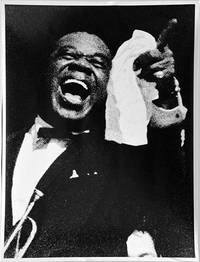
1950ref. 190253London: 1950s. Vivid images of jazz greats by one of the "obscure guys" of British jazz photography - from the collection of Charlie Watts From the collection of Rolling Stones drummer and jazz aficionado Charlie Watts: a delightful and absorbing archive of largely unpublished photographs by Jamie Hodgson an unsung hero of British jazz photography capturing both the exuberance and inwardness of the music. Among the jazz greats pictured are Dizzy Gillespie Ella Fitzgerald Duke Ellington Billy Strayhorn and Louis Armstrong. Perhaps the stand out photographs here are two superb studio images of Strayhorn one a memorable image showing him observing a goldfish in its bowl used on the cover of David Hajdu's 1996 biography Lush Life but unattributed another a delightful and unforgettable portrait of "Strays" lying on the studio floor cigarette in hand legs crossed wine glass within reach working on a score marked in 12/8 time with a quill pen and ink stand. A sequence of eight images focus on Louis Armstrong and date from 1956 through to 1970: one a particularly exuberant portrait of Pops sharing the limelight with Trummy Young Barrett Deems at the kit. These were nearly all taken in concert the exception being one marked "solo visit. Rehearsing with Norman del Mar conductor of the Royal Philharmonic Orchestra at the Royal Festival Hall for a concert in aid of the Hungarian Releif sic Fund. December 10th 1956". There are two fine shots of Dizzy Gillespie both in tux in his dressing room looking thoughtful and another of his up-tilted horn in its case the tag from his recent visit to France still attached to the handle. There is a witty bleached-out studio shot of Jimmy Rushing leaning into the horn of a gramophone and further images of the great singer one a boisterous backstage portrait of Rushing with Harry Carney and Jimmy Hamilton sitting in Rushing's capacious lap! smiling and laughing gathered on the stairs leading up to the gents' toilets and holding a gamut of reed instruments; plus a terrific image of "Mr. Five by Five" raising a pint behind the bar of a pub recalling Basie's reminiscence that "Me and old Rush. We were some pair. We just wanted to have a good time" Basie p. 37. Other portraits include a petulant Ella Fitzgerald Duke Ellington and individual images of Ellington alumni Paul Gonsalves Johnny Hodges Ray Nance Harry Carney Barrett Deems and Sam Woodyard; a chuckling Oscar Peterson; Lionel Hampton with Humphrey Lyttelton; Bud Freeman; a humorous shot of Eddie Condon sitting at a bar and scowling playfully; a tight close-up of a beaming Lionel Hampton; drummer Gus Johnson accompanying bassist Bob Haggart; and Ray Charles performing at the Capital Radio Jazz Festival in 1982. A full listing is available on request. For Hodgson 1930-2006 jazz was a private passion and these remarkable photographs did not see the light of day until a 2006 exhibition Masters of Jazz: Unseen Portraits held in the foyer of the National Theatre. In 2007 Jazz Improv magazine described him as one of the "obscure guys" of British jazz photography. His Guardian obituary noted that he "became known for his hobby rather than his profession. The man who owned the Kinnerton Street studio in London's Knightsbridge for many years earned his living in fashion and family photography. But it was the recent exhibition of 50 of his pictures in the National Theatre foyer that attracted more attention than anything previously shown by the largely anonymous Hodgson. Few knew of his work within the music world and fewer still knew of these unguarded often intimate images which were Hodgson's personal homage to the stars he observed and worshipped. All were taken during British tours many in the privacy of dressing rooms across London or in Hodgson's studio The Guardian jazz critic John Fordham regards these images as 'wonderful pictures'. 'They catch the mood on the night of jazz on and offstage' he said 'and they are very expressive of the big personalities of a lot of those old guys who started touring here in the 1950s and 60s after there had been a dearth of live US jazz in Britain'. Hodgson was a Londoner who took up photography after completing his national service in 1950. Starting out as a freelance he began by taking whatever commissions came his way - news and features aerial and architectural photography or commercial and children's pictures. A stint with the Mayflower Studios brought him into contact with advertising and various television personalities including Frankie Howerd Harry Secombe the Crazy Gang and the Ted Heath Band. In 1956 he set up his own studio where he did fashion shoots with Tania Mallet Jean Shrimpton and Sandra Paul He caught the change in mood from the snooty static haute couture fashion shoots of the 1950s to the more playful popular looks of swinging London in the 1960s. And at night he sneaked out to shoot his favourite jazz and blues bands playing across the capital". An important and captivating collection of jazz images imbued with the photographer's deep affection for the musicians the spontaneity of the portraits matching that of the music itself. Together 95 black and white photographs 46 measuring 223 x 170 mm; 49 measuring 402 x 305 mm each with identifying caption on verso by the photographer some with studio wet stamps or labels a number signed by Hodgson. Preserved in the photographer's own commercial boxes. Three prints Duke Ellington Billy Sytrayhorn Louis Armstrong framed and glazed by auction house overall measuring 445 x 620 mm. In excellent condition. Count Basie Good Morning Blues: The Autobiography of Count Basie 1987. unknown
33 1/3 rpm Vinyl Disc