4420 resultados
2014ref. 90409New York: The Caliban Press 2014. First Limited Edition. Small Quarto. 27cm. Limited to 125 copies. Dark green cloth spine with paper "5 Spot" label over limp grey die-cut card wraps. 10pp with additional internal mechanical elements. A fine bright copy. An artistic reworking of a 1964 "Down Beat Magazine" article by Williams describing the experience of seeing the legendary Thelonius Monk playing at NYC's legendary 5 Spot jazz cafe on 4th and Bowery with a spectacular centrepiece of die cut card by Berard based of a 1958 photo of Monk and his quartet playing. Signed out of sequence by McMurray to limitation page with the accompanying Caliban Press prospectus sheet. The Caliban Press unknown books
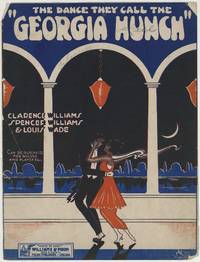
1920ref. BK0059Chicago: Williams & Piron Music Publishers 1920. First. Four pages 9 ½ x 12 ¼ inches. Illustrated cover signed "Wilson. Detached at spine with slight chipping to margins; good overall. A scarce Williams & Piron sheet music imprint for The Dance They Call the "Georgia Hunch" with words and music by Clarence Williams Louis Wade and Spencer Williams. The attractive illustrated cover signed "Wilson" shows a couple dancing beneath the title. The song was issued by Williams & Piron in Chicago in 1920 during Clarence Williams's brief publishing partnership with New Orleans violinist and bandleader Armand J. Piron. Their firm advertised itself as the "House of Jazz." The song's title refers to the Georgia Hunch an early jazz or vernacular dance documented in period performance and later dance history sources. It does not appear to have become a standardized dance craze on the level of the shimmy black bottom or Charleston but it was more than an invented title; Williams recorded The Dance They Call the Georgia Hunch in 1921 as Okeh Records 8029 and the dance appears in later jazz-dance documentation though it apparently never reached the fame of more well known dance steps of the time. OCLC locates two copies institutionally at Baylor and the British Library. . Williams & Piron Music Publishers unknown books
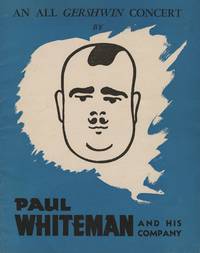
1948ref. BK0120Atlanta Georgia: Atlanta Music Club 1948. Illustrated program 18 pp. 10 ¾ x 8 ½ inches stapled in illustrated blue wrappers. Near fine condition. A program for Paul Whiteman's all-Gershwin concert at Atlanta's Municipal Auditorium on November 6 1948 built around Whiteman's close place in the history of Gershwin's concert music. Whiteman had commissioned Rhapsody in Blue and conducted its celebrated first performance at Aeolian Hall in 1924 with Gershwin himself at the piano. More than two decades later and eleven years after Gershwin's death Whiteman returned to the composer's work with this touring "musical tribute." The program ranges across Gershwin's popular and concert works opening with an instrumental medley of "Swanee" "Do It Again" "Of Thee I Sing" "Someone to Watch Over Me" and "Love Is Sweeping the Country." Vocalists Eugenie Baird and Russell McIntyre appeared alongside guitarist Mike Pingitore and saxophonist Al Gallodoro while pianist Jane Anderson performed a variation on "I've Got Rhythm" the first movement of the Concerto in F and as the finale Rhapsody in Blue. The booklet also contains a photographic portrait of Whiteman and several essays reviewing his career and his role in the development of American popular and concert music including "The Dean of Modern American Music" and "Tops' Moves to the Blue." . Atlanta Music Club unknown books
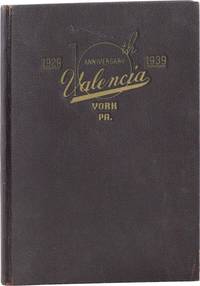
1939ref. 61627York Pennsylvania: The Valencia Ballroom 1939. Quarto. Spiral-bound leatherette boards hardcover; 94pp; illus. Trivial soil to covers with front board very slightly bowed at fore edge; internally fresh clean and unmarked; Near Fine. Promotional album for the storied Valencia Ballroom a popular musical venue during the Swing Band era. Strategically located on a route that connected New York Philadelphia and Baltimore the Valencia caught traveling orchestras on their way north or south thus bringing an impressive assortment of acts to the unlikely industrial city of York PA. Richly illustrated with photographs of the venue of the Tassia family owners and managers of the Valencia architectural views and dozens of portraits of the popular performers who played there including Eddie Duchin Kay Kyser Benny Goodman Sammy Kaye Guy Lombardo Bunny Berrigan the Dorseys and a host of others. Though the Valencia clearly favored white orchestras a few noteworthy African-American performers appeared there regularly and are pictured including Jimmy Lunceford Cab Calloway Duke Ellington and Claude Hopkins. A lavishly-produced souvenir and highly uncommon; OCLC notes four locations and we trace no other copies in the trade. The Valencia Ballroom unknown books
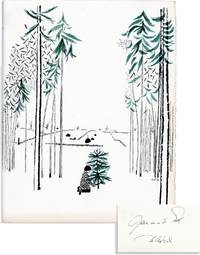
ref. 84869Roosevelt NJ: by the Author c.1956. Quarto 37cm. Printed card portfolio holding twelve lithographic plates loose as issued. All lithographs are signed in plate; Martin has inscribed the portfolio "Jean and Sol Libsohn / David" undated. Very mild external toning and soil; Near Fine. Inside of portfolio is printed with a holiday sentiment and also a brief blurb from Alan Lomax commenting on the illustrations. Scarce portfolio of lithographic prints reproducing Martin's illustrations for Alan Lomax's Mr. Jelly Roll a biography of jazz pianist Jelly Roll Morton published in 1956. Issued without imprint presumably printed as a Christmas gift to friends of the artist. This copy is inscribed to the photographer Sol Libsohn and his wife Jean who were Martin's neighbors in Roosevelt New Jersey a WPA town founded in 1939 which by the Fifties had become a destination for artists writers and musicians seeking refuge from but proximity to the New York art scene. Martin 1913-1992 was a noted mid-century illustrator known best for his many jazz album covers for Folkways and Blue Note in the Fifties and Sixties. Of the present portfolio we locate only a single copy in OCLC Pitt with no other example traced in commerce. unknown books
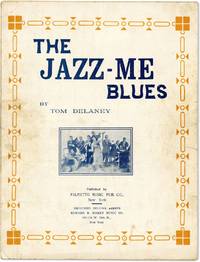
1921ref. 82277New York: Palmetto Music Pub. Co 1921. First Edition. Slim quarto 30.5cm; original pictorial wrappers; 6pp. Moderate wear handling and dust-soil to wrappers some creases and edge-tears with inner spine-fold archivally reinforced with a patch of paper tape remnant to upper end of same; complete Good to Very Good. One of the earliest hits by African American songwriter and composer Thomas Henry Delaney 1889-1963. Born in Charleston SC he would eventually become one of the most popular jazz and blues composers on Tin Pan Alley. The front wrapper reproduces a photograph of Lucille Nelson Hegamin 1894-1970 backed by the band Albury's Blues and Jazz Seven. In 1920 she became the second African American blues singer to record following Mamie Smith and Perry Bradford's August 1920 recording of "Crazy Blues." She recorded "Jazz-Me Blues" in 1921 backed by her husband Bill and his band the Blue Flame Syncopators; thanks to her recording Delaney's song would go on to become a jazz standard. OCLC notes a scant 8 holdings. 82277. Palmetto Music Pub. Co unknown books
ref. 021700Chicago. Softcover. Creasing. Very Good. A large 9-7/8" x 6-3/4" postcard from the famous jazz supper club The London House in Chicago SIGNED "To Edna/Best wishes/Barbara Carroll." Carroll was dubbed by critic Leonard Feather as "the first girl ever to play bebop piano." She was awarded the Kennedy Center's Mary Lou Williams Women in Jazz Lifetime Achievement Award in 2003. Also SIGNED by Lonnie Simmons and legendary Chicago broadcaster Marty Faye. paperback books
ref. 021699Chicago. Softcover. Creasing. Very Good. A large 9-7/8" x 6-3/4" postcard from the famous jazz supper club The London House in Chicago SIGNED "To Bill/Best wishes/Barbara Carroll." Carroll was dubbed by critic Leonard Feather as "the first girl ever to play bebop piano." She was awarded the Kennedy Center's Mary Lou Williams Women in Jazz Lifetime Achievement Award in 2003. Also SIGNED by Lonnie Simmons and legendary Chicago broadcaster Marty Faye. paperback books
ref. 021698Chicago. Softcover. Creasing. Very Good. A large 9-7/8" x 6-3/4" postcard from the famous jazz supper club The London House in Chicago SIGNED "All the best--/Sincerely/Billy Taylor." Taylor was a jazz pianist composer broadcaster and educator whom critic Leonard Feather once said "It is almost indisputable that Dr. Billy Taylor is the world's foremost spokesman for jazz." paperback books
1969ref. 81807New York: Macmillan 1969-70. Second and fifth volumes are first printings; remainder are second or later printings. Six octavo volumes. Uniform cloth hardcovers in dustjackets; 255223290246288287pp; illustrated with photographic plates halftones. All in Very Good or better condition in the original dustwrappers; jacket to 4th volume slightly ragged along upper edge else all Very Good or better. An indispensable set compiling reviews interviews profiles and critical articles with reading lists and selected discographies. Macmillan unknown books
1989ref. 44770New York: Oxford University Press 1989. First Edition. First Printing. Octavo 24cm; black paper and blue-gray cloth-covered boards with titles stamped in silver and metallic pink on spine; dustjacket; xviii9197pp. Textblock sagging faint foxing to upper edge of textblock with sunning to lower edge of front board; Very Good. Dustjacket is unclipped with modest shelfwear and a hint of sunning to spine; Very Good. Second volume in Schuller's monumental The History of Jazz documenting the swing era. Oxford University Press unknown books
1947ref. 14922New York: E.P. Dutton 1947. First Edition. Octavo 21cm. Black cloth boards stamped in red on spine and front cover; dustjacket; 223pp. Review copy with publisher's slip laid in. Endpapers mildly darkened else a tight Near Fine copy in the original pictorial dustwrapper. Jacket is unclipped lightly worn at spine ends with a small closed tear at upper margin of front panel; Very Good. Third volume of Willis's loosely-connected postwar trilogy about jazz musicians in the Midwest. Preceded by Tangleweed 1943 and The Wild Faun 1945. HANNA 3829. E.P. Dutton unknown books
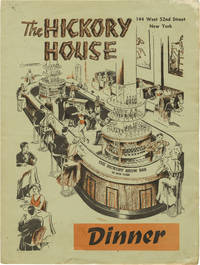
1940ref. 158584New York: The Hickory House 1940. Vintage three-color dinner menu from the renowned 52nd Street jazz club circa 1940s with a "Chef's Special" card stapled to the top outer corner of the second leaf. One of the longest running and premiere jazz clubs of "Swing Street" as 52nd Street between Fifth and Seventh Avenues was known in the 1930s through the 1950s Hickory House was opened shortly after the repeal of Prohibition in 1933 by impresario John Popkin. Featuring a huge oval music bar depicted on the cover of the menu on offer here Hickory House was both a swing venue and the spot to grab dinner and cocktails before a show. A musician's club Hickory House presented and served jazz luminaries for three decades. Among those known to perform or frequent the venue included Duke Ellington Louis Armstrong Benny Goodman Artie Shaw and Thelonious Monk among countless others many of whom were known to be found sitting in with the house band The Hickory House Trio Marian McPartland Bill Crow and Joe Morello on Sunday afternoons in the 1950s. In 1956 jazz pianist and composer Jutta Hipp released two acclaimed Blue Note albums recorded at the club "At the Hickory House Volume 1" and "At the Hickory House Volume 2." By the mid 1960s the venue was one of the last of the jazz clubs left on 52nd street and by the end of the decade closed. As noted on the back of the menu "Life! Life! From ten thirty until scrambled eggs there is always a popular swingy rhythm band to beat out tuneful and catchy syncopations in their own inimitable style." 10.75 x 14.25 inches bi-fold. Very Good plus with light soiling rubbing and edgewear overall and a faint horizontal crease. The Hickory House unknown books
1971ref. 38129Chicago: American Library Association 1971. Hardcover. Good. Octavo. Full gray cloth with titling silver to upper and spine. Ex-Kansas City Public Library with their bookplate handstamps and label to front endpapers and handstamps to dedication leaf. xiv 142 pp. American Library Association hardcover books
1985ref. 38136New York: Beech Tree Books / William Morrow 1985. Hardcover. Good. Octavo. Gray cloth-backed yellow boards with titling to spine. 197 pp. With illustrative plates and occasional illustrations in text. Endpapers slightly soiled. Ex-library with bookpocket handstamps and labels to verso of free rear endpaper. Beech Tree Books / William Morrow hardcover books
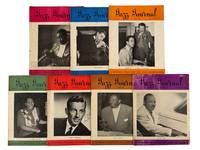
1948ref. 223231948. 1 Traill Sinclair ed. Jazz Journal issues 1948 document postwar British jazz culture as readers collectors critics and musicians rebuilt access to American jazz after wartime disruption and expanding record scarcity. Founded by Sinclair Traill in 1948 Jazz Journal became a major English-language jazz periodical; its inaugural year placed African American performers blues aesthetics revivalist debate discography and record reviews at the center of British jazz criticism. These issues support research into jazz reception in the United Kingdom transatlantic music journalism record collecting racialized cultural admiration and the postwar circulation of African American musical authority through British print culture. Jazz Journal. Volume 1 Nos. 1-3 5-6 8-9. London: J.J. Publications May-November 1948. Seven issues each approximately 12 pages in pictorial wrappers. The run includes the May June July September October and November 1948 issues with one additional issue represented by number rather than month in the supplied description and contains record reviews discographies artist profiles editorials criticism and jazz news. The premier issue opens with Traill's editorial appeal to jazz readers recalling that "Even in those far-off days between the two wars when paper was to be had for the asking and printers' costs didn't resemble a millionaire's hotel bill it was always a dubious endeavour" and closing with the hope that readers would see "a new issue of JAZZ JOURNAL on the first of each month for many years to come." Contents cited in the supplied description include "Make Way for Dixieland or Return to Sanity" a Thomas Waller discography a September 1948 appreciation of Hoagy Carmichael with signed portrait cover and Hugues Panassié's November essay "Count Basie and the Blues" which argues that "Count Basie knows how to play the blues as well as it seems possible to do so on the piano." Cover portraits include Louis Armstrong Nellie Lutcher Count Basie and Humphrey Lyttelton placing African American jazz innovators alongside British revivalist musicians within a magazine aimed at a postwar readership hungry for recordings biographical knowledge and critical guidance. Traill Sinclair ed. Jazz Journal. Vol. 1 No. 1. London: J.J. Publications 1948. The opening issue establishes the magazine's postwar purpose through Traill's editorial address to jazz enthusiasts and its promise of sustained monthly criticism. Its contents including revivalist commentary and discographical attention to Thomas "Fats" Waller show the early publication's effort to organize jazz knowledge for British readers dependent on print mediation and record collecting. 2 Traill Sinclair ed. Jazz Journal. Vol. 1 No. 2. London: J.J. Publications 1948. This issue continues the magazine's early program of criticism record commentary and performer-centered coverage for a readership attentive to American jazz and its British reception. It belongs to the first sequence of issues issued after the May 1948 relaunch from Traill's earlier Pick Up whose final issue preceded the first Jazz Journal in May 1948. 3 Traill Sinclair ed. Jazz Journal. Vol. 1 No. 3. London: J.J. Publications 1948. The third issue forms part of the magazine's initial attempt to stabilize a postwar jazz readership through recurring reviews essays and documentation of recordings and artists. Its position in the first volume is useful for tracing how British jazz criticism developed a regular periodical form in 1948. 4 Traill Sinclair ed. Jazz Journal. Vol. 1 No. 5. London: J.J. Publications 1948. This issue continues the first-year sequence with the supplied description emphasizing the magazine's mix of artist portraits discographical writing and critical essays. The issue contributes to the archive's broader value as evidence of how British jazz readers encountered American performers through images reviews and commentary. 5 Traill Sinclair ed. Jazz Journal. Vol. 1 No. 6. London: J.J. Publications 1948. The September 1948 issue features an appreciation of Hoagy Carmichael with a signed portrait cover connecting jazz readership to popular song composition and the American music industry. Its treatment of Carmichael alongside coverage of African American jazz performers demonstrates the publication's wide understanding of jazz-adjacent culture in the late 1940s. 6 Traill Sinclair ed. Jazz Journal. Vol. 1 No. 8. London: J.J. Publications 1948. This issue belongs to the later portion of the inaugural-year run and continues the magazine's regular pattern of record culture criticism and performer documentation. In the context of the seven-issue group it helps show the durability of Traill's monthly editorial project beyond the launch months. 7 Traill Sinclair ed. Jazz Journal. Vol. 1 No. 9. London: J.J. Publications 1948. The November issue includes Hugues Panassié's "Count Basie and the Blues" a critical essay distinguishing blues feeling and phrasing from commercialized improvisation. Its attention to Basie foregrounds African American musical authority within British jazz discourse and gives the archive direct relevance to the study of blues reception swing-era memory and postwar criticism. Moderate soiling and creasing to wrappers occasional spine chipping intact stapled bindings delicate covers and vivid photographic contrasts good overall. Substantial inaugural-year run of a long-lived British jazz periodical preserving the early critical vocabulary through which postwar British readers studied African American jazz swing-era performers blues expression and record collecting. unknown books
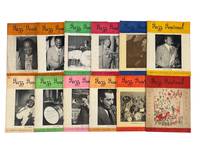
1950ref. 223221950. Complete 1950 run of Jazz Journal Vol. 3 Nos. 1-12. London: L. M. Publications 1950. Complete run of the 1950 volume. Twelve issues with each issue around 20 pages. Black-and-white photo illustrations throughout. Printed paper wraps. Founded in 1948 by editor Sinclair Traill Jazz Journal became a critical platform for serious jazz criticism in Britain at a time when the country began appreciating the impact of African American musical innovation. This volume features twelve monthly issues each spotlighting legendary musicians in deeply reverent portraits: Louis Armstrong Baby Dodds Coleman Hawkins Fats Waller Earl Hines and others. The December cover has a Christmas theme. This archive is a window into Britain's postwar jazz awakening. The articles range from retrospectives to musicology and artist discographies. Floyd Levin's "The American Jazz Scene" captures the transatlantic tone of the journal mourning the death of Buster Wilson and lauding figures like Sidney Anderson and Kid Ory as vanguards of "authentic" jazz-framed as endangered in a postwar America increasingly seduced by commercialism. Meanwhile Derrick Stewart-Baxter's "Preachin' the Blues" traces rural-to-urban migration patterns in blues development analyzing Sleepy John Estes' discography and folk influences. The December issue features a full-page bibliophilic essay "A Case for Books" reviewing A Treasury of the Blues by W. C. Handy whom it names "the composer of the classic Memphis Blues and Joe Turner Blues" emphasizing the book's role in preserving "the true and historical survey of the blues." Taken together the essays discographies and image curation construct a coherent theory of jazz not only as music but as cultural heritage. Moderate and consistent soiling and creasing to wrappers; binding intact but some covers remain delicate. Occasional chipping at spine. Covers remain vivid with strong photographic contrasts. Overall good condition. A complete year's run of one of the earliest and most influential British jazz journals with signatures from leading musicians of the era such as Armstrong Dodds and Hawkins. unknown books
1925ref. 589771925. Two black & white photo images 8" x 10" on glossy stock mounted in Crown Studio mats 11 1/4" x 13 1/4". Images are night shots of windows depicting surroundings full of architectural details. Very minimal soiling to lower fore-edge. 1 image with a bit longer exposure time still a very good pair of photos. These two commercial photos of 1920s window displays provide an invaluable historical glimpse into the marketing of men's fashions at the height of the Jazz Age. The photos include unique period elements with breathtaking flower arrangements positioned amongst the displayed clothing. The men's suits range in tints and style primarily including double-breasted and single-breasted suits with trousers carefully draped over surrounding decorative tables and stands cravats at the neck and each with a dapper cane displayed above it. Rich draperies of men's suit fabrics have been arranged below and around the displays. Frank Jacoby's store was a thriving business in Bridgeport CT. at 1083 Broad Street until the throes of the Great Depression when they were forced to close in 1933. unknown books
1998ref. 44606Westport & London: Greenwood Press 1998. First edition. 230 pp w/indexes. Some light spotting along top edge else near fine in full green cloth with gold stamping to spine and cover. No dust jacket as issued. Anthologies works by individual authors and a cross reference guide matching jazz musician/composer to poet. Westport & London: Greenwood Press hardcover books
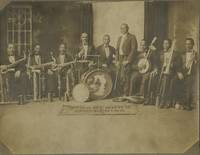
1922ref. BK0009Pittsburgh: Sissman Studio 1922. Photograph measuring approximately 8 x 10 inches. Studio portrait of nine African American musicians posed with saxophones brass instruments violin banjo drums and other instruments with a rug prominently lettered "Bradford's Orchestra" at their feet. Photographer identified as Sissman Studio of Pittsburgh. Some wear and toning particularly at edges and corners; generally well preserved. An early photograph of Bradford's Orchestra an African American ensemble active in Pittsburgh under the direction of Walter Felix Bradford during the early 1920s. Nine musicians pose with an unusually extensive display of their instruments while the orchestra's name is incorporated prominently into the composition on a rug at their feet. The photograph was made by Sissman Studio a Pittsburgh photographic firm later located on Centre Avenue in the city's Hill District. Contemporary sources document Bradford's Orchestra performing over Pittsburgh's pioneering radio station KDKA during this period. A December 1922 program announced an 8:30 evening "Concert by Bradford's Orchestra under the direction of Walter Felix Bradford" with a varied program ranging from Mendelssohn and Verdi to popular marches and light orchestral music.1 The group is also listed as performing on KDKA in the Utica Observer-Dispatch in December 1922.2 The present photograph appears to be an otherwise unrecorded studio portrait of the same Pittsburgh organization. Bradford belonged to a substantial but poorly documented community of African American bandleaders and musicians working in Pittsburgh during the early twentieth century. Later accounts of musical life in the Hill District place him alongside such local ensembles as the Harlem Troubadours Gerty Long and Her Night Hawks and Walt Rainey's High Schoolers.3 These local orchestras formed an important part of the musical culture from which Pittsburgh would subsequently produce an extraordinary generation of nationally prominent Black musicians. 1 "Monday December 11 1922" Radio Broadcasting News 2 no. 28 December 9 1922 6. 2 "To-day's Radio Program" The Utica Observer-Dispatch December 11 1922 5. 3 Hugo A. Freund "Working the Seams: African American Professional Performers Moving Between White Public Culture and African American Private Culture" Pennsylvania Folklife 45 no. 2 1996: 91-97. . Sissman Studio unknown books
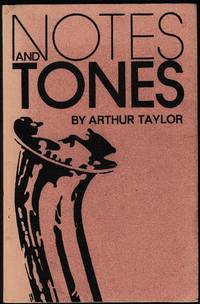
1977ref. 24039Liege Belgium: The Author 1977. First Edition. Original printed wrappers. Very good; modest sunning to the backstrip. A news article about Taylor neatly spot mounted to the front endsheet facing the title no offset - yet. 8vo 8 9 - 301 302 - blank 14 - index 2 - blank 2 - printer's slug verso blank pp. This copy with a dated presentation inscription signed by the author on the Dedication page reading: "For Sylvie printed and Igor etc. / I hope you enjoy / Art Taylor / Jan. 13 1978" autograph. The rare true first of one of the great books of modern jazz history. Taylor - who had lived in Europe most of his career - self-published this book based on interviews of the preceding decade. Taylor played drums in a series of bands in the 1950s that defined modern jazz. The book records his one-on-one conversations with a "who's who" of jazz artists of the period. And what conversations! As an accomplished musician and Afro-American he was able to query his subjects in a manner that no one else could approach. An invaluable resource. The Author unknown books
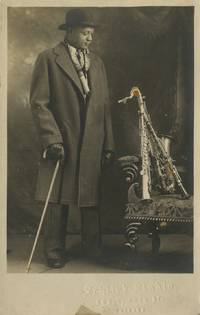
1920ref. List3820Chicago Illinois: Schlink Studio 1920. Real photo postcard measuring approximately 3 ½ x 5 ½ inches. Studio portrait of an African American musician standing in overcoat hat gloves and cane beside a chair displaying a saxophone and clarinet. Divided postcard back. Light wear and soiling with small loss or surface disturbance at lower margin; very good. A real photo postcard portrait of an African American musician posed with saxophone and clarinet. The sitter is not identified but the portrait was clearly made to present him as a professional or semi-professional performer rather than as an informal amateur. The formal clothing cane and carefully arranged instruments give the image the character of a publicity or theatrical portrait. The combination of saxophone and clarinet is especially appropriate to early twentieth-century dance-band and jazz performance when reed players commonly doubled on both instruments. The photograph likely dates from the period in which Black musicians circulated through local orchestras theater bands dance halls vaudeville circuits and early jazz ensembles often leaving behind few named records apart from photographs like this. A strong real photo postcard portrait of an African American reed player with good visual presence and clear musical content. . Schlink Studio unknown books
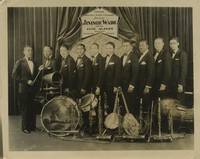
1920ref. List3817Chicago Illinois: Chicago Amusement Service Corporation 1920. Silver gelatin photograph measuring 8 x 10 inches. Photograph shows Jimmie Wade and his Club Alabam Orchestra posed in tuxedos before a curtain with drums banjo brass reeds and string bass beneath a printed sign reading "Chicago Amusement Service Corporation Presents / Jimmie Wade and his Club Alabam Orchestra / Chicago / Vocalion Records. Some wear toning and soiling; verso with staining; very good. A large promotional photograph of Jimmie Wade and his Club Alabam Orchestra. Wade was an African American jazz trumpeter and bandleader active in Chicago from the 1910s through the early 1930s. His orchestra appeared at major Chicago venues and recorded for Vocalion in 1928. Club Alabam opened at 747 Rush Street in 1927 during Prohibition and operated as a cabaret-style nightclub under showman Dan Blanco who had previously worked in saloons amusement parks vaudeville and Chicago cabarets. The club belonged to the city's late-1920s nightlife world of floor shows dance orchestras illicit liquor and entertainment promotion. The sign in this photograph identifies Wade's orchestra Club Alabam Chicago Amusement Service Corporation and Vocalion Records. A strong Jazz Age photograph of an African American Chicago bandleader and his orchestra with connections to the Chicago nightlife scene of the period. Chicago Amusement Service Corporation unknown books
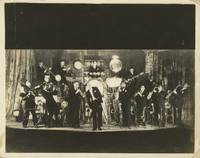
1932ref. List3818New York City 1932. Silver gelatin photograph measuring 8 x 10 inches. Stage photograph of Cab Calloway and His Cotton Club Orchestra with Calloway at center before the band brass and reed sections drums bass guitar and stage lighting visible. Verso with mounting residue and manuscript note reading in part "from Irondome Bessemer album" or similar. Some wear creasing toning and mounting residue; very good. A large stage photograph of Cab Calloway and His Cotton Club Orchestra corresponding to a known 1932 image of the band made to mark the arrival of trumpeter Doc Cheatham. The photograph shows Calloway at center bending forward in his characteristic theatrical posture with the orchestra arranged behind him on the Cotton Club stage. By 1932 Calloway had become one of the defining entertainers of the Cotton Club era. He had taken over the Missourians in 1930 and the success of "Minnie the Moocher" in 1931 helped make him a national figure. The orchestra was also being reshaped during these years with musicians such as Doc Cheatham Morris White Walter "Foots" Thomas Benny Payne and others forming the sound and stage presentation of Calloway's early 1930s band.1 Mills Music used this same image in another press photograph indicating that it functioned as a promotional view of Calloway and the orchestra rather than merely as a private stage snapshot. 1 Jean-François Pitet "Morris 'Fruit' White: from the Missourians' banjo to Calloway's guitar" The Hi de Ho Blog May 20 2021 accessed July 21 2026 https://www.thehidehoblog.com/blog/2021/05/morris-fruit-white-from-the-missourians-banjo-to-calloways-guitar. . unknown books
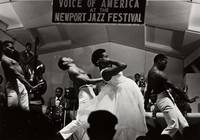
1958ref. List1514New York 1958. Silver Gelatin Photograph measuring 8 ½ x 11 ½ inches with Schatt's marks verso with his notation "Vintage '58" in ink. A fine example fine contrast. A striking image of Eartha Kitt and her band performing at the 1957 Newport Jazz Festival taken by the prolific photographer Roy Schatt perhaps best known for his photographs of James Dean. This is a vintage example likely printed in 1958 from the "1958" and "Vintage" marks to verso. We find no other record of this specific image only a similar image from Kitt's performance taken by Schatt. unknown books