( CD Blues et Jazz ) - Pete Gage et Joe Wilkins.Livre Rare Book

4.702 Ergebnisse
2004Best.-Nr. 15552Pete Gage productions 2021. CD Digipack 4 titres, auto-produit, du claviériste et chanteur de Blues Pete Gage. Excellent album, sur lequel l'artiste est accompagné par Joe Wilkins aux guitares, Richie Blake à la basse et Mike Hoddinott à la batterie. CD comme neuf, enrichi d'une dédicace autographe de Pete Gage au verso de la pochette. Rare. Collection personnelle.
2016Best.-Nr. 27696Pete Gage productions 2015. CD Digipack, auto-produit, du claviériste et chanteur de Blues Pete Gage. Excellent album, sur lequel l'artiste est accompagné par Paul Harts aux guitares, Duncan Kingston à la basse, Eddie John à la batterie et Graig Crofton, Pee Wee Ellis, et Sean McBride aux saxophones. CD comme neuf, enrichi d'une dédicace autographe de Pete Gage sur la pochette. Rare. Collection personnelle.
1955Best.-Nr. 2909Les meilleurs disques de jazz publiés en France. 1/2 chagrin à coins havane, dos long, couvertures et dos conservés. Très bon Paris Laffont 1955 1 volume in-8°.
Best.-Nr. 201010989Paris, Nouveaux horizons, 1969 ; in-12, 207 pp., broché, couverture illustr. Bon état.
2000Best.-Nr. 12007Du Layeur 2000 In-8 cartonnage éditeur, 96 pp. Illustrations Avec CD
1925Best.-Nr. 54342Philadelphia PA: Otto F. Schumann Philadelphia Textile School ca. 1925. Small 4to. 8.25 x 9.2 in. 75 leaves unnumbered including 32 leaves with detailed colour charts on weave formations producing various kinds of cloth 3 tipped-in textile samples together w/ weaving instructions in manuscript. Original limp leather 3-ring binder gilt lettering stamped on front cover ink lettering & association of Otto F. Schumann on front cover some soiling dustsoiling edgewear still VG exemplar. This Jazz Age weaving manuscript notebook complete with weave formation design plates fabric samples and instructions offer a remarkable and invaluable artifact of how a young American textile designer and weaver received training at the famed Philadelphia Textile School now Philadelphia University during the 1920s. These course books were judged on completeness and the aspiring weaver’s skill in presenting the details about the instruction as well as their abilities in running the machinery required to produce the cloth. This manuscript notebook includes Schumann’s detailed plates and notes on producing color effect on the plain weave creating Broken Twills Crowfoot Satins Checked & Figured Broken Twills Entwining Twills Basket Weaves and Broken Satins. The extensive manuscript notes detail the loom instructions how many lines are required composition and more in producing the assorted effects. Because of the poor quality of United States textiles exhibited at the Centennial Exhibition in 1876 the Philadelphia Textile Manufacturers pushed for a formalized vocational school to train weavers designers and textile workers. In 1884 it became part of the Pennsylvania Museum and School of Industrial Art with 81 students enrolled by 1885 and by 1894 the School of Textiles added a Department of Wool Carding & Spinning and a Department of Cloth Finishing and Design. By the 1920s the Philadelphia Textile School was offering extensive three-year textile courses chemistry and dyeing courses as well as design courses in cottons woolens worsteds silks Jacquard design and more. Schumann 1906-1967 was the son of Hugo Schumann founder and owner of the Maid Hosiery Mills in Reading PA through the opening decades of the 20th century for whom he worked with until after World War II as designer and sales executive. Otto F. Schumann, Philadelphia Textile School, hardcover
2010As New English Paperback. Pbo. Mint. Cr. 8vo. (21 x 13 cm). In English. [65] p. Color and b/w ills. 215 lots in total, auction catalogue. Phillips de Pury & Company. Music. 1 December 2010, London. [Auction catalogue].
1959Best.-Nr. 10591Disques Véga 1959. Magnifique photo de Paul Anka signée par l'artiste. Format 17,2 x 22,5 cm. Rare.
Best.-Nr. 10595Magnifique photo originale avec belle dédicace de Martial Solal, au format 11,5 x 18 cm. Cachet du photographe au dos. Rare.
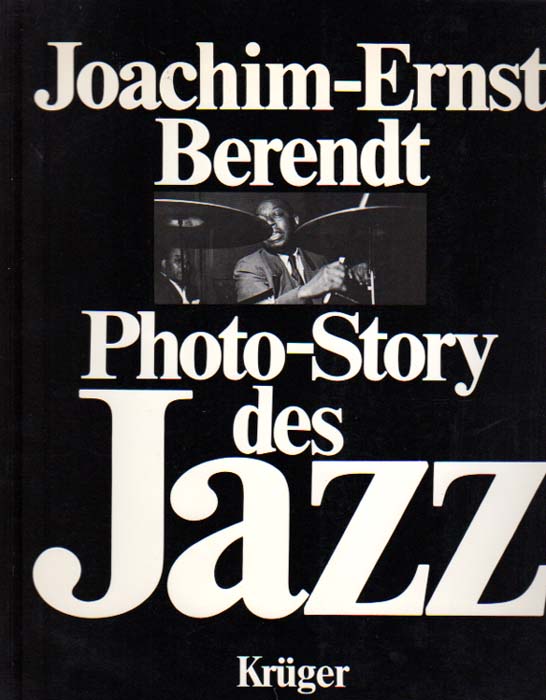
1978Best.-Nr. 58343ABFrankfurt am Main., Wolfgang Krüger Verlag., 1978. 28 x 23 cm. 356 S., 2 Blatt. Obroschur., 58343AB Erste Auflage. Stärker berieben und angestaubt. Noch gutes Exemplar.
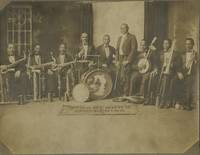
1922Best.-Nr. BK0009Pittsburgh: Sissman Studio 1922. Photograph measuring approximately 8 x 10 inches. Studio portrait of nine African American musicians posed with saxophones brass instruments violin banjo drums and other instruments with a rug prominently lettered "Bradford's Orchestra" at their feet. Photographer identified as Sissman Studio of Pittsburgh. Some wear and toning particularly at edges and corners; generally well preserved. An early photograph of Bradford's Orchestra an African American ensemble active in Pittsburgh under the direction of Walter Felix Bradford during the early 1920s. Nine musicians pose with an unusually extensive display of their instruments while the orchestra's name is incorporated prominently into the composition on a rug at their feet. The photograph was made by Sissman Studio a Pittsburgh photographic firm later located on Centre Avenue in the city's Hill District. Contemporary sources document Bradford's Orchestra performing over Pittsburgh's pioneering radio station KDKA during this period. A December 1922 program announced an 8:30 evening "Concert by Bradford's Orchestra under the direction of Walter Felix Bradford" with a varied program ranging from Mendelssohn and Verdi to popular marches and light orchestral music.1 The group is also listed as performing on KDKA in the Utica Observer-Dispatch in December 1922.2 The present photograph appears to be an otherwise unrecorded studio portrait of the same Pittsburgh organization. Bradford belonged to a substantial but poorly documented community of African American bandleaders and musicians working in Pittsburgh during the early twentieth century. Later accounts of musical life in the Hill District place him alongside such local ensembles as the Harlem Troubadours Gerty Long and Her Night Hawks and Walt Rainey's High Schoolers.3 These local orchestras formed an important part of the musical culture from which Pittsburgh would subsequently produce an extraordinary generation of nationally prominent Black musicians. 1 "Monday December 11 1922" Radio Broadcasting News 2 no. 28 December 9 1922 6. 2 "To-day's Radio Program" The Utica Observer-Dispatch December 11 1922 5. 3 Hugo A. Freund "Working the Seams: African American Professional Performers Moving Between White Public Culture and African American Private Culture" Pennsylvania Folklife 45 no. 2 1996: 91-97. . Sissman Studio unknown
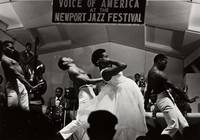
1958Best.-Nr. List1514New York 1958. Silver Gelatin Photograph measuring 8 ½ x 11 ½ inches with Schatt's marks verso with his notation "Vintage '58" in ink. A fine example fine contrast. A striking image of Eartha Kitt and her band performing at the 1957 Newport Jazz Festival taken by the prolific photographer Roy Schatt perhaps best known for his photographs of James Dean. This is a vintage example likely printed in 1958 from the "1958" and "Vintage" marks to verso. We find no other record of this specific image only a similar image from Kitt's performance taken by Schatt. unknown
1922Best.-Nr. BK0009Pittsburgh: Sissman Studio 1922. Photograph measuring approximately 8 x 10 inches. Studio portrait of nine African American musicians posed with saxophones brass instruments violin banjo drums and other instruments with a rug prominently lettered "Bradford's Orchestra" at their feet. Photographer identified as Sissman Studio of Pittsburgh. Some wear and toning particularly at edges and corners; generally well preserved. An early photograph of Bradford's Orchestra an African American ensemble active in Pittsburgh under the direction of Walter Felix Bradford during the early 1920s. Nine musicians pose with an unusually extensive display of their instruments while the orchestra's name is incorporated prominently into the composition on a rug at their feet. The photograph was made by Sissman Studio a Pittsburgh photographic firm later located on Centre Avenue in the city's Hill District. Contemporary sources document Bradford's Orchestra performing over Pittsburgh's pioneering radio station KDKA during this period. A December 1922 program announced an 8:30 evening "Concert by Bradford's Orchestra under the direction of Walter Felix Bradford" with a varied program ranging from Mendelssohn and Verdi to popular marches and light orchestral music.1 The group is also listed as performing on KDKA in the Utica Observer-Dispatch in December 1922.2 The present photograph appears to be an otherwise unrecorded studio portrait of the same Pittsburgh organization. Bradford belonged to a substantial but poorly documented community of African American bandleaders and musicians working in Pittsburgh during the early twentieth century. Later accounts of musical life in the Hill District place him alongside such local ensembles as the Harlem Troubadours Gerty Long and Her Night Hawks and Walt Rainey's High Schoolers.3 These local orchestras formed an important part of the musical culture from which Pittsburgh would subsequently produce an extraordinary generation of nationally prominent Black musicians. 1 "Monday December 11 1922" Radio Broadcasting News 2 no. 28 December 9 1922 6. 2 "To-day's Radio Program" The Utica Observer-Dispatch December 11 1922 5. 3 Hugo A. Freund "Working the Seams: African American Professional Performers Moving Between White Public Culture and African American Private Culture" Pennsylvania Folklife 45 no. 2 1996: 91-97. . Sissman Studio unknown books
1958Best.-Nr. List1514New York 1958. Silver Gelatin Photograph measuring 8 ½ x 11 ½ inches with Schatt's marks verso with his notation "Vintage '58" in ink. A fine example fine contrast. A striking image of Eartha Kitt and her band performing at the 1957 Newport Jazz Festival taken by the prolific photographer Roy Schatt perhaps best known for his photographs of James Dean. This is a vintage example likely printed in 1958 from the "1958" and "Vintage" marks to verso. We find no other record of this specific image only a similar image from Kitt's performance taken by Schatt. unknown books
2020Best.-Nr. 16766Photographie originale argentique glissé dans une chemise cartonné avec cette mention : To Mr Maurice Chevalier ( the World's Greatest Entertainer from Visid Angkatavanich. Cette personne était un amateur Thailandais, posant sur la photographie, devant sa collection consacrée à Maurice Chevalier. Tirage argentique en couleurs au format 20 x 20 cm avec cachet Kodak au dos, daté de 1963. Exemplaire unique ayant appartenu au chanteur français, avec superbe dédicace autographe signée de Visid Angkatavanich à Maurice Chevalier. Rare et en superbe état. Curiosité, indispensable pour les amateurs de Maurice Chevalier.
80 S. Bibliotehksexpl. mit Stempeln, Zetteltasche, plastiziert.
2018brossura Questo Manuale di Pianoforte Jazz è il primo di tre volumi e ha l'obbiettivo di creare un itinerario ideale per la formazione del pianista di jazz, suddividendo gli argomenti lungo i 3 anni che lo studente affronta nei corsi triennali dei Conservatori italiani, stabilendo così una serie di priorità tecniche, stilistiche e di repertorio. Ciascun volume è suddiviso in 4 sezioni. La prima è dedicata al ritmo (poliritmia, polimetria e strutture ritmiche fondamentali). La seconda parte si occupa dell'armonia (armonia tonale, cadenze II-V-I, voicings 4 way closed e drop 2, il blues). La terza si occupa del comping, offrendo spunti ed esempi su come accompagnare in vari contesti stilistici usando gli accordi e le figurazioni ritmiche appropriate. La quarta e ultima parte si occupa dell'improvvisazione (arpeggi, digital patterns, approcci cromatici, licks blues) mostrando per ciascuna argomento veri e propri fraseggi e chops creati dall'autore che lo studente potrà utilizzare come spunto per sviluppare le proprie improvvisazioni. Conclude il testo un'appendice destinata al repertorio da studiare nel corso dell'anno con suggerimenti sul metodo di memorizzazione da utilizzare.
2019brossura Questo manuale di pianoforte jazz è il secondo di tre volumi e ha l'obbiettivo di creare un itinerario ideale per la formazione del pianista di jazz, suddividendo gli argomenti lungo i 3 anni che lo studente affronta nei corsi triennali dei Conservatori italiani, stabilendo così una serie di priorità tecniche, stilistiche e di repertorio. Il volume è suddiviso in 4 sezioni. La prima è dedicata al ritmo (poliritmia, polimetria e strutture ritmiche fondamentali). La seconda parte si occupa dell'armonia (armonia tonale, cadenze II-V-I, voicings 4 way closed e drop 2, il blues). La terza si occupa delle introduzioni e dei finali. La quarta e ultima parte si occupa dell'improvvisazione (arpeggi, digital patterns, approcci cromatici, licks blues) mostrando per ciascuna argomento veri e propri fraseggi e chops creati dall'autore che lo studente potrà utilizzare come spunto per sviluppare le proprie improvvisazioni. Conclude il testo un'appendice destinata al repertorio da studiare nel corso dell'anno con suggerimenti sul metodo di memorizzazione da utilizzare.
2020brossura Questo Manuale di Pianoforte Jazz è il terzo e ultimo di tre volumi e ha l'obbiettivo di creare un itinerario ideale per la formazione del pianista di jazz, suddividendo gli argomenti lungo i 3 anni che lo studente affronta nei corsi triennali dei Conservatori italiani, stabilendo così una serie di priorità tecniche, stilistiche e di repertorio. Il volume è suddiviso in 4 sezioni. La prima parte è dedicata al ritmo (tempi dispari, raggruppamenti metrici per rendere agevole e vario il proprio modo di suonare su questi tempi fino ad arrivare alle polimetrie nascoste). La seconda parte si occupa dell'armonia (Armonia modale, So What voicings, voicings Quartali, Side slipping e Coltrane Changes). La terza parte si occupa del Comping in ambito modale e offre un esempio creto ad hoc in cui sono contemplate tutte le tecniche armoniche spiegate nella precedente sezione. La quarta e ultima parte si occupa dell'improvvisazione (fraseggio sui Coltrane Changes, playing outside) mostrando per ciascuna argomento veri e propri fraseggi e chops creati dall'autore che lo studente potrà utilizzare come spunto per sviluppare le proprie improvvisazioni. Conclude il testo un'appendice destinata al repertorio da studiare nel corso dell'anno.
1975Best.-Nr. 4109337Chicago: Jaynar Press 1975. 244 S. , Abb., incl. Discography, 22cm x 15cm
1984Best.-Nr. 60696BBGermany., Music Corporation., [1984]. 31 x 31 cm. 1 x Vinyl. OCover., 60696BB Erste Auflage. Sehr gutes Exemplar.Cover very good + / near mint; Platte near mint. MPO LP-BB14/UTOPIA AS 3.
2006Best.-Nr. 54857ACT, 2006. ACT 9754-2 CD Digipak
2016br. Guida pratica all'armonizzazione del siglato negli spartiti internazionali e nei Real Book. Prefazione di Maria Pia De Vito.
2001Best.-Nr. 25465TIM, 2001. 1 CD CD