4459 risultati
1940rif. 169491United States: c. 1940-60. A visual record of a rarely seen and poorly documented world - an accidental history An unusually extensive group of these evocative "table photographs" striking records of largely African-American audiences in the glamorous sociable and intentionally inclusive world of mid-century nightclubs. Shot by in-house photographers developed on site and sold for a dollar at the end of the evening these quick souvenirs now amount to a rare visual history of a poorly documented milieu. As Gold notes they "turn the camera round": instead of performers we see the audiences - a critical part of what Jason Moran calls the jazz "ecosystem." The collection offers a nationwide survey of venues from the extravagant to the resolutely down-home. At New York's Café Zanzibar with its spectacular floor shows and "Zanzibeauts" the audience was integrated but largely white prompting Langston Hughes's caustic observation about the seating hierarchy - an impression borne out by the image here. Detroit's Gay Bar Lounge another "black and tan" joint catered to a mostly Black clientele and offered a rougher edge: in 1947 the barkeep famously shot two stick-up artists with the.38s kept beneath the cash register. Equally compelling are the histories of Black enterprise that surface. Oakland's Athens Elks Cocktail Lounge home to Lodge 70 of the Improved Benevolent and Protective Order of Elks of the World stood at the centre of West Oakland's vibrant musical scene hosting countless jam sessions and serving as the informal checkpoint for touring African-American musicians. In Los Angeles Dootsie Williams's Dooto Music Center founded by the trumpeter-turned-entrepreneur provided one of the city's foremost Black cultural venues praised by the Los Angeles Sentinel as "the most-needed cultural and recreation center in Southern California." The photographers themselves remain surprisingly elusive though a few can be traced. In Columbus George Pierce ran a record shop and studio in Bronzeville and supplied images to the Ohio Sentinel and other regional papers; in Detroit Earl Fowler's Top Hat Photo developed into a significant presence in the Black Press with Fowler later serving as chief of the Los Angeles bureau of Now! magazine. Beyond these contexts the photographs' enduring appeal lies in the human dramas unfolding across their tabletops: the conviviality style and fleeting alliances captured in a moment of collective ease. A scene from Gamby's in Baltimore is emblematic - six convivial hat-tipping men and two young women smiling through a forest of shot glasses presided over by a portrait of Fats Waller. It is warmly enigmatic yet inviting an offhand welcome extended across time. A more detailed description and full listing is available on request. Together 66 black and white gelatin silver print photographs 62 c.127 x 178 mm; 3 approximately 178 x 254 mm around 50 are in their original plain or printed souvenir folders the balance loose. Loose photos and folders with occasional wear and mild damp-staining some annotations verso of prints and to folders prints occasionally stapled into folders overall the group remains about very good. Ronald Auther "The Oakland Larks" The Shadow Ball Express: African American Baseball Renderings and other Facts of Life online; Clora Bryant et al Central Avenue Sounds; Jazz in Los Angeles 1930s-1950s 1998; Jeff Gold Sittin' In: Jazz Clubs of the 1940s and 1950s 2020; Robert Petersen "Before Motown: L.A.'s Black-owned Music Empire" PBS SoCal online. unknown
2015ill., br. Terza uscita per Collezione Crumb, la collana che propone in Italia l'opera di Robert Crumb, il più famoso autore underground di tutti i tempi. Dopo gli adattamenti dalla letteratura del primo volume e le storie del mitico Fritz il gatto nel secondo, ora tocca alla più grande passione di questo viscerale autore, ovvero tutte le storie, le illustrazioni e le copertine di dischi legate alla musica jazz e blues. Nel corso della sua lunga carriera Robert Crumb è stato definito in vari modi, genio, visionario, artista, ma anche pervertito, pazzo e razzista. Possiamo tranquillamente dire che non se ne è mai curato più di tanto. Ma se c'è un titolo che lo lusinga davvero quello è "storico della musica". Infatti nella sua incessante ricerca di dischi a 78 giri degli anni Venti e Trenta, Crumb ha praticamente maturato sul campo una preparazione sull'argomento che lo fa ormai rivaleggiare con accademici riconosciuti. Una passione coltivata da Crumb, a sua volta un suonatore di banjo dilettante, fin dall'adolescenza e che lo porterà ad essere un compulsivo collezionista di dischi e a unirsi con alcuni amici per fondare il quartetto R. Crumb and his Cheap Suit Serenaders coi quali registrerà tre album.
194782 pages. Features: Nice RKO photo ad advertises 'I Remember Mama', 'Tycoon', 'If You Knew Susie' and 'Magic Town'; 1-page ad for Philco entertainment products; Brother Jazz - The Story of Eddie Condon - with color photos; Affair's End (fiction); How to Have Ancestors; They're Still Expendable - article and photos explain how unemployment, small-business failures and layoffs are hitting veterans harder than the rest of the nation; Fever (fiction); He Clicked for 30 Years - Highlights of the career of photographer George William Harris - article with photos; The Five Dresden Angels (fiction); Man Running (fiction); Demon from the Doldrums - Nature's most destructive force is the West Indian hurricane; Nice 1-page color-photo ad for International Harvester Industrial Power features photo of a large diesel crawler in a Florida limestone quarry; Nice 1-page color ad for Ford cars; Nice vintage 1-page color ad for Kraft Cheeses; Western Electric 1-page color ad shows telephone repairman talking housewife and children at front door; Ballantine Ale 1-page color ad; Half-page 2-color ad for Fruehauf Trailers; Pennsylvania Railroad nice 1-page color ad shows comforable scene on-board; Fall Guise - article with six color photos of men's fall college fashions; Nice 1-page DeSoto car ad; A Good Whipping (fiction); Fantastic 1-page 2-color ad for the movie 'Body and Soul' starring John Garfield, Lilli Palmer and Hazel Brooks; Nice 1-page color Budweiser ad displays several illustrated plates; Goldwyn ad features colour photo of Danny Kaye; Rislone and Karbout ad features cute color photo of cigarette girl; 1-page ad for Gillette one-piece razors; Smiling Girl (fiction); Nice color 1-page ad for Hamm's Beer; One-page ad for American Overseas Airlines; Luckky Strike ad on back cover includes nice color illustration entitled 'Bright Tobacco' by Fletcher Martin. Couple of chips from top of front cover. Average wear. A worthy vintage copy. Book
2017ill., br. "In principio era il suono. Il suono nasce, cresce, si propaga nella natura del mondo, nella natura delle cose...". Il genio puro di John Coltrane, uno dei jazzisti che hanno lasciato un'impronta più profonda nella musica contemporanea, narrato e rivissuto in un'emozionante biografia a fumetti. Dalla dura infanzia nel North Carolina ai primi ingaggi come session man a Philadelphia, fino all'incontro con Miles Davis, alle mitiche registrazioni per l'etichetta Impulse! e all'esperienza mistico-spirituale di "Ascension". In quattro capitoli, seguendo le tracce e la struttura del suo disco-capolavoro "A Love Supreme", questo libro ci restituisce l'avventura interiore di un musicista straordinario, la sua ricerca, i suoi rapporti con compagni di strada come Dizzy GiIlespie, Thelonious Monk, Duke Ellington, Eric Dolphy, Elvin Jones, McCoy Tyner, Archie Shepp. E insieme a tutto questo, affiora il racconto del mondo che la musica di Coltrane attraversò: l'America degli anni '50 e '60, del Ku Klux Klan e di Malcolm X, delle lotte dei neri per i diritti civili. Una serie di eventi che è impossibile slegare dalla nascita e dall'affermazione del jazz, e che anzi si intrecciano con la sua evoluzione, delineando anche un preciso arco nella storia degli Stati Uniti d'America. Con un montaggio ritmato di parole e immagini Paolo Parisi compone con Coltrane il suo atto d'amore per questo genere musicale, tra i più importanti contributi che la cultura afroamericana ci abbia lasciato. Una storia attraversata da un sound. Un sound libero.
2008rif. 74816Höfen, Hannibal Verlag, 2008. Siegeszug eines Sounds 262 S. Pappband mit Umschlag / gebundene Ausgabe
2004rif. gu4083Definitive Records CD 2004 "2 CD ""Complete 1954 Miles Davis Master Takes"", CD1 : durée 79:31 - 1. The leap 2. Lazy Susan 3. Take off. 4. Well, You Needn't 5. Weirdo 6. It Never Entered My Mind 7. Four 8. Old Devil Moon 9. Blue Haze 10. Solar 11. You Don't Know What Love Is 12. Love me or leave me 13. I'll Remember April 14. Oleo 15. But Not For me 16. But Not For me* ; CD2 : durée 79:12 - 1. Walkin' 2. Blue 'n' Boogie 3. Airegin 4. Doxy 5. Bags' Groove 6. Bemsha Swing 7. Swing Spring 8. The Man I Love 9. The Man I Love* ; très bon état. Livraison a domicile (La Poste) ou en Mondial Relay sur simple demande."
rif. 056951Paris Pierre Bordas et Fils 1993 in 4 (29x24) 1 volume broché, couverture à rabats illustrée, 157 pages, avec de nombreuses photographies en noir et blanc. Bon exemplaire ( Photographies sur demande / We can send pictures of this book on simple request )
rif. 73447S.l., éd. Art Média - Les amis de Guy Lafitte, juillet 2003, EDITION ORIGINALE, in-8, cartonnage souple, couv. photo en noir sur fond noir éd., 120 pp., papier galcé, très nb. photos en noir, discographie, Très bonne et RARE biographie du saxophoniste français Guy Lafitte. Très belle iconographie. Très bonne discographie Très bon état
2002rif. 48256Blue Note, 2002. 5320882 CD CD
2008rif. 22774IMPORT FROM ORIGINAL LABEL, 2008. 4 CDs Audio CD
2013br. Non è solo musica, il jazz. È anche un modo di stare nel mondo, e un modo di stare con gli altri. Al cuore della sua "filosofia" ci sono l'unicità e il potenziale di ciascun individuo, uniti però alla sua capacità di ascoltare gli altri e improvvisare insieme a loro. È stato creato dai discendenti degli schiavi, ma sa parlare di libertà. È figlio della malinconia del blues, ma sa lasciarsi andare alla felicità più pura. Le sue radici sono nella tradizione, ma la sua sfida è la continua innovazione. E anche se vive di tensioni armoniche e ritmiche, ha saputo e sa essere ancora messaggero di pace. Wynton Marsalis fa leva sulla sua eccezionale storia artistica e sull'eredità dei grandi maestri per introdurci in questo universo fatto di opposti che si riconciliano. Con la passione del protagonista racconta storie del presente e del passato. Con la competenza dello studioso spiega cosa e come ascoltare. E soprattutto mostra come le idee centrali del jazz possano aiutare le persone e le comunità a cambiare il loro modo di pensare e di agire, con se stesse e le une con le altre.
1924rif. 47496Dayton OH: The Comer Manufacturing Co. 1924. Tall 8vo. 5.5 x 10.5 in. 36 pp. Numerous illustrations 4 colour plates 4 sepia-tinted plates 64 wool wool blend canvas linen leather cotton and patterned fabrics some treated w/ coating tipped-in occasional offsetting from samples either surrounding the sample or on facing leaves. Dark red printed softcovers decoration & lettering in orange & blue minor soiling some creasing still a VG- copy. First edition of this scarce salesman sample catalogue for men and women’s Jazz Age raincoats and overcoats in the mid-1920s. The company was founded before World War I by Charles E. Comer b. 1887 who quickly established the company as one of the largest manufacturers in Ohio of raincoats. The colour fashion plates are quite striking for the period and offer invaluable historical reference for the styles and weight of raincoats sold during the Flapper Era. Comer produced rubber-lined coats offered deals if you ordered two coats at once and also offered Mackinaws General Purpose coats Rubber rain slickers reversible coats and even waterproof aprons for housewives. This catalogue notes that they had just completed their new 40000 square foot and even offered waterproof luggage and garment bags. They were well known for advertising in labor magazines trade magazines and professional magazines constantly promoting their product and recruiting new salesmen. Worldcat locates only 1 copy Vol. 166. The Comer Manufacturing Co., paperback
1986rif. 48043Virgin, 1986. CDV 2397 CD CD
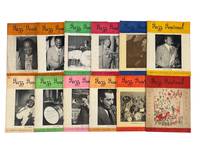
1950rif. 223221950. Complete 1950 run of Jazz Journal Vol. 3 Nos. 1-12. London: L. M. Publications 1950. Complete run of the 1950 volume. Twelve issues with each issue around 20 pages. Black-and-white photo illustrations throughout. Printed paper wraps. Founded in 1948 by editor Sinclair Traill Jazz Journal became a critical platform for serious jazz criticism in Britain at a time when the country began appreciating the impact of African American musical innovation. This volume features twelve monthly issues each spotlighting legendary musicians in deeply reverent portraits: Louis Armstrong Baby Dodds Coleman Hawkins Fats Waller Earl Hines and others. The December cover has a Christmas theme. This archive is a window into Britain's postwar jazz awakening. The articles range from retrospectives to musicology and artist discographies. Floyd Levin's "The American Jazz Scene" captures the transatlantic tone of the journal mourning the death of Buster Wilson and lauding figures like Sidney Anderson and Kid Ory as vanguards of "authentic" jazz-framed as endangered in a postwar America increasingly seduced by commercialism. Meanwhile Derrick Stewart-Baxter's "Preachin' the Blues" traces rural-to-urban migration patterns in blues development analyzing Sleepy John Estes' discography and folk influences. The December issue features a full-page bibliophilic essay "A Case for Books" reviewing A Treasury of the Blues by W. C. Handy whom it names "the composer of the classic Memphis Blues and Joe Turner Blues" emphasizing the book's role in preserving "the true and historical survey of the blues." Taken together the essays discographies and image curation construct a coherent theory of jazz not only as music but as cultural heritage. Moderate and consistent soiling and creasing to wrappers; binding intact but some covers remain delicate. Occasional chipping at spine. Covers remain vivid with strong photographic contrasts. Overall good condition. A complete year's run of one of the earliest and most influential British jazz journals with signatures from leading musicians of the era such as Armstrong Dodds and Hawkins. unknown
1995rif. 51974Document, 1995. DOCD-5385 CD CD
1995rif. 51973Document, 1995. DOCD-5384 CD CD
1995rif. 51971Document, 1995. DOCD-5382 CD CD
1995rif. 51972Document, 1995. DOCD-5383 CD CD
1995rif. 51970Document, 1995. DOCD-5381 CD CD
1950rif. 223221950. Complete 1950 run of Jazz Journal Vol. 3 Nos. 1-12. London: L. M. Publications 1950. Complete run of the 1950 volume. Twelve issues with each issue around 20 pages. Black-and-white photo illustrations throughout. Printed paper wraps. Founded in 1948 by editor Sinclair Traill Jazz Journal became a critical platform for serious jazz criticism in Britain at a time when the country began appreciating the impact of African American musical innovation. This volume features twelve monthly issues each spotlighting legendary musicians in deeply reverent portraits: Louis Armstrong Baby Dodds Coleman Hawkins Fats Waller Earl Hines and others. The December cover has a Christmas theme. This archive is a window into Britain's postwar jazz awakening. The articles range from retrospectives to musicology and artist discographies. Floyd Levin's "The American Jazz Scene" captures the transatlantic tone of the journal mourning the death of Buster Wilson and lauding figures like Sidney Anderson and Kid Ory as vanguards of "authentic" jazz-framed as endangered in a postwar America increasingly seduced by commercialism. Meanwhile Derrick Stewart-Baxter's "Preachin' the Blues" traces rural-to-urban migration patterns in blues development analyzing Sleepy John Estes' discography and folk influences. The December issue features a full-page bibliophilic essay "A Case for Books" reviewing A Treasury of the Blues by W. C. Handy whom it names "the composer of the classic Memphis Blues and Joe Turner Blues" emphasizing the book's role in preserving "the true and historical survey of the blues." Taken together the essays discographies and image curation construct a coherent theory of jazz not only as music but as cultural heritage. Moderate and consistent soiling and creasing to wrappers; binding intact but some covers remain delicate. Occasional chipping at spine. Covers remain vivid with strong photographic contrasts. Overall good condition. A complete year's run of one of the earliest and most influential British jazz journals with signatures from leading musicians of the era such as Armstrong Dodds and Hawkins. unknown books
1999rif. 45035Definitive Records, 1999. DRCD11148 4 CD CD
1952rif. 65207Durand et Cie 1952 1 vol. broché in-8, broché, 43 pp., dessins en noir de Clément Serveau (dont 1 à pleine page). Ex-dono manuscrits sur la page de garde. Sinon très bon état.
1952rif. 65207Durand et Cie 1952 1 vol. broché in-8, broché, 43 pp., dessins en noir de Clément Serveau (dont 1 à pleine page). Ex-dono manuscrits sur la page de garde. Sinon très bon état.
rif. 427171 vol in-8 - broché - N° 14 de novembre 1942 - 116 pages
rif. 119417Frankfurt/Main Verve Records, s.d. [1959] 1 vol. broché plaquette in-4, brochée, couverture illustrée en couleurs, non paginée (18 p.). Programme d'une tournée européenne avec les textes en allemand, français et anglais et de belles photographies en noir et blanc, le tout dans une mise en page soignée avec impression sur papier couché et papier Canson rouge. Bien complet du supplément pour les concerts des 20 et 21 septembre 1959 à la Salle Pleyel de Paris (8 pages in-4, photos et publicités). En belle condition.