Giacomo Meyerbeer (Composer), J C Fryer (Opera Company), and The Academy of Music (New York)Biblio.com

19 645 résultats
1873réf. 005672The Academy of Music. Mr. J. C. Fryer's Grand 'Wagner' and 'Meyerbeer' Opera Festival: Libretto and Parlor Pianist Front Cover The Huguenots: A Serious Opera in Five Acts As Represented at the Royal Italian Opera House London and The Academy of Music New York Title Page 1873. A left-stitched soft cover measuring 6-7/8" by 10" and containing 40 pages including interior paginated pages as well as outer covers. The front cover reads: "The Only Correct and Authentic Edition - Mr. J. C. Fryer's Grand 'Wagner' and 'Meyerbeer' Opera Festival - Libretto and Parlor Pianist. The Original German Libretto with a correct English Translation and the Principal Airs and Gems of the Opera arranged as Piano-Forte Solos by distinguished Professors. Huguenots. Published at The Theatre Ticket Office No. 111 Broadway New York." The Title Page reads: "The Huguenots. Die Hugenotten. A Serious Opera in Five Acts. The Music by Giacomo Meyerbeer. As Represented at the Royal Italian Opera House London and The Academy of Music New York. New York: Published at the Academy of Music." No date although late 1873 or very early 1874 published shortly following the performance at The Academy of Music. The contents are as follows: splendid illustrated advertisement for Weber Grand Square and Upright Piano-Fortes to inside front cover; Title Page; advertisement The Weber Piano-Fortes: Opinions of the most Distinguished Artists the latest of which is dated December 6 1873; Dramatis Personae; Argument; the complete opera The Huguenots - Die Hugenotten in Five Acts with German verse on left pages and English verse on right pages; Die Hugenotten Musical Score; advertisement for Weber to inside rear cover and rear cover "'Weber' of New York Receives the Highest Award at the U.S. Centennial Commission". Condition: front and rear covers soiled but not badly and not impacting the often bold cover typeface; covers show narrow chipping along lower overhang short closed edge tear periodic narrow chips along outer spine; the lightest of foxing to interior pages. Exceptionally rare. . Good. Soft cover. 1st Edition. 1873. The Academy of Music paperback
réf. 34689Very good. - Two bars of music penned with the lyric "We are be-trothed" on a 3 inch high by 5-5/8 inch wide sheet of buff paper. Signed in full "Frederic Solomon". Once mounted into an album the corners are torn with remnants of paper & glue adhering to the corners of the verso. The American composer of comic operas & songs Frederic Solomon was the author of several compositions including "Cunnin Ain't it A Satirical! Comical! Topical!" 1887 "Beggar's Keepsake" 1893 "Temptation is hard to resist" 1893 "King Kaliko" an 1892 comic opera with libretto by Frank Dupree. unknown
1888réf. 33019Boston MA: circa 1888. 1888. Very good. - Sepia-toned cabinet photograph by Conly 5-1/2 inches high by 3-7/8 inches wide mounted on a card 6-1/2 inches high by 4-1/4 inches wide with the cast and credits of "Prince Kam; or A Trip to Venus" printed on the verso Signed "Sincerely yours / Camille D'Arville" below the photo. There is some very light foxing & soiling to the verso. Very good. The copy on the verso of the photograph states that this card is a souvenir of the 75th performance at the Park Theatre Boston of Rice's comic opera 'Venus' with libretto by Charles Alfred Byrne and Louis Harrison and music by Gustave Kerker. As the star Camille D'Arville is listed separately at the foot of the cast list. She plays Prince Kam son and heir of Poom the Grand Llama of Thibet. The photo is a head-and-shoulders portrait of a distinctly womanly D'Arville wearing an embroidered cap on her mop of short curly hair and a doublet with puffed sleeves elaborately jeweled around the collar. Born Neeltye Dykstra in the Netherlands Camille D'Arville studied music in Amsterdam and made her debut there in concert in 1877. She appeared in London toured the English provinces and came to the United States in 1888 under the management of J. F. Duff. The photographer Charles F. Conly 1846-1892 was best known for his theatrical photographs. Boston, MA: circa (1888). unknown
1980réf. 28607New York: October 14 1980. 1980. Very good. - sc Quarto 11 inches high by 8-3/8 inches high. 201 words typed on a sheet of cream paper with her address typed at the top. Signed "Constance DeJong". The left edge of the paper is darkened & there is a light paper-clip mark to the top left corner with a small light stain just below the body of the letter. Very good. DeJong writes to Gary Wilkie of Contexts in Seattle to ask if she could present her new work there as part of a tour that will take her to Portland Oregon. She encloses a photo and resume: "It's not very up to date in terms of the new work I'd be presenting or the recently completed book and opera I wrote with Philip Glass." A publicity sheet from Art Performances New York states: "Constance DeJong is one of the young post-modern writers who has made performance a natural extension of her work as a writer. By blending some of the traditional techniques of theatre - lighting movement music - performances extend her work beyond the written word into an almost tactile presence a context where the narrative can come to life. New York: October 14, 1980. unknown
1927réf. 011921Los Angeles CA: J.M. Moskowitz. Offered is an original letter dated January 11 1927 written and signed by J. M. Moskowitz Chairman of the Los Angeles Grand Opera Choral Society to Mr. Vitti who I could not identify in my research of the San Carlo Grand Opera Company. Measuring 8-3/16" by 9" it reads in full: "Los Angeles Cal. - Jan. 11 1927 - Mr. Vitti - c/o San Carlo Grand Opera Company - Dear Sir: I understand that during your stay in Los Angeles you will complete the process of organizing into a union chorus the Los Angeles Grand Opera Choral Society and also present the charter. Please inform me as to the evening most convenient for you to be with us so that everything as far as we know will be prepared. Cordially Yours J.M. Moskowitz Chairman L.A. Grand Opera Choral Society - street number Arlington Ave. Los Angeles Cal." Lacks mailing envelope; previously folded twice possibly for mailing or delivery purposes. . Fine. No Binding. 1st Edition. 1927. J.M. Moskowitz unknown
réf. 125814Carlo Gatti - Verdi - ed. 1931 Alpes - Opera completa in due volumi. - Pag. 470 con 64 tavole illustrate - Pag. 638 con 65 tavole illustrate l'ultima non numerata - Copertina rigida - Lingua italiana. - Buone condizioni generali. Legatura e sguardie rifatte. unknown
réf. 125724La Biennale di Venezia - Orchestra da Camera Internazionale Anton Webern - 14 Luglio / 13 Settembre 1975 - Pag. 27 con due illustrazioni. - Copertina morbida - Testo in italiano. - Buone condizioni generali. - unknown
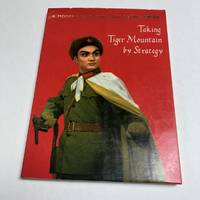
1971réf. AG-10059Beijing: Published by Foreign Language Press 1971 FIRST EDITION. The July 1970 Script Revised by "The Taking Tiger Mountain by Strategy" Group of Peking Opera Troupe of Shanghai. Large 8vo. XXX 113 6 pp. colophon with 3 pages Quotations from Chairman Mao. Printed pictorial wrappers minor tear to the foot edge of the front cover minor curled at the head edge of the front cover else very good condition. 北京:外文出版社出版,1971年第一版,由ä¸å›½äº¬å‰§å›¢æ ¹æ®1970年剧本è”åˆæ”¹ç¼–。å‰é¡µå¸¦æœ‰æ¯›ä¸»å¸è¯å½•ã€‚å°çš®é¡¶éƒ¨ç¨æœ‰ç£¨æŸï¼Œå…¶ä»–部分å“相éžå¸¸å¥½ã€‚ In China revolutionary operas or model operas Chinese: yangban xi æ ·æ¿æˆ were a series of shows planned and engineered during the Cultural Revolution 1966–1976 by Jiang Qing the wife of Chairman Mao Zedong.1 They were considered revolutionary and modern in terms of thematic and musical features when compared with traditional Chinese operas. Many of them were adapted to film. Originally eight revolutionary operas Chinese: Ba Ge Yangban Xi å…«ä¸ªæ ·æ¿æˆ were produced eighteen by the end of the period. Instead of the "emperors kings generals chancellors maidens and beauties" of the traditional Peking opera which was banned as "feudalistic and bourgeois" they told stories from China's recent revolutionary struggles against foreign and class enemies. They glorified the People's Liberation Army and the bravery of the common people and showed Mao Zedong and his thought as playing the central role in the victory of socialism in China. Although they originated as operas they soon appeared on LPs in comic books lianhuanhua on posters postcards and stamps; on plates teapots wash basins cigarette packages vases and calendars. They were performed or played from loudspeakers in schools factories and fields by special performing troupes. The Eight Model Operas dominated the stage in all parts of the country during these years leading to the joke "Eight hundred million people watched eight shows." 本组剧本属于文é©æ—¶æœŸçš„å…«å¤§æ ·æ¿æˆï¼Œç”±æ¯›ä¸»å¸å¤«äººæ±Ÿé’负责制作和演出。很多被æ‹æˆäº†ç”µå½±ã€‚ 最åˆæœ‰å…«ä¸ªæ ·æ¿æˆï¼ŒåŽæ¥åœ¨æ–‡é©æ—¶æœŸçš„åŽæœŸå‘展到了18个。ä¸åƒå› å°å»ºå’Œèµ„产阶级的被ç¦äº†çš„ä¼ ç»Ÿäº¬å‰§ï¼Œé‡Œé¢å‡ºçŽ°çš„ä¸çš„国王大臣少女和美人,é©å‘½çŽ°ä»£äº¬å‰§ä¸»è¦è®²è¿°ä¸å›½è¿‘å¹´æ¥çš„抗战故事,宣扬人民解放军的光辉è£è€€å’Œæ¯›ä¸»å¸çš„英勇。虽然是京剧,很快就å˜æˆäº†å„ç§å½¢å¼å‡ºçŽ°åœ¨è¿žçŽ¯ç”»ã€æµ·æŠ¥ã€æ˜Žä¿¡ç‰‡ã€é‚®ç¥¨ã€é¦™çƒŸã€èŠ±ç“¶ã€æ—¥åŽ†ç‰å„ç§åœ°æ–¹ï¼Œç”¨æ‰©éŸ³å–‡å在å¦æ ¡ã€å·¥åŽ‚ç‰åœ°æ–¹ï¼Œç”±æ¼”出团进行表演。8ä¸ªæ ·æ¿æˆä¸»å¯¼äº†å…¨å›½æ‰€æœ‰çš„舞å°ï¼Œå› æ¤æœ‰äº†8亿人看8个剧的笑è¯ã€‚ Foreign Language Press paperback
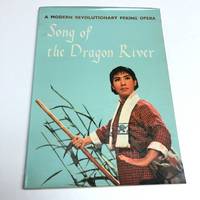
1972réf. AG-10060Beijing: Published by Foreign Language Press 1972 FIRST EDITION the January 1972 Script Revised by the Song of the Dragon River Group of Shanghai. Started with Quotation from Chairman Mao on the first page large 8vo xii 44 pp. 12 colophon fine condition fine condition 北京:外语出版社出版,1972年第一版,由上海《龙江颂》改编,开头带有毛主席语录。本册共44页12页彩色舞å°ç…§ç‰‡ï¼Œå“相éžå¸¸å¥½ã€‚ In China revolutionary operas or model operas Chinese: yangban xi æ ·æ¿æˆ were a series of shows planned and engineered during the Cultural Revolution 1966–1976 by Jiang Qing the wife of Chairman Mao Zedong.1 They were considered revolutionary and modern in terms of thematic and musical features when compared with traditional Chinese operas. Many of them were adapted to film. Originally eight revolutionary operas Chinese: Ba Ge Yangban Xi å…«ä¸ªæ ·æ¿æˆ were produced eighteen by the end of the period. Instead of the "emperors kings generals chancellors maidens and beauties" of the traditional Peking opera which was banned as "feudalistic and bourgeois" they told stories from China's recent revolutionary struggles against foreign and class enemies. They glorified the People's Liberation Army and the bravery of the common people and showed Mao Zedong and his thought as playing the central role in the victory of socialism in China. Although they originated as operas they soon appeared on LPs in comic books lianhuanhua on posters postcards and stamps; on plates teapots wash basins cigarette packages vases and calendars. They were performed or played from loudspeakers in schools factories and fields by special performing troupes. The Eight Model Operas dominated the stage in all parts of the country during these years leading to the joke "Eight hundred million people watched eight shows." 本剧本属于文é©æ—¶æœŸçš„å…«å¤§æ ·æ¿æˆï¼Œç”±æ¯›ä¸»å¸å¤«äººæ±Ÿé’负责制作和演出。很多被æ‹æˆäº†ç”µå½±ã€‚ 最åˆæœ‰å…«ä¸ªæ ·æ¿æˆï¼ŒåŽæ¥åœ¨æ–‡é©æ—¶æœŸçš„åŽæœŸå‘展到了18个。ä¸åƒå› å°å»ºå’Œèµ„产阶级的被ç¦äº†çš„ä¼ ç»Ÿäº¬å‰§ï¼Œé‡Œé¢å‡ºçŽ°çš„ä¸çš„国王大臣少女和美人,é©å‘½çŽ°ä»£äº¬å‰§ä¸»è¦è®²è¿°ä¸å›½è¿‘å¹´æ¥çš„抗战故事,宣扬人民解放军的光辉è£è€€å’Œæ¯›ä¸»å¸çš„英勇。虽然是京剧,很快就å˜æˆäº†å„ç§å½¢å¼å‡ºçŽ°åœ¨è¿žçŽ¯ç”»ã€æµ·æŠ¥ã€æ˜Žä¿¡ç‰‡ã€é‚®ç¥¨ã€é¦™çƒŸã€èŠ±ç“¶ã€æ—¥åŽ†ç‰å„ç§åœ°æ–¹ï¼Œç”¨æ‰©éŸ³å–‡å在å¦æ ¡ã€å·¥åŽ‚ç‰åœ°æ–¹ï¼Œç”±æ¼”出团进行表演。8ä¸ªæ ·æ¿æˆä¸»å¯¼äº†å…¨å›½æ‰€æœ‰çš„舞å°ï¼Œå› æ¤æœ‰äº†8亿人看8个剧的笑è¯ã€‚ Foreign Language Press
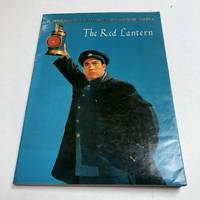
1972réf. AG-10058Beijing: Published by Foreign Language Press 1972 FIRST EDITION. The May 1970 Script Revised Collectively by China Peking Opera Troupe. Started with Quotation from Chairman Mao on the first page. Large 8vo. vii 98 1 pp. colophon printed pictorial wrappers very good condition. 北京:外文出版社出版,1972年第一版,由ä¸å›½äº¬å‰§å›¢æ ¹æ®1970年剧本è”åˆæ”¹ç¼–。å‰é¡µå¸¦æœ‰æ¯›ä¸»å¸è¯å½•ã€‚å“相éžå¸¸å¥½ã€‚ In China revolutionary operas or model operas Chinese: yangban xi æ ·æ¿æˆ were a series of shows planned and engineered during the Cultural Revolution 1966–1976 by Jiang Qing the wife of Chairman Mao Zedong.1 They were considered revolutionary and modern in terms of thematic and musical features when compared with traditional Chinese operas. Many of them were adapted to film. Originally eight revolutionary operas Chinese: Ba Ge Yangban Xi å…«ä¸ªæ ·æ¿æˆ were produced eighteen by the end of the period. Instead of the "emperors kings generals chancellors maidens and beauties" of the traditional Peking opera which was banned as "feudalistic and bourgeois" they told stories from China's recent revolutionary struggles against foreign and class enemies. They glorified the People's Liberation Army and the bravery of the common people and showed Mao Zedong and his thought as playing the central role in the victory of socialism in China. Although they originated as operas they soon appeared on LPs in comic books lianhuanhua on posters postcards and stamps; on plates teapots wash basins cigarette packages vases and calendars. They were performed or played from loudspeakers in schools factories and fields by special performing troupes. The Eight Model Operas dominated the stage in all parts of the country during these years leading to the joke "Eight hundred million people watched eight shows." 本剧本属于文é©æ—¶æœŸçš„å…«å¤§æ ·æ¿æˆï¼Œç”±æ¯›ä¸»å¸å¤«äººæ±Ÿé’负责制作和演出。很多被æ‹æˆäº†ç”µå½±ã€‚ 最åˆæœ‰å…«ä¸ªæ ·æ¿æˆï¼ŒåŽæ¥åœ¨æ–‡é©æ—¶æœŸçš„åŽæœŸå‘展到了18个。ä¸åƒå› å°å»ºå’Œèµ„产阶级的被ç¦äº†çš„ä¼ ç»Ÿäº¬å‰§ï¼Œé‡Œé¢å‡ºçŽ°çš„ä¸çš„国王大臣少女和美人,é©å‘½çŽ°ä»£äº¬å‰§ä¸»è¦è®²è¿°ä¸å›½è¿‘å¹´æ¥çš„抗战故事,宣扬人民解放军的光辉è£è€€å’Œæ¯›ä¸»å¸çš„英勇。虽然是京剧,很快就å˜æˆäº†å„ç§å½¢å¼å‡ºçŽ°åœ¨è¿žçŽ¯ç”»ã€æµ·æŠ¥ã€æ˜Žä¿¡ç‰‡ã€é‚®ç¥¨ã€é¦™çƒŸã€èŠ±ç“¶ã€æ—¥åŽ†ç‰å„ç§åœ°æ–¹ï¼Œç”¨æ‰©éŸ³å–‡å在å¦æ ¡ã€å·¥åŽ‚ç‰åœ°æ–¹ï¼Œç”±æ¼”出团进行表演。8ä¸ªæ ·æ¿æˆä¸»å¯¼äº†å…¨å›½æ‰€æœ‰çš„舞å°ï¼Œå› æ¤æœ‰äº†8亿人看8个剧的笑è¯ã€‚ Foreign Language Press paperback
réf. 125331Libretto Opera - Il Crociato in Egitto: Melodramma Eroico in Due Atti di Giacomo Meyerbeer e Gaetano Rossi - ed. 1825 - Testo in lingua italiana. Pagine 61 - Copertina morbida. - Condizioni buone con segni del tempo come da foto. - - unknown
réf. 125315Libretto Opera - Francesca Donato: Azione Mimica di P. Diani - ed. 1861 - Testo in lingua italiana. Pagine 14 - Copertina morbida. - Condizioni buone con segni del tempo come da foto. - - unknown
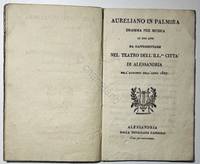
réf. 125303Libretto Opera - Aureliano in Palmira: Dramma per Musica in Due Atti - ed. 1827 - Testo in lingua italiana. Pagine 48 - Copertina morbida. - Condizioni buone con segni del tempo come da foto. - - unknown
réf. 125311Libretto Opera - Olga di Cracovia: Azione Romantica di G. Briol - ed. 1857 - Testo in lingua italiana. Pagine 24 - Copertina morbida. - Condizioni buone con segni del tempo come da foto. - - unknown
réf. 125310Libretto Opera - Caterina ovvero La Figlia del Bandito di A. Palladino - ed.1856 - Testo in lingua italiana. Pagine 32 - Copertina morbida. - Condizioni buone con segni del tempo come da foto. - - unknown
réf. 125305Libretto Opera - Attila: Dramma Lirico in un Prologo e Tre Atti di G. Verdi 1846 - Testo in lingua italiana. Pagine 28 - Copertina morbida. - Condizioni buone con segni del tempo come da foto. - - unknown
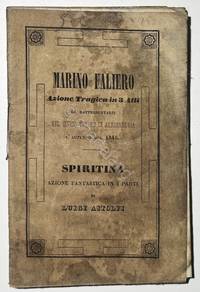
réf. 125321Libretto Opera - Marino Faliero: Azione Tragica - Spiritina: Azione Fantastica di L. Astolfi - ed. 1846 - Testo in lingua italiana. Pagine 40 - Copertina morbida. - Condizioni buone con segni del tempo come da foto. - - unknown
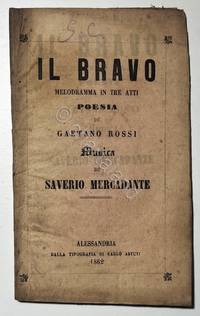
réf. 125302Libretto Opera - Il Bravo: Melodramma in 3 Atti di G. Rossi e S. Mercadante - ed. 1862 - Testo in lingua italiana. Pagine 43 - Copertina morbida. - Condizioni buone con segni del tempo come da foto. - - unknown
réf. 125304Libretto Opera - Corrado D'Altamura: Dramma Lirico di Jacopo Sacchéro - ed. 1842 - Testo in lingua italiana. Pagine 46 - Copertina morbida. - Condizioni buone con segni del tempo come da foto. - - unknown
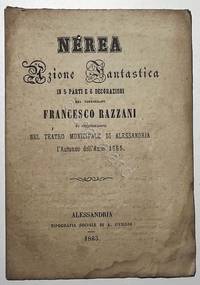
réf. 125330Libretto Opera - Nerea: Azione Fantastica in 5 Parti di F. Razzani - ed. 1865 - Testo in lingua italiana. Pagine 8 - Copertina morbida. - Condizioni buone con segni del tempo come da foto. - - unknown
réf. 125327Libretto Opera - Otello o sia Il Moro di Venezia di G. Rossini - ed. 1862 - Testo in lingua italiana. Pagine 30 - Copertina morbida. - Condizioni buone con segni del tempo come da foto. - - unknown
réf. 125328Libretto Opera - Otello o sia Il Moro di Venezia di Gioachino Rossini - ed. 1862 - Testo in lingua italiana. Pagine 30 - Copertina morbida. - Condizioni buone con segni del tempo come da foto. - - unknown
réf. 125329Libretto Opera - I Lombardi alla Prima Crociata: Dramma Lirico di G. Verdi - ed. 1844 - Testo in lingua italiana. Pagine 48 - Copertina morbida. - Condizioni buone con segni del tempo come da foto. - - unknown
réf. 40760New York City's famed Juilliard School was the breeding ground for this unusual opera troupe of under-30 singers that sprung up in the 1940s the brainchild of David Otto. Signed Program small 4to 6¼" X 9½" 4pp n.p. n.y. Very good. Mild edgewear and folds; faint age toning. Attractive program on buff stock for the Nine O'Clock Opera Company's appearance at the "Community Concert Association" performing "The Marriage of Figaro: A Comic Opera in Two Acts." The entire cast of seven listed on the front wrapper have each signed boldly in pencil: David Otto John Tyers 1914-07 Helen Van Loon Vera Weikel 1911-61 John McRae Allen Stewart and Gertrude Gibson along with pianist Max Walmer. Inside pages give a plot summary of "The Marriage of Figaro" page 2 and the history of this upstart opera company page 3 noting "the oldest member of the company is now thirty." Interesting and unusual! unknown
1728réf. 296052Augustae Vindelicorum & Graecii Sumptibus Fratrum Veith 1728. Vellum. Folio in worn vellum. Ex-library foxing hinge repaired between half-title and title page with a strip of binding tape back hinge is beginning to weaken. Geroh of Reichtersberg 1093-1169 was one of the notable theologians of Germany during the 12th century provost of Riechersbert and Canon Regular a reformer in the spirit of Gregorian ideas particularly concerned with the reform of clergy. This work was left unfinished by Gerhoh. Geroh's portion is Psalm 1-78 118-150 and some additional canticum at the end. Psalm 78-117 are by Honorius Augustodunensis d. 1151 a popular theologian and prolific writer. 2219 14 pages. Augustae Vindelicorum & Graecii, Sumptibus Fratrum Veith hardcover