41,450 results
Folio (360 x 226 mm). Title and 12 plates, engraved throughout. Papered spine. First edition of this finely engraved instruction book for drawing flowers, showing the basic shapes of leaves and petals, as well as primroses, saffron, daffodils, hyacinths, tulips, auriculae, and snowflakes. Johann Daniel Preißler (1666-1737), a member of a Nuremberg artists' dynasty of Bohemian origin, published several such pattern books and is also known for his series of ornamental, Biblical and allegorical engravings. - Touches of contemporary colour to border of title engraving. Light waterstaining to about six leaves; title and final leaf show small edge tears (the latter repaired). Kat. Ornamentstichslg. Berlin 4439. Thieme/Becker XXVII, 374. VD 18, 1099145X. OCLC 258151573.
18038vo. 2 vols. (4), 226 pp. (4), 242 pp. With 4 folding engr. plates. Contemp. marbled calf with double giltstamped red spine labels, richly gilt spine, giltstamped cover borders and Bavarian Ducal arms; leading edges gilt. First and only edition, very rare. - Art-historical work by Baron Jacques-Antoine de Saint-Cyr (1767-1829), who served in the French army and wrote several plays as well as a few novels. This work, printed in only a small number of copies, has been little noted by bibliographers, although it is revealing for an understanding of contemporary aesthetic ideas. - The engravings show dimensional ratios and anatomical studies for sketching purposes, as well as musical notes which relate musical expressions to cloud formations, waves, and architecture. - Bindings rubbed and with slight worming and defects; spines finely preserved, with handsome shelf appearance. Interior very clean; partly uncut. From the library of Duke Max in Bavaria (1808-88), father of Empress Elizabeth of Austria, with his shelfmark label. Becker 498.
1880Oblong folio (370 x 295 mm). 2 photographed title pages and 42 albumen prints (245 x 205 mm), all mounted on cardboard. Contemp. red half calf with blindstamped cover borders and giltstamped title to cover and spine. Fine original selection of Sommer's legendary views of Campania which have fascinated tourists of Southern Italy since the late 19th century. "Giorgio Sommer (1834-1914) was one of the pioneers who reintroduced antiquity to the world through his work. A native German, he moved to Naples in 1857 to open a studio where he sold photographs of ancient ruins at Pompeii and other sites, ongoing excavations, recovered artifacts, and other images from the Bay of Naples" (National Gallery of Art, Washington DC). Among the ten views of Pompeii are a panorama, the House of the Faun, the amphitheatre, frescoes and casts of the victims of the Vesuvius eruption in the year 79. 15 views show Naples (panoramas, the chapel of Sansevero, the Teatro San Carlo, Via Partenope, Piazza Vittoria, Posillipo, etc.). Other photographs show Pozzuoli (Serapeion, amphitheatre), Bacoli, Salerno, Castellamare di Stabia, the cliffs of Sorrento, the Neptune temple at Paestum, the 1872 eruption of Mt. Vesuivius, and local Neapolitans. - Spine and corners bumped; binding loosened; some slight interior staining.
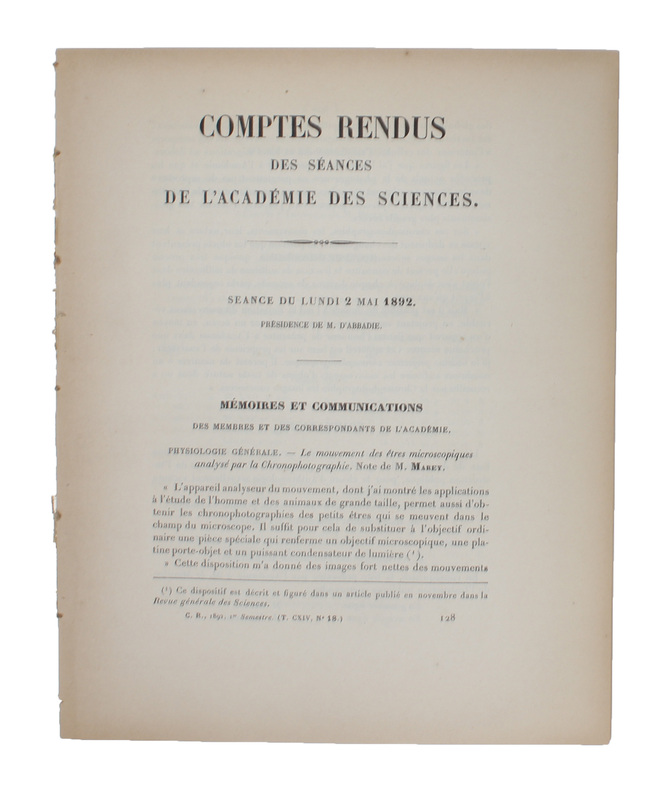
1882Paris, Gauthier-Villars, 1882, 1888, 1892. 4to. No wrappers. 7 entire issues. In: ""Comptes Rendus Hebdomadaires des Séances de L'Academie des Sciences"", Tome 95, No 1, 6 a. 14. Tome 107, No 16, 17 a. 18, Tome 114, No 18. (7 entire issues offered). With halftitles and titlepages to Vol. 95, 107 a. 114. The papers: pp. 14-16 (No1), 267-270 (no 6), 583-585, 2 textillustr. (no 14) - pp. 607-609 (No 16), 643-645, 1 textillustr. (No 17), 677-678 (No 18) - pp. 989-990 (No. 18). Stamps on verso of titlepages.
1863Berlin, 1863. Folio. Cont. hcalf. (108) pp. of text with many woodcut illustrations and 85 fine lithographed plates in colours, depicting details of bricklaying, patterns, houses etc. etc. Some plates slightly brownspotted.
1822London, R.Ackermann, (1822-24). Folio oblong. Bound in one fine hmorocco, raised bands and gilt back. Uncut. 30,36 pp. and 120 fine aquatint-plates (drawn and etched by W.H.Pyne, 23 x 30 cm.). Marginally brownspotted. - Importent sourcework for information of pre-industrial techniques.
1835Berlin, 1835-44. Folio. Vol. 1-2 in cont. hcalf. Backs and corners worn, vol. 3 in cont. boards, back worn. 14,24,8 pp. of text and 116 lithographed plates. All plates in vol. 3 stained in upper left corners. Somewhat brownspotted.
1882ref. 48088Paris, Gauthier-Villars, 1882, 1888, 1892. 4to. No wrappers. 7 entire issues. In: ""Comptes Rendus Hebdomadaires des Séances de L'Academie des Sciences"", Tome 95, No 1, 6 a. 14. Tome 107, No 16, 17 a. 18, Tome 114, No 18. (7 entire issues offered). With halftitles and titlepages to Vol. 95, 107 a. 114. The papers: pp. 14-16 (No1), 267-270 (no 6), 583-585, 2 textillustr. (no 14) - pp. 607-609 (No 16), 643-645, 1 textillustr. (No 17), 677-678 (No 18) - pp. 989-990 (No. 18). Stamps on verso of titlepages.
1863ref. 9171Berlin, 1863. Folio. Cont. hcalf. (108) pp. of text with many woodcut illustrations and 85 fine lithographed plates in colours, depicting details of bricklaying, patterns, houses etc. etc. Some plates slightly brownspotted.
1835ref. 16136Berlin, 1835-44. Folio. Vol. 1-2 in cont. hcalf. Backs and corners worn, vol. 3 in cont. boards, back worn. 14,24,8 pp. of text and 116 lithographed plates. All plates in vol. 3 stained in upper left corners. Somewhat brownspotted.
1934In-8 gr., 9 volumi, mz. pelle mod., decoraz. e tit. oro al dorso, pp. 32 / 24 / 16, con ill. in b.n. o in tinta nel t. Di questa celebrata rivista mensile offriamo una raccolta pressoché completa di 9 annate, dal gennaio 1934 (Anno VI) al dicembre 1942 (Anno XIV). Tutta la raccolta è ben conservata (6 volumi, purtroppo, portano incollata sulla prima pagina di ogni numero l’etichetta con l’indirizzo del destinatario, non sempre intatta). Nata nel 1929, la rivista ha cadenza mensile ma formato da quotidiano. Inizialmente, oltre a proporre ricette e consigli gastronomici, pubblica anche articoli firmati da donne scrittrici e ricette di poeti italiani, oltre a numerose rubriche. Nel 1934, col passaggio della direzione a Fanny Dini, la "La Cucina Italiana" si presenta come una moderna rivista per signore, cambia formato, le 8 pagine diventano 32, e si introducono le illustrazioni. Anche il contenuto muta: vengono ampliate le tematiche gastronomiche e introdotte nuove rubriche (dedicate alla bellezza, all’arredamento della casa, alle giovani dame della borghesia perchè diventino “perfette massaie”); dal 1935 appare anche la rubrica sulla moda e vi è persino uno spazio per il galateo. Nell’ottobre 1937 la prima pagina del mensile si presenta come una copertina vera e propria e diventa a colori due anni dopo. "La Cucina Italiana" chiude per la guerra nel luglio 1943 ma rinascerà nel dopoguerra.
1753In-8 gr., 11 volumi, bross. muta coeva, tit. ms. al dorso, con una ricchiss. documentazione iconografica di 117 tavv. inc. in rame (alcune ripieg.), con relativa descrizione a fronte. Introduce il dizionario un approfondito "discorso storico sopra l'origine e i progressi della Medicina". Versione italiana di questa importante opera del medico inglese Robert James (1703-1776), pubblicata a Londra nel 1743-44 in 3 volumi in folio. Cfr. Biographie Medicale,V,p. 344: "Cet ouvrage important, qui semblait au-dessus des forces d'un seul homme, fait le plus grand honneur à James et lui suppose une immense érudition. C'est un tableau de ce qu'on avait écrit de mieux jusqu'alors sur les diverses parties de l'art de guérir; un pareil travail a du exiger de longues et pénibles recherches". Testo con bruniture e fiorit.; tavole con solo lievi fioriture.
1569In-8 p. (mm. 215 x 155), p. pergamena molle antica con legacci (risg. rifatti), tit. ms. al dorso, 19 cc.nn., 1 c.b., 120 cc.num., testo in caratteri rotondi, 2 marche tipografiche differenti, una al frontespizio e una al verso dell’ultima carta; ornato da eleganti capilettera, tutti xilografati; con 1 tavola f.t., più volte ripieg., che rappresenta la pianta di una palestra, secondo Vitruvio. Introdotta da un "Carmen" di Lorenzo Gambara e da un Indice analitico, l’opera descrive le diverse applicazioni (ai sani, agli infermi, ai giovani e ai vecchi) della ginnastica medica, atletica e bellica, considerata uno dei mezzi più idonei al miglioramento dell’organismo. "Prima edizione", dedicata dall’A. al Cardinale Alessandro Farnese. Cfr. Camerini “Annali dei Giunti”,II,723: “Questa edizione, con aggiunte e altre illustrazioni, avrà numerose ristampe” - Cicognara,1711 - Brunet,III,1646 - Choix de Olschki,I,1672. Frontesp. restaur. e prime 10 cc. con lieve alone margin.; con qualche lieve e uniforme arross. e restauri per picc. fori di tarlo, ma complessivam. esempl. ben conservato. "Il forlivese Girolamo Mercuriale (1530-1606) fu prof. di medicina alle università di Padova, Bologna e poi Pisa. Portò il suo contributo in diversi campi della medicina (epidemiologia, igiene, terapeutica, tossicologia, pediatria, oculistica, ecc.), soprattutto in quello della critica storico-medica, traducendo in latino, dai migliori codici, le opere di autori greci, specialmente di Ippocrate. Si giovò della sua vasta erudizione per compilare il suo massimo lavoro “De Arte gymnastica”". Così Encicl. Treccani,XXII, p. 891.
1773In-8 gr. (mm. 260x190), 4 volumi, p. pergamena coeva (con fori di tarlo, spacco a una cerniera), tagli rossi, pp. XLIII,(1),287; 368; 275; 340; ben illustrato da 17 tavole ripieg. e f.t., inc. in rame da Domenico Cagnoni, per lo più con due o più figure. "Prima edizione italiana". Cfr. Biogr. Médicale,VII, p. 198: "Ouvrage capital de Jean-Baptiste Senac (1693-1770), celèbre médecin de la Faculté de Montpellier; première bonne monographie organique publiée en France et peut etre dans le reste de l'Europe" - Morton,2733: "Senac's valuable treatise added much to the knowledge of the anatomy and diseases of that organ; he mentioned the leucocytes, which he considered to belong to the chyle, and he described pericarditis. Senac was the first to use quinine for palpitation" - Sallander,8836 cita la II ediz. francese del 1783 - Eloy,VI,138. Esemplare ben conservato, con ex libris di Vincenzo Gallucci, l’illustre cardiochirurgo che eseguì il primo trapianto di cuore in Italia.
1770In-folio, p. pelle coeva (restaur.), dorso a cordoni con fregi e titolo oro su tassello, pp.num. (18),324, 2 cc.nn. (Indice ed Errata); testo su due colonne; con una bellissima antiporta ambientata (a doppia pag.) in cui è presentato il ritratto equestre dell'A. con, alle sue spalle, lo scheletro di un cavallo alla mangiatoia; deliziosa vignetta al frontesp. e vignetta alle armi con il ritratto dell'Arcivescovo Maximilian Friederich, alla dedica. Il volume è molto ben illustrato da 15 tavole fuori testo, inc. in rame (a p. pag. o ripieg.) che raffigurano diversi tipi di cavalli, scene di allevamento e di maneggio come pure bardature e strumenti chirurgici. "Edizione originale" di questa classica opera, "enseignement complet des connaissances d'un écuyer". I suoi principi di addestramento si avvicinano molto a quelli di La Guérinière e, come la maggior parte dei suoi contemporanei, tratta delle malattie e cure dei cavalli. Cfr. Mennessier,II, p. 513-15: "J.B. Baron de Sind, écuyer allemand, né en Moravie vers 1709, mort en 1776. Il servit pendant quelque temps dans les armées autrichiennes, puis devint premier écuyer de l'Electeur de Cologne, prince éveque de Muenster. Il était à la fois écuyer et vétérinaire et avait inventé un électuaire contre la morve" - Wells,7004. Restauro alla dedica, altrimenti esemplare ben conservato, con bell'ex libris nobiliare inciso.
1777In-8 gr. (mm. 252x184), 2 volumi, p. pelle coeva (restauri al dorso e agli angoli), dorso a cordoni con decoraz. e titolo oro ai riquadri, tagli rossi, pp.num. XII,532; (4),611. E’ una edizione molto ben illustrata da un ritratto dell’A. all’antiporta e da 22 (su 23) tavole anatomiche inc. in rame e più volte ripieg., f.t. Manca la tavola 16. Cfr. Biographie Médicale,VII, p. 198: "Ouvrage capital de Jean-Baptiste Senac (1693-1770), celèbre médecin de la Faculté de Montpellier; première bonne monographie organique publiée en France et peut etre dans le reste de l'Europe" - Morton,2733: "Senac's valuable treatise added much to the knowledge of the anatomy and diseases of that organ; he mentioned the leucocytes, which he considered to belong to the chyle, and he described pericarditis. Senac was the first to use quinine for palpitation". Con qualche uniforme arross. e fiorit.; alone all’angolo super. di numer. pagg. del vol. II, timbri di appartenenza privata, ma complessivam. buon esemplare.
1731ref. 2936Couverture rigide Johann Ludwig Königs 1731 Offenbach 38x25 cm
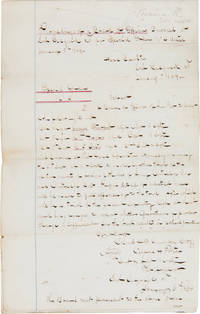
1869ref. 58233Fort Sedgwick Colorado Territory. January 6 1869. Army Frontier Outpost Trials the Mills Cartridge Belt A brief but enlightening manuscript military report from the short-lived Fort Sedgwick in Colorado recording the results of a series of tests undertaken to compare new designs for cartridge belts and boxes. Fort Sedgwick was built as a frontier outpost in 1864 in response to growing unrest and violent conflict with Native Americans during the Civil War and was known as a particularly challenging post due to the poor quality of its construction and its lack of access to water and wood. Parts of the 18th Infantry Regiment were stationed at Fort Sedgwick from 1866 but it became their headquarters at the beginning of 1869 making these tests some of their first actions at their new base. The report titled "Proceedings of a Board of Officers Convened at Fort Sedgwick C.T. per Special Orders No. 4" begins with a brief excerpt of those orders. They name the officers James Stewart R.P. Hughes and R.F. Bates and outline their duty "to make further trial of the relative merits of various patterns of Army Cartridge Box and Cartridge Belt." Comparing the Morris Pattern cartridge box Crispin Pattern cartridge box and a new cartridge belt through a variety of trials the board determined the following: "The Morris Pattern containing thirty six rounds 36 was emptied in thirty 30 seconds less time than Crispin's pattern Containing Thirty five 35 rounds and one minute and twenty seven 27 seconds less time than the Cartridge Belt containing forty 40 rounds. "The Boards then put all the Cartridge Boxes and the Belt in water and they remained in that way two days to test the swelling of the wood in the Morris Crispin and Hadley Cartridge Boxes and the tightening of the leather in the Cartridge Belt. When taken out it was found that the Boxes Belt work quite as well as when dry…. "The Board is of opinion that the weight is more equally divided in the Belt than in the Cartridge Box and easier on the men when marching in double time; they are further of the opinion that the Belt is in every way suitable for Campaigning purposes but for the soldier in garrison they are of opinion that the Cartridge Box Morris Pattern is more suitable the reasons are that the Belt as it is at the present time to look soldierly and neatly must contain the full number of rounds of Cartridges for which it is made while the Cartridge Box may only have a few rounds to make the weight lighter and still retain its neatness. "In the opinion of the Board the belt has many advantages one of them above named is that…it remains steadier in its place and the other is that the weight is more equally distributed; in the other hand the Cartridge Box Morris Pattern is more soldierly in appearance and the Cartridges can be handled more quickly and with less exertion than the Belt." Although his name is not mentioned in the report itself the document is docketed "Report of Officers on Belt Submitted by Lt. Anson Mills." The belt at hand then is in fact the famous Mills Cartridge Belt. While not immediately adopted following this report it became widespread throughout the United States Canada and England after Mills patented it in 1881 making Mills who remained in service until 1896 into a wealthy man. An interesting report from a frontier post following the Civil War recording the earliest tests of what would become a standard piece of military equipment for the next several decades. Slightly tanned scattered soiling very minor splitting at the edges of old folds. Very good. hardcover
1869ref. 58233Fort Sedgwick Colorado Territory. January 6 1869. Army Frontier Outpost Trials the Mills Cartridge Belt A brief but enlightening manuscript military report from the short-lived Fort Sedgwick in Colorado recording the results of a series of tests undertaken to compare new designs for cartridge belts and boxes. Fort Sedgwick was built as a frontier outpost in 1864 in response to growing unrest and violent conflict with Native Americans during the Civil War and was known as a particularly challenging post due to the poor quality of its construction and its lack of access to water and wood. Parts of the 18th Infantry Regiment were stationed at Fort Sedgwick from 1866 but it became their headquarters at the beginning of 1869 making these tests some of their first actions at their new base. The report titled "Proceedings of a Board of Officers Convened at Fort Sedgwick C.T. per Special Orders No. 4" begins with a brief excerpt of those orders. They name the officers James Stewart R.P. Hughes and R.F. Bates and outline their duty "to make further trial of the relative merits of various patterns of Army Cartridge Box and Cartridge Belt." Comparing the Morris Pattern cartridge box Crispin Pattern cartridge box and a new cartridge belt through a variety of trials the board determined the following: "The Morris Pattern containing thirty six rounds 36 was emptied in thirty 30 seconds less time than Crispin's pattern Containing Thirty five 35 rounds and one minute and twenty seven 27 seconds less time than the Cartridge Belt containing forty 40 rounds. "The Boards then put all the Cartridge Boxes and the Belt in water and they remained in that way two days to test the swelling of the wood in the Morris Crispin and Hadley Cartridge Boxes and the tightening of the leather in the Cartridge Belt. When taken out it was found that the Boxes Belt work quite as well as when dry…. "The Board is of opinion that the weight is more equally divided in the Belt than in the Cartridge Box and easier on the men when marching in double time; they are further of the opinion that the Belt is in every way suitable for Campaigning purposes but for the soldier in garrison they are of opinion that the Cartridge Box Morris Pattern is more suitable the reasons are that the Belt as it is at the present time to look soldierly and neatly must contain the full number of rounds of Cartridges for which it is made while the Cartridge Box may only have a few rounds to make the weight lighter and still retain its neatness. "In the opinion of the Board the belt has many advantages one of them above named is that…it remains steadier in its place and the other is that the weight is more equally distributed; in the other hand the Cartridge Box Morris Pattern is more soldierly in appearance and the Cartridges can be handled more quickly and with less exertion than the Belt." Although his name is not mentioned in the report itself the document is docketed "Report of Officers on Belt Submitted by Lt. Anson Mills." The belt at hand then is in fact the famous Mills Cartridge Belt. While not immediately adopted following this report it became widespread throughout the United States Canada and England after Mills patented it in 1881 making Mills who remained in service until 1896 into a wealthy man. An interesting report from a frontier post following the Civil War recording the earliest tests of what would become a standard piece of military equipment for the next several decades. Slightly tanned scattered soiling very minor splitting at the edges of old folds. Very good. hardcover books
1565In-4 p. (mm. 314x195), p. pelle bazana settecentesca, dorso a cordoni con tit. oro su tassello, tagli rossi, 16 cc.nn., 1027 (ma 1035) pp.num., marca tipografica al frontesp., ornato da pregevoli testat. e grandi capilett. figurati a vignetta inc. su legno. "Prima edizione dell’opera omnia" che include anche due opere di gastronomia: “De Mannae differentiis, ac viribus de’ que eas dignoscendi via, et ratione” (1562) e “De Vinaceorum facultate, ac usu”. Cfr. Wellcome,I,253 - Durling,181 - De Renzi “Storia della medicina in Italia”,III che cita le numerosiss. opere di questo “celebre professore napoletano”. Lieve alone margin. sulle ultime 50 cc.; con uniformi arrossature più o meno lievi, ma certamente un buon esemplare. "Donato Antonio Altomare, nato a Napoli nei primi decenni del sec. XVI, studiò dapprima diritto e poi si dedicò alla medicina. Seguace della scuola classicistica, che si richiamava cioè alle dottrine di Ippocrate e Galeno, fu insegnante nello Studio di Napoli, dove formò una combattiva schiera di discepoli e sostenne vivaci polemiche soprattutto contro i paracelsiani. A contatto con i migliori ingegni napoletani del suo tempo, dal Tansillo ai Della Porta, l’A. raggiunse tale fama da essere ancora ricordato da T. Boccalini in un elenco di medici famosi di tutti i tempi accanto a Cornelio Celso, Ippocrate, Galeno, Fracastoro. Morì dopo il 1562, forse nel 1566 e fu sepolto a Napoli nella chiesa di S.ta Maria delle Grazie, nella cappella degli Altomare". Così “Diz. Biograf. degli Italiani”, II, p. 568.
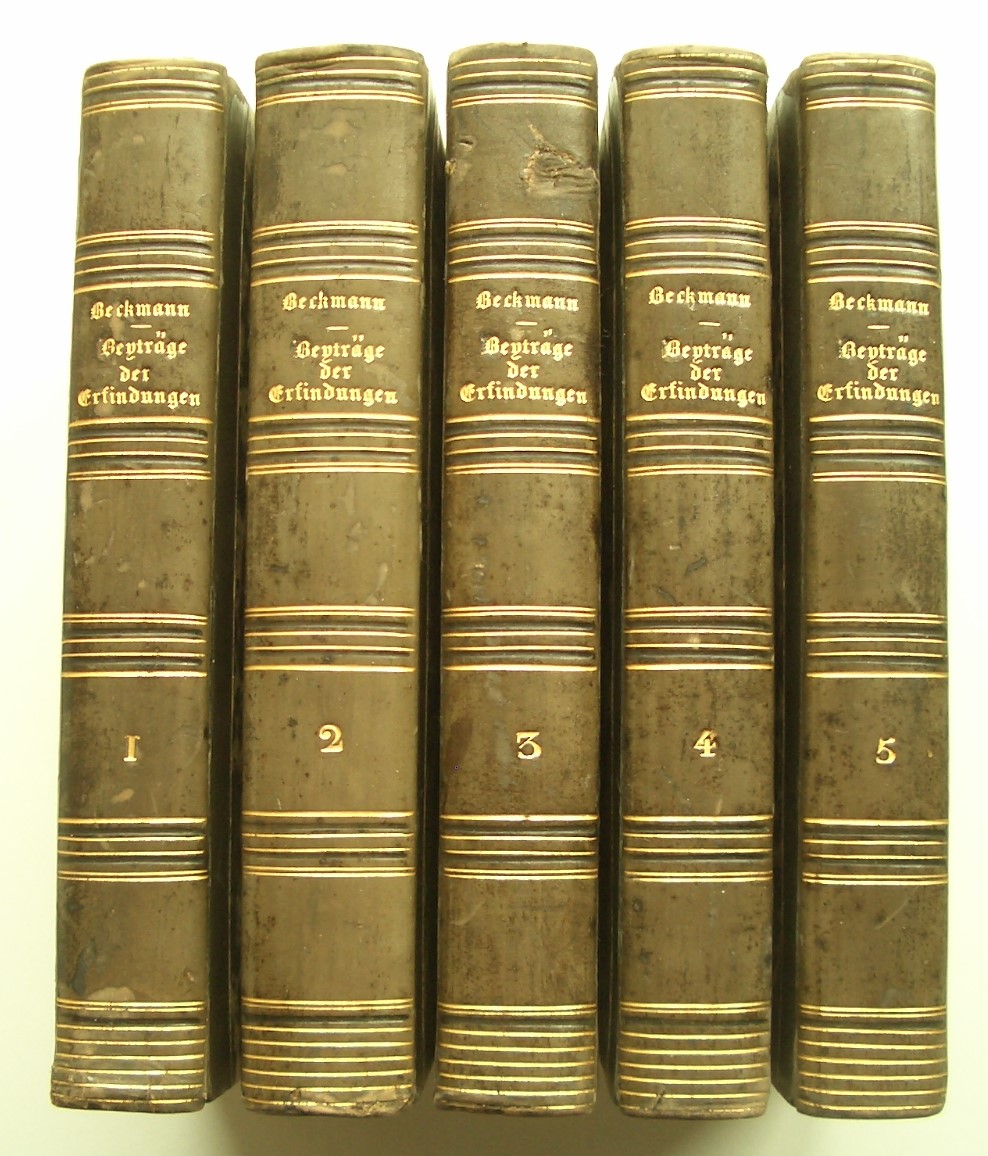
1805ref. 34065 Bände. Leipzig, P. G. Kummer, 1783-1805. 8vo. (17,8 x 10,4 cm). Marmorierte Halblederbände aus der Mitte des 19. Jahrhunderts mit goldgeprägtem Rückentitel u. -vergoldung.
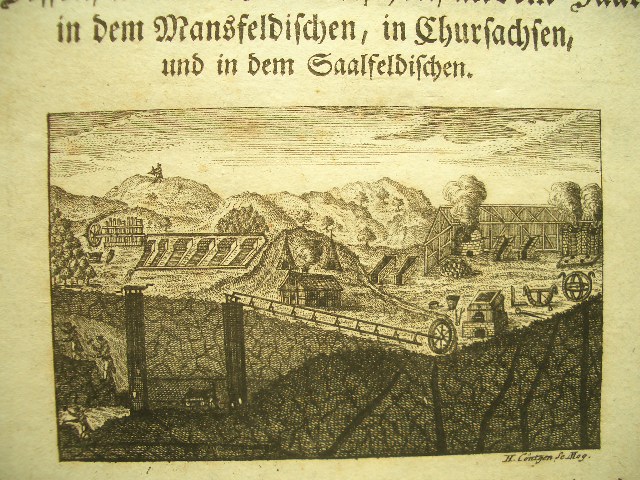
1767ref. 3858), in dem Mansfeldischen, in Chursachsen, und in dem Saalfeldischen. Mit gest. Titelvign. u. 11 gefalt. gest. Tafeln von H. Cöntgen, Mainz, u. J. C. Back. Frankfurt am Main, Andreäische Buchhandlung, 1767. 4to. (23,5 x 18,5 cm). 8 Bl., 429 S., (1 S. Verbesserungen), 1 leeres Bl. Halblederband d. Zt. mit Rückenschild u. -vergoldung sowie Marmorpapiervorsätzen.
1842In-8 p. (mm. 228x136), 2 volumi, mz. pelle mod. con ang., dorso a cordoni con decoraz. e tit. oro, conservata la brossura orig. - Volume 1°: pp. XI (occhietto, frontesp., dedica a Messieurs Robert Frères, “notice sur Careme par M. le Marquis de Cussy”, il celebre gastronomo), 352; con bella antiporta incisa, disegnata da Carème per la prima ediz. del 1822 - 12 ‘tableaux’ di menus, più volte ripieg. - 2 tavole (più e più volte ripieg.) con la disposizione dei “coperti” per un considerevole numero di persone. - Volume 2°: pp. 4 (occhietto, frontespizio), 282; con 12 ‘tableaux’ di menus, più volte ripieg. - 3 tavole (più e più volte ripieg.) con la disposizione dei “coperti” - 2 grandi tavole con la raffigurazione del “grand buffet de la cuisine moderne”, tutte inc. in rame. "Seconda edizione" di questa importante opera, con un totale di 24 ‘tableaux’, una antiporta allegorica e 7 (su 10) tavv. più volte ripieg. Nella prefazione l’A. spiega la divisione del suo studio in 5 trattati. - I traité: Remarques et considération sur l’ordonnance des menus de l’ancienne cuisine. - II traité: Considération et développements sur l’ordonnance des menus de la cuisine moderne, selon les 4 saisons, pour le service des tables opulentes depuis le premier janvier jusqu’à la fin de décembre inclusivement. - III traité: Des menus servis à la russe par l’auteur à S. M. I. l’empereur Alexandre, pendant son séjour à Paris, en 1814 et 1815. - IV traité: Des menus servis par l’auteur à S.A.R. le prince régent d’Angleterre, depuis George IV, pendant le grand voyage de la cour au pavillon de Brighton, en 1816 et 1817. - V traité: Des menus servis à Vienne par l’auteur à S. Exc. lord Stewart, ambassadeur extraordinaire de S.M.B. près la cour d’Autriche, en 1821. Suivis de considérations et remarques curieuses sur les productions en comestibles de Londres, Vienne et Saint-Pétersbourg, comparées à celles de la capitale de France, relativement à la cuisine; enrichi de planches représentant le service des tables et buffets pour les grandes réunions de famille et les fetes civiles et militaires. Cfr. Vicaire, p. 146 - Bitting, p. 75: 8 tavv. (di cui 7 ripieg.) e 24 ‘tableaux’. Pagine ingiallite per la qualità della carta e con qualche fiorit. ma complessivam. buon esemplare. "Il grande chef francese Marie Antoine Careme (1784-1833), fu cuoco di Talleyrand e poi degli imperatori di Russia e d’Austria. Il suo nome è divenuto quasi proverbiale per indicare l’ideale del cuoco perfetto. Scrisse varie opere fra cui “Il cuoco parigino o L’arte della cucina nel secolo XIX”". Così Diz. Larousse,III, p. 405.
1654In-16 p. (mm. 156x95), 8 parti in 1 vol., mz. pergam. antica, titolo impresso al dorso. Questa importante opera è così suddivisa: Pars prima (1654) pp. 77 - Pars secunda: De vegetabilium, animalium & mineralium praeparatione, per solvens universale (1656) pp. 128 - Tertia pars: Vegetabilia, animalia & mineralia per salem & ignem spagyrica methodo mundandi.. (1661) pp. 48 - Quarta pars: Medicinae quatuor columnas primarias, nempe sulphur, vitriolum, antimonium & mercurium tractans.. (1661) pp. 76, 2 cc.b. - Quinta pars: De vera medicina universali, summisque illis arcanis, tam universalibus quam particularibus.. (1663) pp. 75, 1 c.b. "Mancano le 2 tavole fuori testo ripieg." - Pars sexta: Sive lumen nuperrime ortum & clavis fortis.. (1664) pp. 87 - Pars septima: In qua uberius pertractatur, qualiter ex hominis urina secretum philosophorum sal armoniacum praeparetur.. (1668) pp. 87 - Prima Appendix in Pharmacopoeiae spagyricae partem septimam (1669) pp. 48. Importante opera, tutta in "edizione originale" ad eccezione della parte III (la cui prima ed. è del 1657). Molto raro trovarla completa di tutte le sue 7 parti + il vol. di Appendice. Cfr. Sallander “Bibliotheca Walleriana”,3577 e 3578 la sola bibliografia che segnala l’opera completa dell’Appendice - Wellcome,III, p. 123 non cita l’Appendice - Krivatsy,4804 solo 5 parti - Duveen, p. 257 e Caillet,II,4586 solo 3 parti. Celebre alchimista tedesco, Johann Rudolph Glauber (1604-1668) fu soprannominato il “Paracelso della sua epoca” e, come quest’ultimo, si dimostrò partigiano delle operazioni e teorie alchemiche le più strane. “Iniziò lo studio teorico della affinità chimica, e si occupò di diversi processi tecnologici fra cui la preparazione di acidi minerali (acido cloridrico) e di sali (solfato sodico, sali d’antimonio), la distillazione del legno, ecc. Sotto il nome di "Sale di Glauber" ancora oggi si indica spesso il solfato di sodio idrato che i medici del tempo di Glauber, chiamarono anche "sale mirabile" per le sue proprietà terapeutiche". Così Diz. Treccani,V, p. 461. Con antiche postille e sottolineature a penna; fiorit., lievi aloni margin. e arross. per la qualità della carta, ma complessivam. discreto esemplare.
1929ref. 025041Pasadena 1929. Original Drawing . No Binding. Near Fine. 13 3/4" x 12 1/4. Original Pencil Engineering Drawing Of Three Views Of A "Latitude Finder At Any Hour Angle With Three Reflections" Dated 1929 Signed Rwp. The Drawing Is 9 5/8" X 11 1/8" With Ample Margins. Porter Is Famous For His Prescient Pre-Construction Drawings Of The Palomar Observatory And Its Telescopes Machinery And Buildings So Well Visualized That They Were Used As Guides During Construction. unknown