SCHEEL, (HENR. OTTO).Livre Rare Book

51,552 results
1777ref. 57417Copenhague, Claude Philibert, 1777. 4to. Contemp. hcalf. Richly gilt spine. Titlelabel with gilt lettering. Some repairs to upper compartment of spine. Engraved titlevignette. (4),XVI,(8),440,(1) pp., 6 folded tables and 30 large folded engraved plates. Some marginal dampstaining, mainly to the first ca. 20 leaves, decreasing towards end and a few at end. On good paper.
1733ref. 56170Dublin, S. Powell, 1733. Contemp. full calf. Raised bands. Titlelabel with gilt lettering. Light wear along fronthinge. A paperlabel pasted on lower part of spine. XI,(1),(12 - Subscriber'øs List),176 pp., 4 folded engraved plates. Clean, printed on good paper. Light toning to the first quires.
1922ref. 55371Granite City IL & St. Louis MO: John H. Wedig Sun Motors Corporation; William L. Schreiber Commercial Photographer 1922. Two vols. 1st - 4 leaves Five plates & diagrams. Steel-engraved printed softcovers typed form on front cover with US seal awarding Patent No. 1421632 to John H. Wedig and Sun Motors punch-sewn at gutter margin w/ blue ribbon minor dustsoiling edgewear w/ TLS from Ralph Kalish addressed to John H. Wedig; 2nd -- Oblong 4to. 12 x 9.25 in. With 39 linen-backed silver gelatin photographs including 4 images 35 of blueprints & diagrams many hand-coloured on images all mounted on linen hinges at gutter margin stamped on versos w/ photographer’s studio stamp. Contemporary Acco-folder post-binder bound w/ nickel-plated sliding Acco fastener at gutter margin minor edgewear rubbing still VG exemplar. A fascinating patent model album and patent award for a rotary “internal-combustion engine” developed by Wedig a Granite City IL physician and inventor. Rotary engines had first been developed by Millet and Hargrave by 1889 with applications to motorcycles and operating large flywheels. By 1900 Adams-Farwell automobiles had developed and introduced rotary engines into their motor cars. Prior to World War I there was a flurry of activity surrounding the development of rotary engines for aircraft as their power-to-weight ratios gave them an advantage over in-line engines being developed at the time. Dr. Wedig 1885-1934 an Illinois physician and inventor believed that he had made enough improvements to claim a U.S. patent including the piston sequences camshaft issues oil distribution and cooling problems. He filed in April 1918 just months after the U.S. had entered World War I and formed the Sun Motors Corporation to develop a lighter weight and more efficient rotary engine apparently not only for aircraft but also other uses. However his patent was not awarded until July 1922 and by that time high fuel consumption and oil lubrication issues would doom the rotary engine within a very short time and Sun Motors Corporation disappeared. Air-cooled radial engines notably produced by Jaguar and Bristol Jupiter replaced rotaries in aircraft and rotary engines before the Wankel rotary engine were largely confined to small and short-lived automobile companies such as Adams-Farwell Bailey Intrepid and others. Wedig had previously invented and patented a double-chamber syringe and known to have worked on other technological and medical devices. Schreiber 1879-1947 was a lithographer who became a successful commercial photographer whose business flourished until the Great Depression and then he disappears from street and commercial directory listings and is registered as unemployed for the World War II draft in 1942. John H. Wedig, Sun Motors Corporation; William L. Schreiber, Commercial Photographer, paperback
1864ref. 21755Philadelphia: Henry Carey Baird. Very Good-. 1864. First Edition; First Printing. Hardcover. Bound in the original fragile brown cloth. Surface is flaking off the spine and at the corners. Contents are clean and tight. Owner's contemporary signature inside the front cover. ; Small 8vo 7½" - 8" tall; 33616 pages . Henry Carey Baird hardcover
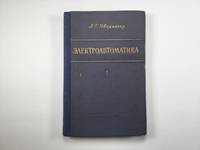
1954ref. 007867Kiev: State Technical Press of Ukrainian SSR 1954. Very Good condition. SEE PHOTOS. 14 cm x 21 cm. A solid copy. Square and tight. Minor bumps/rubbing to corners. Inner hinges are sound. Pages are clean crisp and unmarked. This is the original 1954 Russian language edition. Since our book listing service does not offer the capability to enter titles using the Cyrillic alphabet the bibliographical data given above are based on an automated translation from the Russian using Babel Fish Altavista. Bound in the original blue boards with a blue cloth spine lettered in shiny gold. The author A. G. Ivakhnenko was born in the Ukraine in 1913. This book is one of his earliest publications probably the 3rd. With more than 30 monographs and over 400 published scientific articles to his credit Professor Ivakhnenko has made numerous major contributions to the fields of cybernetics automatic control adaptive learning systems and infomatics. His most influential invention is probably the Group Method of Data Handling GMDH also known as Polynomial Neural Networks. GMDH is widely used to identify unknown relationships of complex systems to solve a multitude of problems in medicine business sociology and other fields. Ivakhnenko also developed the algorithms on which the artificial intelligence tool KnowledgeMiner is based and was chief editor of the journal Avtomatika. This copy is one of several dozen books from Alonzo Church's library that we were lucky enough to purchase at auction in New Jersey. Several of the books contain his signature or a presentation inscription to him. Unfortunately this copy does not have those signs of his ownership. But please check our inventory for several others that do. However there is a paper laid-in with bibliographic data concerning the book that appears to be written in Dr. Church's hand. Alonzo Church 1903 - 1995 was professor of mathematics at Princeton University 1929-1967 and of mathematics and philosophy at UCLA 1967-1990. He was the founding editor of the JOURNAL OF SYMBOLIC LOGIC. Among his most influential contributions are Church's Theorem Church's Thesis and the Lambda Calculus. His work was of major importance in mathematical logic recursion theory theoretical computer science and functional programming languages in general. Professor Church's creation of lambda calculus was the foundation for the LISP programming language and provided the semantic model for ALGOL. He was elected to the National Academy of Sciences British Academy and the American Academy of Arts and Sciences. Church is regarded by many as the greatest American logician of the 20th century. For more on Church's contributions see items 250 251 321 394 and 533 in Hook and Norman's ORIGINS OF CYBERSPACE A LIBRARY ON THE HISTORY OF COMPUTING. First Edition. Hardcover. Very Good condition/No dust acket. 8vo. 291pp. Great Packaging Fast Shipping. State Technical Press of Ukrainian SSR Hardcover
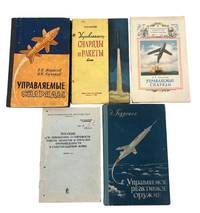
1956ref. 231011956. Guided Missiles USSR Coild War Soviet guided missile technology archive documenting Russian weapons development and civil defense planning during the Cold War when ballistic missile systems and nuclear strategy defined global military competition between the United States and the Soviet Union. Issued by Soviet military and state publishing bodies these works provide direct evidence of how missile guidance rocket engineering and industrial survivability were formalized taught and disseminated within Soviet scientific and defense institutions. All text in Russian. The archive supports research into Cold War military science Soviet technological education and the integration of weapons systems knowledge with civil defense planning under conditions of anticipated nuclear conflict. Archive of five books published between the mid-1950s and early 1970s encompassing both technical instruction and applied military doctrine. The group includes translated and domestically produced works on guided missile systems as well as a civil defense manual addressing industrial resilience under nuclear conditions. Archive includes: 1 Burgess Eric. Guided Weapons. London 1957; Russian translation: Moscow: Izdatelstvo Inostrannoy Literatury 1958. Illustrated blue boards. 8vo. 325 pages. Technical overview of guided missile systems including propulsion control mechanisms and early missile design principles based on Western research. 2 Lyapunov B. V. Guided Projectiles. Moscow: Voennoe Izdatelstvo Ministerstva Oborony SSSR 1956. Illustrated wrappers. 8vo. 136 pages. Introductory military-scientific text explaining the structure and function of guided munitions within Soviet weapons systems. This volume establishes foundational terminology and conceptual frameworks for missile technology within Soviet military education. A few pen markings and ex-libris stamps. 3 Petrov V. P. Guided Missiles and Rockets. Moscow: Izdatelstvo DOSAAF 1957. Illustrated wrappers. 8vo. 118 pages. Expanded treatment of rocket systems and guided weapons likely intended for paramilitary or technical training audiences associated with DOSAAF. Some minor loss to spine and foxing on cover. Binding tight. 4 Marisov V. I. and Kucherov I. K. Guided Projectiles. Moscow: Military Publishing House of the Ministry of Defense. 1959. Illustrated blue and yellow boards. 8vo. 259 pages. Mid-century instructional work focused on guided weapons systems with emphasis on operational and mechanical principles. This volume reinforces standardized Soviet instruction on missile technology. Some pen and pencil markings on title page and back pastedown. 5 Headquarters of Civil Defense of the USSR. Manual on Increasing the Stability of Industrial Operations in a Missile Nuclear War. Moscow: Voennoe Izdatelstvo Ministerstva Oborony SSSR 1972. Light blue wrappers. 8vo. 95 pages. Civil defense manual detailing procedures for maintaining industrial productivity and infrastructure resilience under conditions of missile and nuclear attack. Some loss to spine minor markings on cover and title page. Binding tight. Together these works document the convergence of military engineering scientific education and civil defense policy in the Soviet Union during the height of the Cold War when guided missile technology and nuclear strategy reshaped both warfare and domestic planning. The inclusion of both technical manuals and civil defense instruction shows how missile systems were not only weapons platforms but also organizing principles for industrial and societal preparedness. Light wear including edge wear creasing and handling marks; some volumes with softcover wear and minor staining; binding sound on all volumes; overall very good condition. This archive offers material evidence of how the Soviet state disseminated complex military knowledge across professional educational and civilian sectors contributing to broader studies of Cold War science technology transfer and defense infrastructure. unknown
1956ref. 231011956. Guided Missiles USSR Coild War Soviet guided missile technology archive documenting Russian weapons development and civil defense planning during the Cold War when ballistic missile systems and nuclear strategy defined global military competition between the United States and the Soviet Union. Issued by Soviet military and state publishing bodies these works provide direct evidence of how missile guidance rocket engineering and industrial survivability were formalized taught and disseminated within Soviet scientific and defense institutions. All text in Russian. The archive supports research into Cold War military science Soviet technological education and the integration of weapons systems knowledge with civil defense planning under conditions of anticipated nuclear conflict. Archive of five books published between the mid-1950s and early 1970s encompassing both technical instruction and applied military doctrine. The group includes translated and domestically produced works on guided missile systems as well as a civil defense manual addressing industrial resilience under nuclear conditions. Archive includes: 1 Burgess Eric. Guided Weapons. London 1957; Russian translation: Moscow: Izdatelstvo Inostrannoy Literatury 1958. Illustrated blue boards. 8vo. 325 pages. Technical overview of guided missile systems including propulsion control mechanisms and early missile design principles based on Western research. 2 Lyapunov B. V. Guided Projectiles. Moscow: Voennoe Izdatelstvo Ministerstva Oborony SSSR 1956. Illustrated wrappers. 8vo. 136 pages. Introductory military-scientific text explaining the structure and function of guided munitions within Soviet weapons systems. This volume establishes foundational terminology and conceptual frameworks for missile technology within Soviet military education. A few pen markings and ex-libris stamps. 3 Petrov V. P. Guided Missiles and Rockets. Moscow: Izdatelstvo DOSAAF 1957. Illustrated wrappers. 8vo. 118 pages. Expanded treatment of rocket systems and guided weapons likely intended for paramilitary or technical training audiences associated with DOSAAF. Some minor loss to spine and foxing on cover. Binding tight. 4 Marisov V. I. and Kucherov I. K. Guided Projectiles. Moscow: Military Publishing House of the Ministry of Defense. 1959. Illustrated blue and yellow boards. 8vo. 259 pages. Mid-century instructional work focused on guided weapons systems with emphasis on operational and mechanical principles. This volume reinforces standardized Soviet instruction on missile technology. Some pen and pencil markings on title page and back pastedown. 5 Headquarters of Civil Defense of the USSR. Manual on Increasing the Stability of Industrial Operations in a Missile Nuclear War. Moscow: Voennoe Izdatelstvo Ministerstva Oborony SSSR 1972. Light blue wrappers. 8vo. 95 pages. Civil defense manual detailing procedures for maintaining industrial productivity and infrastructure resilience under conditions of missile and nuclear attack. Some loss to spine minor markings on cover and title page. Binding tight. Together these works document the convergence of military engineering scientific education and civil defense policy in the Soviet Union during the height of the Cold War when guided missile technology and nuclear strategy reshaped both warfare and domestic planning. The inclusion of both technical manuals and civil defense instruction shows how missile systems were not only weapons platforms but also organizing principles for industrial and societal preparedness. Light wear including edge wear creasing and handling marks; some volumes with softcover wear and minor staining; binding sound on all volumes; overall very good condition. This archive offers material evidence of how the Soviet state disseminated complex military knowledge across professional educational and civilian sectors contributing to broader studies of Cold War science technology transfer and defense infrastructure. unknown books
1821In-8 gr. (mm. 265x195), mz. pelle coeva con ang. (spacco a una cerniera), dorso a cordoni con fregi e tit. oro, pp. XIV,291,(7), con 6 grandi tavv. inc. in rame f.t. e più volte ripieg., relative a: "Carta per la navigazione-interna del Milanese - Canale di Pavia: planimetria e profilo del canale - Dettagli pei sostegni sul canale - Tipo di due sostegni accollati sul canale - Tipi di varie opere sul canale". Importante studio sull'idrografia del Milanese, con particolare riguardo al canale di Pavia, e con notizie storiche dal XIII al XIX secolo. "Prima edizione." Cfr. Predari, p. 45. Piccole macchie a p. 71; le tavole restaur. per picc. strappi, altrimenti esempl. marginoso, ben conservato.
1542In-16 p. (mm. 155x100), p. pergam. antica (risg. rifatti), titolo ms. al dorso, 8 cc.nn., 171 cc.num., marca tipograf. della Fenice al frontespizio e in fine, ornato da eleganti grandi capilettera figur. a vignetta inc. su legno. Opera divisa in 20 libri: cinque sono dedicati al vino e numerosi sono i riferimenti alla gastronomia. Si trovano anche capitoli su come preparare le esche per la pesca di fiume e di mare, sull'allevamento delle pecore, mucche, cavalli, sulla preparazione del miele, dell'olio, ecc. "Prima edizione". Cfr. Bongi,I, p. 40: “E’ la traduzione de’ venti libri delle "Geoponiche", raccolta di precetti d’agricoltura, un tempo attribuita all’imperatore d’Oriente Costantino VII Porfirogenito (903 - 959). Nello stesso anno 1542 fu stampata altra traduzione della stessa raccolta fatta da Niccolò Vitelli, il quale si valse però della versione latina di Giano Corrario. Il Lauro, invece, avrebbe condotto il suo lavoro sul testo greco”. Leggermente corto del marg. sup.; restauro al frontesp. per manc. al margine interno (non di testo) e con lieve arross.; altrimenti esemplare ben conservato.
1669In-4 (mm. 351 x 244), 2 volumi, cartonato rustico antico (restaur., dorso rifatto), pp. (20),724; (24),883,(17); inclusi i due bei frontespizi figur. incisi e 1 tavola nel t. con 6 stemmi; fuori testo un ritratto dell'A. (ripetuto nel II vol. ma nel t.), tutti inc. in rame. L'opera è ornata da testate, grandi capilettera figur. a vignetta e finali inc. su legno. Nel II vol. è contenuta anche la vita dell'A., scritta da Jacobo Pighio. "Edizione originale". Cfr. Wellcome,III, p. 44 - Krivatsy,4207 - Biographie Médicale,IV, p. 210. "Raimondo Giovanni Forte (1603-78), si dottorò a Padova con somma lode. Si rese così famoso a Venezia che fu scelto nel 1658 ad occupare in Padova la prima cattedra di Medicina pratica. La fama della sua somma perizia in quest'Arte obbligò grandi Principi a chiederlo per la loro salute e fu anche chiamato a Vienna dall'imperatore Leopoldo che lo nominò Archiatro della Casa Cesarea." Così Eloy,II, p. 69 Nel I vol. pesante alone al marg. super. bianco delle prime 120 e ultime 35 carte; l'ultima è stata anche restaur. per angolo super. mancante. Nel II vol. alc. carte con uniformi arross. più o meno lievi e in entrambi i volumi alc. carte restaur. per piccoli fori di tarlo, ma complessivam. un buon esemplare con barbe.
1738In-8 p. (mm. 230x170), 8 parti in 4 tomi, p. pergamena coeva, tit. ms. al dorso (uno con picc. manc.). L’opera è così composta: tomo 1° e 2° - tomo 3° e 4° p. I - tomo 4° p. II e III - tomo 4° p. IV e V, di pp. complessive 2200 ca. "Mancano" il Supplemento e la Vita dell’Autore. Cfr. Castiglioni “Storia della medicina”, pp. 596-97: “Federico Hoffmann (1660-1742), prof. di medicina a Halle, medico a Berlino alla corte di Federico I.. fu il creatore del sistema essenzialmente razionale su fondamento meccanico. In una importante opera intitolata "Medicina rationalis systematica" raccolse le sue teorie delle quali egli afferma che esse devono servire soprattutto alla pratica. Il ragionamento e l’esperienza devono, secondo lui, formare i fondamenti della medicina, che poi per la spiegazione dei fatti deve servirsi della fisica, della chimica e dell’anatomia.. Il posto che gli fu attribuito nella storia della medicina da molti storici non è immeritato” - Wellcome, p. 283 e Blake p. 217 citano l’ediz. di Halle 1718-40. Qualche lieve alone ma buon esemplare.
1684In-4 p. (mm. 280x215), p. pergamena coeva, titolo ms. al dorso (picc. strappo), pp. (8),243 (mal num. 253), con grande vignetta inc. in rame al frontespizio e 26 interessanti tavole f.t. (pure inc. in rame), di cui 2 più volte ripieg., ciasc. con numer. figure. Privo del ritratto dell’A., “quasi sempre mancante”, come precisa il Piantanida. "Rara edizione originale" di uno dei testi fondamentali per la parassitologia. Cfr. Piantanida,I,1752: “Nello stesso anno l’ed. pubblicò altra edizione in 232 pp., priva dell’errata e con l’impresa dell’Accad. al front. in legno e non in rame, ediz. questa meno bella ma più corretta. Opera molto importante per la storia delle scoperte sui parassiti, sui vermi, ecc. Le tavole sono inc. con particolare finezza. Testo di lingua e di Crusca” - Brunet,IV,1175 - Graesse,VI, p. 58 - Gamba,823 - Razzolini, p. 288 - Walleriana, 11939 - Garrison-Morton, 2276 - De Renzi,IV,170-172. Fresco esemplare marginoso, molto ben conservato.
1968ref. EG-346Arcadia California: A.A. Mathews Inc. 1968. Classic comprehesive text originally published in 1906 presents a detailed preeminent treatise on shield-work and compressed air working including its early history 1818-1880 with notes on caisson sickness. Topics covered include: cast iron lining for tunnels; the Greathead shield in London clay- the assisted shield Great Northern and Strand shields Kingsway subway shield Glasgow District subway Thomson's excavator; the shield in water-bearing strata- the Hudson River Tunnel the Vyrnwy Aqueduct Tunnel Glasgow Harbour Tunnel the Blackwall Tunnel the East River Gas Tunnel in New York the Greenwich subway the Lea Tunnel the Baker Street and Waterloo Railway; the shield in masonry tunnels- the Chagnaud shield the Tremont Street Tunnel in Boston the Boston Harbor Tunnel the Champigneul shield the Lamarre shields the Dieudonnat and Weber shields; tunnelling work carried out with a shield or compressed air- tube railways in London the Rotherhithe Tunnel Paris Metropolitan Railway the River Dee Tunnel the Brackenagh Tunnel the Hilsea Tunnel; etc. Includes a chronological list of events connected with tunnelling by means of a shield or of compressed air and some English patents relating to tunneliing with shield and compressed air 1818 to 1904. 389 pgs. Illustrated with 260 figures drawings and diagrams including a fold-out chart. Gilt spine. Minor rubbing to corners; very minimal shelfwear. Scarce. Limited Edition Reprint. Hard Cover. Fine. 4to - over 9¾" - 12" tall. A.A. Mathews Inc. Hardcover
ref. DADAX158705065XNew unknown
1930Kaluga 1930. Orig. printed wrappers. 8vo. (16,5 x 12,8 cm). A few spots to margins of wrappers, otherwise mint. 91 pp. + 21 pp. with illustrations only.
1734Amsterdam, Par la Compagnie des Libraires, 1734. 4to. Cont. hcalf. Gilt back. Titlelabel on back. Back slightly rubbed. Engraved frontispiece (le Pautre fecit). Title in red/black. (8),346,(2) pp. and 41 folded engraved plates (plate 3-4 on one). Small stamp on title and verso. Occasionally slightly browned.
1928(London, The Television Press), 1928. 8vo. Original illustrated coloured wrappers depicting a distinguished couple enjoying the opera transmitted on television, with the actual opera in the background. Richly illustrated throughout. A bit of minor spotting to front wrapper " all in all a very nice, fully intact, copy. 52 pp + one loose leaf: ""Supplement to Television, No. 1 - March, 1928"" (containing the article ""Seeing Across the Atlantic!"").
1908ref. 27415Black Hills SD: H. W. Kitsen. Good with No dust jacket as issued. 1908. First Edition. Flexible leather. These are the original handwritten notes by the engineer who surveyed and worked on the mine. Plans of or for tunnels location all sorts of stuff. Done in pencil but very legible. In part appears to be instruction on how to set up the mine. The leather covers are flaking and rubbed at the edges. Contents are very good to fine. ; Small 8vo 7½" - 8" tall . H. W. Kitsen hardcover
1794ref. 15653London: T. G. Wilkie. Very Good. 1794-1798. First Edition. Hardcover. Eight volumes rebound in light tan buckram cloth maroon spine labels with gilt titles. Volume #1 1794 432pp with index 440pp. 25 plates and one fold out. Volume #2 1795 432pp with index 440 24 plates. Some pages have a damp stain on bottom margin. Volume #3 1795 432pp with index 440pp 23 plates. Copper plate #16 between pages 288-289 had been torn out. Volume #4 1796 432pp 440pp with index. 23 plates and one fold out. Volume #5 1796 432pp. 440pp with index. 23 plates and one fold out. Volume 6 1796 432pp 440pp with index. 21 plates. Plate #4 between pages 34 & 35 is half torn out. Volume #7 1797 432pp 440pp with index. 21 plates and 3 fold outs. Volume #8 1798 432pp 440 with index. 22 plates and 2 fold outs. Of the 182 copper plates called for in the 8 volumes 180 are complete one and a half are missing. Condition ranging from G to VG. A few lightly foxed pages some damp staining and a few age toned pages. Fascinating look at latest in technology & industrial Arts. Technical; Copper plates; 8vo 8" - 9" tall; 3520 pages . T. G. Wilkie hardcover
1734ref. 29885Amsterdam, Par la Compagnie des Libraires, 1734. 4to. Cont. hcalf. Gilt back. Titlelabel on back. Back slightly rubbed. Engraved frontispiece (le Pautre fecit). Title in red/black. (8),346,(2) pp. and 41 folded engraved plates (plate 3-4 on one). Small stamp on title and verso. Occasionally slightly browned.
1928ref. 40916(London, The Television Press), 1928. 8vo. Original illustrated coloured wrappers depicting a distinguished couple enjoying the opera transmitted on television, with the actual opera in the background. Richly illustrated throughout. A bit of minor spotting to front wrapper" all in all a very nice, fully intact, copy. 52 pp + one loose leaf: ""Supplement to Television, No. 1 - March, 1928"" (containing the article ""Seeing Across the Atlantic!"").
ref. DADAX0675222893New unknown
ref. DADAX0801851521New unknown
1952ref. 1205300085Center for International Studies: MIT 1952. Perfect Paperback. Good. A classified study of the political vulnerabilities of the Soviet Union. This study was rated Secret under Title 18 of the US espionage laws. Walt Whitman Rostow and other cold war analysts such as Adam Ulam McGeorge Bundy Andreas Lowenfeld Barrington Moore Allen Dulles etc. prepared it for the CIA DOD and Psychological Strategy Board. The recommendations are quite fascinating and have important implications for future US cold war policies. The analyzes of the study are quite vivid and strongly argued for example "The regime might also undertake major war in a variety of conditions under which it became convinced that major war was the only realistic alternative to loss of control over Soviet society. In other terms the regime is likely o choose to go down fighting rather than surrender its domestic base without a fight. For example on the knowledge available to us it seems likely that an overt ultimatum to the regime whose acceptance would be judged to involve both loss of essential positions and open capitulation to an external threat would be rejected." Machiavelli is quoted in the analysis. 5 volumes. "Secret" has been inked out on the top and bottom margin of all pages. Bound in CENIS wraps. viii 222 i 275 pp. Contents include: Part I. Recommendations secret; Part II. A Origin Present Status and Prospects for Soviet Society B Vulnerability of the Soviet Union and its European Satellites to Political Warfare; Part III. A Cancellation; B Some Problems of Radio Broadcasting to the Soviet Union and its European Satellites; C Some problems of policy in respect to the non-Russian Soviet Peoples; D A statement of U.S. Interests and objectives in Russia and Eastern Europe. Volume II The Dynamics of Soviet Society. Center for International Studies: MIT paperback