Mattenheimer, AAntiquariat.de
51,856 results
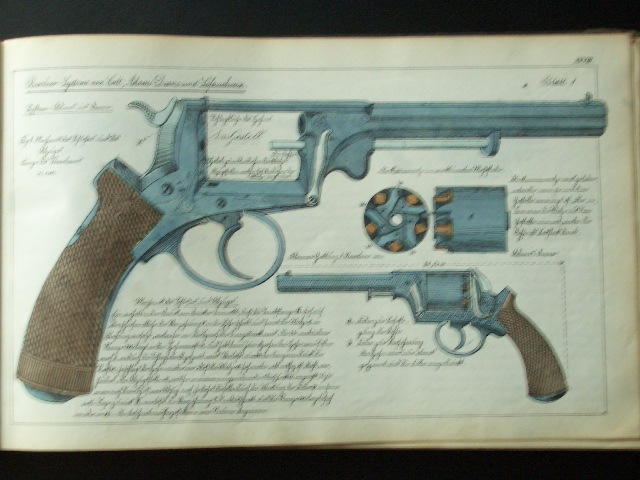
1869ref. 3179Fragmente ihrer Entstehungs- und Entwickelungs-Geschichte in lithographirten und colorirten Blättern. (Beitrag zur Handfeuerwaffen-Lehre). Nach den Original-Waffen, Photographien und Original-Zeichnungen. Mit 92 (1 gefalt., meist kolor.) lithogr. Tafeln. Darmstadt u. Leipzig, E. Zernin, 1869. Quer-4to. (21,0 x 33,5 cm). 3 Bll. Leinwandband d. Zt. mit geprägtem Deckeltitel.
1804ref. 4857Zusammengetragen aus zwey gekrönten Preisschriften. 2 Schriften in 1 Band. Mit 3 (1 gefalt.) gest. Tafeln. Wien, gedruckt bey M. A. Schmidt, 1804. 8vo. (19,1 x 11,9 cm). 1: 6 Bl., 179 S. 2: 4 Bl., 115 S. Blaugrüner Pappband d. Zt. mit 2 farbigen Rückenschildern.
1821ref. 3579Coronata colla medaglia d'oro nella distribuzione de' Premj d' Industria nel dì 4 Ottobre 1815. Mit 4 kolor. gefalt. gest. Tafeln. Mailand, dalla tipografia di Angelo Stanislao Brambilla, 1821. 8vo. (20,8 x 13,7 cm). 19 S. Neuer Umschlag.
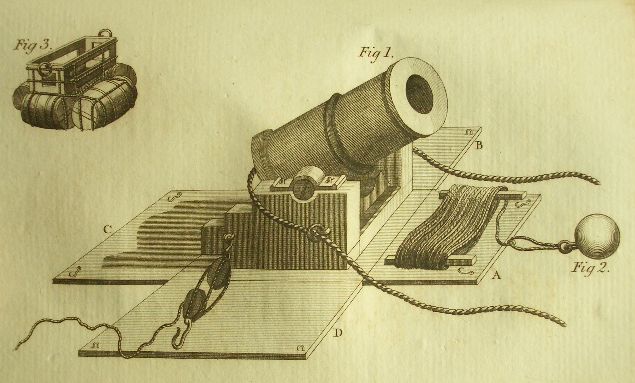
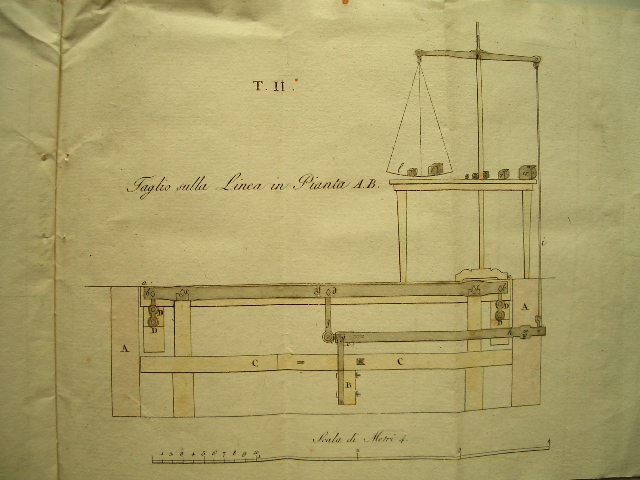
1810ref. 3483; suivies d'expériences sur la transmission du mouvement et la collision de corps. Ouvrage traduit de l'anglais, et précédé d'une Introduction par M. P[ierre] S[imon] Girard. Mit 5 gefalt. gest. Tafeln von N. L. Rousseau nach J. Smeaton. Paris, Courcier u. La Haye, Immerzeel, 1810. 4to. (27,5 x 20,8 cm). (2), XXVIII, 102, (1) S. "Table". Hellroter Pappband d. Zt. mit goldgeprägtem Rückentitel u. goldgeprägter Bordüre auf beiden Deckeln.
1844ref. 2178Couverture souple 1ère Édition Carilian-Goeury et V. Dalmont 1844 Paris 23x14 cm
1587In-16 gr. (mm. 198x148), p. pergamena coeva, 4 cc.nn., 162 (ma 152) pp.num. (omesse nella numerazione le pp. 145-154); marca tipografica al frontespizio (in cornice: porta con architrave sorretta da colonne. Motto: Iusti intrabunt per eam). La parola “TRATTATO” del titolo ha il carattere tipografico “A” rovesciato. Nell’opera “non solo tutte le virtù, & i vitij di quelli minutamente si palesano; ma anco i rimedij per correggere i loro difetti copiosamente s’insegnano: tanto nell’apparecchiarli per l’uso, quanto nell’ordinare il modo di riceverli”. Simon ritiene l’opera del Pisanelli uno dei più celebrati trattati di dietetica del suo tempo. Comprende liste di cibi e di vini suddivisi per categorie (selvaggina, pesce, frutta, verdura, condimenti, vini rossi e bianchi, ecc.) e descrive le loro proprietà nutrizionali, la storia naturale e altro ancora. Cfr. Bitting, p. 372: "Pisanelli practised medicine in Bologna in the 16th century and became celebrated through the erudition shown in this work” - Simon,1172 - Westbury, 6, p. 174 - Vicaire, pp. 682-86 per le numer. ediz. del ‘5/’600 e le traduz. in latino e francese. Con uniformi ingialliture, lieve alone su una decina di carte, ma complessivamente buon esemplare.
Second Edition, folding hand-coloured frontispiece and 6 hand-coloured plates (one folding), 6pp. publisher's catalogue at end, x, [2], [xi] - xvii, [1], 194 pp., contemporary half calf, slightly rubbed, spine ruled in gilt, morocco label, a nice clean copy. Accum collaborated with Rudolph Ackermann, "in order to introduce into England the lighting of towns by gas; and in 1810, when the London Chartered Gaslight and Coke Company was formed, Accum was nominated one of its engineers. It is said that the prompt adoption of this mode of lighting in London and other large cities was greatly due to his 'Practical Treatise on Gas Light'. The first two editions were printed in 1815," - DNB, the fourth and last edition was published in 1818. Partington, 111, 827; cf. Abbey Life, 436.
1835Engraving, 395 x 261 mm. Interesting German engraving, describing the airship built by Count Lennox in London in 1834/35. "In 1835, the comte de Lennox built the 'Eagle', a cigar-shaped airship that he displayed in London. This craft had four large paddles on either side that 'experimental sailors' were to turn back and forth like the oars of ancient ships. No evidence exists that Lennox tried to fly his invention, nor is there any reason to think it would have worked if he had tried" (Don Berliner, Aviation: Reaching for the Sky [1997], p. 33). "[The airship of 98,700 cubic feet capacity] is of interest because a small balloon or ballonet, 7,050 cubic feet contents, was placed inside the larger one for an air filling. A car 66 feet in length was rigged beneath the envelope by means of ropes eighteen inces long. Above the car the envelope was provided with a long air cushion in connection with a valve. The intention was by compression of the air in the cushion and the inner balloon, to alter the height of the airship, in order to travel with the most favourable air currents. The motive power was 20 oar propellers worked by men. The airship proved to be too heavy on completion to lift its own weight, and was destroyed by the onlookers" (George Whale, British Airships: Past, Present and Future [1919], p. 16). - Occasional insignificant browning; slightly wrinkled. Traces of folding. Cf. the like-sized drawing, dated 1838, in the ILA catalogue: Liebmann/Wahl (1912), no. 136 (probably based on this engraving, or vice-versa).
1667In-24 gr. (mm. 132x75) 2 opere in 1 volume, p. pergamena coeva, titolo ms. al dorso, pp. (12),345,(31 di Indice); 213,(15 di Indice), compresa la bella antiporta figurata inc. in rame da Hendrick Bary; vignette incise ai due frontespizi. Il volume è molto ben illustrato nel t. da 21 tavole inc. in rame a piena pagina e da 7 tavole, pure inc. in rame e più volte ripieg., fuori testo (compresa 1 di iscrizioni) che raffigurano varie fogge di calzature e personaggi che le indossano, alcune assai curiose (come quella a p. 126 che mostra una lucerna romana a forma di piede calzato). La tavola di p. 40 costituisce una delle prime raffigurazioni di attrezzi per muoversi e camminare sulla neve e sul ghiacccio. "Prima edizione" di opera rara sulle calzature, dai tempi più antichi fino al Medioevo: materiali, forma, uso in base al rango sociale, alle circostanze ed alla professione; con una gran quantità di notizie e curiosità tratte da autori classici e contemporanei. Cfr. Cicognara,1567: “Libretto assai ben fatto, e con molte tavole nitide” - Lipperheide,I,154 (in nota all’edizione del 1733 di Lipsia). Pagine ingiallite per la qualità della carta altrimenti esemplare ben conservato.
1788In-8 gr. (mm. 254x193), p. pelle bazana coeva, dorso a cordoni (abrasioni alle cerniere) con decoraz. e tit. oro su tassello, tagli rossi, pp. XL,294. E’ introdotto da una interessante “idée générale de la maneuvre des vaisseaux, de leurs évolutions et de leurs divers mouvements”. In appendice “Vocabulaire des termes qu’on a employés dans le Traité de la Mature” e Indice delle figure. Il volume è molto ben illustrato da 192 figure in 24 tavole f.t., ripieg. e inc. in rame da Benard. “Dans ce livre, qui jouit en son temps d’une réputation bien méritée, l’auteur envisage tout ce qui concerne la construction et la mature des vaisseaux et propose une nouvelle formule de voilure qui permet de tirer le meilleur parti possible du vent”. "Prima edizione" di questo importante trattato del francese Forfait (1752-1807), “Ingénieur-Constructeur ordinaire de la Marine”, grazie al quale venne eletto all’Accademia Reale delle Scienze. Lieve alone al margine super. di tutto il vol. ma certamente un buon esemplare.
1759In-4 p. (mm. 286x202), cartonato muto coevo, tit. ms. al dorso, pp. XVIII,426,(2 di “Correzioni”), vignetta ovale incisa al frontespizio, testo ornato da belle testate, grandi capilettera figur. e finali inc. in rame, tutto a soggetto agreste, con 4 tabelle ripieg. f.t. Il volume è molto ben illustrato da: 1 ritratto dell'autore in antiporta, inciso da Pietro Monaco su disegno di Giovanni Andrea Lazzaroni; 1 grande carta geografica (ripieg.) con il “Territorio Ravennate”; 7 tavole, più volte ripieg. (alla fine), che raffigurano il grano nei vari stadi di crescita ed i suoi parassiti, il tutto inciso in rame. "Prima edizione" non comune del maggiore trattato italiano sul frumento, sua coltivazione, malattie, parassiti. Cfr. Gamba 2263: “Il trattato delle Malattie ec. ha assicurata all’Autore l’immortalità, e gli acquistò gli encomii di Haller, che lo antepose a quello di Tillet sullo stesso argomento” - Pritzel 3335 - Paleari - Henssler, I, p. 348. Alcune carte lievem. ingiallite e qualche fiorit. ma certamente un buon esemplare.
1821ref. NATW2998Wien, Leopold Grund 1821. 320, 263 Seiten. Marmorierter Pappband d. Zt. mit 2 goldgepr. Rückenschildchen, umlaufend marm. Schnitt. Titelbl. mit zeitgen. Schulstempel. Breitrandiges, frisches und fleckenfreies Exemplar. Das Werk ist gegliedert in 45 Abschnitte und enthält insgesamt 741 §§. Weitere Photos bzw. das Inhaltsverzeichnis übermitteln wir gerne. Sigismund Friedrich Hermbstädt (1760-1833), deutscher Apotheker, Chemiker, technischer Schriftsteller, Technologe und ?Unternehmensberater?. H.s größte Bedeutung liegt auf dem Gebiete der Technologie. Unermüdlich hat er als Hochschullehrer, in Unterrichtskursen für Gewerbetreibende, durch direkte Beratung von Fabrikanten sowie durch eine sehr große Zahl von Lehrbüchern für nahezu alle Zweige handwerklicher und industrieller chemisch-technologischer Tätigkeit sowie der Landwirtschaft die Erfahrungen und die neuesten Ergebnisse der Wissenschaft der Praxis nutzbar gemacht. Er hat damit vielen Industriezweigen starken Auftrieb gegeben und einzelnen zur Weltgeltung verholfen. Besonders erwähnenswert sind, neben vielen speziellen Handbüchern für einzelne Gewerbe u.a. der - erstmals 1815 erschienene - ?Grundriß der Technologie? - Vgl. NDB 8,666f. - Differenzbesteuert [2 Warenabbildungen]
1619In-24 p. (mm. 119x85), 4 opere di Lemnius in 1 vol., p. pergamena mod. con legacci, tit. ms. al dorso. Oltre all'opera "De miraculis..", pp. (16),582,(58 di Indice) - importante trattato che ebbe numerosiss. edizioni dopo la prima del 1559, in cui vengono affrontati molti argomenti naturali e curiosi. - vi sono contenute: - “De habitu et constitutione corporis, quam Graeci triviales complexionem vocant. Libri II..” Typis Nicolai Hofmanni, 1619, pp. (16),185,(9). Unito: - “Similitudinum ac parabolarum, quae in Bibliis ex herbis atque arboribus desumuntur.. Libri II”. Typis Guolphg. Hofmanni,1627, pp. (16),170. "Cet ouvrage, dans lequel l'auteur traite de l'utilité des plantes et de leur usage allégorique dans les cérémonies réligieuses, a eu beaucoup d'éditions, et il a été traduits en français et en anglais". Unito: - “De gemmis aliquot, iis praesertim quarum divus Ioannes Apostolus in sua Apocalypsis meminit.. Libri duo”. Typis Guolphg. Hofmanni, 1626, pp. 288 (numeraz. continua). Cfr. Biographie Universelle,XXIV, pp. 58-59: "Levin Lemnius o Lemmes, médecin, philosophe hollandais (1505-68) eut pour maitres André Vésale et Conrad Gesner; il pratiqua son art avec un tel succès, que sa reputation s'étendit bientot dans toute l'Europe. Il a laissé plusieurs ouvrages, dont le style n'est dépourvu ni de force, ni d'élégance, et qui tous ont eu un grand succès" - Wellcome,3706; 3714; 3718 - Caillet,II,6480 per "De Miraculis". Esemplare corto del margine sup. ma ben conservato.
1976xvi, [4], 154, [2], 154, [4], 14, 47, [1], 2, 1 pages. List of black and white illustrations. Shulman spent twenty-five years researching this work and wrote it with librarians, students of cryptography, and book collectors in mind. An introduction preceeds the following six sections: works relating directly to ciphers from 1518 to 1976, chronological list of works relating indirectly to cryptography, chronological list of manuscripts, alphabetical index of authors and translators, chronological list of patents on cryptographic devices from 1874 through 1953, sample list of books on cryptography written in languages other than English. From the library of Philip Mills Arnold whose bookplate is mounted inside front board. Arnold, a student of semeiology, explored the history of communication, from efforts to relate through universal languages and alphabets, to systems to conceal, specifically, codes and ciphers. A Semeiology collection named in his honor is maintained at Washington University. In his professional life Arnold spent nearly forty years with Phillips Petroleum, retiring in 1976 as V.P. of Research and Development with 22 patents to his name. Moderate wear. Occasional light pencil marginalia. A sound association copy of this invaluable cryptographic reference. Book
40 Bll., jeweils mit ganzseitiger Heliotypie, am Titel verso gedrucktes Impressum. Pergamentband der Zeit mit goldgepr. Rückenschildchen; die Deckel mit Goldprägung und Bordüren in roter und purpurner Farbe. Marmorvorsätze. Kopfgoldschnitt. Gr.-4to. Seltene Faksimileausgabe von Vavassores 1546 erschienenem Musterbuch, neu herausgegeben von F. Ongania (als Nr. 6 seiner Reihe "Raccolta di opere antiche sui disegni dei merletti di Venezia"). Nr. 80 von 100 numerierten Exemplaren. Nur 2 Exemplare in Italien über ICCU nachgewiesen; diese weisen lediglich einen Umfang von 36 Bll. (einschließlich Titel) auf. Unter den Vorlagen nicht nur Stickmuster, sondern auch Tierholzschnitte, Mauresken etc. Der venezianische Formschneider und Drucker Giovanni Andrea Valvassori (tätig 1510-72, vgl. Ascarelli-Menato, S. 363) legte erstmals 1530 sein Stickmusterbuch "Esemplario di lavori" vor, "das im Laufe von 22 Jahren mindestens 9 Auflagen erlebte" (Thieme/Becker XXXIV, 144). - Die Deckel minimal aufgeworfen; gutes, sauberes Exemplar. ICCU UBO\1285895 (nennt 36 Bll.); VEAE\011760 (nennt 26 Bll.). Vgl. Kat. der Ornamentstichslg. Berlin 1607-1608. Sander 6455.
1932ref. 64022St. Charles MO & Chicago IL: American Car & Foundry Engineering Dept. Chicago Rock Island & Pacific Railway; St. Louis & San Francisco Railroad 1932-1940. Oblong folio. 15.5 x 11.25 in. 112 pp unpaginated. thick black paper stock. With 151 silver gelatin photographs mounted within sized from 7 x 9 in. up to 10.5 x 13.5 in. a few long narrow 6 x 13.5 in. nearly all w/ typed captions w/in negative at lower fore-edges some w/ minor chipping at corners others w/ minor rippling from mounting. Contemporary faux textured flexible black calf post-binder nickel-plated screwposts at gutter margin wraparound spine black cloth w/ white lettering for title “Air. Condt. Equip.” on spine in manuscript some bumping to corners a few leaves w/ cracking in center from weight of images a few reinforced at gutter margin w/ black cloth tape still a VG exemplar. This exceptional in-house factory album visually details the American Car & Foundry’s research & development testing laboratory facilities as they raced to compete with the Pullman Company to introduce the latest innovation in rail technology -- air conditioning. This one technology was not only essential for fast streamlined trains as prior to their introduction passenger railcars were largely cooled by opening windows but also for their standard railcars as well. However all steel cars with the emphasis on less wind resistance allowed all railroad car sets to travel at higher speeds -- streamliners up to 100 miles per hour. Ralph Budd the president of Chicago Burlington & Quincy Railroad was the innovator who combined the all steel cars first developed in 1907 by Alexander Cassatt with stainless steel air-conditioning equipment and powerful diesel engines. This album opens with equipment for the Chicago Rock Island & Pacific Railway diner cars along with mechanical air-conditioning systems for the Wabash RR Chair Cars; together with the mechanical systems motors belts fan systems compressor coils air-conditioning ice boxes for transporting perishable foods and so much more. Of additional interest are the portable temporary rolling air-conditioning units which would be hooked up to diner and passenger coach cars when in the depot allowing comfort while the cars were not powered by diesel locomotive engines and their power plants so as to not drain the batteries. American Car & Foundry systems proved so successful that many of these photos show their large “Thermo-Gravity Air Conditioning System” units for overseas railways. No similar albums or technological records for American Car & Foundry are located in Worldcat; See: Air Conditioning: The Essential Technology Streamliner Memories August 1 2013. American Car & Foundry, Engineering Dept., Chicago, Rock Island & Pacific Railway; St. Louis & San Francisco Railroad, hardcover
ref. SONG0471593192Used: Good unknown
ref. DADAX0849387965New unknown
ref. SONG364230611XUsed: Good unknown
1866ref. 3277I. Curs zu den Vorträgen des Professors Baumeister an der polytechnischen Schule zu Carlsruhe. 60 doppelblattgr. lithogr. Tafeln. Karlsruhe, J. Veith, 1866. Folio (44,5 x 30,5 cm). 1 gefalt. Titel- u. Inhaltsblatt. Halbleinwandband d. Zt.
1725A' Paris chez Brunet, Ganeau, Robustel, Osmont, 1725. In-8, piena pelle, dorso a cordoni con fregi e titolo oro, pp. 431, antiporta allegorica incisa in rame, con 37 tavole, alcune ripiegate, raffiguranti strumenti di navigazione, orologi, mappamondi. Ope
1545In-8 p. (mm. 202x142), 2 opere dello stesso A. in 1 vol., p. pergam. antica (risg. rifatti), 10 cc.nn. Unito, con proprio frontespizio, "Apologia de sectione venae in gravida muliere, pro cautione abortus". Ut illa subinde maladicendi occasio malevolis nulla reliqua esse possit, 28 cc.nn. Bella marca tipograf. ai frontespizi (raffigura Pegaso che colpisce con uno zoccolo la roccia da cui scaturisce una sorgente. Motto: in via virtuti nulla est via); ornate da grandi iniziali su fondo criblé, inc. su legno. Entrambe "seconde edizioni" (le prime sono del 1544), molto rare. Cfr. De Renzi,III, p. 465: “G. Antonio Bozzavotra, celebre filosofo e medico, professore nell’università di Napoli, godeva grande riputazione come pratico e come scrittore; tradusse da Galeno e comentò i quattordici trattati sui metodi di medicare che pubblicò nel 1549, otto anni prima della sua morte - Minieri-Riccio, p. 63. Lunga annotazione in latino (anticamente manoscritta) alla fine della prima opera; solo qualche lieve fiorit. altrimenti ben conservato.
1718In-8 gr. (mm. 275x225), cartonato rustico coevo, pp. (6),312, vignetta allegorica inc. in rame al frontespizio; ritratto dell’A. in medaglione, disegnato e inc. in rame da Gaetano Bianchi; vignetta (incisa nel t.) con la medaglia coniata in occasione dell’entrata in Milano di Francesco Sforza; testo ornato da capilettera e finalini xilografati. "Edizione originale". “Il milanese Bartolomeo Corte (o Curtius) (1666-1738) di antica nobiltà, studiò medicina e si laureò a Pavia nel 1683.. In queste “Notizie istoriche..” (la sua opera più nota e consultata) egli presenta un panorama cronologico (diviso per secoli) della medicina milanese - da Giovanni da Milano al 1715 - sottolineando che col sec. XVI una serie di grandi scoperte permise all’Italia di riconquistare il primato nella scienza medica, perduto nel Medioevo a favore degli Arabi. Il secolo cui è dedicato maggior spazio è il Seicento, ricco di scoperte e di personalità mediche di primo piano”. Così Diz. Biograf. Italiani, XXIX, p. 692/93. Cfr. De Renzi,IV, p. 566 - Argelati,I,i,529 - Cat. Hoepli,141. Qualche lieve fiorit. ma complessivam. esemplare con barbe, ben conservato.
2007Davies, Paul (autore)Cannillo, Tullio (traduttore) Una fortuna cosmica : la vita nell'universo: coincidenza o progetto divino. Milano, Mondadori 2007, 367 p. : ill. ; 23 cm. Ottimo (Fine) . rigida 367 9788804571674
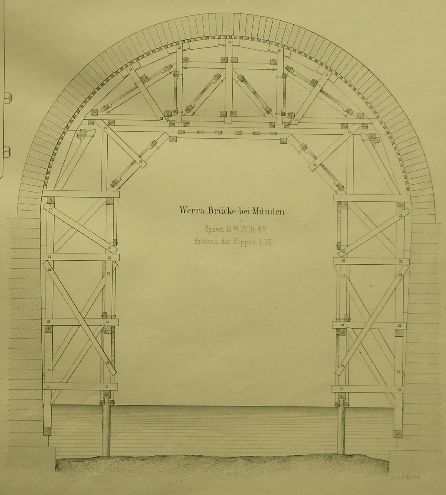
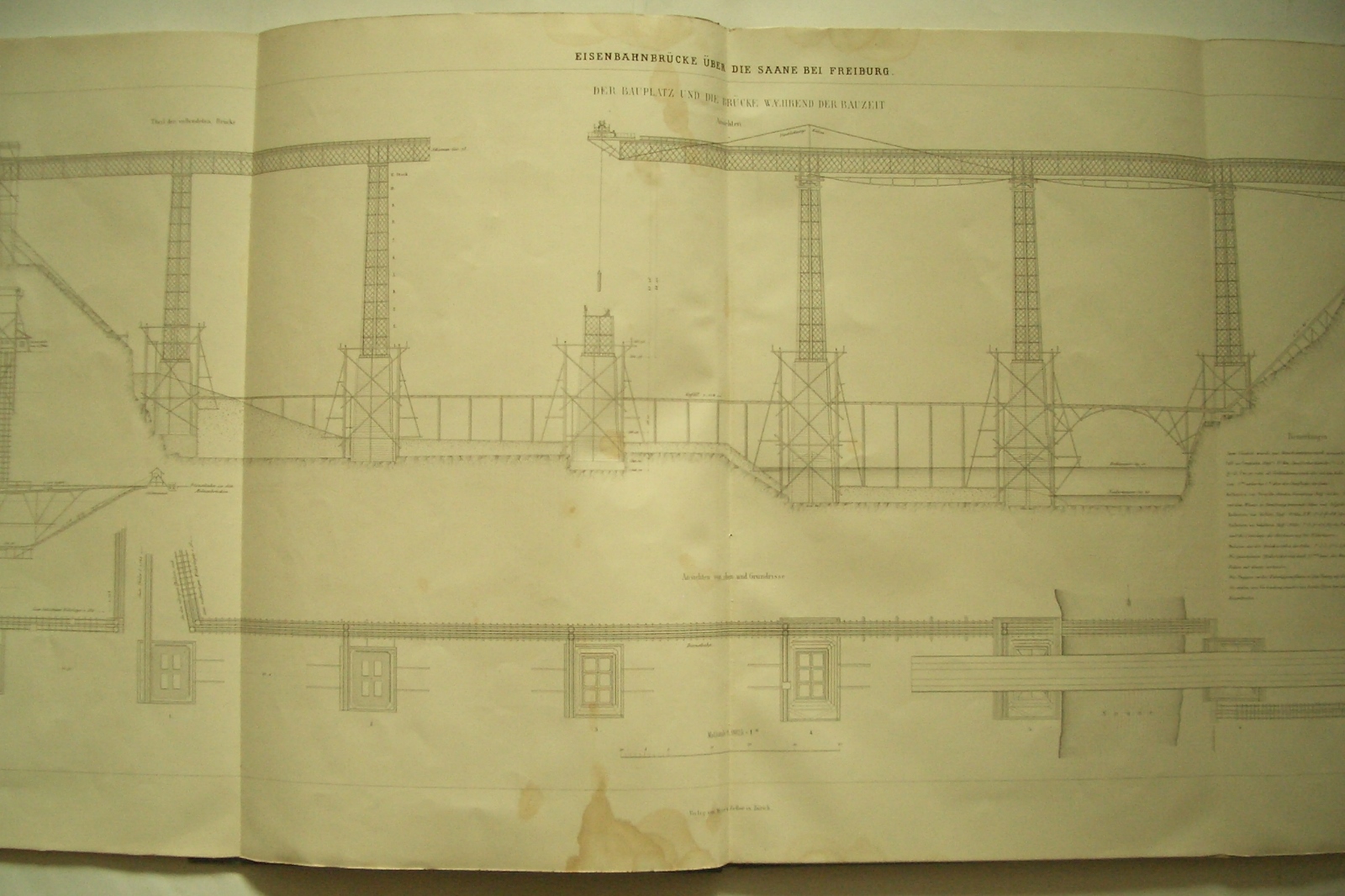
1867ref. 1385[Hrsg. vom Schweizerischen Ingenieur- und Architektenverein.] Mit 12 doppelblattgr. (1 zusätzlich gefalt.) lithogr. Tafeln von Wurster, Randegger & Co. in Winterthur. Zürich, Meyer & Zeller, [1867]. Folio. (46,6 x 29,5 cm). Neuer Halbleinwandband mit montiertem Deckeltitel. [6 Warenabbildungen]