1 330 résultats
1956108 pages. Features: Rex Woods cover illustration of the Royal 22nd Regiment in Quebec City; Nice colour ad for International Trucks shows them at work in a growing baby-boomer subdivision; Colour-photo ad for GE kitchen mixers in '3 Festive Colours'; Duplessis is Not Unbeatable; Colour photo ad for Hoover Vacuums features lady in heels, dress and apron happily cleaning her home; One-page colour ad for Dodge features Dodge Mayfair Hardtop with push-button transmission; Who Really Owns Canada? - great article by Peter C. Newman explains how outsiders own most of our oil, mining, pulp and other biggest industries; How Man Will Conquer Mars - the detailed story, complete with timetable, of how the first Mars journey may be carried out - with nine illustrations, eight in colour, by Chesley Bonestell (not in Schuetz); I Married a Count - Catherine Cziraky explains how she married Hungarian Count Laszlo Cziraky; You Don't Have to Panic Over Rabies; The B.C. Coast - with large colour night photo of the intersection of Georgia and Granville in Vancouver; One-page photo of logger (faller) beside gigantic cedars he has taken down on the west coast of Vancouver Island; The Most Baffling Show on Television - Holiday Ranch is Canada's most popular show; You Really Run by Electricity - the electrical system of the human body is so ingenious that it makes man's inventions seem like clumsy toys; The Secret of Stolen Love Letters; I Cry at the Movies; Classy one-page colour-photo ad for the Remington 60 de luxe Auto-Home electric shaver shows it at work at home and in a car; Nice 2/3-page colour ad for Tappan electric and gas ranges; Fancy half-page ad for Allied Van Lines in bright orange; One-page colour ad for Chevrolet features six of their station wagons for 1956; Classy colour-photo one-page ad for Leonard appliances features glamorous photo of Anne Leonard; Heinz baby food colour-photo ad features mother breastfeeding; Nice 2/3-page colour ad for Maxwell House coffee features smiling lady and card game; Classy one-page colour ad for the (yellow) 1956 Chrysler Windsor Newport; Trans-Canada Air Lines ad; Colour Molson's Export ad features smiling newspaper man at quitting time; Half-page Olsonite ad features open toilet seat which eerily resembles a crocodile waiting to snap someone's backside!; One-page colour ad for Ford 225 HP V-8 cars (battling a big truck on the highway); 3/4-page photo ad for Electrohome Fans, of Kitchener, Ontario; Toronto-Dominion (TD) Bank colour-photo ad features funky family checking into Motel; Classic colour O'Keefe's Ale ad features lumberman with peavey jumping over floating logs outside mill; Colour ad features five of the 1956 car models made by Packard - Clipper - Studebaker; R.O.T.P. (Regular Officer Training Plan) ad features smiling young man; Labatt's ad features photo of Arthur G. Turner of Toronto delivering ice(?); Nice colour GWG ad inside back cover features lineman climbing utility pole; Back cover colour-photo Coke ad shows four scenes; and more. Unmarked with average wear and external soiling. A sound vintage copy of this stellar issue. Book
192848 pages. Second issue of this marvelous publication. Features: Loening Aeronautical Engineering Corporation ad inside front cover; Nice photo-illustrated Fairchild ad on page 1 features the Vickers-Fairchild Cabin Monoplane; Photo-ad for Canadian Vickers Limited shows the Vicers Vedette; Goodyear airplane tire ad; Armstrong Siddleley ad for their Lynx radial engine; Wakefield Castrol Motor Oil ad; Editorial comments on why the achievements of Canadian aviators are not 'ballyhoo-ed' across the world, and why insurance companies must act to service the rapidly developing aviation industry in Canada; Great article explains how E.W.G. Moore (shown in photo inset) and other public-spirited citizens secured an airport for London, Ontario after the electorate refused to approve the expense; Photos of the Prince of Wales in flying kit, Sir Alan Cobham after his 22,000-mile flight, Amelia Earhart in group photo at Southampton after crossing the Atlantic for the first time, and Miss Earhart's seaplaine "Friendship" afloat at Southampton; Inauguration of the Winnipeg Flying Club - article with photos of Manitoba Premier John Bracken and his wife, Major Ray Miller, Lieut. Palmer, and W.A. Major, Attorney-General of Manitoba, plus a photo of Captain H.A. Oaks who was awared the McKee trophy for the most valuable contribution to aviation in Canada; Progress of Civil Aviation in Canada - article; Photo memorializing Captain Emilio Carranza, Mexico's "Lone Eagle" flying ambassador to the United States who died at age 22 in a crash; Photo of the Trans Canada trophy won by Capt. H.A. Oaks; Canadian Aviation and the University of Toronto - article with five photos which document the University's aerodynamic laboratory which was established ten years ago and is now being used for undergraduate instruction; First aircraft show opened at Montreal - article with photos of officials E.F. Peacock and Capt. W. S. Lighthall; Photo of Joaquim Pacheco and Fritz Bieler, the first aviators to make the flight from Canada to Mexico; Canada leads in Aerial Photography - article with photos; Is Your Life Insurance Policy Affected? - Part II - article deals with confusion over insurance coverage of aviation risk; Nice aerial photos of Gaspe and the Royal Military College; Detroit Air Olympics Draw Mammoth Crowds - article with nine photos; News from flying clubs; Nice ad for the De Havilland Moth; Pioneer Altimeter ad; Numerous press comments on the first issue of Canadian Aviation; Fantastic photo full-page ad for Canadian Pacific Express - World Wide Service - photos shows truck backed up to plane; Toronto Boys Compete at Detroit Model Aircraft Contest - article with photos of Edward Adams, H.H. McKinnon, Richard Hiscocks, Ford Grant, Aram Abgarian, Jack Loughner and Thomas Hill; Fantastic full-page photo ad for International Airways of Canada (Hamilton, Ontario) shows their Loening Amphibian plane; Model Aircraft flights are helpful - article; Air Services in Canada - Part II - information about the R.C.A.F. with three photos; Marvelube ad on back cover. Somewhat above-average wear. Binding intact. Three-inch opening to base of coverfold. A sound vintage copy of this early issue. Book
1945Features: "Europe Won't Go Communist"; Funny Business - The Comic Strip Industry; Built-In Glasses - Contact Lenses; Beverage Room - Alcohol Controversy in Ontario; Ah Nuts! - Meet George Corsan of Islington, Ontario who, at age 88, operates the Echo Valley Nut Farm; London Letter - Farce at Belsen; Washington News; Ottawa Debates Tariffs; Homes To Rent, American Style - An account of how the U.S. has tackled the problem of low-rental housing; Big Iron - The Steep Rock Iron Mine near Atikokan; and more. Short Stories: I'm the Girl; It Helps to Cry; Dream Acres. Ads include: A fascinating one-page ad by the bankers of Canada featuring a U-boat with black flag raised; One-page Imperial Oil ad entitled "The Story of a [oil well] Failure"; Aunt Jemima; Frigidaire; Peposident tooth paste with Irium; Canada Dry (Christmas moif); Longines watches; Eveready batteries ad features photo of Saskatchewan-born soprano Marguerite Gendron; Stanfield's Unshrinkable Underwear; Arrid ad features photo of Hollywood star Jean Parker; Seagram ad encourages investors to hold on to Victory Bonds; Two-page Maclean's subscription ad; Gruen watches (inside back cover); Community Silverplate (back cover). 68 pages. Unmarked with average wear. A quality copy of this historic vintage issue. Book
1945152 pages. Large oblong book measuring 10" x 14.5". "Because war censorship forbade publicity there is a widespread lack of knowledge of the outstanding production job for the war effort done by British Columbia industry... Few British Columbians - certainly very few Eastern Canadians, United States business men or British Empire industrialists - realize the extent of the accomplishments and the facilities that are now available here for manufacturing of all kinds. This survey has been prepared to place on record the information that is felt should be known. It is in two parts: First, an illustrated news section graphically telling the story of leading manufacturing developments; second, a concise factual compilation of statistics giving complete authoritative basic data." - from title page. The section on leading manufacturers is profusely illustrated with glorious black and white photos. Companies presented include: West Coast Shipbuilders Ltd.; Western Bridge and Steel Fabricators Ltd.; Vivian Engine Works Ltd.; Vivian Diesels and Munitions Ltd.; Arrow Transfer Co. Ltd.; Canada Western Cordage Co. Ltd.; Burrard Dry Dock Co. Ltd.; Boyles Bros. Drilling Company Ltd.; Canadian Mixermobile Company; United Distillers Ltd.; The H.R. Macmillan Export Company Limited; Industrial Engineering Ltd. (power/chain saw manufacturer); British Columbia (B.C.) Packers; W.R. Carpenter (Canada) Ltd. - crushers of copra and oil seeds; Edward Lipsett Ltd - commercial fishing supplies; Vancouver Iron Works Limited; British Columbia Telephone Company The Canadian Fishing Company Ltd; British Columbia Distillery Company Limited; Hammond Furniture Company Ltd; American Can Company Limited; Empire Sheet Metal Works Ltd; Canada Chain and Forge Company; Vancouver Engineering Works Ltd; Dominion Bridge Company Limited - including a grand photo of their new Pattulo Bridge looking toward the barrens of Surrey, plus a photo of the Hotel Vancouver's underlying steel structure during construction; Smith Bros. & Wilson Ltd - General Contractors; Heaps Engineering (1940) Limited; Marwell Construction Company; Canadian Sumner Iron Works; McDonnell Metal Manufacturing; Jones Tent and Awning Limited; Leek & Company Limited; McCarter & Nairne - Architects and Structural Engineers; Stewart-Lovick Ltd - Advertising; Terminal City Iron Works; Westland Foundries; British American Paint Co. Ltd; Bloedel Stewart & Welch Ltd.; Straits Towing and Salvage Co. Ltd.; Island Tug and Barge Ltd.; Standard Oil Company of British Columbia Limited; The Vancouver Sun; The Vancouver Daily Province; A-1 Steel and Iron Foundry Ltd.; A-1 Pattern Shop & Brass Foundry Ltd; Pacific Coast Terminals Co. Ltd.; Canadian Forest Products Limited; Alaska Pine Co. Ltd; Newcastle Ship Building Co. Ltd; Bennett & White Construction Co. Ltd; Evans Coleman & Evans Ltd; Falconer Marine Industries Limited; Yarrows Ltd.; Victoria Daily Times; The Daily Colonist; The Consolidated Mining and Smelting Company of Canada Limited. Also included in this section are photo illustrated features on power generation, brewing, the pulp industry, technical education, tourism, mining, highways, mining, printing, the British Columbia Police Force, New Westminster, Victoria, and Prince Rupert. A very uncommon and informative publication which proudly and abundantly presents the bold industrial might of Canada's pacific province in the immediate aftermath of the second world war. Unmarked. Average wear. Binding intact. A sound copy of this important record of British Columbia's industrial history. Book
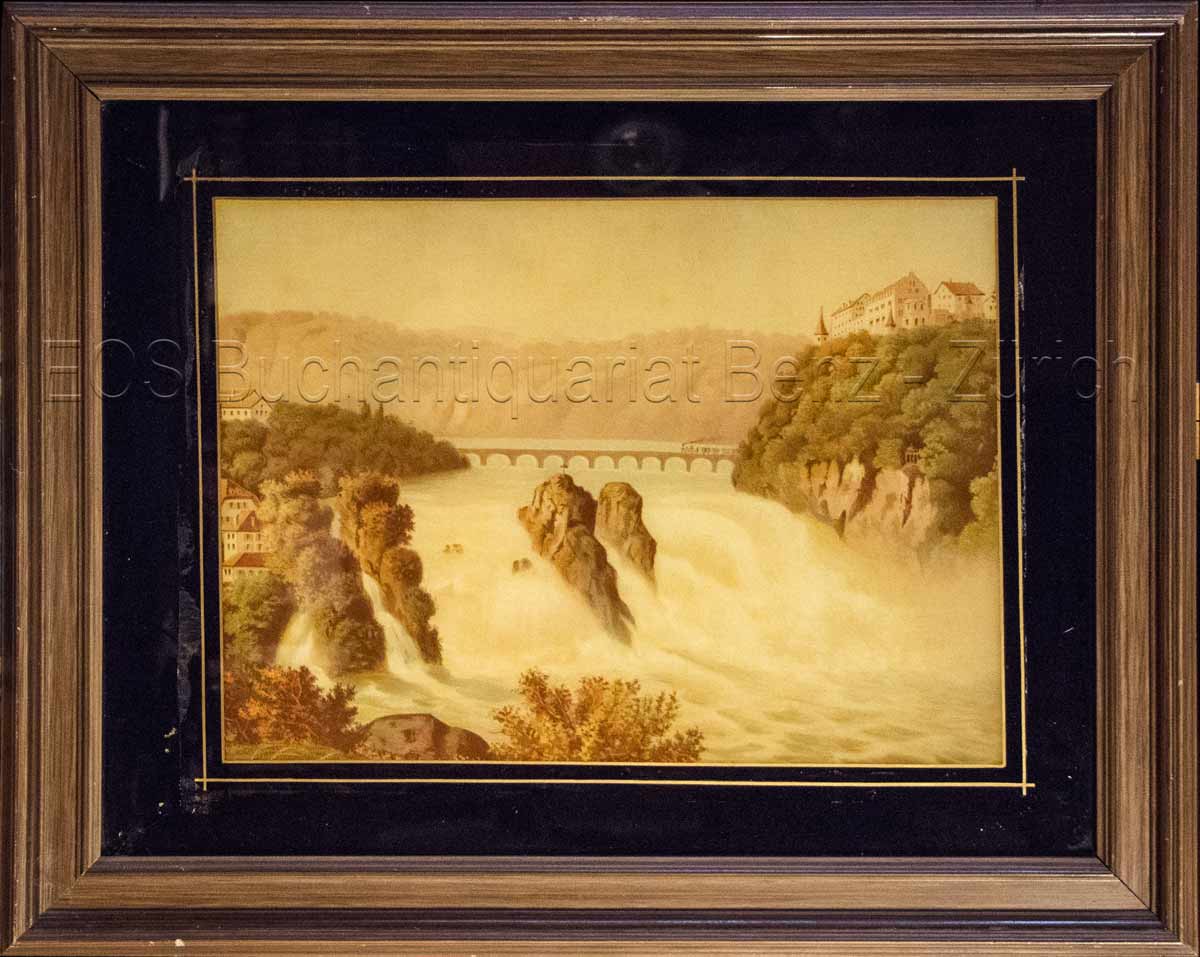
1860réf. 825CG(um 1860). Chromolithographie hinter Glas. Bildausschnitt: 28,5 x 39 cm. + Wichtig: Für unsere Kunden in der EU erfolgt der Versand alle 14 Tage verzollt ab Deutschland / Postbank-Konto in Deutschland vorhanden +, Abb.
2001réf. TAB0000995. 2001. In-12. Broché. Bon état, Couv. convenable, Dos satisfaisant, Intérieur frais. Huile sur toile (effets de matière). Dimensions : 38x46cm (8F). Dimensions avec cadre : 52x60cm. Tampon de l'artiste au dos du cadre. Toile signée et datée en bas à droite.. . . . Classification : 920.4-Huile
réf. TAB0000997. XXième siècle. In-12. Broché. Bon état, Couv. convenable, Dos satisfaisant, Intérieur frais. Huile sur toile sur châssis avec cadre. Dimensions toile : 33x41cm (6F). Dimensions avec cadre : 45x53cm. Toile signée en bas à droite. Non daté. Tampon de l'artiste au dos du cadre.. . . . Classification : 920.4-Huile
2012réf. TAB0000998. 2012. In-12. Broché. Bon état, Couv. convenable, Dos satisfaisant, Intérieur frais. Huile sur toile encadrée. Dimensions de la toile : 41x33cm (F6). Dimensions avec cadre : 49x42cm. Toile datée et signée en bas à droite. Tampons de l'artiste au dos du cadre.. . . . Classification : 920.4-Huile
réf. TAB0000048. Non daté. In-12. Broché. A restaurer, Couv. convenable, Dos satisfaisant, Intérieur frais. Huile sur toile encadrée. Dimensions avec cadre : 52 x 44cm. Dimensions oeuvre à vue : 40x32cm. Toile signée en bas à gauche. Une déchirure sur la toile d'une longueur de 4 cm environ (voir photo).. . . . Classification : 920.4-Huile
1961réf. 010337Béziers l'Auteur 1961 In-8 broché, couverture illutrée Edition originale Dédicacé par l'auteur
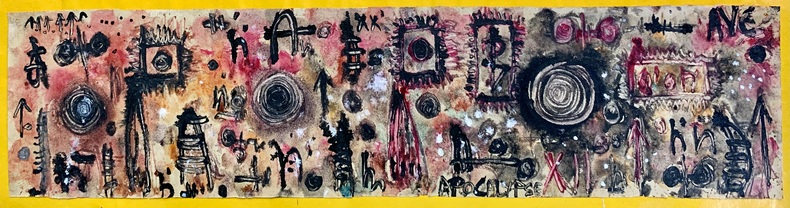
réf. awd-1137Huile sur papier au format horizontal, contrecollée sur papier jaune, vers 1957 (12,5/50 cm). t
réf. awd-1176Huile sur carton, dédicacée « pour Lise » (Deharme), datée 1973 et signée en bas à droite (16,4/29,5 cm).
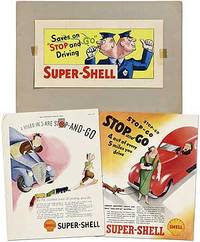
1937réf. 3969791937. Unbound. Near Fine. Original painted color illustration on paper. Image size 14" x 7¼" on 18" x 12" artist board. Near fine with some light toning darkening to the tape and bump to corner of the board. A fun pictures of a two headed traffic cop representing the stop and go traffic that Shell Oil's Super-Shell gasoline to designed to combat. The art was produced by an unknown artist who worked the 1940s for the advertising agency Foote Belding & Cone which represented some of the biggest clients in the world. The art is accompanied by two proofs of magazine advertisements produced by the same artist. A wonderfully whimsical ad. unknown
1937réf. 3969791937. Unbound. Near Fine. Original painted color illustration on paper. Image size 14" x 7¼" on 18" x 12" artist board. Near fine with some light toning darkening to the tape and bump to corner of the board. A fun pictures of a two headed traffic cop representing the stop and go traffic that Shell Oil's Super-Shell gasoline to designed to combat. The art was produced by an unknown artist who worked the 1940s for the advertising agency Foote Belding & Cone which represented some of the biggest clients in the world. The art is accompanied by two proofs of magazine advertisements produced by the same artist. A wonderfully whimsical ad. unknown books
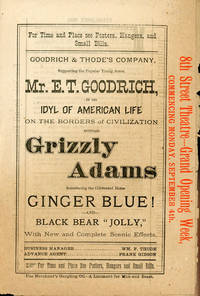
1882réf. 50838N.P.: Privately printed n.d. ca 1882. 1882. 9" x 12" sheet folded to 4 panels. A 4-page promotional flyer for the theatrical performance of Grizzly Adams. Grizzly Adams came West in 1849 and forsook the gold mines for life in the Western and California wilderness where he acquired a legendary reputation for hunting grizzly bears and fending off Indians. Cover panel offers title actors manager etc. as well as printed in red ink on the right side front carries the notice "8th Street Theatre - - Grand Opening Week Commencing Monday September 4th" which would most likely have been 1882. The second panel offers a full-page advertisement for Merchant's Gargling Oil the company sponsoring the show. Merchant's Gargling Oil is “a Liniment for Man and Beast" a catch-all salve first produced by George W. Merchant a druggist in 1833. The salve was made up of petroleum soap ammonia water oil of amber iodine tincture benzine and water and supposedly would cure anything . burns scalds scratches foot rot on sheep roup in poultry hemorrhoids toothaches etc. Panel 3 offers general information about the play followed by a synopsis for all three acts. The rear panel offers a full-page woodcut illustration showing Adams on horseback rescuing innocent settlers in the wilderness from Indians. 1 1/2" closed tear to fold and with a 1" closed tear to side panels. Very good. Privately printed, n.d. [ca 1882]. unknown
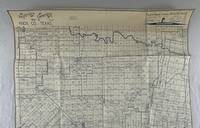
1976réf. 5965Wichita Falls Tx: Heydrick Mapping Company 1976. About very good. Blue line map 45.5 x 42 inches. On paper. Folded. Toning across top and bottom portions light edge wear. A late but nonetheless instructive oil map of Knox County Texas printed by the Heydrick Mapping Company which was known for its oil maps. Indeed their slogan on the map indicates "Oil men have used Heydrick maps since 1870." The legend shows various kinds of oil and gas wells -- producing dry drilled etc. Most of the oil activity is along the southern part of the county with a deep concentration of wells and oil companies noted across the D.G. Burnett lands. Dozens of oil companies are represented here many of which would be gone when the Texas oil boom busted in the early-1980s though production in Knox County was relatively steady through the lean times. Knox County is located between the DFW metroplex and Lubbock and oil was discovered there in 1945. "Oil was discovered in Knox County in 1945. By 1946 the county's first successful oil well had been spudded on the Beavers Ranch north of Benjamin; in subsequent years other wells were drilled in the southern part of the county. In 1948 oil production was only thirty-seven barrels but in 1956 it reached 978715 and in 1960 almost 2415000. County oil wells produced 2065000 barrels in 1965 771089 barrels in 1974 and 1421964 barrels in 1982. Production totaled about 888000 barrels in 1990 and by January 1 1991 almost 55881000 barrels had been taken from Knox County lands since discovery in 1945" - Handbook of Texas online. All Heydrick maps of Texas are scarce regardless of when they were produced with the vast majority being located in only one or two copies. OCLC shows one copy each of editions printed in 1930 and 1957 but not this 1976 version. Heydrick Mapping Company unknown
1976réf. 5965Wichita Falls Tx: Heydrick Mapping Company 1976. About very good. Blue line map 45.5 x 42 inches. On paper. Folded. Toning across top and bottom portions light edge wear. A late but nonetheless instructive oil map of Knox County Texas printed by the Heydrick Mapping Company which was known for its oil maps. Indeed their slogan on the map indicates "Oil men have used Heydrick maps since 1870." The legend shows various kinds of oil and gas wells -- producing dry drilled etc. Most of the oil activity is along the southern part of the county with a deep concentration of wells and oil companies noted across the D.G. Burnett lands. Dozens of oil companies are represented here many of which would be gone when the Texas oil boom busted in the early-1980s though production in Knox County was relatively steady through the lean times. Knox County is located between the DFW metroplex and Lubbock and oil was discovered there in 1945. "Oil was discovered in Knox County in 1945. By 1946 the county's first successful oil well had been spudded on the Beavers Ranch north of Benjamin; in subsequent years other wells were drilled in the southern part of the county. In 1948 oil production was only thirty-seven barrels but in 1956 it reached 978715 and in 1960 almost 2415000. County oil wells produced 2065000 barrels in 1965 771089 barrels in 1974 and 1421964 barrels in 1982. Production totaled about 888000 barrels in 1990 and by January 1 1991 almost 55881000 barrels had been taken from Knox County lands since discovery in 1945" - Handbook of Texas online. All Heydrick maps of Texas are scarce regardless of when they were produced with the vast majority being located in only one or two copies. OCLC shows one copy each of editions printed in 1930 and 1957 but not this 1976 version. Heydrick Mapping Company unknown books
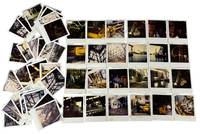
1970réf. 234111970. Offshore oil rig construction photo archive recording fabrication machining and dockside heavy-lift work at Farmers Marine Copper Works in Galveston Texas during the mature expansion of Gulf Coast petroleum engineering. After offshore drilling moved beyond shallow coastal waters Texas port cities became essential service centers for the fabrication of platforms pipe assemblies pressure systems and marine equipment needed by the oil and gas industry. These scenes place Galveston inside that industrial network through the labor machinery and waterfront facilities that made offshore production physically possible. Photo archive of 50 Polaroid snapshot photographs measuring 3.5" x 4" standard instant print format Galveston Texas circa 1970s to 1980s. Workers in hard hats and shop clothing stand among yellow-painted pipe systems hydraulic lines large flanged fittings deck-mounted machinery and scaffolded cylindrical components. Several interiors show machine-shop work including a worker operating or adjusting equipment at a large industrial station marked "44" while other scenes move outside to the waterfront where cranes barges dock edges and fabrication sheds frame components being staged near the water. Additional views include a small white operator cab heavy hoses across the deck red scaffolding around a large round metal housing and a massive concrete or metal assembly positioned beside an indoor slip or basin. The archive records the practical environment behind offshore oil production: the shore-based construction repair and preparation that allowed rigs and marine petroleum equipment to operate. Galveston's port economy depended on this kind of specialized industrial work linking local metal shops and waterfront yards to Gulf energy development petrochemical expansion and marine engineering. Surface soiling abrasions emulsion wear and handling marks to many Polaroid borders; images generally legible with expected fading and industrial handling wear. Overall in good condition. A photographic record of fabrication-floor and dockside labor at a named Galveston marine petroleum shop. unknown
1970réf. 234111970. Offshore oil rig construction photo archive recording fabrication machining and dockside heavy-lift work at Farmers Marine Copper Works in Galveston Texas during the mature expansion of Gulf Coast petroleum engineering. After offshore drilling moved beyond shallow coastal waters Texas port cities became essential service centers for the fabrication of platforms pipe assemblies pressure systems and marine equipment needed by the oil and gas industry. These scenes place Galveston inside that industrial network through the labor machinery and waterfront facilities that made offshore production physically possible. Photo archive of 50 Polaroid snapshot photographs measuring 3.5" x 4" standard instant print format Galveston Texas circa 1970s to 1980s. Workers in hard hats and shop clothing stand among yellow-painted pipe systems hydraulic lines large flanged fittings deck-mounted machinery and scaffolded cylindrical components. Several interiors show machine-shop work including a worker operating or adjusting equipment at a large industrial station marked "44" while other scenes move outside to the waterfront where cranes barges dock edges and fabrication sheds frame components being staged near the water. Additional views include a small white operator cab heavy hoses across the deck red scaffolding around a large round metal housing and a massive concrete or metal assembly positioned beside an indoor slip or basin. The archive records the practical environment behind offshore oil production: the shore-based construction repair and preparation that allowed rigs and marine petroleum equipment to operate. Galveston's port economy depended on this kind of specialized industrial work linking local metal shops and waterfront yards to Gulf energy development petrochemical expansion and marine engineering. Surface soiling abrasions emulsion wear and handling marks to many Polaroid borders; images generally legible with expected fading and industrial handling wear. Overall in good condition. A photographic record of fabrication-floor and dockside labor at a named Galveston marine petroleum shop. unknown books
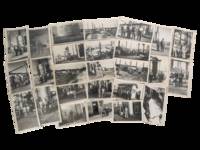
1945réf. 232411945. Oil refinery photo archive documenting refinery labor plant operations and worker identity at Kern Oil in Southern California and Mid West Refineries in Grand Rapids Michigan in the immediate postwar years showing how petroleum production expanded through the daily work of identified laborers during the industrial reorganization that followed World War II. The group centers on the men who stood on the ground among cracking towers tank farms piping runs shop buildings and control areas. Postwar oil demand rose with civilian automobile use trucking suburban growth and military-industrial continuity and refineries became key sites where that expansion was made practical through skilled and semi-skilled labor shift work maintenance inspection and dangerous physical proximity to heat pressure fuel storage and heavy equipment. The archive records that system at worker level where industrial growth appears as crews posing beside process units inside service spaces and at small plant structures rather than as abstract production statistics. Photo archive of 26 silver gelatin photographs each 2.5" x 4.5" Kern Oil Southern California and Mid West Refineries Grand Rapids Michigan circa 1945-1949. Roughly half the images show refinery infrastructure with dense fields of distillation columns and stacks cylindrical tanks elevated piping steel frameworks service roads and storage areas; one dramatic view shows a damaged or collapsed horizontal tank or vessel within a twisted metal structure. A large painted sign reading "MID-WEST REFINERIES INC." advertises "GASOLINES / FUEL OILS / BURNER OILS / KEROSENE." Other views show broader plant grounds with horizontal storage tanks outbuildings and open yards. The remaining photographs focus on workers posed alone and in groups in overalls work shirts caps and brimmed hats standing beside towers near pipe runs outside small office or shack structures and in work areas with process equipment visible behind them. Several versos identify individuals by name including groupings such as "Perry / Bob Patter / Lou Lane / John Higdon" "Charles Johnson / Bart Klein / 1946" "B. Klein / C. West / D. Golden" one inscription reads "4-15-49 / Place / MAX WERTZ SHACK / M-50 / Lou Peterson." American oil refining in the mid-1940s stood at the junction of wartime production and postwar consumer expansion. Plants that had helped sustain military logistics now fed the fuel economy that depended on workers whose labor was physically demanding and hazardous. These photographs preserve the named men occupying the industrial landscape that structured their livelihoods. Light wear and minor curling; numerous versos with identifying inscriptions; overall very good condition. A grounded postwar labor archive that places refinery workers inside the machinery of American oil production at the moment petroleum became central to everyday life. unknown
1945réf. 232411945. Oil refinery photo archive documenting refinery labor plant operations and worker identity at Kern Oil in Southern California and Mid West Refineries in Grand Rapids Michigan in the immediate postwar years showing how petroleum production expanded through the daily work of identified laborers during the industrial reorganization that followed World War II. The group centers on the men who stood on the ground among cracking towers tank farms piping runs shop buildings and control areas. Postwar oil demand rose with civilian automobile use trucking suburban growth and military-industrial continuity and refineries became key sites where that expansion was made practical through skilled and semi-skilled labor shift work maintenance inspection and dangerous physical proximity to heat pressure fuel storage and heavy equipment. The archive records that system at worker level where industrial growth appears as crews posing beside process units inside service spaces and at small plant structures rather than as abstract production statistics. Photo archive of 26 silver gelatin photographs each 2.5" x 4.5" Kern Oil Southern California and Mid West Refineries Grand Rapids Michigan circa 1945-1949. Roughly half the images show refinery infrastructure with dense fields of distillation columns and stacks cylindrical tanks elevated piping steel frameworks service roads and storage areas; one dramatic view shows a damaged or collapsed horizontal tank or vessel within a twisted metal structure. A large painted sign reading "MID-WEST REFINERIES INC." advertises "GASOLINES / FUEL OILS / BURNER OILS / KEROSENE." Other views show broader plant grounds with horizontal storage tanks outbuildings and open yards. The remaining photographs focus on workers posed alone and in groups in overalls work shirts caps and brimmed hats standing beside towers near pipe runs outside small office or shack structures and in work areas with process equipment visible behind them. Several versos identify individuals by name including groupings such as "Perry / Bob Patter / Lou Lane / John Higdon" "Charles Johnson / Bart Klein / 1946" "B. Klein / C. West / D. Golden" one inscription reads "4-15-49 / Place / MAX WERTZ SHACK / M-50 / Lou Peterson." American oil refining in the mid-1940s stood at the junction of wartime production and postwar consumer expansion. Plants that had helped sustain military logistics now fed the fuel economy that depended on workers whose labor was physically demanding and hazardous. These photographs preserve the named men occupying the industrial landscape that structured their livelihoods. Light wear and minor curling; numerous versos with identifying inscriptions; overall very good condition. A grounded postwar labor archive that places refinery workers inside the machinery of American oil production at the moment petroleum became central to everyday life. unknown books
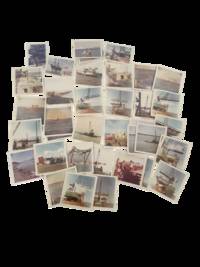
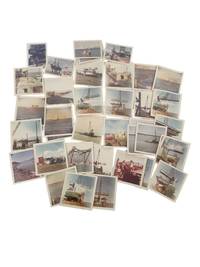
1965réf. 233141965. Offshore oil construction photographs documenting platform fabrication barge work marine transport and field logistics tied to the Gulf Coast petroleum industry in 1965-66 with direct evidence of how offshore drilling depended on a broad labor system before a rig ever reached a producing field. Taken at Farmers Marine Copper Works in Galveston Texas the archive records the building and handling of steel jackets deck sections cranes work barges service vessels and crew activity that made offshore extraction possible. The Gulf of Mexico was the proving ground of the modern offshore petroleum industry as the region became the incubator for an industry later exported worldwide. Photo archive of 53 color photographs 3.5" x 3.5" Galveston Texas 1965-66. The photographs show offshore structures in multiple stages of assembly and movement rather than a single completed drilling scene. Repeated views include steel platform legs and jacket sections standing in the water beside cranes and barges; large deck modules being hoisted or aligned over pilings; work decks with hoses railings and moored service boats; crewmen gathered onshore and aboard vessels; and small aircraft and automobiles used in project access and inspection. Several images show major marine lifts in progress with cranes extending over partially assembled structures and barges positioned tight against the work. Others widen out to open water towing scenes or partially completed platforms against distant mountainous terrain indicating that some photographs may record project deployment or field work beyond Galveston even if no specific destination is identified on the objects themselves. Handwriting on one verso of a group of men identifies "McClure / Chas. Young / Smithy." By the mid 1960s offshore oil had become central to both the U.S. energy economy and Texas coastal industry. Gulf Coast yards built and serviced the jackets pipe vessels and equipment that allowed companies to move farther offshore and later federal studies described fabrication yards as a core part of the offshore system that linked land based labor to offshore production. Texas held a special place in that expansion because its ports yards engineering firms and petroleum capital helped turn the Gulf into a permanent industrial frontier. Light handling wear and most exhibit curling; images generally clean and well preserved. Overall good condition. A strong documentary record of offshore construction labor at the moment when Texas Gulf Coast yards were helping scale the offshore oil industry from regional enterprise to national system. unknown
1965réf. 233141965. Offshore oil construction photographs documenting platform fabrication barge work marine transport and field logistics tied to the Gulf Coast petroleum industry in 1965-66 with direct evidence of how offshore drilling depended on a broad labor system before a rig ever reached a producing field. Taken at Farmers Marine Copper Works in Galveston Texas the archive records the building and handling of steel jackets deck sections cranes work barges service vessels and crew activity that made offshore extraction possible. The Gulf of Mexico was the proving ground of the modern offshore petroleum industry as the region became the incubator for an industry later exported worldwide. Photo archive of 53 color photographs 3.5" x 3.5" Galveston Texas 1965-66. The photographs show offshore structures in multiple stages of assembly and movement rather than a single completed drilling scene. Repeated views include steel platform legs and jacket sections standing in the water beside cranes and barges; large deck modules being hoisted or aligned over pilings; work decks with hoses railings and moored service boats; crewmen gathered onshore and aboard vessels; and small aircraft and automobiles used in project access and inspection. Several images show major marine lifts in progress with cranes extending over partially assembled structures and barges positioned tight against the work. Others widen out to open water towing scenes or partially completed platforms against distant mountainous terrain indicating that some photographs may record project deployment or field work beyond Galveston even if no specific destination is identified on the objects themselves. Handwriting on one verso of a group of men identifies "McClure / Chas. Young / Smithy." By the mid 1960s offshore oil had become central to both the U.S. energy economy and Texas coastal industry. Gulf Coast yards built and serviced the jackets pipe vessels and equipment that allowed companies to move farther offshore and later federal studies described fabrication yards as a core part of the offshore system that linked land based labor to offshore production. Texas held a special place in that expansion because its ports yards engineering firms and petroleum capital helped turn the Gulf into a permanent industrial frontier. Light handling wear and most exhibit curling; images generally clean and well preserved. Overall good condition. A strong documentary record of offshore construction labor at the moment when Texas Gulf Coast yards were helping scale the offshore oil industry from regional enterprise to national system. unknown books
1970réf. 233331970. Texas and Kansas petroleum infrastructure photo archive 1970s and 1984 documenting the industrial system that linked Gulf Coast fabrication yards port facilities heavy marine transport offshore petroleum extraction and inland drilling in the mature oil fields of Kansas. The photographs show offshore structures moving from shore side assembly into open water service and a separate 1984 Kansas sequence inscribed "Lee's oil well" where a land based drilling rig trucks workers and rig floor equipment record oil production away from the coast. The archive places petroleum extraction within both the Gulf Coast industrial corridor that built and deployed offshore structures and the inland lease field where drilling remained dependent on mobile rigs pipe handling and small crews. Its value lies in that shift of scale from Galveston waterfront engineering and offshore installation to the working machinery of a Kansas well in the early 1980s. Photo archive of 42 chromogenic color photographs 3.5 x 5 inches Galveston Texas circa 1970s and Kansas 1984. The photographs center first on large offshore structures at several stages of completion and deployment including jack up rigs elevated decks cranes and a prominent circular helipad or radar platform mounted above the main deck. Several views show rigs still at dockside beside harbor pavement parked vehicles and industrial lifting equipment; others place the same or similar structures offshore standing above open water on extended legs or surrounded by service craft. One photograph includes a banner reading "Galveston Project Post USA" anchoring part of the sequence to a named project site while another frames the Galveston waterfront with dense ranks of harbor cranes and marine industrial equipment. Additional images show smaller fixed platforms a long yellow boom or gangway extending over water crane barges maneuvering beside offshore structures and a wider sea view with multiple platforms operating at once establishing repeated movement between fabrication yard port transfer and offshore installation. Six later Kansas photographs show "Lee's oil well" in 1984 including a land drilling rig in open field country truck mounted support equipment a lowered mast or rig component being moved into position workers on the rig floor handling chain and pipe a standing derrick and close views of the drill string hoisting line block and metal rig fittings. By the mid 1960s offshore oil had become central to both the U.S. energy economy and Texas coastal industry. Gulf Coast yards built and serviced the jackets pipe vessels and equipment that allowed companies to move farther offshore and later federal studies described fabrication yards as a core part of the offshore system that linked land based labor to offshore production. Texas held a special place in that expansion because its ports yards engineering firms and petroleum capital helped turn the Gulf into a permanent industrial frontier. Kansas had a different petroleum history beginning with commercial production in the 1890s and continuing through thousands of smaller lease fields where independent operators and mobile drilling crews extended the life of older oil districts. The 1984 "Lee's oil well" photographs add that inland production economy to the Galveston material showing how petroleum infrastructure depended not only on large coastal fabrication and marine transport but also on field rigs pipe work trucks and crew labor at individual wells. Light surface wear mild fading and minor edge wear; overall very good condition. A concentrated visual record of how American petroleum production moved between Gulf Coast offshore construction marine installation and inland drilling work in late twentieth century Texas and Kansas. unknown
1970réf. 233331970. Texas and Kansas petroleum infrastructure photo archive 1970s and 1984 documenting the industrial system that linked Gulf Coast fabrication yards port facilities heavy marine transport offshore petroleum extraction and inland drilling in the mature oil fields of Kansas. The photographs show offshore structures moving from shore side assembly into open water service and a separate 1984 Kansas sequence inscribed "Lee's oil well" where a land based drilling rig trucks workers and rig floor equipment record oil production away from the coast. The archive places petroleum extraction within both the Gulf Coast industrial corridor that built and deployed offshore structures and the inland lease field where drilling remained dependent on mobile rigs pipe handling and small crews. Its value lies in that shift of scale from Galveston waterfront engineering and offshore installation to the working machinery of a Kansas well in the early 1980s. Photo archive of 42 chromogenic color photographs 3.5 x 5 inches Galveston Texas circa 1970s and Kansas 1984. The photographs center first on large offshore structures at several stages of completion and deployment including jack up rigs elevated decks cranes and a prominent circular helipad or radar platform mounted above the main deck. Several views show rigs still at dockside beside harbor pavement parked vehicles and industrial lifting equipment; others place the same or similar structures offshore standing above open water on extended legs or surrounded by service craft. One photograph includes a banner reading "Galveston Project Post USA" anchoring part of the sequence to a named project site while another frames the Galveston waterfront with dense ranks of harbor cranes and marine industrial equipment. Additional images show smaller fixed platforms a long yellow boom or gangway extending over water crane barges maneuvering beside offshore structures and a wider sea view with multiple platforms operating at once establishing repeated movement between fabrication yard port transfer and offshore installation. Six later Kansas photographs show "Lee's oil well" in 1984 including a land drilling rig in open field country truck mounted support equipment a lowered mast or rig component being moved into position workers on the rig floor handling chain and pipe a standing derrick and close views of the drill string hoisting line block and metal rig fittings. By the mid 1960s offshore oil had become central to both the U.S. energy economy and Texas coastal industry. Gulf Coast yards built and serviced the jackets pipe vessels and equipment that allowed companies to move farther offshore and later federal studies described fabrication yards as a core part of the offshore system that linked land based labor to offshore production. Texas held a special place in that expansion because its ports yards engineering firms and petroleum capital helped turn the Gulf into a permanent industrial frontier. Kansas had a different petroleum history beginning with commercial production in the 1890s and continuing through thousands of smaller lease fields where independent operators and mobile drilling crews extended the life of older oil districts. The 1984 "Lee's oil well" photographs add that inland production economy to the Galveston material showing how petroleum infrastructure depended not only on large coastal fabrication and marine transport but also on field rigs pipe work trucks and crew labor at individual wells. Light surface wear mild fading and minor edge wear; overall very good condition. A concentrated visual record of how American petroleum production moved between Gulf Coast offshore construction marine installation and inland drilling work in late twentieth century Texas and Kansas. unknown books