1 592 résultats
réf. DADAX0367571048New unknown
réf. DADAX0367427192New unknown
réf. DADAX1240695624New unknown
réf. DADAX0128130253New unknown
2025réf. x-1032328657Taylor & Francis Ltd 2025. Paperback. New. 144 pages. 9.18x6.12x9.21 inches. Taylor & Francis Ltd paperback
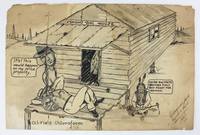
1937réf. 6117Edmond Ok 1937. Good. Ink wash drawing on heavy stock 12 x 18 inches. A few tears and chips at edges lightly dampstained some light soiling. A satirical and slightly racist drawing featuring the Oklahoma oil fields a Native American and a cat. The centerpiece is a long shabby building labeled "Edmond Tool House" in haphazard letters. This rickety-looking building has cracked windows a peeling tin roof and a slightly sketchy porch upon which reclines a man who appears to be sniffing the hind end of a cat. The label below reads "Oil-field chloroform" and a waft of smoke rises from the back end of the cat which hides the lower half of the reclining man's face. From around the side of the building a fedora-clad man exclaims "!!x! This would happen on my prize property." The face is a very accurate portrait pasted on to the artwork. On the other side of the building a Native American sits cross-legged on the ground holding a peace pipe opining "Maybe big white brother finly sic buy feast for Indians." Oil derricks can be seen in the background. The image is inscribed and signed in the lower right corner "Recalling a very pleasant trip and a damned embarrassing experience. J.G. Dyer 7/21/37." The oil fields of Oklahoma were some of the busiest and most productive from 1900 to 1935 though the West Edmond Oil Field wasn't discovered until the 1940s. An unusual piece of art which would seem to contain some sort of inside joke. unknown
1980réf. 225521980. Arabian American Oil Company. Aramco and Its World: Arabia and the Middle East published in 1980 documents the corporate information system through which Aramco explained Saudi history Islamic culture regional geography petroleum engineering and industrial development to employees and a wider English-language audience. Replacing the longstanding Aramco Handbook title the volume grew from instructional booklets created during the company's postwar expansion to orient incoming American personnel unfamiliar with Arabic and Saudi social practices. Its coordinated use of historical narrative landscape photography technical diagrams and cultural guidance reveals how Aramco presented itself as both a petroleum enterprise and an intermediary between Saudi Arabia and the industrialized West providing primary-source evidence for research into corporate communications expatriate training petroleum infrastructure and United States-Saudi relations. Publication coincided with the Saudi government's acquisition of a 100 percent participation interest in Aramco's concession rights production and facilities although the Saudi Arabian Oil Company was not formally created to assume Aramco's responsibilities until 1988. Arabian American Oil Company. Aramco and Its World: Arabia and the Middle East. Washington D.C.: Arabian American Oil Company 1980. First edition in this revised and retitled form. xi 275 pages. Profusely illustrated with color photographs maps and diagrams including double-page and folding material. Publisher's blue cloth lettered in turquoise; no dust jacket. Large 4to. A large folding color map titled "The Arabian Peninsula" drawn by Don Thompson and measuring approximately 24 × 36 inches is inserted at the rear. The book traces the growth of the modern Saudi state the geography of the peninsula and the development of Aramco's petroleum system. Illustrated cultural sections show desert dwellings coffee preparation camel travel goat herding Islamic calligraphy and landscapes including Jabal al-Fil while technical chapters record seismic surveying in the Rubʿ al Khali drilling equipment instrument-filled control rooms offshore platforms tanker-loading facilities and the geometrically arranged storage and refining installations at Ras Tanura. Maps locate Middle Eastern oil fields and Aramco concession areas and charts using 1978 data compare global petroleum production reserves and consumption. The folding map extends the volume's educational purpose beyond the bound text presenting topography cities transportation routes and political boundaries on a scale suited to reference or display. A manuscript inscription on the front free endpaper reads "Dear Dick and Susie.I'm on page 117" preserving evidence of the book's circulation as a personal or professional presentation copy. The volume's detailed visual record is governed by Aramco's institutional viewpoint. Its photographs and diagrams demonstrate the process by which geological surveying extraction refining transportation and export operated as an integrated industrial network while its treatment of Bedouin life and Saudi culture translates complex communities into introductory material for predominantly foreign readers. The timing gives this edition particular interpretive value: its language continues the company's established narrative of technological leadership and cultural mediation even as ownership of the petroleum enterprise passed fully to the Saudi government. Official Aramco histories confirm that Saudi participation reached 100 percent in 1980 making the book evidence of both the mature American corporate communication apparatus and the transition toward Saudi control. Light sunning and small marks affect the blue cloth; the folding map is clean and well preserved and the contents remain sound. Very good. A substantial illustrated record of the technical and cultural knowledge Aramco used to explain its operations during a pivotal year in the transfer of Saudi petroleum ownership. unknown
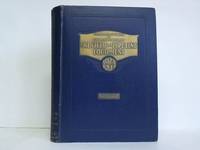
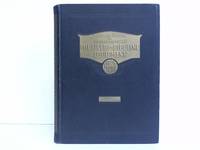
réf. 2J9040The Oil Weekly Houston 1934. 666 S. mit zahlreichen Textabb. blind- und goldgeprägter Leinen-Einband quart etwas berieben und bestoßen/Stempel auf Vorsatz/Vorsatz etwas gebräunt. - Also covering the latter part of 1933 / Text englisch - unknown
réf. 2k4238Mobil Oil AG Hamburg 1981/82. 123/148 S. kart. - Enthalten: Band 1: Arten Auswahl Grundlagen/Band 2: Probleme Anwendung Umlaufsysteme - unknown
réf. 2J9038The Oil Weekly Houston 1931. 260 135 S. mit zahlreichen Textabb. blind- und goldgeprägter Leinen-Einband quart etwas berieben und bestoßen/Stempel auf Vorsatz/Vorsatz etwas gebräunt. - Text englisch - unknown
réf. 2J9039The Oil Weekly Houston 1930. 381 121 S. mit zahlreichen Textabb. blind- und goldgeprägter Leinen-Einband quart etwas berieben und bestoßen/Stempel auf Vorsatz/Vorsatz etwas gebräunt. - Text englisch - unknown
1930réf. 218981930. Archive of press photographs documenting systems of petroleum extraction offshore drilling and industrial emergency response in Texas between 1938 and 1979. The material documents how oil companies drilling crews firefighters and industrial workers operated within the high-risk infrastructure of the American petroleum industry through visual records of refinery explosions well blowouts offshore platform accidents and active drilling operations. The photographs reveal the mechanisms of oil production and disaster response across inland fields and Gulf Coast offshore sites during a period when Texas oil played a central role in the expansion of American industrial power military logistics and global energy markets. Produced largely for the Houston Post Houston Chronicle Associated Press and United Press International the archive provides primary-source evidence for the study of industrial labor workplace hazards extractive infrastructure and the environmental and human costs of mid-twentieth-century oil production. Collection consists of seven original black-and-white silver gelatin press photographs measuring approximately 10 x 8 inches. Several images document catastrophic oilfield fires and explosions associated with the East Texas oil boom and Gulf Coast petroleum industry. One aerial photograph dated July 28 1956 depicts the aftermath of the Shamrock Oil & Gas Corporation explosion near Dumas Texas showing scorched circular storage fields collapsed piping infrastructure and thick smoke rising from burned refinery grounds. The attached caption notes that sixteen workers died and at least thirty were injured in the blast with the resulting fireball reportedly visible from Amarillo forty miles away. Two Associated Press photographs dated January 1938 portray uncontrolled oil well fires in the Kilgore oil field during the height of the East Texas oil boom. One image shows flames reportedly reaching 150 feet above a wild well blowout while firefighters attempt unsuccessfully to suppress the fire with high-pressure water streams. Another photograph depicts silhouetted firefighters approaching the burning wellhead after temporarily suppressing the flames with chemicals in order to close a valve. Additional photographs document offshore drilling operations in the Gulf of Mexico including a United Press International image dated May 11 1979 showing exhausted survivors of a collapsed offshore platform south of Galveston wrapped in towels while awaiting medical treatment; the accompanying caption notes that nine workers remained missing from the thirty-four-man crew. Another image dated September 15 1956 depicts oilmen silhouetted atop an offshore drill rig approximately fifteen miles off the Texas coast while a helicopter approaches carrying replacement personnel. A June 1954 photograph from Brazoria County documents drilling operations at a depth of 9544 feet as workers remove drill stems to change bits at the McGeary D.G. Company No. 1 Jamison Estate well. Additional images show derricks under construction drilling fields crowded with infrastructure and industrial crews working amid active extraction sites. Together the photographs document the immense economic importance and physical danger of the Texas petroleum industry during the mid-twentieth century when inland oil booms and offshore exploration transformed both regional landscapes and global energy systems. Particularly notable is the archive's sustained focus on labor and catastrophe preserving visual evidence of the hazardous conditions faced by oilfield workers firefighters and offshore drilling crews operating under extreme pressure and technological risk. The images also illustrate the growing complexity of extraction systems as drilling operations expanded from rural inland fields to large-scale offshore platforms in the Gulf of Mexico. Minor editorial markings and light handling wear to versos with scattered creasing consistent with newsroom use; photographs remain sharp and well-preserved overall. Very good condition. A substantial documentary archive of industrial labor extraction technology and petroleum disasters in twentieth-century Texas oil history. unknown
réf. DADAX1497206022New unknown
réf. DADAX1633215806New unknown
réf. SONG3030116042Used: Good unknown
réf. DADAX0199659486New unknown
réf. SONG0300170548Used: Good unknown
réf. DADAX0984376453New unknown
1991réf. ZB1272930Canadian Heavy Oil Association 1991. Price HAS BEEN REDUCED by 10% until Monday Oct. 26 weekend SALE item 595 pp. folding map Hardcover ex library else text clean and binding tight. - If you are reading this this item is actually physically in our stock and ready for shipment once ordered. We are not bookjackers. Buyer is responsible for any additional duties taxes or fees required by recipient's country. Photos available upon request. Canadian Heavy Oil Association hardcover
réf. SONG1107087074Used: Good unknown
réf. DADAX1409456005New unknown
réf. DADAX1138692905New unknown
réf. DADAX1466556242New unknown
réf. DADAX1138737844New unknown
réf. DADAX1911078038New unknown