LEWITT, SolBiblio.com

9 739 résultats
1987réf. 321661987. Faint foldlines and minor soiling to left margin; else near fine. With a manuscript note from Higginbotham to verso "Black 1 bottle / white paper tape / 430". A rare behind-the-scenes artifact from LeWitt's conceptual apparatus. Ballpoint pen drawing on sheet of watercolor paper 5.75 x 9.5 inches. A manuscript plan from Sol LeWitt complete with color codes and measurements for what would soon become Wall Drawing #517: Symmetrical Flat-Topped Pyramid with Color Ink Washes Superimposed with a 15-inch 37.5 cm Black Band on Each Side—first installed at Trisolini Gallery of Ohio University by David Higginbotham and Anthony Sansotta February 1987. This very drawing is reproduced in the Sol LeWitt Wall Drawings Catalogue Raisonné where the editors distinguish plans from instructions and preparatory drawings as "the final drawn or written representations followed by LeWitt's assistants. Plans are considered artworks in their own rights. unknown
réf. 6060105626 Morton Street Philadelphia: Sun Ra 1980. Softcover. Very Good. First edition thus. Octavo. 66 2pp. Illustrated. Printed on several colors of paper stock. Stapled printed wrappers. A bit misfolded and stapled wrappers slightly toned near the spine else near fine. Inscribed by the author: "To Beven & Greg From Sun Ra." Poetry. Originally published in 1972 with 60 pages this version seems decidedly more DIY in its nature and seems like it was produced in considerably smaller numbers. OCLC locates little more than a half-dozen records of this version. Sun Ra unknown
réf. 6060105626 Morton Street Philadelphia: Sun Ra 1980. Softcover. Very Good. First edition thus. Octavo. 66 2pp. Illustrated. Printed on several colors of paper stock. Stapled printed wrappers. A bit misfolded and stapled wrappers slightly toned near the spine else near fine. Inscribed by the author: "To Beven & Greg From Sun Ra." Poetry. Originally published in 1972 with 60 pages this version seems decidedly more DIY in its nature and seems like it was produced in considerably smaller numbers. OCLC locates little more than a half-dozen records of this version. Sun Ra unknown books
1984réf. 84246Anthoensen Press the Limited Editions Club. As New. Hardcover. FREE UPGRADE to Courier/Priority Shipping Upon Request - IN STOCK AND IMMEDIATELY AVAILABLE FOR SHIPMENT - AS NEW THE TEXT BLOCK IS PRISTINE CLEAN UNMARKED AND IN EXCELLENT CONDITION - -- - Corresponds to ASIN: B001F3I68Y. SIGNED by the ARTIST LIMITED EDITION OF 1500 COPIES. Xxxii 306 4 pages; 22 silkscreens by Sol Lewitt. -- with a bonus offer-- . 1984. Anthoensen Press, the Limited Editions Club hardcover
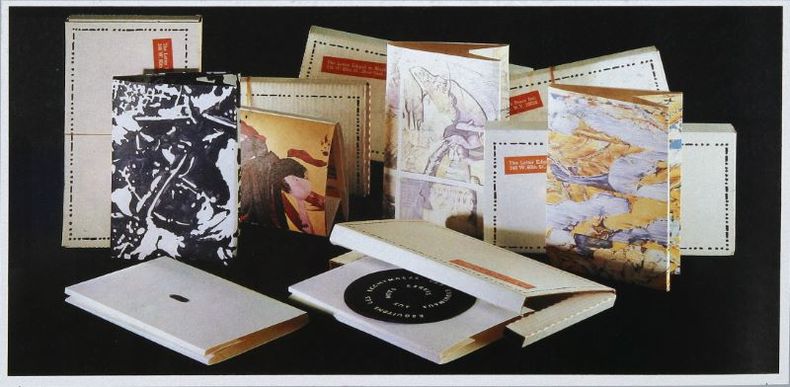
1968réf. 100144New York The Letter Edged in Black Press, 1968. 1968 6 17.8 x 27.9 cm. New York, The Letter Edged in Black Press, 1968. Six portefeuilles 178 x 279 mm, présentés dans leurs emballages postaux d’origine, contenant chacun un sommaire, pour un total de 73 multiples originaux.
1955réf. 008624Paris Tériade 1955 in folio En feuilles, couverture rempliée, chemise et étui éditeur
1963réf. 013800Paris Jean-Janques Pauvert 1963 In-4 Cartonnage illustré éditeur Edition originale Dédicacé par l'illustrateur
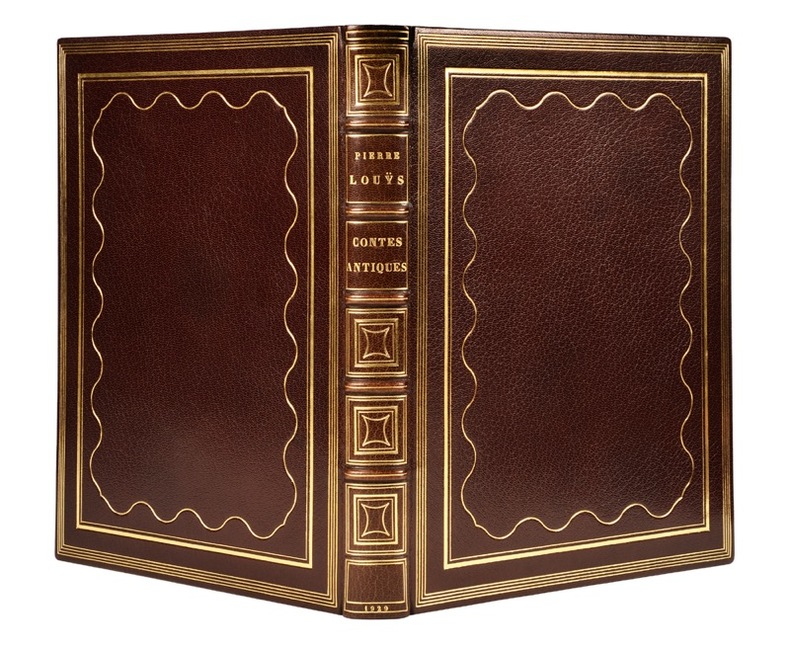
1929réf. 21637Paris, Editions du Bois Sacré, 1929 ; grand in-4°, maroquin bordeaux, dos à nerfs soulignés d’un filet doré, auteur et titre en majuscules dorées, caisson décorés, date en queue ; plats décorés d’un grand filet ondulé d’encadrement, entouré d’un double filet maigre et gras, le tout encadré d’un quadruple filet doré fin, filet doré sur les coupes, tête dorée, bordure intérieure avec cinq filets dorés et un filet gras à froid encadrant une pièce de soie moire grenat, gardes de même, doubles gardes marbrées et dorées, couverture et dos conservés, étui bordé (Adrien Lavaux)
2022réf. 2081502111907327social science literature 2022. Soft Cover. Fine. The book is in fine condition. social science literature paperback
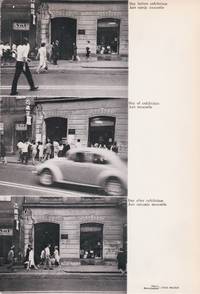
réf. 54371Belgrade: Galerija SKC 1971. Quarto 30.5 × 21 cm. Original blind-stamped folder with transparent title page; 32 plates on glossy card stock. Folder with slight signs of wear; preface with a few highlighter marks; else very good. First and only edition of the extremely rare catalog of the first two important international exhibitions of conceptual art in Yugoslavia which saw participation by renowned artists such as Robert Barry Joseph Beuys Daniel Buren Sol LeWitt and Lawrence Weiner. In April 1971 the exhibition "At the Moment" was shown in Zagreb and then continued in Belgrade under the title "In Another Moment". In Zagreb the exhibition of works by 16 international artists and 3 artist groups did not take place in a prestigious museum or gallery space not even in a white cube but in the gateway of an ordinary apartment building on a busy street in the old town. Three photographic images in the catalog document this simple inconspicuous gateway on the "Day before exhibition" "Day of the exhibition" and "Day after exhibition". The catalog makes it impressively clear that the choice of location was itself conceptual in its randomness and simplicity by placing the photographs prominently at the beginning. Apart from this seemingly random driveway the pictures show nothing more than passers-by and on the day of the exhibition a somewhat larger group of visitors and a VW Beetle driving past. The foreword by Nena Dimitrrijević also begins with the sentence "An international exhibition organized in a hall-gate of an ordinary apartment house ." Last but not least the aim was to desacralize art. The works were to be literally removed from their pedestals and taken out of the temple of art and onto the street. The "conception were the negation of the gallery as a constant and 'consacrated' exhibition space" according to the introduction. The duration of the exhibition was also unusual. The works were only shown for three hours. Although the Belgrade continuation took place in a gallery a disruption of conventions was also built into this location. The exhibition was interrupted twice to create new constellations. The crucial point however was that it was not the curators or artists who were responsible for the rearrangement but one member of the technical team in each case. In this way the two exhibition organizers Nena and Braco Dimitrijević continued the working principle of conceptual art of delegating as many steps as possible in order to interrupt the fetishization of art and the continuity of the work with the artist. The door was literally opened to chance. The present catalog also continues this concept. Instead of the usual bound book pages the catalog consists of loose plates placed in a folder which can be rearranged as desired. Although the plates are numbered on the back they are not arranged according to content but merely alphabetically according to the names of the artists and groups.The cardboard-like plates in the catalog can therefore be placed in relation to each other in a variety of ways. Thanks to the excellent print quality each panel is not merely a reproduction but an individual work in its own right. The folder thus resembles a transportable exhibition that can be rearranged by anyone. The greatest possible flexibility was the declared aim of the two exhibition organizers. Cf. Seraina Renz Kunst als Entscheidung: Performance- und Konzeptkunst der 1970er Jahre am Studentischen Kulturzentrum Belgrad München 2018 pp. 123-132. The catalogue documents works by Giovanni Anselmo Robert Barry Joseph Beuys Stanley Brouwn Daniel Buren Victor Burgin Jan Dibbets Braco Dimtrijević Barry Flanagan Grupa / E KOD Grupa OHO Douglas Huebler Alain Kirili Jannis Kounellis David Lamels John Latham Sol Lewitt Goran Trbuljak Lawrence Weiner Ian Wilson. As of April 2024 OCLC lists only 2 copies in North America MoMA and Clark Art Institute. unknown
1660In-4, [12] ll. (incl. frontispiece), 689 pp., [9] ll., engraved title-page, full-page coat of arms of the dedicatee on the verso of the title, 12 copper-engraved plates; contemporary vellum, ms. title stamp, one clasp remaining, blue edges (tiny stain touching some margins, very rare sporadic browning, small cover defects). Genuine beautiful copy.
1929réf. 22389Paris: Black Sun Press 1929. First edition. One of 150 copies printed. Minkoff A25. Presentation copy inscribed by the publisher Harry Crosby to his father: "SVRC Stephen Van Rensselaer Crosby from Harry" with an accompanying sketch of his personalized sun symbol and the Black Sun Press's emblem. "In August Harry Crosby delivered one hundred and fifty copies of 1450-1950 to Brown who quickly sent most of them on to publishers and friends sixty of whom he listed opposite the title page under the heading "Free Copies." In return Brown hoped for a few kind words that might be useful in reviving a writing career that had been quiescent for close to fifteen years. 1450-1950 is an amusing mixture of ideography and calligraphy examples of which Brown had been amassing - with obvious pleasure - for many years. "I like looking back / at the / Illuminated manuscripts of / 1450 / And forward / to the / more Illuminations / Movie Scripts of / 1950 I like to see / Fly Specks / on yellowed pages / I like too / Leaving my own on / New ones / My Fly Speck." In his dedication to "all monks all early oriental artists . . . " Brown playfully attempted to locate his work in the history of innovative printing and himself among those authors celebrated as much for their matter as for their manner of expression. By early fall he had gathered a garland of testimonials from among others Gertrude Stein H. L. Mencken and William Carlos Williams." Harry Crosby was found dead in his New York studio on December 10th 1929 evidently a casualty of a suicide pact: in one hand he held a pistol and in his other arm his twenty year old lover Josephine Noyes Rotch Bigelow also dead of a bullet to the temple. - Hugh Ford Published In Paris N. Y.: Macmillan 1975 p. 200- 210. On the same day Crosby had made his last entry in his diary: "One is not in love unless one desires to die with one's beloved. There is only one happiness it is to love and to be loved." When Jonathan Williams reissued 1450-1950 as Jargon 29 in 1959 the publisher observed: "That it should take him JW thirty years to locate a copy of Bob Brown's utterly charming and singular book is a measure of the almost cultish regard 1450-1950 has commanded from its contemporaries. If you didn't own a copy you were automatically cast into either of the modern outer darknesses then beginning to pullulate: Squaresville or Beat City. The virtues of 1450-1950 are publicly attested by many luminaries on the back cover blurb - among them Geltte Burgess who invented the word blurb." Among those quoted on the back cover are Gertrude Stein Marcel Duchamp Carl Van Vechten William Carlos Williams Carl Sandburg Walter Lowenfels James Johnson Sweeney Gelett Burgess Stuart Davis and Caresse Crosby who wrote to Brown: "We show your book to everyone who comes to the house and they always find some page that so especially delights them that soon we will have to chain it down like an ancient missal. A fine copy of a rare book with the "Crosby Cross" bookplate and the Black Sun Press blindstamp on the endpaper in the publisher's gold foil folder which is somewhat worn. 8vo original printed wrappers publisher's glassine dust jacket publisher's foil folder. A fine copy of a rare book with the "Crosby Cross" bookplate and the Black Sun Press blindstamp on the endpaper in the publisher's gold foil folder which is somewhat worn. Black Sun Press unknown
1929réf. 22389Paris: Black Sun Press 1929. First edition. One of 150 copies printed. Minkoff A25. Presentation copy inscribed by the publisher Harry Crosby to his father: "SVRC Stephen Van Rensselaer Crosby from Harry" with an accompanying sketch of his personalized sun symbol and the Black Sun Press's emblem. "In August Harry Crosby delivered one hundred and fifty copies of 1450-1950 to Brown who quickly sent most of them on to publishers and friends sixty of whom he listed opposite the title page under the heading "Free Copies." In return Brown hoped for a few kind words that might be useful in reviving a writing career that had been quiescent for close to fifteen years. 1450-1950 is an amusing mixture of ideography and calligraphy examples of which Brown had been amassing - with obvious pleasure - for many years. "I like looking back / at the / Illuminated manuscripts of / 1450 / And forward / to the / more Illuminations / Movie Scripts of / 1950 I like to see / Fly Specks / on yellowed pages / I like too / Leaving my own on / New ones / My Fly Speck." In his dedication to "all monks all early oriental artists . . . " Brown playfully attempted to locate his work in the history of innovative printing and himself among those authors celebrated as much for their matter as for their manner of expression. By early fall he had gathered a garland of testimonials from among others Gertrude Stein H. L. Mencken and William Carlos Williams." Harry Crosby was found dead in his New York studio on December 10th 1929 evidently a casualty of a suicide pact: in one hand he held a pistol and in his other arm his twenty year old lover Josephine Noyes Rotch Bigelow also dead of a bullet to the temple. - Hugh Ford Published In Paris N. Y.: Macmillan 1975 p. 200- 210. On the same day Crosby had made his last entry in his diary: "One is not in love unless one desires to die with one's beloved. There is only one happiness it is to love and to be loved." When Jonathan Williams reissued 1450-1950 as Jargon 29 in 1959 the publisher observed: "That it should take him JW thirty years to locate a copy of Bob Brown's utterly charming and singular book is a measure of the almost cultish regard 1450-1950 has commanded from its contemporaries. If you didn't own a copy you were automatically cast into either of the modern outer darknesses then beginning to pullulate: Squaresville or Beat City. The virtues of 1450-1950 are publicly attested by many luminaries on the back cover blurb - among them Geltte Burgess who invented the word blurb." Among those quoted on the back cover are Gertrude Stein Marcel Duchamp Carl Van Vechten William Carlos Williams Carl Sandburg Walter Lowenfels James Johnson Sweeney Gelett Burgess Stuart Davis and Caresse Crosby who wrote to Brown: "We show your book to everyone who comes to the house and they always find some page that so especially delights them that soon we will have to chain it down like an ancient missal. A fine copy of a rare book with the "Crosby Cross" bookplate and the Black Sun Press blindstamp on the endpaper in the publisher's gold foil folder which is somewhat worn. 8vo original printed wrappers publisher's glassine dust jacket publisher's foil folder. A fine copy of a rare book with the "Crosby Cross" bookplate and the Black Sun Press blindstamp on the endpaper in the publisher's gold foil folder which is somewhat worn. Black Sun Press unknown books
réf. 108941 oblong leaf of explanatory text & 4 color woodcut plates 222 x 457 mm. each signed & numbered by the artist loose as issued housed in orig. handmade paper wrapper orig. publisher's portfolio. Tokyo: Galerie Watari 1980. An extremely rare suite of four woodblock prints all numbered and signed by Sol LeWitt 1928-2007. These prints were finely executed on Echizen-Kizuki-Hosho paper by the Adachi Institute in an edition of 40 copies 10 A.P. The same year Shizuko Watari's Galerie Watari also published a scarce LeWitt artist's book with a slightly shortened title All Four Part Combinations of Six Geometric Figures. Both publications coincided with the artist's exhibition at Watari's gallery which opened 1 March 1980. Boldly printed in blue black red and yellow our set of this print suite features a circle square triangle and rhombus matching the combination of shapes of 1980.08 in the catalogue raisonné see below. Based on the portfolio title there are probably four distinct shape combinations with 10 copies printed of each. The portfolio and the four prints are in pristine condition in the publisher's original cardboard enclosure and slipcase. Unrecorded by WorldCat. We did locate examples of the present portfolio at these two American institutions: Carnegie Museum of Art and Ohio University's Kennedy Museum of Art. ⧠Sol LeWitt Prints Catalogue Raisonné online 1980.07-.09 with title as Four Part Combinations of Geometric Figures in Four Colors. unknown
réf. 108941 oblong leaf of explanatory text & 4 color woodcut plates 222 x 457 mm. each signed & numbered by the artist loose as issued housed in orig. handmade paper wrapper orig. publisher's portfolio. Tokyo: Galerie Watari 1980. An extremely rare suite of four woodblock prints all numbered and signed by Sol LeWitt 1928-2007. These prints were finely executed on Echizen-Kizuki-Hosho paper by the Adachi Institute in an edition of 40 copies 10 A.P. The same year Shizuko Watari's Galerie Watari also published a scarce LeWitt artist's book with a slightly shortened title All Four Part Combinations of Six Geometric Figures. Both publications coincided with the artist's exhibition at Watari's gallery which opened 1 March 1980. Boldly printed in blue black red and yellow our set of this print suite features a circle square triangle and rhombus matching the combination of shapes of 1980.08 in the catalogue raisonné see below. Based on the portfolio title there are probably four distinct shape combinations with 10 copies printed of each. The portfolio and the four prints are in pristine condition in the publisher's original cardboard enclosure and slipcase. Unrecorded by WorldCat. We did locate examples of the present portfolio at these two American institutions: Carnegie Museum of Art and Ohio University's Kennedy Museum of Art. ⧠Sol LeWitt Prints Catalogue Raisonné online 1980.07-.09 with title as Four Part Combinations of Geometric Figures in Four Colors. unknown books
réf. 701380 woodcut illus. in the text. 100; 89 folding leaves. Two vols. 8vo orig. wrappers minor foxing & rubbing orig. block-printed title labels on upper covers label on Vol. I no longer present new stitching. Kyoto: Murakami Kanbei 1668. First Japanese edition in Chinese with Japanese reading marks of the Yin hai jing wei a Chinese ophthalmological classic with 80 woodcut illustrations of various eye diseases. Some Chinese authorities have suggested that Simiao Sun 581-682 the famous physician of the Tang dynasty was the author of this work but other evidence supports a later date for the work at least during the Song Dynasty and perhaps afterwards. Sun known as “the King of Medicine” was a “great alchemist as well as an eminent physician and medical writer.”–Lu & Needham Celestial Lancets p. 121. This was one of the chief texts used in the ophthalmological practice of Japanese physicians of the “middle ages” in Japan. It includes therapeutics operations and the use of moxa in ocular disorders. It is based on the theory of wu lun ba kuo showing the illustrations of a variety of eye diseases and explaining the causes and prescriptions of each disease. A fine set. ⧠Mestler A Galaxy of Old Japanese Medical Books IV p. 328–& illus. on Plate 1. Needham et al. Science and Civilisation in China Vol. 5 Part III pp. 132-39. Unschuld Medicine in China. A History of Ideas p. 160–“At the beginning of the seventh century Sun Ssu-miao a scholar versed in all humanistic endeavors compiled an extensive collection of prescriptions in which he combined as already indicated the concepts of systematic correspondence with Taoist techniques of demonic exorcism as well as with certain Buddhist notions.”. unknown
réf. 701380 woodcut illus. in the text. 100; 89 folding leaves. Two vols. 8vo orig. wrappers minor foxing & rubbing orig. block-printed title labels on upper covers label on Vol. I no longer present new stitching. Kyoto: Murakami Kanbei 1668. First Japanese edition in Chinese with Japanese reading marks of the Yin hai jing wei a Chinese ophthalmological classic with 80 woodcut illustrations of various eye diseases. Some Chinese authorities have suggested that Simiao Sun 581-682 the famous physician of the Tang dynasty was the author of this work but other evidence supports a later date for the work at least during the Song Dynasty and perhaps afterwards. Sun known as “the King of Medicine” was a “great alchemist as well as an eminent physician and medical writer.”–Lu & Needham Celestial Lancets p. 121. This was one of the chief texts used in the ophthalmological practice of Japanese physicians of the “middle ages” in Japan. It includes therapeutics operations and the use of moxa in ocular disorders. It is based on the theory of wu lun ba kuo showing the illustrations of a variety of eye diseases and explaining the causes and prescriptions of each disease. A fine set. ⧠Mestler A Galaxy of Old Japanese Medical Books IV p. 328–& illus. on Plate 1. Needham et al. Science and Civilisation in China Vol. 5 Part III pp. 132-39. Unschuld Medicine in China. A History of Ideas p. 160–“At the beginning of the seventh century Sun Ssu-miao a scholar versed in all humanistic endeavors compiled an extensive collection of prescriptions in which he combined as already indicated the concepts of systematic correspondence with Taoist techniques of demonic exorcism as well as with certain Buddhist notions.”. unknown books
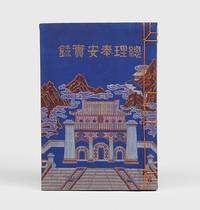
1929réf. 172181Nanjing: Zongli fengan huakan bianzuan weiyuanhui 1929. Bidding China's "National Father" farewell First and only edition and printing of the official commemorative publication for Sun Yat-Sen's state burial distributed as a gift by the Chinese Ministry of Foreign Affairs. Over one hundred photographic illustrations record the elaborate multi-day ceremony and the appearance of Sun's mausoleum; these are accompanied by several folding architectural plans. Loosely inserted is the ministry's printed presentation card. Following Sun's death on 12 March 1925 the Kuomintang formed a 12-man committee tasked with overseeing the construction of a massive mausoleum on Mount Zijin in Nanjing. The stakes were high: amidst the breakdown of the Kuomintang's relations with the Chinese Communist Party and Chiang Kai-Shek's tightening grip on the party-state exerting control over Sun's legacy and image was paramount. The design of the site was opened to public tender the committee requiring the winning design to combine traditional Chinese styles with modern concepts of adaptive architecture. The winning architect Lu Yanzhi 1894-1929 died before construction finished and his vision was seen through to completion by his colleague Poy Gum Lee 1900-1968. Lu and Poy's American training is reflected in such design elements as the layout of the site which draws on the Mall in Washington and the Liberty Bell and the design of a statue of Sun seated in Lincoln-esque fashion. In spring 1929 the internment ceremony began with the transfer of Sun's body from Beiping to Nanjing on a special train named the "Soul Train" in Chinese. "The transfer was designed as a long drawn-out mobile media event that was to spiritually mobilize modernize and unify the population around the spirit and body of Sun Yat-sen". The internment ceremony held on 1 June 1929 after the body had lain in state for three days was a lavish and highly regulated spectacle. The body was escorted by a 3-mile-long procession to the echoes of a 101-gun salute from a gunboat moored on the Yangtze River. At midday as Song Qingling and Sun Ke Sun's wife and son closed the metal door on the tomb the ceremony closed with a national three-minutes silence. This is the most important printed record of one of 20th-century China's defining political events. The majority of copies are now housed in institutional collections and we have traced no others in commerce. Accompanying this copy are two contemporary typescript translations into English of the book's captions. Large octavo. With 73 plates 4 collotype and 35 halftone plates 7 maps and plans 6 folding ornate title page after calligraphy by Han Minjing. Original lavish silk brocade lettered in gold orange thread xianzhuang stitching spine and covers lined with tan silk. With original blue cloth folding case xylographic label on front panel reproducing calligraphy by Chiang Kai-Shek lined with decorative blue paper bone toggles. Brocade bright some losses to silk on spine rear cover silk lining worn and feathering where sometime damp text and illustrations very well preserved one folding plan with small hole not affecting printed area: a very good copy the binding having lost none of its lustre in very good case with rubbing a little soiling and cockling to lining. Rudolph G. Wagner "1925-1928: Enshrining the Father of the Republic" China Heritage Annual available online. hardcover
2018réf. 2081502111907509national library 2018. Soft Cover. Fine. The book is in fine condition. national library paperback
2016réf. 2081502111906077national library 2016. Soft Cover. Fine. The book is in fine condition. national library paperback
1962réf. 2409180259xbvkJamaica, Island Worcester [and Things] - Ceramics, 1962. Material: Ceramic / Total height (Pot with lid): ca. 39 cm; diameter at foot: ca. 15 cm, largest diameter (open top of 'pot'): ca. 24 cm. / Colour: lightbrown-rosé with white partly gilt-lined embossments and partly gilt inscriptions; foot and pineapple-top: white. / Weight: ca. 3 kg.
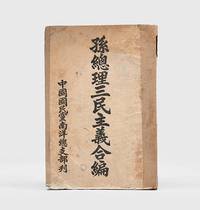
1924réf. 180007China: Zhongguo guomindang nanyang zongzhibu c. 1924. A fundamental text of modern Chinese political thought A rare early edition of the official Kuomintang anthology of Sun Yat-Sen's 1924 lectures on the 'Three Principles of the People' which became the defining exposition of his famous political theory following his death the following year. This example was issued by the party's Nanyang headquarters the branch covering the Chinese south coast and south-east Asia the sheets likely printed in China. The lectures delivered between January and August at Guangdong Higher Teacher's College "were given on Sunday mornings to audiences of two thousand to three thousand people. The audience packed into the hall consisted of government and party officials students and 'people from all walks of life.' Sun's listeners were generally attentive though sometimes distracted by fatigue or hunger one attendee recalled rushing to the dining hall once Sun concluded his remarks for the day" Strand pp. 255-6. Of the 16 talks 6 each were devoted to the principles of "nationalism" and "democracy" and 4 expounded on "the people's livelihood." They crystallized his three decades of political theorizing and activism serving as a last testament that could be readily used and abused by the different political factions that claimed throughout the 20th century to be the true custodians of his legacy. As Sun spoke without a prepared text his talks were transcribed by Zou Lu a Kuomintang official. After Sun had made edits and corrections the transcripts were issued separately one booklet per principle and then as one volume at the end of 1924. Institutional holdings of early Kuomintang printings of the lectures are low. For the booklets the National Library of China holds a copy of each with different paginations to the relevant sections here. The present edition was reproduced in Volume 45 of the 2023 Taibei 268-volume edition of Sun's writings suggesting copies are held in the depositories of Sun's writings and manuscripts in Taiwan and Guangzhou but otherwise it is entirely untraced. Around the time of Sun's death Shanghai's Minzhi Shuju published a trade edition of the lectures. This is a little more common institutionally. Octavo 245 x 170 mm. Vignettes and diagrams in text; text in Chinese. Original buff wrappers later brown paper backstrip and reinforcement to front cover front wrapper lettered in black. Contemporary red ink stamp on front cover; mid-century purple ink annotations on rear wrapper and internally. Wear and soiling contents browned as usual for paper of this period: a very good copy showing heavy signs of use. Marie-Claire Bergère Sun Yat-sen 1998; David Strand An Unfinished Republic: Leading by Word and Deed in Modern China 2011. unknown
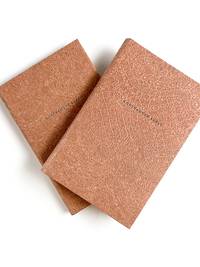
1832réf. 53547Philadelphia: Carey & Lea 1832. Near fine. First US edition of Austen's third published novel - in a stunning fine art binding by the acclaimed Argentinian design bookbinder Sol Rébora. Morally upright Fanny gets pulled into a neighbor's scheming via an adaptation of Elizabeth Inchbald's well-known play LOVERS' VOWS. Among Austen's works MANSFIELD PARK especially demonstrates how careful contrasts of characters and plot twists can bring out subtle ironies. First published in 1814 in three volumes this is the first edition to appear in the United States published in two volumes by Carey & Lea in an edition of only 1250 copies. Sol Rébora is an internationally recognized design bookbinder based in Buenos Aires. Her works embody a minimalistic elegance that is nevertheless subtly complex as in the carefully structured multiple layers used here. They are not only visually stunning but supremely tactile. From Rèbora's artist statement: "The cloth texture is achieved using silk with a patterned design that evokes the aesthetic of the time period in which the original edition was produced creating a visual connection with antique paper. This design also appeals to the collective memory of how custom bindings from the early 19th century might have appeared complete with deep-relief hot-stamping impressions." A magnificent unique copy of an Austen first. Two 12mo volumes 6.75'' x 4.25'' each. Modern full pink design binding by Sol Rébora in Can Can structure with one layer of cotton cloth and two layers of Japanese paper each element hand-painted with acrylics and textured with a patterned design impressed with deep-relief hot-stamping from silk; spines and boards lettered in dark grey. Cotton and abaca handmade paper peach endpapers. Publisher's catalogue bound at front of volume I. 4 200; 204 pages. Vol. II with pencil inscription of the Portsmouth Athenaeum to fly leaf. Some browning a few spots of staining to text block some early pencil notes. Tight. Carey & Lea unknown
1833réf. 53548Philadelphia: Carey & Lea 1833. Near fine. First US edition of the most bookish of Austen's novels - in a stunning fine art binding by the acclaimed Argentinian design bookbinder Sol Rébora. Often misread as critical of the gothic novels that were popular at the period of its first composition NORTHANGER ABBEY is a more complex exploration of the genre that is especially notable for its passages in defense of the novel form - written uncharacteristically in first person directly from the narrator. First published in late 1817 in three volumes this is the first edition to appear in the United States published in two volumes by Carey & Lea in an edition of only 1250 copies; it includes the famous "Biographical Notice of the Author" that first revealed Austen's name to the public as the author as her books were all published anonymously in her lifetime. Sol Rébora is an internationally recognized design bookbinder based in Buenos Aires. Her works embody a minimalistic elegance that is nevertheless subtly complex as in the carefully structured multiple layers used here. They are not only visually stunning but supremely tactile. From Rèbora's artist statement: "The cloth texture is achieved using silk with a patterned design that evokes the aesthetic of the time period in which the original edition was produced creating a visual connection with antique paper. This design also appeals to the collective memory of how custom bindings from the early 19th century might have appeared complete with deep-relief hot-stamping impressions." A magnificent unique copy of an Austen first. Two 12mo volumes 6.75'' x 4.25'' each. Modern full grey-lavender design binding by Sol Rébora in Can Can structure with one layer of cotton cloth and two layers of Japanese paper each element hand-painted with acrylics and textured with a patterned design impressed with deep-relief hot-stamping from silk; spines and boards lettered in dark grey. Cotton and abaca handmade paper grey-pink endpapers. 195 1; 196 pages. Light pencil notation to title of Vol. 2. Some offsetting marks to endpapers from earlier binding; light browning to leaves a few small stains. Bright. Carey & Lea unknown
1832réf. 53547Philadelphia: Carey & Lea 1832. Near fine. First US edition of Austen's third published novel - in a stunning fine art binding by the acclaimed Argentinian design bookbinder Sol Rébora. Morally upright Fanny gets pulled into a neighbor's scheming via an adaptation of Elizabeth Inchbald's well-known play LOVERS' VOWS. Among Austen's works MANSFIELD PARK especially demonstrates how careful contrasts of characters and plot twists can bring out subtle ironies. First published in 1814 in three volumes this is the first edition to appear in the United States published in two volumes by Carey & Lea in an edition of only 1250 copies. Sol Rébora is an internationally recognized design bookbinder based in Buenos Aires. Her works embody a minimalistic elegance that is nevertheless subtly complex as in the carefully structured multiple layers used here. They are not only visually stunning but supremely tactile. From Rèbora's artist statement: "The cloth texture is achieved using silk with a patterned design that evokes the aesthetic of the time period in which the original edition was produced creating a visual connection with antique paper. This design also appeals to the collective memory of how custom bindings from the early 19th century might have appeared complete with deep-relief hot-stamping impressions." A magnificent unique copy of an Austen first. Two 12mo volumes 6.75'' x 4.25'' each. Modern full pink design binding by Sol Rébora in Can Can structure with one layer of cotton cloth and two layers of Japanese paper each element hand-painted with acrylics and textured with a patterned design impressed with deep-relief hot-stamping from silk; spines and boards lettered in dark grey. Cotton and abaca handmade paper peach endpapers. Publisher's catalogue bound at front of volume I. 4 200; 204 pages. Vol. II with pencil inscription of the Portsmouth Athenaeum to fly leaf. Some browning a few spots of staining to text block some early pencil notes. Tight. Carey & Lea unknown books