CollectifLivre Rare Book

622 résultats
1970réf. sm354Zeiss Revue 1970 Revue in-4 agraffée, 33pp., nombreuses illustrations, Histoire des jumelles ZEISS ; Une nouvelle jumelle de poche 8*20 ; Le microscope électronique ZEISS EM 9 S ; Une métode de coloration pour l'identification des cellules au cours de la mitose et des formes indifférenciées atypiques ; Parenté entre grains vitellins et lysosomes ; MICRO-VIDEOMAT : un analyseur linéaire pour les examens stéréométriques automatiques ; bon état. Livraison a domicile (La Poste) ou en Mondial Relay sur simple demande.
1971réf. sm355Zeiss Revue 1971 Revue in-4 agraffée, 33pp., nombreuses illustrations, Changement de commissaire de fondation à la Fondation CARL ZEISS ; tube d'assistant et adaptateur cinématographique (télévision) pour les microscopes d'opération ZEISS ; TESSOVAR ZEISS - une photoloupe avec objectif Zoom ; Les processus de métabolisme dans l'infactus du myocarde expérimental ; Epimicroscope : un instrument pour l'observation directe des structures internes de l'oeil d'arthropode ; Lac Salton ; Microscopie en fluorescence : observation de la croissance des tubes polliniques dans le tussi de style et d'ovaire ; Nouveau dispositif d'éclairage pour microscopes de mesure ; Nouveaux instruments photogrammétriques ; Sous-ensembles poue la microscopie et l'électronique ; L'Elrepho, colorimètre pour échantillons fluorescents et particulièrement pour ceux qui sont éclarcis optiquement ; Levier de mise au point pour microscopes ; bon état. Livraison a domicile (La Poste) ou en Mondial Relay sur simple demande.
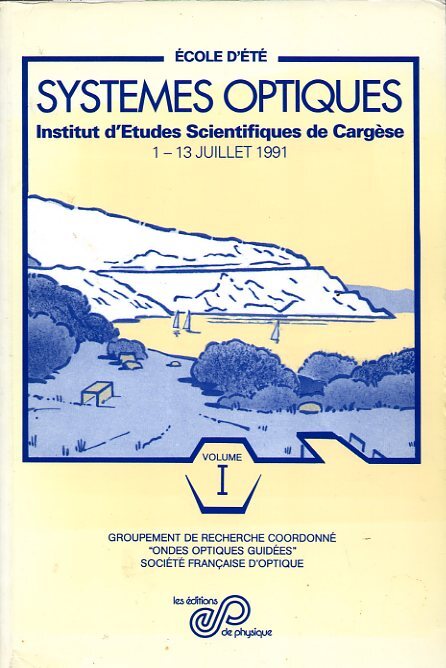
1992réf. L323Les éditions de physique, 1992, 512 p.
1750Montauban, chez Jean François Teulières, 1750, In-8 broché, sous couverture d'attente, LXV + 389 pages. Contient, entre autres : Essau d'explication de quelques textes des reflexions de l'Empereur Marc-Aurèle par l'Abbé Bellet. L'origine des lunettes par M. de Bernoy. Reflexions sur le génie d'Horace, de Despreaux et de Rousseau, etc. Bon état
réf. 12202Laffond Sciences, 1969. Couverture illustree. Format in-12 broché, 192 pages.Tres bon etat.
réf. 22314Paris, Gauthier-Villars et Cie, 1933. 14 x 23, 206 pp., 124 figures, nombreux exercices, broché, très bon état.
1871réf. 5020In three parts 1852-1870. Printed, for private circulation only, by order of the Council of the Royal Society. Mit 6 (3 gefalt., 2 lithogr.) Tafeln u. einigen Illustrationen im Text. London, Printed by Taylor and Francis, 1871. 8vo. (21,0 x 13,1 cm). V S., 1 Bl., 45, 3 S.; 40 S.; Titel, 59 S. Orig.-Halbleinwandband.
réf. 32313Paris, Seghers, 1967. 14 x 16, 186 pp., quelques illustrations, broché, bon état.
réf. 1366P., CNRS, 1956, un volume in 8 relié en pleine toile éditeur 300pp.
réf. 1391P., Durand, 1752, un volume in 4 relié en plein veau marbré, dos orné de fers dorés, tranches rouges (reliure de l'époque), (habiles restaurations aux mors et à la coiffe, quelques cahiers uniformément jaunis), (1-tiotre), 5pp., (1pp.-errata), 202pp. (mal chiffrées 192), 3 feuillets non chiffrés dont 2 feuillets de privilège et 1 feuillet blanc, 7 PLANCHES DEPLIANTES
1991réf. 50939Chicago, The University of Chicago Press, 1991. 263 S. (23 cm) Broschierte Ausgabe
réf. 89BiAnvers Kompas Grand in 8 331 pages - 4 planches in fine - 224 figures dans le texte - cartonnage editeur - ecrit en néerlandais - bon etat
réf. 89BiAnvers Kompas Grand in 8 331 pages - 4 planches in fine - 224 figures dans le texte - cartonnage editeur - ecrit en néerlandais - bon etat
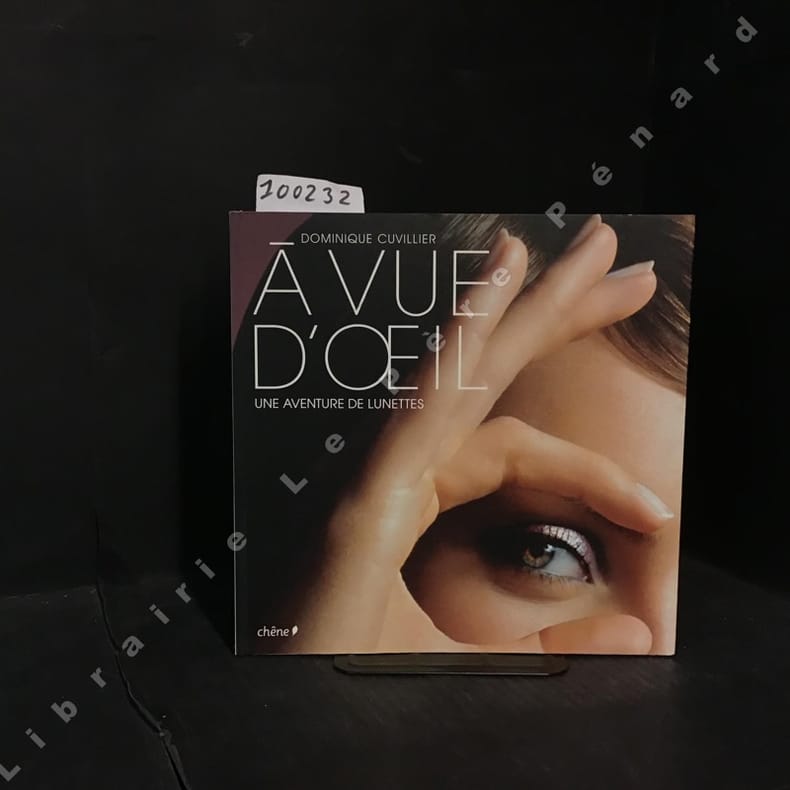
2007réf. 1002322007 Chêne - 2007 - In-4 broché avec rabat - 160 pages - nombreuses reproductions photographiques
in-8°, 76 pp., fig. in-t., broche, couv. Bel exemplaire. [CA27/0][F] Avec 32 figures dans le texte et une nouvelle carte du Ciel Boreal portant l'indication des constellations, des etoiles tests et des curiosites les plus facilement observables au moyen de petits refracteurs.
français Bruges, Editions "De Tempel", 1946. In-8 de 23 pp.; plaquette agrafée, couverture imprimée et illustrée. Avec 8 figures dans le texte et 2 planches hors texte. Dos insolé et fragile, intérieur frais.
1933réf. 107022BBStuttgart, Ferdinand Enke, 1933. Gr.-8°. S. 577-720, [1] Bl. mit 49 Abb., 1 Portrait und 1 Farbtafel. OBr.
réf. 2900in 8 broché titre,XVI,716 pages,354 figures dans le texte et pleine page éditions de la revue d’Optique théorique et instrumentale 1935 rare édition originale un petit manque coin supérieur droit du deuxième plat .
réf. 31986aafParis, Revue d'optique théorique et instrumentale, 1935, in-8°, XVI + 715 p., richement illustré avec ca. 340 figures + 13 planches, brochure originale.
1935715pp VG/none First edition, in French. Contemporary binding in strong half cloth, inset with gilt lettering on spine, minimal signs of wear, light signs of dust on upper edges, overall in VG conditions throughout, a nice copy, tight and clean. Important, classic, comprehensive work in French on lenses and telescopes, and their use and adjustment plus a section on the history of telescopes. The authors were from the Strasbourg and Paris observatories. Full title Lunettes et Télescopes Théorie – Conditions d’Emploi – Description – Réglage – Histoire. It had been reprinted in modern times, this is the original edition. Prima edizione, in francese. Robusta rilegatura coeva in mezza tela, tassello con scritte dorate al dorso, minimi segni di usura, leggere tracce di polvere ai tagli superiori. nel complesso in ottime condizioni. Importante e classico volume su lenti e telescopi, il loro impiego e regolazione, con una parte storica. Gli autori erano impiegati negli osservatori astronomici di Strasburgo e Parigi.
réf. 38530Paris Editions de la Revue d'Optique Théorique et Instrumentale 1934 in 8 (22x14) 1 volume reliure percaline brique de l'éditeur, dos et plat supérieur titrés en noir, 90 pages. Préface de M. Jean Cabannes. Exemples puisés dans l'oeuvre de M. Bourguel. Pierre Daure, Professeur à la Faculté des Sciences de Bordeaux. 1°/ Diffusion moléculaire et effet Raman - 2°/ Technique de l'effet Raman - 3°/ Application des spectres à l'analyse chimique - 4°/ Interprétation des spectres Raman - 5°/ Exemples d'applications chimiques. Edition originale. Envoi autographe signé par l'auteur. Bon exemplaire
1933réf. 012175PARIS EDITIONS DE LA REVUE D'OPTIQUE THEORIQUE ET INSTRUMENTALE 1933 Un volume in-8 de 12 pages non paginées de publicités + 90 pages , dans son cartonnage éditeur pleine percaline marron , titrage en noir , ouvrage enrichi de 38 figures in-texte , soulignages au crayon à papier aux 6 premières pages , autrement très bon exemplaire . Très bon Couverture rigide
1775réf. 27718PARIS Daumont 1775 une vue d'optique en couleurs, GRAVÉE A L'EAU-FORTE ET AQUARELLÉE SUR PAPIER DE FORMAT: 48 x 29 cm., 1775 Paris Daumont Editeur,
1790réf. 28379PARIS DAUMONT 1790 une vue d'optique en couleurs, GRAVÉE A L'EAU-FORTE ET AQUARELLE SUR PAPIER DE FORMAT: 44 x 29,5 cm., 1790 PARIS DAUMONT Editeur,
1611"Marca tipografica frontespizio e numerosi diagrammi xilografici nel testo. 4 p.l., 78 pp., 1 carta di errata. Piccolo 4to, pergamena coeva. Venezia: T. Baglionus, 1611. Frontespizio con un piccolo restauro. Prima edizione di questa rara e importante opera nella storia dell'ottica e del telescopio; ha avuto una grande influenza sulle teorie ottiche di Newton ed è di grande interesse galileiano. De radiis visus et lucis si occupa di lenti, telescopi e arcobaleno. De Dominis sapeva come la luce si rifrangeva nel suo passaggio da un mezzo all'altro. Dopo l'invenzione del telescopio De Dominis ha aggiunto la sua spiegazione teorica al suo lavoro. La sua spiegazione non fu del tutto soddisfacente, tuttavia, perché la sua conoscenza della legge di rifrazione era incompleta. De Dominis descrive in modo particolareggiato l'effetto sull'angolo di vista di una lente di maggiore curvatura o di maggiore distanza tra la lente e l'oggetto che si sta osservando. Con la stessa accuratezza ha esaminato le combinazioni di lenti, in particolare la combinazione di un oggetto di vetro convesso e di un oculare concavo. Questo lavoro ha portato alla sua scoperta delle condizioni in cui è possibile l'ingrandimento di un'immagine. ""- DSB, IV, p. 158. Nella prefazione, Giovanni Bartoli, che fu ambasciatore della Toscana a Venezia e uno dei primi sostenitori delle scoperte di Galileo, descrive il cannocchiale di nuova invenzione (attribuendo la sua invenzione a Galileo) e le scoperte rese possibili da questo strumento. De Dominis fornisce anche un resoconto del cannocchiale (pp. 34-43) e suggerisce addirittura i tiranti, entrati in uso molto più tardi . Questo libro contiene anche la famosa teoria dell'arcobaleno di De Dominis che influenzò molto Newton. Nel 1704, Newton scrisse nel suo Optics: ""Questa rifrazione è stata recentemente scoperta e spiegata più completamente dal famoso Arcivescovo Antonius de Dominis di Spalato, nel suo libro De Radiis Visus et Lucis, pubblicato dall'amico Bartolus a Venezia, nell'anno 1611, e scritto sopra 20 anni prima. Perché vi insegna come l'arco interno è realizzato da gocce di pioggia rotonde da due rifrazioni della luce solare. ""Per una discussione approfondita sulla spiegazione dell'arcobaleno di De Dominis, vedere Boyer, The Rainbow (pp. 187-92 & passim ), che lo definisce ""superiore a qualsiasi altro pubblicato nell'intervallo di tre secoli dal 1311 al 1611"". Newton possedeva una copia del presente libro che ora si trova al Trinity College di Cambridge (vedi Harrison, The Library of Isaac Newton, 535). De Dominis (1560-1626), gesuita dalmata, tenne conferenze di matematica, logica e filosofia a Verona, Padova e Brescia. In seguito fu nominato arcivescovo di Spalato (Spalato). La sua fede nell'unità di tutti i cristiani chiese e la pace tra le nazioni lo portarono a fuggire in Inghilterra. Poco dopo il suo ritorno a Roma, fu imprigionato dall'Inquisizione. Morì in una prigione e dopo la sua morte fu riconosciuto colpevole di eresia e il suo corpo fu bruciato. Goethe scrisse di De Dominis che ""ha scoperto lo spettro solare mentre diceva messa"" Cinti 33. Poggendorff, I, 589-90. Riccardi, I, 417-18– ""importantissimo libro"". Printer’s mark on title page & numerous woodcut diagrams in the text. 4 p.l., 78 pp., 1 leaf of errata. Small 4to, contemporary calf. Venice: T. Baglionus, 1611. Title page with a small restoration. First edition of this rare and important work in the early history of optics and the telescope; it had a major influence on the optical theories of Newton and is of great Galilean interest. De radiis visus et lucis deals with lenses, telescopes, and the rainbow. De Dominis knew how light was refracted in its passage from one medium to another. After the invention of the telescope Dominis added its theoretical explanation to his work. His explanation was not entirely satisfactory, however, because his knowledge of the law of refraction was incomplete. De Dominis describes in particular detail the effect on the angle of sight of a lens of greater curvature or of a greater distance between the lens and the object being viewed. With the same thoroughness he examined lens combinations, in particular the combination of a convex object glass and a concave eyepiece. This work led to his discovery of the conditions under which the magnification of an image is possible.""–D.S.B., IV, p. 158.In the Preface, Giovanni Bartoli, who was Tuscan Ambassador at Venice and an early advocate of Galileo’s discoveries, describes the newly invented telescope (attributing its invention to Galileo) and the discoveries made possible by this instrument. De Dominis also provides an account of the telescope (pp. 34-43) and even suggests draw-tubes, which came into use much later. This book also contains De Dominis’ famous theory of the rainbow which greatly influenced Newton. In 1704, Newton wrote in his Optics: ""This Refraction was of late more fully discover’d and explain’d by the famous Antonius de Dominis, Archbishop of Spalato, in his book De Radiis Visus et Lucis, published by his friend Bartolus at Venice, in the Year 1611, and written above 20 Years before. For he teaches there how the interior Bow is made in round Drops of Rain by two Refractions of the Sun light."". For a thorough discussion of De Dominis explanation of the rainbow, see Boyer, The Rainbow (pp. 187-92 & passim), who calls it ""superior to any other published in the interval of three centuries from 1311 to 1611."" Newton owned a copy of the present book which is now at the Trinity College, Cambridge (see Harrison, The Library of Isaac Newton, 535). De Dominis (1560-1626), a Dalmatian Jesuit, lectured on mathematics, logic, and philosophy at Verona, Padua, and Brescia. He was later appointed archbishop of Split (Spalato). His belief in the unity of all Christian churches and peace among nations caused him to flee to England. Soon after his return to Rome, he was imprisoned by the Inquisition. He died in a dungeon and after his death he was found guilty of heresy and his body was burned. Goethe wrote of De Dominis that ""he discovered the solar spectrum while celebrating Mass"" Cinti 33. Poggendorff, I, 589-90. Riccardi, I, 417-18–""importantissimo libro"" "