STROHL AndréLivre Rare Book

622 Ergebnisse
1957Best.-Nr. 148289Couverture rigide. Reliure de l'éditeur, 668 pages. Cachet de librairie.
1994Best.-Nr. 97035Bellingham Washington: SPIE The International Society for Optical Engineering 1994. 1994. Very good. - Quarto 11 inches high by 8-1/2 inches wide. Softcover bound in printed yellow wraps. The corners of the covers are lightly creased and an early ink price has been partially erased from the top corner of the front cover. vii i & 150 pages with textual illustrations and diagrams. The corners of the pages are lightly bumped. Very good. SPIE is the Society of Photo-Optical Instrumentation Engineers. Bellingham, Washington: SPIE The International Society for Optical Engineering, (1994). paperback
Best.-Nr. 34049P., Flammarion (Bibliothèque de Philosophie Scientifique), 1939, in 12 broché, 282 pages ; quelques rousseurs sur les tranches.
Best.-Nr. 8632Vue d’optique représentant la procession du st sacrement, le jour de la feste Dieu,à Vienne en Autriche.Eau-forte du XVIIIème siècle, en couleurs 390x270mm à la cuvette et 480x320mm avec la marge. Paris Chez Chereau
1960Best.-Nr. 35365ABNew York, Consultants Bureau, 1960. Gr. 8° (23,5 x 15,5 cm).. VI, 186 S., mit 165 graphischen Darstellungen (davon 3 farbig auf einer Tafel). Original-Ganzleinenband mit farbig illustriertem Schutzumschlag.
1 volume in-8°, 223 pages, figures et schemas n&b et couleurs, broche, couv. Bon etat. [CA30-5] [F]
Best.-Nr. 12321In 8 reliure éditeur pleine toile lie de vin. Titre doré au dos et sur le premier plat, titre, 223 pages, 1 page de table des matières, catalogue de 32 pages, 39 figures dans le texte. Paris Librairie Germer Baillière & Cie 1878. Rousseurs, plus concentrées en début et fin de volume. Premier plat et dos, en partie, insolés. Edition originale.
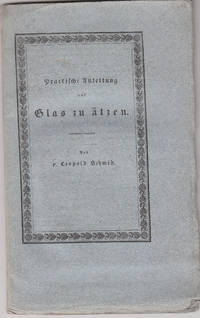
1832Best.-Nr. 1798Vienna: F Beck 1832. First Edition. orig. blue wrappers. A very good copy. 8vo. A large fldg. plate. Etching glass with flourine had been known since the late 18th century but the dangerous work had been undertaken in only limited fashion. Schmid's pamphlet proffers new methods and techniques to carry out delicate tasks. What is of considerable interest is the attention the author devotes to the production of micrometers for telescopes. The plate illus. all the necessary apparatus. Duncan #11722; NUC cites only Corning Coll.; absent from Engelmann. F Beck unknown books
Best.-Nr. GF4178Lithographie format 37,5 x 25,5 cm marges comprises - Paris - Imprimerie Lemercier - vers 1880 - Mouillure en angle -
Best.-Nr. 64375aafBraunschweig, Friedrich Vieweg, 1865-71, gr. in-8°, VIII + 134 S. (S. 129/130 verbunden); X + 211 S., mit insgesamt 51 in den Text eingedruckten Holzstichen (die Abbildungen zu «Eis und Gletscher» koloriert), mit marmorierten Vorsätzen, HLwd. Sehr gutes Exemplar.
Best.-Nr. 143071aafBraunschweig, Friedrich Vieweg, 1865-71-76, gr. in-8°, I. Heft: VIII + 134 S. ; II. Heft: X + 211 S.; X + 136 S. + III Heft: Über die Erhaltung der Kraft S. 137 bis 211 + 3 n.numm. S. Mit insgesamt 68 in den Text eingedruckten Holzstichen (die Abbildungen zu «Eis und Gletscher» koloriert), exlibris Martin Egli / Exliubris Peter E. Obergfell, Rez. Halbledereinband, Rückenvergoldung v. Autor u. Titel, schönes Exemplar.
in-12, 152 pages, figures in-t., broche, couv. Bel exemplaire. [PF-1]
Best.-Nr. 51290Interscience Publishers, Inc., 1946 16 x 23, 510 pp., 141 figures, 3 tableaux, cartonnage, éditeur, Très bon état - 2e edition, revue
Best.-Nr. 8555P., Carré, 1896, un volume in 8 relié en demi-basane, dos orné de filets dorés (reliure de l'époque), (coiffe émoussée, dos légèrement frotté), (3), 285pp.
1896Best.-Nr. 9799Paris Gauthier-Villars 1896 GRAND In-8 285 pp, Cours de physique générale, leçons professées à la Sorbonne en 1895, rédigées par Duperray et Gallotti. Couvertures conservées restaurées ; 1/2 percaline.
1993Binding is very well preserved overall, though there are a few very slight marks (some very light scuffs and a small stain), though these are only slightly visible. pages are clean and crisp, and printing is immaculate throughout... clean tight and bright. Used
Best.-Nr. 108255Sans mention d'imprimeur, sans date, 1 volume de planches vendu seul sans les volumes de texte, in-4 de 265x205x25 mm environ, 1f. blanc, 1 faux-titre, 1f. (avertissement), 90 planches (dont une dépliante),1f.blanc, demi reliure en veau marbré brun, dos à nerfs portant titres dorés, orné de caissons à fleurons et motifs dorés, tranches jaspées. Tomaison en partie effacée, rares petites rousseurs, un tampon sur la page de faux-titre, cuir frotté avec petites épidermures et coiffes ébréchées, cartonnage frotté avec manque de matière sur un coin, sinon intérieur bien conservé. Complet des 90 planches.
1923Best.-Nr. AUB-8075James Guinchard éd. 1923. Bel exemplaire relié, reliure pleine toile, in-8, 142 pages.
1937Reliure de bibliothèque. 260 pages.
1861IX, (1bl), 714, (2)pp cartonnage moderne, couvertures originales imprimées rapportées sur les plats et au dos 1861, 1861, in-8, IX, (1bl), 714, (2)pp, cartonnage moderne, couvertures originales imprimées rapportées sur les plats et au dos, 114 figures dans le texte. ENVOI signé de l'auteur à Émile Combes (1835-1921), membre de l'Institut ; il entreprit des études de médecine à Paris et soutient une thèse sur les Considérations contre l'hérédité des maladies en 1868. Il s'illustra par la suite dans la carrière politique, sous les présidences de Loubet et de Poincaré. Rare édition originale de cet ouvrage très approfondi sur la vision binoculaire et les instruments d'optiques ; l'ophtalmoscope binoculaire, invention de l'auteur (p. 674 et suiv.), Marc-Antoine "Félix" Giraud-Teulon (1816-1887), y est décrit pour la première fois. L'ophtalmoscope de Giraud-Teulon, consistait en un un miroir concave de 45mm de diamètre, avec deux prismes à l'arrière se rencontrant sur leurs angles aigus et deux prismes variables fixés du côte de l'observateur, l'un ayant une surface plane, l'autre convexe. Nachet emprunta son principe pour la fabrication son propre ophtalmoscope binoculaire. De par son utilisation peu commode, l'objet rencontra peu de succès : il sera de nouveau envisagé plusieurs années après, par Charles Schepens ("Un nouvel ophtalmoscope binoculaire pour l'examen du décollement de la rétine", Bulletin de la Société belge d'ophtalmologie, 1945). Bon exemplaire, non rogné. Hirsch II, 759. Schett, The Ophtalmoscope, p. 172 et suiv
1975Best.-Nr. 2080502106912526Not Available 1975. Soft Cover. Fine. The book is in fine condition. Not Available paperback
2003Best.-Nr. 101239World Scientific 2003 World Scientific, 2003, 552 p., cartonnage éditeur sous jaquette, une étiquette sur le second plat de la jaquette, un antivol sur le second contreplat, bon état pour le reste et intérieur très propre.
1939Best.-Nr. 24520Paris, Editions Ecole et Collège, (1939). Un vol. au format pt in-4 (232 x 177 mm) de 385 pp., broché.
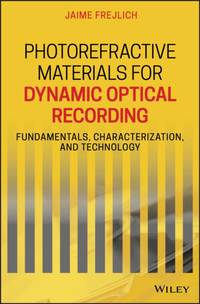
Best.-Nr. ria9781119563778_inpHardback. New. New Book; Fast Shipping from UK; Not signed; Not First Edition; N/A hardcover
1504Best.-Nr. 5444Venice: Giovanni Battista Sessa June 1504. THIRD OR FOURTH EDITION of the two editions of 1504 priority has not been determined. THE FIRST TO BE EDITED BY LUCA GAURICO. Hardcover. Fine. Bound in modern vellum. Title with large woodcut showing the author in his study surrounded by books lecturing his students one of whom takes notes. Sessa's cat-and-mouse printer's device appears on the same leaf.The text is illustrated with 77 woodcut diagrams. A very fine copy crisp and bright. There is a very light stain on the title page a bit of soiling in the gutter of leaf A3 and a discreet paper repair to the fore-edge of the final leaf. "The 'Perspectiva communis' was the most widely used of all optical texts from the early fourteenth until the close of the sixteenth century and it remains today the best index of what was known to the scientific community in general on the subject" DSB. It was first printed in Milan around 1482 then in 1503 it was included in a collection by Thomas Bradwardine "Praeclarissimum mathematicarum opus"Valencia. This 1504 edition the first edited by Luca Gaurico can be considered the third although another edition of the pre-Gaurico version was also published in 1504 at Leipzig. A mathematician from Naples and teacher of Scaliger Gaurico who also edited the works of Archimedes and Ptolemy completely revised the text. "The work on which Pecham's fame has chiefly rested is the Perspectiva communis probably written between 1277 and 1279 during Pecham's professorship at the papal curia. In the first book Pecham discussed the propagation of light and color the anatomy and physiology of the eye the act of visual perception physical requirements for vision the psychology of vision and the errors of direct vision. In book II he discussed vision by reflected rays and presented a careful and sophisticated analysis of image formation by reflection. Book III was devoted to the phenomena of refraction the rainbow and the Milky Way. "The central feature of Pecham's optical system and the dominant theme of book I of the 'Perspectiva communis' is the theory of direct vision. Here as elsewhere Pecham endeavored to reconcile all the available authorities-Aristotle Euclid Augustine al-Kindi Ibn al-Haytham Ibn Rushd Grosseteste and Bacon. Following Ibn al-Haytham Pecham argued that the emission of visual rays from the observer's eye is neither necessary nor sufficient as an explanation of sight; the primary agent of sight is therefore the ray coming to the eye from a point on the visible object. But in an attempt to follow Aristotle al-Kindi and Grosseteste as well Pecham argued that visual rays do nevertheless exist and perform the important but not always necessary function of moderating the luminous rays from the visible object and making them "commensurate with the visual power." Thus Pecham like Bacon resolved the age-old debate between the emission and intromission theories of vision in favor of a twofold radiation although to be sure priority was given to rays issuing from the visible object. "The rays issuing from points on the visible object fall perpendicularly onto the cornea and penetrate without refraction to the sensitive ocular organ the glacial humor or crystalline lens; nonperpendicular rays are weakened by refraction and therefore can be largely ignored. Since only one perpendicular ray issues from each point of the visible object and the collection of such perpendicular rays maintains a fixed order between the object and the eye a one-to-one correspondence is established between points on the object and points on the glacial humor and unconfused perception of the visual field is thus achieved. Vision is not "completed" however in the glacial humor. There is a further propagation of the rays or species through the vitreous humor and optic nerve to the common nerve where species from the two eyes combine and eventually to the anterior part of the brain and the "place of interior judgment." "Pecham's optical system included significantly more than a theory of direct vision. He briefly discussed the doctrine of species; treated at length the propagation of rays; and developed a theory to explain how solar radiation when passing through noncircular apertures gives rise to circular images. He expressed the full law of reflection and applied it to image formation by plane spherical cylindrical and conical mirrors; in this analysis he revealed an implicit understanding of the nature of the focal point of a concave mirror. Although he did not possess a mathematical law of refraction he successfully applied the general qualitative principles of refraction to the images that result from refraction at plane and circular interfaces between transparent media of various densities. In his discussion of the rainbow Pecham again attempted to reconcile different theories. He argued that all three kinds of rays rectilinear reflected and refracted concur in the generation of the rainbow. "Pecham's 'Perspectiva communis' is still extant in more than sixty manuscripts and went through twelve printed editions including a translation into Italian between 1482 and 1665. It was used and cited by many medieval and Renaissance natural philosophers including Dominicus de Clavasio Henry of Langenstein Blasius of Parma Lorenzo Ghiberti Leonardo da Vinci Albert Brudzewski Francesco Maurolico Giambattista della Porta Girolamo Fabrici Johannes Kepler Willebroad Snellius and G. B. Riccioli. It was lectured upon in the late Middle Ages at the universities of Vienna Prague Paris Leipzig Cracow Würzburg Alcala and Salamanca."DSB. Giovanni Battista Sessa, June hardcover books