Soemmerring, Samuel Thomas von.MareMagnum

7,684 results
Small folio (210 x 342 mm). 38, (2) pp. With engr. title vignette and 12 engr. plates by J. C. Berndt. Contemp. marbled boards. Only edition of this profusely illustrated collection of human malformations. "Achondroplasia is first described on page 30 and pictured on plate 11" (Garrison/M.). An English translation appeared in 1932 in R. H. Major's "Classic Descriptions of Disease". The versatile German anatomist S. T. von Soemmerring (1755-1830), one of the first members of the Senckenbergian Society, is hailed as the discoverer of the eye's Macula lutea, one of the earliest scholars to describe the Pterodactyl, and inventor of a telescope as well as of an electrical telegraph. He also was an early champion of smallpox vaccination. - Binding bumped at extremeties. Ms. inscription (c. 1820) on flyleaf: "Zum Beweise der reinsten Achtung | Aug. v. Tournier" [?]. Corners of flyleaf clipped; slight worming throughout (insignificant loss to text; more pronounced near beginning and end), otherwise fine. Extremely rare; last recorded on a German auction in 1964. Garrison/Morton 4306. VD 18, 14590689-001. E. Goldschmid, Entwicklung und Bibliographie der path.-anatom. Abbildung 78. OCLC 67960624.
1766Folio. Engraved title-page, (20), CXXVIII, (2), 200, (2) pp. With 2 heraldic engravings and 33 engr. plates. - (Bound with) II: Valentijn, François. Abhandlung von Schnecken, Muscheln und Seegewächsen, welche um Amboina und den umliegenden Inseln gefunden werden. Als ein Anhang zu G. E. Rumphs Amboinischen Raritätenkammer [...]. Ibid., 1773. VIII, 148 pp. With 18 (2 folding) engr. plates. Contemporary calf with label to gilt spine. First German edition. The Hessian scientist Rumpf had come to Ambon Island (part of the Maluku Islands of Indonesia) in 1635 as a member of the Dutch East India Company. His description of Ambonese seashells remains a classic of early marine biology. The plates of this edition are reversed copies of plates 17-49 of the Dutch original, published in 1705. - II: First German edition of the "Verhandeling der Zee-Horenkens en Zee-Gewassen" (1754). Valentijn was a preacher in the Ambon and Banda Islands and published an important description of East India. - Engravings of I bound at the end of the text. Second dedication leaf slightly spotty; otherwise very clean. Several engravings show slight creases to the margins. Several gatherings in II slightly browned. Binding slightly scuffed; spine and hinges restored, using mainly the old material. - Altogether a very nice copy. I: Ebert 19609. Landwehr, VOC 593. Graesse VI.1, 192. Nissen, ZBI 3519. - II: Nissen, ZBI 4215.
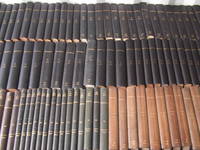
1866ref. 010620London: Office for Advertisments and Publications 1866. A near complete run from 1866 to 1994. 231 volumes. Lacking July-Decenber 1948 & January-June 1949. Books measure 36x26.5 last 31 volumes measure 30x21.5. Illustrated throughout. Most volume bound in modern black cloth with gilt lettering others bound in quarter calf. The calf volumes are faded on spines. Generally all bindings in very good clean firm condition. Internally very occasional library mark stamp. Pages and illustrations in very good clean condition. . Cloth. Very Good. Small Folio. Office for Advertisments and Publications Hardcover
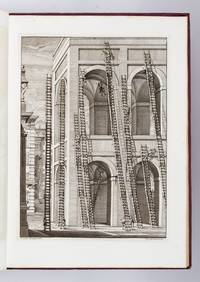
1824ref. ST19673Rome: Crispino Puccinelli 1824. Second Edition with the Addition of Later Machines and Premises. 520 x 370 mm. 20 1/2 x 14 1/2". 4 p.l. XXIX 1 46; 4 48 pp. Two volumes bound in one. Edited and with notes on the life and work of Zabaglia by Filippo Maria Renazzi. SPLENDID CONTEMPORARY RED MOROCCO VERY ATTRACTIVELY GILT covers with frames formed by thick and thin gilt rules filled with alternating fleuron tools above an undulating ribbon roll central panel framed by multiple gilt rules connecting ornate floral corner- and sidepieces flat spine divided into panels by multiple plain and decorative rules these panels with rectangular centerpiece composed of volutes arabesques and floral tools marbled endpapers. Engraved portrait of Zabaglia by Girolamo Rossi after a drawing by Pietro Leone Ghezzi engraved vignettes on both title-pages and 62 FINE ENGRAVED PLATES 10 OF THEM FOLDING after designs by Francesco Rostagni. Berlin Katalog 2755; Brunet V 1515 ; Graesse VII 501; Cicognara 968 all citing the first edition. Trivial signs of use to the binding and contents with insignificant imperfections only: AN EXCEPTIONALLY FINE COPY the attractive binding lustrous and virtually unworn and THE PLATES REMARKABLY CLEAN FRESH AND BRIGHT with especially ample margins. This is a remarkably beautiful copy inside and out of the second enlarged edition of a fundamental work for the history of engineering and the construction of buildings expanding the original 1743 edition for educational use with text in academically appropriate Latin in addition to the original Italian. Niccola or Nicolò Zabaglia 1667-1750 began working as a day laborer on the construction of St. Peter's Basilica in 1686 and was employed full time on the project by 1691. According to Dizionario Biografico degli Italiani "by 1696 he was able to demonstrate his ability as a mechanic moving the large porphyry cup and the bronze statues placed in the Vatican baptistery." Although illiterate he was an ingenious practical engineer. DBI notes that "the preparation of scaffolding and exceptional castles and the transport of extraordinary weights" were his strongest skills. For the Vatican he organized the removal transportation and installation of several obelisks at St. Peter's and other churches figured out a way to move a large marble altar and prepared the scaffolding needed to construct maintain or restore areas of St. Peter's. He was involved in strengthening its famed dome after the earthquakes of 1703 and 1730 inventing the necessary machines to do the work and training the construction crew. This volume's splendid oversized engravings illustrate the machinery and instruments used for the restoration of the dome—elaborate hoisting devices construction tools pulleys scaffolding ornamental tiles etc.—as well as the craftsmen at work. The transportation of the Vatican obelisk by Domenico Fontana in 1590 is represented by a fine selection of plates from Carlo Fontana's work on St. Peter's "Templum Vaticanum" published in 1694 and derived from Domenico's original "Delle transportazione dell'obelisco Vaticano". This undertaking may be compared with the plates depicting Zabaglia's methods for transporting and erecting obelisks. The greatest honor conferred on the unofficial "Engineer of the Vatican" in his lifetime was the first edition of this work published at Rome by Niccolò & Marco Pagliarini in 1743 with a total of 55 plates. The present second edition is enlarged with a biography of Zabaglia written by jurist Filippo Maria Renazzi 1742-1808 and with eight more plates which are among the very best and largest in the book; it is less commonly encountered than the first edition. This may be due to the fact that if put to the intended use in educational settings copies of the 1824 edition would have seen far more wear and tear than the earlier printing. Crispino Puccinelli unknown
1824ref. ST19673Rome: Crispino Puccinelli 1824. Second Edition with the Addition of Later Machines and Premises. 520 x 370 mm. 20 1/2 x 14 1/2". 4 p.l. XXIX 1 46; 4 48 pp. Two volumes bound in one. Edited and with notes on the life and work of Zabaglia by Filippo Maria Renazzi. SPLENDID CONTEMPORARY RED MOROCCO VERY ATTRACTIVELY GILT covers with frames formed by thick and thin gilt rules filled with alternating fleuron tools above an undulating ribbon roll central panel framed by multiple gilt rules connecting ornate floral corner- and sidepieces flat spine divided into panels by multiple plain and decorative rules these panels with rectangular centerpiece composed of volutes arabesques and floral tools marbled endpapers. Engraved portrait of Zabaglia by Girolamo Rossi after a drawing by Pietro Leone Ghezzi engraved vignettes on both title-pages and 62 FINE ENGRAVED PLATES 10 OF THEM FOLDING after designs by Francesco Rostagni. Berlin Katalog 2755; Brunet V 1515 ; Graesse VII 501; Cicognara 968 all citing the first edition. Trivial signs of use to the binding and contents with insignificant imperfections only: AN EXCEPTIONALLY FINE COPY the attractive binding lustrous and virtually unworn and THE PLATES REMARKABLY CLEAN FRESH AND BRIGHT with especially ample margins. This is a remarkably beautiful copy inside and out of the second enlarged edition of a fundamental work for the history of engineering and the construction of buildings expanding the original 1743 edition for educational use with text in academically appropriate Latin in addition to the original Italian. Niccola or Nicolò Zabaglia 1667-1750 began working as a day laborer on the construction of St. Peter's Basilica in 1686 and was employed full time on the project by 1691. According to Dizionario Biografico degli Italiani "by 1696 he was able to demonstrate his ability as a mechanic moving the large porphyry cup and the bronze statues placed in the Vatican baptistery." Although illiterate he was an ingenious practical engineer. DBI notes that "the preparation of scaffolding and exceptional castles and the transport of extraordinary weights" were his strongest skills. For the Vatican he organized the removal transportation and installation of several obelisks at St. Peter's and other churches figured out a way to move a large marble altar and prepared the scaffolding needed to construct maintain or restore areas of St. Peter's. He was involved in strengthening its famed dome after the earthquakes of 1703 and 1730 inventing the necessary machines to do the work and training the construction crew. This volume's splendid oversized engravings illustrate the machinery and instruments used for the restoration of the dome—elaborate hoisting devices construction tools pulleys scaffolding ornamental tiles etc.—as well as the craftsmen at work. The transportation of the Vatican obelisk by Domenico Fontana in 1590 is represented by a fine selection of plates from Carlo Fontana's work on St. Peter's "Templum Vaticanum" published in 1694 and derived from Domenico's original "Delle transportazione dell'obelisco Vaticano". This undertaking may be compared with the plates depicting Zabaglia's methods for transporting and erecting obelisks. The greatest honor conferred on the unofficial "Engineer of the Vatican" in his lifetime was the first edition of this work published at Rome by Niccolò & Marco Pagliarini in 1743 with a total of 55 plates. The present second edition is enlarged with a biography of Zabaglia written by jurist Filippo Maria Renazzi 1742-1808 and with eight more plates which are among the very best and largest in the book; it is less commonly encountered than the first edition. This may be due to the fact that if put to the intended use in educational settings copies of the 1824 edition would have seen far more wear and tear than the earlier printing. Crispino Puccinelli unknown books
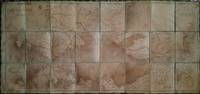
1911ref. 14938Chatham: School of Military Engineering May 1911. 765 by 1075mm. 30 by 42.25 inches. Colour lithographed map 40-section canvas-backed folding map at a scale of one inch to one mile This map of Hong Kong and the New Territories is one of the earliest maps to show the topography of Lantau Island and adjacent islands in detail. Hills are shown with contours and hachure shading with heights given in feet and villages are named. Cheung Chau called "Chung Island" is detailed but Lamma appears to have been only partially surveyed. The "Mouth of the Canton or Pearl River" runs along the left margin. Mountains of interest include Lin tau Lantau Peak at 3064 feet Victoria Peak at 1774 feet Ma On Shan at 2261 feet and Tai Mo Shan at 3130 feet. Part of the new single-track Kowloon Canton Railway which opened in 1910 is depicted between Tsim Sha Tsui and Sham Chun Sum Chun. This map is an early example of the topographical maps of areas of British political and commercial interest compiled by the Geographical Section General Staff of the War Office throughout the twentieth century. School of Military Engineering, unknown
Oblong folio (245 x 375 mm). 2 engr. title pages and 22 + 20 engr. plates by Pfeffel after Danreiter. - (Bound with) II: Steingruber, Johann David. Architecture civile. Erster Theil [= all published]. Architecturally engr. title-page, engr. preface (misbound before title-page), and 25 numbered engr. plates by J. D. Ringlin after Steingruber; explanatory text engraved within the plate in German and French. - (Bound with) III: Charmeton, Georges. Plans de divers edifices et corniches choisies. Abriße unterschiedener Gebälcke und Kronwercke. 12 engr. plates, including the title-page. Contemporary German half vellum over paste boards and beige paper covers (a little foxed); slightly faded red stained gilt lettered label tooled directly onto spine. Red speckled edges. A remarkable sammelband of three rare architectural and garden ornament works (the first in two parts), all of which were published by the important Augsburg print publisher Johann Andreas Pfeffel. I: First and only edition of a very scarce ornamental garden pattern book by the newly appointed court gardener and inspector of the Salzburg gardens, Franz Anton Danreiter (1695-1760). In 1728 Danreiter was appointed court gardener and inspector to related buildings by the ducal bishop of Salzburg. He translated Dezallier's "La Theorie et la Pratique du Jardinage" into German and became one of the more important mediators of French garden design to the German-speaking countries. His own designs issued in the present work, in two parts, with the second part particularly rare, show more than 100 ornamental and fanciful planting patterns on 42 plates. This was his first and rarest model book with garden plans for parterres. They show that far from endlessly repeating the strict symmetrical canon of French Baroque garden design, Danreiter developed a never-ending variety in ornamental designs which herald the German rococo. Danreiter served five successive bishops in Salzburg. Between 1727 and 1735 he also engraved a number of large-scale views of the city which represent a unique documentation of Salzburg in its 18th century baroque glory. - II: First edition of Steingruber's first published architectural book, showing designs for town houses and palaces. In total Steingruber shows seven scaled designs from a garden pavilion in an aristocratic park (2), several ever more lavish town houses for the haute bourgeois (4), and finally a ducal residence (1). Each design is shown in as much detail as possible with elevations and plans, but also several sections. The grander houses are shown with views of street and garden elevations; some designs have differently laid out plans. The architect J. D. Steingruber (1702-87) was appointed court architect by the Margrave of Brandenburg-Ansbach in 1734. In the course of his near sixty-year tenure of this position he was able to transform the townscape of Ansbach after his own designs. He is best remembered for his playful "Architektonisches Alphabet" (1773), a remarkable series of designs in which each building has a ground plan based on a different letter in the alphabet. - III: Scarce 18th century copy of Charmeton's rare "Diverses corniches choisies sur l'anticque", originally issued in 30 plates in c. 1670 (cf. Guilmard, 68). Pfeffel decided to issue only a selection of the designs. - Very rare: the only three complete copies of Danhauser's work located in libraries worldwide are at Augsburg (cf. KVK), Dumbarton Oaks (cf. OCLC), and the National Gallery, Washington (cf. Millard, Northern, no. 18). The Bavarian State Library and the British Library have only the first part; Olschki, Choix, 645 offered a copy with the second part, but lacked 2 plates in that part. - First leaf with near-contemporary aristocratic illegible ownership stamp. A fine architectural sammelband in excellent fresh condition with the plates in strong impressions, all printed an thick paper. I: Kat. der Ornamentstichslg. Berlin 3332 (wrong collation). II: Kat. der Ornamentstichslg. Berlin 2006. Cicognara 676. OCLC records copies at Avery and Getty; as well as 4 copies in Germany (including Berlin). III: Kat. der Ornamentstichslg. Berlin 3929.
Oblong folio (555 x 385 mm). Tinted lithographed title-page and 30 tinted lithographed plates (555 x 385 mm, one slightly smaller: 350 x 505 mm), all in fine contemporary hand colour. Loose in modern clamshell box. Extremely rare first edition of an impressive series of lithographed views showing the zinc mines, foundries and factories in Belgium and Germany owned by the "Société Anonyme de Mines et Fonderies de Zinc de la Vieille Montagne". The series includes views of Moresnet, Welkenraedt, Rabotraedt, Angleur, Saint Léonard (Liège), Valentin-Cocq and Bray, all beautifully rendered by the French landscape painter Adolphe Maugendre (1809-1895). The Vieille Montagne society was founded in 1837. Its history goes back to 1806, when Jean-Jacques Daniel Dony (1759-1819) was granted the sole mining rights to the calamine deposits of Vieille Montagne (or Altenberg), between Liège and Aachen. Dony had invented a new method for extracting zinc and casting it in ingots. In 1809 he established a rolling mill at Saint-Léonard, apparently the first plant for the industrial production of zinc. The series shows the complete process of producing zinc, from the zinc ore extraction to the stoking, pouring and refilling of the crucible, and finally the production of sheets of zinc in a rolling mill. It includes four detailed views of the Saint-Léonard plant (one, surprisingly, featuring a woman and two children). In the 20th century the Vieille Montagne society, together with a number of other mining and smelting companies, evolved into "Umicore", a global materials technology and recycling group still active today. A second edition was published in 1855 as Album des usines et etablissements de la société and is much less rare than the present first edition. - Some light marginal spotting, the title-page more severely, title-page with a tiny tear, otherwise in very good condition. An important visual record of the history of the zinc industry. WorldCat (only a catalogue entry, not listing any copies); no further copies in KVK. For Dony: Biographical Dictionary of the History of Technology, pp. 376-377; for Maugendre: Benezit VII, p. 273.
ref. 000150126 × 59 cm. Paper mounted on thick cloth. Text in Ottoman Turkish printed in a European-style typeface. Depicting the northern Ottoman territories extending from the Caspian Sea to the eastern regions of Austria. An early wall map printed under Ottoman authority in Üsküdar Scutari. the Imperial engineering ground forces, Muhendishane