588 résultats
réf. SONG1568985320Used: Good unknown
réf. SONG0394910117Used: Good unknown
réf. REDXDT7PIXDDThe Clever Factory. paperback. New. in x in x in. The Clever Factory paperback
réf. g2-7-26-17-Good. Very good cds 2 no scratches appears to be complete with shirt and some transfer paper barcode cut and some wear to box. unknown
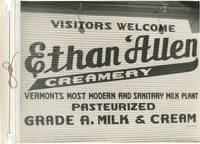
1930réf. 149350N.p.: N.p. 1930. Archive of six double weight borderless photographs of the Ethan Allen Creamery in Essex Junction VT circa 1930s. The photographs contain images of both the creamery buildings and interior of the facilities including the vats used to pasteurize milk at what the creamery's sign claims is "Vermont's most modern and sanitary milk plant." Photographs roughly 9.75 x 7.75 inches. Fine. Tipped onto linen on the left edge and bound with a string. Housed in a contemporary card folder with a vintage photography studio label to the rear pastedown. N.p. unknown
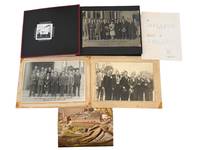
1939réf. 46634Shanghai: Nishimura Company 1939. Edition not stated. Quarto 26.5cm; black simulated leather stamped in red and gilt in brown paper slipcover; unpaginated photo-illustrated plates w/ rice paper overlays. Wear minor scuffs and soiling to boards; toning and foxing intermittent throughout text especially on overlays; some overlays creased or torn. Slipcover worn and chapped with abrasions and two large one repaired tears across front panel. Photo-illustrated pastedowns and endpapers. Very Good in Good slipcover. All text in Japanese with some obsolete/antiquated kana/kanji oriented right to left. This is a privately-issued commemorative yearbook-type photo album shashin-cho published on behalf of the Imperial Japanese Army medical forces during the Second Sino-Japanese War 1937-1945. Specifically it was produced for those who served under military physician captains/commanding officers Nobuo Isa and Tetsuo Fukaya who were stationed in or near Shanghai at the time. By July 1939 the Imperial Japanese Army was beginning to feel the impact of its own mounting casualties and costs; the Chinese Red Army would launch a major offensive later that November. While the Japanese occupation of Shanghai was notably brutal there is little evidence of violence in this album. However some photographs do depict the aftermath of battle with ruined buildings and soldiers being treated for injuries. Other subjects are mundane in nature: Staff and group portraits hospitals and other facilities physicians at work company events and ceremonies. Also includes photographs of Shanghai and a fold-out map of the Hangzhou Bay area. Apparently not cataloged in OCLC or available commercially as of November 2019. Nishimura Company unknown
réf. 62619234Atrium Group . Papeback. New. pp. 288 Atrium Group unknown
réf. 6654757Harper Collins Publishers . Papeback. New. pp. 384 Harper Collins Publishers unknown
1983réf. 42001Manchester: Factory Records 1983. First Edition. Fine. VHS recording of a live performance by New Order at the Ukranian National Home designed by Peter Saville Associates. Features a portrait of Taras Schevchenko at front cover from a photograph taken at the Ukranian National Home. Reissued in 2001 the original 1983 edition is uncommon. Robertson 77. VHS tape in black plastic case 4.5" x 8" approx. with printed paper label in plastic sleeve. Clean and bright. Fine. Factory Records unknown
1934réf. 64509Columbus OH Cleveland OH Portland OR Universal City Los Angeles & Oakland CA: Jaeger Machine Co. Lakewood Engineering Co. M.L. Cohen & Co. General Photographers Arthur M. Prentiss Commercial Photographer Orville Logan Snider Terryfoto W.H. Wolfram Commercial Photographers 1934-1942. Thick oblong 4to. 12 x 9 x 4.5 in. 282 silver gelatin photographs w/ over 80% backed in white or gray linen most w/ typed or stamped captions on versos identifying product about 30% marked by company as “Master Book Print” w/ rubber stamp nearly all stamped w/ Jaeger Machine Co. stamp a few w/ Lakewood Machine Co. Stamp some typescript captions majority either ink or pencil manuscript on versos some typescript captions w/in negatives arranged in reverse chronological order. Contemporary De Luxe Systems Peerless Toplock Sectional Post Binder Style 4 olive-green cloth nickel-plated piano hinges partially covered slide-lock & post system neatly written in drafter’s hand ms title on front cover burgundy-coloured calf corners dustsoiling edgewear rubbing rubbing to corners soot & dustsoiling to thick photo block fore-edges w/ some scuffing edgewear occasional minor closed tears a couple loose a few misbound in reverse or upside down about 30% of the photos with identifying stamps on images still a VG original exemplar. This stupendous factory photo album offers an essential photographic record of the vital role of road building emerging from the Good Roads Movement during the opening decades of the 20th century into the New Deal projects driven by the Roosevelt administration during the Great Depression and aspirations of creating and improving a massive Interstate Highway system. At the end of the 19th century less than 50% of roads within American cities had been paved and the very few highways and turnpikes connecting cities and towns were little more than crushed rock macadam dirt roads or even paths. By the early 1930’s there were many highways but most were in rudimentary condition forced through bottlenecks in every town along the route and all required significant upgrade to strengthen the cement and asphalt add rebar within the underlying roadbeds and special demand for the finisher machines produced by the Jaeger Machine Co. in Columbus and subsidiary Lakewood Machine Co. in Cleveland. Jaeger Machine Co. was originally founded in 1906 by Gehard Jaeger 1874-1959 and specialized in cement mixers roadbuilding equipment and later specialized concrete and cement finisher equipment for roads and airports. The 282 in-house photographs document not only the variety of cement finishers and road forms developed by Jaeger and Jaeger-Lakewood during the 1930’s into World War II but also capture street scenes road crews along with the growing demands in the West especially California. Projects such as road paving for the Bay Bridge project between San Francisco and Oakland CA by the Bates & Rogers Construction Co. of Chicago IL depict them working with Type D Jaeger-Lakewood Finishers the Type D Vibratory Machine and others laying and finishing the road deck from 1935-1937; several photos of the Type D Finisher used by the Pacific Bridge Co. on the Golden Gate Bridge road deck job from 1935-1937 featuring for both photos of the equipment as well as operating on the bridges. Also included are photos of Jaeger Finisher’s laying foundations of the Metropolitan Acqueduct Conduit in the desert East of Los Angeles CA in Mecca Riverside County operated by the Thompson-Starrett Co. firm. In addition there are photos of finishing the bottom concrete conduit for the aqueduct near San Jacinto CA by the Griffith Co. of Los Angeles in 1935. Road construction photos of the Type D Type C and later Type H finishers include those in Fort Knox KY near the Battalion Barracks in 1934; street scenes in and around Columbus OH showing roadbuilding and homes and street scenes in the background 1934-1935; road construction near Portland OR in Feb. 1935; F.P. McElwarath contracting building roads through Rockdale TX in 1934; as well as R.G. Curtis working with Type D Finisher for highway 10 miles east of Long Angles in 1936 along with photos of a Type D Finisher building roads through Minneapolis MN in Sept. 1936. Additional photos depict the Type D operating with new vibratory tube introduced in 1939 Type H Finisher working from 1940-1942 including the construction of airfields at the Muroc Bombing Airbase in Southern California in 1941-1942 now Edwards Air Force Base with the base’s main 15000-foot runway completed by December 1941 in a single pour of concrete using Jaeger finisher’s and roadbuilding equipment. The majority of the photographs are either marked with the T.H. Wolfram photographer’s imprint who appears to have been the major in-house photographer for Jaeger Machine Co. & Lakewood Engineering Co. through the 1930’s and early 1940’s. Theodore Henry Wolfram 1868-1960 began his career as a German-American chemist and photographer before the end of the 19th-Century in Columbus and would work as commercial studio through World War II. Arthur M. Prentiss 1864-1941 worked with Benjamin Gifford 1859-1936 George Weister Company and then Kiser Photo Co. until 1922 when Prentiss became a single professional photographer after acquiring Weister’s Studio and negatives. He specialized in views of the Columbia River Highway. Orville Logan Snider was a noted Southern California photographer best known for his many scenic night shots in and around Los Angeles and Hollywood as well as his movie studio photography from the 2920’s through 1950’s. Although the occasional product catalogues are held by Ohio Historical Assoc. libraries a few institutions including the Smithsonian as well as archival material held by the Columbus Metropolitan Library this cataloguer could locate no similar albums or small collections and/or archives of factory photos for Jaeger or Lakewood Engineering. Jaeger Machine Co., Lakewood Engineering Co., M.L. Cohen & Co., General Photographers, Arthur M. Prentiss, Commercial Photograph hardcover
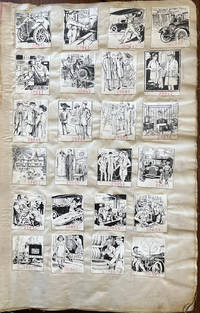
1920réf. 61659New York: American Publishing & Engraving Co. J.J. Schultz & Co. 184 William St. Bookbinder ca. 1920-1939. Thick folio. 13 x 19 x 3.5 in. 135 leaves numbered reverse in pencil on versos of last half. on linen with 4274 camera-ready clipart samples all w/ inventory numbers rubber stamped below the image sized approx. 2 x 2 in. throughout arranged in montages of 24 28 32 & 40 per page each carefully mounted some crossed out w/ annotation “Killed” and others worn through at the lower right corner of some leaves while just a few have been removed and in once case clipped from the upper fore-edge of the leaf. Contemporary light gray/beige buckram soiled dampstained wear at fore-edges partially shaken rebacked still a VG- exemplar. An extraordinary printing & engraving firm’s factory sample catalogue for over 4000 of their camera-ready clipart advertisements for subscribing businesses following World War II through the Great Depression and the New Deal programs of President Roosevelt. This superlative archive of images traces Art Deco styles spanning nearly two decades advertising campaigns printing styles fonts and with almost not repeated images offered by American Publishing & Engraving Co. AP&E Co. to their extensive client list. In addition these engravings capture the revolutionary changes in American industry and commerce with nearly 50% devoted to the automobile industry including automobile manufacturers and dealerships accessory suppliers automobile repair public safety from bad driving the fast-growing electric motors and battery industries and more. Ford the Dodge Brothers Buick Studebaker Cadillac Plymouth Auburn Chrysler Essex Auburn-Cord DeSoto Hudson Terraplane and many others all are featured here advertising their service departments features speed and more. A significant portion also reveal the very real needs to wash the cars clean engines repaint the lacquer update the automobile tops replace batteries repair radiators and the always pressing need to maintain safety equipment and tires. Interspersed as well are automobile movers commercial body builders for trucks and commercial delivery vehicles with a significant percentage showing cylinder grinding engine rebuilding boiler repair and other very necessary secondary market needs as metal alloys and tolerances were far less durable with breakdowns an ever pressing problem for the motorist. Public safety notices reflecting the impact of the Progressive Era illustrate the dangers of the automobile with many indicating streetcars potentially hitting stalled cars which had not been repaired properly gridlock automobile accidents from ignoring traffic signals and police traffic officers as well as speeders hitting pedestrians or ignoring motorcycle police traps. Early in the sample illustrations are many reflecting the interest in building large Tudor Revival or Arts & Crafts homes installing electric lighting new furniture stylish clothes & shoes beautiful Oriental carpets and jewelry and watches for young flapper-era women. There are also promotional ads for Art & Stained Leaded Glass windows for homes interior decorators a panoply of beauty products many reflecting the Flapper Era hair and dress styles as well as evolution of the Art Deco lettering. As the AP&E Co. continued to add their sample engravings through the Great Depression not only is there a greater emphasis on repairing automobiles shoes recovering furniture and even repairing mattresses reflecting the belt tightening of the 1930’s but there are also increasing influences of more streamlined automobiles introduction of appliances such as refrigerators appearance of beer ads following the repeal of Prohibition and the fast growing radio industry. American Publishing & Engraving Co. based out of New York was one of a myriad of job printer engraving firms who emerged at the end of the 19th Century and initially specialized in publishing local histories and genealogies for historical societies by subscription typically with illustrations. Although this cataloguer could find no specific trade reference either in contemporary magazines or newspapers they appear to have operated out of the same locations as the Atlantic Publishing & Engraving Co. with some overlap and by the beginning of the 20th Century had largely dispensed with publishing local histories engraved portraits or vanity press projects. Contemporary court cases and other references indicate that they operated a subscription service for businesses advertising art to be run in magazines newspapers pulps or added to trade literature for matchbook covers business flyers etc. and by 1916-1925 were managed by Thomas W. Smith. No similar factory sample collection or published collection located in Worldcat. American Publishing & Engraving Co., J.J. Schultz & Co., 184 William St., Bookbinder, hardcover
réf. 1569709688.Gpaperback. Good. Access codes and supplements are not guaranteed with used items. May be an ex-library book. paperback
1924réf. 53007Rochester NY: Consolidated Machine Tool Corp. 1924-1953. Two vols. 4to. 147; 131 leaves all w/ 278 silver gelatin photos sized 8.5 x 11 in. all preserved in archival mylar sleeves and nearly all with typed captions dated and often pen & pencil annotations on versos most with hole punches at gutter blank margin from being bound originally in 3-ring factory binders. Uniformly bound in recent black cloth post-binders gilt lettering stamped on covers & spines NF set. This remarkable factory photo archive documents the durable and invaluable machine tools which built American industrial production through the 1920s and the post-World War II era. The Colburn drill presses turning lathes boring machines and boring mills were essential for such companies as Ford Motor Co. Maxwell Motorcar Co. John Deere Oakland Motor Car Co. Delco Light Co. International Harvester Nash Motors Co. Allis Chalmers Manufacturing Co. Caterpillar Tractor Co. Monarch Tractors Co. Hughes Tool Co. of Los Angeles part of Hughes Aviation Westinghouse and so many others. Many of the images show the connecting rods gears bearings engine blocks and other parts manufactured by these massive machines. A large number of the photos in the first volume show machines built and installed for the first National Machine Tool Builders’ Exposition which was held Sept. 19-23 1927 in the Cleveland Auditorium and attracted over 12000 attendees including Henry Ford the Dodge Brothers Durant George Westinghouse and many other automotive and industrial innovators and builders at the time. A number of these machines were also sold to Railroad companies including the Missouri Pacific the International & Great Northern Railway in Palastine TX the Chesapeake & Ohio Railway Co. in Huntington WV and more. The second volume includes Newton duplex milling machines cold saws and hot saws for metal especially aluminum and more. These photos show Newton machines being sold to Dodge Chrysler Buick General Motors Ford Bendix Wright Aeronautical Corp. ALCOA as well as photos showing engine blocks being milled and the internal works of many of the machines. Newton was originally founded in 1880 by Charles C. Newton who specialized as a twist drill manufacturer in Philadelphia and continued to expand operations until merged with Betts Machine Co. and Colburn Machine Tool Co. in 1922 to form the Consolidated Machine Tool Corp. of Rochester NY. Colburn Machine Tool Co. was founded sometime in 1890 by Henry J. Colburn and after his death in 1902 was run by his son Leslie who died in 1918. The Company which maintained a number of machinery patents for drill presses and table saws was merged later with Consolidated in 1922. Consolidated Machine Tool Corp. operated on Blossom Road in Rochester NY producing tools and machinery used in metal and plastics manufacturing. In 1951 they were acquired by the Farrel-Birmingham Co. operating until 1983 when they were sold to the Conlon Corp. See: Directory of American Toolmakers: Early American Industries Association 1999; Betts Machine Co. Manufacturers Index Vintage Machinery 2017; Colburn Machine Tool Co. Franklin PA Manufacturers Index Vintage Machinery 2017. Consolidated Machine Tool Corp., hardcover
1931réf. 48849Brooklyn NY: Consolidated Lithographing Corporation 1931-1962. Two vols. Thick oblong elephant folio 24 x 20 x 6 in. 206; 190 pp misnumbered in ink manuscript on corners of each page. With 2375 chromolithograph and colour lithographed cigar labels and cigar box labels most printed with elaborate embossed & gilt borders many with raised lettering & printing ranging in size from 3.25 x 3.5 in. up to 12 x 18 in. outer cigar box wrappers 25 printer’s proof sample pages -- mostly for Doubleday Books and Garden City Press largely 4to and Folio sized 3 Lotos Club menus 30 elaborately printed samples of Christmas wrap for Seagrams Avon Reader’s Digest & Revlon 1 giant Seagrams Christmas promotional banner 5 ft. 9 in. x 4 ft. 3 in. several uncut proof sheets for Paul Jones and Philadelphia Gold Label Whiskey Labels and even game box labels many with extensive manuscript ink annotations indicating lithograph stone No. production run and amount and date printed. Contemporary gray-green buckram over heavy boards rounded leather reinforced corners thick card stock leaves some of the labels creased w/ minor damage some paper-clipped in multiple batches tipped-in to each other minor tears some leaves cropped with samples taken out in which the stones were no longer some labels removed edgewear rubbing to covers still a remarkable set of factory sample catalogues including numerous in-house typed memos printer’s notes and more. These colossal and striking factory sample catalogues for cigar box labels wonderfully display a chromolithographic advertising archive by one of the largest commercial printing firms in the United States from the Great Depression until the Kennedy Administration. Jacob A. Voice formed the Consolidated Lithographing Corporation around 1925 by merging Wm. Steiner & Sons Lithographers the label producing division of American Lithographic Co. in 1929 as well as two other companies. So by 1935 Voice’s company was printing 6500 different labels for over 4000 million cigars. From the 1880s until the 1950s cigar manufacturers were one of the most competitive and lucrative industries in the United States and they employed raised lettering embossing and chromolithography of exceptional quality using printing processes which remained largely unchanged until the mid-20th century when photo-mechanical colour printing largely replaced traditional lithography. These samples provide incredible visual historical records of the cigar-box labels appearing on the ends top and sides of boxes serving as vital advertising display material in cigar stores and with the inner beautifully printed labels on the inside of the lid drawing the attention of the customers. In addition these provide an invaluable cultural archive of the influence of cigars produced from Cuban Puerto Rican and Floridan tobaccos in the 20th century. Over 150 different cigar company labels are preserved in varying states some with special holiday labels others with different colour schemes for varying markets and many over decades showing the changing tastes of the consumer and the advertising art. Included are such companies as Alcazar Judge Wright Ardova Phillies Stetson Wabon Faustino Rubens La Magnitaz Treaty Bond especially striking with images of Napoleon & Jefferson Famous Players White Owl Juan de Fuca White Heather Hauptmann’s National Speaker -- Joe Cannon Havana Ribbon Villa Reina Jockeys Benson & Hedges El Macco La Palina Paramount Admiration -- E. Regensburg & Sons Wm. Penn Panatelas Socrates Muriel Gato Donalda Jose Arango Van Dyck Optimo Dutch Masters Moonshine Crooks and many others. In addition there are product labels included for White Rock Orange Soda Ginger Ale Cola Root Beer Yuban Coffee Prest-of-Flex watch bracelets Champion Prest-o-Slide Buckles Flagstaff Jellys & Preserves Rubinstein & Revlon Cosmetics and much more. Consolidated also served as the colour printers for many of the Doubleday Books published in the 1950s including McCracken Hoofs Claws & Antlers; McCracken Charles Russell; Dare Wright Lonely Doll; Palazzo Don Quixote and many others. The beautifully printed Christmas wraps for cigar companies liquor companies such as Seagrams as well as Rubinstein Avon and Revlon are striking with colour embossing and gold work. The large Seagrams Christmas advertising Banner for 1954 at over 5 feet tall is visually impressive and offers a superb example of mid-Century advertising artwork and printing by Consolidated. The numerous memos blue-lines and proof sheets inserted throughout offer a historical record of how these labels wraps posters and books were produced at the time. See: Rickards Encyclopedia of Ephemera 2000 pp. 94-96; Twyman A history of chromolithography pp. 189-191. Consolidated Lithographing Corporation, paperback
1981réf. 91078San Francisco: Rough Trade/Factory 1981. First edition. 26 x 20 inch poster on heavy stock. Two short tears some edgewear and wrinkles from being rolled. Very good only. Promotional poster for the US release of this eponymous 12-inch ep. FAC US4. [San Francisco: Rough Trade/Factory unknown
réf. 68752042-20Clever Factory The. Used - Good. Former library copy. Pages intact with minimal writing/highlighting. The binding may be loose and creased. Dust jackets/supplements are not included. Includes library markings. Stock photo provided. Product includes identifying sticker. Better World Books: Buy Books. Do Good. Clever Factory, The unknown
réf. mon0004275261Onestream Press 4/14/2025 12:00:01 A. paperback. Very Good. 1.2200 11.6900 8.2700. Onestream Press paperback
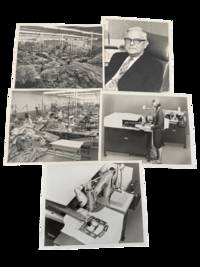
1950réf. 233261950. Garment factory photographs documenting women's industrial sewing labor machine based apparel production and managerial oversight in the postwar United States circa 1950s with direct evidence of how mass clothing manufacture depended on large sewing rooms specialized equipment and gendered factory work. Archive documents the production floor as a working system rather than a single portrait scene placing rows of women at Pfaff machines beside piles of cut or partly finished garments while a separate executive portrait and staged equipment views link shop floor labor to administration and industrial sales culture. The group matters because postwar clothing production relied heavily on women's wage labor in factories where speed repetition and machine specialization turned fabric into standardized output for a growing consumer economy. Photo archive of 5 Large silver gelatin photographs each 8" x 10" circa 1950s. Two photographs show the main sewing room from wider angles with long rows of women seated at machine stations beneath suspended electric lines and task lighting while large heaps of striped fabric or finished garments spill across tables and benches in the foreground. The workers are positioned close together in a dense production space organized around straight runs of tables and sewing heads with little separation between labor stations and material flow. One photograph isolates a woman operating a large Pfaff industrial unit in a cleaner demonstration setting while another gives a close technical view of a Pfaff machine head and work plate. A fifth photograph shows an older male executive or manager seated in an office. Postwar apparel production expanded through factories that combined assembly line logic with skilled but repetitive needlework and women formed a large share of that labor force in garment plants across the United States. The Pfaff machines represent the technological side of production while the sewing room views show the human structure that made the machines profitable with women handling fabric continuously at closely arranged stations under managerial control. Light handling wear and minor curling to edges. Overall very good condition. The archive preserves the relationship between labor machinery and output at a moment when industrial clothing manufacture still depended on concentrated factory work before later shifts toward overseas production transformed the industry. unknown
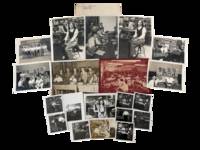
1940réf. 233241940. Dictaphone Corporation factory photographs documenting women and men manufacturing dictating machines in Bridgeport Connecticut circa 1940s showcasing the postwar expansion of women's employment inside a growing communications technology industry. The group centers on Dictaphone's Bridgeport plant at 335 Howard Avenue where workers appear at long rows of benches with recording and transcription equipment tool drawers lamps wiring and partly assembled machines placing this archive within the larger World War II and postwar reorganization of American factory labor. Several photographs give women a central place within that system not as incidental figures but as seated operators bench workers and posed employees inside the production rooms themselves grounding the archive in the history of women's industrial employment as office technology manufacturing expanded beyond clerical use into large scale commercial production. Archive of 21 pieces including 20 black and white and one red photographs ranging from 2" x 2" to 5" x 7" and original envelope. Bridgeport Connecticut circa 1940s. One original company envelope is printed "DICTAPHONE CORPORATION / 335 HOWARD AVENUE / BRIDGEPORT CONN." fixing the factory location. Interior views show crowded production rooms under fluorescent strip lighting with dozens of workers seated at benches operating or assembling dictating machines and related components; in the largest image male workers fill a deep factory floor while several men in the foreground lean into handsets or testing devices at stations packed with equipment. One view shows a male worker alone at a bench in a long machine lined room with belts tools and suspended mechanisms overhead; several smaller prints show women seated at desks or worktables women and men posed together on the shop floor and mixed groups of workers assembled outdoors or around demonstration tables with supervisors and visiting men in suits. The images repeatedly emphasize rows of benches machine bodies cords lamps and standardized work positions while the envelope and repeated factory interiors tie the lot to Dictaphone's manufacturing operation rather than to sales or office promotion alone. During World War II and the immediate postwar years firms producing office equipment occupied an important place in the broader American communications and business machine economy supplying devices that organized dictation transcription record keeping and administrative workflow for corporations law offices and government users. This archive makes that industrial system visible at the level of labor showing how the growth of business technology relied on factory discipline gendered employment patterns and the integration of women into production space during a period when wartime labor demand altered who worked at the bench and who appeared in the industrial workforce. Light edge wear envelope toned. Overall very good condition. A concentrated visual record of 1940s office machine manufacturing placing women's industrial labor inside the production history of one of the leading American dictation companies. unknown
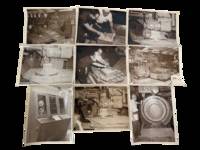
1960réf. 233821960. Industrial factory photograph archive documenting large scale machining systems automated tooling equipment and precision manufacturing processes during the height of postwar American industrial expansion circa 1960s. Several scenes feature Sundstrand branded machinery associated with the Sundstrand Corporation a major Rockford Illinois manufacturer of machine tools aerospace components and industrial automation systems during the Cold War industrial economy. By the 1960s American factories increasingly relied on massive numerically controlled machining equipment capable of producing aircraft parts turbine components and heavy industrial hardware with levels of precision unattainable in earlier manually operated machine shops. These photographs record the physical scale of that transition capturing the integration of computerized or semi automated production systems into factory environments that formed the backbone of aerospace defense transportation and heavy manufacturing industries during the period. Photo archive of 9 Large Silver Gelatin photographs each 8" x 10" circa 1960s. Interior factory scenes show enormous industrial machining centers occupying tiled production floors beneath overhead lighting and exposed structural systems. Multiple photographs depict large circular indexing tables rotary cutting assemblies suspended tooling heads and enclosed control units bearing visible "Sundstrand" identification. Engineers and machinists wearing shop coats and protective glasses appear adjusting tooling mechanisms calibrating machine components and servicing cutting assemblies surrounded by heavy cables hydraulic systems and banks of industrial controls. Several machines are shown actively engaged in metal cutting operations with curled metal shavings accumulating beneath rotating tooling heads and across surrounding platforms. One scene captures technicians removing or fitting a large machined component beneath a circular cutting apparatus while another documents reel based electronic control equipment integrated into the production system reflecting the growing use of automated process control in industrial manufacturing during the decade. The 1960s marked a decisive transformation in American manufacturing as industries shifted from conventional machining toward automated and numerically controlled production methods capable of supporting aerospace engineering military procurement automotive manufacturing and mass industrial output. Companies such as Sundstrand played a central role in supplying the specialized tooling and machine systems that allowed factories to machine increasingly complex metal components at industrial scale. Some curling scattered edge and surface wear as well as foxing to margins; images remain sharp with strong detail. Overall in good condition. The photographs preserve direct visual evidence of the machinery labor practices and production environments that defined late midcentury industrialization before many such facilities were modernized outsourced or dismantled during later waves of deindustrialization. unknown
1940réf. 233861940. Marathon Paper Mills and later American Can Company industrial safety archive documenting workplace medicine accident prevention campaigns first-aid training and factory safety administration in Menasha Wisconsin from the 1940s-60s. The album records how Midwestern paper and graphic arts manufacturers attempted to reduce industrial injuries during a period when paper mills and printing plants remained physically hazardous workplaces filled with heavy rollers cutting machinery chemical exposure steam systems and high-speed industrial presses. During the postwar decades American manufacturers increasingly institutionalized safety committees plant nursing departments and employee first-aid instruction in response to rising workers' compensation costs union pressure and national workplace safety campaigns promoted by organizations such as the National Safety Council. Marathon Paper Mills was acquired by American Can Company in 1957 placing the Menasha Graphic Arts plant within one of the nation's largest packaging and industrial printing corporations. Photo and scrapbook archive of over 100 pieces with approximately 75 black-and-white photographs including twelve 8 x 10 inch prints with typed programs corporate memoranda newspaper clippings conference photographs official correspondence and safety-related ephemera Menasha Wisconsin 1940-1969. Group portraits identify attendees at the Fox River Valley and Lakeshore Safety Conferences of 1940 1941 and 1942. Numerous mounted photographs depict factory nurses treating workers administering oxygen equipment conducting examinations teaching first-aid procedures inspecting washrooms and sanitary facilities and leading emergency-response instruction for plant employees. Workers stand beside industrial presses and mechanical equipment while captions stress housekeeping sanitation accident reporting and machine safety. Several pages preserve newspaper coverage celebrating "one million safe man hours" and "three consecutive years of safe working without a disabling injury" alongside a 1969 letter signed by Wisconsin Governor Warren P. Knowles congratulating the American Can Graphic Arts Plant on its safety record. A 1953 letter from the National Safety Council thanks Marathon Corporation for photographs displayed at the Industrial Nursing Section exhibit during the National Safety Congress in Chicago directly tying the album to nationally circulated industrial safety programming. The album preserves a narrower glimpse into ground level industrial plants with the emergence of workplace medicine and safety management as formal corporate systems. The main photographs focus on the Marathon First Aid Department where nurses supervisors and workers collaborated in organized training programs intended to reduce accidents and standardize emergency response inside hazardous production environments. Captions repeatedly emphasize sanitation inspections accident prevention emergency transport and employee instruction demonstrating how industrial safety became both a managerial program and a public relations tool during the postwar era. Photographs mounted with corner tabs throughout; scrapbook pages retain mounted newspaper clippings letters and typed documentation; light toning occasional adhesive discoloration and minor edge wear present. Overall in very good condition. unknown
réf. 172893NAKAZAWA DYEING FACTORY. Ouchi. Emperor's Palace. 80 silk colour samples mounted on 5 cardboard sheets. 8vo 240 x 140 mm publisher's tied cloth. Kyoto: Nakazawa n.d. An elegant collection of colour samples. hardcover
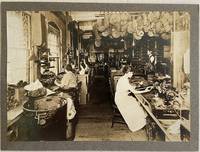
1900réf. 178581900. Women at Work Albumen photo of women at work in a small factory. Photograph measures 7.75" x 5.5" inches and is on gray photographer's board measuring 8.5" x 6.5" inches. Circa 1900s. Albumen print. Women sitting at long wooden tables in small manufacturing shop. Palm-sized rings hang in loops from the ceiling and can be seen scattered throughout the photo. One woman in a long white dress holds length of material looking it over while another sitting behind her and across and wooden aisle looks away from the camera toward her desktop. Two other women can be seen seated behind her further back into the shop. A man in shirt and vest appears to be observing the women at work while another man at the back of the shop appears to be using some sort of pressing device. It's unclear what's being manufactured but the details of materials and workplace layout give rich details to take in. The women would have been part of a growing female workforce utilized to support production in the midst of industrialization. Overall very good condition. unknown
1920réf. 173461920. 1920s vintage sepia photograph of around 50 women at work in a textile factory. The photographer's board is 10" x 8" inches and image is 8.25" x 5" inches. The women are seated in long rows and armed with sewing machines and seem to be turning bundles of cloth into garments. Spools of thread hang down from a center rail in the middle of the table to be fed into the sewing machines. Some of the cloth appears to be polka-dotted similar to the dresses that several women pictured appear to be wearing. The factory is consisted almost entirely of women - there is one man in a waistcoat walking around accompanied by an older woman. The working women seem to be of varying ages from their early 20s into their 50s. Textile manufacturing was unique at the time for its overwhelmingly female labor force. Sepia toned very good condition with great detail. unknown
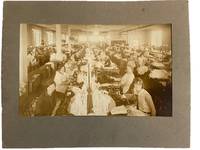
1910réf. 175641910. Original photograph of female cigar factory workers Circa 1910. Sepia toned. 9.5" x 7.5" inches. Mounted on original gray board. This remarkable photo shows an all female workforce at a cigar factory in the 1910s. The women assemble bundles of cigars that are stacked into pyramid-like shapes. The cigars are being hand-rolledat their work stations. There are about 100 women pictured at work in the factory in this turn of the century photograph. A large and clear photo in very good condition. unknown