634 résultats
réf. DADAX0415785707Routledge 2018-10-11. 1. paperback. New. 6.14x0.38x9.21. Buy with confidence. Excellent Customer Service & Return policy. Routledge paperback
réf. DADAX0807607819New unknown
réf. DADAX1499802773New unknown
1989réf. 168377N.p.: N.p. 1989. Two original flyers announcing a performance by The Bern Nix Trio at the original New York Knitting Factory location on Houston Street circa 1990. The Bern Nix Trio consisting of Nix on guitar William Parker on bass and David Cappello on drums formed in 1985 and played together until the early 1990s. In 1994 Nix released the album "Alarms and Excursions" as The Bern Nix Trio with Fred Hopkins on Bass and Newman Baker on drums. 8.5 x 11 inches. Xerographically reproduced one printed on pale yellow and one printed on salmon. Near Fine. N.p. unknown books
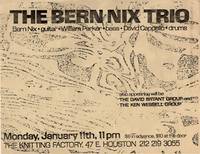
1989réf. 168377N.p.: N.p. 1989. Two original flyers announcing a performance by The Bern Nix Trio at the original New York Knitting Factory location on Houston Street circa 1990. The Bern Nix Trio consisting of Nix on guitar William Parker on bass and David Cappello on drums formed in 1985 and played together until the early 1990s. In 1994 Nix released the album "Alarms and Excursions" as The Bern Nix Trio with Fred Hopkins on Bass and Newman Baker on drums. 8.5 x 11 inches. Xerographically reproduced one printed on pale yellow and one printed on salmon. Near Fine. N.p. unknown
réf. DADAX0760339139New unknown
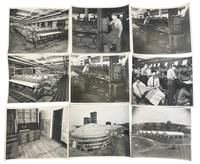
1945réf. 234071945. Reading Pennsylvania factory photo archive documenting textile machinery production and hosiery manufacturing work circa late 1940s to early 1950s at or near the Wyomissing industrial complex associated with Textile Machine Works and Berkshire Knitting Mills. Reading became one of the major American centers for full fashioned knitting machinery after Ferdinand Thun and Henry Janssen founded Textile Machine Works in 1892 and the equipment seen here belongs to the world of stocking manufacture before seamless nylon hosiery reshaped the industry in the 1950s. Photo archive of 17 large silver gelatin photographseach 8 x 10 inches Reading or Wyomissing Pennsylvania circa 1940s to early 1950s. Rows of large knitting machines fill long factory rooms under fluorescent lighting; workers stand beside circular or braiding machinery marked with chalked Greek words; an engineering office includes men studying large technical drawings; machine tools metal stock exterior factory buildings tanks and utility structures place the scenes within a large industrial plant. Several versos are stamped "Paul Bauer Photographer 608 Franklin St. Reading Pa." and "Photo by Paul Bauer." Several shop-floor views include a chalked Greek vocabulary list beside the machinery a striking detail in a Reading industrial region that had an established Greek immigrant community by the early twentieth century. The archive records the machinery workers drafting practices and plant environment behind Pennsylvania's textile machinery economy at the point when American hosiery manufacturing still depended on large specialized mechanical systems and skilled shop labor. Documenting the production floors machine details engineering rooms workers and exterior plant views. Minor edge and curling; images remain clear and well preserved. Overall in very good condition. unknown books
1945réf. 234071945. Reading Pennsylvania factory photo archive documenting textile machinery production and hosiery manufacturing work circa late 1940s to early 1950s at or near the Wyomissing industrial complex associated with Textile Machine Works and Berkshire Knitting Mills. Reading became one of the major American centers for full fashioned knitting machinery after Ferdinand Thun and Henry Janssen founded Textile Machine Works in 1892 and the equipment seen here belongs to the world of stocking manufacture before seamless nylon hosiery reshaped the industry in the 1950s. Photo archive of 17 large silver gelatin photographseach 8 x 10 inches Reading or Wyomissing Pennsylvania circa 1940s to early 1950s. Rows of large knitting machines fill long factory rooms under fluorescent lighting; workers stand beside circular or braiding machinery marked with chalked Greek words; an engineering office includes men studying large technical drawings; machine tools metal stock exterior factory buildings tanks and utility structures place the scenes within a large industrial plant. Several versos are stamped "Paul Bauer Photographer 608 Franklin St. Reading Pa." and "Photo by Paul Bauer." Several shop-floor views include a chalked Greek vocabulary list beside the machinery a striking detail in a Reading industrial region that had an established Greek immigrant community by the early twentieth century. The archive records the machinery workers drafting practices and plant environment behind Pennsylvania's textile machinery economy at the point when American hosiery manufacturing still depended on large specialized mechanical systems and skilled shop labor. Documenting the production floors machine details engineering rooms workers and exterior plant views. Minor edge and curling; images remain clear and well preserved. Overall in very good condition. unknown
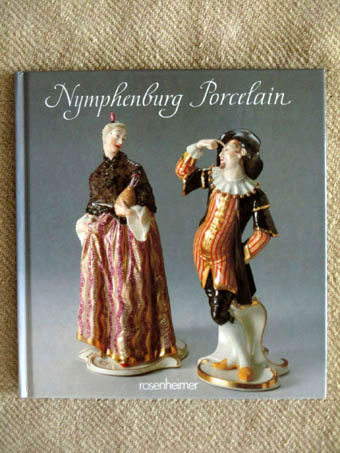
1988réf. 30765Rosenheimer, Rosenheim, 1988. 88 Seiten / pp., mit zahlreichen Abbildungen / with many illustrations; Kl.-8°, ca. 15 x 17 cm, Pappeinband
réf. 3694Paris, Dunod et E. Pinat Éditeurs, s.d (1911?), 152 pp., in-8, br. Préface de M. Henry Le Chatelier (Membre de l'Institut), Trad. de M. Jean Royer (Ingénieur des Arts et Manufactures). Publication de la Revue de Métallurgie.
réf. DADAX187410557XNew unknown
1976réf. 2090502113717526Not Available 1976. Soft Cover. Fine. The book is in fine condition. Not Available paperback
1910réf. 345641910 6 photos au format 12 X 17 cm montées sur cartons au format in-8 du photographe Sutter Très intéressant document, une seule est une machine Japy, les autres sont des ouvriers certaines sont légèrement passées, Une photo de l'ensemble des ouvriers avec un enfant au centre
1989réf. 2092902143901403Osaka Association of Architects 1989. Soft Cover. Fine. Number of books: 1 book Osaka Association of Architects paperback
1969réf. 2081402109803362Koyu-sha 1969. Soft Cover. Fine. Volume: 1 Koyu-sha paperback
19908vo., First Edition, with numerous photographs throughout; blue cloth, gilt back, a near fine copy in unclipped dustwrapper.
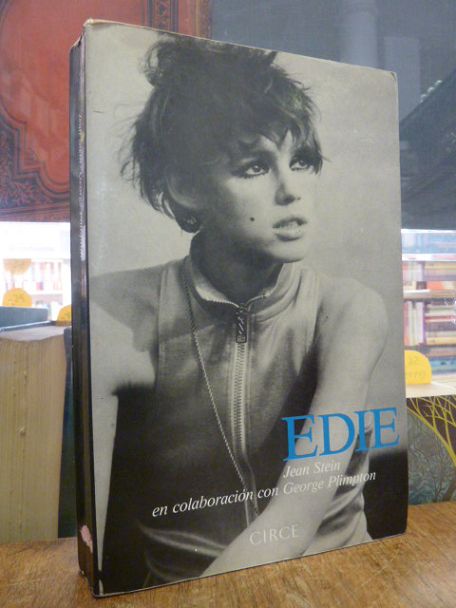
1982réf. 8413BBLondon, Cape, 1982. gr.8°, 430 S., mit zahlreichen, teils ganzseitigen s/w-Abbildungen, illustr. original Klappenbroschur, Einband stark knickspurig, Rücken gewölbt, zahlreiche Kugelschreiber-Anstreichungen - ein zweifelsfrei intensiv gelesenes und durchgearbeitetes Exemplar (in spanischer Sprache).
192532 pages. Index. Undated. Appears to be circa 1920s. Nostalgic colour-illustrated covers. Interesting statement about Alum on back cover. Contains dozens of tested recipes. Average wear. Binding intact. A wothy copy of this charming vintage piece. Book
réf. DADAX0415819865New unknown
réf. DADAX0367867680New unknown
réf. SONG080145154XUsed: Good unknown
1624réf. 183311624 Broché - 16 x 24 - 27 pp - année 1932 - Editions Avril 1932 RC Mulhouse B 214 n° 22 - Illustrations -
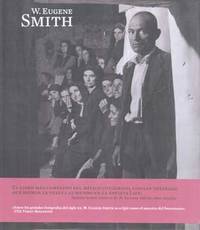
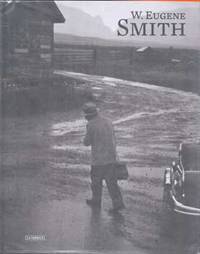
réf. 75-8168Madrid: La Fabrica Editorial 2008. Fo. Cloth Hard Cover ca. 240 pp. First Edition. B&W Plates. Version with Cover Image from Page 47. Very Good. Dust Jacket also Very Good with Creasing. Includes Belly Band of Terra Cotta Paper. Oversize Book May require extra Shipping ChargesWilliam Eugene Smith was born in 1918 in Wichita Kansas. He took his first photographs at the age of 15 for two local newspapers. In 1936 Smith entered Notre Dame University in Wichita where a special photographic scholarship was created for him. A year later he left the university and went to New York City. After studying with Helene Sanders at the New York Institute of Photography in 1937 he began working for News-Week later Newsweek. He was fired for refusing to use medium-format cameras and joined the Black Star agency as a freelancer……Smith worked as a war correspondent for Flying magazine 1943–44 and a year later for Life. He followed the island-hopping American offensive against Japan and suffered severe injuries while simulating battle conditions for Parade which required him to undergo surgery for the next two years……Once recuperated Smith worked for Life again between 1947 and 1955 before resigning in order to join Magnum Photos as an associate. In 1957 he became a full member of Magnum. Smith was fanatically dedicated to his mission as a photographer. Because of this dedication he was often regarded by editors as “troublesome.”….A year after moving to Tucson to teach at the University of Arizona Smith died of a stroke. His archives are held by the Center for Creative Photography in Tucson Arizona. Today Smith’s legacy lives on through the W. Eugene Smith Fund to promote “humanistic photography” founded in 1980 which awards photographers for exceptional accomplishments in the field. Madrid: La Fabrica Editorial, 2008 hardcover
réf. 75-8167Madrid: La Fabrica Editorial 2008. Fo. Cloth Hard Cover ca. 240 pp. First Edition. B&W Plates. Version with Cover Image from Page 109. Very Good. Dust Jacket also Very Good with Creasing Abrasions now in Protective Mylar Cover. Oversize Book May require extra Shipping ChargesWilliam Eugene Smith was born in 1918 in Wichita Kansas. He took his first photographs at the age of 15 for two local newspapers. In 1936 Smith entered Notre Dame University in Wichita where a special photographic scholarship was created for him. A year later he left the university and went to New York City. After studying with Helene Sanders at the New York Institute of Photography in 1937 he began working for News-Week later Newsweek. He was fired for refusing to use medium-format cameras and joined the Black Star agency as a freelancer……Smith worked as a war correspondent for Flying magazine 1943–44 and a year later for Life. He followed the island-hopping American offensive against Japan and suffered severe injuries while simulating battle conditions for Parade which required him to undergo surgery for the next two years……Once recuperated Smith worked for Life again between 1947 and 1955 before resigning in order to join Magnum Photos as an associate. In 1957 he became a full member of Magnum. Smith was fanatically dedicated to his mission as a photographer. Because of this dedication he was often regarded by editors as “troublesome.”….A year after moving to Tucson to teach at the University of Arizona Smith died of a stroke. His archives are held by the Center for Creative Photography in Tucson Arizona. Today Smith’s legacy lives on through the W. Eugene Smith Fund to promote “humanistic photography” founded in 1980 which awards photographers for exceptional accomplishments in the field. Madrid: La Fabrica Editorial, 2008 hardcover
1987réf. 011747Woodland CA: Printer's Ink. SIGNED by both Walter Loewen and Skip Quinlan. Lightly bumped bottom corners rear cover has small chip on side edge. Clean copy. . Very Good. Soft cover. 1987. Printer's Ink paperback