636 risultati
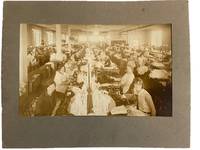
1910rif. 175641910. Original photograph of female cigar factory workers Circa 1910. Sepia toned. 9.5" x 7.5" inches. Mounted on original gray board. This remarkable photo shows an all female workforce at a cigar factory in the 1910s. The women assemble bundles of cigars that are stacked into pyramid-like shapes. The cigars are being hand-rolledat their work stations. There are about 100 women pictured at work in the factory in this turn of the century photograph. A large and clear photo in very good condition. unknown books
1989rif. 2092902143801627Osaka Association of Architects 1989. Soft Cover. Fine. Number of books: 1 book Osaka Association of Architects paperback
1989rif. 2092902143901403Osaka Association of Architects 1989. Soft Cover. Fine. Number of books: 1 book Osaka Association of Architects paperback
rif. 172893NAKAZAWA DYEING FACTORY. Ouchi. Emperor's Palace. 80 silk colour samples mounted on 5 cardboard sheets. 8vo 240 x 140 mm publisher's tied cloth. Kyoto: Nakazawa n.d. An elegant collection of colour samples. hardcover
rif. 172893NAKAZAWA DYEING FACTORY. Ouchi. Emperor's Palace. 80 silk colour samples mounted on 5 cardboard sheets. 8vo 240 x 140 mm publisher's tied cloth. Kyoto: Nakazawa n.d. An elegant collection of colour samples. hardcover books
1922rif. 16857Partitions sur les travailleurs ouvriers Bénech 1922
1951rif. 24695Partitions sur les Banlieues Gasté Louis 1951
1946rif. 19051Partitions sur le Métier,Partitions sur les travailleurs ouvriers Beuscher Paul 1946
1934rif. 33126Allegan: Baker Furniture Factory 1934. Hardcover. Good. Hardcover. 112pp index. Binding shaken but hinges firm prelims foxed pages tanned else a good copy in publisher's cloth backed boards that have some dampstaining to the edges and superficial loss to the spine. Baker Furniture Factory hardcover
1934rif. 33126Allegan: Baker Furniture Factory 1934. Hardcover. Good. Hardcover. 112pp index. Binding shaken but hinges firm prelims foxed pages tanned else a good copy in publisher's cloth backed boards that have some dampstaining to the edges and superficial loss to the spine. Baker Furniture Factory hardcover books
2017rif. I-654-276MARIE-CLAIRE 2017. Paperback. Good. Former library book. Edition 2017. Ammareal gives back up to 15% of this item's net price to charity organizations. MARIE-CLAIRE paperback
1992rif. ABE-1633974889444EN COUVERTURE, MADONNA PAR STEVEN MEISEL-LES EXPOS DU MOIS DE LA PHOTO-BETTINA RHEIMS: CHAMBRE CLOSE, 6 PAGES-LES INEDITS D'HELMUT NEWTON,10 PAGES-CARL DE KEYZER: LE MARCHE DE LA FOI, 6 PAGES-WALTER CARONE, 8 PAGES-UGO MULAS: LA MEMOIRE DE L'ART, 8 PAGES-LE "SEX" DE MADONNA, 16 PAGES-LES ANNEES LUTENS, 6 PAGES-
2005rif. ABE-2343836961MILES ALDRIDGE/10P-TSUNAMI: LES IMAGES QUI RESTERONT/16P-WILLY CAMDEN: SEXY AVANT TOUT!/10P-FABRICA
1966rif. 25612NANTES 1966 une photographie originale en noir, format : 18,2 x 23,8 cm, sans date (1966),
1943rif. 25614NANTES 1943 1 photographie originale en noir, format : 17,6 x 23,5 cm, noté au crayon en haut à gauche Expo 43, on voit bien à gauche les deux Tours de l'usine LEFEVRE-UTILE, le Chateau des Ducs de Bretagne et la Cathédrale à droite,
1937rif. 26884NANTES-CHANTENAY 1937 2 photographies originales en noir, format total : 18 x 13 cm, NANTES-CHANTENAY 1937, PHOTOGRAPHE INCONNU,
1920rif. 173461920. 1920s vintage sepia photograph of around 50 women at work in a textile factory. The photographer's board is 10" x 8" inches and image is 8.25" x 5" inches. The women are seated in long rows and armed with sewing machines and seem to be turning bundles of cloth into garments. Spools of thread hang down from a center rail in the middle of the table to be fed into the sewing machines. Some of the cloth appears to be polka-dotted similar to the dresses that several women pictured appear to be wearing. The factory is consisted almost entirely of women - there is one man in a waistcoat walking around accompanied by an older woman. The working women seem to be of varying ages from their early 20s into their 50s. Textile manufacturing was unique at the time for its overwhelmingly female labor force. Sepia toned very good condition with great detail. unknown
1920rif. 173461920. 1920s vintage sepia photograph of around 50 women at work in a textile factory. The photographer's board is 10" x 8" inches and image is 8.25" x 5" inches. The women are seated in long rows and armed with sewing machines and seem to be turning bundles of cloth into garments. Spools of thread hang down from a center rail in the middle of the table to be fed into the sewing machines. Some of the cloth appears to be polka-dotted similar to the dresses that several women pictured appear to be wearing. The factory is consisted almost entirely of women - there is one man in a waistcoat walking around accompanied by an older woman. The working women seem to be of varying ages from their early 20s into their 50s. Textile manufacturing was unique at the time for its overwhelmingly female labor force. Sepia toned very good condition with great detail. unknown books
1920rif. 28350LES SABLES D'OLONNE 1920 un PLAN ORIGINAL aquarellé en lavis de couleur rouge et manuscrit à l'encre brune, sur papier crème, Format : 54,5 centimètres de haut par 69,5 centimètres de large, plan à l'échelle de 0,01 cm par mètre, bordant d'une part : LA RUE BASSE, LA RUE DES DAMES ET LA RUE DU COEF, sans date (1920) ,
rif. 101035-nnew. unknown
rif. 101035like new. unknown
1989rif. Q-0915299313Productivity Press 1989-02-01. Hardcover. New. In shrink wrap. Looks like an interesting title! Productivity Press hardcover
1988rif. x-0915299313Productivity Pr 1988. Hardcover. New. 1st edition. 304 pages. 11.75x9.00x0.75 inches. Productivity Pr hardcover
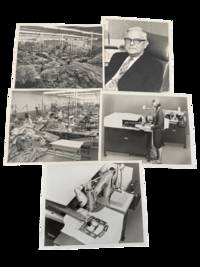
1950rif. 233261950. Garment factory photographs documenting women's industrial sewing labor machine based apparel production and managerial oversight in the postwar United States circa 1950s with direct evidence of how mass clothing manufacture depended on large sewing rooms specialized equipment and gendered factory work. Archive documents the production floor as a working system rather than a single portrait scene placing rows of women at Pfaff machines beside piles of cut or partly finished garments while a separate executive portrait and staged equipment views link shop floor labor to administration and industrial sales culture. The group matters because postwar clothing production relied heavily on women's wage labor in factories where speed repetition and machine specialization turned fabric into standardized output for a growing consumer economy. Photo archive of 5 Large silver gelatin photographs each 8" x 10" circa 1950s. Two photographs show the main sewing room from wider angles with long rows of women seated at machine stations beneath suspended electric lines and task lighting while large heaps of striped fabric or finished garments spill across tables and benches in the foreground. The workers are positioned close together in a dense production space organized around straight runs of tables and sewing heads with little separation between labor stations and material flow. One photograph isolates a woman operating a large Pfaff industrial unit in a cleaner demonstration setting while another gives a close technical view of a Pfaff machine head and work plate. A fifth photograph shows an older male executive or manager seated in an office. Postwar apparel production expanded through factories that combined assembly line logic with skilled but repetitive needlework and women formed a large share of that labor force in garment plants across the United States. The Pfaff machines represent the technological side of production while the sewing room views show the human structure that made the machines profitable with women handling fabric continuously at closely arranged stations under managerial control. Light handling wear and minor curling to edges. Overall very good condition. The archive preserves the relationship between labor machinery and output at a moment when industrial clothing manufacture still depended on concentrated factory work before later shifts toward overseas production transformed the industry. unknown
1950rif. 233261950. Garment factory photographs documenting women's industrial sewing labor machine based apparel production and managerial oversight in the postwar United States circa 1950s with direct evidence of how mass clothing manufacture depended on large sewing rooms specialized equipment and gendered factory work. Archive documents the production floor as a working system rather than a single portrait scene placing rows of women at Pfaff machines beside piles of cut or partly finished garments while a separate executive portrait and staged equipment views link shop floor labor to administration and industrial sales culture. The group matters because postwar clothing production relied heavily on women's wage labor in factories where speed repetition and machine specialization turned fabric into standardized output for a growing consumer economy. Photo archive of 5 Large silver gelatin photographs each 8" x 10" circa 1950s. Two photographs show the main sewing room from wider angles with long rows of women seated at machine stations beneath suspended electric lines and task lighting while large heaps of striped fabric or finished garments spill across tables and benches in the foreground. The workers are positioned close together in a dense production space organized around straight runs of tables and sewing heads with little separation between labor stations and material flow. One photograph isolates a woman operating a large Pfaff industrial unit in a cleaner demonstration setting while another gives a close technical view of a Pfaff machine head and work plate. A fifth photograph shows an older male executive or manager seated in an office. Postwar apparel production expanded through factories that combined assembly line logic with skilled but repetitive needlework and women formed a large share of that labor force in garment plants across the United States. The Pfaff machines represent the technological side of production while the sewing room views show the human structure that made the machines profitable with women handling fabric continuously at closely arranged stations under managerial control. Light handling wear and minor curling to edges. Overall very good condition. The archive preserves the relationship between labor machinery and output at a moment when industrial clothing manufacture still depended on concentrated factory work before later shifts toward overseas production transformed the industry. unknown books