Elsner, BerndAntiquariat.de
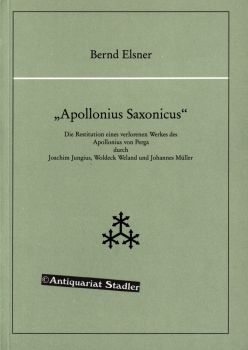
4,199 results
1988ref. 36836Göttingen: Vandenhoeck und Ruprecht 1988. 429 S. Mit graph. Darst. OKart. 24x17 cm.
ref. 31033Bruxelles, Alfred Castaigne/Paris, Gauthier-Villars, 1898. 21 x 27, 2 volumes, 159 pages + 37 planches, reliure dos/coins toilés, bon état (reliure état d'usage).
ref. 37472Bruxelles, Les Presses Universitaires, 1948. "16 x 24, 673 pp., nombreux exercices, broché, état moyen (couverture défraîchie, rousseurs sur les tranches; quelques annotations au bic)."
ref. 97073Paris, Librairie Militaire de J. Dumaine, 1881. 16 x 25, 208 pp., broché, état moyen (dos recollé, 1 manque à la couverture arrière? 1 cachet d'ex-propriétaire).
ref. 68292Mons, Bastin Vital, s.d. (ca 1920). 15 x 23, 120 pp., 6 planches, 135 figures, broché, bon état.
1999ref. E715Burgrain, KOHA, 1999. 2 Bände zusammen 473 S., viele schwarz-weiße Abb., farbige Pappbände. ISBN Band 2: 3-929512-63-7. Jeweils gut erhaltene gebundene Ausgaben mit leichten Gebrauchsspuren. Band 1 am Rücken unten leicht bestoßen, bei Band 2 der Strichcode auf der Einbandrückseite mit Filzstift durchgestrichen. Gewichtsbedingt Versand als Paket.
ref. 65196Namur, Maison d'Edition Ad. Wesmael-Charlier, 1947. "14 x 20, 283 pp., 286 figures, broché, état moyen (traits au crayon; couverture défraîchie)."
ref. 89423Bruxelles, Maison d'Edition A. Castaigne, Albert de Boeck successeur, 1910. 15 x 24, 385 figures, reliure d'édition dos toilé, état moyen (couverture fort défraîchie).
ref. 44637Paris, Gauthier-Villars, 1887. "14 x 22, 319 + viii pages, 74 figures, reliure dos toilée, état moyen (dos abîmé, reliure usagée; pas trop de rousseurs)."
1769ref. (LCPCSCI-0008)(Une rare édition originale de la Geometrica de Torelli conservée dans un séduisant exemplaire tel que paru) TORELLI GIUSEPPE. (1721-1781) "IOSEPHI TORELLI VERONENSIS GEOMETRICA". 1769, Veronae, A. Carattoni. 1 volume in-8° (210x147 mm) (dimensions pages 210x145 mm) XIV (titre, dédicace et préface), (2) pp., 130, (2) pp.; quelques figures géomteriques sur bois dans le texte. (*8, A-G8, H10) Brochure bleu-grise de l'époque. Ancienne étiquette de bibliothèque en queue du dos. Edition Originale, rare. Infimes déchirures et petits manques de papier au dos. Petite déchirure marginale, sans perte, au f. *4 et toute petite trace claire de mouillure dans l'angle supérieur des 40 dernières pages. Bel exemplaire à toutes marges. Homme de droit et de grande culture "... da Scipione Maffei, suo maestro acquisì l'apertura enciclopedica all'eudizione, alla letteratura e alle scienze... Nel De nihilo geometrico (1758) discusse i fondamenti del calcolo infinitesimale dimostrando una chiara preferenza per i metodi geometrici tradizionali che troverà conferma nella Geometrica (1769)...". (Treccani) Provenance : Cachet d'ancienne biliothèque universitaire. (LCPCSCI-0008) (280,00 €)
ref. 84080Paris, Payot, 1960. 14 x 23, 276 pp., 92 figures, broché, bon état (couverture défraîchie).
ref. 32660Bruxelles, Maurice Lamertin/Paris, Librairie Scientifique J. Hermann, 1928. 17 x 26, 331 pp., 243 figures, broché, bon état (sauf soulignages).
ref. 49445Bruxelles, Maurice Lamertin/Paris, Librairie Scientifique J. Hermann, 1928. 17 x 26, 331 pp., 243 figures, broché, bon état (couverture légèrement défraîchie).
ref. 353Sans lieu Sans éditeur. 1845 - 1846 15,5x19,5cm. Cahier cousu. 42 feuillets (84 pages).
1764ref. SB3611Olomucii [Olmütz], Josephae Hirnlianae [Hirnle], 1764 - 1767. "Sammelband mit drei lateinischen Schriften zur Mathematik, Geometrie und Architekur (auch Militärarchitektur). Die ersten beiden Teile wurden 1867 und der Architekturteil 1864 gedruckt. Schmuckloser Pappband in kl-8°, (4) 72 S., 1 gef. Tafel; 112 S., 8 gef. Tafeln; 64 S., 4 gef. Tafeln. Der Einband berieben, das Überzugspapier beschädigt, innen weitgehend gut erhalten. Lediglich die letzte Tafel des Architekturteils lose und mit Wumloch im unbedruckten Rand. Drei weitere Blätter im Architekturteil ebenfalls mit Wurmloch im unbedruckten Blattrand. Der Verfasser war Jesuit und Mathematikprofessor in Olmütz. Für dieses Buch wird um Vorkasse gebeten."
ref. 44636Bruges, Alphonse Bogaert, Imprimeur-Libraire, 1851. "14 x 22, 376 + vi pages, 5 planches dépliantes, reliure dos cuir, bon état (reliure usagée; quelques très rares rousseurs)."
ref. 92562Paris, Dunod, 1925. 12 x 18, 542 pp., 342 figures, reliure d'édition pleine toile, bon état (couverture légèrement défraîchie).
ref. 91900Paris, Gauthier-Villars, 1934. 16 x 25, 2 parties en 1 volume, 732 pages (pagination continue), 176 figures, reliure dos/coins toilés, très bon état (cachet d'ex-propriétaire).
ref. 49360Paris, Imprimerie et Librairie Classiques, Delalain Frères, 1901. 17 x 25, 280 pp., 286 figures, reliure pleine toile, bon état (couvrerture défraîchie).
ref. 107.117Paris, Gauthier-Villars/ Louvain, Peeters-Ruelens/ Mons, Hector Manceaux, 1880. "16 x 24, (atlas : 18 x 24), 2 volumes, 234 pages + 31 planches double-page, demi-reliure, dos cuir : filets dorés et décors à la roulette, plats marbrés, tyrès bon état (légères épidermures; bord droit de l'atlas légèrement insolé; cachets du Collège jésuite Saint Stanislas à Mons)."
ref. 30798Paris, Librairie Vuibert, 1917. "14 x 23, 214 pp., 208 figures, 1 planche et 1 carte dépliante, broché, état moyen (couverture fort défraîchie; papier légèrement jauni)."
1867ref. 1902190147xbvkFreiburg, Herder, 1867. 231 (1) Seiten, 4 ausfaltbare lithographische Falttafeln. - Fester Originaleinband mit Deckel- und Rückentitel; 8vo.(ca. 20 x 13 cm).
1543in-folio, ff. CCXL (con vari errori), leg. antica cartonciono azzurro. Sul tit. armi silogr. del cav. Gabriele Tadino cui l'opera è dedicata, marca tip. al recto del penultimo f. e ripetuta al verso dell'ult., centinaia di fig. geometriche poste nei margini. Prima edizione, rarissima, della prima traduzione in una lingua moderna del testo di geometria più importante al mondo, d'uso comune ancor oggi. Di straordinaria importanza sono la traduzione ed il commento di Niccolò Tartaglia (1499-1557), celebre matematico dell'epoca. Insieme all'opera di Archimede e di Apollonio, gli "Elementi" di Euclide costituiscono la più alta espressione della matematica greco-alessandrina. Esemplare marginoso, fresco e puro (i primi 2 ff. con lievi restauri nei margini bianchi).. Thomas-Stanford 34. Riccardi II, 497: "Rarissimo". STC. 238. Adams E-992. "Tartaglia's Italian translation was an event of great importance to the progress of mechanics... opened to men who knew neither Greek nor Latin" (Stillman Drake)..
1991Ippolito Bonanno 100 esercizi di Statistica Psicometrica. , Kappa 1991, Buono (Good) . 96
1797ref. 88RARE FIRST EDITION OF LORENZO MASCHERONI's TREATISE ABOUT THE USE OF THE COMPASS IN GEOMETRY UNTRIMMED AND UNCUT COPY IN ORIGINAL PAPER WRAPPER Mascheroni Lorenzo. La geometria del compasso di Lorenzo Mascheroni. Pavia : presso gli eredi di Pietro Galeazzi anno V della Repubblica francese 1797. 8to 223 x 130 mm original printer's wrappers; pp. 2 XVIII 264 14 leaves of folding plates woodcut decoration at title page friezes and headletters. The principle of economy in geometric constructions First edition of Mascheroni's most important work with a dedication in verse to Napoleon in which he proves that any geometrical construction of Euclidean geometry can be carried out by means of compasses alone admitting that a straight line is constructed once two of its points have been defined thus demonstrating how a certain principle of economics in geometric constructions proclaimed by all the great mathematicians of the past from Pappus to Descartes was regularly and violated by the use of two tools where only one was enough. His approach was to first demonstrate how to use the compass alone to bisect a given arc of a circle add and subtract two given segments find the fourth proportional given three segments find the point of intersection of two given lines and the points of intersection between a given line and a circle. At this point Mascheroni theoretically demonstrated how all constructions completed with ruler and compass can be considered as a composition of the elementary operations defined above and therefore obtained using only the compass. In the spirit of the Enlightenment this work is not meant to be just theoretical but is also designed to facilitate the construction of precision instruments. Although some authors such as the Danish G. Mohr had sought before Mascheroni the solution of certain geometrical problems by using the compass alone he was able to deal with the subject of the geometry of the compass with such depth and in such a general way to make his forerunner forgotten. Lorenzo Mascheroni 1750 - 1800 was an Italian mathematician scholar and academic who since 1778 taught physics and mathematics at the Bergamo seminary. His most important contributions concern mathematical analysis with studies related to integral calculus and natural logarithms construction science with its original studies on arc-breaking calculus and geometry with the demonstration that solvable problems with row and compasses can also be solved with just the compass. His name is also linked to the Euler-Mascheroni constant of which he calculated the first 32 decimal digits. The Euler – Mascheroni constant also called Euler's constant is a mathematical constant recurring in analysis and number theory usually denoted by the lowercase Greek letter gamma γ. It is defined as the limiting difference between the harmonic series and the natural logarithm. Napoleon whose passion for science and mathematics is known met Mascheroni in 1796 during the invasion northern Italy and was intrigued by his theories ion the use of the compasses becoming they say a great expert. "General we could expect from you everything but geometry lessons": with this sentence the mathematician Laplace and Lagrange welcomed Napoleon's explanations on Mascheroni's constructions whose book just a year after the Italian edition in 1798 was translated into French by Charette. Conditions: Light marks of use along the text small warmholes never touching the text in general very good copy printed on strong paper untrimmed and uncut in its original paper wrapper. References: RICCARDI P. "Biblioteca Matematica Italiana Milano 1952 vol. 1 134 9.1 "Pregiata e Rara". Pietro Galeazzi paperback