3037 risultati
1966rif. 2090502113705489Not Available 1966. Soft Cover. Fine. The book is in fine condition. Not Available paperback
1933rif. 2091502135407520Not Available 1933. Soft Cover. Fine. Number of books: 1 Not Available paperback
1987rif. 2110502150312346Nanjing Army Accounting College Second Purple Gold Association 1987. Soft Cover. Fine. Volume: 1 Nanjing Army Accounting College Second Purple Gold Association paperback
1983rif. 2091202133104839Naval Accounting School Remedial Students 10th Collection Publishing Committee 1983. Soft Cover. Fine. Volume: 1 Naval Accounting School Remedial Students 10th Collection Publishing Committee paperback
rif. 2111902153101058Ichi ni san shobo N.A. Soft Cover. Fine. Volume: 1 Ichi ni san shobo paperback
1981rif. 2090502113711927Not Available 1981. Soft Cover. Fine. The book is in fine condition. Not Available paperback
rif. 2080502106908076Moriyama Shoten / Accounting Volume 71 Appendix N.A. Soft Cover. Fine. The book is in fine condition. Moriyama Shoten / Accounting Volume 71 Appendix paperback
1996rif. 2080502106912223Not Available 1996. Soft Cover. Fine. The book is in fine condition. Not Available paperback
2007rif. 2081502111901977China Water Conservancy 2007. Soft Cover. Fine. Number of pages: 379p Size: B5 hardcover book China Water Conservancy paperback
1940rif. 2111902160102471Dobun-kan shuppan 1940. Soft Cover. Fine. Volume: 1 Dobun-kan shuppan paperback
1983rif. 2091502135419769Green Garden Association Secretariat 1983. Soft Cover. Fine. Number of books: 2 Green Garden Association Secretariat paperback
1995rif. 2080502106912231Not Available 1995. Soft Cover. Fine. The book is in fine condition. Not Available paperback
1991rif. 2090202120415014Chinese Law Attorneys Association 1991. Soft Cover. Fine. Number of books: 1 Chinese Law Attorneys Association paperback
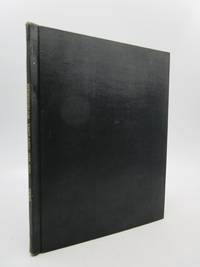
1937rif. 002129Unknown 1937. Hard Cover. Very Good/No Jacket as Issued. This is a bound manuscript-never published. It is 55 pages fully footnoted and with a bibliography. Dr. Srail taught at Case University in Cleveland-now Case Western. This was his personal copy. Unknown hardcover
2013rif. 2083002115706973Seibido 2013. Soft Cover. Fine. Number of pages: 207p Size: 22cm Number of books: 1 Seibido paperback
1991rif. 2090502113718033Not Available 1991. Soft Cover. Fine. The book is in fine condition. Not Available paperback
1994rif. 2080502106911946Not Available 1994. Soft Cover. Fine. The book is in fine condition. Not Available paperback
1999rif. 2080502106912494Not Available 1999. Soft Cover. Fine. The book is in fine condition. Not Available paperback
rif. 2090502113711578Not Available N.A. Soft Cover. Fine. The book is in fine condition. Not Available paperback
1974rif. 2080502106914071Tax Accounting Association 1974. Soft Cover. Fine. The book is in fine condition. Tax Accounting Association paperback
rif. 2081002109000360Moriyama shoten N.A. Soft Cover. Fine. Number of pages: 373p Plate size: 22cm Moriyama shoten paperback
1986rif. 2080502106908785Moriyama shoten 1986. Soft Cover. Fine. The book is in fine condition. Moriyama shoten paperback
1986rif. 2080502106909609Moriyama shoten 1986. Soft Cover. Fine. The book is in fine condition. Moriyama shoten paperback
2000rif. 77137Washington DC: United States General Accounting Office 2000. Version 1 Exposure Draft. Wraps. Very good. iv 163 1 pages. Footnotes. Figures. Abbreviations. Appendices including a Glossary. Document Distribution Center Customer Service Survey form laid in. Few draft copies survive. This was a precursor to a 2004 Executive Guide of the same title published as GAO-04-394G. An exposure draft was typically used to broadly solicit comments from multiple agencies and stakeholders. Otherwise audit and review drafts were typically shared with the studied agency for factual accuracy and to obtain a management response. In 1997 the GAO developed guidance based primarily on the Clinger-Cohen Act that provides a method for evaluating and assessing how well a federal agency is selecting and managing its IT resources and identifies specific areas where improvements can be made. The Information Technology Investment Management framework identifies critical processes for successful IT investment and organizing these processes into a framework of increasingly mature stages. This shift reflects both the maturation of the thinking in the area of IT investment management and the feedback we received from organizations based upon their experiences creating their IT investment mechanisms and processes. Such a maturity framework can be used to analyze an organization's IT investment management process and determine the maturity of its investment process. In doing so ITIM establishes three key benefits: 1 a rigorous standardized tool for internal and external evaluations of an agency's IT investment management process; 2 a consistent and understandable mechanism for reporting the results of these assessments to agency executives the Congress and other interested parties; and 3 a road map agencies can use for improving their IT investment management process. The achievement of more mature IT investment management stages depends on performing other good management practices and attributes such as human capital training IT architecture and software management. United States General Accounting Office paperback
2002rif. 91336Washington DC: United States General Accounting Office 2002. Presumed First Edition First Printing. Wraps. Very good. 50 4 pages. Footnotes. Figures. Tables. This is a "Report to the Subcommittee on Space and Aeronautics Committee on Science House of Representatives". In response to a Congressional request this report discusses the mechanisms that the National Aeronautics and Space Administration NASA has in place to capture disseminate and apply past lessons learned towards future mission success. We found that NASA's processes procedures and systems do not effectively capture and share lessons learned and therefore NASA has no assurance that lessons are being applied towards future missions. We include recommendations to the NASA administrator on ways to strengthen the agency's lessons learning processes and systems. NASA's procedures and guidelines require that program and project managers review and apply lessons learned from the past throughout a program's or project's life cycle and to document and submit any significant lessons to the agency's Lessons Learned Information System LLIS in a timely manner. NASA defines a lesson learned as knowledge or understanding gained by experience. The experience may be positive such as a successful test or mission or negative such as a mishap or failure. A lesson must be significant in that it has a real or assumed impact on operations; valid in that it is factually correct; and applicable in that it identifies a specific design process or decision that reduces or eliminates the potential for failures and mishaps or reinforces a positive result. NASA recognizes the importance of learning from the past to ensure future mission success and uses several mechanisms to capture and disseminate lessons learned. The principal source NASA has established for the agency-wide collection and sharing of lessons is the LLIS a Web-based lessons database that managers are required to review on an ongoing basis. In addition NASA uses training program reviews and periodic revisions to agency policies and guidelines to communicate lessons. Several NASA centers and key programs also maintain lessons learned systems that are geared toward their own staff. Recently NASA has taken steps to improve the way it captures and shares information by developing a business strategy called knowledge management. Knowledge management can be defined as the way that organizations create capture and reuse knowledge to achieve their objectives. According to NASA officials knowledge management has the potential to link agency staff with the knowledge and resources they need to complete tasks faster better and cheaper. In pursuit of knowledge management NASA has developed a strategic plan established a management team to coordinate knowledge management activities at NASA's centers and initiated several information technology pilot projects. Despite the processes and procedures in place to capture and share lessons learned there is no assurance that lessons are being applied toward future missions success. A GAO survey of NASA program and project managers revealed weaknesses in the collection and sharing of lessons learned agency-wide. While some lessons learning does take place our survey found that lessons are not routinely identified collected or shared by programs and project managers. Respondents reported that they are unfamiliar with lessons generated by other centers and programs. In addition many respondents indicated that they are dissatisfied with NASA's lessons learned processes and systems. Managers also identified challenges or cultural barriers to the sharing of lessons learned such as the lack of time to capture or submit lessons and a perception of intolerance for mistakes. They further offered suggestions for areas of improvement including enhancements to LLIS and implementing mentoring and "storytelling" or after-action reviews as additional mechanisms for lessons learning. While NASA's current knowledge management efforts should lead to some improvement in the sharing of agency lessons and knowledge they lack ingredients that have been shown to be critical to the success of knowledge management at leading organizations. Cultural resistance to sharing knowledge and the lack of strong support from agency leaders often make it difficult to implement an effective lessons learning and knowledge sharing environment. We found that successful industry and government organizations have overcome barriers by making a strong management commitment to knowledge sharing developing a well defined business plan for implementing knowledge management providing incentives to encourage knowledge sharing and building technology systems to facilitate easier access to information. The application of these principles could increase opportunities for NASA to perform its basic mission of exploring space faster better and cheaper more successfully. United States General Accounting Office paperback