3037 risultati
1997rif. 79427Washington DC: General Accounting Office National Security and International Division June 1997. Presumed First Edition First printing White cover not usual blue cover--reprint/. Wraps. Good. 235 pages. Oversized book measuring 11 inches by 8/1-2 inches. Postage sticker and part of a shipping label roughly removed on rear cover. This report is the unclassified version of a classified report that the General Accounting Office issued in July 1996 on the Operation Desert Storm air campaign. At the request of John D. Dingell the Ranking Minority Member of the Committee on Commerce House of Representatives the Department of Defense reevaluated the security classification of the original report and as a result about 85 percent of the material originally determined to be classified has subsequently been determined to be unclassified and is presented in this report. The best available data did not permit GAO to either: 1 make a comprehensive system-by-system quantitative comparison of aircraft and weapon effectiveness; or 2 validate some of the key performance claims for certain weapon systems. Pursuant to Congressional direction GAO reviewed the Operation Desert Storm air campaign focusing on the: 1 use and performance of aircraft munitions and missiles employed during the air campaign; 2 validity of Department of Defense DOD and manufacturer claims particularly those for weapon systems utilizing advanced technology; 3 relationship between cost and performance of weapon systems; and 4 extent that Desert Storm air campaign objectives were met. GAO noted that: 1 air power clearly achieved many of Desert Storm's objectives but fell short of fully achieving others; 2 the available quantitative and qualitative data indicate that air power damage to several major target sets was more limited than DOD's title V report to the Congress stated; 3 these data show clear success against the oil and electrical target categories but less success against Iraqi air defense command control and communications and lines of communication; 4 success against nuclear-related mobile Scud and Republican Guard targets was the least measurable; 5 the lessons that can be learned from Desert Storm are limited because of the unique conditions the strike tactics employed by the coalition the limited Iraqi response and limited data on weapon system effectiveness; 6 the strong likelihood of campaign success enabled U.S. commanders to favor strike tactics that maximized aircraft and pilot survivability rather than weapon system effectiveness; 7 the Iraqis employed few if any electronic countermeasures and presented almost no air-to-air opposition; 8 as a result Desert Storm did not consistently or rigorously test all the performance parameters of aircraft and weapon systems used in the air campaign; 9 many of DOD's and manufacturers' postwar claims about weapon system performance were overstated misleading inconsistent with the best available data or unverifiable; 10 aircraft and pilot losses were historically low partly owing to the use of medium- to high-altitude munition delivery tactics that nonetheless both reduced the accuracy of guided and unguided munitions and hindered target identification and acquisition; 11 air power was inhibited by the limited ability of aircraft sensors to identify and acquire targets the failure to gather intelligence on critical targets and the inability to collect and disseminate battle damage assessments BDA in a timely manner; 12 the contributions of guided weaponry incorporating advanced technologies and their delivery platforms were limited because the cooperative operating conditions they require were not consistently encountered; 13 the important contributions of stealth and laser-guided bombs were emphasized as was the need for more and better BDA and less attention was paid to the significant contributions of less-sophisticated systems and the performance of critical tasks such as the identification and acquisition of targets; and 14 there was no apparent link between the cost of aircraft and munitions and their performance in Desert Storm. General Accounting Office, National Security and International Division paperback
1999rif. 91264Washington DC: United States General Accounting Office 1999. Presumed First Edition First Printing. Wraps. Very good. 34 pages. Report to Congressional Requesters. The purpose of the $1.3 billion X-33 Program cosponsored by the NASA and the Lockheed Martin Corporation is to develop and demonstrate advanced technologies and techniques needed for future reusable launch vehicles RLV including lightweight internal fuel tanks advanced rocket engines a durable heat shield and rapid-turnaround low-cost operations. The X-33 vehicle will be a half-scale model of Lockheed Martin's planned single-stage-to-orbit SSTO Venture Star RLV an operational vehicle that will be based on and developed after the X-33. Lockheed Martin and NASA will base the decision to proceed with developing the Venture Star in part on the results of the X-33 Program. NASA would potentially be one of Lockheed Martin's primary customers for the cargo-only flights and is the only anticipated customer for passenger flights. The passenger flights would carry crewmembers to and from the International Space Station. NASA and Lockheed Martin are conducting the X-33 Program under a cooperative agreement a financial instrument with which a government entity and one or more public or private organizations jointly fund and implement an activity to achieve common objectives. Such a partnership was encouraged by the National Space Transportation Policy of 1994 as a means of 1 establishing NASA as the lead agency for technology development and demonstration of reusable space transportation systems and 2 positioning the government and the private sector to make decisions on the development of an operational reusable launch system. NASA and Lockheed Martin X-33 program managers anticipate that the program will achieve technical requirements such as demonstrating the feasibility of building large liquid hydrogen fuel tanks made of graphite composite material. However the program will not meet some original cost schedule and performance objectives. Problems encountered by Lockheed Martin while working toward the X-33 Program's technical requirements have caused cost increases delay of the test vehicle's first flight and revision of some performance objectives. The technical problems occurred during development and fabrication of the X-33 vehicle's internal fuel tanks rocket engines and thermal protection system the three key advanced technologies the program seeks to demonstrate. Resolving these technical problems caused Lockheed Martin's estimated contribution to grow $75 million above the original estimate of $211.6 million to $286.6 million. However part of the increase will be borne by the government. Procurement regulations allow companies to recover allowable independent research and development costs by including them as overhead in the pricing for other government contracts. Thus Lockheed Martin's and its partners' shares may actually be lower. In addition estimated government costs for NASA civil service personnel working on the program not included in NASA's X-33 program budget also increased. Together these estimated costs increased from $216.9 million to $274.3 million as of March 1999. As a result we believe a more accurate representation of the estimated government's share of the X-33 Program is $1.23 billion while industry's estimated share is $125.4 million. Several issues will need to be evaluated before NASA decides to use Venture Star RLVs to support the International Space Station. First the results of the X-33 Program must provide sufficient information for NASA to determine that the risks have been sufficiently reduced and that continuation of activities leading to the agency's use of Venture Star as a customer is warranted. Second even though Venture Star RLVs are intended to be commercially owned and operated government financial incentives will likely be needed to initiate such a venture. Third NASA would have to pay for either two crew modules or modifications to Venture Star vehicles if the crew return vehicle being developed for the International Space Station is chosen as a means for Venture Star to carry people. Fourth because the Venture Star RLV would not carry as much cargo as the space shuttle additional flights would be needed. The more frequent docking activities may reduce the amount of stable time available for some science operations. United States General Accounting Office paperback
1998rif. 59761Washington DC: United States General Accounting Office 1998. Wraps. Very good. No dust jacket. Cover has slight wear and soiling. 324 p. : ill. maps; 28 cm. Includes: Illustrations Maps. GAO/HEHS-98-32. This report examings how VA and community hospitals' care evolved during the 20th century including changes in supply and demand factors contributing to declining demand the extent of excess capacity and actions taken to increase efficiency and compete for patients. United States General Accounting Office paperback
1992rif. 45007Washington DC: GAO 1992. First Edition. First Printing. very good. approx. 600 wraps 2-vol. set index Part A and B only Part A is entitled Improving National Security and International Affairs Programs GAO/OP-92-1A; Part B is entitled Improving Resources Community and Economic Development Programs GAO/OP-92-1B. GAO paperback
1968rif. 2082702114905209Japan Management Publishing Association 1968. Soft Cover. Fine. Number of pages: 261 pages Size: 23cm Japan Management Publishing Association paperback
rif. 2081002108500722Sanctuary Publishing Nozomi General Accounting Office N.A. Soft Cover. Fine. Number of pages: 235p Size: 19cm Sanctuary Publishing Nozomi General Accounting Office paperback
1994rif. 2080502106911942Not Available 1994. Soft Cover. Fine. The book is in fine condition. Not Available paperback
rif. DADAX0367581302New unknown
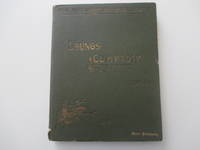
1898rif. 15514AB1898. Wien Weiss 1898 - 1899. 295 : 225 cm. Original cloth. Textbook for the different ways of accounting including the corresponding letter. - From the businees-school Weiss in Vienna. hardcover
rif. SONG0471251097Used: Good unknown
rif. SONG1640551867Used: Good unknown
rif. B9781578860678Paperback / softback. New. paperback
rif. DADAX0415645638New unknown
rif. mon0000112535IFRS Foundation 12/01/2018 00:00:01. paperback. New. 8.7933 in x 24.7812 in x 15.3883 in. IFRS Foundation paperback
2002rif. 2080502106915980Financial Accounting Standards Foundation 2002. Soft Cover. Fine. The book is in fine condition. Financial Accounting Standards Foundation paperback
2004rif. 2080502106915031Financial Accounting Standards Foundation 2004. Soft Cover. Fine. The book is in fine condition. Financial Accounting Standards Foundation paperback
2003rif. 2080502106914074Financial Accounting Standards Foundation 2003. Soft Cover. Fine. The book is in fine condition. Financial Accounting Standards Foundation paperback
2006rif. 2080502106915978Financial Accounting Standards Foundation 2006. Soft Cover. Fine. The book is in fine condition. Financial Accounting Standards Foundation paperback
2005rif. 2080502106915979Financial Accounting Standards Foundation 2005. Soft Cover. Fine. The book is in fine condition. Financial Accounting Standards Foundation paperback
1998rif. 2080502106915705Not Available 1998. Soft Cover. Fine. The book is in fine condition. Not Available paperback
1998rif. 2080502106909499Not Available 1998. Soft Cover. Fine. The book is in fine condition. Not Available paperback
2006rif. 2080502106908729Japan Academy of Accountancy 2006. Soft Cover. Fine. The book is in fine condition. Japan Academy of Accountancy paperback
1952rif. 2080502106914061Moriyama shoten 1952. Soft Cover. Fine. The book is in fine condition. Moriyama shoten paperback
rif. DADAX1118152859New unknown
rif. DADAX1618533126New unknown