2462 risultati
195168 pages. Features: Great cover illustration of Toronto Maple Leaf locker room by Franklin Arbuckle shows button being sewn onto uniform of team captain Ted "Teeder" Kennedy by Tim Daly with Turk Broda in background; The Case History of Comrade Tim Buck - Leader of Canada's Communist Party for 21 years; You Too Can Be a Perfect Parent; The Hex-man of Croaker's Hole (fiction); Conscription! - How soon will it come?; Art Reaume - The Battered Boss of Windsor, Ontario; How to Pay Less Income Tax; Sir John Franklin's Folly; Regina's Always Starting Something; Whooping Cough - Number One Baby-Killer; Attractive colour Buick ad shows yellow Custom and red Roadmaster; Li'l Abner comic in Cream of Wheat ad; Noxzema ad features lovely Elaine Stewart; Jergens ad features four photos of Ginger Rogers; Nice colour La-Z-Boy ad shows officeman reclining on red chair; Dow Brewery ad honours Leo Doucet, 13, of Richibucto, N.B. who performed a heroic feat after a shotgun charge exploded while he and his father were two miles from shore; Auto-Lite ad features photo of Maureen O'Hara and her look-alike Jean Eyres of NYC; Molson's ad features tips for homeowners by Tom Gard; Nice colour Coke ad on back covers shows boy with blacksmith plus mechanic; and more. Unmarked with moderate wear. A nice vintage copy. Book
190617 pages plus 3 pages of ads. Contents include: Editorials; A Comment on the Coins of the United States; The Collector's Debt to the Museum; Notables Who Are Members of the British Numismatic Society; The Chicago Numismatic Society;The Numismatic and Antiquarian Society of Montreal; Stamp Department; Mineralogy; Charles Gregory's Gift. Unmarked. Average external wear. Small chip from upper corner of front corner at coverfold. Short openings along coverfold. A sound copy of this, the premier issue of this esteemed numismatic publication. Book
1912"Contains information published for the first time, of navigable distances of lakes and rivers in north-western Ontario, Manitoba, Saskatchewan, Alberta and Mackenzie Territory; the draught and number of steamers plying on thoses waters. Similar information is given of the inland waters of British Columbia for the first time. In the description of the Transcontinental and Intercolonial railways much new information appears... Original photographs of various localities were procured from the headquarters of the railways and steamboat lines. The book is copiously illustrated." - A. Johnston, Deputy Minister of Marine and Fisheries. "Intended as a sketch of Canada, for the use of representatives, delegates and members of the XIIth Congress of the Permanent International Association of Navigation Congresses, to be held at Philadelphia. Contains information relating to Canada, important lines of communication on this continent, and ocean going steamers, that will be valuable to travellers engaged in business, tourists, sportsmen, yachtsmen, canoeists, surf bathers, and others who may find the means of satisfying any reasonable desire connected with travel, pastime or recreation." - from Introduction. Prior owner's name upon first blank leaf else unmarked. Average wear with the following exception: Affixed to the last leaf is a 35" x 21.5" fold-out map of the Dominion of Canada which shows national rail lines, resource locations, fog signals, lighthouses, wireless stations, and more. Through use, this leaf and the two which preceed it are loose but present. Two-inch opening at base of back cover and backstrip. Also included is a 21" x 17.5" fold-out map entitled "Chart of Radio-Telegraph Stations on the East Coast". Profusely illustrated with often enthralling black and white photography. Attractive gilt lettering upon embossed chocolate brown cover. A magnificent survey of Canada's natural resources and transportation infrastructure in the Pre- World War One era. Book
197752 pages. Includes piano sheet music, guitar chords and lyrics for the following songs: Amelia; Black Crow; Blue Motel Room; Coyote; Furry Sings the Blues; Hejira; Refuge of the Roads; Song for Sharon; and A Strange Boy. Contains several great black and white illustrations which include photos of renowned figure skater Toller Cranston working his magic. Unmarked with moderate wear. Binding sound. A quality vintage copy of this wonderful Joni Mitchell collectible. Book
1917rif. 005414Paris Lyre et Palette 1917 In-4 En feuilles, couverture illustrée Edition originale
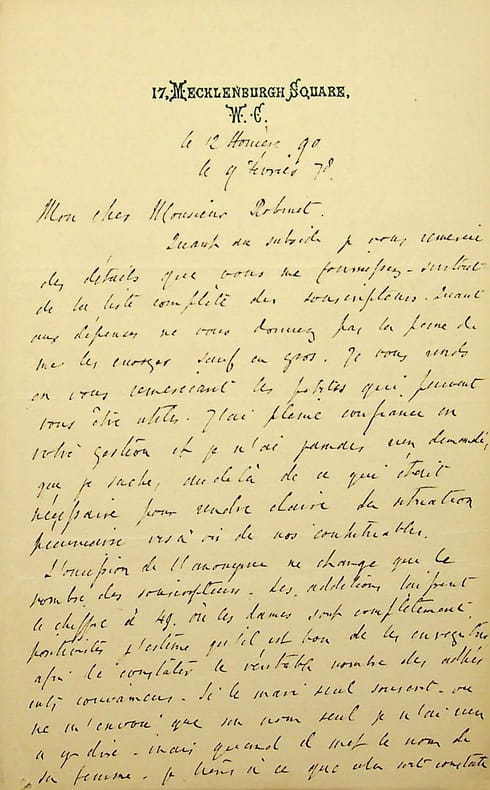
rif. 018963[Positivisme] Richard Congreve (1818-1899), philosophe anglais, figure de proue du positivisme en Angleterre, à l'origine du schisme en 1878. L.A.S. en français, 12 Homère 90 [9 février 1878], 4p in-8. Au docteur Jean-François Robinet (1825-1899), médecin d'Auguste Comte et important positiviste français. « Mon cher Monsieur Robinet, Quant au subside, je vous remercie des détails que vous me fournissez - surtout de la liste complète des souscripteurs. Quant aux dépenses, ne vous donnez pas la peine de me les envoyer sauf en gros. Je vous rends en vous remerciant les petites[?] qui peuvent vous être utiles. J'ai pleine confiance en votre gestion et je n'ai jamais demandé, que je sache, au delà de ce qui était nécessaire pour rendre éclairé la situation pécuniaire vis à vis de nos contribuables. l'omission de l'anonyme ne change que le nombre de souscripteurs. Les additions laissent le chiffre à 49. Où les dames sont complètement positivistes, j'estime qu'il est bon de les enregistrer afin de constater le véritable nombre des adhérents convaincus. Si le mari seul souscrit - ou ne m'envoie que son nom seul, je n'ai rien à y dire - mais quand il met le nom de sa femme. Je tiens à ce que cela soit constaté. Rien de plus important, comme vous l'avez toujours senti, que l'adhésion des femmes, et il est utile de le reconnaître partout où une telle reconnaissance n'a rien qui implique des concessions illégitimes. Qu'en pensez-vous ? C'était pour indiquer cette idée que j'ai associé madame Congreve à ma souscription. Merci de vos explications à l'égard de la circulaire. J'ai fait ce que vous me demandez auprès de madame Geddes. Merci aussi de l'envoi du journal contenant le discours de M. Finance. Je l'en félicite malgré certaines erreurs typographiques - et de la réception qu'il a eue. Est-il satisfait du résultat du congrès [fin illisible]. Je ne puis adhérer à votre manière de voir pour M. Hutton. Pour moi, il n'a pas changé puisqu'il y a deux ans ou trois qu'il m'a écrit, dans le même sens de sa récente lettre, [mot illisible] s'applique à la question générale. Je n'ai pas d'indication quant à la revue. Quand je dis tord, je ne dis pas que vous vouliez ou que vous cherchiez le résultat que j'indique. Je n'ai émis aucun soupçon, je n'ai fait aucune accusation de vouloir la chose, j'ai constaté seulement ce qui, pour moi, est un fait, que l'action de vous et d'autres positivistes parisiens en comparaison avec celle de certains de nos confrères ici, à une tendance dans la direction indiquée. Comme je le disais à M. [nom illisible] : "Je ne dis pas, je ne crois pas que c'est voulu, ou même aperçu, mais il n'en est pas moins vrai". M. Pradeau m'assure que je ne me suis pas trompé en employant le verbe tendre en ce sens. En ce qui regarde la correspondance [mot illisible], vous me permettrez de ne pas répondre à votre première question. Je m'abstiens dans l'intérêt de la paix. Mais pour la seconde, je réponds que je n'ai pas fait la même demande. Je n'entre pas dans la question du fond du débat. Je m'en tiens à celle de la forme de votre réponse, qui n'a semblé interdire tout espoir de conciliation. Mais si j'ai été indiscret, permettez moi de retirer une observation qui n'avait pour but que d'amener votre attention sur la lettre en question, et de vous prier de me pardonner mon indiscrétion. Je ne voudrais faire aucune démarche qui fût de nature à empirer l'état actuel - à moins qu'elle ne fût pour moi d'une nécessité absolue. Nous somme en pleine dissolution. Comment arriver à la reconstruction. Du reste c'était inévitable, vu la différence de direction imprimée aux deux noyaux, chose assez notoire. En dehors des personnalité, voilà où je reviens. Veuillez agréer tous mes respects pour vous et toute votre famille. Richard Congreve ». Emily Geddes (1840-1929) est la belle-soeur de Congreve. Isidore Finance (1848-1918) était un ouvrier peintre, militant syndicaliste. Henry Dix Hutton (1824-1907) est un
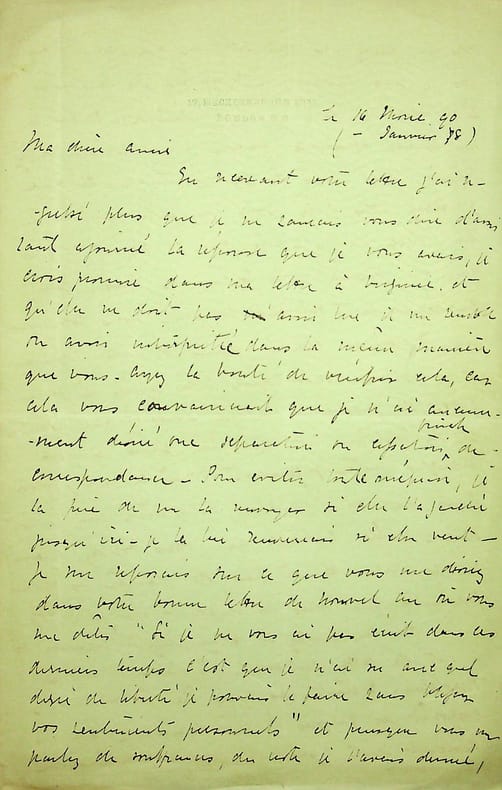
rif. 018970[Positivisme] Richard Congreve (1818-1899), philosophe anglais, figure de proue du positivisme en Angleterre, à l'origine du schisme en 1878 ; Mary Bury Congreve (1833-1915), épouse du philosophe ; Emily Bury Geddes (1840-1929), soeur de Mary ; James Geddes (1841-1880), époux d'Emily. L.A.S. de Mary Congreve en français & L.A.S. de Richard Congreve en françaisn contre signée par Emily et James Geddes, 15-16 Moïse 90 [15-16 janvier 1878], 6p in-8. A Mary Weyer Robinet (1827-1881), épouse du docteur Jean-François Robinet (1825-1899), médecin d'Auguste Comte et important positiviste français. « Ma chère amie, En recevant votre lettre, j'ai regretté plus que je ne saurais vous dire d'avoir tant ajourné la réponse que je vous avais, je crois, promise dans une lettre à Virginie, et qu'elle en doit pas avoir lue il me semble ou avoir interprétée dans la même manière que vous. Ayez la bonté de vérifier cela, car cela vous convaincrait que je n'ai aucunement désiré une séparation ou cessation stricte de correspondance. Pour éviter toute méprise, je la prie de me la renvoyer si elle l'a scellée jusqu'ici. Je la lui renverrais si elle veut. Je me reposais sur ce que vous me disiez dans votre bonne lettre de nouvel an où vous me dites : "Si je ne vous ai pas écrit dans ces derniers temps, c'est que je n'ai pas su avec quel désir de liberté je pouvais le faire sans blesser vos sentiments personnes" et puisque vous me parlez de souffrances, du reste je l'avais désiré, vous ne devez pas être surprise que, ne l'étant pas je crois moins, je ressentis de la peine à répondre simplement[?]. Mais je me serais épargné encore une douleur si j'y avais mis plus de promptitude. Ce que j'allais vous dire vous aurait peut-être empêchée de m'écrire sur ce sujet, ce qui eût été mieux pour toutes les deux. Car évidemment, situées comme nous sommes, les mesures étant dans d'autres mains, la meilleure chose que nous avons à faire, c'est de garder le contact[?] autant que possible et de fortifier[?] nos affections sans laisser aveugler notre jugement, voilà ce que j'entendais par mon amitié subjective pour ainsi dire - réelle autant que vous voulez, mais ne se permettant pas de visiter les choses présentes qui nous intéressent - peut-être trop. Et vous me parle de votre projet comme si le but de cette entrevue Boulevard dde la Madeleine n'était pas que M. Robinet nous exposât les raisons d'une démarche qu'il désirait tant, disait-il, pour le positivisme (il n'a presque pas été question de nos personnalités mais de nos devoirs-sacrifices a-t-il dit) et qui me répugnent tant à moi - démarche dont les inconvénients qu'il regrettait en [mot illisible] était surtout pour nous dans le cas que M. Laffitte ne se résignerait pas (ce que vous avez, vous et lui, dit qu'il ferait probablement). Que son affection pour M. Laffitte était profonde, cela se voyait, et qui a ajouté un grand poids à sa désapprobation de la directions, mais c'était comme moyen d'éviter un schisme, que M. Robinet a insisté sur notre venue et c'était en vue de ce schisme, qu'il ne contemplait que dans le cas que M. Congreve se refuserait de venir à Paris que M. Robinet, vous aussi je crois, vous avez dit que vous resteriez du côté de M. Laffitte. C'était nous, au contraire, qui nous sommes alors, comme plus tard, opposés à l'espèce de substitution sourde que vous avez désirée, et qui ne nous a pas parue désirer de mon mari. Aucune déclaration que M. Robinet se rangerait du côté de M. Laffitte si, mon mari venant, les choses [mot illisible] mal, n'a été faite. Il y a eu, je crois, confusion dans votre mémoire entre cette entrevue et la correspondance des dernières semaines de l'an passé. Dans la première, il n'y avait rien qui aurait pu nous blesser ni dans les expressions que je vous cite de la chose que vous avez écrite à M. Congreve beaucoup plus tard - elle est datée le 27 Descartes 89. "Il est pour moi hors de doute que votre présence à Paris serait le salut du Positivisme et la seule
Acquaforte e acquatinta a colori Misure: cm29,2 x 24,2; foglio 52 x 36,5 Pittore e architetto cileno, icona dell'arte del '900. Nacque in una famiglia benestante e nel 1931 si laureò in architettura presso l’università di Santiago del Cile. Nel '34 si trasferì a Parigi dove collaborerà con Le Corbusier (La Chaux-de-Fonds 1887 - Roccabruna 1965) e qui l'incontro con Andrè Breton e Salvator Dalì determinerà il suo ingresso nel Surrealismo sviluppando un modus operandi carico di immaginazione in cui le forme spesso astratte trovano la loro dimensione nello spazio compositivo, i suoi primi oli surrealisti li chiamò Morfologie Psicologiche e poi Inscape. Successivamente partirà per Londra per lavorare con Walter Gropius (Berlino 1883 - Boston 1969) e qui entrerà in contatto con Henry Moore (Castleford 1898 - Much Hadham 1986) e René Magritte (Lessines 1898 - Bruxelles 1967). A causa della Seconda Guerra Mondiale lo vediamo nel 1940 a New York e nel 1949 a Roma. Sarà sempre itinerante tra la Francia e l'Italia, e in Italia si trasferì a Tarquinia dove si stabilì in un convento e si dedicò all’architettura creando l’Autoapocalipse, una casa realizzata riciclando scarti di vecchie automobili, in collaborazione Bruno Elisei (Tarquinia 1945). Composizione con quattro figure antropomorfe, tipiche dell'autore, che sembrano all'interno di un'aula universitaria. Scrivono e commentano operando su una lavagna alla loro sinistra, le figure sono parzialmente in ombra mentre un cono di luce bianca parte dalla metà del lato sinistro della lastra e invade la composizione. Una fascia orizzontale a metà lastra divide in due lo spazio. A matita in basso a sinistra sotto l'inciso XIII/XXV, a destra firma. Ottimo stato di conservazione. Colori vividi. Ampi margini oltre la battuta. Numerata a matita in basso a sinistra XIII/XXV e firmata in basso a destra.
TOFANO SERGIO -STO- (ROMA 1886/1973) Serie di 4 bozzetti originali, matita, china e coloritura parziale in seppia ad acquarello, non firmati ma tutti con autentica al retro di mano della nuora del grande STO. , , Un disegno montato su cartoncino, misura: cm 21 x 23,3, fu utilizzato per illustrare il primo capitolo del volume di Franz Pitussi Craveri "Come allevare un padrone" - E' utile un padrone ? Io rispondo subito SI! - Gli altri tre bozzetti, questi su cartoncini di diverso formato, risultano quadrati di cm 21 x 21 circa e sono preparatori per l'immagine di copertina e per una immagine interna (il cagnetto compita alla lavagna). Si unisce il volume detto (Rizzoli, 1965), illustrato da Tofano, prima edizione. Buon esemplare con solo un poco di vecchia colla al dorso per precedente etichetta. TUTTO Buono (Good) .
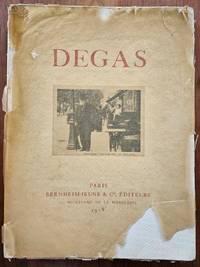
1918rif. 2414Paris: Bernheim-Jeune & Cie Editeurs 1918. Limited ed. Paperback. Fair/poor. Number 136 of 800 copies with numbers 1 through 275 on Japanese paper from the Shizuoka factory per the limitation page. Oversize softcover between a quarto and folio size. A fair copy in a poor glassine wrapper. 98 plates in black and white with four additional plates on brown paper tipped in color. Externally fragile in appearance with heavy damage to the spine column - with a split to the binding paper from the top and paper loss across the top and bottom. Corners bent and some creasing at the top rear. Inside is much better - a sweet gift inscription to the top of the front endpaper appears to be the only marking. Where present text is in French. The plates are solidly bound in with the 4 color additions from Bernheim being significantly looser. The glassine wrapper is hanging on by a thread but included as it appears original to the publication. Thick pages a beautiful scarce collection. Bernheim-Jeune & Cie, Editeurs paperback
2024rif. x-3031390776Springer Nature 2024. Hardcover. New. 533 pages. 10.98x8.27x1.38 inches. Springer Nature hardcover
rif. 24189Nash’s eight TLsS from between 4 July 1949 and 10 October 1951; all on letterheads of 2 Bristol Court West Marine Parade Brighton. Macqueen-Pope’s carbons from 1949 and 1951. ‘The Tragic Comedians’ undated. Nash made around 70 films between 1912 and 1927 and was a key figure in the creation of Elstree Studios. His career as a film maker was effectively ended following the screening of his 1921 film 'How Kitchener was betrayed'. See Bernard Ince ' “For the Love of the Art”: The Life and Work of Percy Nash Film Producer and Director of the Silent Era’ ‘Film History’ September 2007. See also Macqueen-Pope’s entry in the Oxford DNB. The collection of eleven items is in fair overall condition with minor creasing and aging to some items. Nash’s eight letters are all signed ‘Percy Nash’ and the first and longest has a long postscript in autograph. The eight total 9pp: four in 4to and five in 12mo. All are addressed to ‘My dear Popie’. The two men are clearly well acquainted - to one letter Nash adds the autograph note ‘Come & see us soon!!!’. The first letter contains personal information about the 1897 murder of the actor William Terris outside the Adelphi. ‘I was producing a Panto for Charles Denton at the time at the Parkhurst Theatre and I was short of a Chorister Denton phoned to say that he would have one for me the following morning. I called next day at Maiden Lane and he told me that he had a man but as he had a “Wall” eye he sent him away. It was Prince. Terris’s murderer E Dagnall Daggie was a member of the Adelphi Co at that time and he told me that Prince was a small part merchant who was spasmodically engaged there. He considered himself badly treated by the Management.’ He concludes in the same vein. Letter of 3 August 1950 begins: ‘I am under the impression that I am the last living “Acting” Not ‘Walk on’ member of Irvings Lyceum Theatre Company.’ After describing a visit to Irving’s centenary service at St Martin’s in the Fields he adds ‘I am sure that I am the only one left connected with his Stage Management. Lionel Belmore who was with me at the time migrated to America and I am informed passed on a year or two ago.’ On 9 November 1950 he writes intriguingly: ‘Re the G. B. Shaw incident you will be surprised at the undignified pranks that they got up to in the film at the behest of the little Scotchman.’ Letter of 14 December 1950 describes ‘a long queue waiting to book and a slip of a girl solo to do the work . I am often in touch with Emily Norton Freds sister and she says she is very hard up perhaps this revival will healp. Jack Gladwin called in on Tuesday and I showed him the great “Write up” of Chue in “Everybodys”.’ On 24 June 1951 he praises Popie’s new book ‘Ghosts and Greasepaint’: ‘Every word and picture takes me back through my whole life from the ‘Fly posting’ inside cover of Drink which we used to call “Lets av some more” to the index pages. I saw Warner first at the Princess in it and I signed the pledge. / My word! as I turn the pages over I see pictures of the “Gone befores” and I feel strangely lonely but when I pass over and it can’t be long now I shall tell them all what a Champion they left behind them to keep their memory green.’ The last letter 10 October 1951 concerns a radio broadcast featuring Popie: ‘What a glorious night you must have had last Sunday. I listened in to the first part and it all seemed to go so slick and the applause was never allowed to “peter” out. I was connected in one way or the other with The Nellie Farren H.I. and Ellen Terry similar shows and they were nothing like I.N’s.’ The carbons of two of Popie’s replies are both unsigned. Each 1p 4to. The first 5 July 1949 discusses of the Terris murder. The second is a response to Nash’s last letter. The final item is a typescript of reminiscences titled ‘The Tragic Comedians / Laughter and Tears.’ 2pp 4to. Whether this is by Popie or Nash or another party is unclear. There is one autograph emendation. Observations on George Formby ‘I have been present at a performance when the audience were screaming with merriment at him during his “Turn” and he was compelled to turn his back on them to conceal his terrible cough which eventually closed his career.’ George Bastow Melville Gideon Leslie Stuart and a final long passage on Dan Leno ‘The greatest tragedy of all was to my thinking that every Panto first night at the Lane Two boxes were reserved for the members of his TWO families. The Boxes were placed one over the other on the same side of the Theatre so that they never knew each other were there or even that they existed. This fact used to worry Sir Augustus Harris and after him Arthur Collins lest they should make the discovery but they never did what a time of anguish it must have been for Dan’. Nash’s eight TLsS from between 4 July 1949 and 10 October 1951; all on letterheads of 2 Bristol Court West, Marine Parade, Bri unknown
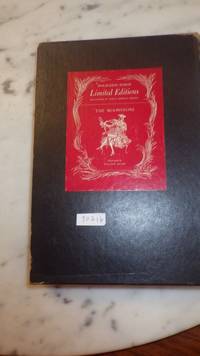
1944rif. 30216AHB NODJ SLIPCASE HAS RED & WHITE ILLIUSTRATION ON FRONT OF GENTLEMAN SEATED SLIPCASE EDGE WEAR SEPARATION 1944 on Title Pg COPY # 571 LIMITED NUMBERED 1ST EDITION VG/VG- AS-IS EXTREMITIES CHIPS WEAR DJ Printed from Plates in Original Limited Edition of 1000 BEIGE CLOTH GREY ILLUSTRATED BOARDS Set in an aristocratic estate in Victorian England pronounced by critics as the oldest full length English mystery novel and to this day the best. Outlandish HORROR During a battle in India a sacred shrine is robbed of a jewel by a British soldier and the curse of the East Indian God follows the gem through generations of English ownership. A group of Fanatical East Indians follow the Moonstone to England where a mysterious death overtakes every heir to the fatal jewel Against the Gentle Background of an Aristocratic Estate in Victorian EnglandMoves a Story so Intriguing in Mystery Fascinating in Character Presentation & Beguiling in the Telling. During a Gory Battle in Far Off India a Sacred Shrine is entered & Robbed of a Jewel by an Adventurous British Soldier & the Curse of the East Indian God follows DORAN DOUBLEDAY & CO LIMITED EDITIONS GARDEN CITY NY hardcover
1997rif. 30257HBNODJ SLIPCASE HAS RED & WHITE ILLIUSTRATION ON FRONT OF GENTLEMAN SEATED SLIPCASE EDGE WEAR SEPARATION clear tape repairs 1944 on Title Pg COPY # 713 LIMITED NUMBERED 1ST EDITION VG/VG- AS-IS EXTREMITIES CHIPS WEAR DJ 1ST EDITION THUS Printed from Plates in Original Limited Edition of 1000 BEIGE CLOTH GREY ILLUSTRATED BOARDS IN WORN SLIPCASE Set in an aristocratic estate in Victorian England pronounced by critics as the oldest full length English mystery novel and to this day the best. Outlandish HORROR During a battle in India a sacred shrine is robbed of a jewel by a British soldier and the curse of the East Indian God follows the gem through generations of English ownership. A group of Fanatical East Indians follow the Moonstone to England where a mysterious death overtakes every heir to the fatal jewel Against the Gentle Background of an Aristocratic Estate in Victorian EnglandMoves a Story so Intriguing in Mystery Fascinating in Character Presentation & Beguiling in the Telling. During a Gory Battle in Far Off India a Sacred Shrine is entered & Robbed of a Jewel by an Adventurous British Soldier & the Curse of the East Indian God follows DORAN DOUBLEDAY & CO LIMITED EDITIONS GARDEN CITY NY hardcover
rif. 38877Wien [Vienne] J. Adamek s.d. [premier tiers du XIXe siècle] 10 x 7,8 cm environ en feuille, à tirette
rif. 1207T532431Fair. SIGNED #1 of 30 presentation copies: "To My Dear Andrea. TOBIAS DANTZIG." New York: Macmillan 1930. 1st printing. viii 260 p. incl. Index. Illustrations. Spine cover is missing o/w G ha unknown
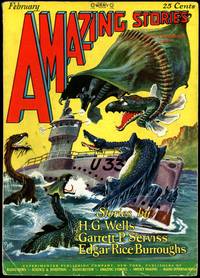
1927rif. 29018New York: Experimenter Publishing Company 1927. Pages tanned mild edge wear small paper loss base of spine two large chips upper and lower left rear corners. A very good to nearly fine copy with attractive front cover. 29018. Large octavo single issue cover by Frank R. Paul pictorial wrappers. Pulp magazine bedsheet format. Features part one of "The Land That Time Forgot" by Edgar Rice Burroughs. Other authors include H.G. Wells Edwin Balmer and William MacHarg Garrett P. Serviss and others. Reference: Tymm and Ashley Science Fiction Fantasy and Weird Fiction Magazines pp. 14-49. Experimenter Publishing Company unknown
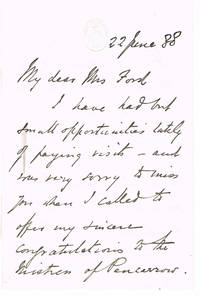
1888rif. 33058London U.K.: 22 June 1888. 1888. Very good. - Letter: small octavo 7-3/8 inches high by 4-3/4 inches wide. 128 words penned in black ink on all 4 sides of a folded 4-sided sheet of House of Commons letterhead with the Commons seal at the top of the first side. Signed "Yours sincerely / Edward Hamley". There is occasional very light foxing to the letterhead & 2 pieces of mounting tape adhere to the right margin of the 4th side where the letter has been removed from an album. Folded once for mailing. Very good. Manuscript leaf: small quarto 9 inches high by 7 inches wide. 83 words penned in black ink on one side of a sheet of cream watermarked paper. Folded 3 times with slight darkening down the top end of 1 vertical fold. 2 small pieces of tape adhere to the verso of the sheet where it has been removed from an album. Very good. The letter addressed to "My dear Mrs. Ford" expresses his regret that he missed her when he called on her. He congratulates her on becoming "the Mistress of Pencarrow" her family's estate and her childhood home. He goes on to complain about the House of Commons workload though "we are not quite such slaves as we were last year." The manuscript leaf is from Hamley's novel "Lady Lee's Widowhood" and is headed "Chap. II." The page which ends in mid-sentence describes the morning toiletries of two women characters. The first sentence of the extract reads: "Rosa constitutionally an early riser used to be always up before Orelia in the morning until the latter took it into her head to have a shower-bath fitted up in the closet that opened from their room." Sir Edward Bruce Hamley 1824-1893 served in the Crimean War. He was professor of military history at the Staff College Sandhurst from 1858 to 1877 and was Commandant of the College from 1870-1877. He was chief of the commission for the delimitation of the Balkan and Armenian frontiers 1879-80 and commanded a division in the Egyptian war of 1882. He was promoted to General in 1890. Hamley was Member of Parliament for Birkenhead from 1885 until his death in 1893. In addition to works on the Crimean War and his military manual "The Operations of War" Hamley was a short-story writer and poet a translator of French verse and the author of a novel "Lady Lee's Widowhood". He was a valued contributor to Blackwood's Magazine wherein the novel first appeared in 1853. It was subsequently published in two volumes by William Blackwood and Sons in 1854. Sadleir 1103; Wolff 2949. Both the letter and the manuscript come from the autograph collection of Mrs. Mary Ford widow of Richard Ford who wrote the popular "Handbook for Travellers in Spain". The autograph collection known as the Pencarrow Collection was formed from the 1850s onwards largely by Mary Ford in her long period of widowhood. [London, U.K.]: 22 June 1888. unknown
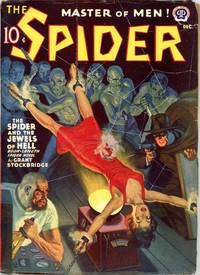
1940rif. 34799Chicago: Popular Publications Inc. 1940. Mild tanning to text paper slight trim to right edge several tiny tears tiny chip and small closed tear to upper left corner closed tear around upper right corner a nearly fine copy. 34799. Octavo single issue cover by Rafael DeSoto pictorial wrappers. Pulp magazine. "The Spider and the Jewels of Hell" with Norvell Page writing as "Grant Stockbridge." The character was established to be a direct competitor to Street and Smith's Shadow magazine. After Doc Savage and The Shadow this was the most popular hero character. The Spider character was considered one of the most brutal and violent of the pulp era. Reference: Cook Mystery Detective and Espionage Magazines pp. 521-527. Tymm and Ashley Science Fiction Fantasy and Weird Fiction Magazines pp. 602-604. Popular Publications, Inc. unknown
1940rif. 2110502150414612Nagoya Local Traffic Investigation Committee 1940. Soft Cover. Fine. Volume: 1 Nagoya Local Traffic Investigation Committee paperback
1906rif. 2111902160200727Toyuridono Castle General High School 1906. Soft Cover. Fine. Volume: 1 Toyuridono Castle General High School paperback
1714rif. 20890A Ratisbonne, chez les Héritiers de Mathias Kerner, 1714. 3 volumes in-12 de [6]-XXXII-428-[24]; [6]-474-[34]; [4]-536-[30] pages, plein veau jaspé brun, dos à nerfs ornés de filets et fleurons dorés, étiquette de titre et tomaison rouge et marron, roulette dorée sur les coupes, tranches rouges.
1809(CHIESA CATTOLICA) MISSALE ROMANUM Missale Romanum ex decreto Sacrosancti Concilii Tridentini restitutum, Sancti Pii V. Pontificis Maximi jussu editum, Clementis VIII, et Urbani VIII auctoritate recognitum; nunc denuo cum Missis Sanctorum pro Ecclesia Universali.... Roma, Puccinelli 1809, In folio, pp. XXXVI + 450 + CII alle quali si aggiungono 10 cc. n.n. di tavv. e 31 cc. n.n., 28 delle quali a fine vol., contenenti testi successivi all'edizione; vignetta calc. al front., stampa in rosso e nero su due coll., numerosi passi musicali in notazione quadrata su tetragramma, bei capilettera xilografici. Bella e ricca legatura di gusto ancor settecentesco, in piena pelle riccamente decorata in oro: ai piatti tripla bordura floreale e, all'interno, doppio filetto a greche e cornice vegetale con balaustri, grandi ventagli agli angoli e figura di Santo - Pietro al piatto ant., Paolo a quello post. - al centro, entro ovale circondato da elementi vegetali, con due canestri di frutta agli estremi sup. e inf.; dorso muto a sei nervi, fittamente decorato con filetti o motivi vegetali, fregi in oro anche ai labbri, sguardie marmorizzate; sei cavalieri in seta nocciola e una etichetta di omaggio al contropiatto ant., su carta con fregi floreali in oro al bordo. Il messale è arricchito con 12 belle tavv. incise a piena pag. per la maggior parte su cc. fuori num., in parte anonime e in parte sottoscritte dai contemporanei C. Grandi (Nagler, V, 331; 3 tavv.), A. Ricciani (Nagler, XIII, 117; Le Blanc III, 328) e Luigi Fabri (Nagler IV, 209), in un caso (Natività) da un dipinto di P. Berrettini da Cortona (1596-1669, Benezit 1924, I, 540; Nagler, I, 458) o (Annunciazione) da G. Passeri o Passari (1654-1714, Benezit 1924, III, 434; Diz. Biog. It.); numerose le carte aggiunte posteriormente per adeguarlo alle disposizioni in materia di liturgia, quasi tutte in nero e stampate a Bologna. Minima usura ed una mancanza, non grande, al centro del dorso, angolo inferiore un poco sporco per sfoglio Buono (Good) .
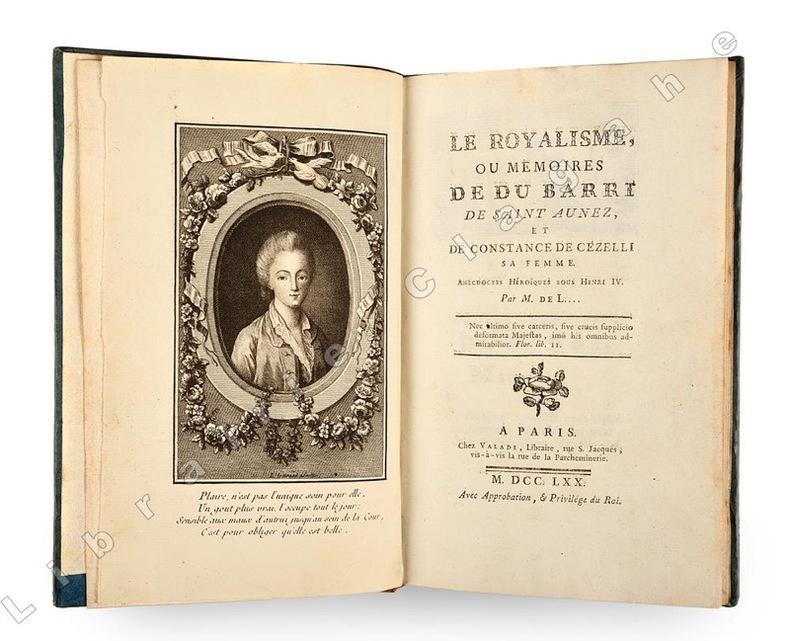
1770rif. 21433Paris, Valade, 1770 ; in-8 (200 mm), demi-veau fauve, pièces de titre et de date, en queue, grenat (reliure de l’époque) ; VIII, 155 pp., [1]p. Fautes à corriger ; portrait en frontispice, bandeau armorié et cul-de-lampe au chiffre, gravés en taille douce par L. Le Grand.
rif. 012-Wo.J. Feder in Grau, grau laviert, mit Deckweiß gehöht, mit Bleistiftlinie umrandet, auf bräunlichem Velin, rechts unten datiert ?10. März 37.? Ca. 17:12,6 cm. Auf Untersatz montiert, dort von alter Hand bezeichnet. In den Rändern ungleich beschnitten, etwas fleckig.