1 788 résultats
1957réf. 50909Lancaster American Physical Society 1957. Lex8vo. In the original printed orange wrappers. In "Reviews of Modern Physics" Volume 29 April No. 2 1957. Entire issue offered. Lacking backtrip and stamp to front wrapper Langley Aeronautical Laboratory. Otherwise a fine a copy. Feynman Pp. 205-212. Entire issue: Pp. 159-254. First printing of the Reviews of Modern Physics issue entirely dedicated to the International Congress on Theoretical Physics held in Seattle Washington 1957. The congress turned out to be exceptionally important in the field of superconductivity and Feynman here presented his only paper on the subject even though he spend most of the 1950ies on precisely this. Feynman's work on the subject led directly to Bardeen's focus on the subject which eventually resulted on Bardenn Leon Cooper and John Robert Schrieffer published their famous BCS-theory paper in 1957:"John Bardeen already well-known for his work leading to the discovery of the transistor turned his full attention to superconductivity in 1951 having realized that the isotope effect identified the interaction between electrons that must be responsible for the phenomenon. The basic idea would be a Fermi-degenerate gas of nearly free electrons with a weakly attractive interaction by way of the lattice phonons. Solving that problem - for example finding the ground state of such a system - proved to be a difficult task. There was also the threat of powerful competition. Richard Feynman one of the masters of quantum electrodynamics could not help but notice the similarity between that problem and this one. By 1955 by then at the University of Illinois at Urbana Bardeen decided that reinforcements were needed. He called up C. N. Yang at the Institute for Advanced Study at Princeton to ask for a postdoc versed in the kind of field theory one uses in quantum electrodynamics. Yang recommended Leon Cooper. At about the same time one of Bardeen's graduate students J. Robert Schrieffer decided to work on superconductivity. The team was assembled. In the cramped quarters of the University of Illinois physics department Bardeen and Cooper had to share an office a hardship that did not prove to be an obstacle to progress. The team worked furiously in early 1957 driven in part by the feeling that Feynman was hot on the trail using powerful new techniques they knew little about. However it was not Feynman but Bardeen Cooper and Schrieffer who produced the microscopic theory" Goodstein Richard Feynman and the History of Superconductivity. unknown
1947réf. 026818Los Angeles: University of California 1947. First Edition Second Printing . Blue Wrappers. Very Good . Diagrams. 25 Pp. Simple Folding Schematic Tipped On To Rear Inside Cover. Stated Second Printing Of This Early Work On Scientific Computing; The Machine Was Notably Used In Atomic Energy And Other Calculations. Small Ownership Signature "Diercks" At Top Of Front Cover. Pencil Note Pencil Note On Foreword Page Indicates "Prof. Hurter In Charge Now Granite 30971 Ext. 751 Anal. Used Only For Instruction Purposes." Scarce Only Five Copies Shown In Worldwide Institutional Holdings Indexed In Worldcat. University of California unknown
réf. PH-311New York: Technology Press & M.I.T. 1956. Classic comprehensive text presents a collection of formulas giving the important mathematical properties of these functions and a set of tables from which values of the solutions can be obtained for the more interesting ranges of the variables. The tables contain the series coefficients together with some of the separation constants and allied coefficients and cover the most difficult part of the whole procedure of obtaining numerical solutions. Includes coverage of general spheroidal functions; prolate and oblate spheroidal functions; Mathieu functions; Gegenbauer functions; scalar and vector wave equations. 613 pgs. Prior owner's nameplate pastedown on front endpaper; clean pocket remnant on rear endpaper; small numerals stenciled to lower spine. Minimal shelfwear. Scarce. First Edition. Hard Cover. Very Good. 4to - over 9¾" - 12" tall. Ex-Professional Library. Technology Press & M.I.T. hardcover
1947réf. 010237No Place: Michigan State College 1947. Book. Near Fine. Two Ring Binder. First Thus. 4to - over 9¾ - 12" tall. Quarto viii 133 leaves : with illustrations.Uniform Title: Seltenen Erden vom Standpunkte des Atombaues English: The Structure of Matter in Single Presentations edited by M. Born and J. Franck Berlin Julius Springer Publisher 1927. Bound in stiff cardboard binder Near Fine pages printed rectos only with manuscript edits and additions in ink on almost every page made by someone with knowledge of both the science and the references. George Charles de Hevesy was a Hungarian radiochemist winner of the Nobel Prize in Chemistry and the Copley Medal recognized in 1943 for his key role in the development of radioactive tracers to study chemical processes such as in the metabolism of animals. He also co-discovered the element hafnium.Wikipedia RARE OCLC locates only a single copy at the Univ. of Cincinnati. OCLC: 863634712 . Michigan State College Hardcover
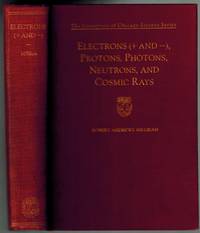
1935réf. 010247Chicago: University of Chicago Press 1935. Book. Very Good. Cloth. 1st Edition. 12mo - over 6¾ - 7¾" tall. First Edition x 492 pages original red cloth with gilt lettering. Very Good no jacket spine a hint faded hinge starting at half title page interior clean and unmarked the ownership signature of William B. Jensen Emeritus Professor of Chemistry and curator of the Oesper Collection on the History of Chemistry at the University of Cincinnati at front paste down. SCARCE in the First Edition. Millikan won the Nobel Prize for Physics in 1923 "for the measurement of the elementary electric charge and for his work on the photoelectric effect". University of Chicago Press Hardcover
1994réf. 16655Singapore: World Scientific Publishing Co. Pte. Ltd. 1994. First Edition. Hardcover. Very Good/No Dust Jacket. 8.75 x 6.30 x 1.00 inches. 12th Symposium on Theoretical Physics: 14th International Workshop on Weak Interactions and Neutrinos Seoul Korea 19-24 July 1993 edited by Jihn E. Kim and S. K. Kim. This hardcover edition is in Very Good condition without a dust jacket. The covers are in great shape with only a hint of shelf wear. The binding is square and tight. Abrasion to the front flyleaf. The interior pages are clean and unmarked.This volume focuses on key areas of research in particle physics including electroweak interactions CP violation and neutrino physics. It covers the latest theoretical advancements and experimental findings with discussions on topics like LEP physics radiative corrections lepton number nonconservation and astroparticle physics. The book provides valuable insights into both the theoretical and experimental progress in these areas.The book will be carefully packaged for shipment for protection from the elements. USPS electronic tracking number issued free of charge. Feel free to contact us for more information or pictures regarding the book. Kim S. K. World Scientific Publishing Co. Pte. Ltd. hardcover
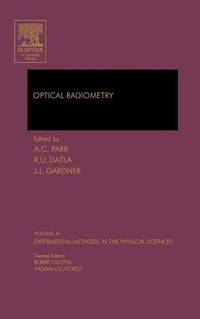
2005réf. DADAX0124759882Academic Press 2005-10-26. 1. hardcover. New. 6.44x1.17x9.30. Buy with confidence. Excellent Customer Service & Return policy. Academic Press hardcover
1922réf. 034956Leiden: Eduard Ijdo 1922. 1st Edition 1st Printing. Soft cover. Very Good. Iv 22 I 1070-1107 Plate At Rear. Grey-Green Wrappers Printed In Black Purple Stamp Of The Leeskamer Bosscha In Leiiden With Partly Illegible Signature Underneath Pencil Note To Left Sall Losses At Top And Bottom Of Spine Without Loss Of Text Some Fading To Covers. Coster's Thesis In Dutch Supervised By Ehrenfest Here Issued And Bound With A Complete Reprint Of His Article On The Spectra Of X-Rays And The Theory Of Atomic Structure In English From The Philosophical Magazine June 1922 With A Note Explaining That It Had Been Furnished By Ernest Rutherford For Publication. The Stellingen Text References Work By C. D. Ellis Lise Meitner Twice Separately Millikan Twice Separately Rutherford And Andrade Van Overn Ms. Davies Kohnstamm C. Benedicks Arnold. At The End Of His English Journal Article He Thanks Siegbahn And Niels Bohr"For The Great Interest They Have Shown In My Work" And "My Friend Mr. H. A. Kramers For His Help In Reading The Manuscript". Per Wikipedia Dirk Coster October 5 1889 - February 12 1950 Was A Dutch Physicist. In Leiden He Was Influenced By The Inspiring Lectures Of Paul Ehrenfest And In 1916 He Obtained His M.Sc. Degree. From 1916 To 1920 Coster Was Assistant Of Lodewijk Siertsema And Wander De Haas At The Delft University Of Technology Where In 1919 He Obtained An Engineer's Degree In Electrical Engineering. In 1920 And 1921 He Did Research At Lund University Under Manne Siegbahn On X-Ray Spectroscopy Of Different Elements. Coster's Thesis Was On This Subject And He Obtained His Ph.D. Degree In 1922. Coster Is Known As The Co-Discoverer Of Hafnium Hf Element 72 In 1923 Along With George De Hevesy By Means Of X-Ray Spectroscopic Analysis Of Zirconium Ore. The Discovery Took Place In Copenhagen. From August 1922 Until The Summer Of 1923 Coster Worked In Niels Bohr's Institute In Copenhagen. Within A Few Months He Co-Authored A Landmark Publication With Bohr On X-Ray Spectroscopy And The Periodic System Of The Elements. In Addition He Worked With Chemist George De Hevesy On The Identification Of Element No. 72. Element 72 Had Been Known To Be A Gap In The Sequence Of Elements Since 1914 When Henry Moseley Created An Experimental Technique For Placing The Elements In A Definite Sequence. Radiochemist Fritz Paneth Suggested That Element 72 Might Be Found In Ores Of Zirconium. Some Histories Incorrectly Attribute This Suggestion To Physicist Niels Bohr. Bohr Published A Prediction Of The Electronic Configuration Of Element 72 In 1923. Von Hevesy Had Been Working With Bohr At The Time.After Coster Returned From Copenhagen He Became Hendrik Lorentz' Assistant At The Teylers Museum In Haarlem Where He Developed An X-Ray Spectrometer. In 1924 He Was Appointed At The University Of Groningen Where He Was The Successor Of Wander De Haas. At Groningen He Started An Active Research Program In X-Ray Spectroscopy.In 1938 He Traveled To Berlin To Convince Lise Meitner That She Had To Leave Germany To Escape The Persecution Of The Jews. Together They Went By Train To Groningen; At The Dutch Border Coster Persuaded German Immigration Officers That She Had Permission To Travel To The Netherlands. She Stayed With Him For Several Weeks. From There She Went On To Sweden By Way Of Copenhagen.During The German Occupation Of Holland Coster Also Helped Jews Hide From The Nazis. From Wikipedia. Ahh We Lesser Mortals. Eduard Ijdo paperback
1950réf. 001757Chicago: Wilcox & Follett Co. 1950. First Edition . Blue Cloth. Very Good/Very Good DJ. Photographs. First Edition First Printing Blue Cloth. Personally Inscribed " To ---------- Fine Son Of A Gifted Father Whose Brilliant Work On One Of My Problems Promises An Early Solution. With All Best Wishes For A Successful Life. Sincerely / Lee De Forest / First Edition". A Very Bright Attractive Example Dj With No Rubbing To Front Panel Slight Rubbing Along Edges And Slight Dampstaning Along Lower Two Inches Of Spine. Wilcox & Follett Co. hardcover
1953réf. 030055Pasadena: California Institute Of Technology 1953 1954 1953. 1st Edition Thus . No Binding. Very Good. 433 Pp Appendices And Errata Sheet. Three Volumes In . Mimeo Class Text With Class Notes And Tests By A Student Who Later Became A Prominent Jpl Astronomer. Handwritten Comments And Grades By Leighton. Robert Benjamin Leighton September 10 1919 - March 9 1997 Was A Prominent American Experimental Physicist Who Spent His Professional Career At The California Institute Of Technology Caltech. His Work Over 58 Years Spanned Solid State Physics Cosmic Ray Physics The Beginnings Of Modern Particle Physics Solar Physics The Planets Infrared Astronomy And Millimeter- And Submillimeter-Wave Astronomy. In The Latter Four Fields His Pioneering Work Opened Up Entirely New Areas Of Research That Subsequently Developed Into Vigorous Scientific Communities. His Bachelor's Master's And Ph.D. Degrees Were All From Caltech; He Joined The Faculty In 1949 And Later Served As Division Chair Of Physics Mathematics And Astronomy From 1970 To 1975. Leighton Was A Renowned Teacher At Caltech. His Principles Of Modern Physics Published In 1959 Was A Standard And Influential Textbook. After Richard Feynman's Lectures In Physics Course In The Early 1960S Leighton Spent Over Two Years Reworking The Tape-Recorded Text Into Publishable Form: The Feynman Lectures On Physics Which Were Published In 1964 And 1966 And Which Have Enjoyed Perennial Success Ever Since. In Addition He Co-Authored With Robbie Vogt A Set Of Problems To Accompany The Feynman Lectures. In The Early 1960S Leighton Developed And Fabricated A Novel Inexpensive Infrared Telescope Which Included A Simple Array Of Eight Lead-Sulfide Photocells. These Cells Were Surplus From The Defense Industry; They Had Been Developed For The Sidewinder Missile'S Heat-Seeking Guidance System. Starting In 1965 He And Gerry Neugebauer Used The New Telescope To Sweep The Roughly 70 Percent Of The Sky Visible From Mt. Wilson Observatory Collecting The Data As Squiggles On A Strip-Chart Recorder. This Began A New Area Of Infrared Astronomy. The Resulting Two-Micron Sky Survey Published In 1969 Contained 5612 Infrared Sources The Vast Majority Of Which Had Been Previously Uncataloged. Some Of These Have Been Found To Be New Stars Still Surrounded By Their Dusty Pre-Stellar Shells While Others Are Supergiant Stars In The Last Stages Of Their Evolution Embedded In Expanding Dusty Shells Of Matter Ejected By The Stars Themselves. Leighton's Development Of Photographic Equipment During The Mid-1950S Had Allowed Him To Obtain The Best Pictures Of The Planets Ever Attained Anywhere To That Time From The 60 And 100-Inch Telescopes And Led To His Work As Team Leader At The Jet Propulsion Laboratory Jpl For The Imaging Science Investigations On The Mariner 4 6 And 7 Missions To Mars During The Middle 1960S. As Team Leader And An Experienced Experimental Physicist Leighton Played A Key Role In Forming And Guiding The Development Of Jpl's First Digital Television System For Use In Deep Space. He Also Contributed To The First Efforts At Image Processing And Enhancement Techniques Made Possible By The Digital Form Of The Imaging Data. He Received The Space Science Award From The American Institute Of Aeronautics And Astronautics For The Mariner Television Experiments In 1967 And The Nasa Exceptional Scientific Achievement Medal In 1971. In The 1970S Leighton's Interest Shifted To The Development Of Large Inexpensive Dish Antenna Which Could Be Used To Pursue Millimeter-Wave Interferometry And Submillimeter-Wave Astronomy. Leighton Shared The Rumsford Prize In 1986 For Advancements In Infrared Astronomy And Won The James Craig Watson Medal In 1988 For His Work As Creator And Exploiter Of New Instruments And Techniques That Opened Whole New Areas Of Astronomy - Solar Oscillations Infrared Surveys Spun Telescopes And Large Millimeter-Wave Reflectors.Leighton And Feynman Were Close Personal Friends. One Of Leighton's Sons Ralph Also Collaborated With Feynman On Several Books. California Institute Of Technology 1953 1954 unknown
1931réf. 059785New York: W W Norton 1931. First American Edition 1st Printing. Hardcover. Fine/Very Good. 114 Pp. 2 Pp Index At Rear. Brown Rough Cloth With Yellow Paper Labels On Spine And Front Cover Printed In Green And Black. Fine No Rubbing To Labels. Dust Jacket Priced $2.00 Wear Browning Small Losses At Corners. W W Norton hardcover
1872réf. 035726London: Macmillan & Co 1872. 1st Edition 1st Printing. Hardcover. Good. Xv 592 Errata At Bottom Of P. 592 52 Pp Publisher's Catalog Dated April 1872. First Printing; About A Quarter Of The Book Contains Papers Published Here For The First Time. Green Cloth Gilt Brown Endpapers. Gilt Complete And Bright Cloth Worn With Fraying At Corners And At Ends Of Spine And In Three One Inch Long Thin Lines On Rear Spine Edge And Joint Cracked Through At Top 1" Of Front Spine Edge Hinges Cracked At Endpapers And Before Title Page But Binding Solid. No Names Or Marks. Macmillan & Co hardcover
1963réf. 032953New York: Interscience Publishers ' John Wiley & Sons 1963. 1st Edition 1st Printing. Hardcover. Very Good /No Jacket. Ix 249 Pp. Beige Boards Printed In Blue. Light Wear At Corners And Part Of Front Spine Edge Bumping To Bottom Of Spine. Inscribed By The Author "To One Of My Few Collaborators Who Worked On Something Different. Richard Wilson." Richard Wilson Born 29 April 1926 Is A British Born American Physicist. His Original Fields Were Nuclear And Elementary Particle Physics But Branched Out Into Applications Of Physics In Other Disciplines. He Is Now Mallinckrodt Professor Of Physics Emeritus. At Harvard University.He Has Lectured In 44 Different Countries. In 1988 He Became A Member Of The Science Advisory Board Of The Atlantic Legal Foundation A Public Interest Law Foundation. Wilson's First Research Was On The Properties Of The Nucleon. He Started By Using Radioactive Sources And Then Using First The Cyclotron At Aere Harwell Uk Then The Cyclotron At Harvard University Usa. This Work Is Described In Many Papers And In This Book. At Harvard He Became An Enthusiastic Supporter Of The Cambridge Electron Accelerator And Was Chairman Of The Management Committee From 1961 To 1968. He Became Known For His Work On Nucleon Form Factors An Interest Which Continues. He Was A Trustee Of The Universities Research Association From 1987 To 1993 And Studied The Inelastic Form Factors. Wilson Was An Early Proponent Of Electron-Positron Colliding Beams. And Worked Thereon In Frascati Cea And Cornell University. In 1991 He Realized That The General Public Was No Longer Automatically Supporting Physicists And Began A Career Explaining The Positive Aspects Of Radiation Use As Well As Its Risks And Dangers. In This He Used The "Hands On" Style Of An Experimental Physicist And Soon Became An Expert On Nuclear Accidents: Three Mile Island Chernobyl & Fukushima. He Is Particularly Known For His Visits To Chernobyl Being The First American Scientist To Go To The Plant And Measure Radioactivity Levels Thereby Exposing Himself To The Dangers. He Expanded His Interests To Other Hazards And Thereby Helped To Found The Field Of Risk Analysis. In This Work He Realized That While It Is Interesting What Scientists Say In Their Conferences; The Us Public Is More Concerned About Of What Congress Enacts In Response But Most Importantly What The Courts Said Last Week. This Realization Has Led To An Activity On Emphasizing To The Courts The Fundamental Thinking Of A Physicist. This Includes The Role Of Expert Witnesses In Court Cases. Interscience Publishers ' John Wiley & Sons hardcover
1980réf. PH-332Southampton England: Sabberton Publications 1980. Classic thesis presents a comprehensive unification theory based upon the law of electrodynamics which accounts for anomalies in the electron-ion energy transfer process observed in experiments relating to fusion power and its connection between the properties of elementary particles and the structured character of the vacuum medium which allows for exact theoretical evaluation of several fundamental physical constants. 206 pgs. Illustrated. Dustjacket in mylar. . First Edition. Hard Cover. Fine/Fine. 8vo - over 7¾" - 9¾" tall. Sabberton Publications Hardcover
1981réf. PH-198New York: Academic Press 1981. Comprehensive text presents a qualitative and quantitative treatment of the physical principles and operating characteristics of solar cell devices. Topics covered include physics and materials properties basic to photovoltaic energy conversion; solar cell materials and structures; homojunction solar cells; semiconductor-semiconductor heterojunction cells; surface-barrier solar cells; etc. 332 pgs. Illustrated. Prior owner's name on front endpapers. Minimal shelfwear. First Edition. Hard Cover. Fine. 8vo - over 7¾" - 9¾" tall. Academic Press Hardcover
1992réf. PH-274Wilmington California: Kneat Kompany 1992. Classic scholarly text presents a comprehensive alternative to Einstein's questionable special theory- an ether gauge theory which offers an unparalled common-sense explanation of the experimental data. The new theory is distinguished by a return to time simultaneously even though clocks can run at different rates; the replacement of the Lorentz transformations with gauge transformations; a unification of the electromagnetic and gravitational forces; a clear explanation of the source of inertia; a consistent explanation of the physics underlying the equivalence principle. 232 pgs. Signed and inscribed by the author on the title page. Dustjacket in mylar. Minimal shelfwear. Scarce. Signed by Author. First Edition. Hard Cover. Fine/Fine. 8vo - over 7¾" - 9¾" tall. Kneat Kompany Hardcover
1897réf. 43860Leipzig Johann Ambrosius Barth 1897. No wrappers. In: "Annalen der Physik und Chemie Neue Folge" Bd. 61 No 7. Titlepager to vol. 61. Pp. 417-640 a. 1 folded plate. Entire issue offered. Kaufmann's paper: pp. 544-552 textillustrations. A stamp to upper corner of titlepage. Clean and fine. First printing of this landmark paper in particle physics in which Kaufmann found that the cathode are negatively charged particles that certain properties of the cathode rays are independent of the nature of the gas that they traverse and determining the ratio e/m. charge/mass"To define the 'birth of an era' is perhaps best left for parlor games. Let me write of the BIRTH OF PARTICLE PHYSICS nevertheless define it to take place in April 1897 and appoint Kaufmann and Thomson as keepers of the gate. Their respective experimental arrangements.are of comparable quality their experimental results equally good."Pais "Inward Bound" p. 84."In 1897 three physicists Weichert Kaufmann and Thomson in independent experiments found that cathode rays are indeed negatively charged particles having the peculiar property that the ratio of the mass and the charge of these particles is in the order of 1000 times smaller than for the lightest ion the ion of the hydrogen. The term 'electron' which had previously been used to denote the 'elementary charge' was soon adopted as the name of the new particle. The electron was the first of the later so-called 'elementary particles' to be discovered." Siegmund Brandt "The Harvest of a Century" No. 4 p.16 ff. unknown
1820réf. 46032Paris Crochard 1820. Uncut with orig. printed wrappers Juin-issue. In "Annales de Chimie et de Physique Par MM. Gay-Lussac et Arago" Tome XIV Juin issue pp. 113-222. Entire issue in orig. wrappers. Savart's paper: pp. 113-172 and 3 folded engraved plates. First printing of a pioneer paper on the acoustics of the violin and on the construction of the Trapezoidal Fiddle."In his earliest work Savart gave the first explanation of the function of certain parts of the violin. To learn how vibrations are transmitted from the strings to the rest of the instrument he induced vibrations in a free wood plate by passing a vibrating string over a bridge at its center; he also used Chladni’s sand-pattern technique to observe the resulting nodal lines. Savart showed that the bridge transmits the string’s vibrations; that the plate can be made to vibrate at any frequency; and that the corresponding mode is a modification of an unforced mode. He demonstrated that the sound post also serves to transmit vibrations and he explained that it therefore should not be placed under a nodal line. Thinking that symmetry and regularity would produce the best tone Savart built a trapezoidal violin with rectangular sound holes. When the instrument was played before a committee that included Biot the Composer Cherubini and other members of the Academy of Sciences and the Académie des Beaux-Arts its tone was judged as extremely clear and even but somewhat subdued."DSB.The issue also contains Eilhard Mitscherlich' famous paper in the first French version "Sur la Relation qui existe entre la forme cristalline et les proportions chimiques" pp. 172-190. unknown
1952réf. 49100Edinburgh Nelson and Sons 1952-53. 8vo. Contemp. hcloth. Tome-and titlelabels with gilt lettering. In: "The British Journal for the Philosophy of Science" Vol. III May 1952 to February 1953. XIV394 pp. Entire volume offered. Stamps to foot of titlepage and a few other pages. Schrödinger's papers: pp. 109-123 a. 233-242. Clean and fine. First printing of these importent papers on the philosophy of Quantum physics. "If we have to go on with these damned quantum jumps then I'm sorry that I ever got involved." E.Schrodinger."In it he contrasts the smooth evolution of the Schrodinger wavefunction with the erratic behaviour of the picture by which the wavefunction is usually supplemented or 'interpreted' in the minds of most physicists. He objects in particular to the notion of 'stationary states' and above all to 'quantum jumping' between those states. He regards these concepts as hangovers from the old Bohr quantum theory of 1913 and entirely unmotivated by anything in the mathematics of the new theory of 1926. J.S. Bell. hardcover
1984réf. PH-149Oxford UK: Pergamon Press 1984. Comprehensive text contains detailed technical papers presented by leading international scientists and field experts dealing with the technology and techniques of solid state nuclear track detectors. Topics covered include: fundamental mechanisms; electrochemical etching; emulsion technique; track profile technique; analysis of CR-39; automation systems; neutron dosimetry; fission tracks and radon measurements; nuclear and cosmic ray physics; charged particle tracks in plastics; etc. 651 pgs. Illustrated. Prior ownership stamps on title page & endpapers; pocket remnant on front endpaper. Minimal shelfwear. First Edition. Hard Cover. Very Good. 4to - over 9¾" - 12" tall. Ex-Professional Library. Pergamon Press hardcover
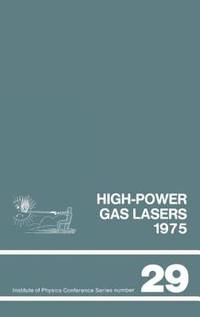
1975réf. x-0854981195Taylor & Francis 1975. Hardcover. New. 1st edition. 333 pages. 9.20x6.30x1.10 inches. Taylor & Francis hardcover
1932réf. 031839New York: Mcgraw-Hill Book Co 1932. 1st Edition 1st Printing. Hardcover. Near Fine/Fair. Tables. Xi 562. Cloth Gilt. First Edition Stated On Title Page. Near Fine Slight Rubbing At Corners Gilt Brilliant. No Marks. Scarce. The Rare But Only Fair Condition Dust Jacket Is Priced $6.00 On The Front Cover Worn Small Chips At Edges With 2" Square Chip At Lower Left Corner Of Rear Panel Removing A Few Words In The Publisher's Catalog Of Books; Dj Split Entirely Along Front Spine Edge Without Loss Of Lettering. Bacher's Copy- From His Library But Not Marked As Such. Per Wikipedia Robert Fox Bacher 1905 - 2004 Was An American Nuclear Physicist And One Of The Leaders Of The Manhattan Project. Bacher Obtained His Undergraduate Degree And Doctorate From The University Of Michigan Writing His 1930 Doctoral Thesis Under The Supervision Of Samuel Goudsmit On The Zeeman Effect Of The Hyperfine Structure Of Atomic Levels. After Graduate Work At The California Institute Of Technology Caltech And The Massachusetts Institute Of Technology Mit He Accepted A Job At Columbia University. In 1935 He Accepted An Offer From Hans Bethe To Work With Him At Cornell University In Ithaca New York. It Was There That Bacher Collaborated With Bethe On His Book Nuclear Physics. A: Stationary States Of Nuclei 1936 The First Of Three Books That Would Become Known As The "Bethe Bible". In December 1940 Bacher Joined The Radiation Laboratory At Mit Although He Did Not Immediately Cease His Research At Cornell Into The Neutron Cross Section Of Cadmium. The Radiation Laboratory Was Organized Into Two Sections One For Incoming Radar Signals And One For Outgoing Radar Signals. Bacher Was Appointed To Handle The Incoming Signals Section. Here He Gained Valuable Experience In Administration Coordinating Not Just The Efforts Of His Scientists But Also Those Of General Electric And Rca. In 1942 Bacher Was Approached By Robert Oppenheimer To Join The Manhattan Project At Its New Laboratory In Los Alamos New Mexico. It Was At Bacher's Insistence That Los Alamos Became A Civilian Rather Than A Military Laboratory. At Los Alamos Bacher Headed The Project's P Physics Division And Later Its G Gadget Division. Bacher Worked Closely With Oppenheimer And The Two Men Discussed The Project's Progress On A Daily Basis. After The War Bacher Became Director Of The Laboratory Of Nuclear Studies At Cornell. He Also Served On The U.S. Atomic Energy Commission The Civilian Agency That Replaced The Wartime Manhattan Project And In 1947 He Became One Of Its Inaugural Commissioners. He Left In 1949 To Become Head Division Of Physics Mathematics And Astronomy At Caltech. He Brought Richard Feynman From Cornell To Caltech But Was Unable To Convince Feynman To Work For The Government Also. He Was Appointed A Member Of The President's Science Advisory Committee Psac In 1958. In 1962 He Became Caltech's Vice President And Provost. He Stepped Down From The Post Of Provost In 1970 And Became A Professor Emeritus In 1976. Mcgraw-Hill Book Co hardcover
1981réf. 032759Cambridge: The MIT Press 1981. 1st Edition 1st Printing. Hardcover. Near Fine/Very Good Minus DJ. Xiii 753 Pp. Blue Cloth. First Printing Volume Iii Only. Very Near Fine Book Touch Of Wear In Worn Dj With Small Losses At Corners Largest Being A 1/4" Square Chip At Top Of Front Spine Edge. No Names Or Marks. The MIT Press hardcover
réf. PH-89London England: Cambridge University Press 1963. Classic comprehensive standard text contains a detailed outline of the theoretical aspects of the spectra of atoms from quantum mechanical principles. Topics covered include: quantum mechanical method; angular momentum; theory of radiation; one-electron spectra; central field approximation; the Russell-Saunders case; jj coupling; intermediate coupling; central fields; transformations in the theory of complex spectra; configuration interaction; Zeeman effect; Stark effect; the nucleaus in atomic spectra; etc. Signed and inscribed by Condon on lower half-title pg. 441 pgs. Minor slight horizontal crease on the first few text pages. Tiny scuff on outer edge; minimal rubbing to edges. Signed by Author. Corrected Reprint. Original Wraps. Very Good. 8vo - over 7¾" - 9¾" tall. Cambridge University Press Paperback
1943réf. PH-47New York: Mary S. Rosenberg 1943. Classic comprehensive two-volume rare text written in German by two of the most reknown physicists and mathematicians of the early twentieth century. Volume I- Mathematischer Teil by Dr.R.von Mises contains detailed sections on real functions complex variables boundary value problems integral calculus partial differential equations potential theory etc. 916 pp. Vol.II- Physikalischer Teil by Philipp Frank contains sections on classical mechanics and optical radiation; stability and vibrations; mechanics of the continua; dynamical problems of elasticity; foundations of hydromechanics; electromagnetic waves; electromagnetic fields; heat conduction and diffusion; wave mechanics; etc. 1106 pp. Illustrated. Gilt spines. Minor rubbing to corners and spine edges. Prior owner's name on inside front boards. Very light foxing on edges. Overall in excellent condition for its age. Second Edition. Original Cloth. Very Good. 8vo - over 7¾" - 9¾" tall. Mary S. Rosenberg Hardcover