18 029 résultats
1820réf. 61598Kiøbenhavn, Andreas Seidelin, 1820. 8vo. In contemporary brown half calf with lighter brown leather title-label with gilt lettering. All edges coloured in blue. In: ""Dansk Litteratur = Tidende for Aaret 1820"". (The entire volume 1820 present, comprising all 52 issues, numbered 1-52). Light wear to extremities, spine with a few scratches. With occassional brownspotting, primarily affecting first and last leaves, but generally nice and clean. (Entire volume:) X, 822 pp. (Oersteds paper's in issue no. 28:) pp. 447-448.
1746Königsberg, Martin Eberhard Dorn, 1746. 8vo. Nice newer full vellum with gilt spine. Title-page a bit soiled and with neat reapair to blank margins, far from affecting text. A bit of occasional browning and soiling. one plate repared from verso, no loss. Title-page + 16 pp. + pp. (3) - 240 + 2 folded engraved plates. Fully complete.
1746réf. 46723Königsberg, Martin Eberhard Dorn, 1746. 8vo. Nice newer full vellum with gilt spine. Title-page a bit soiled and with neat reapair to blank margins, far from affecting text. A bit of occasional browning and soiling. one plate repared from verso, no loss. Title-page + 16 pp. + pp. (3) - 240 + 2 folded engraved plates. Fully complete.
1822Paris, Firmin-Didot, 1822. 4to. Contemporary half calf with gilt spine. Old paper label to top of spine. Two old stamps to foot of title-page and old inscription to top of title-page. Half-title browned, otherwise just a bit of mild scattered brownspotting. A mild damp stain to lower blank margin of ab. 20 leaves, far from affecting text. A nice copy. Plates with light brownspotting. (4), XII, 639 pp. + 2 plates.
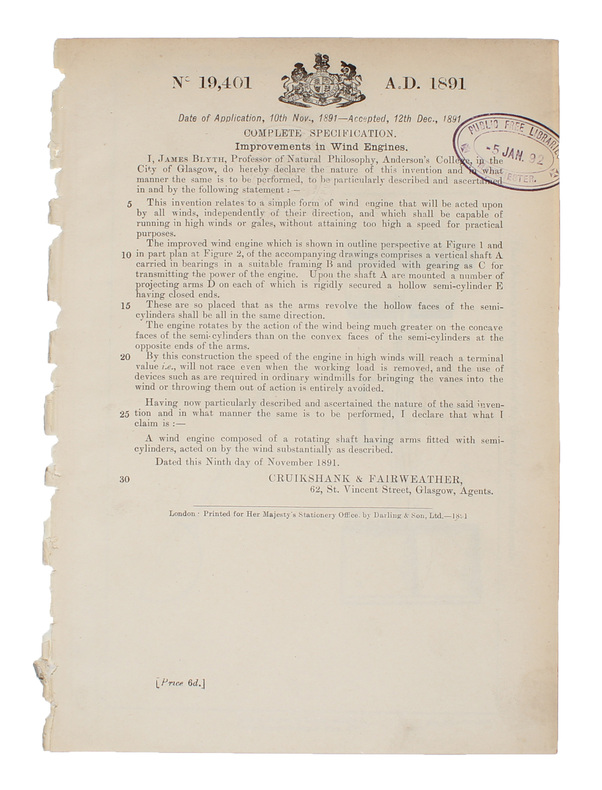
1891London, Darling & Son, 1891. 8vo. Disbound. Stamp to p. 1. 1 .p + 1 plate.
1905Leipzig, Johann Ambrosius Barth, 1905. 8vo. All three papers extracted and with marbled paper strip. In ""Annalen der Physik, Vierte Folge, Band 17"". Housed in a beautiful half calf box with blue goat skin to spine and walnut wood veneer to boards. A fine and clean set. [Zur Elektrodynamik bewegter Körper:] Pp. 891-921" [Über einem die Erzeugung... :] Pp. 132-148 " [Über die von der molekularkinetischen Theorie... :] Pp. 549-571.
1891réf. 48964London, Darling & Son, 1891. 8vo. Disbound. Stamp to p. 1. 1 .p + 1 plate.
1665réf. 170071Bologna, Benati, 1665. 4°. M. Holzschn.-Titel u. zahlr. Textholzschn. 11 Bl., 535 S., 8 Bl. Prgtbd. d. Zt. m. verbl. Rtit. u. Rsign. Einbd. bestoßen u. stärker fleckig (Nässespur). Rücken m. mehr. Fehlst. im Bezug. Vorsätze, Holzschn.-Titel sowie letzte Texts. m. Ausrissen. Zweites Titelbl. m. mehr. Notizen v. alter Hd. Beide Titel in Rot u. Schwarz. St. a. erstem Textbl. Durchg. mit (teils auch stärkerer) Nässespur u. Bräunung. Gegen Ende (inkl. Vorsatz u. hint. Innendeckel) auch spakig. Papier teils etwas wellig. Feuchtigkeitsspuren auch am Schnitt sichtbar. Trotz der Nässeschäden u. in Anbetracht der Seltenheit doch noch sehr brauchbares Exemplar.
1673réf. 5022Kempten: Per Rudolphum Dreherr 1673. SOLE EDITION. Hardcover. Fine. Bound in contemporary stiff vellum small repairs to foot of the spine re-cased endpapers renewed. Internally this copy is in fine condition with only minor faults as follows: half-title soiled small wormholes in first four lvs. a peppering of small wormholes to final four index lvs. and final blank leaf. Marginal hole not affecting text to leaf B3 margins of portrait leaf foxed and with light stain at foot. The volume was re-cased probably to remove a second slim work judging by the size of the overlapping vellum fore-edges of the binding. Provenance: Engraved armorial bookplate of Augustin Erath 1648-1719 German Augustinian Canon theologian translator. The "Phonurgia" is illustrated with an added engraved allegorical title by Georg Andreas Wolfgang 1631-1716 after Felix Cheurier an engraved title vignette an engraved portrait of Emperor Leopold I by Wolfgang after Franz Herman two engraved plates seventeen engravings and numerous woodcut diagrams and illustrations in the text musical notation ornamental woodcut head- and tail-pieces and decorative initials. Among the illustrations are Michele Todini's "claviorganum" one of the most technologically advanced keyboards of Kircher's time Kircher's own musical invention the "Aeolian Harp" and the invention that inspired the book Kircher's "Speaking Trumpet" the megaphone shown at the shrine of St. Eustace in Monterella. Various chambers with peculiar acoustical properties are also depicted such as a Vitruvian amphitheater the courtyard at the Villa Simonetta in Milan and the "ears" of the Tyrant Dionysius of Syracuse. There is also a depiction of one of Kircher's "talking statues" his 17th century intercom. "The 'Phonurgia Nova' is in part Kircher's response to Sir Samuel Morland 1625-95 a fellow of the Royal Society of London who claimed.to have invented the megaphone. Numerous testimonies from Kircher's admirers such as James Alban Gibbs and Gaspar Schott are appended to the work defending Kircher's claim as the inventor of the tuba stentorophonica as Morland called it. Kircher had indeed written extensively on the device in his 'Musurgia' and had been using the 'speaking trumpet' for years at the shrine of Mentorella to call people to services. The 'Phonurgia' treats the science and applications of sound amplification and echoes. It was the first book published in Europe devoted entirely to acoustics." Merrill. "The importance that the Jesuits placed on sensory experience as part of worship had a significant impact on Kircher's treatment of music. Within the devotional framework music was valued precisely because of its capacity to move the passions to produce strong emotional effects that under properly controlled conditions were designed to ravish the soul and lead the faithful closer to the divine. Indeed Kircher declared that the goal of all music was to move the affections and this belief goes a long way toward explaining his interest in classifying all the various emotional or affective states that music can imitate. Kircher's was the first systematic account of the 'doctrine of affections' which underpinned early opera and oratorio and was one of the fundamental assumptions of later Baroque composers such as Bach and Handel."Penelope Gouk "Making Music Making Knowledge: The Harmonious Universe of Athanasius Kircher". Per Rudolphum Dreherr hardcover
1673réf. 5022Kempten: Per Rudolphum Dreherr 1673. SOLE EDITION. Hardcover. Fine. Bound in contemporary stiff vellum small repairs to foot of the spine re-cased endpapers renewed. Internally this copy is in fine condition with only minor faults as follows: half-title soiled small wormholes in first four lvs. a peppering of small wormholes to final four index lvs. and final blank leaf. Marginal hole not affecting text to leaf B3 margins of portrait leaf foxed and with light stain at foot. The volume was re-cased probably to remove a second slim work judging by the size of the overlapping vellum fore-edges of the binding. Provenance: Engraved armorial bookplate of Augustin Erath 1648-1719 German Augustinian Canon theologian translator. The "Phonurgia" is illustrated with an added engraved allegorical title by Georg Andreas Wolfgang 1631-1716 after Felix Cheurier an engraved title vignette an engraved portrait of Emperor Leopold I by Wolfgang after Franz Herman two engraved plates seventeen engravings and numerous woodcut diagrams and illustrations in the text musical notation ornamental woodcut head- and tail-pieces and decorative initials. Among the illustrations are Michele Todini's "claviorganum" one of the most technologically advanced keyboards of Kircher's time Kircher's own musical invention the "Aeolian Harp" and the invention that inspired the book Kircher's "Speaking Trumpet" the megaphone shown at the shrine of St. Eustace in Monterella. Various chambers with peculiar acoustical properties are also depicted such as a Vitruvian amphitheater the courtyard at the Villa Simonetta in Milan and the "ears" of the Tyrant Dionysius of Syracuse. There is also a depiction of one of Kircher's "talking statues" his 17th century intercom. "The 'Phonurgia Nova' is in part Kircher's response to Sir Samuel Morland 1625-95 a fellow of the Royal Society of London who claimed.to have invented the megaphone. Numerous testimonies from Kircher's admirers such as James Alban Gibbs and Gaspar Schott are appended to the work defending Kircher's claim as the inventor of the tuba stentorophonica as Morland called it. Kircher had indeed written extensively on the device in his 'Musurgia' and had been using the 'speaking trumpet' for years at the shrine of Mentorella to call people to services. The 'Phonurgia' treats the science and applications of sound amplification and echoes. It was the first book published in Europe devoted entirely to acoustics." Merrill. "The importance that the Jesuits placed on sensory experience as part of worship had a significant impact on Kircher's treatment of music. Within the devotional framework music was valued precisely because of its capacity to move the passions to produce strong emotional effects that under properly controlled conditions were designed to ravish the soul and lead the faithful closer to the divine. Indeed Kircher declared that the goal of all music was to move the affections and this belief goes a long way toward explaining his interest in classifying all the various emotional or affective states that music can imitate. Kircher's was the first systematic account of the 'doctrine of affections' which underpinned early opera and oratorio and was one of the fundamental assumptions of later Baroque composers such as Bach and Handel."Penelope Gouk "Making Music Making Knowledge: The Harmonious Universe of Athanasius Kircher". Per Rudolphum Dreherr hardcover books
1820(Paris, 1820). Small 8vo. Contemporary (original?) blank blue paper wrappers. Annulated stamp to title-page, otherwise a nice, clean, and fresh copy. 68 pp. + 5 engraved plates.
1820réf. 51054(Paris, 1820). Small 8vo. Contemporary (original?) blank blue paper wrappers. Annulated stamp to title-page, otherwise a nice, clean, and fresh copy. 68 pp. + 5 engraved plates.
1961réf. 211203Berlin, Akad.-Vlg. 1961-90. Fehlen: Ausg. A Bd. 4 Aut.-Ind.; 17 H.2; 39 H. 2; 97 Aut.-Ind.; Ausg.B. Bd. 58 H. 1; Aut.-Ind. zu Bd. 133 u. 138.
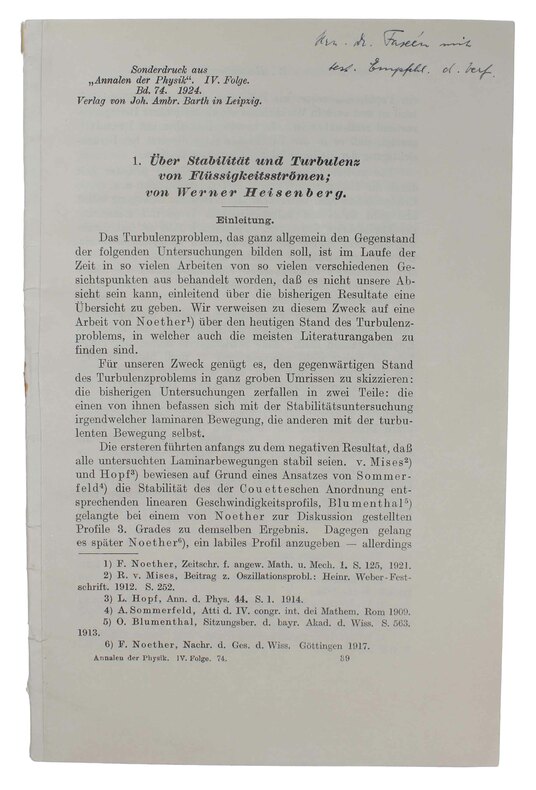
1924(Leipzig, Johann Ambrosius Barth), 1924. 8vo. Offprint from ""Annalen der Physik"" IV. Folge, Bd. 74, 1924. With the author's presentation inscription to upper right corner of first leaf: ""Hrn. Dr. Faxeén mit / best. Empfehl. d. verf."". Stapled spine with rust slightly affecting surrounding paper. A very fine and clean copy. Pp. (1), 578-627.
1924réf. 53190(Leipzig, Johann Ambrosius Barth), 1924. 8vo. Offprint from ""Annalen der Physik"" IV. Folge, Bd. 74, 1924. With the author's presentation inscription to upper right corner of first leaf: ""Hrn. Dr. Faxeén mit / best. Empfehl. d. verf."". Stapled spine with rust slightly affecting surrounding paper. A very fine and clean copy. Pp. (1), 578-627.
1787Leipzig, Weidmanns Erben und Reich, 1787. 4to. Uncut in the original interrim boards. Small exlibris-stamp (J. L. Prevost) to front free end-paper. Light brownspotting throughout. An excellent unsophisticated copy. (4), 77, (1) pp + 11 plates (by S. Capieux).
1787réf. 60253Leipzig, Weidmanns Erben und Reich, 1787. 4to. Uncut in the original interrim boards. Small exlibris-stamp (J. L. Prevost) to front free end-paper. Light brownspotting throughout. An excellent unsophisticated copy. (4), 77, (1) pp + 11 plates (by S. Capieux).
Amstaelodami, sumptibus Societatis, 1714, in-4, legatura settecentesca in piena pergamena (ma dorso rinforzato in pergamena moderna), tagli rossi, pp. [28], 484, [8]. Frontespizio in rosso e nero con marca calcografica della Compagnie des libraires di Amsterdam (due mani uscenti da nuvole strette davanti a fascio littorio che regge una bilancia. Ai lati due putti seduti su casse. In basso due cornucopie. In alto il motto in cartiglio: Vis unita major) e una tavola calcografica ripiegata f.t. raffigurante l'orbita di una cometa. Centinaia di diagrammi xilografici n.t. Dedica a Carlo II, segue un poemetto di E.D. Halley a Newton e due prefazioni di Newton, datate "Dabam Cantabrigiae e Collegio S. Trinitatis, Maii 8 1686" e "dabam Londini, Mar. 28 1713"; poi la prefazione editoriale curata da Roger Cotes professore di astronomia e filosofia sperimentale del Trinity College, datata "Cantabrigiae Maii 12. 1713" e infine lo "Index Capitum totius operis". Prima tiratura di Amsterdam (una seconda olandese fu pubblicata nel 1723), redatta sulla seconda edizione assoluta del 1713 (la prima a contenere lo "Scholium generale" scritto in risposta alle obiezioni di Berkeley e Leibniz), ma rivista e corretta interamente ad Amsterdam. Si tratta la prima edizione impressa al di fuori del Regno Unito d'una delle pietre miliari del pensiero umano. Esemplare proveniente dalla collezione del fisico John Gudbrand Tandberg (1896-1968), con la sua firma di possesso sulla controguardia anteriore: "J. Tandberg Lund 1920". Quarto, XVIIIth century full vellum binding (but the spine has been strengthened with modern vellum), red edges, pp. [28], 484, [8]. Red and black title-page with a copper engraved printer's device (the Amsterdam "Compagnie des Libraires") and a folded copper plate bearing the orbit of a comet. Hundreds of woodcut diagrams throughout the text. Dedication to Charles II, followed by a poem by E.D. Halley to Newton and two prefaces by Newton, dated "Dabam Cantabrigiae and Collegio S. Trinitatis, Maii 8 1686" and "dabam Londini, Mar. 28 1713"; then the preface edited by Roger Cotes, professor of astronomy and experimental philosophy at Trinity College, dated "Cantabrigiae Maii 12. 1713" and finally the "Index Capitum totius operis". First Amsterdam edition (a second Dutch edition was published in 1723), written on the second absolute edition of 1713 (the first to contain the "Scholium Generale" written in response to the objections of Berkeley and Leibniz), but revised and corrected entirely in Amsterdam. This is the first edition printed outside the United Kingdom of one of the milestones of human thought. This copy is from the collection of physicist John Gudbrand Tandberg (1896-1968), with his signature: "J. Tandberg Lund 1920".
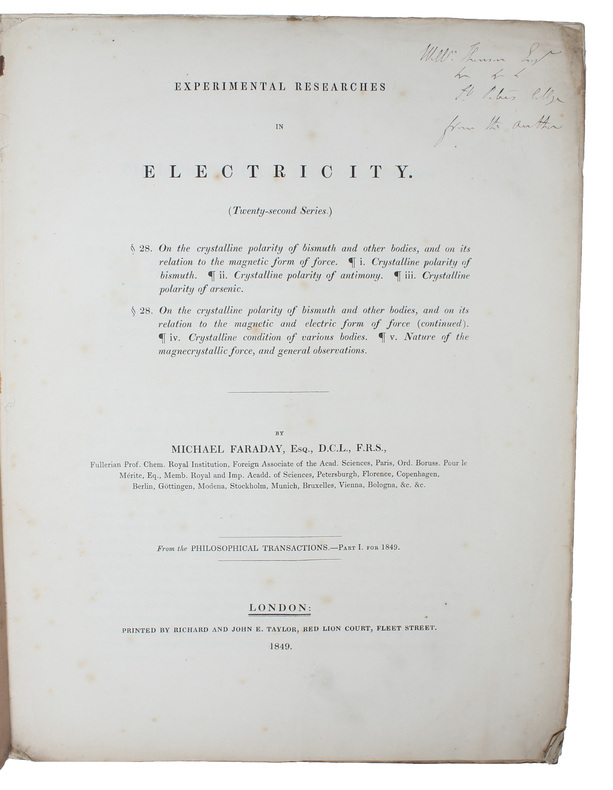
1849London: Richard and John E. Taylor, 1849. Large 4to. (300x231mm). Original blank wrappers. Some small tears. Back strip proffesionally repaired with Japanese paper. With presentation-inscription by Faraday in ink on title page: ""William Thomson Esq. | St. Peters College | from the Author."" (2),41,(1:blank) pp.
1849réf. 38043London: Richard and John E. Taylor, 1849. Large 4to. (300x231mm). Original blank wrappers. Some small tears. Back strip proffesionally repaired with Japanese paper. With presentation-inscription by Faraday in ink on title page: ""William Thomson Esq. | St. Peters College | from the Author."" (2),41,(1:blank) pp.
1743Paris, David l'aine, 1743. 4to (220×165 mm). In 19th century full mottled calf with five raised bands and gilt ornamentation to spine. Lower compartment of spine with loss of leather. A few small worm hole to front board and spine. Occassional light, primarily marginal, browning. (4), XXVI, (2), 186, (2) pp., + 4 folded plates.
1788Paris, Chez la Veuve Desaint, 1788. 4to. Beautiful contemporary full mottled calf with richly gilt spine and gilt borders to boards. Double gilt line-borders to edges of boards. Binding with wear, especially to capitals, corners, and hinges - binding still tight, though. A tear to lower front hinge and small lack of leather to upper capital as well as corners. (a2&3) loose, but intact, present, and NOT supplied from another copy. Very minor scattered brownspotting to a few leaves, otherwise very fine and clean. In spite of wear, a nice and tight copy, which is completely unrestored. XII,512 pp.
1788réf. 53843Paris, Chez la Veuve Desaint, 1788. 4to. Beautiful contemporary full mottled calf with richly gilt spine and gilt borders to boards. Double gilt line-borders to edges of boards. Binding with wear, especially to capitals, corners, and hinges - binding still tight, though. A tear to lower front hinge and small lack of leather to upper capital as well as corners. (a2&3) loose, but intact, present, and NOT supplied from another copy. Very minor scattered brownspotting to a few leaves, otherwise very fine and clean. In spite of wear, a nice and tight copy, which is completely unrestored. XII,512 pp.
réf. 8753Hambourg, 1753, un volume in 8 relié en plein veau marbré, dos orné de fers dorés, tranches rouges (reliure de l'époque), (un coin légèrement émoussé), 1 feuillet non chiffré blanc, 1 feuillet non chiffré (titre : MAUPERTUISIANA - verso blanc), 2 feuillets non chiffrés (avertissement - Pièces conenues dans ce recueil, pp. 7 à 48pp., 26pp., 192pp., (1), 65pp., 56pp., 40pp., (1), 41pp., 74pp., 32pp., 16pp., 8pp., 8pp., 8pp., (4), 88pp., 16pp., 19pp.. – Soit 16 parties reliées en un volume
1913[London, Taylor & Francis], 1913. 8vo. Original printed wrappers. The fragile wrappers are detached, but fully intact. Merely tiny parts of the thin backstrip lacking. Three small tears to front wrapper, no loss, as well as a couple of creses. Back wrapper with a slight bend to the corner and minor fading to extremities. Pp. (9)-31.