19 400 résultats
1824réf. 249518Paris, Crochard, 1824. In: Annales de chimie et de physique (Gay-Lussac et Arago) Bd. 26, S. 134-162, 246-258, 390-411. Hldr. d. Zt. m. Rsch. Rücken angeplatzt u. m. Fehlst.. Einbd. berieben. Exlibris a. Innendeckel. Vorsätze leimschattig. Gebräunt u. etwas braunfl. St. a. u. verso Tit.
1913réf. 194685London, Taylor & Francis, 1913. In: The London, Edinburgh, and Dublin Philosophical Magazine and Journal of Science. Series 6 Vol. 25 = Januar-June 1913, No. 145, pp.10-31. Bound in half leather with gilt-stamped title on spine. Cover rubbed. Library stamps from Wilhelm von Siemens on title page and endpaper. Edges, endpaper and title page brown-spotted and a bit soiled.
1855réf. 417574Leipzig, Barth, 1855-62. In: Annalen d. Physik u. Chemie 96, 100, 101, 108 u. 117. M. 26 Taf. Je Band ca. 650 S. In versch. Hlwd.- u. Ppbdn. Einbde. leicht bestoßen. Teils etwas braunfl. M. mehr. St.
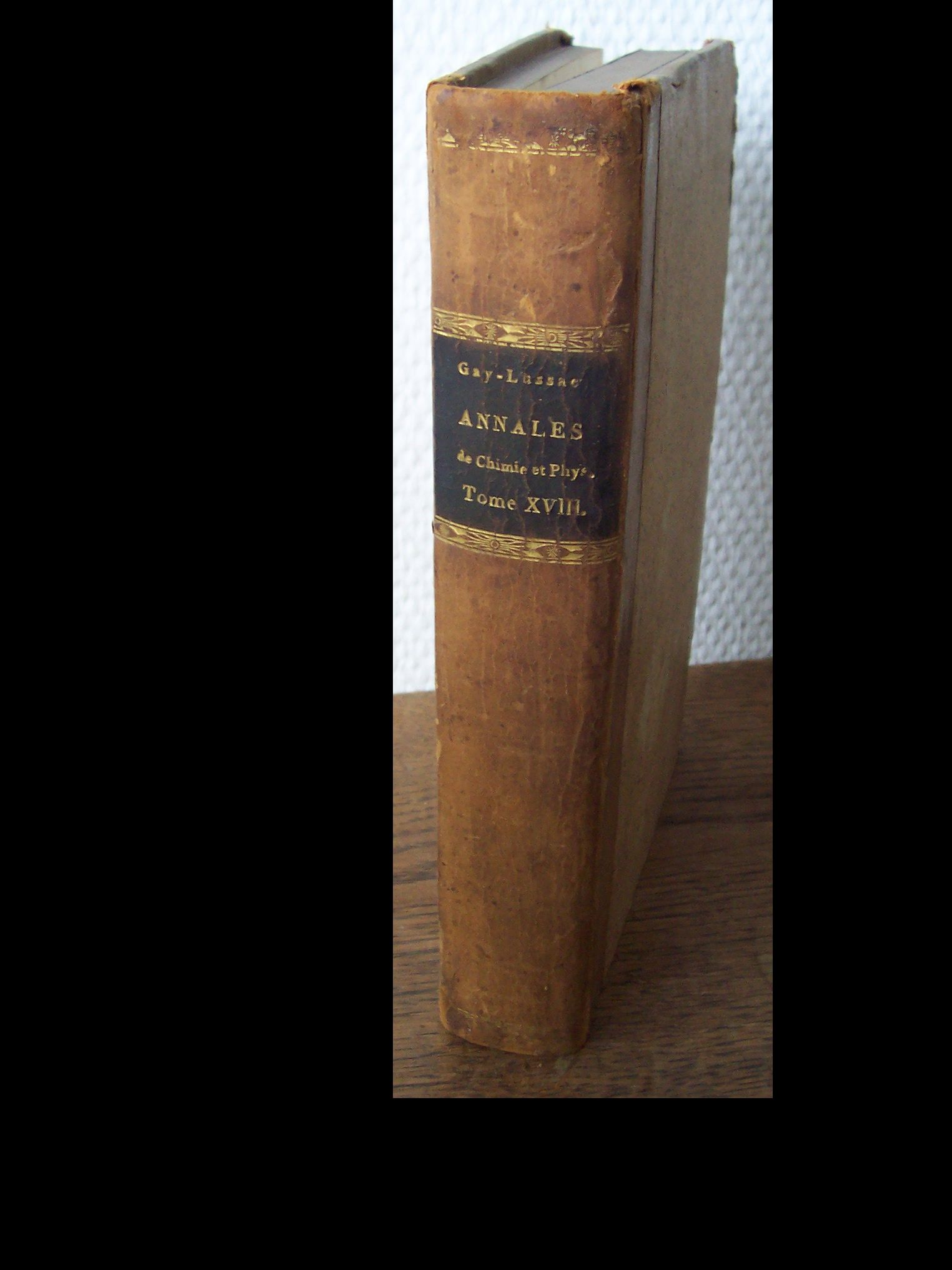
1821réf. 249201Paris, Crochard, 1821. In: Annales de chimie et de physique (Gay-Lussac et Arago), Bd. 18 S. 337-448. Hldr. d. Zt. m. Rsch. Einbd. berieben. Ecken etwas bestoßen. Rücken angerissen. Exlibris a. Innendeckel. Vorsätze leimschattig. Gebräunt u. etwas braunfl. St. a. u. verso Tit. [2 Warenabbildungen]
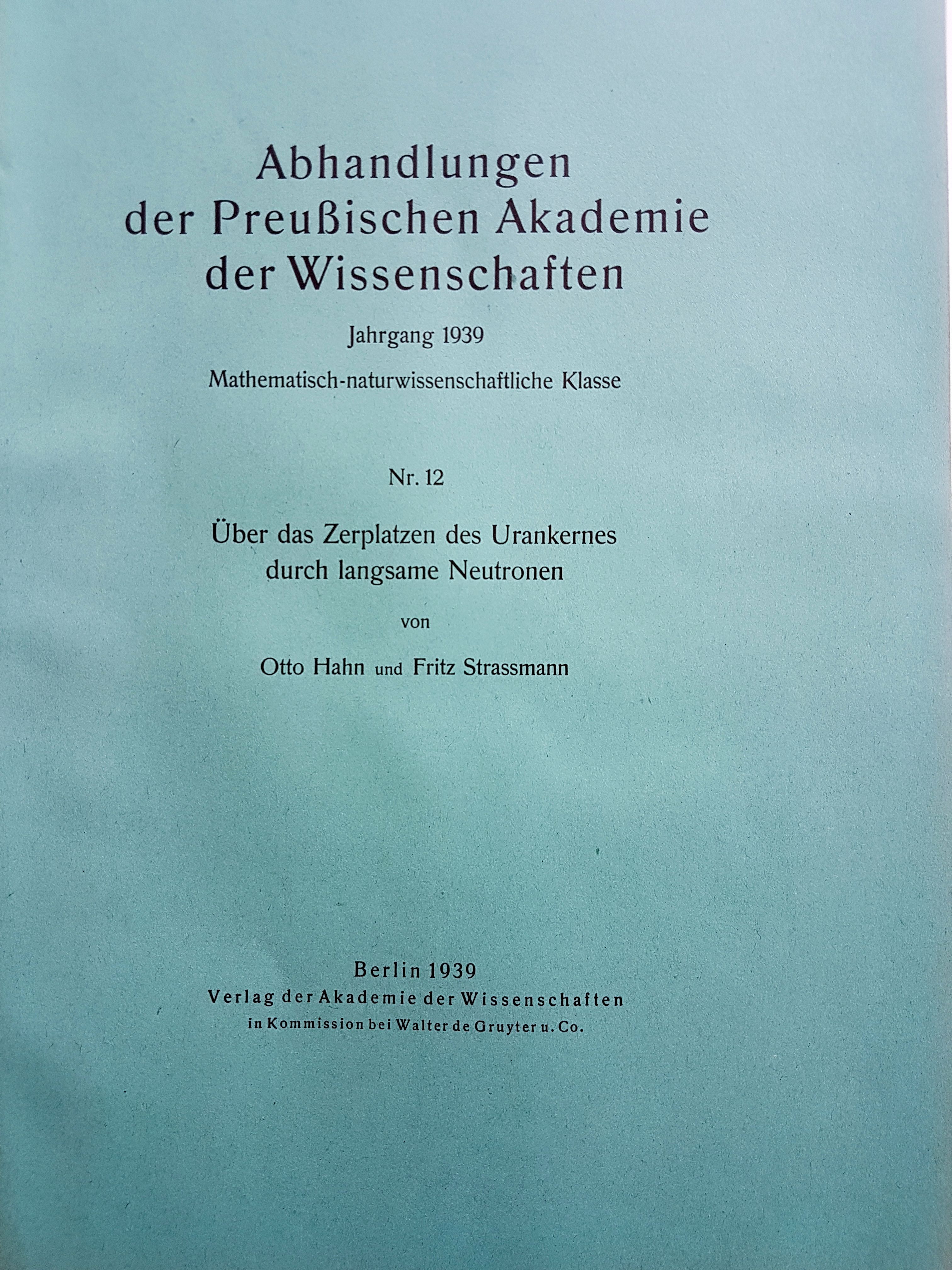
1939réf. 181974Berlin, Vlg. d. Akad. d. Wiss. 1939. 4°. M. 4 Textfig. u. 3 Tab. 20 S. OU. Tadellos. (PAW. Abh. d. math.-nat. Kl. 1939/12).
1731In 4° (23,8×19 cm); (16), XLVIII, (12), 193, 192, (14) pp. e 32 tavv. f.t. ripiegate e una tabella. 2 parti in un volume. Bella legatura coeva in tutta pergamena rigida con titolo parlato al dorso. First edition, good copy. Frontespizio in rosso e nero. Prima edizione in ottime condizioni di conservazione di questa raccolta illustrata di esperimenti relativi alla misurazione di umidità, pressione atmosferica, la struttura del ghiaccio, caldo e freddo, capillarità, ottica, il movimento del suono, il magnete, ecc. Esemplare con leggerissima ed uniforme brunitura dovuta alla tipica qualità della carta utilizzata a Leida ma non fastidiosa e meno intense che nelle altre copie conosciute e nel complesso bellissimo esemplare. Opera di estrema importanza per la storia della fisica moderna. Qui è presente anche la prima descrizione del pirometro (Pyrometer chiamato così da Musschenbroek), uno strumento per misurare la dilatazione dei corpi solidi quando esposti al calore. Pieter van Musschenbroek (1692-1761), professore di fisica a Leida, fu un grande ammiratore di Newton e Desaguliers. Iniziatore della fisica sperimentale in Olanda, il suo insegnamento fu particolarmente apprezzato per la qualità dei suoi esperimenti. L’eccellenza delle sue lezioni aiutò a mantenere la reputazione che l’Università di Leida aveva acquisito sotto Boerhaave e Gravesande, continuando ad attrarre studenti provenienti da tutta Europa, tra i quali Jean Antoine Nollet che divenne poi il primo professore di fisica sperimentale presso l’Università di Parigi. Il suo nome rimane legato all’invenzione della così detta “bottiglia di Leida” che ebbe un’importanza cruciale sulle ricerche riguardanti l’elettricità. La bottiglia di Leida costituisce la forma più antica di condensatore. Fu utilizzata per condurre molti dei primi esperimenti sull’elettricità durante la seconda metà del XVIII secolo. In questo libro, l’autore, raccoglie e presenta con commenti, integrazioni e spiegazioni diversi esperimenti fisici portati avanti nell’Accademia del Cimento. Il tutto è preceduto da un discorso sulla storia e i fondamenti della fisica sperimentale. L’opera contiene anche la prima traduzione in latino dell’opera del Magalotti “Saggi di naturali esperienze”, fatta dallo stesso Petrus van Musschenbroek che aggiunse ad essa le sue “Oratio de methodo instituendi experimenta physica” i “Commentarii” (o “Additamenta”) e “Nova Experimenta” che contengono importantissime aggiunte e nuove esperienze pratiche mai prima provate. Tra gli esperimenti effettuati molti “deal with the mechanics of rigid bodies, air pressure, heat, cohesion, capillarity, phosphorescence, magnetism, and electricity. Many of these experiments have become classics in elementary instruction. One of the better-known apparatuses is the pyrometer (the name was given by Musschenbroek) first described in the Tentamina of 1731…” (Dict. of Scientific Biogr., vol. 9, pp. 594-6). Prima non comune edizione in ottime condizioni di conservazione. Rare. A good copy. Bibl.: Wellcome Vol. 4 p. 23; Graesse IV, 637 e VI, 218; Wheeler Gift Cat. 276.
1846Venezia, G. Antonelli, 1846-1848, tre volumi in-8° grande (cm. 26 x 16,5) tutta tela editoriale con titoli impressi al dorso, pp. IV-573-(3) con 3 tavole ripiegate fuori testo + 574-(2) con 5 tavole ripiegate fuori testo + 558-(2) con 7 tavole ripiegate fuori testo. Rara e completa raccolta di questo compendio di memorie che riunisce in una singola pubblicazione importanti articoli (anche inediti) di scienziati italiani del tempo dediti a ricerche di astronomia, fisica, chimica e storia naturale (l'opera comprende oltre 100 articoli di studiosi come Ambrogio Fusinieri, Stefano Marianini, Giuseppe Zamboni, Tommaso Catullo, Antonio Colla, Domenico Paoli, Geminiano Grimelli, Michele Cito, Bartolomeo Bizio, J.D. Botto, lo stesso Zantedeschi e altri ancora). Un importante spaccato del panorama accademico italiano del XIX secolo. Cajori, Storia della Fisica Elementare, p. 419; Poggendorff, II, 1397. Una macchia al piatto anteriore del II volume; peraltro volumi ottimi, largamente intonsi.
1756Due parti in un volume di cm. 23,5, pp. (16) xlviii (12) 193 (1); 192 (12). Frontespizio in rosso e nero con vignetta, una tabella ripiegata e 32 tavole ripiegate fuori testo. Il tutto nitidamente inciso in rame. Legatura coeva in piena pelle, dorso a piccoli nervi con titoli in oro su tassello al dorso. Segni di abili restauro alla legatura, esemplare complessivamente genuino e ben conservato. Interessante ed ampia raccolta di esperimenti fisici condotti da Peter van Musschenbroek (1692-1761) che fu professore a Leida e considerato uno dei più profondi e geniali sperimentatori del tempo. I suoi testi divennero infatti esempio per il percorso di studio nelle università di fisica.
réf. 30170P., Gauthier-Villars, 1888-1889, 2 fort volumes grand in 4 reliés en demi-soie noire, dos ornés de filets dorés (reliures modernes), T.1 : 22pp., 502pp., T.2 : 8pp., 391pp.
réf. 122815aafLeyden [Leiden], Chez Samuel Luchtmans Imprimeur de l’Université 1751, Frontispice-Portrait de l’auteur + XXXIII + 3 p. n.n. + 493 p. (+ 1 blanche) / 2 ff. + page 493 (sic) à 882 + 1 f. expliucation de la carte + 12 ff. table de matières + 60 p. (incl. titre: Machines Pneumatiques) + 8 p. + 30 planches dépl. num. de I à XXIX (avec: Pl. V et V*); a la fin descr. de nlles sortes de machines avec 4 planches dépl., reliure en veau orné, tranches jaspées rouges.
1952Copenhagen, Institute for Theoretical Physics, 1952. 4to. In the original grey stapled printed wrappers. Stenciled. ""52.15"" wirtten in top right corner of front wrapper. Very fine and clean. 65 pp.
1941Tucuman, Argentina, 1941. Royal8vo. Orig. printed wrappers. Offprint from ""Revista. Universidad Nacional de Tucuman"", Series A Matematicas y Fisica Teorica, Vol. 2, Diciembre de 1941, Nos 1 y 2. Pp. 11-15. Fine and clean. This copy has belonged to Abraham Pais (1918-2000) - the famous Einstein scholar, theoretical physicist and Einsteins collegue at Princeton - and having his name on top of the frontwrapper ""A Pais""
1924Leipzig, Johann Ambrosius Barth, 1924. 8vo. In contemporary half cloth with gilt lettering to spine. In ""Annalen der Physik"", band 74, 1924, entire volume offered. Stamp to verso of title-page and hindges loose, otherwise fine. [Heisenberg's paper:] Pp. 577-627. [Entire volume:] VII, (1), 760 pp. + 3 plates.
1932Berlin, Julius Springer, 1932 & 1933. 8vo. In two half cloth bindings with gilt lettering to spines. In ""Zeitschrift für Physik"". Vol. 78, 1932 & Vol. 83, 1933. Library stamp to free front end-paper and title-pages. A nice and clean set. (Vol. 78:) Pp. 318-339" (Vol. 83:] [Entire volumes: VII, 857 pp. " VIII, 845 pp.].
1921Berlin, Julius Springer, 1921 & 1922. 8vo. Entire volumes 7-8, 1921 and 1922, of ""Zeitschrift für Physik"" bound in two uniform contemporary half cloth bindings over marbled boards. Library-stamp to title-pages, otherwise, both volumes fine, clean, and tight. Pp. 249-53" Pp. 110-11. [Entire volumes: VI, 414 pp " IV, 419 pp.].
1896Leipzig, Johann Ambrosius Barth, 1896. 8vo. Contemporary half cloth with gilt title to spine. Band 58 of ""Annalen der Physik und Chemie"". Library stamp to verso of title-page. Light wear to edges and capitals and a damp-stain to the lower part of the last three leaves. Otherwise a clean and well preserved copy. The entire volume offered. Pp. 662-669. [Entire volume: VIII, 776 pp. + 6 folded plates].
1952réf. 51307Copenhagen, Institute for Theoretical Physics, 1952. 4to. In the original grey stapled printed wrappers. Stenciled. ""52.15"" wirtten in top right corner of front wrapper. Very fine and clean. 65 pp.
1924réf. 53518Leipzig, Johann Ambrosius Barth, 1924. 8vo. In contemporary half cloth with gilt lettering to spine. In ""Annalen der Physik"", band 74, 1924, entire volume offered. Stamp to verso of title-page and hindges loose, otherwise fine. [Heisenberg's paper:] Pp. 577-627. [Entire volume:] VII, (1), 760 pp. + 3 plates.
1932réf. 48975Berlin, Julius Springer, 1932 & 1933. 8vo. In two half cloth bindings with gilt lettering to spines. In ""Zeitschrift für Physik"". Vol. 78, 1932 & Vol. 83, 1933. Library stamp to free front end-paper and title-pages. A nice and clean set. (Vol. 78:) Pp. 318-339" (Vol. 83:] [Entire volumes: VII, 857 pp." VIII, 845 pp.].
1921réf. 44872Berlin, Julius Springer, 1921 & 1922. 8vo. Entire volumes 7-8, 1921 and 1922, of ""Zeitschrift für Physik"" bound in two uniform contemporary half cloth bindings over marbled boards. Library-stamp to title-pages, otherwise, both volumes fine, clean, and tight. Pp. 249-53" Pp. 110-11. [Entire volumes: VI, 414 pp" IV, 419 pp.].
1896réf. 43069Leipzig, Johann Ambrosius Barth, 1896. 8vo. Contemporary half cloth with gilt title to spine. Band 58 of ""Annalen der Physik und Chemie"". Library stamp to verso of title-page. Light wear to edges and capitals and a damp-stain to the lower part of the last three leaves. Otherwise a clean and well preserved copy. The entire volume offered. Pp. 662-669. [Entire volume: VIII, 776 pp. + 6 folded plates].
1896réf. 43069Leipzig Johann Ambrosius Barth 1896. 8vo. Contemporary half cloth with gilt title to spine. Band 58 of "Annalen der Physik und Chemie". Library stamp to verso of title-page. Light wear to edges and capitals and a damp-stain to the lower part of the last three leaves. Otherwise a clean and well preserved copy. The entire volume offered. Pp. 662-669. Entire volume: VIII 776 pp. 6 folded plates. First edition of Wilhelm Wien's highly influential paper on the phenomenon of radiation also known as Wien's displacement law. Wien followed Ludwig Boltzmann's approach when incorporating electrodynamics and thermodynamics in investigating radiation and its characteristics. "He argued that if a system reaches the same temperature by the increase of temperature or by the adiabatic compression of the volume containing heat radiation it should yield the same energy distribution. Considering also the Doppler effect of the radiation Wien arrived at an expression for energy distribution that states that the product of temperature and the wave length is a constant". Mathew Chandrankunnel Philosophy of physics 2000 4 p.Wien's empirical observations functioned as a starting point for Max Planck who wanted prove the theoretical foundation for Wien's wishing thus to justify the entropy law. Today Wien's approximation is also known as Wien-Planck law.This phenomenon was coined "Wien's displacement law" because the energy density curve is displaced correspondingly to the temperature; it implies that the hotter an object is the shorter the wavelength at which it will release most of its radiation. Wien's description of radiation awarded him the Nobel Prize in Physics in 1911. Wien's constant is today used in a wide range of different aspects of physics e.g. cosmic microwave background and the determination of how much energy is emitted from a light bulb. Magie "A Source Book in Physics". Pp. 597-600.Other papers of interest contained in the present volume:KOHLRAUSCH F. Ueber Widerstandsmessungen von Electrolyten mit Wechselströmen durch das Dynamometer. Pp. 514-516.BOLTZMANN L. Zur Energetik. Pp. 595-598.RYDBERG J. J. Die Neuen Grundstoffe des Cleveïtgases. Pp. 674-679.WIEN W. Ueber die auf einer schweren Flüssigkeit möglichen Wellen von sehr Höhe. Pp. 729-735.Etc. hardcover
réf. DADAX0306307553New unknown
1918réf. 194915Braunschweig, Vieweg, 1917-1918. M. einigen Tab. u. Abb. VI, 489, V, 485 S. In 1 Hlwd. Bibl.-Ex. m. Rsign. Einbd. bestoßen, berieben. Bibl.-Tasche u. -Zettel a. Spiegel bzw. Vorsatz. M. mehr. St. Schnitt angestaubt u. teils braunfl.
1740In-12° (cm. 15,8), legatura coeva in p. pelle con titolo e fregi in oro al dorso a 5 nervi (lievi usure), tagli rossi, risguardi marmorizzati; pp. [2] XVIII 487 [7] in ottimo stato, con 2 tavole f.t.; lievissime fioriture sparse. Edizione originale del saggio del gesuita che si opponeva alle teorie di Newton. Trascende in realtà l'ottica per abbracciare anche l'estetica e la tecnica pittorica, l'arte tintoria e la musica. Cfr. Sommervogel II, 831, 11. Esemplare molto buono.