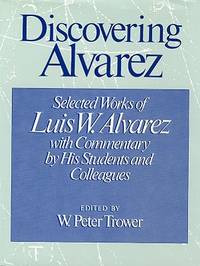
Alvarez, Luis W ; W Peter Trower (Editor); Comments By Emilio Segre, Norman F Ramsay, , EtcBiblio.com
19 400 résultats
1987réf. 047025University of Chicago Press 1987. 1st Edition 1st Printing. Hardcover. Fine/Fine. Ix 272 Pp. Grey Cloth Stamped In Black. Large Format. First Printing. Fine In Fine Dust Jacket University of Chicago Press hardcover
1955réf. 044419New York: Scientific American Inc. 1955. First Edition . Soft cover. Fair. Covers Are Entirely Detached Although Present; Otherwise Clean And Almost Unworn. 140 Pp. First Printing Of Weisskopf's New Model Of The Atomic Nucleus. Scientific American, Inc. paperback
1949réf. 044417New York: Scientific American Inc. 1949. First Edition 1st Printing. Illustrated Wrappers. Good. 64 Pp. Illustrated Wrappers. Good Only Scientific American, Inc. unknown
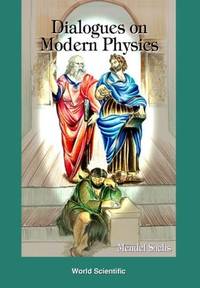
1999réf. 043092Singapore: World Scientific Publishing Co Inc 1999. 1st Edition 1st Printing. Hardcover. Fine/Fine. Xxi 125 Pp. Black Cloth Gilt. First And Only Printing Hardcover Issiue. Fine In Fine Dust Jacket. Text Evolved From Lectures To An Honors Course For Undergraduates. Fine In Fine Dust Jacket; Inscribed By Sachs And Dated March 18 1999. Mendel Sachs 1927 -2012 Was An American Theoretical Physicist. His Scientific Work Includes The Proposal Of A Unified Field Theory That Brings Together The Weak Force Strong Force Electromagnetism And Gravity. Sachs Earned His Bachelors At The University Of California Los Angeles He Then Moved To Columbia University New York For Postgraduate Study. While At Columbia Sachs Was Taught By Willis Lamb And Hideki Yukawa.5 Yukawa Had Agreed To Be Sach's Thesis Advisor But Sachs Decided To Complete His Doctorate Back At Ucla. Following The Award Of His Phd In 1954 Sachs First Post-Doctoral Position Was At The New University Of California Radiation Laboratory At Both Berkeley And Livermore Which Was Run By Edward Teller And Ernest Lawrence And Was Also Home To Bryce Dewitt Who Sachs Would Later Co-Author Articles With In Physics Today. In 1956 Sachs Became A Senior Scientist At Lockheed Missiles And Space Laboratory While At Lockheed Sachs Began Developing With Solomon Schwebel A Field Theory Of Quantum Electrodynamics That Included Broken Symmetries That Did Not Require Recourse To Renormalization Or Perturbation Techniques - The "Schwebel-Sachs" Model. In 1961 He Became A Research Professor At Mcgill University; This Was Followed By A Post As Associate Professor Of Physics At Boston University 1962-1966. In 1964 While At Boston University Sachs Received An Invitation From Paul Dirac To Visit Cambridge University. Sachs Stayed In England For Three Months Where His Wife Yetty Had Family. Sachs Worked With Paul Dirac At The Department Of Applied Mathematics And Theoretical Physics Cambridge University. While Working With Dirac Sachs Also Had The Opportunity To Discuss Ideas With John G. Taylor John Polkinghorne And Graduate Students At Damtp. In 1965 Sachs Had Had A Breakthrough While At The Aspen Physics Institute Colorado. Sachs Was Able To Derive A Result For A Unified Field Theory If Quantum Mechanics Was Considered To Be A Linear Approximation For A Field Theory Of Inertia Expressed In General Relativity. Sachs Argued That The Work Of Albert Einstein And Erwin Schrödinger In General Relativity Did Not Yet Take Account Of The Inertia Of Matter Which Required Consideration Of The Mach Principle. In The Summer Of 1966 Abdus Salam Invited Sachs To Spend A Few Months At The International Centre For Theoretical Physics In Trieste Italy. During This Time Sachs Published The Details Of His Formal Structure Of Quantum Mechanics From A Generally Covariant Field Theory Of Inertia In The Italian Journal Il Nuovo Cimento. In The Autumn Of 1966 He Was Appointed Professor Of Physics At State University Of New York At Buffalo. World Scientific Publishing Co Inc hardcover
1886réf. 038804London : Gebbie & Co 1886. 1st Edition 1st Printing. No Binding. Near Fine. 18" X 12 7/8" One Of A Series Of High Quality Productions Published By Gebbie In 1886 With Tissue Guard And With The Explanatory Text Page. Gebbie & Co unknown
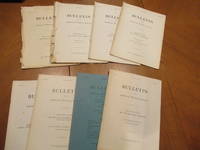
1955réf. 036871Lancaster: American Physical Society 1955. 1st Edition . Soft cover. Near Fine. All Eight Issues In Original Wrappers. All Near Fine Except Number1 Which Has Worn And Frayed Covers Which Are Loose Although Text Pages Near Fine. All Issues Contain Paragraph Summaries Of All Papers Presented At The Society's Sessions. American Physical Society paperback
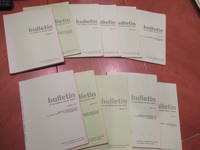
1972réf. 036872Lancaster: American Physical Society 1972. 1st Edition . Soft cover. Near Fine. Twelve Issues In Original Wrappers. All Near Fine. International Postage At Usps Priority Mail Box Rate. American Physical Society paperback
réf. 19155World Scientific London 1988. KARTONIERT 462 Seiten keine Markierungen/Anmerkungen dies ist dies ist ein regulär ausgesondertes Exemplar aus einer wissenschaftlichen Bibliothek das Buch ist sehr gut erhalten --- HARDCOVER LIB.EX. no marks 462 pages the book is in a very good condition World Scientific London 1988 hardcover
1946réf. 035871New York: The Macmillan Company 1946. 1st Edition 1st Printing. Red Cloth. Near Fine/No DJ. X 161 Pp. Red Cloth. First American Printing With 1946 Date In Title Page. Near Fine Slight Rubbing At Corners Spine Lettering Strong. Former Owner's Name On Front Pastedown. A Scarce Books As Gamow's Concern Was Not Stupid Enough For Leaders Yet He Could Not Be Argued With Due To His Intelligence Rather Than His Position In Some Institution. He Apparently Distributed Some Copies Himself; We Sold One Pointedly Inscribed To Admiral Chester Nimitz. The Macmillan Company hardcover
1904réf. 036002London: C. J. Clay And Sons / Cambridge University Press 1904. 1st Edition . Hardcover. Very Good . Figures In Text. Xxi; Errata Printed On Verso Of Xxi; Errata Slip; 694 Pp. Blue Cloth Gilt. Cambridge Bookseller's Ticket On Front Pastedown Circa 1904. First Edition. Lightly Used Gilt Brilliant Cloth With Slight Rubbing Spine Cloth With Some Fading Hinges Very Tight Pages Square And Immaculate. No Marks Or Book Plates. C. J. Clay And Sons / Cambridge University Press hardcover
1912réf. 035654Archives Neerlandaises Des Sciences Exactes 1912. First Separate Edition . Soft cover. Near Fine. Pp 1-15 Published Beginning At P. 139 In "The Archives" But Here Paginated 1-15. Tan Wrappers Printed In Black. Publisher's Offprint For The Author. First Separate Edition. Near Fine No Damage. Archives Neerlandaises Des Sciences Exactes paperback
1872réf. 035726London: Macmillan & Co 1872. 1st Edition 1st Printing. Hardcover. Good. Xv 592 Errata At Bottom Of P. 592 52 Pp Publisher's Catalog Dated April 1872. First Printing; About A Quarter Of The Book Contains Papers Published Here For The First Time. Green Cloth Gilt Brown Endpapers. Gilt Complete And Bright Cloth Worn With Fraying At Corners And At Ends Of Spine And In Three One Inch Long Thin Lines On Rear Spine Edge And Joint Cracked Through At Top 1" Of Front Spine Edge Hinges Cracked At Endpapers And Before Title Page But Binding Solid. No Names Or Marks. Macmillan & Co hardcover
1975réf. 034945New York: Scientific American Inc. 1975. First Edition . Illustrated Wrappers. Near Fine. 124 Pp. Near Fine In Original Wrappers No Marks Or Labels. Scientific American, Inc. unknown
1922réf. 034956Leiden: Eduard Ijdo 1922. 1st Edition 1st Printing. Soft cover. Very Good. Iv 22 I 1070-1107 Plate At Rear. Grey-Green Wrappers Printed In Black Purple Stamp Of The Leeskamer Bosscha In Leiiden With Partly Illegible Signature Underneath Pencil Note To Left Sall Losses At Top And Bottom Of Spine Without Loss Of Text Some Fading To Covers. Coster's Thesis In Dutch Supervised By Ehrenfest Here Issued And Bound With A Complete Reprint Of His Article On The Spectra Of X-Rays And The Theory Of Atomic Structure In English From The Philosophical Magazine June 1922 With A Note Explaining That It Had Been Furnished By Ernest Rutherford For Publication. The Stellingen Text References Work By C. D. Ellis Lise Meitner Twice Separately Millikan Twice Separately Rutherford And Andrade Van Overn Ms. Davies Kohnstamm C. Benedicks Arnold. At The End Of His English Journal Article He Thanks Siegbahn And Niels Bohr"For The Great Interest They Have Shown In My Work" And "My Friend Mr. H. A. Kramers For His Help In Reading The Manuscript". Per Wikipedia Dirk Coster October 5 1889 - February 12 1950 Was A Dutch Physicist. In Leiden He Was Influenced By The Inspiring Lectures Of Paul Ehrenfest And In 1916 He Obtained His M.Sc. Degree. From 1916 To 1920 Coster Was Assistant Of Lodewijk Siertsema And Wander De Haas At The Delft University Of Technology Where In 1919 He Obtained An Engineer's Degree In Electrical Engineering. In 1920 And 1921 He Did Research At Lund University Under Manne Siegbahn On X-Ray Spectroscopy Of Different Elements. Coster's Thesis Was On This Subject And He Obtained His Ph.D. Degree In 1922. Coster Is Known As The Co-Discoverer Of Hafnium Hf Element 72 In 1923 Along With George De Hevesy By Means Of X-Ray Spectroscopic Analysis Of Zirconium Ore. The Discovery Took Place In Copenhagen. From August 1922 Until The Summer Of 1923 Coster Worked In Niels Bohr's Institute In Copenhagen. Within A Few Months He Co-Authored A Landmark Publication With Bohr On X-Ray Spectroscopy And The Periodic System Of The Elements. In Addition He Worked With Chemist George De Hevesy On The Identification Of Element No. 72. Element 72 Had Been Known To Be A Gap In The Sequence Of Elements Since 1914 When Henry Moseley Created An Experimental Technique For Placing The Elements In A Definite Sequence. Radiochemist Fritz Paneth Suggested That Element 72 Might Be Found In Ores Of Zirconium. Some Histories Incorrectly Attribute This Suggestion To Physicist Niels Bohr. Bohr Published A Prediction Of The Electronic Configuration Of Element 72 In 1923. Von Hevesy Had Been Working With Bohr At The Time.After Coster Returned From Copenhagen He Became Hendrik Lorentz' Assistant At The Teylers Museum In Haarlem Where He Developed An X-Ray Spectrometer. In 1924 He Was Appointed At The University Of Groningen Where He Was The Successor Of Wander De Haas. At Groningen He Started An Active Research Program In X-Ray Spectroscopy.In 1938 He Traveled To Berlin To Convince Lise Meitner That She Had To Leave Germany To Escape The Persecution Of The Jews. Together They Went By Train To Groningen; At The Dutch Border Coster Persuaded German Immigration Officers That She Had Permission To Travel To The Netherlands. She Stayed With Him For Several Weeks. From There She Went On To Sweden By Way Of Copenhagen.During The German Occupation Of Holland Coster Also Helped Jews Hide From The Nazis. From Wikipedia. Ahh We Lesser Mortals. Eduard Ijdo paperback
1967réf. 033967New York: The American Physical Society 1967. 1st Edition . Hardcover. Near Fine. Entire Volume 18 Issued As A Purrple Cloth Bound Volume Gilt Without Individual Issue Covers Separate Complete Volume Author Index And All "Abstracts Of Articles To Be Printed In The Physical Review" Separate At Back. Ex-Library But Near New Neat Library Bookplate And Discard Stamp On Front Pastedown Library Stamps On Edges Of Page Block No Other Marks. International Postage At Usps Priority Mail Box Rate. The American Physical Society hardcover
réf. OTF-S-9780883189467American Institute of Physics. New. BRAND NEW GIFT QUALITY! NOT OVERSTOCKS OR MARKED UP REMAINDERS! DIRECT FROM THE PUBLISHER! American Institute of Physics unknown
1963réf. 032953New York: Interscience Publishers ' John Wiley & Sons 1963. 1st Edition 1st Printing. Hardcover. Very Good /No Jacket. Ix 249 Pp. Beige Boards Printed In Blue. Light Wear At Corners And Part Of Front Spine Edge Bumping To Bottom Of Spine. Inscribed By The Author "To One Of My Few Collaborators Who Worked On Something Different. Richard Wilson." Richard Wilson Born 29 April 1926 Is A British Born American Physicist. His Original Fields Were Nuclear And Elementary Particle Physics But Branched Out Into Applications Of Physics In Other Disciplines. He Is Now Mallinckrodt Professor Of Physics Emeritus. At Harvard University.He Has Lectured In 44 Different Countries. In 1988 He Became A Member Of The Science Advisory Board Of The Atlantic Legal Foundation A Public Interest Law Foundation. Wilson's First Research Was On The Properties Of The Nucleon. He Started By Using Radioactive Sources And Then Using First The Cyclotron At Aere Harwell Uk Then The Cyclotron At Harvard University Usa. This Work Is Described In Many Papers And In This Book. At Harvard He Became An Enthusiastic Supporter Of The Cambridge Electron Accelerator And Was Chairman Of The Management Committee From 1961 To 1968. He Became Known For His Work On Nucleon Form Factors An Interest Which Continues. He Was A Trustee Of The Universities Research Association From 1987 To 1993 And Studied The Inelastic Form Factors. Wilson Was An Early Proponent Of Electron-Positron Colliding Beams. And Worked Thereon In Frascati Cea And Cornell University. In 1991 He Realized That The General Public Was No Longer Automatically Supporting Physicists And Began A Career Explaining The Positive Aspects Of Radiation Use As Well As Its Risks And Dangers. In This He Used The "Hands On" Style Of An Experimental Physicist And Soon Became An Expert On Nuclear Accidents: Three Mile Island Chernobyl & Fukushima. He Is Particularly Known For His Visits To Chernobyl Being The First American Scientist To Go To The Plant And Measure Radioactivity Levels Thereby Exposing Himself To The Dangers. He Expanded His Interests To Other Hazards And Thereby Helped To Found The Field Of Risk Analysis. In This Work He Realized That While It Is Interesting What Scientists Say In Their Conferences; The Us Public Is More Concerned About Of What Congress Enacts In Response But Most Importantly What The Courts Said Last Week. This Realization Has Led To An Activity On Emphasizing To The Courts The Fundamental Thinking Of A Physicist. This Includes The Role Of Expert Witnesses In Court Cases. Interscience Publishers ' John Wiley & Sons hardcover
1920réf. 032975Haarlem: De Erven Loosjes 1918 1920. First Separate Edition . Soft cover. Good. 76 Pp. Light Beige Wrappers Printed In Black. Publisher's Offprint Dated 1920 Edited By Keesom Of This Paper By Lorentz First Published In 1918. Wear And Losses To Paper Backstrip Front Cover Detached And Rear Cover Almost Detachedslight Wear At Tip With Very Small Corner Chip At Lower Front Tips. Paper Browning A Little Fading And Browning To Covers. No Names Or Marks But Bookplate Of A Well-Published Leiden-Trained Mathematical Physicist Jan Korringa. Handwritten Title On Spine. With The Three Summary Handouts For The Lectures De Electronentheorie I Ii And Iii Of 7 8 And 10 Pp. Pencil Notes And Formulae Probably By H A Kramers Who Attended These Lectures And Passed Many Of His Books On To His Student And Later Principal Assistant Korringa. The Three Class Summaries Are Scarce. De Erven Loosjes (1918) paperback
1965réf. 033385New York: The American Physical Society 1965. 1st Edition . Soft cover. Near Fine. Entire Issue In Original Blue-Green Wrappers. Near Fine. In 1965 "Pauling Spent Much Of His Time Away From Santa Barbara Developing A New Model Of The Atom Which He Called The Close-Packed-Spheron Model Of Atomic Nuclei. This Theory Of Nuclear Structure Was Published In Four Different Articles "Structural Significance Of The Principal Quantum Number Of Nucleonic Orbital Wave Functions" Phys. Rev. Lett. September 1965; "Structural Basis Of Neutron And Proton Magic Numbers In Atomic Nuclei" Nature October 1965; "The Close-Packed-Spheron Model Of Atomic Nuclei And Its Relation To The Shell Model" Proc. Natl. Acad. Sci. October 1965; And "The Close-Packed-Spheron Theory And Nuclear Fission" Science October 1965 Each Of Which Addressed Different Implications Of The Theory. Pauling'S Work Dealt With "Magic Numbers" And Nuclear Subshells. Previously It Was Known That Magic Numbers Describe The Quantity Of Protons And Neutrons That Make An Atom Particularly Stable. Pauling'S Theory However Suggests That The "Magic" Qualities Associated With These Numbers Of Nuclear Components Corresponds To The Filling Of Nuclear "Spherons" Or Nuclear Sub-Units Where Protons And Neutrons Are Arranged. These Spherons Or Sub-Units Were Also Referred To As Shells In Previous Theories. The Close-Packed Theory Therefore Suggests That Nuclear Components Form Clusters Rather Than Arranging As Independent Particles. The Close-Packed-Spheron Model Was Based On The Earlier Nuclear Shell Theory. Pauling Took The Nuclear Shell Theory A Step Further By Attempting To Explain Why Specific Numbers Of Protons And Neutrons Cause Greater Nuclear Stability. The Close-Packed-Spheron Model States That The Lower Magic Numbers Represent Atoms In Which The First Or Second Nuclear Shells Are Filled And That Higher Magic Numbers Correspond To A Special "Mantle" Shell; That Is A Hybridized Shell That Can Form If Greater Amounts Of Nuclear Components Arrange Into Spheres. In Developing His Model Pauling Was Trying To Explain The Arrangement Of Nuclear Components By Simplifying Previous Theories And Applying The Principles Of Electron Orbitals To Protons And Neutrons In The Atomic Nucleus. Pauling'S Past Work Had Helped To Establish The Principles Of Electron Orbital Hybridization And He Hoped That This New Work Would Yield Similar Fruit For The Atomic Nucleus. If Such Were The Case It Would Then Be Possible To Explain The Stability Of Atoms With Magic Numbers And The Geometric Arrangement Of Protons And Neutrons. Pauling'S Close-Packed Theory Was Interesting And Relatively Simple; However It Failed To Spark Interest Among Many Other Scientists. For The Next Several Years Pauling Continued To Advocate For The Theory And In June 1974 He Applied For A National Science Foundation Grant To Support Further Theoretical Research On The Structure Of Atomic Nuclei. The Application Was Denied And Pauling Turned His Attentions Elsewhere." See The Pauling Blog. The American Physical Society paperback
1965réf. 033394New York: The American Physical Society 1965. 1st Edition . Soft cover. Near Fine. Entire Issue In Original Blue-Green Wrappers. Near Fine. Glashow Received The Nobel Prize In 1979. The American Physical Society paperback
1965réf. 033395New York: The American Physical Society 1965. 1st Edition . Soft cover. Near Fine. Entire Issue In Original Blue-Green Wrappers. Near Fine. Bloembergen And Lederman Are Co-Authors Of Two Separate Articles; Both Were Nobel Laureates. The American Physical Society paperback
1965réf. 033402New York: The American Physical Society 1965. 1st Edition . Soft cover. Near Fine. Entire Issue In Original Blue-Green Wrappers. Near Fine. Glashow And Weinberg Both Won The Nobel Prize In 1979. The American Physical Society paperback
1965réf. 033406New York: The American Physical Society 1965. 1st Edition . Soft cover. Near Fine. Entire Issue In Original Blue-Green Wrappers. Near Fine. Dyson Co-Authors One Article Here. The American Physical Society paperback
1965réf. 033398New York: The American Physical Society 1965. 1st Edition . Soft cover. Near Fine. Entire Issue In Original Blue-Green Wrappers. Near Fine. Lederman Won The Nobel Prize In 1988 Ting Won In 1976; They Co-Authored Three Articles Here. . The American Physical Society paperback
1965réf. 033414New York: The American Physical Society 1965. 1st Edition . Soft cover. Near Fine. Entire Issue In Original Blue-Green Wrappers. Near Fine. Chandrasekhar Was Awarded A Nobel Prize In 1983. The American Physical Society paperback