17.898 risultati
1966rif. 036903New York: American Institute Of Physics For The American Physical Society 1966. 1st Edition . Soft cover. Fine. 12 Softcover Issues Each Containing Index For 1 Month. Original Blue-Green Wrappers. Fine. American Institute Of Physics For The American Physical Society paperback
1961rif. 036908New York: American Institute Of Physics 1961. 1st Edition . Soft cover. Near Fine. Original Beige Wrappers. Near Fine A Few Short Line-Like Light Stains On Front Cover. American Institute Of Physics paperback
1965rif. 036902New York: American Institute Of Physics For The American Physical Society 1965. 1st Edition . Soft cover. Fine. 4 Softcover Issues Each Containing The Index For 3 Months. Original Blue-Green Wrappers. Fine. American Institute Of Physics For The American Physical Society paperback
1969rif. 036906New York: American Institute Of Physics For The American Physical Society 1969. 1st Edition . Soft cover. Fine. 6 Issues Each Containing Index For 1 Month. Original Blue-Green Wrappers. Fine. American Institute Of Physics For The American Physical Society paperback
1968rif. 036905New York: American Institute Of Physics For The American Physical Society 1968. 1st Edition . Soft cover. Fine. 12 Softcover Issues Each Containing Index For 1 Month. Original Blue-Green Wrappers. Fine. American Institute Of Physics For The American Physical Society paperback
1970rif. 036955Cambridge: Harvard University Press 1970. 1st Edition 1st Printing. Hardcover. Fine/Fine. Frontispiece. Viii 289 Pp. Green Cloth Stamped In Black. Fine In Fine Price-Clipped Dust Jacket. Harvard University Press hardcover
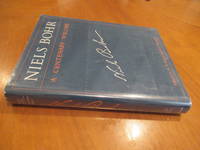
1985rif. 037287Cambridge: Harvard University Press 1985. 1st Edition 1st Printing. Hardcover. Fine/Near Fine. Photographs And Diagrams. Xiv 403 Pp. Blue Cloth Gilt. Fine No Wear Or Marks Except Inscribed And Signed By Author "To Don Fleischman With Warm Regards. A. P. French" And Dated 3 June 1986. Dj Priced $20.00 Just A Hint Of Rubbing At Corners But A 3/4" And Another 1 1/4" Closed Tear At Top Of Spine Edges. Harvard University Press hardcover
1987rif. 037300New York: Springer 1987. 1st Edition 1st Printing. Hardcover. Fine. 191 Pp. Yellow Boards Stamped In Black. First Printing. Fine With Slight Fading To Yellow Cover On Spine. Springer hardcover
1969rif. 037297New York: Mcgraw-Hill Book Company 1969. 1st Edition 1st Printing. Hardcover. Very Good. Ix 208 Pp. Brown Cloth Stamped In Gilt And Bronze. First Printing Indicated. Very Good Slight Usage. Ownership Label Of Ucla Professor A. J. A. Morgan And With A Few Of His Underlinings And Marginalia. Mcgraw-Hill Book Company hardcover
1980rif. 035787Cambridge: Cambridge University Press 1980. 1st Edition 1st Printing. Soft cover. Fine. 26 Pp. Yellow Wrappers Printed In Black. First Printing. Fine No Wear Or Marks Or Fading. Cambridge University Press paperback
1933rif. 035947New York: The Macmillan Company 1933. 1st Edition 2nd Printing. Hardcover. Near Fine/No Jacket. 300 Pp. Blue Cloth Gilt. Second Printing Of The First Edition. Near FineCover Gilt Brilliant Spine Gilt Strong But Not As Bright Wear Along Top Edge Of Spine. Signed By The Author And Dated In 1944 With Some Light Pencil Underlining And Marginal Gloss By The Recipient. The Macmillan Company hardcover
1730rif. 035995London: William Innys 1730. 4th Edition 1st Printing. Hardcover. Near Fine. New Calf Spine And Tips Over Marbled Paper Covered Boards New Endpapers. Two Preliminary Blanks Title Advertisements To First Second And Fourth Editions382 Pp 12 Folding Plates And Two Pages Of Publisher's Ads At Rear. Page Block 19.5 Cm Text Block 6.5" X 3 1/2" From Top To Bottom Of Printed Area Including Page Running Headings Tall. Top Edge Of Page Block Is Dark Grey Or Black Fore Edge And Bottom Edge Red All Polished. Leaves 7 5/8" Tall; Binding 7 3/4" X 5 3/16". The Last And Best Edition Prepared By Newton Corrected From The Third Edition By Newton; In This Fourth Edition Of 1730 There Are 31 Queries And It Is The Famous "31St Query" That Over The Next Two Hundred Years Stimulated A Great Deal Of Speculation And Development On Theories Of Chemical Affinity. The Publishers Have Added To This Edition Several Citations From The Lectiones Opticae 1669-1671 To Show Where Demonstrations Omitted From The Opticks May Be Found. Unusually Well Preserved Binding Fine Contents Clean Some Tiny Foxing Spots Mainly In Margins And Mainly Towards Beginning Of Book; Very Slight Wear To Edges Of Page Block. . William Innys hardcover
1904rif. 036002London: C. J. Clay And Sons / Cambridge University Press 1904. 1st Edition . Hardcover. Very Good . Figures In Text. Xxi; Errata Printed On Verso Of Xxi; Errata Slip; 694 Pp. Blue Cloth Gilt. Cambridge Bookseller's Ticket On Front Pastedown Circa 1904. First Edition. Lightly Used Gilt Brilliant Cloth With Slight Rubbing Spine Cloth With Some Fading Hinges Very Tight Pages Square And Immaculate. No Marks Or Book Plates. C. J. Clay And Sons / Cambridge University Press hardcover
1946rif. 036003New York: Reinhold Publishning Company 1946. 2nd Edition 1st Printing. Hardcover. Near Fine/Very Good. 325 Pp. Green Cloth Gilt. Stated Second Edition Completely Rewritten To Include Recent Developments Since The First Edition Of 1942; One Of The Authors Directed The Construction Of The First Successful Electron Microscope. Book Is Very Clean Unfaded Light Wear At Corners Gilt Brilliant Hinges Tight Name On Front Free Endpaper. Dj With Wear Spine Faded 1/2" Chip Across Top Of Spine 1/4" Chip At Top Of Front Panel Some Minute Losses. Reinhold Publishning Company hardcover
1914rif. 036010Cambridge: University Press 1914. Reprint . Hardcover. Very Good . Figures Throghout The Text. X 224 210 Vi V Catalog At End. Two Volumes In One. Reprint 1914 First Published Thus In 1894. Well Illustrated With Extensive Mathematical Support No Historical References Factual And Clear And Quite Detailed With Experimental Examples On Every Issue. Very Good Covers Clean No Fading Gilt Brilliant And Complete Hinges Tight Old Former Owner's Name Stamp "George Ogg" Principal Of Kilburn College And Formerly Instructor To The Prince Of Wales On Front Free Endpaper No Other Marks University Press hardcover
1959rif. 036025Bangalore: The Indian Academy Of Sciences 1959. 1st Edition 1st Printing. Hardcover. Fine/Very Good. 160 Pp. Brown Cloth Printed In Black. First Printing. Near Fine Very Slight Rubbing At Corners Some Slight Browning To Endpapers; In Lightly Worn Blue Dj With Very Short Tears And Minor Losses Along Top And Bottom Edges Of Spine. No Names Or Marks. Chandrasekhara Venkata Raman Frs 1888 -1970 Was An Indian Physicist Known For His Work In The Field Of Light Scattering. Using A Spectrograph That He Developed He And His Student K. S. Krishnan Discovered That When Light Traverses A Transparent Material The Deflected Light Changes Its Wavelength And Frequency. This Phenomenon A Hitherto Unknown Type Of Scattering Of Light Which They Called "Modified Scattering" Was Subsequently Termed The Raman Effect Or Raman Scattering. In Addition To Being A New Phenomenon Itself The Raman Effect Was One Of The Earliest Proofs Of The Quantum Nature Of Light. Robert W. Wood At The Johns Hopkins University Was The First American To Confirm The Raman Effect In The Early 1929. He Made A Series Of Experimental Verification After Which He Commented Saying "It Appears To Me That This Very Beautiful Discovery Which Resulted From Raman's Long And Patient Study Of The Phenomenon Of Light Scattering Is One Of The Most Convincing Proofs Of The Quantum Theory". The Field Of Raman Spectroscopy Came To Be Based On This Phenomenon And Ernest Rutherford President Of The Royal Society Referred To It In His Presentation Of The Hughes Medal To Raman In 1930 As "Among The Best Three Or Four Discoveries In Experimental Physics In The Last Decade".Raman Received The 1930 Nobel Prize In Physics For The Discovery And Was The First Asian To Receive A Nobel Prize In Any Branch Of Science. With Suri Bhagavantam He Determined The Spin Of Photons In 1932 Which Further Confirmed The Quantum Nature Of Light. With Another Student Nagendra Nath He Provided The Correct Theoretical Explanation For The Acousto-Optic Effect Light Scattering By Sound Waves In A Series Of Articles Resulting In The Celebrated Raman-Nath Theory. Modulators And Switching Systems Based On This Effect Have Enabled Optical Communication Components Based On Laser Systems. Other Investigations He Carried Out Included Experimental And Theoretical Studies On The Diffraction Of Light By Acoustic Waves Of Ultrasonic And Hypersonic Frequencies And Those On The Effects Produced By X-Rays On Infrared Vibrations In Crystals Exposed To Ordinary Light Which Were Published Between 1935 And 1942. In 1948 Through Studying The Spectroscopic Behaviour Of Crystals He Approached The Fundamental Problems Of Crystal Dynamics In A New Manner.104105 He Dealt With The Structure And Properties Of Diamond From 1944 To 1968 The Structure And Optical Behaviour Of Numerous Iridescent Substances Including Labradorite Pearly Feldspar Agate Quartz Opal And Pearl In The Early 1950S. Among His Other Interests Were The Optics Of Colloids And Electrical And Magnetic Anisotropy His Last Interests In The 1960S Were On Biological Properties Such As The Colours Of Flowers And The Physiology Of Human Vision.Raman Was The Paternal Uncle Of Subrahmanyan Chandrasekhar Recipient Of The 1983 Nobel Prize In Physics. The Indian Academy Of Sciences hardcover
1891rif. 036016Boston: Houghton Mifflin And Company 1891. 2nd Edition 2nd Printing. Hardcover. Very Good . Figures In Text. 243 Pp. Ad At Rear. Second Edition Copyright 1890 Preface Dated 1890 Title Page Dated 1891 So Apparently A Later Printing Of The Second Edition. Revised. Light Wear A Few Points Of Fraying Gilt Bright Spine Cloth With Some Fading. Yellow Bookplate Illustrated In Black Of The Theosophical University Library At Point Loma With Their Stamp On The First Page No Other Marks; Small Erasure At Foot Of Spine Probably An Erased Call Number. Houghton, Mifflin And Company hardcover
1914rif. 036009Cambridge: Cambridge University Press 1914. 1st Edition 1st Printing. Hardcover. Near Fine/No Jacket. Viii 144 Pp Catalog At End Dated 5/14. Green Cloth Gilt. A Very Near Fine Example Cloth Clean And Entirely Unfaded Gilt Brilliant No Wear To Pages Some Browning To Endpapers Ownership Signature Of An Engineer/Physicist On Front Pastedown. Hughes Went Cavendish Laboratory At Cambridge Where He Studied Under J.J. Thomson Who Had Won The Nobel Prize In Physics In 1906. It Was At Cambridge That Hughes Carried Out What Some Consider His Finest Scientific Work Proving The Validity Of Einstein's Theory Of The Photoelectric Effect. In 1912 He Accepted A Teaching Position At The Newly-Founded Rice Institute In Texas. When World War I Broke Out Hughes Returned To England To Work On Anti-Submarine Devices. Shortly After The War He Left Rice To Take A Research Professorship At Queen's College In Ontario From Which He Was Called To St. Louis By Compton In 1923. For 15 Months In World War Ii Hughes Served As Assistant Director Of The Los Alamos Atomic Energy Project Acting As Recruiting Officer. In An Interview "I Never Saw Such A Collection Of Top Notch Scientists In My Life" He Said "And As You Probably Know Our Whole Chemistry Department Was Brought Lock Stock And Barrel From Los Alamos. I Think Six Of Those Men Are Still Here." "The Big Job Was To Persuade Scientists To Come To Los Alamos Without Telling Them What Was Going On. When I Arrived There Were 250 People In All Scientists And Technicians. When I Left 15 Months Later There Were About 3000." I Asked Hughes About Changes He Has Seen In Physics. "When I Came Here" He Said "We Were Rather Pedestrian In Our Attitude Toward Physics. I Suppose That Attitude Was Rather World-Wide Back Then. We Took Summer Vacations Because There Was No Paid Work To Be Done Then. Now No One Takes Long Vacations. Before World War Ii Physicists Were Hardly Known In Industry. Any Job Was Likely To Be In Teaching Or In Government Re Search. Nowadays Physicists Have Become Acceptable People." His Photoelectric Phenomena Published In 1933 With Dubridge Remained The Standard Work On The Subject Until 1959 When It Went Out Of Print. Cambridge University Press hardcover
1974rif. 036014Jerusalem: I.P.S.T. / Israel Universities Press / John Wiley & Sons / Halsted Press 1974. 1st Edition 1st Printing. Hardcover. Very Good /No Jacket. Xv 190 Pp. Red Cloth Printed In Black And Pink. First Printing. Inscribed By The Author To The Dedicatee Prof. Abraham Kaplan. Light Wear Rubbing And Bumping At Corners No Fraying Some Fading To Cloth On Spine Panel But Lettering Still Strong. Mendel Sachs 1927 -2012 Was An American Theoretical Physicist. His Scientific Work Includes The Proposal Of A Unified Field Theory That Brings Together The Weak Force Strong Force Electromagnetism And Gravity. Sachs Earned His Bachelors At The University Of California Los Angeles He Then Moved To Columbia University New York For Postgraduate Study. While At Columbia Sachs Was Taught By Willis Lamb And Hideki Yukawa.5 Yukawa Had Agreed To Be Sach's Thesis Advisor But Sachs Decided To Complete His Doctorate Back At Ucla. Following The Award Of His Phd In 1954 Sachs First Post-Doctoral Position Was At The New University Of California Radiation Laboratory At Both Berkeley And Livermore Which Was Run By Edward Teller And Ernest Lawrence And Was Also Home To Bryce Dewitt Who Sachs Would Later Co-Author Articles With In Physics Today. In 1956 Sachs Became A Senior Scientist At Lockheed Missiles And Space Laboratory While At Lockheed Sachs Began Developing With Solomon Schwebel A Field Theory Of Quantum Electrodynamics That Included Broken Symmetries That Did Not Require Recourse To Renormalization Or Perturbation Techniques - The "Schwebel-Sachs" Model. In 1961 He Became A Research Professor At Mcgill University; This Was Followed By A Post As Associate Professor Of Physics At Boston University 1962-1966. In 1964 While At Boston University Sachs Received An Invitation From Paul Dirac To Visit Cambridge University. Sachs Stayed In England For Three Months Where His Wife Yetty Had Family. Sachs Worked With Paul Dirac At The Department Of Applied Mathematics And Theoretical Physics Cambridge University. While Working With Dirac Sachs Also Had The Opportunity To Discuss Ideas With John G. Taylor John Polkinghorne And Graduate Students At Damtp. In 1965 Sachs Had Had A Breakthrough While At The Aspen Physics Institute Colorado. Sachs Was Able To Derive A Result For A Unified Field Theory If Quantum Mechanics Was Considered To Be A Linear Approximation For A Field Theory Of Inertia Expressed In General Relativity. Sachs Argued That The Work Of Albert Einstein And Erwin Schrödinger In General Relativity Did Not Yet Take Account Of The Inertia Of Matter Which Required Consideration Of The Mach Principle. In The Summer Of 1966 Abdus Salam Invited Sachs To Spend A Few Months At The International Centre For Theoretical Physics In Trieste Italy. During This Time Sachs Published The Details Of His Formal Structure Of Quantum Mechanics From A Generally Covariant Field Theory Of Inertia In The Italian Journal Il Nuovo Cimento. In The Autumn Of 1966 He Was Appointed Professor Of Physics At State University Of New York At Buffalo. I.P.S.T. / Israel Universities Press / John Wiley & Sons / Halsted Press hardcover
1927rif. 036020London: Longmans Green And Co. 1927. 3rd Edition 1st Printing. Hardcover. Near Fine/No Jacket. Xiv Errata 297 Pp. Green Cloth Gilt Spine Blind Stamping To Front Cover. First Printing Of Third Edition 1927. Near Fine Lightly Used No Names Or Marks Gilt Brilliant Cloth Clean Very Slight Fading To Spine Cloth. Longmans, Green And Co. hardcover
1962rif. 036066New York: Basic Books 1962. 1st Edition 1st Printing. Hardcover. Fine/Very Good. Xii 291 Pp. Blue Cloth Gilt. First Printing. Outline Of Debroglie's Shift Back To Precise Space-Time Representations Rather Than Purely Statistical Wave Mechanics. Near Fine No Wear Or Rubbing But Slightly Used Previous Owner's Pencil Information On Rear Free Endpaper. Dj Lightly Used Minute Rubbing At Corners 1/8" Deep Chip Across Most Of Top End Of Spine Rear Panel Dusty Price Clipped. Basic Books hardcover
1949rif. 036081Cambridge: Cambridge University Press 1949. 1st Edition 1st Printing. Hardcover. Near Fine/Very Good. Ix 152 Pp. Red Cloth Gilt. First Printing. Near Fine Slight Usage Owner's Information Of A Usc Physicist On Front Free Endpaper Binding Lightly Cracked At Pp 32/33. Dj Clean But Worn At Corners With 1" Loss At Top Of Spine And Some Tearing Along Front Spine Edge Small Losses At Corners. Cambridge University Press hardcover
1999rif. 036068New York: Springer 1999. 2nd Edition 1st Printing. Hardcover. Fine. Xvii 587 Pp. First Printing Of Revised Second Edition. Yellow Cloth. Fine As New Except For Slight Fading To Yellow Color On Spine. Springer hardcover
1952rif. 036072New York: Mcgraw-Hill Book Company 1952. 1st Edition 1st Printing. Hardcover. Fine/Near Fine. Charts And Figures. X 362 Pp. Very Dark Blue Cloth Gilt. Stated First Edition 1952. Book Fine No Wear Or Marks. Dj Lightly Used A Little Browning To Spine Priced $8.00Minute Loss At Lower Front Tip. Percy Williams Bridgman 21 April 1882 - 20 August 1961 Was An American Physicist Who Won The 1946 Nobel Prize In Physics For His Work On The Physics Of High Pressures. He Also Wrote Extensively On The Scientific Method And On Other Aspects Of The Philosophy Of Science. Mcgraw-Hill Book Company hardcover
1927rif. 036094Copenhagen: Denmarks Naturvidenskabelige Samfund 1927. 1st Edition 1st Printing. Hardcover. Very Good. Charts. 237 Iv 19 239-244 Pp. Large Format Original Blue/Brown Cloth Lettered In Gilt On Spine And Front Cover; Edges Of Page Block Colored Red. First Printing. Light Wear No Fraying Hinges Solid Cover Gilt Complete And Bright But Cloth Faded. Not Ex-Library No Names Or Marks. Per Wikipedia Peder Oluf Pedersen 1874 - 1941 Was A Danish Engineer And Physicist. He Is Notable For His Work On Electro-Technology And His Cooperation With Valdemar Poulsen On The Developmental Work On Wire Recorders Which He Called A Telegraphone And The Arc Converter Known As The Poulsen Arc Transmitter. Pedersen Became A Professor Of Telegraphy Telephony And Radio In 1912. He Became Principal Of The College Of Advanced Technology Den Polytekniske Læreanstalt In 1922 A Title He Held Until His Death. Pedersen Rays Are Named After Him. Denmarks Naturvidenskabelige Samfund hardcover