Feyman, R. P.MareMagnum
FEYNMAN Richard -MareMagnum
La legge fisica
1971Torino, Boringhieri, 1971, 8vo br. con cop. col. pp. 195 con 29 fig. n.t.

Libreria Piani · Italie20,00 €
19 400 résultats
1962... First paperback edition, 2nd Corrected printing. Good condition, with lightly tanned, lightly rubbed wraps, a few light marks. light reading crease on fr, lightly bumped corners. somewhat tanned p. edges, some soil/soil foxing. lightly tanned ins wra
réf. DADAX0367315769New unknown
réf. DADAX0367091941New unknown
1971Torino, Boringhieri, 1971, 8vo br. con cop. col. pp. 195 con 29 fig. n.t.
1971ill. In questo ciclo di conferenze, il premio Nobel Richard Feynman, parlando a braccio sulla scorta di poche note, racconta a studenti di varia provenienza, con scarse conoscenze matematiche, in che cosa consiste il lavoro del fisico teorico. Il suo intento non è però di divulgare i contenuti della fisica (ché, tanto, senza equazioni nessuno «potrà mai far capire la natura a "quelli dell'altra cultura"») ma di mostrare il modo in cui essa procede e di rendere in qualche misura consapevoli anche i profani del valore intellettuale dell'impresa. E lo fa col suo stile immediato e antiretorico, senza vaghe affermazioni qualitative, sulla base di esempi concreti tratti dalla fisica di ieri e di oggi, analizzati quanto basta per mettere in luce l'essenza del metodo. Al lettore più esperto non sfuggiranno le osservazioni sottili, le intuizioni profonde di cui questo libretto, come ogni scritto di Feynman, è ricco: dalla dimostrazione einsteiniana della località delle leggi di conservazione all'analisi del significato della termodinamica, alle considerazioni finali sul futuro della fisica.
2000in-16°, pp. 212 con 32 figure n.t. Bross. edit.
2004ill., br. Una scelta di testi "meno facili" operata tra le "Lectures on Physics" di Feynman. Filo conduttore di questo volume è una teoria tanto popolare quanto poco compresa: la teoria della relatività di Einstein. Come disse il fisico Freeman Dyson, che fu suo allievo al Caltech, in Feynman "il pensiero profondo e il fare burlesco e giocoso non erano parti separate di una personalità divisa... egli faceva le due cose contemporaneamente". Seguire una di queste lezioni richiede una costante attenzione ai trabocchetti che il fisico tende di continuo, avvalendosi di uno stile dialogico degno di un filosofo antico. In Feynman nessun concetto è così ovvio o elementare da non meritare un supplemento di indagine, un'analisi più attenta.
2004In-16° (17,7 x 10,5 cm), pp. 223, (5), copertina editoriale. Lievi, normalissime tracce d'uso alla copertina. Con 43 figure in bianco e nero nel testo. Per il resto, ben conservato. Titolo originale: Six Not-So-Easy Pieces. Volume 512 nella collana «Piccola Biblioteca Adelphi». Prima edizione italiana. Quarta di copertina. Incoraggiati dallo strepitoso successo dei Sei pezzi facili, i curatori hanno invano passato al setaccio le Lectures on Physics nella speranza di trovare altri «pezzi» dello stesso tipo. In compenso si sono imbattuti in una folta serie di testi di livello leggermente superiore – «meno facili», ma non al punto da non essere accessibili anche a studenti alle prime armi. Il frutto di quella selezione è il presente volume, il cui filo conduttore è una teoria tanto popolare quanto poco capita: la teoria della relatività di Einstein. Seguire una lezione di Feynman richiede una costante allerta, per evitare di cadere nei trabocchetti che egli tende di continuo. Come ha scritto il grande fisico Freeman Dyson, il suo fare burlesco e giocoso cela infatti uno stile dialogico degno di un filosofo antico. Un esempio illuminante ci è qui offerto dall’illustrazione della simmetria, un concetto astratto che insieme a quello di «eleganza matematica» ricorre di continuo nella fisica teorica e a cui Feynman attribuisce un significato preciso. Se comunicassimo via radio con un extraterrestre, quale esperimento potremmo suggerirgli, senza nominare le parole «destra» o «sinistra», per dargli modo di stabilire da che parte batte il cuore umano? Con lo stesso spirito, Feynman sa far luce sulle proprietà dello spazio-tempo e della sua curvatura – non semplici artifizi matematici, ma ingredienti fondamentali dell’universo in cui viviamo.
1990In-8° (20,8 x 14,5 cm) pp. VIII, 240, legatura editoriale con sovraccoperta illustrata a colori. Lievi, normali tracce d'uso e del tempo alla sovraccoperta. Con 38 figure in bianco e nero nel testo, 19 numerate e 19 non numerate. Alcuni piccoli, lievi segni d'umido al taglio di testa. Normale patina del tempo alle pagine, per il resto, ben conservato. Volume nella collana «Le Ellissi». Indice: Prefazione. Parte 1. Uno scienziato curioso. 1. La formazione di uno scienziato. 2. «Che t'importa di ciò che dice la gente?». 3. È semplice come contare fino a... 4. Farsi strada. 5. Hotel City. 6. Chi diavolo è Herman? 7. Feynman sporco sessista! 8. Non ci crederai, ma gli ho appena stretto la mano. 9. Lettere, fotografie, disegni. Parte 2. Mr. Feynman va a Washington: l'inchiesta sul disastro dello Shuttle. 1. Preliminari. 2. Suicidarsi. 3. I fatti nudi e crudi. 4. Attento a ore sei! 5. Detective. 6. Cifre fantastiche. 7. Un'appendice infiammata. 8. La decima raccomandazione. 9. Incontro con la stampa. 10. Ripensamenti. 11. Appendice F: osservazioni personali sull'affidabilità dello Shuttle. Epilogo. 1. Prefazione. 2. Il valore della scienza. Indice dei nomi.
2017brossura Richard Feynman - genio scientifico reso celebre dalla felice perspicuità delle sue lezioni e dei suoi scritti, oltre che dalle esplorazioni quantistiche che gli valsero il premio Nobel - non temeva di sconfinare in territori estranei alla sua materia, mosso com'era da un'insaziabile curiosità fanciullesca e armato di un'intelligenza analitica giocosa e spietata. A oltre trent'anni dalla morte, Michelle Feynman ha setacciato opere edite, carte personali, conferenze, lezioni e interviste, per trarne un memorabile florilegio di idee e riflessioni illuminate dai lampi di un'immaginazione che ammetteva come unico limite la compatibilità con le leggi note della fisica.
2017brossura
2018ill., br. I due testi qui raccolti hanno come argomento l'unione tra la meccanica quantistica e la relatività. Feynman descrive la realtà fisica alla base della previsione dell'antimateria, a partire dalle tesi di Paul Dirac, e Weinberg mostra quanto siano stretti i vincoli che la teoria quantistica e la relatività esercitano sulle leggi della natura.
1985réf. 010678New York and London: W. W. Norton & Company 1985. Book. Near Fine. Cloth. 1st Edition. 8vo - over 7¾ - 9¾" tall. First Edition 9th printing. Orange paper covered boards with orange cloth spine and gilt lettering to the spine. Near Fine in a Near Fine dust jacket designed by Mike McIver. Top page edges very lightly foxed. Dust jacket spine evenly sunned with scattered light foxing to it. Interior crisp tight and unmarked. . W. W. Norton & Company Hardcover
1972réf. 020088Reading: W. A. Benjamin Inc. 1972. 1st Edition 1st Printing. Turquiose Cloth. Fine/No DJ. Xvi 282 Pp. Turquoise Cloth Gilt. Near New. First Printing: Number Line On Last Page Begins With A And Ends With 2. W. A. Benjamin, Inc. hardcover
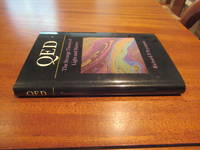
1985réf. 060434Princeton: Princeton Univ Press 1985. 1st Edition 1st Printing. Hardcover. Near Fine/Fine. X 158. Black Cloth Spine Stamped In Purple Other Printings Have Spine Stamped In Gilt. Early Printing Book With No Marking Of Later Printing Same As First Issue But Without Review Of Peierls Book On Dj Rear Flap First Printings Had An Ad For Peierls Book At The Bottom Of The Rear Flap According To A March 1986 Letter From The Publisher To Feynman. Alix G. Mautner Memorial Lecture On The Theory Of Light Written For A Popular Audience. Fine In Fine Dust Jacketpriced $18.50 Princeton Univ Press hardcover
1985réf. 060164Princeton: Princeton Univ Press 1985. 1st Edition 1st Printing. Hardcover. Near Fine/Fine. X 158. Black Cloth Spine Stamped In Purple Other Printings Have Spine Stamped In Gilt. Early Printing Book With No Marking Of Later Printing Same As First Issue But Without Review Of Peierls Book On Dj Rear Flap First Printings Had An Ad For Peierls Book At The Bottom Of The Rear Flap According To A March 1986 Letter From The Publisher To Feynman. Alix G. Mautner Memorial Lecture On The Theory Of Light Written For A Popular Audience. Book Would Be Fine No Wear But Small Area 1/2" Or Less" Of Very Light Blue Dampstaining At Top Spine Corner Of First And Last Few Pages. Former Owner's Three-Line Sophisticated Critical Comment At Bottom Of P. 19. As New Dj No Trace Of Dampstaining As Damp Spot Was On Top Of Spine Edge Of Boards And Bled Down Up To One Half Inch On Those Introductory And Final Pages Without Affecting The Book Covers Or Dj. Princeton Univ Press hardcover
1985réf. 046468Princeton: Princeton Univ Press 1985. 1st Edition 1st Printing. Hardcover. Near Fine/Fine. X 158. Black Cloth Spine Stamped In Gilt Other Printings Have Spine Stamped In Metallic Violet. Early Printing Book Without Indication Of Later Printing Same As First Issue But Without Review Of Peierls' Book On Dj Rear Flap First Printings Had An Ad For Peierls' Book At The Bottom Of The Rear Flap According To A March 1986 Letter From The Publisher To Feynman. Alix G. Mautner Memorial Lecture On The Theory Of Light Written For A Popular Audience. Book Fine No Wear Or Damage Small Owner's Name And 1988 Date At Top Of Front Free Endpaper. Dust Jacket Priced $18.50 Is Fine No Wear Spine Lettering Slightly Faded To A Greyish-Purple. Princeton Univ Press hardcover
1992réf. QS-2Reading Mass.: Addison-Wesley 1992. Frontiers in Physics series classic stemming from one of Prof. Feynman's acclaimed 1953 CalTech Quantum Mechanics courses. Topics includes theories of light and matter relativity relativistic wave equation potential problems in quantum electrodynamics propogation and potential scattering etc. 198 pgs. Illustrated. 13th Printing. Soft Cover. Fine. 8vo - over 7¾" - 9¾" tall. Addison-Wesley Paperback
1957réf. 50909Lancaster American Physical Society 1957. Lex8vo. In the original printed orange wrappers. In "Reviews of Modern Physics" Volume 29 April No. 2 1957. Entire issue offered. Lacking backtrip and stamp to front wrapper Langley Aeronautical Laboratory. Otherwise a fine a copy. Feynman Pp. 205-212. Entire issue: Pp. 159-254. First printing of the Reviews of Modern Physics issue entirely dedicated to the International Congress on Theoretical Physics held in Seattle Washington 1957. The congress turned out to be exceptionally important in the field of superconductivity and Feynman here presented his only paper on the subject even though he spend most of the 1950ies on precisely this. Feynman's work on the subject led directly to Bardeen's focus on the subject which eventually resulted on Bardenn Leon Cooper and John Robert Schrieffer published their famous BCS-theory paper in 1957:"John Bardeen already well-known for his work leading to the discovery of the transistor turned his full attention to superconductivity in 1951 having realized that the isotope effect identified the interaction between electrons that must be responsible for the phenomenon. The basic idea would be a Fermi-degenerate gas of nearly free electrons with a weakly attractive interaction by way of the lattice phonons. Solving that problem - for example finding the ground state of such a system - proved to be a difficult task. There was also the threat of powerful competition. Richard Feynman one of the masters of quantum electrodynamics could not help but notice the similarity between that problem and this one. By 1955 by then at the University of Illinois at Urbana Bardeen decided that reinforcements were needed. He called up C. N. Yang at the Institute for Advanced Study at Princeton to ask for a postdoc versed in the kind of field theory one uses in quantum electrodynamics. Yang recommended Leon Cooper. At about the same time one of Bardeen's graduate students J. Robert Schrieffer decided to work on superconductivity. The team was assembled. In the cramped quarters of the University of Illinois physics department Bardeen and Cooper had to share an office a hardship that did not prove to be an obstacle to progress. The team worked furiously in early 1957 driven in part by the feeling that Feynman was hot on the trail using powerful new techniques they knew little about. However it was not Feynman but Bardeen Cooper and Schrieffer who produced the microscopic theory" Goodstein Richard Feynman and the History of Superconductivity. unknown
1966réf. 054516Reading Massachusetts: Addison-Wesley Publishing 1966. 1st Edition 4th Printing. Soft cover. Very Good/No Dust Jacket. 11 1/4" Tall. Profusely Illustrated with Black and White Charts Graphs Diagrams and Equations. Fourth Printing July 1966. Soft Cover 1" Thick Thicker Than Hardcover!. Interior Clean And Unmarked. Covers Bright And Clean. Wear And Light Reading Creases To Spine Panel. Addison-Wesley Publishing paperback
1999réf. 048799New York: Perseus Publishing Company / Helix Books 1999. 1st Edition 1st Printing. Hardcover. Near Fine/Near Fine. 270 Pp. Black Spine Beige Boards. First Printing With Number Line Ending In "1". Very Near Fine In Very Near Fine Dj Slight Bumping. Perseus Publishing Company / Helix Books hardcover
1988réf. 058965New York: W. W. Norton & Company 1988. First Edition stated 1st Printing. Hardcover. Fine/Fine. 8 1/2" Tall. Black and White Illustrations. 255 Clean Unmarked Pages. No Inscriptions. Dj Price-Clipped. No Marks Or Names No Wear. W. W. Norton & Company hardcover
1980réf. 021829Warszawa Warsaw: Panstwowe Wydawnictwo Naukowe 1980. First Polish Edition . Printed Wrappers. Very Good. 453 Pp. Text In Polish. Light Wear And Rubbing No Chips Or Names Or Marks Very Short Tears At Top Edges Of Spine. Panstwowe Wydawnictwo Naukowe unknown
1988... Ex-lib. hardcover, very good condition, w. label, markings, embossed stamp, pocket. Llightly slanted spine, lightly bumped spine bottom, bottom corners. R. free ep. has some light soil, o/w clean, tight, unmarked. Mylar wrapped dj, taped around bo
1985réf. 010678New York and London: W. W. Norton & Company 1985. Book. Near Fine. Cloth. 1st Edition. 8vo - over 7¾ - 9¾" tall. First Edition 9th printing. Orange paper covered boards with orange cloth spine and gilt lettering to the spine. Near Fine in a Near Fine dust jacket designed by Mike McIver. Top page edges very lightly foxed. Dust jacket spine evenly sunned with scattered light foxing to it. Interior crisp tight and unmarked. . W. W. Norton & Company Hardcover books