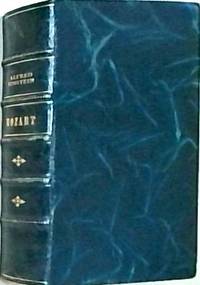
[BIOGRAPHIE] - EINSTEIN (Alfred) -Livre Rare Book
Einstein, Alfred,Biblio.com
Mozart His Character His Work
Best.-Nr. 72056-nnew. unknown

GreatBookPrices · Vereinigte Staaten57,87 $≈ 51,60 €
2.980 Ergebnisse
Best.-Nr. 200510073Stockholm, Bermann Fischer Verlag, 1947 ; in-8, 636 pp., cartonnage de l'éditeur avec jaquette. Jaquette abîmée.
1984Best.-Nr. 2-8875921334Ricordi 1984. Paperback. New. French language. 9.37x6.30x1.42 inches. Ricordi paperback
1946Best.-Nr. COD-05253Cassell and Company Ltd 1946. hardcover. Good. Good condition with light wear. Cassell and Company Ltd hardcover
Best.-Nr. 72056-nnew. unknown
Best.-Nr. M3425PMBROCHE EN ETAT CORRECT. COUVERTURE USEE, PLIS ET FROTTEMENTS MARQUES, ADHESIFS JAUNIS EN HAUT ET EN BAS DU DOS. ROUSSEURS SUR LES PREMIERES ET DERNIERES PAGES. CONTENU PROPRE. DESCLEE DE BROUWER, 1954. 594 PAGES. PHOTOS SUR DEMANDE
1954Best.-Nr. qg1811Desclée de Brouwer Broché 1954 In-8 (14,5 x 21,7 cm), broché, 594 pages ; pliures au dos, chocs sur le premier plats et les premières pages, état moyen. Livraison a domicile (La Poste) ou en Mondial Relay sur simple demande.
Best.-Nr. 19078[s.l, Paris], Desclée de Brouwer, [cop. 1954] 1 volume In-8° (14,5 x 21,7cm) Broché sous couverture au 1er plat illustré. 594p., 1 feuillet; musique. Couverture un peu frottée; traces d'un ancien adhésif de couvrure sur les gardes; rares petites marques marginales à l'encre.
Best.-Nr. Z30447SLWGallimard Broché bon état .Contenu propre .Couverture jaunie . 1992.628 pages .PHOTOS SUR DEMANDE
1954Best.-Nr. 005224Desclée De Brouwer broché Couverture Illustrée Paris 1954 589 pages en format 14 - 21 cm - portraits et notes musicales
Best.-Nr. 6655822Oxford University Press OUP . Papeback. New. pp. 512 Oxford University Press OUP unknown
Best.-Nr. DCE85AP
Best.-Nr. $A34422.- Buenos Aires. 1948. Espasa Calpe. 8º mayor. 1 tomo. 471 pgs. Con ilustraciones intercaladas y láminas fuera de texto. Plena piel nervios hierros. Pequeño sello anterior poseedor. Unas pocas anotaciones tinta en índice. Muy buen estado. . . Biografías / Música unknown
Best.-Nr. 6202528001.Gpaperback. Good. Access codes and supplements are not guaranteed with used items. May be an ex-library book. paperback
Best.-Nr. I4-4WQM-FTTZEditora Nova Fronteira. New. Editora Nova Fronteira unknown
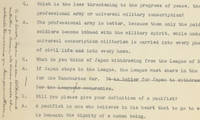
1502Best.-Nr. 2446215/02/1933. He revises the typescript of his interview with the War Resisters League of which he was Honorary Chairman and calls out William Randolph Hearst and the head of the press and film empire in Germany who aided Hitler’s rise On philosophy: “The intellect without the emotions is insignificant”; On racism: “The main thing is that minority groups should be allowed security in the community.” They ought to be “accepted with friendliness as equal members” On the press: He criticizes William Randolph Heart by name but says “The freedom of the press is necessary despite all the dangers or abuse that come with it.”. On pacifism and peace keeping: “A pacifist is one who believes in his heart that to go to war is beneath the dignity of a human being” “Society needs some form of organization for security and protection in international life” and “An international police force…is almost absolutely necessary as one step toward achieving peace. Force when used by an impartial third party to achieve law and order it's not contrary to pacifism”. This document has never previously been offered for sale and was acquired by us from the family that has had it all this time Einstein was well known as a pacifist until Hitler’s rise to power. In 1930 on his second visit to America he joined the War Resisters League and accepted the office of Honorary Chairman. Einstein spoke to the organization that year saying “True pacifists must publicly declare in time of peace that they will not take up arms under any circumstances… even if only 2% of those assigned to perform military service should announce their refusal to fight governments would be powerless they would not dare send such a large number of people to jail.” The league then issued a pamphlet “Einstein on War Resistance” that was widely read and discussed. Meanwhile back in Germany the rising Nazi movement found a convenient target in Einstein and relativity branding the latter “Jewish physics” and sponsoring conferences and book burnings to denounce Einstein and his theories. The Nazis even enlisted other physicists to denounce Einstein; “One Hundred Authors Against Einstein” was published in 1931. When asked to comment on this denunciation of relativity by so many scientists Einstein replied that to defeat relativity one did not need the word of 100 scientists just one fact. <img class=""alignnone wp-image-24605 size-post-window"" src=""https://cdn.raabcollection.com/wp-content/uploads/20231204150044/Einstein-Feb-15-1933-3-1-1600x209.jpg"" alt="""" width=""1600"" height=""209"" /> In December 1932 Einstein decided to leave Germany. The reason: it became obvious to him that his life was in danger. A Nazi organization published a magazine with Einstein’s picture and the caption “Not Yet Hanged” on the cover. There was even a price on his head. In January 1933 Einstein came to the United States to serve at the California Institute of Technology in Pasadena California as a visiting professor. The appointment of Adolf Hitler as chancellor took effect late that month and Einstein decided he would not return to his home in Germany where he had been a professor at the Berlin Academy of Sciences. He would instead return to Europe and assess the situation from there. He and his wife Elsa returned by ship to Belgium in March 1933 to find that that their residences in Germany had been raided numerous times. Einstein accepted the fact that he could not return to Germany and turned in his passport to the German consulate; he also formally renounced his German citizenship. By the summer Einstein learned that his name was on a list of assassination targets. He resided in Belgium for some months and then moved to England for a short period. On October 17 1933 he returned to the US and took up a position at the Institute for Advanced Study at Princeton in New Jersey. And there he remained until his death. On February 15 1933 after Hitler had taken power but before Einstein learned that his homes had been raided he granted an interview to the War Resisters League at the home of one of its officials John Dorland. Dorland wanted the interview to be read aloud at the upcoming March 2 meeting of the members in Pasadena. He prepared a five page typescript of the interview and sent it to Einstein to review. As Dorland said in his cover letter to Einstein “Would you be kind enough to read it and if the answers misrepresent you in any detail may we request that you revise it in such particular as we are very anxious to have these correct.” He also asked Einstein's permission to read the interview aloud. This is the original typescript of the Einstein interview sent to Einstein by Dorland complete with Einstein’s handwritten notations. It is the only such annotated interview of Einstein that we have seen and it covers important topics. <img class=""alignnone wp-image-24606 size-post-window"" src=""https://cdn.raabcollection.com/wp-content/uploads/20231204150037/Einstein-Feb-15-1933-2-1-1600x247.jpg"" alt="""" width=""1600"" height=""247"" /> On page one Einstein makes it clear he was not ready to abandon his resistance to war. “The War Resisters” he stated at the interview “are doing a fine work. They have done more than any other peace group. A strong organized minority who have declared themselves absolutely against war is very powerful.” Question from Dorland. “Can we hope to convince everybody” Answer: “Oh no we cannot convince everybody but we do not need to. One strong man is worth much and has great influence Individuals thoroughly convinced and small groups working earnestly are of the utmost value.” Q: “In trying to arouse interest is it better to appeal to the intellect or the emotions” A: “To both; the intellect without the emotions is insignificant.” On page two Einstein states that “Public protests are very valuable” as is control over munitions production. “The private munitions business is a great threat to the peace of the world and there should be government control. Public opinion is not yet awake to the atrocities of the munitions firms.” Then Dorland changes the subject to “race relations.” Einstein responded “The main thing is that minority groups should be allowed security in the community.” Then Einstein hand writes in some thoughts. If they are not afforded such security “they should isolate themselves from the rest of society since they are not accepted with friendliness as equal members.” Then some fascinating free thoughts emerge. Clearly thinking of the Jews in Germany he crosses out “It insecurity is not so bad” and instead says “They can achieve a healthy existence”. But thinking of the current situation he finishes the thought by adding at least “Up until now!” He surely had less confidence about the future. On page three Einstein discusses the part to be played by international organizations. “The main thing is organization. Disputes will always come but we must have other methods than war for settling them. Society needs some form of organization for security and protection in international life.” Einstein then writes in “Obligatory court of arbitration. Unconditional obligation of the states to accept their verdicts and enforce them.” He is then asked which is less threatening to the progress of peace a professional army or universal military conscription. Einstein answers “The professional army is better because then only the professional soldiers become imbued with the military spirit.” Asked about Japan leaving the League of Nations he hand writes “It is better to let Japan secede from the League of Nations rather than have it the League compromised by a bad compromise.” Sooner let them go than compromise principles to keep them in. Lastly he is asked for his definition of a pacifist and responds “A pacifist is one who believes in his heart that to go to war is beneath the dignity of a human being.” <img class=""alignnone wp-image-24607 size-post-window"" src=""https://cdn.raabcollection.com/wp-content/uploads/20231204150030/Einstein-Feb-15-1933-5-1-1600x242.jpg"" alt="""" width=""1600"" height=""242"" /> On page four Einstein continues by saying that a pacifist “must be active in the prevention of war; that is he must support justice arbitration and conciliation.” In terms of having some international force enforce the peace Einstein is in favor. “an international police force as suggested by the French is almost absolutely necessary as one step toward achieving peace. Force when used by an impartial third party to achieve law and order it's not contrary to pacifism. This international force would exist only for a transition perhaps 20 years.” Dorland then asks Einstein “What do you think of the control over public opinion by the press” Einstein in the interview stated it was not good but in this document he elaborated further. “The freedom of the press is necessary despite all the dangers or abuse that come with it. This is the point with the biggest dependence of the peace movement peace work on economic circumstances. Hearst in America and Hugenberg in Germany demonstrate this fact with frightening clarity”. Alfred Hugenberg was the head of a press and film empire in Germany who aided Hitler’s rise. Einstein’s comparison of William Randolph Hearst with him is interesting. He clearly feels that the press in the wrong hands motivated by profit and political power was a danger. The next question was “Are religious bodies a power for peace” Einstein’s answer: “Not greatly now.” On the final page Einstein states his belief that though no one can change human nature “we can change traditional institutions.” <img class=""alignnone wp-image-24608 size-post-window"" src=""https://cdn.raabcollection.com/wp-content/uploads/20231204150023/Einstein-Feb-15-1933-4-1-1600x231.jpg"" alt="""" width=""1600"" height=""231"" /> This document is full of gems: “The intellect without the emotions is insignificant”; “The main thing is that minority groups should be allowed security in the community.” They ought to be “accepted with friendliness as equal members”; “Society needs some form of organization for security and protection in international life”; “A pacifist is one who believes in his heart that to go to war is beneath the dignity of a human being”; “An international police force…is almost absolutely necessary as one step toward achieving peace. Force when used by an impartial third party to achieve law and order it's not contrary to pacifism”; and “The freedom of the press is necessary despite all the dangers or abuse that come with it.” This is a great and fascinating rarity. A search of public sale records going back over 40 years turns up only one other example of an Einstein annotated interview nor have we ever had one. It wasn’t long in 1933 before the intensity of the threat from Naziism convinced Einstein that only force would be a deterrent a Hitler triumph. He resigned from the War Resisters League later in 1933. To Einstein pacifism became not an absolute concept but one that had to be re-examined depending on the magnitude of the threat. <img class=""alignnone wp-image-24457 size-post-window"" src=""https://cdn.raabcollection.com/wp-content/uploads/20231204150746/Folder-site-8-1600x1327.jpg"" alt="""" width=""1600"" height=""1327"" /> unknown books
1502Best.-Nr. 2446215/02/1933. He revises the typescript of his interview with the War Resisters League of which he was Honorary Chairman and calls out William Randolph Hearst and the head of the press and film empire in Germany who aided Hitler’s rise On philosophy: “The intellect without the emotions is insignificant”; On racism: “The main thing is that minority groups should be allowed security in the community.” They ought to be “accepted with friendliness as equal members” On the press: He criticizes William Randolph Heart by name but says “The freedom of the press is necessary despite all the dangers or abuse that come with it.”. On pacifism and peace keeping: “A pacifist is one who believes in his heart that to go to war is beneath the dignity of a human being” “Society needs some form of organization for security and protection in international life” and “An international police force…is almost absolutely necessary as one step toward achieving peace. Force when used by an impartial third party to achieve law and order it's not contrary to pacifism”. This document has never previously been offered for sale and was acquired by us from the family that has had it all this time Einstein was well known as a pacifist until Hitler’s rise to power. In 1930 on his second visit to America he joined the War Resisters League and accepted the office of Honorary Chairman. Einstein spoke to the organization that year saying “True pacifists must publicly declare in time of peace that they will not take up arms under any circumstances… even if only 2% of those assigned to perform military service should announce their refusal to fight governments would be powerless they would not dare send such a large number of people to jail.” The league then issued a pamphlet “Einstein on War Resistance” that was widely read and discussed. Meanwhile back in Germany the rising Nazi movement found a convenient target in Einstein and relativity branding the latter “Jewish physics” and sponsoring conferences and book burnings to denounce Einstein and his theories. The Nazis even enlisted other physicists to denounce Einstein; “One Hundred Authors Against Einstein” was published in 1931. When asked to comment on this denunciation of relativity by so many scientists Einstein replied that to defeat relativity one did not need the word of 100 scientists just one fact. <img class=""alignnone wp-image-24605 size-post-window"" src=""https://cdn.raabcollection.com/wp-content/uploads/20231204150044/Einstein-Feb-15-1933-3-1-1600x209.jpg"" alt="""" width=""1600"" height=""209"" /> In December 1932 Einstein decided to leave Germany. The reason: it became obvious to him that his life was in danger. A Nazi organization published a magazine with Einstein’s picture and the caption “Not Yet Hanged” on the cover. There was even a price on his head. In January 1933 Einstein came to the United States to serve at the California Institute of Technology in Pasadena California as a visiting professor. The appointment of Adolf Hitler as chancellor took effect late that month and Einstein decided he would not return to his home in Germany where he had been a professor at the Berlin Academy of Sciences. He would instead return to Europe and assess the situation from there. He and his wife Elsa returned by ship to Belgium in March 1933 to find that that their residences in Germany had been raided numerous times. Einstein accepted the fact that he could not return to Germany and turned in his passport to the German consulate; he also formally renounced his German citizenship. By the summer Einstein learned that his name was on a list of assassination targets. He resided in Belgium for some months and then moved to England for a short period. On October 17 1933 he returned to the US and took up a position at the Institute for Advanced Study at Princeton in New Jersey. And there he remained until his death. On February 15 1933 after Hitler had taken power but before Einstein learned that his homes had been raided he granted an interview to the War Resisters League at the home of one of its officials John Dorland. Dorland wanted the interview to be read aloud at the upcoming March 2 meeting of the members in Pasadena. He prepared a five page typescript of the interview and sent it to Einstein to review. As Dorland said in his cover letter to Einstein “Would you be kind enough to read it and if the answers misrepresent you in any detail may we request that you revise it in such particular as we are very anxious to have these correct.” He also asked Einstein's permission to read the interview aloud. This is the original typescript of the Einstein interview sent to Einstein by Dorland complete with Einstein’s handwritten notations. It is the only such annotated interview of Einstein that we have seen and it covers important topics. <img class=""alignnone wp-image-24606 size-post-window"" src=""https://cdn.raabcollection.com/wp-content/uploads/20231204150037/Einstein-Feb-15-1933-2-1-1600x247.jpg"" alt="""" width=""1600"" height=""247"" /> On page one Einstein makes it clear he was not ready to abandon his resistance to war. “The War Resisters” he stated at the interview “are doing a fine work. They have done more than any other peace group. A strong organized minority who have declared themselves absolutely against war is very powerful.” Question from Dorland. “Can we hope to convince everybody” Answer: “Oh no we cannot convince everybody but we do not need to. One strong man is worth much and has great influence Individuals thoroughly convinced and small groups working earnestly are of the utmost value.” Q: “In trying to arouse interest is it better to appeal to the intellect or the emotions” A: “To both; the intellect without the emotions is insignificant.” On page two Einstein states that “Public protests are very valuable” as is control over munitions production. “The private munitions business is a great threat to the peace of the world and there should be government control. Public opinion is not yet awake to the atrocities of the munitions firms.” Then Dorland changes the subject to “race relations.” Einstein responded “The main thing is that minority groups should be allowed security in the community.” Then Einstein hand writes in some thoughts. If they are not afforded such security “they should isolate themselves from the rest of society since they are not accepted with friendliness as equal members.” Then some fascinating free thoughts emerge. Clearly thinking of the Jews in Germany he crosses out “It insecurity is not so bad” and instead says “They can achieve a healthy existence”. But thinking of the current situation he finishes the thought by adding at least “Up until now!” He surely had less confidence about the future. On page three Einstein discusses the part to be played by international organizations. “The main thing is organization. Disputes will always come but we must have other methods than war for settling them. Society needs some form of organization for security and protection in international life.” Einstein then writes in “Obligatory court of arbitration. Unconditional obligation of the states to accept their verdicts and enforce them.” He is then asked which is less threatening to the progress of peace a professional army or universal military conscription. Einstein answers “The professional army is better because then only the professional soldiers become imbued with the military spirit.” Asked about Japan leaving the League of Nations he hand writes “It is better to let Japan secede from the League of Nations rather than have it the League compromised by a bad compromise.” Sooner let them go than compromise principles to keep them in. Lastly he is asked for his definition of a pacifist and responds “A pacifist is one who believes in his heart that to go to war is beneath the dignity of a human being.” <img class=""alignnone wp-image-24607 size-post-window"" src=""https://cdn.raabcollection.com/wp-content/uploads/20231204150030/Einstein-Feb-15-1933-5-1-1600x242.jpg"" alt="""" width=""1600"" height=""242"" /> On page four Einstein continues by saying that a pacifist “must be active in the prevention of war; that is he must support justice arbitration and conciliation.” In terms of having some international force enforce the peace Einstein is in favor. “an international police force as suggested by the French is almost absolutely necessary as one step toward achieving peace. Force when used by an impartial third party to achieve law and order it's not contrary to pacifism. This international force would exist only for a transition perhaps 20 years.” Dorland then asks Einstein “What do you think of the control over public opinion by the press” Einstein in the interview stated it was not good but in this document he elaborated further. “The freedom of the press is necessary despite all the dangers or abuse that come with it. This is the point with the biggest dependence of the peace movement peace work on economic circumstances. Hearst in America and Hugenberg in Germany demonstrate this fact with frightening clarity”. Alfred Hugenberg was the head of a press and film empire in Germany who aided Hitler’s rise. Einstein’s comparison of William Randolph Hearst with him is interesting. He clearly feels that the press in the wrong hands motivated by profit and political power was a danger. The next question was “Are religious bodies a power for peace” Einstein’s answer: “Not greatly now.” On the final page Einstein states his belief that though no one can change human nature “we can change traditional institutions.” <img class=""alignnone wp-image-24608 size-post-window"" src=""https://cdn.raabcollection.com/wp-content/uploads/20231204150023/Einstein-Feb-15-1933-4-1-1600x231.jpg"" alt="""" width=""1600"" height=""231"" /> This document is full of gems: “The intellect without the emotions is insignificant”; “The main thing is that minority groups should be allowed security in the community.” They ought to be “accepted with friendliness as equal members”; “Society needs some form of organization for security and protection in international life”; “A pacifist is one who believes in his heart that to go to war is beneath the dignity of a human being”; “An international police force…is almost absolutely necessary as one step toward achieving peace. Force when used by an impartial third party to achieve law and order it's not contrary to pacifism”; and “The freedom of the press is necessary despite all the dangers or abuse that come with it.” This is a great and fascinating rarity. A search of public sale records going back over 40 years turns up only one other example of an Einstein annotated interview nor have we ever had one. It wasn’t long in 1933 before the intensity of the threat from Naziism convinced Einstein that only force would be a deterrent a Hitler triumph. He resigned from the War Resisters League later in 1933. To Einstein pacifism became not an absolute concept but one that had to be re-examined depending on the magnitude of the threat. <img class=""alignnone wp-image-24457 size-post-window"" src=""https://cdn.raabcollection.com/wp-content/uploads/20231204150746/Folder-site-8-1600x1327.jpg"" alt="""" width=""1600"" height=""1327"" /> unknown
2004Best.-Nr. Q-030010023XYale University Press 2004-06-10. Hardcover. New. In shrink wrap. Looks like an interesting title! Yale University Press hardcover
2004Best.-Nr. Q-0300105703Yale University Press 2004-07-01. Paperback. New. In shrink wrap. Looks like an interesting title! Yale University Press paperback
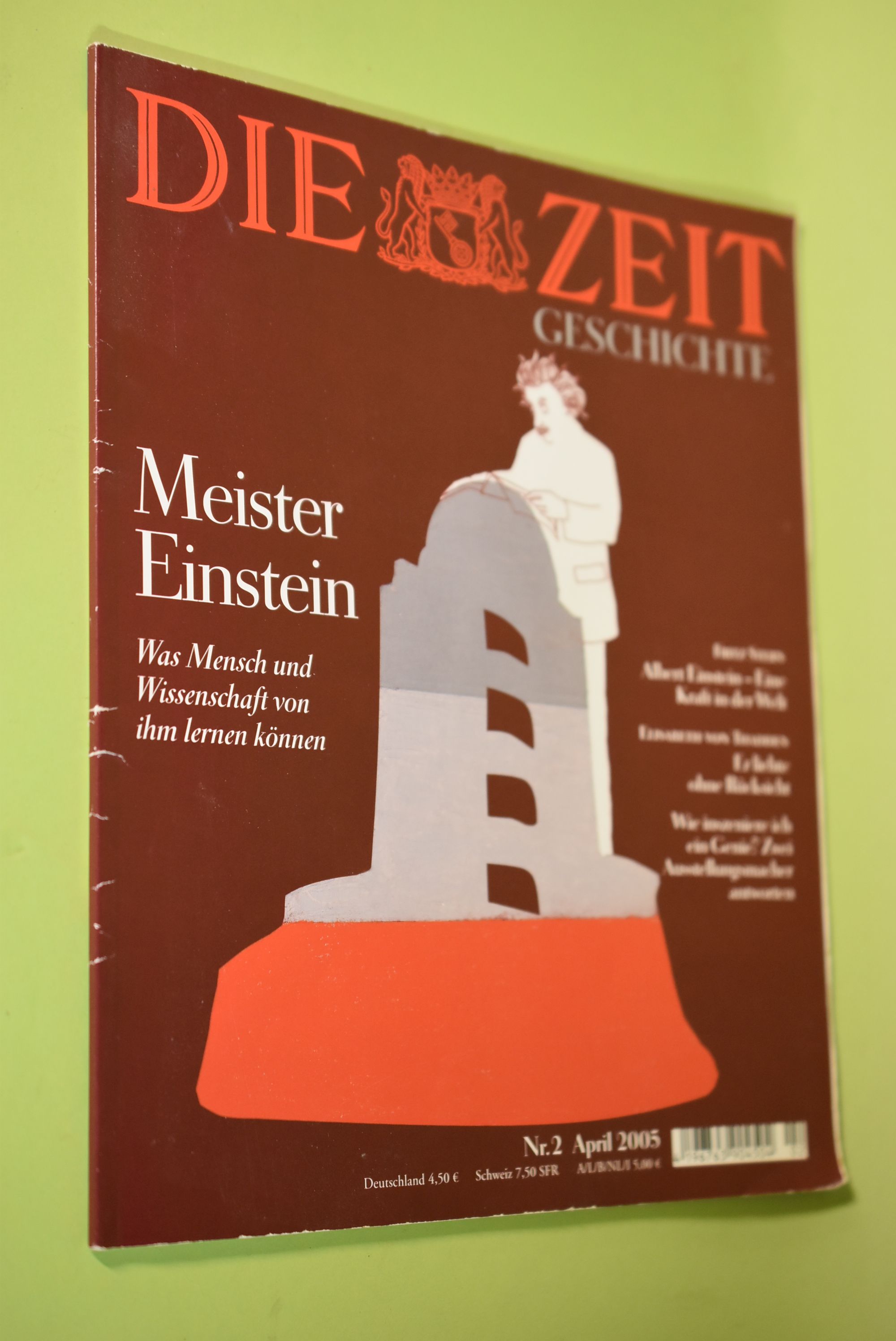
2005Best.-Nr. 79186Hamburg : Zeitverl. Bucerius 2005. 80 S. : Ill. ; 27 cm Heft 0
1934Best.-Nr. 58250ABAmsterdam Querido Verlag. 1934. 269 S. Originalleinwand.
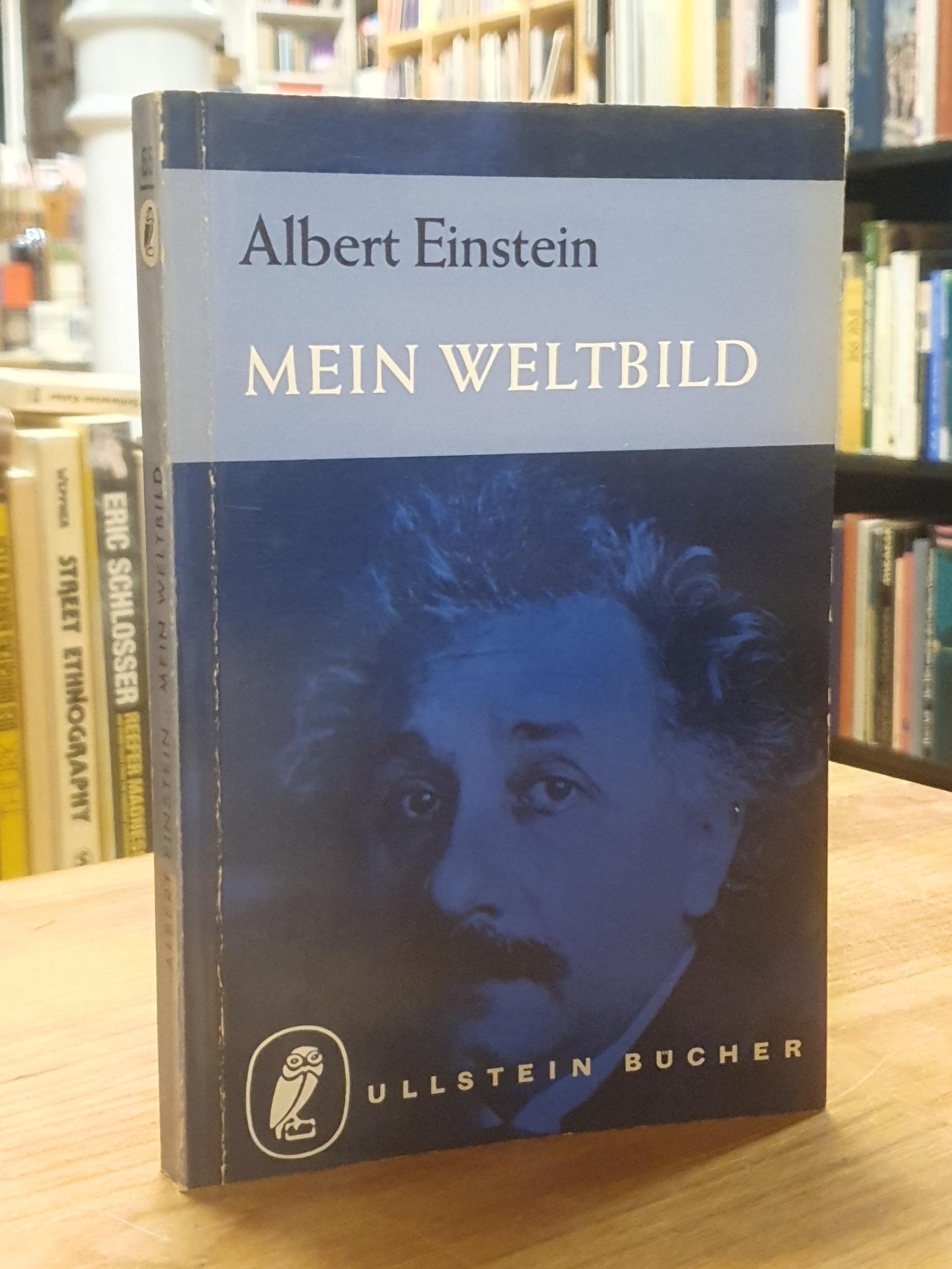
1962Best.-Nr. 15517BBFrankfurt/M., Ullstein, 1962. 8°, 200 S., farbig illustr. original Kartonage (Paperback), neue, vom Verfasser durchgesehene und wesentlich e Rückdeckel mit einem 7cm langen Längskickchen parallel zur Außenkante, ebendort ein 3mm-Randrisschen, Einbandkanten stellenweise berieben, Papier ein wenig nachgedunkelt, sonst ein gutes, sauberes, anstreichungsfreies Exemplar
1974Best.-Nr. RO60085762Ullstein. 1974. In-12. Broché. Bon état, Couv. légèrement pliée, Dos satisfaisant, Intérieur acceptable. 200 pages.. . . . Classification Dewey : 430-Langues germaniques. Allemand
Best.-Nr. 148205Amsterdam 1934. Orig. helshirtingbd. 269 s. Navn på tittelbl. . Boken befinner seg på et fjernlager og ekstra leveringstid må beregnes! unknown
Best.-Nr. 10361210-6Taylor & Francis Group. Used - Very Good. Former library copy. Pages intact with possible writing/highlighting. Binding strong with minor wear. Dust jackets/supplements may not be included. Includes library markings. Stock photo provided. Product includes identifying sticker. Better World Books: Buy Books. Do Good. Taylor & Francis Group unknown
2004Best.-Nr. 9760095Lawrence Erlbaum Associates 2004. This is an ex-library book and may have the usual library/used-book markings inside.This book has hardback covers. In good all round condition. No dust jacket. Please note the Image in this listing is a stock photo and may not match the covers of the actual item650grams ISBN:9780805842418 Lawrence Erlbaum Associates hardcover