213 Ergebnisse
1979Best.-Nr. 300955Princeton Princeton University Press 1979. 1979. First edition. Selected and edited by Helen Dukas and Banesh Hoffman. Frontispiece b/w portrait. Original German texts; chronology. Dust jacket price clipped. Very good. 167 pages. No signatures or bookplates. 1st Edition. Hardcover. Very Good/Very Good. Princeton, Princeton University Press [1979]. hardcover books
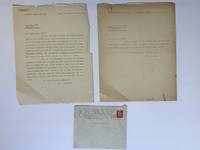
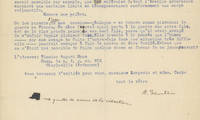
Best.-Nr. 342445/11/19. A remarkable letter before his great fame referencing and shown to Marie Curie Einstein who helped free so many from the jaws of Nazism makes an impassioned plea for a World War I German POW in France who would escape but later die in the Holocaust In 1905 while a young patent clerk and physicist in Bern Switzerland Albert Einstein obtained his doctorate and published a paper that explained his newly developed Special Theory of Relativity. This unlocked many mysteries of the universe and introduced the world to the idea equating mass and the speed of light with energy which we know today as e=mc2. Einstein's insight and one element that distanced his work from that of Newton was to recognize that mc2 was the proper energy of mass the energy associated with that mass and was independent of its motion. Mass must be measured in this way as resting mass. This was a foundation of e=mc2. The breakdown of molecules therefore released energy. This energy is often used by cells to perform work such as powering movement. In the early years of the 20th century thanks to the development of mass spectrographs science had acquired the capacity to ""weigh"" atoms with extreme precision. Indeed Einstein provided the theoretical explanation for Brownian motion while French Chemist Perrin experimentally verified Einstein's theory solidifying the evidence for the existence of atoms. Scientists among them Perrin noted that when comparing the mass of a helium nuclei to that of the four elementary nuclei it was made of there was a slight discrepancy—one helium atom was slightly lighter than four hydrogen atoms; in other words the whole was smaller than the sum of the parts. Where did the missing mass go Einstein knew the answer: in accordance with his famous E=mc_ equation a tiny fraction of the mass had been transformed into a formidable quantity of energy. <img class=""alignnone wp-image-34256 size-post-window"" src=""https://cdn.raabcollection.com/wp-content/uploads/20250724151316/Einstein-Nov-1919-1-1600x709.jpg"" alt="""" width=""1600"" height=""709"" /> The French mathematician Paul Langevin understood the formidable source of energy that resulted from these ""transmutations."" But it was Jean Perrin a professor of physical chemistry in Paris who first proposed in 1919 that the fusion of hydrogen into helium was the energy source of the Sun and stars accounting for the billions of years of sunshine past and the billions of years to come. During this time radiation studies too were in their infancy. Marie Curie famously decided to do her thesis on radiation recently discovered in uranium by Henri Becquerel. She found that an ore containing uranium was far more radioactive than could be explained by its uranium content. This led her and her husband Pierre to the discovery of a new element that was 400 times more radioactive than uranium. In 1898 it was added to the Periodic Table as polonium named after Curie’s birth country. Then Curie discovered an even more radioactive element radium and through observation of radium made a fundamental discovery: Radiation wasn’t dependent on the organisation of atoms at the molecular level; something was happening inside the atom itself. The atom was not as scientists believed at the time inert indivisible or even solid. This discovery led to an overlapping one: At the time people did not know what powered the Sun. Many however thought it was Radium. Perrin was one of those who believed this. His hypothesis borrowing from E=MC2 was that radiation in the form of Radium was emanating from bodies like earth causing the breakdown of molecules on the Sun and that the breakdown was powering the Sun and other stars. In 1919 Perrin sent to Einstein his new publication proposing this theory. Einstein's response notes the breakdown of molecules and the released energy can likely be accomplished by other means than radiation. He uses the mathematical equation for the breakdown of one molecule into atoms. He references a first order reaction a chemical reaction where the rate of the reaction is directly proportional to the concentration of only one reactant. In simpler terms if you double the concentration of that reactant you double the reaction rate. A common example is radioactive decay. And he gives his best to the Madame Curie. Einstein had last met in Paris with Perrin Pierre Langevin Professor of Experimental Physics at the Collège de France and Curie then Professor of Physics at the Sorbonne on the occasion of Einstein’s lecture to the French Physical Society in late March 1913. They first met at the Solvay Congress in Brussels in autumn 1911. At the same time Einstein who helped so many Jews escape Germany during World War II had a distant cousin the geologist August Moos who had volunteered in the German infantry at the start of the First World War in 1914. After being taken prisoner in 1915 he made several attempts to escape which resulted in a sentence that prevented his release after the armistice of 1918. His mother asked for help from Einstein who turned to his friend Perrin as well as mathematician and statesman Paul Painlevé asking them to intercede. Moos was finally released in February 1920. He would work as an oil geologist in the interwar period before being tragically arrested due to his Jewish heritage under the Nazi regime. Moos would die in the Buchenwald concentration camp during World War II. Typed letter signed in French signed “A. Einstein"" November 5 1919 to Professor Jean Baptiste Perrin who would go on to win the Nobel Prize for Physics in 1926 for his work on the atomic structure of matter. ""Dear Perrin! I received your publications and thank you cordially. Your opinion of the primary importance of radiation for all chemical reactions still seems to me dubious even if it was certain which it is not that reactions of the type J_ - JJ added by hand are of the first order. It would be possible for example that J_ molecules whose internal energy exceeds a certain limit would decompose in accordance with radioactive bodies. ""One more prayer. One of the parents of one of my cousins—a geologist—is a prisoner of war in France. His widowed mother having lost her other son in the war is in the greatest pain for her only son since he had tried to flee several times. She shudders at the thought that the man—through his old efforts to flee in a very difficult situation—might try to flee again and be shot. Wouldn't it be possible to do something for this young scholar"" He goes on to give the address of August Moos held in Charleville Ardennes and concludes by offering his ""many friendships for you Mr. Langevin and Madame Curie."" Below he notes an ink spill draws an arrow and writes ""drop of editorial sweat from editing."" Perrin responded the very same day confirming that he believed rays from Earth were breaking down molecules in the sun and that he assumed the first order nature of the reaction. In other words he did not agree with Einstein that radiation was not breaking down molecules releasing energy and powering the sun. ""I do indeed believe that I2 Einstein used J but Perrin used I decomposes like radioactive bodies and I devoted a chapter of my work to this but precisely on the conviction that radioactive bodies like I2 are decomposed by light for radium ultra-short X rays emanating from the Earth at _ = 10–11 light which suddenly increases the internal energy. I read your letters to Mrs. Curie and to Langevin. They too send you their very best regards."" Perrin and In addition to this important family and political content Einstein comments on a theory that Perrin had developed in which all chemical transformations including radioactive decay are triggered by radiation calling it ""dubious."" Also significant is the date: one day before the official report of Eddington's expedition debuted before the Royal Society of London confirming Einstein's theory of general relativity. Widespread newspaper coverage of the results vaulted Einstein into immediate international fame. An altogether remarkable letter from one Nobel Prize winner to another shown to yet a third and using the chemical equation for the breakdown of molecules into atoms in his own hand. <img class=""alignnone wp-image-25018 size-post-window"" src=""https://cdn.raabcollection.com/wp-content/uploads/20231204144051/Folder-site-11-1600x1327.jpg"" alt="""" width=""1600"" height=""1327"" /> unknown books
1954Best.-Nr. 2625423/02/1954. An increasingly uncommon letter of Einstein on the role of religions philosophy peace and the dangers of the atomic age that he helped usher in <img class=""alignnone wp-image-26334 size-post-window"" src=""https://cdn.raabcollection.com/wp-content/uploads/20231204132831/Einstein-Feb-28-1954-1-e1674939062835-1600x216.jpg"" alt="""" width=""1600"" height=""216"" /> Albert Einstein believed that wars stood in the way of human progress and he was a lifelong pacifist though he did not believe in pacifism at any price or in all situations. He was also an active promoter of world peace from the days of World War I right up to his death in 1955. In fact one of his last acts before his death was to add his signature to a statement of nine scientists warning that the world risked universal annihilation unless the institution of war was abolished. Knowing his stance people from all over the world appealed to him to assist various causes consistent with these beliefs and to give statements supporting individuals and groups that did so. Einstein was also not a member or follower of any organized religion. He considered himself a Jew but was not a practicing Jew. And as for the Christian churches he felt that it “since Constantine has always favored the authoritarian State as long as the State allows the Church to baptize and instruct the masses"". Their conduct in the years up to World War II was worse than disappointing he thought as they made the devil’s bargain - the evil compromise - with the Hitler regime. Einstein addressed this saying “Since when can one make a pact with Christ and Satan at the same time"" He added ""The Church has always sold itself to those in power and agreed to any bargain in return for immunity…If I were allowed to give advice to the Churches I would tell them to begin with a conversion among themselves and to stop playing power politics.” This idea of an evil compromise or devil's pact is central to his feelings about organized religion. There was one exception to his criticism of religions - the Quakers. Their community aims at purifying the Christian world and generating social reform by creating direct experience with God without intervention of clergy or other expressions of church. The Quakers greatly influenced science and industry and their community is noted for the pursuit of peace and non-violence. Thus Einstein’s views fit into their belief system. “If I were not a Jew I would be a Quaker” he once wrote. Speaking to a Quaker gathering in 1938 he said ""With admiration and respect I have seen in the course of many years how successfully and selflessly the Society of Friends has worked in the entire world to lessen human suffering and to make the teachings of Christ apply to real life. Everyone who is concerned about a better lot and a more dignified stature for humanity owes deep gratitude to the Society of Friends. This Society is an admirable testimony against the assertion that every organization by its very nature kills the spirit which has called it into life.” <img class=""alignnone wp-image-26335 size-post-window"" src=""https://cdn.raabcollection.com/wp-content/uploads/20231204132818/Einstein-Feb-28-1954-2-e1674939294283-1600x653.jpg"" alt="""" width=""1600"" height=""653"" /> In 1949 the Australian pathologist Alton R. Chapple who was a Quaker wrote to Einstein in the then-current climate of concern regarding the perils of the atomic age for ""a few words of leadership and hope"". Einstein responded stressing the necessity for moral courage by the individual. He said that power is often in the hands of power-loving persons who know very little restrictions when it comes to the realization of their ambitious goals; and answering negatively the question whether self-restraint on what “productive thinkers and explorers” research might not prevent further development of means of mass destruction. He gave three main reasons: 1 The already existing means of destruction are effective enough to bring about total destruction; 2 People really devoted to the progress of knowledge concerning the physical world like Faraday or Rutherford have never worked for practical goals let alone military goals. And nobody could know in advance what kind of application might be developed on the basis of their discoveries; and 3 People of technical skill are so numerous and so dependent economically that they cannot be expected to refuse employment offered them by the state or private industry even if they were able to clearly recognize that their work will lead to disaster on a world-wide scale. He concluded that hope can only be based on the intellectual and moral independence of a sufficient number of people since “honesty and courage of the individual to stand up for his convictions on every occasion is the only essential thing”. Chapple wrote Einstein again in 1954 about the Quakers and a perceived contradiction that Chapple discerned in the 1949 letter thinking that Einstein stated that he does not expect people to refuse to work in research that generates knowledge for the means of mass destruction. Einstein responded to Chapple giving a virtual primer on his world view and opinions on how a religion and religious individuals could live a moral life and contribute something valuable to society and the cause of peace. This he felt the Quakers did. Typed letter signed on his blind-embossed letterhead Princeton February 23 1954 to Alton Chapple in Australia illuminating Einstein’s judgment and standards of conduct. “Thank you for your letter of February 16th. I consider the Society of Friends the religious community which has the highest moral standards. As far as I know they have never made evil compromises and are always guided by their conscience. In international life especially their influence seems to me to be very beneficial and effective. “There seems to me to be no contradiction in my remarks in my former letter to you. The rules applying to a moral elite can not be expected to be followed by the rank and file.” So here Einstein praises those religions with “the highest moral standards”. He especially lays out the need for them and for individuals to avoid “evil” compromises and to always be guided by conscience. If an individual does these things or a dedicated group like the Quakers they will gain influence that is both beneficial and effective. Einstein does stand by his statement in the 1949 letter maintaining that from his experience moral elites lead and that those in rank and file don’t necessarily follow that lead. In a sense he is saying that an ethical elite exercising leadership has the best chance of saving the world. An increasingly uncommon letter of Einstein on philosophy peace the role of religions and religious individuals and the dangers of the atomic age that he helped usher in. <img class=""alignnone wp-image-25018 size-post-window"" src=""https://cdn.raabcollection.com/wp-content/uploads/20231204144051/Folder-site-11-1600x1327.jpg"" alt="""" width=""1600"" height=""1327"" /> unknown books
Best.-Nr. 2034512/12/30. We obtained this photograph directly from the Guard heirs and it has never before been offered for sale In December 1930 Albert Einstein visited America for the second time. It was originally intended as merely a two-month working visit as a research fellow at the California Institute of Technology but Einstein’s popularity made the trip headline news. After arriving in New York City Einstein was taken to various places and events including Chinatown a lunch with the editors of The New York Times and a performance of Carmen at the Metropolitan Opera on December 12 where Einstein an opera buff who revered Mozart Bach and other great composers was cheered by the audience on his arrival. William Guard was engaged by the Manhattan Opera Company as a press representative upon its organization in 1906. Upon the company's dissolution he took a similar position with the Metropolitan Opera remaining with the company until his death in 1932. Einstein met Guard at his office on his visit to the Met. <img class=""alignnone wp-image-26178 size-post-window"" src=""https://cdn.raabcollection.com/wp-content/uploads/20231204133729/Einstein-Opera-1-e1673307039907-1600x1193.jpg"" alt="""" width=""1600"" height=""1193"" /> Newspapers reported on December 14 1930: “Einstein Theory Defined in Sentence”. “At last Prof. Einstein has hit upon a one sentence definition of relativity which anyone can understand. He was chatting recently in the office of William Guard factotum of the Metropolitan Opera. ‘Professor’ said Guard ‘I have a definition of your relativity theory and I would like to know if it is correct.’ The Professor smiled. There are presumed to be only a handful of wise men in the entire world who are able to understand it. ‘My definition is this’ said Guard. ‘There is no hitching post in the universe—so far as we know.’ Einstein laughed and nodded assent vigorously.” A spectacular 8 by 10 inch photograph of Einstein inscribed and presented by the great scientist to Guard on his visit to the Met: ""Mr. William J. Guard / A. Einstein / 12. XII.30.” We obtained this photograph directly from the Guard heirs and it has never before been offered for sale. unknown books
1931Best.-Nr. 1403337Potsdam Germany 1931. Two letters by Albert Einstein. The first is a single-paged autograph letter signed by Albert Einstein with one horizontal fold and one vertical fold. In Very Good condition . Measuring 22.5 x 28.5 cm. Letter accompanied with mailing envelope both with matching paper-clip rust stain. Letter with some light wear along edges small staining to lower corner. Addressed to G. W. Meyer and dated 8 Oktober 31 in Potsdam the Letter reads in full: "Sehr geehrter Herr! Indem ich Ihnen für die Uebersendung des Buches von Henry George bestens danke sende ich Ihnen anliegend die gewünschte Meinungsäusserung mit der Bitte um Weiterleitung an Mrs. Evans. Mit ausgezeichneter Hochachtung" and signed in ink "A. Einstein". He thanks Meyer for serving as an intermediary in getting a book to him and for forwarding the enclosed letter. The second letter is a typed copy of Einstein's previously enclosed letter presumably made by Meyer before he passed the original on to Evans. Addressed to R. W. Evans and dated 8.10.1931 in Potsdam the letter discusses Henry George's economic theory of poverty and land nationalization compares it to Franz Oppenheimer's work and proposes questions to be asked. Presumably he was sent a copy of Henry George's Progress and Poverty. First published in 1879 it sparked the Progressive Era discussing the paradox of increasing inequality and poverty amid economic and technological progress as well as the economic value of land. Consignment. Shelved Case 3. The Letter reads in full: "Sehr geehrte Mrs. Evans! Ich habe das Buch von Henry George zum grössten Teil mit ausserordentlichem Interesse gelesen und glaube dass es in der Hauptsache einen unanfechtbaren Standpunkt vertritt insbesondere was die Ursache der Armut betrifft. Nie in diesem Buch vertretenen Ansichten stimmen soweit ich es beurteilen kann vollkommen mit den Resultaten des zeitgenössischen Professors Franz Oppenheimer überein der sie offenbar selbständig herausgefunden hat. Nicht einverstanden bin ich mit der Theorie des Zinses. Mit dem vorgeschlagenen Heilmittel der Verstaatlichung des Bodens und der Bodenschätzung scheint mir allerdings mehr ein Problem als eine Lösung gegeben zu sein. Soll z. Beispiel ein Boden Eigentum der Gemeinschaft das darauf hingestellte Haus aber Privateigentum sein Jedenfalls ist es schon von höchster Wichtigkeit dass das Wesen des Uebels klar aufgezeigt ist. Schon darum wäre es wichtig wenn das Buch die ihm gebührende Beachtung fände. Mit ausgezeichneter Hochachtung gez. A. Einstein." 1403337. Shelved Dupont Bookstore. unknown books
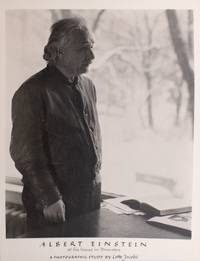
1940Best.-Nr. 3293321940. Black and white photographic print. 6 1/2 x 4 7/8 in. Fine. Black and white photographic print. 6 1/2 x 4 7/8 in. unknown books
1920Best.-Nr. 43308Berlin: Springer 1920. 15pp. 221 x 146 mm. Original printed wrappers foxed. Minor internal foxing but very good. First edition cover title does not include the date Einstein delivered his lecture; see Weil. "By royal decree of June 24 1920 a special chair in Leiden University was created for Einstein enabling him to come to that university for short periods of his choosing. On October 27 1920 Einstein began his new position with an inaugural address on aether and relativity theory" Pais Subtle is the Lord p. 313. Weil Albert Einstein Bibliography 111. Springer unknown books
1920Best.-Nr. 37403Berlin: Springer 1920. Springer unknown books
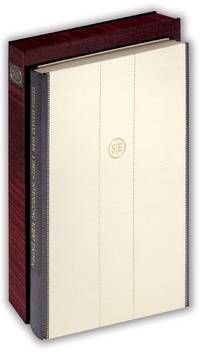
Best.-Nr. 35452Rockport ME: Two Ponds Press 2015. Fine. Number 35 of 75 copies signed and numbered by Joseph Goldyne. Joseph Goldyne was born in 1942 in Chicago IL. He came to prominence as an artist on the West Coast. He has been credited as one of the artists responsible for the rebirth of monotype and monoprint as valuable approaches to art. He is also known for his artist's books often done in collaboration with printer Peter Rutledge Koch. From the Prospectus: "Joseph Goldyne brought this project to our attention and the Press was convinced that this little-known oratory by George Bernard Shaw deserved wider recognition one that Goldyne thought a most unexpectedly wondrous and humorous introduction to Albert Einstein perhaps the most transformative and towering figure of the twentieth century. Goldyne's own introduction " An Introduction to an Introduction" speaks to his discovery of Shaw's speech its presentation Shaw's record of condemning anti-Semitism and his public support for Einstein. The full text of Shaw's speech is reprinted together with Einstein's response delivered in German and printed here in English translation. Goldyne illustrates the volume with five drypoint etchings created especially for this publication. They pay tribute to the featured speakers as well as to the sense of the event." Beautifully bound in cream paper covered boards with gilt dotted rulings and ornament on front cover of circle with initials "SE" in its center. Gray leather spine and trim along front edges with gilt titling on spine. Printed in Monotype Bembo and Gill Sans types on paper handmade at the Velké Losiny mill in the Czech Republic. Letterpress printing by Arthur Larson at Horton Tank Graphics with additional hand composition by Rose Ku'ulealoha Wisotzky. Design and typography planned by Michael Russem Housed in a slipcase covered in dark red cloth with "SE" symbol on spine. Accompanied by prospectus. A lovely book in fine condition. Measures 6.5 x 10 inches. 39 pages. PRI/112321. Two Ponds Press unknown books
1947Best.-Nr. 222250New York: Dorset Press 1947. Hardcover. Near Fine/Very Good. Second edition. Near fine in very good dust jacket. Slight spine lean. Dorset Press hardcover books
Best.-Nr. MA06C-03367Pantheon Irodalmi Intezet. Used - Acceptable. Budapest: Pantheon Irodalmi Intezet 1922. 12mo hardcover. Rebound gray cloth with original front paper wrap bound in. 94pp. Hungarian. Fair book. Ex-Library copy from the New York Public Library with usual markings and pocket on front pastedown in Hungarian. Dampstaining and red paint flecks on front board. Upper corner dampstained throughout. Albert Einstein Theory of Relativity Books in Hungarian Inquire if you need further information. Pantheon Irodalmi Intezet hardcover books
Best.-Nr. 504141 First Edition journal issue. The brilliant follow-up to Einstein's landmark 1905 paper on the photoelectric effect. In the 1905 paper Einstein had explained the photoelectric effect-the emission of electrons from a metal when irradiated by light-by making the revolutionary proposal that light rather than consisting of continuous waves was instead made up of discrete particles of energy "light quanta" which transferred their entire payload of energy to an electron on impact. In the 1905 paper Einstein made use of Planck's mathematical formula for blackbody radiation which had introduced the concept of energy quanta but he was only able to derive part of the formula. In his 1906 paper Einstein "used his statistical mechanics to demonstrate that when light interacts with matter Planck's entire formula can arise only from the existence of light quanta-not from waves" Cassidy; emphasis ours. Einstein had realized as he stated in the present paper that "'Planck's theory makes implicit use of the . . . light-quantum hypothesis' . . . his acceptance of Planck's formula albeit as a hypothesis led to a major advance in his own work" Pais Subtle is the Lord p. 378. In 1921 Einstein was awarded the Nobel Prize in physics for his work on the photoelectric effect. Cassidy David "Einstein on the Photoelectric Effect." Einstein: Image and Impact. American Institute of Physics n.d. Web. Accessed 09 July 2014. Shields "Writings of Albert Einstein" in Albert Einstein: Philosopher-Scientist 1948 pp. 689-758 no. 13; also included in Shields' "Chronological list of principal works" on p. 757. Weil Albert Einstein: A Bibliography no. 12. 2 First Edition journal issue of Einstein's second paper on the inertia of energy following his 1905 paper "Ist die Trägheit eines Körpers von seinem Energieinhalt abhängig" Is the inertia of a body dependent on its energy content. In the present paper Einstein presented another argument in support of the proposition that a body's energy depends on its energy content. "About a year after he first introduced the inertia of energy Einstein published a paper entitled "The Principle of the Conservation of the Center of Gravity and the Inertia of Energy" in which he showed that E = mc2 is necessary and sufficient to ensure that the center-of-mass theorem holds for systems in which 'not only mechanical but also electromagnetic processes take place' . . . As Einstein acknowledges his paper is similar to Poincaré's contribution to the Lorentz Festschrift 1900. Einstein showed that in order to avoid the kind of violations of the center-of-mass theorem discussed by Poincaré one has to assume that energy has inertia" Janssen pp. 39-40. Janssen "The Trouton experiment E = mc2 and a slice of Minkowski space-time" in Revisiting the Foundations of Relativistic Physics: Festschrift in Honor of John Stachel 2003 pp. 27-54. Weil Albert Einstein Bibliography 13. . unknown books
1912Best.-Nr. 50338Leipzig: Johann Ambrosius Barth 1912. Einstein Albert 1879-1955. 1 Lichtgeschwindigkeit und Statik des Gravitationsfeldes pp. 355-369. Weil 47 Boni 43. 2 Zur Theorie des statischen Gravitationsfeldes pp. 443-458. Weil 48 Boni 44. 3 Nachtrag zu meiner Arbeit: "Thermodynamische Begrundung des photochemischen Aquivalentgesetzes" pp. 881-885. Weil 46 Boni 42. 4 Antwort auf eine Bemerkung von J. Stark: "Uber eine Anwedung des Planckschen Elementargesetzes" pp. 888. Weil 49 Boni 45. 5 Relativitat und Gravitation. Erwiderung auf eine Bemerkung des Hrn. A. Einstein pp. 1059-1064. Weil 50 Boni 46. In Annalen der Physik 38 1912. Red cloth with gilt lettering on the spine. Whole volume: 1064 pp. 8 plates. Text-figs. 210 x 130 mm. Very good copy. Approximate English translations of titles with brief explanations of referenced paper if available: 1 "The speed of light and the statics of the gravitational field." "Further exploring his studies of gravitation based on the equivalence principle Einstein sees with growing clarity that gravitation is intimitely linked with the problem of the measurement of space and time" p. 292. Calaprice Kennefick & Shulmann. An Einstein Encyclopedia. 2015.; 2 "On the theory of the static gravitational field." "Einstein more closely analyzes the equations of motion stated in no. 1 above concluding that those equations cannot be reconciled with the given field equations for c . . . because the principle of "action equals reaction" is violated. p. 290. Calaprice Kennefick & Shulmann. An Einstein Encyclopedia. 2015.; 3 "Addendum to my work: 'Thermodynamic justification of the photochemical equivalent law' "; 4 "Answer to my remark by J. Stark: "On an application of Planck's elementary law' "; 5 "Relativity and gravitation. Response to a remark by Mr. A Einstein". Weil's Einstein Bibliography nos. 47 48 46 49 and 50. Boni's Einstein Checklist nos. 43 44 42 45 and 46. . Johann Ambrosius Barth unknown books