Guida FrancescoMareMagnum

2 595 résultats
2022br. Vuoi scoprire gli NFT e come guadagnare con loro? Hai paura di perdere un'altra mega opportunità come Bitcoin o investire in Amazon? Vuoi cambiare il tuo destino con una nuova possibilità nel mondo virtuale? Se hai risposto "Sì!" a qualsiasi di queste domande, allora questa è la Guida che fa per te! Immagino che tu sia confuso dalle migliaia di informazioni sul mondo degli NFT che escono ogni giorno. Così tante persone al giorno d'oggi sono alla ricerca di nuove opportunità per dimostrare a se stesse di avere l'intuizione adeguata ma non sanno dove trovare le informazioni corrette per creare la conoscenza di cui hanno bisogno. Sono ancora scettici sul fatto che siano efficaci o meno. Sarai sorpreso di scoprire che non ti servono competenze informatiche o anni di studio per capire questo nuovo mondo e diventarne i visionari! Risponderà a tutti i tuoi dubbi grazie sapendo che questo libro è supportato da solide basi pratiche di persone che hanno: applicato questa conoscenza in prima personastanno espandendo la loro presenza su diversi Marketplace NFT come Rarible, OpenSea, Foundation, ecc.
réf. DADAX1447125541New unknown
2000Guidotti Enrico Internet e comunicazione. Per capire come cambia il modo di comunicare l'impresa con Internet. , Franco Angeli 2000-05-01, Piatti e dorso con lievi segni del tempo. Taglio di testa impolverato. Interno leggermente ingiallito ma in buono stato. Buono (Good) . Copertina flessibile 192 88-464-0016-X
1938réf. 628New York: Oxford University Press 1938. Presumed First Edition First printing. Hardcover. Good. vi 323 3 pages. Frontis illustration. Dunant's Principal Works. Works Consulted. No DJ present. Boards discolored and scuffed discoloration inside boards and stamp inside front board. Martin Gumpert 13 November 1897 - 18 April 1955 was a German-born physician dermatologist historian and author. Born in Berlin Gumpert specialized in dermatology and medical history. His early life included service as a medical orderly during WI and academic pursuits in Berlin and Heidelberg culminating in a dissertation on syphilis in 1923. Gumpert also engaged in expressionist poetry and literature. He went on to write texts on pediatrics and developmental deformity. In 1933 Gumpert was forced out of his medical position by the Nazi rise to power. Over the next few years he wrote several texts of literature and the history of science and medicine. He was further excluded from the association of German writers the Reichsverband deutscher Schriftsteller as a Jew in 1935 and emigrated to the United States in 1936. Gumpert opened a dermatology practice in New York in 1936 and became a US citizen in 1942. During these years Gumpert became a friend of the siblings Erika and Klaus Mann and in 1949 visited their father Thomas Mann in Germany. Thomas Mann used Gumpert's medical knowledge on the course of syphilis in writing his novel Doktor Faustus. From 1952 Gumpert edited the gerontology journal Lifetime Living and worked as a geriatrician at the Jewish Memorial Hospital New York. Gumpert continued to write about the exile experience in poems and literary publications. Henry Dunant born Jean-Henri Dunant; 8 May 1828 - 30 October 1910 also known as Henri Dunant was a Swiss humanitarian businessman social activist and the co-founder of Red Cross movement. His humanitarian efforts won him the first Nobel Peace Prize in 1901. Dunant was born in Geneva to a devout Calvinist family and had business interests in French Algeria and Tunisia. In 1859 while on his way to petition Napoleon III he witnessed the aftermath of the Battle of Solferino in northern Italy. Horrified by the suffering of the wounded and the lack of care they received Dunant took the initiative to organize the local population in providing aid for the soldiers. After returning to Geneva he recorded his experiences in the book A Memory of Solferino in which he advocated the formation of an organization that would provide relief for the wounded without discrimination in times of war. In February 1863 Dunant was a member of a five-person committee that sought to put his plan into action which in effect founded the organization that would become the International Committee of the Red Cross. A year later he took part in a diplomatic conference organized by the Swiss government that led to the signing of the First Geneva Convention. . In 1895 Dunant was rediscovered by a journalist which brought him renewed attention and support and in 1901 he was awarded the first Nobel Peace Prize alongside French pacifist Frédéric Passy. The organized International Red Cross and Red Crescent Movement is a humanitarian movement with approximately 16 million volunteers members and staff worldwide. It was founded to protect human life and health to ensure respect for all human beings and to prevent and alleviate human suffering. Within it there are three distinct organizations that are legally independent from each other but are united within the movement through common basic principles objectives symbols statutes and governing organizations. In 1863 Gustave Moynier a Geneva lawyer and president of the Geneva Society for Public Welfare received a copy of Dunant's book and introduced it for discussion at a meeting of that society. As a result of this initial discussion the society established an investigatory commission to examine the feasibility of Dunant's suggestions and eventually to organize an international conference about their possible implementation. The members of this committee which has subsequently been referred to as the "Committee of the Five" aside from Dunant and Moynier were physician Louis Appia who had significant experience working as a field surgeon; Appia's friend and colleague Théodore Maunoir from the Geneva Hygiene and Health Commission; and Guillaume-Henri Dufour a Swiss army general of great renown. Eight days later the five men decided to rename the committee to the "International Committee for Relief to the Wounded". The Swiss government invited the governments of all European countries as well as the United States the Empire of Brazil and the Mexican Empire to attend an official diplomatic conference. Sixteen countries sent a total of 26 delegates to Geneva. On 22 August 1864 the conference adopted the first Geneva Convention "for the Amelioration of the Condition of the Wounded in Armies in the Field". Representatives of 12 states and kingdoms signed the convention. Oxford University Press hardcover
2003réf. 634573Wien u. Graz, Wissenschafts-Verlag, 2003. 207 S. Originalumschlag.
réf. VLE-357P., Doin, 1950 Seconde édition augmentée, in-8, 630pp. illustrées de 84 figures et croquis broché
1996réf. 43334Gallimard 1996 128 pages poche. 1996. Broché. 128 pages. Numérisation virtuel cyberespace Internet ces mots sont entrés dans le langage courant. Mais quelle réalité recouvrent-ils exactement ? Initiée par les militaires américains durant la guerre froide récupérée par les universitaires la mise en réseaux nationaux puis internationaux des ordinateurs - l'Internet - donne le signal d'une véritable révolution culturelle. Mais une révolution qui n'est pas sans danger : la communication sans limite est synonyme d'une information sans contrôle. Les données fondamentales du temps de l'espace de l'identité et du droit sont sur le point d'être redistribuées. Pour demain se prépare un choc aussi décisif que le fut l'écriture il y a cinq mille ans. Jean-Claude Guédon fait le point et nous emmène "naviguer sur la toile" ou plutôt en langage cyber "surfer sur le Web"
réf. 34940ABKöln, Verlag Kiepenheuer & Witsch, 2016. 19 cm, 266 Seiten, Taschenbuch. Originalausgabe, 2. Auflage Mängelexemplar (Stempel auf Fussschnitt), Kerben in hinterem Buchdeckel, gut erhalten. KiWi 1507.
1971réf. 100137147groupe express 1971 in8. 1971. Broché.
1979réf. 19900Stuttgart, Hamburg, München : Dt. Bücherbund, [1979 ?]. 544 S. : graph. Darst. Gr. 8°. Lizenzausg. OPpbd. ohne SU.
1983réf. 120202La Farandole 1983 191 pages in8. 1983. Broché. 191 pages.
2007réf. 100136462Ediciones Cátedra 2007 320 pages 1x21x14cm. 2007. Broché. 320 pages.
2019Neues Exemplar - Informationsinstrument, Spielkonsole, Quatschbude, Kaufhaus und vieles andere mehr: Das Netz ist die digitale Anderswelt, vertraut – und doch ganz anders. Schneller, direkter sind die Möglichkeiten zur Partizipation, ich kann mich in Jetztzeit beteiligen, widersprechen oder mitdiskutieren. Neu sind leider auch die Möglichkeiten, Menschen bis in ihre intimsten Räume zu orten und zu verfolgen. Das Leben der anderen wird in nie dagewesener Weise durchsichtig. Das Leben in der digitalen Kommunikationsgesellschaft wird zugleich in nie da gewesener Weise undurchsichtig. Was macht das mit uns, mit unserem Denken, unserer Wahrnehmung, unseren Wahrheiten und unserer Wahrhaftigkeit, unseren Bindungen? Johanna Haberer bringt anhand der alten Begriffe Wahrheit, Glauben und Vertrauen Licht in die Unübersichtlichkeit. Sie fragt nach den Machtstrukturen in der digitalen Welt und ermuntert zur mündigen Teilhabe. – Inhalt: Von der Christlichen Lebenskunst in codierten Zeiten. Oder: Die Religion der Nummern – Der mediale Stresspegel – Angst und Aufmerksamkeit – Wahrheit und Bullshit – Liebe – Anerkennung und die Wohlfühlblasen – Lebenskunst und Seel-Sorge. Oder: Warum Glaube Hoffnung und Liebe uns zu Menschen macht. ISBN 9783946905240
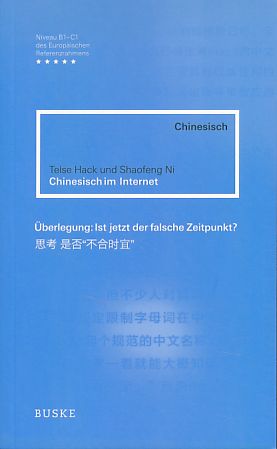
2015réf. 1046603Hamburg : Buske, 2015. 213 S. Originalbroschur.
1999347 p.; 24 cm. Brossura editoriale. Ottimo
réf. VLE-358P., Plon, Nourrit, 1887, in-8, IV+328pp., quelques rousseurs broché
2020br. Chiunque si occupi di raccolta e analisi dei dati lo sa bene, o almeno dovrebbe: le informazioni che non conosciamo possono essere altrettanto importanti di quelle che abbiamo a disposizione. Ha senso affermare che un prodotto è efficace perché ha solo recensioni favorevoli? Ed è davvero possibile prevedere il buon esito di un trattamento medico sulla base di un campione che, per quanto ampio, non corrisponde alla totalità dei casi? Considerazioni analoghe si possono applicare alla nostra vita di tutti i giorni: perché invidiare una persona per i successi messi in mostra sui social network, quando i suoi fallimenti ci vengono opportunamente nascosti? In un'epoca dominata dai big data, conviene prestare maggiore attenzione al rovescio della medaglia, ovvero ai dati che sappiamo di non avere o - peggio ancora - che crediamo erroneamente di possedere. Simili alla materia oscura che elude le rilevazioni dei cosmologi, i dark data influenzano ogni campo di studio e di lavoro, dalla ricerca medica all'industria, dalle politiche pubbliche e sociali al settore finanziario, e sono molto più numerosi di quanto pensiamo. Sottostimarli è dunque un grave rischio, che può portare a costruire modelli fuorvianti e inesatti, con conseguenze talvolta catastrofiche. Al contrario, smascherare questi numeri «traditori» e imparare a gestire i problemi che essi provocano può portare vantaggi nella nostra sfera professionale e in quella personale. I dark data ci insegnano, infatti, a capovolgere il modo di considerare l'analisi dei dati, facendoci comprendere più a fondo l'universo dell'informazione e ad affrontare l'imprevedibile in maniera più consapevole e ponderata.
réf. DADAX036742245XNew unknown
réf. SONG078902599XUsed: Good unknown
réf. SONG1420053868Used: Good unknown
réf. DADAX0367452650New unknown
réf. DADAX0367572400New unknown
réf. DADAX1843925249New unknown
2016brossura Nella società digitale, le parole sono i nostri emissari: raccontano al mondo chi siamo. Il modo in cui scriviamo può farci apparire intelligenti o stupidi. Ma può anche farci passare per persone confuse, sciocche o noiose. Una norma, questa, valida per buttare giù un listicle, per usare SlideShare e persino per maneggiare i termini che stiamo utilizzando in questo preciso momento. Ciò vuol dire che occorre scegliere le parole con cura, usare uno stile gradevole e parsimonioso, ricorrere a un'empatia sincera nei confronti del lettore. Ma significa anche prestare attenzione alla capacità, spesso trascurata, di fare marketing dei contenuti: saper scrivere e raccontare bene (ma davvero bene!) una storia vera. Essere in grado di comunicare nella scrittura è anche il fondamento del content marketing. In questo libro Ann Handley mette al servizio tutta la sua esperienza per guidarci nel processo e nelle strategie di creazione, produzione e pubblicazione dei contenuti, con consigli pratici pensati per ottenere risultati sicuri. Le lezioni e le regole di cui l'autrice ci fa dono possono applicarsi facilmente a tutti i contenuti online: pagine web, homepage, landing page, email, marketing, blog, post su Facebook, Twitter, LinkedIn e tutti gli altri social media. Le nuove regole della scrittura è una guida pratica alla creazione e pubblicazione di qualsiasi tipo di contenuto online, destinata a chi lavora per un grande brand o per una piccola azienda, o anche solo per se stesso.
2010réf. 100065936Dunod 2010 160 pages 19x23x1cm. 2010. Broché. 160 pages.