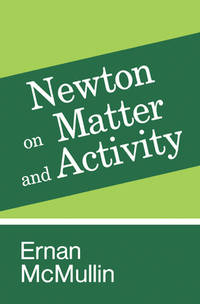
1970réf. S10566Cambridge MA:: MIT Press 1970. 1970. 8vo. viii 351 pp. Index. Metallic silver cloth white-stamped spine dust-jacket; front jacket torn spine ends chipped. Ownership signature. Near fine in good jacket. ISBN: 0262160358 MIT Press, (1970). hardcover books
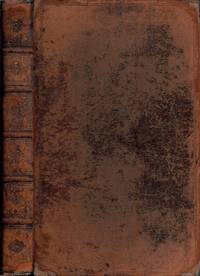
1744réf. 35969London: J. Osborn and J. Rivington 1744. Hardcover. Very Good. Hardcover. Second Edition which contains a previously unpublished copy of a letter to the author with a copy of the answering letter. Written by Richard Newton 1676 - 1753 the Presbyter of the English Church in response to Henry Wharton's "Defense of Pluralities" 1692. Bound in full tan leather boards with maroon and gilt title label to spine. Most of spine label is no longer present but several gilt letters remain. The leather on both hinges is cracked but the cords remain intact and the boards are still securely attached. Rubbing and wear to spine edges and corners. A few very light spots of foxing to first and last few pages else clean and bright. 402 pages. REL/081722. J. Osborn and J. Rivington hardcover
1733réf. 293624London: Printed for J. Strahan 1733. Softcover. Very Good. Second edition. 52pp. Disbound. Some staining good only. Authorship attributed to Richard Newton as per Mansell v. 417 p. 500. Printed for J. Strahan unknown
réf. 1156171733. 271 1 s. Samtidig helskinnb. Bindets ytterkanter oppskrapet og med sår. Falsene med brist. De første sidene med en fuktskjold i venste marg. Brunplettet. Noen svake bretter. Enkelte fingermerker. . unknown
1937réf. 164607Philadelphia PA: The Emergency Peace Campaign 1937. Sixteen panel brochure 4x7 inches very good condition maps of Campaign committee locations. Bulletin no. 1. The Emergency Peace Campaign unknown books
1744réf. 35969London: J. Osborn and J. Rivington 1744. Hardcover. Very Good. Hardcover. Second Edition which contains a previously unpublished copy of a letter to the author with a copy of the answering letter. Written by Richard Newton 1676 - 1753 the Presbyter of the English Church in response to Henry Wharton's "Defense of Pluralities" 1692. Bound in full tan leather boards with maroon and gilt title label to spine. Most of spine label is no longer present but several gilt letters remain. The leather on both hinges is cracked but the cords remain intact and the boards are still securely attached. Rubbing and wear to spine edges and corners. A few very light spots of foxing to first and last few pages else clean and bright. 402 pages. REL/081722. J. Osborn and J. Rivington hardcover books
1733réf. 293624London: Printed for J. Strahan 1733. Softcover. Very Good. Second edition. 52pp. Disbound. Some staining good only. Authorship attributed to Richard Newton as per Mansell v. 417 p. 500. Printed for J. Strahan unknown books
réf. 1021134910.Ghardcover. Good. Access codes and supplements are not guaranteed with used items. May be an ex-library book. hardcover
1730réf. 788711730. NEWTON William. The Life of the Right Reverend Dr. White Kennett Late Lord Bishop of Peterborough. With Several Original Letters of the Late Archbishop of Canterbury Dr. Tennison the Late Earl of Sunderland Bishop Kennett &c. and Some Curious Original Papers and Records Never before Publish'd. London: Printed for S. Billingsley 1730. 1st ed. xx2881 postscript 1 advertisement pp. 19th-century paneled calf raised spine bands gilt-chamfered edges. Hinges tender but holding else a very good copy. Sabin 37449. European Americana 730/164. Kennett was the author of the first English bibliography of the New World the Bibliothecae Americanae Primordia published in 1713. He had many American connections and interests and this work includes an account of the Society for the Propagation of the Gospel in America. unknown
1950réf. S6657New York:: Herbert Reichner 1950. 1950. 258 x 177 mm. 8vo. xiv 228 pp. Frontis. illus. index. Brick-red cloth. Ownership signature of Martha Teach Gnudi. Fine. 606 items. Herbert Reichner, 1950. hardcover
1950réf. S6657New York:: Herbert Reichner 1950. 1950. 258 x 177 mm. 8vo. xiv 228 pp. Frontis. illus. index. Brick-red cloth. Ownership signature of Martha Teach Gnudi. Fine. 606 items. Herbert Reichner, 1950. hardcover books
2002réf. S6135Boston:: Burndy Library 2002. 2002. 8vo. xxvii 95 pp. Frontis. port. figs. index. Gilt-stamped brick red cloth. NEW. First edition designed and printed by the Stinehour Press. Burndy Library, 2002. hardcover
2001réf. S6536New York:: W. H. Freeman 2001. 2001. First printing. Small 8vo. xvi 188 pp. Bibliog. index. Quarter cloth gilt spine dust-jacket. Fine. W. H. Freeman, (2001). hardcover books
2002réf. S6135Boston:: Burndy Library 2002. 2002. 8vo. xxvii 95 pp. Frontis. port. figs. index. Gilt-stamped brick red cloth. NEW. First edition designed and printed by the Stinehour Press. Burndy Library, 2002. hardcover books
réf. 0333907353.Ghardcover. Good. Access codes and supplements are not guaranteed with used items. May be an ex-library book. hardcover
2002réf. S9186London:: Macmillan 2002. 2002. First edition. 8vo. xvi 347 pp. Figs. bibliog. index. Black cloth gilt-stamped spine title dust jacket. NEW. ISBN: 0333907353 Macmillan, (2002). hardcover books
2003réf. S6538New York:: Pantheon Books 2003. 2003. Small 8vo. xii 272 pp. Color frontis. port. figs. bibliog. index. Gray cloth gilt spine dust-jacket. New. Pantheon Books, (2003). hardcover books
1969réf. S11787Munich:: Werner Fritsch 1969. 1969. Series: Neue Munchner Beitrage zur Geschichte der Medizin und Naturwissenschaften Heft 1. 8vo. 47 pp. Printed wrappers. Fine. INSCRIBED COPY FROM THE AUTHOR LOHNE with his initials to David C. Lindberg. Scarce. Inhalt Contents: Newton und die Farben -- Zur Vorgeschichte der Farbenlehre -- "Neue Theorie uber Licht und Farben" 1672 -- Erlauterungen zur Abhandlung -- Zur Beurteilung -- Literaturverzeichnis -- Newtons Schriften zur Optik -- Weiteres Schrifttum zur Farbenoptik. With typed corrigenda from the author his initials. Werner Fritsch, 1969. unknown books
1978réf. S10893Notre Dame IN & London:: Notre Dame Press 1978. 1978. Small 8vo. viii 160 pp. Green cloth gilt-stamped spine title. Ownership signature on ffep. Fine. ISBN: 026801342X Notre Dame Press, (1978). hardcover books
1971réf. S11785Philadelphia:: University of Philadelphia Press 1971. 1971. Offprint. Series: Historical Studies in the Physical Studies vol. 3 1971. 8vo. pp. 233-306. Printed wrappers. Title inscription in ink on upper cover. Fine. University of Philadelphia Press, 1971. unknown books
1728réf. 19285London: S. Palmer 1728. FIRST EDITION. With engraved title-vignette of an observatory within a border of instruments 12 folding plates and historiated initials all engraved by J. Pine after J. Grison including the arms of Sir Robert Walpole to whom the work is dedicated. Complete with subscriber’s list including Isaac Newton’s 12 books. Half-calf over marbled boardsspine with gilt decorations and morocco label. An absolutely exquisite wide-margined copy preserved in a slipcase. First edition. Pemberton’s ability in mathematical problems impressed Newton and consequently he asked him to edited the third and definitive edition of his Principia mathematica 1726. The preface contains Pemberton’s recollections of Newton especially in his old age. However this work is most notable for its explanation of Newtonia philosophy. Pemberton 1694-1771 studied under Boerhaave at Leiden and was attached to St. Thomas’ Hospital in London. Babson 98; Gray 132. S. Palmer unknown
1728réf. 19285London: S. Palmer 1728. FIRST EDITION. With engraved title-vignette of an observatory within a border of instruments 12 folding plates and historiated initials all engraved by J. Pine after J. Grison including the arms of Sir Robert Walpole to whom the work is dedicated. Complete with subscriber’s list including Isaac Newton’s 12 books. Half-calf over marbled boardsspine with gilt decorations and morocco label. An absolutely exquisite wide-margined copy preserved in a slipcase. First edition. Pemberton’s ability in mathematical problems impressed Newton and consequently he asked him to edited the third and definitive edition of his Principia mathematica 1726. The preface contains Pemberton’s recollections of Newton especially in his old age. However this work is most notable for its explanation of Newtonia philosophy. Pemberton 1694-1771 studied under Boerhaave at Leiden and was attached to St. Thomas’ Hospital in London. Babson 98; Gray 132. S. Palmer unknown books
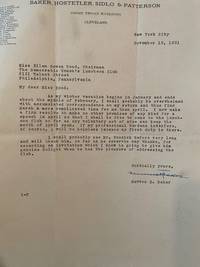
1940réf. List1819V.P. 1940. With fifty-eight letters from Newton Baker 1924-1937. Generally fine condition. Ellen Gowen Hood was active in the Democratic party at both the local and national levels. An obituary from the Philadelphia Daily News in 1970 described her as “one of the earliest local advocates of women in politics.” She was the chairman of the Democratic Women’s Luncheon Club of Philadelphia for 20 years and had regular correspondence with women such as Edith Bolling Wilson and Eleanor Roosevelt. Democratic women’s clubs became active across the country after the 19th amendment passed in 1920 and the democratic party sought to mobilize women voters. As chairman of the Democratic Women’s Luncheon Club of Philadelphia Hood organized events with prominent political speakers and then had the speeches printed in book format. Without Hood’s side of the correspondence we don’t get insight into her philosophy of women’s participation in politics. We do however get a sense for the role that the club played in the Democratic Party. Baker was a periodic guest of the luncheon club and in his letters he praised the organization saying “I think I have never addressed a more intelligent or obviously influential audience” and "I think there is no more useful forum anywhere. They print the addresses made at their luncheons and give them a wide circulation throughout the country so that their pamphlets are now in libraries and in the hands of studious and thoughtful people everywhere." As an avid supporter of Wilsonian ideas and the League of Nations Hood’s political intention with the club seems more focused on bringing speakers that would highlight those causes than specifically speaking to women’s participation in politics. The letters from Baker to Hood reveal their shared political beliefs and goals. Their letters are ongoing conversations about the League of Nations and the World Court; the Democratic Conventions in 1924 1928 and 1932; and how democrats should govern following the Great Depression and prohibition. Baker frequently recommends essays and speeches for Hood to read and also helps connect her with potential speakers for the Luncheon Club. He addresses her as a political peer and we also get a sense of her professional persistence and savvy -- in nearly every letter for twenty years Baker responds to her requests for him to come and speak at the club. The letters give insight into Baker’s political beliefs as they evolve through the 1920s and 1930s. In the 20s-30s he writes as his thinking on the League of Nations changes from strongly feeling that the United States should join to discouraging it until there is complete support. In one letter Baker describes in confidence one of the only times he disagreed with President Wilson as Secretary of War -- when Wilson sent American troops to North Russia at the end of World War I. In a few memorable letters from 1932 Baker writes about his experience of the 1932 democratic convention and his sense of relief when he was not chosen for nomination. The letters also exhibit Baker’s writing style and his tendency to wax poetic about democratic politics. For example speaking about the limitations of the Democratic Party he writes “The trouble about it all is that nobody has yet invented anything better for the long run and the steady pull than democracy and so we just have to be patient with it as we are with the small misdoings of our children and take our joy out of the sure forecast of their fine performance when they have matured.” Other correspondences in the collection include letters from Edith Bolling Wilson Eleanor Roosevelt Secretary of State Cordell Hull historian and diplomat Claude Bowers and Bess Truman. There are also several letters from Ralph Hayes Baker’s wartime secretary in the war department and a central figure in Baker’s 1932 presidential campaign. These letters go into detail about Baker’s role at the 1932 convention his legacy on labor issues and a rumor that he was Jewish. Overall the collection provides insight into Democratic Women’s Clubs of the period. We suspect the Baker letters to exist in duplicate at his archive but the collection still provides a succinct opportunity for research on the subject. Please contact us for a full inventory. unknown
1940réf. List1819V.P. 1940. With fifty-eight letters from Newton Baker 1924-1937. Generally fine condition. Ellen Gowen Hood was active in the Democratic party at both the local and national levels. An obituary from the Philadelphia Daily News in 1970 described her as “one of the earliest local advocates of women in politics.” She was the chairman of the Democratic Women’s Luncheon Club of Philadelphia for 20 years and had regular correspondence with women such as Edith Bolling Wilson and Eleanor Roosevelt. Democratic women’s clubs became active across the country after the 19th amendment passed in 1920 and the democratic party sought to mobilize women voters. As chairman of the Democratic Women’s Luncheon Club of Philadelphia Hood organized events with prominent political speakers and then had the speeches printed in book format. Without Hood’s side of the correspondence we don’t get insight into her philosophy of women’s participation in politics. We do however get a sense for the role that the club played in the Democratic Party. Baker was a periodic guest of the luncheon club and in his letters he praised the organization saying “I think I have never addressed a more intelligent or obviously influential audience” and "I think there is no more useful forum anywhere. They print the addresses made at their luncheons and give them a wide circulation throughout the country so that their pamphlets are now in libraries and in the hands of studious and thoughtful people everywhere." As an avid supporter of Wilsonian ideas and the League of Nations Hood’s political intention with the club seems more focused on bringing speakers that would highlight those causes than specifically speaking to women’s participation in politics. The letters from Baker to Hood reveal their shared political beliefs and goals. Their letters are ongoing conversations about the League of Nations and the World Court; the Democratic Conventions in 1924 1928 and 1932; and how democrats should govern following the Great Depression and prohibition. Baker frequently recommends essays and speeches for Hood to read and also helps connect her with potential speakers for the Luncheon Club. He addresses her as a political peer and we also get a sense of her professional persistence and savvy -- in nearly every letter for twenty years Baker responds to her requests for him to come and speak at the club. The letters give insight into Baker’s political beliefs as they evolve through the 1920s and 1930s. In the 20s-30s he writes as his thinking on the League of Nations changes from strongly feeling that the United States should join to discouraging it until there is complete support. In one letter Baker describes in confidence one of the only times he disagreed with President Wilson as Secretary of War -- when Wilson sent American troops to North Russia at the end of World War I. In a few memorable letters from 1932 Baker writes about his experience of the 1932 democratic convention and his sense of relief when he was not chosen for nomination. The letters also exhibit Baker’s writing style and his tendency to wax poetic about democratic politics. For example speaking about the limitations of the Democratic Party he writes “The trouble about it all is that nobody has yet invented anything better for the long run and the steady pull than democracy and so we just have to be patient with it as we are with the small misdoings of our children and take our joy out of the sure forecast of their fine performance when they have matured.” Other correspondences in the collection include letters from Edith Bolling Wilson Eleanor Roosevelt Secretary of State Cordell Hull historian and diplomat Claude Bowers and Bess Truman. There are also several letters from Ralph Hayes Baker’s wartime secretary in the war department and a central figure in Baker’s 1932 presidential campaign. These letters go into detail about Baker’s role at the 1932 convention his legacy on labor issues and a rumor that he was Jewish. Overall the collection provides insight into Democratic Women’s Clubs of the period. We suspect the Baker letters to exist in duplicate at his archive but the collection still provides a succinct opportunity for research on the subject. Please contact us for a full inventory. unknown books
1947réf. 428Racine Wis: Whitman Publishing Co 1947. Staplebound. Very good. Ruth E. NEWTON. 4to; 11pp with back wrapper last page of story; linen-like color illustrated paper wrapper title author and publisher on front; 11 pages of color illustration followed by text; a few light creases to front wrapper and light scuffing of paper; very good. Unauthorized Peter Rabbit story. Whitman Publishing Co unknown