2.155 resultados
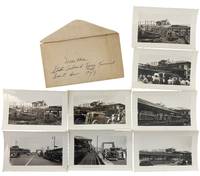
1946ref. 234361946. Photographs documenting the emergency response to the nine-alarm fire that destroyed the St. George ferry and railway terminal on Staten Island in June 1946 recording fire apparatus a hospital ambulance crew and rescue workers amid the smoking wreckage. The fire began at 2:30 in the afternoon of June 25 1946 under a car and spread to the terminal's wooden support pilings. Nine alarms were transmitted within half an hour summoning fifty land companies and six fireboats; three civilians were killed and more than 250 firemen and 30 civilians were injured or overcome by smoke. Photo archive of 8 silver gelatin snapshot photographs approximately 5 x 3 inches Staten Island New York with the original mailing envelope inscribed in ink "Martha Staten Island Ferry Terminal burnt down June 1947." One image centers a panel-body ambulance lettered "St. Vincent's Hospital" and "Staten Island" parked beside an open rear ambulance where attendants in white tend a patient. Another shows workmen uniformed officers and helmeted firemen clustered around the rescue vehicles below the gutted upper story. Several frames show pairs of wooden and steel rapid transit cars standing scorched on the rails beneath the twisted collapsed ribs of the train shed windows blown out and roofs caved in. A trackside view captures fire engines lined nose to tail along the roadway. The nine alarms transmitted within thirty minutes the fifty land companies and the Manhattan units racing through the Holland Tunnel show standard FDNY multi-borough mutual aid working at full stretch recorded by a bystander close enough to walk the platforms. The St. George fire ranks among the worst in Staten Island history and FDNY commanders called it one of the most stubborn blazes they had faced the burning rooted deep in the terminal's wooden pilings over the water. The destroyed structure was replaced by an entirely new $21 million terminal that opened in 1951. Overall in very good condition. A direct on-the-ground record of a multi-borough emergency response to a fatal nine-alarm fire that erased a major New York transit terminal. unknown books
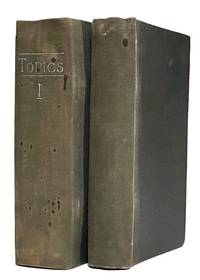
1855ref. 031418New York: McSpedon & Baker 1855. First edition 1855. Also includes ordinance revisions of 1845 to the year 1855 approved Sept. 22 1854. Externally worn but sound copy in full calf leather with red spine label 405 pages. Covers rubbed front joint cracked but cover securely attached horizontal crack to surface of spine covering some spine chipping spine label a little worn around the edges but clearly legible text block sound faint dampstains to upper margins throughout about half of the book lightly foxed endpapers page slightly age-toned but clean no names or other markings. First Edition. Hard Cover. Fair. 8vo - over 7¾" - 9¾" tall. McSpedon & Baker Hardcover
2023ref. Scientific-9781799601142White Press Academic 2023. Hardcover. New. White Press Academic hardcover
2023ref. Scientific-9781799601142White Press Academic 2023. Hardcover. New. White Press Academic hardcover
2022ref. SKU0591834National Fire Protection Association NFPA 2022-09-19. paperback. Good. 11x9x1. Textbook May Have Highlights Notes and/or Underlining BOOK ONLY-NO ACCESS CODE NO CD Ships with Tracking National Fire Protection Association (NFPA) paperback
2024ref. SKU1707772National Fire Protection Association NFPA 2024-10-03. paperback. Good. 11x8x11. Textbook May Have Highlights Notes and/or Underlining BOOK ONLY-NO ACCESS CODE NO CD Ships with Tracking National Fire Protection Association (NFPA) paperback
2022ref. DADAX1455929077NFPA 2022-12-07. hardcover. New. 11.06x8.82x2.09. Buy with confidence. Excellent Customer Service & Return policy. NFPA hardcover
1715ref. 21193London 1715. Broadside. Disbound. Small folio. Early folds and early stab holes in left margin. Some foxing. A rare leaflet lobbying Parliament on behalf of British merchants who had recently lost £22500 worth of sugar ginger oil and sasparilla in a great fire. The merchants had just recently imported the goods paying approximately £3000 in customs. In the present document the merchants petition the House of Commons to allow them to import goods duty-free up to the value of the customs of the goods destroyed. This is among the earliest examples of commercial lobbying literature which first began proliferating in the lobby of the House of Commons at the time of the accession of King George I and the British general election of 1715. ESTC lists three copies: at the University of London Oxford and Harvard. Goldsmiths 5228.1; Hanson 2169. unknown
1715ref. 21193London 1715. Broadside. Disbound. Small folio. Early folds and early stab holes in left margin. Some foxing. A rare leaflet lobbying Parliament on behalf of British merchants who had recently lost £22500 worth of sugar ginger oil and sasparilla in a great fire. The merchants had just recently imported the goods paying approximately £3000 in customs. In the present document the merchants petition the House of Commons to allow them to import goods duty-free up to the value of the customs of the goods destroyed. This is among the earliest examples of commercial lobbying literature which first began proliferating in the lobby of the House of Commons at the time of the accession of King George I and the British general election of 1715. ESTC lists three copies: at the University of London Oxford and Harvard. Goldsmiths 5228.1; Hanson 2169. unknown books
ref. Z1-R-014-01322General Books LLC. Used - Like New. Used - Like New. Book is new and unread but may have minor shelf wear. Ships from UK in 48 hours or less usually same day. Your purchase helps support Sri Lankan Children's Charity 'The Rainbow Centre'. 100% money back guarantee. We are a world class secondhand bookstore based in Hertfordshire United Kingdom and specialize in high quality textbooks across an enormous variety of subjects. We aim to provide a vast range of textbooks rare and collectible books at a great price. Our donations to The Rainbow Centre have helped provide an education and a safe haven to hundreds of children who live in appalling conditions. We provide a 100% money back guarantee and are dedicated to providing our customers with the highest standards of service in the bookselling industry. General Books LLC unknown
ref. REDLTVFQBX1SIntl Fire Service Training Assn. paperback. Good. in x in x in. Intl Fire Service Training Assn paperback
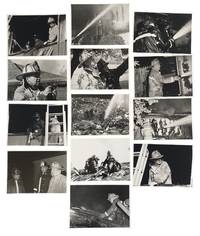
1980ref. 233751980. Rescue Operations Richardson Texas Fire Department photo archive documenting the sequential order of a small city rescue operation circa 1980s recording municipal crews as they move from arrival and exterior assessment to ladder access hose deployment radio communication breathing apparatus use residential fire suppression interior inspection overhaul and salvage. The archive documents firefighters wearing RFD helmets working from roofs windows ladders burned interiors refuse piles and exterior hose lines showing not just isolated scenes of fire suppression but the step by step process by which a suburban fire department managed an active emergency. Scenes capture fire crews masking up beside engines directing water into smoking structures removing material from upper floors inspecting charred rooms and coordinating around damaged buildings after flame knockdown. Photo archive of 24 glossy silver gelatin photographs 5 by 7 inches Richardson Texas circa 1980s. Firefighters wear leather turnout coats helmets marked RFD portable radios self contained breathing apparatus face masks and reflective striping. Hose streams strike wood siding rooflines and debris piles; ladders reach second story windows and eaves; crews stand on damaged roofing with hose and equipment; command and line personnel confer inside burned rooms and at exterior thresholds. Several scenes show active suppression at night with smoke water spray and charred structural elements surrounding firefighters at close range. Other scenes record quieter stages of the same work including radio use air pack preparation interior inspection and removal of burned material. By the 1980s local fire departments across the United States were increasingly shaped by portable radio communication standardized protective gear air pack training and coordinated incident response even in smaller cities outside major metropolitan departments. This archive captures that transition in practical terms with Richardson firefighters working fires in houses apartment style buildings refuse areas and heavily damaged interiors rather than posed station scenes. All complete and in very good to near fine condition. A grounded record of small town firefighting physical labor technical procedure and public safety work in a rapidly modernizing suburban fire department. unknown
1980ref. 233751980. Rescue Operations Richardson Texas Fire Department photo archive documenting the sequential order of a small city rescue operation circa 1980s recording municipal crews as they move from arrival and exterior assessment to ladder access hose deployment radio communication breathing apparatus use residential fire suppression interior inspection overhaul and salvage. The archive documents firefighters wearing RFD helmets working from roofs windows ladders burned interiors refuse piles and exterior hose lines showing not just isolated scenes of fire suppression but the step by step process by which a suburban fire department managed an active emergency. Scenes capture fire crews masking up beside engines directing water into smoking structures removing material from upper floors inspecting charred rooms and coordinating around damaged buildings after flame knockdown. Photo archive of 24 glossy silver gelatin photographs 5 by 7 inches Richardson Texas circa 1980s. Firefighters wear leather turnout coats helmets marked RFD portable radios self contained breathing apparatus face masks and reflective striping. Hose streams strike wood siding rooflines and debris piles; ladders reach second story windows and eaves; crews stand on damaged roofing with hose and equipment; command and line personnel confer inside burned rooms and at exterior thresholds. Several scenes show active suppression at night with smoke water spray and charred structural elements surrounding firefighters at close range. Other scenes record quieter stages of the same work including radio use air pack preparation interior inspection and removal of burned material. By the 1980s local fire departments across the United States were increasingly shaped by portable radio communication standardized protective gear air pack training and coordinated incident response even in smaller cities outside major metropolitan departments. This archive captures that transition in practical terms with Richardson firefighters working fires in houses apartment style buildings refuse areas and heavily damaged interiors rather than posed station scenes. All complete and in very good to near fine condition. A grounded record of small town firefighting physical labor technical procedure and public safety work in a rapidly modernizing suburban fire department. unknown books
1838ref. 19928Paris, Dépôt de la Librairie Trese, sans date [1838]. 2 tomes in-8 reliés en un volume, demi-basane verte dos lisse, [4]-440 et [4]-448 pages.
1839ref. 19929Paris, Barba, 1839. In-8 de [4]-462 pages, demi-veau cerise, dos à nerfs orné de filets et fleurons dorés et à froid, pièce de titre noire.
1918ref. 642306General Fire Extinguisher Company; Grinnell Co 1918. First Edition. Paperback. Good. Complete run of 36 issues starting with #1 in May 1918 through March 1925 of the company magazine of America's largest manufacturer of automatic sprinkler sytems and fire safety equipment. QUITE RARE. Illustrated in b/w throughout. Bound in two black cloth Emerson binders several covers loose some wear. Bound in is a typed letter signed by the editor. One issue the 'Special Smile Issue' is entirely devoted to smiling employees while another - covering an employee theatrical performance - features employees in blackface. General Fire Extinguisher Company; Grinnell Co paperback
ref. SKU0639332Delmar Cengage Learning 2019-09-18. paperback. New. 11x8x1. New Textbook Ships with Tracking Delmar Cengage Learning paperback
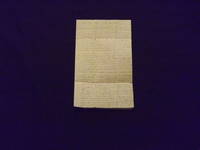
1825ref. 102273Letter sheets 8" x 12" 3 pages plus integral address leaf. Extensive tape repairs to folds mostly archival tape but some regular tape too which has caused a little browning in areas long tear obscures writers signature but partially visible creased normal aging and browning remnant of wax seal; otherwise good or better. The letter is to Boston Mayor Josiah Quincy 1772-1864 a future head of Harvard and served eight years in Congress. It appears after becoming Boston's mayor he sent delegates to New York and Philadelphia to study fire fighting techniques in those cities. The author of this letter read about this mission and sent Mayor Quincy a lengthy letter on the subject. The probable author is Solon Robinson 1803-1880 although his signature is partially obscured by a tear. However on the back page a smudged docketed note identifies him as Solon Robertson or Robinson. Robinson was a writer and would become a well known Indiana pioneer. In any case the author would suggest a far more modern system for fighting fires than the existing practice of engines carrying water to fires which would become useless when the water ran out. he proposed putting lead aqueduct pipes "laid deep underground and leading to every part of the city." While her does not use the term fire hydrants the water would be accessed from locked iron covers that would serve that function. ABN.
1825ref. 102273Letter sheets 8" x 12" 3 pages plus integral address leaf. Extensive tape repairs to folds mostly archival tape but some regular tape too which has caused a little browning in areas long tear obscures writers signature but partially visible creased normal aging and browning remnant of wax seal; otherwise good or better. The letter is to Boston Mayor Josiah Quincy 1772-1864 a future head of Harvard and served eight years in Congress. It appears after becoming Boston's mayor he sent delegates to New York and Philadelphia to study fire fighting techniques in those cities. The author of this letter read about this mission and sent Mayor Quincy a lengthy letter on the subject. The probable author is Solon Robinson 1803-1880 although his signature is partially obscured by a tear. However on the back page a smudged docketed note identifies him as Solon Robertson or Robinson. Robinson was a writer and would become a well known Indiana pioneer. In any case the author would suggest a far more modern system for fighting fires than the existing practice of engines carrying water to fires which would become useless when the water ran out. he proposed putting lead aqueduct pipes "laid deep underground and leading to every part of the city." While her does not use the term fire hydrants the water would be accessed from locked iron covers that would serve that function. ABN. books
2022ref. DADAX1455930717NFPA 2022-12-07. 2023. hardcover. New. 0.00x0.00x0.00. Buy with confidence. Excellent Customer Service & Return policy. NFPA hardcover
1844ref. 15216Berlin, Wilhelm Ernst & Sohn, 1844. Mit 1 lithogr. Frontispiz und zahlreichen Text-Abbildungen in Holzstich.. Lwd.d.Zt. (mit Rückentitel), VII; 304 S., 8° [3 Warenabbildungen]
2013ref. NOCT17-9781455754113-651Delmar Cengage Learning 2013-11-26. Hardcover. New. 0x0x0. NEW TEXTBOOK SHIPS WITH EMAILED TRACKING FROM USA Delmar Cengage Learning hardcover
2022ref. SKU0591826National Fire Protection Association 2022-12-07. hardcover. Good. 0x0x0. Textbook May Have Highlights Notes and/or Underlining BOOK ONLY-NO ACCESS CODE NO CD Ships with Tracking National Fire Protection Association hardcover
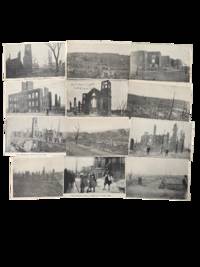
1908ref. 232131908. Chelsea fire real photo postcard archive documenting the destruction of civic religious medical and financial institutions in Chelsea outside of Boston Massachusetts after the November 1908 fire one of the most destructive urban fires in early twentieth century New England. This collection displays not only the ruined architecture but on the functions that had to be reestablished after the fire including places of worship schooling banking and medical care. Not only do these images display a developing New England city in ruins but the involvement of the surrounding community that was left displaced to pick up the pieces. Photo archive of 12 silver gelatin real photo postcards each 3" x 5.5" Chelsea Massachusetts circa 1908. The cards show skeletal masonry walls roofless church towers leveled residential blocks ash fields and streets lined with stripped tree trunks and scattered debris. Printed captions identify multiple sites including "Ruins of Unitarian Church Chelsea Mass." "Universalist Church Fourth & Chestnut St." "Ruins of Fay School Chelsea Mass." "Ruins of Public Library" "Central Church from Broadway Chelsea Mass." "Ruins of Williams School & First Universalist Church Chelsea Mass." and "Remains of Frost Hospital." Several views are wide panoramas taken from elevated ground or across open lots showing block after block reduced to foundations and chimneys while others isolate single institutional buildings left standing as shells. Human figures appear throughout as scale markers and witnesses with pedestrians moving through cleared streets and one especially important card showing uniformed cadets and coast artillery guards with rifles outside the Chelsea Savings Bank. The Great Chelsea Fire burned through a substantial section of the city in 1908 and displaced thousands making it one of the most destructive urban fires in New England in its period. These postcards preserve the public facing record created immediately after the disaster when churches schools hospitals libraries and banks were photographed not as isolated ruins but as essential parts of a city whose institutional framework had to be defended and rebuilt. Some edge and corner wear; minor toning. Overall very good condition. A concentrated record of urban destruction emergency security and civic reconstruction in Chelsea Massachusetts. unknown
1908ref. 232131908. Chelsea fire real photo postcard archive documenting the destruction of civic religious medical and financial institutions in Chelsea outside of Boston Massachusetts after the November 1908 fire one of the most destructive urban fires in early twentieth century New England. This collection displays not only the ruined architecture but on the functions that had to be reestablished after the fire including places of worship schooling banking and medical care. Not only do these images display a developing New England city in ruins but the involvement of the surrounding community that was left displaced to pick up the pieces. Photo archive of 12 silver gelatin real photo postcards each 3" x 5.5" Chelsea Massachusetts circa 1908. The cards show skeletal masonry walls roofless church towers leveled residential blocks ash fields and streets lined with stripped tree trunks and scattered debris. Printed captions identify multiple sites including "Ruins of Unitarian Church Chelsea Mass." "Universalist Church Fourth & Chestnut St." "Ruins of Fay School Chelsea Mass." "Ruins of Public Library" "Central Church from Broadway Chelsea Mass." "Ruins of Williams School & First Universalist Church Chelsea Mass." and "Remains of Frost Hospital." Several views are wide panoramas taken from elevated ground or across open lots showing block after block reduced to foundations and chimneys while others isolate single institutional buildings left standing as shells. Human figures appear throughout as scale markers and witnesses with pedestrians moving through cleared streets and one especially important card showing uniformed cadets and coast artillery guards with rifles outside the Chelsea Savings Bank. The Great Chelsea Fire burned through a substantial section of the city in 1908 and displaced thousands making it one of the most destructive urban fires in New England in its period. These postcards preserve the public facing record created immediately after the disaster when churches schools hospitals libraries and banks were photographed not as isolated ruins but as essential parts of a city whose institutional framework had to be defended and rebuilt. Some edge and corner wear; minor toning. Overall very good condition. A concentrated record of urban destruction emergency security and civic reconstruction in Chelsea Massachusetts. unknown books