12 695 résultats
1987295x290mm. 308 pages. Dark blue cloth Hardcover with illustrated dust-jacket. Jacket verso and cover slightly damp-stained. Else in good condition.
1988Dustjacket has minor shelfwear and rubbing. Light sunning to Dustjacket's spine. ; A revised and elaborated version of Harrison's dissertation, it deals with medieval Italian lyric poetry, with special emphasis on Dante's early work La Vita Nuova. ; 224 pages
1921Contains color plates. 30x22.5 cm. XVI+404 pages. Hardcover. Spine edges and front cover upper corner slightly torn. Cover lettering slightly faded. Else in good condition. PLEASE NOTE: This item is overweight. We may ask for extra shipping costs.
2012Fine English Paperback. Demy 8vo. (21 x 14 cm). In English. 282 p. "Professor Karpat, one of the most prominent names in the field of Political History, explores the social structure of Ottoman Empire through different eras and looks at Turkey's multi-party democracy culture from a historical perspective. His articles interpret the Ottoman history for broader audience and lay a vivid picture of events of recent history in front of our eyes. Professor Karpat's remarkable articles take us back to 18th century Ottoman days and examine change and modernization on those days, his work also looks into the independence and interaction of various social groups within a muslim state. The Ottoman social structure produced a unique way of practicing "secularism" where spiritual issues regarding faith and administrative issues regarding everyday state politics were kept completely independent from each other; one was dealing with earthly matters of day to day life of subjects of the Ottoman sultan, the other was to aid the followers of specific faith in their practice of religion and to prepare for after-life. Ottomans, despite having a highly complex social structure accommodating a number of ethnic groups and various religious orders, had successfully sustained freedom of faith by adopting the 'millet' system. Every non-muslim community represented by its leader was regarded as a 'millet' and enjoyed an absolute autonomy and freedom within its own faith and community in terms of practice of religion, language, social relations. During the Tanzimat era a new generation of religious leaders; who were relatively free from state regulations emerged among Ulema and unlike their predecessors they were not dignitaries. The social status of this newly emerging group from within well- established Ulema which was preoccupied at times to legitimise social and political change from an Islamic perspective or at other times tried to maintain status-quo siding with government, overlapped with the social image of the Ottoman middle-class. The fact that the new generation Ulema had common characteristics with ordinary middle-class people had a profound impact on Ottoman-Turkish political history. Consequently, the road map of 'modernity and secularism' set in Republican Turkey was identified by both the state represented by military and civilian bureaucrats and by people represented by local notables.".
201927x19.5 cm. 397 pages. Hardcover. Cover edges slightly rubbed. Else in good condition. PLEASE NOTE: This item is overweight. We may ask for extra shipping costs.
1961225x190mm. 66 pages. Gilt hardcover. Cover slightly bumped. Spine faded. Spine edges bumped. Ex-library copy with usual marks. Pages slightly yellowing. Else in good condition.
200030x20.5 cm. 6+434 pages. Hardcover with dust jacket. Cover is slightly dirty. Else in good condition. PLEASE NOTE: This item is overweight. We may ask for extra shipping costs.
1939Very Good Latin Paperback. Roy. 8vo. (23 x 16 cm). In Latin. [xviii], [2], 312 p. Compendium Theologiae Orientalis: In commodum audiotrum Facultatis Theologicæ concinnatum. Editio altera. First Edition.
1928SIGNED BY AUTHOR. Contains b&w plates. 22.5X15 cm. XXII+281 pages. Hardcover. Cover slightly rubbed. Spine edges chipped. Pages yellowing. Else in good condition.
1993Foxing to textblock. ; Surveys the literary treatment of the Orpheus myth as the myth of the essence of poetry, its ability to encounter the fullest possible intensity of beauty and sorrow and to transform they into song. The first half concentrates on the ancient literary tradiiton. Later chapters focus on the continuities of the myth in modern literature. ; 256 pages
1945145x80 mm. 171 pages. Softcover with dust-jacket. Jacket edges slightly torn. Ex-library copy with the usual marks. Cover slightly yellowing. Spine edges yellowing. Pages yellowing. Uncut pages. Else in good condition.
1884Ex-library copy with usual stamps, call numbers and pocket. Former owner's name on ffep. Fraying to spine ends. Edgewear to extremities. ; Looks at the theology that may be present in the writings of Homer, Aeschylus and Sophocles. ; 365 pages; 1870. Natural theology may be contemplated from two different points of view, and so may be seen in two different aspects. We may look at in from the stand point of our own observation and reason in the light of Christianity; or we may consider it as it has been developed in the literature and history of heathen nations, and as it appeared in the eyes of those who were destitute of the Christian revelation. This volume is intended as a humble contribution to natural theology in both these forms.
2018ill. Esplorando i diversi modi attraverso i quali arte e fotografia si sono intrecciate, l'autore sottolinea il ruolo cruciale svolto dall'arte nelle mutazioni dell'immagine fotografica e tutta l'importanza della fotografia per la nascita e l'evoluzione dell'arte moderna. Confrontando efficacemente la panoramica storica e la trattazione tematica, dal pittorialismo e dall'«immagine nuda» documentaria agli usi concettuali, archivistici o narrativi della fotografia, il saggio dimostra quanto questa forma d'arte sia oggi vitale, variegata e in continua espansione. Bate infatti si concentra sulla natura sempre piú globale del fenomeno, dando conto non soltanto del contesto angloamericano ed europeo, ma anche di quello relativo a importanti regioni emergenti dell'Asia, dell'Africa e del Medio Oriente; e prendendo in considerazione nomi storici come quelli di William Henry Fox Talbot e Roger Fenton e artisti quali Lee Miller, Brassaï, Robert Frank, Nan Goldin, Ed Ruscha e Gillian Wearing.
2011ill., br. Questa raccolta di tutti gli scritti di Umberto Boccioni riporta delle memorie fondamentali per la storia dell'arte contemporanea. Questi saggi, manifesti, lettere e diari con la propria fisionomia, estetica e poetica, concorsero a delineare uno di quei movimenti, il Futurismo, che si definirono grazie ai testi di Kandinsky, Malevic, Delaunay e Mondrian col nome di Avanguardie artistiche. Non solo ne emergono i particolari del percorso creativo e umano di un grande protagonista dell'arte contemporanea, qual è stato Umberto Boccioni, ma anche l'infatuazione positivista, il concetto di azione, modernità e rischio, nonché la fiducia nel progresso che hanno informato le riflessioni del primo Novecento italiano. Una società piena di aspirazioni rigenerative e speranze che tuttavia si dimostrano disattese dall'avanzare della guerra: "Da questa esistenza io uscirò con un disprezzo per tutto ciò che non è arte", scriveva Boccioni dal fronte in una lettera del 1916 pochi giorni prima della sua morte. Da qui scaturisce l'originalità del pensiero boccioniano teso al rinnovamento della sensibilità estetica del suo tempo a partire dalla vita, dalla realtà attuale, in un connubio arte-vita che rappresenta il nucleo più autentico e genuino del primo futurismo, ma che non manca di aneliti molte volte tragici e disincantati.
2006ill., ril. Il volume intende restituire l'orizzonte in cui si inseriscono le operazioni e le idee massoniche; le opere rappresentate rientrano in un milieu culturale influenzato dal pensiero massonico ovvero discendono da alcune matrici esoteriche confluite sia nella massoneria operativa che in quella speculativa. Ne deriva un viaggio alla ricerca della Architettura Divina, di una spazialità sacrale che discende da modelli di perfezione sovrumana, coniugando gli archetipi "divini" con l'aspirazione a riproporre una laica Civitas Dei di fraternità e solidarietà sociale se non anche l'ideale di nuovi Templi e Cattedrali della Umanità. Vengono passate in rassegna le architetture ispirate dal Grande Architetto (Tabernacolo, Tempio, Arca) nonché gli archetipi dell'Ars Regia e i tre modelli "naturali" del costruire (la Capanna, la Caverna, la Tenda). In età medievale e moderna la protostoria della Massoneria si esplica sul duplice versante della operatività (cantiere delle Cattedrali) e della architettura "filosofale". Viene poi riassunto il dibattito sullo "stile" massonico, dalla ricerca di un linguaggio egemonico (come lo "stile romano" o il revival egizio) fino alla ricezione di stili diversi, nel segno della tolleranza e del sincretismo culturale.
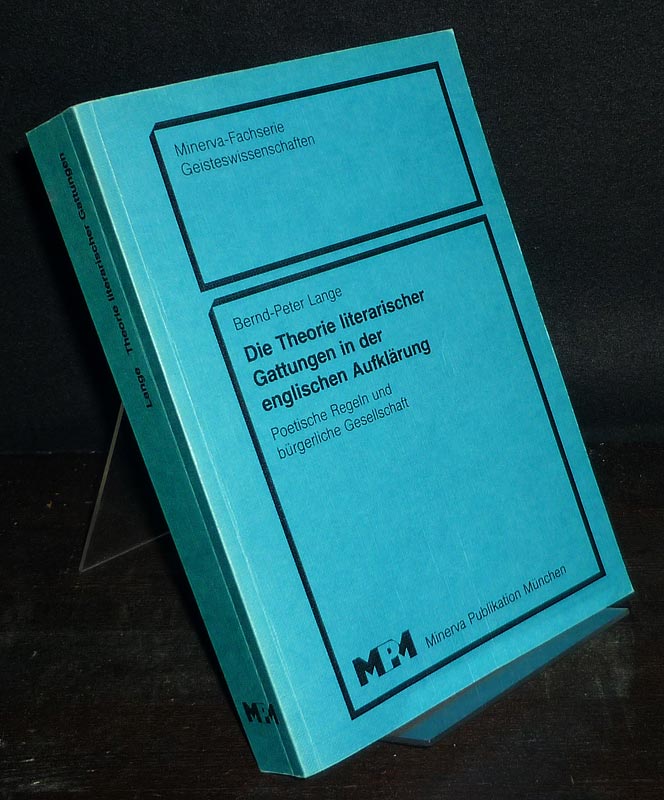
1979réf. 97418München: Minerva-Publikation 1979. IX, 558 Seiten. Als Typoskript gedruckt. 8° (17,5-22,5 cm). Orig.-Broschur. [Softcover / Paperback].
1942réf. 89039Berlin-Zehlendorf: Borntraeger 1942. VII, 240 Seiten. 4° (25-35 cm). Orig.-Broschur. [Softcover / Paperback].
1981réf. 111969Centre Georges Pompidou 1981 In-4 broché 29,8 cm sur 20,8. 462 pages. Couverture jaunie par le soleil. Bon état d’occasion.
1968Mm 155x215 Collana: "Biblioteca di Storia dell'Arte - Nuova Serie". Volume rilegato in tela con titolo impresso al dorso, sovraccoperta a colori con piccoli strappi ai margini, xxix-358 pagine con xiv disegni in nero nel testo e 153 figure sempre in nero non comprese nel testo. Bibliografia ed indice dei nomi in chiusura. Ottima copia, spedizione in 24 ore dalla conferma dell'ordine.
1837COPERTINA DANNEGGIATA
1991réf. 43142ABMünchen, Verlag C. H. Beck, 1991. 23 cm, 329 + 338 Seiten, mit Abbildungen, rotoranges Leinen, Original-Schutzumschlag. leichte Gebrauchsspuren, gute Erhaltung.
1989cm. 18 x 25,5, xxxiv-166 pp. Biblioteca dell'?Archivum Romanicum? - Serie I: Storia, Letteratura, Paleografia 445 gr. xxxiv-166 p.