2 703 résultats
1940réf. ULYMIDE00mfThe Lyman Gun Sight Corporation Circa 1940. Fair. Lyman Gun Sight Corporation. The Ideal Hand Book No. 37. Middlefield CT: The Lyman Gun Sight Corporation Circa 1940. 144pp. Indexed. Illustrated. 12mo. Paperback. Book condition: Fair with detached covers and tattered spine. Text block is intact. The Lyman Gun Sight Corporation paperback books
1945réf. 1674291945. DUCHAMP Marcel. View. Series V. No. 1. With texts by Andre Breton Robert Desnos and others. Profusely illustrated including a foldout plate. Small folio bound in stapled wraps in a new navy cloth folding box. New York: March 1945. A fine copy of the regular edition of the sought-after Duchamp number of Charles Henri Ford's celebrated magazine with the original cover designed by Duchamp. The centerfold "Les Larves D'Imagie D'Henri Robert Marcel Duchamp" is by Frederick J. Kiesler. The issue contains numerous important texts on Duchamp by among others Andre Breton Gabrielle Buffet Robert Desnos Harriet and Sidney Janis. Schwarz The Complete Work of Marcel Duchamp No.508. Andel Avant Garde Page Design 460-461. hardcover books
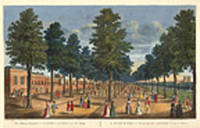
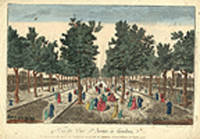
1780réf. 10559Paris: Chez. Daumont rue St. Martin. Presentement chés Lachaussée rue S. Jacques 1780. Engraving with original colour. Printed on wove paper. This is a later copy of the earlier print of St. James' published by Daumont. In good condition with the exception of some scattered brown marks. Trimmed within the platemark. Image size: 9 1/4 x 14 1/2 inches. Vue d'Optique of St. James' Park in London During the eighteenth century "vues d'optique" or "perspective views" became extremely popular in England and Europe. Like other optical prints they capitalized on a connoisseur market eager for the latest novelty. English publishers such as John Bowles and Robert Sayer had great success with these optical views which quickly developed into a collecting craze that swept through print shops on both sides of the Channel. "Vues d'optiques" were specifically designed to create the illusion of perspective when viewed with a zograscope or perspective glass. These viewing devices used a series of reflecting mirrors to enhance the illusion of depth in the print creating a veritable "view" for the onlooker. Typically these prints depicted city or landscape views and were horizontal in format. They had roughly the same dimensions and were sold with heavy opaque colouring so as to show the tints when viewed through the lens. In their heyday optical prints were a technical revolution; they could be seen in almost every fashionable drawing room and were enjoyed by the poorer classes in print shops or at traveling fairs. For a small fee the citizens of Europe and England could travel the world without leaving their village. The "vue d'optique" was the first medium to bring the visible appearance of the wider world to a large European public. Ironically the artists and engravers who created these prints rarely had first hand knowledge of the scenes depicted hence the views were often not as accurate as they were advertised to be. As a result of their constant handling optical prints such as these are rare especially in good condition. They are not only beautiful images but a fascinating glimpse into the history of printmaking. Clayton The English Print 1688-1802 140-141. Chez. Daumont rue St. Martin. Presentement chés Lachaussée rue S. Jacques unknown books
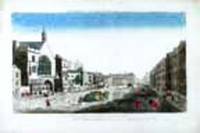
1766réf. 18808London and Paris: a Londres ches Wichnyther A Paris chez J. Chereau rue St. Jacques au dessus de la Fontaine St. Severin aux 2 Colonnes No. 257 1766. Engraving with original colour. Printed on laid paper. In good condition with mild soiling and creasing. A beautiful Vue d'Optique with strong early colour depicting the old Palace of Westminster where the Lords and Commons met. An interesting late 18th century view of Westminster prior to the great fire of 1834 which brought into being the present Houses of Parliament. Westminster had been a royal residence until Henry VIII left it after a fire to reside at Whitehall. After that the Houses of Parliament met there. During the eighteenth century "vues d'optique" or "perspective views" became extremely popular in England and Europe. Like other optical prints they capitalized on a connoisseur market eager for the latest novelty. English publishers such as John Bowles and Robert Sayer had great success with these optical views which quickly developed into a collecting craze that swept through print shops on both sides of the Channel. "Vues d'optiques" were specifically designed to create the illusion of perspective when viewed with a zograscope or perspective glass. These viewing devices used a series of reflecting mirrors to enhance the illusion of depth in the print creating a veritable "view" for the onlooker. Typically these prints depicted city or landscape views and were horizontal in format. They had roughly the same dimensions and were sold with heavy opaque colouring so as to show the tints when viewed through the lens. In their heyday optical prints were a technical revolution; they could be seen in almost every fashionable drawing room and were enjoyed by the poorer classes in print shops or at traveling fairs. For a small fee the citizens of Europe and England could travel the world without leaving their village. The "vue d'optique" was the first medium to bring the visible appearance of the wider world to a large European public. Ironically the artists and engravers who created these prints rarely had first hand knowledge of the scenes depicted hence the views were often not as accurate as they were advertised to be. As a result of their constant handling optical prints such as these are rare especially in good condition. They are not only beautiful images but a fascinating glimpse into the history of printmaking. Clayton The English Print 1688-1802 140-141. a Londres ches Wichnyther (?) A Paris chez J. Chereau rue St. Jacques au dessus de la Fontaine St. Severin aux 2 Colonnes No. 25 unknown books
1760réf. 103861760. Engraving with original colour. Printed on laid paper. In good condition with the exception of some creases within the image. Sides have been remargined with laid paper and bottom edge is trimmed within the platemark. Surface soiling within image. Image size: 11 x 16 1/4 inches. A wonderful "vue d'optique" of Somerset House on the Strand in London. During the eighteenth century "vues d'optique" or "perspective views" became extremely popular in England and Europe. Like other optical prints they capitalized on a connoisseur market eager for the latest novelty. English publishers such as John Bowles and Robert Sayer had great success with these optical views which quickly developed into a collecting craze that swept through print shops on both sides of the Channel. "Vues d'optiques" were specifically designed to create the illusion of perspective when viewed with a zograscope or perspective glass. These viewing devices used a series of reflecting mirrors to enhance the illusion of depth in the print creating a veritable "view" for the onlooker. Typically these prints depicted city or landscape views and were horizontal in format. They had roughly the same dimensions and were sold with heavy opaque colouring so as to show the tints when viewed through the lens. In their heyday optical prints were a technical revolution; they could be seen in almost every fashionable drawing room and were enjoyed by the poorer classes in print shops or at traveling fairs. For a small fee the citizens of Europe and England could travel the world without leaving their village. The "vue d'optique" was the first medium to bring the visible appearance of the wider world to a large European public. Ironically the artists and engravers who created these prints rarely had first hand knowledge of the scenes depicted hence the views were often not as accurate as they were advertised to be. As a result of their constant handling optical prints such as these are rare especially in good condition. They are not only beautiful images but a fascinating glimpse into the history of printmaking. Clayton The English Print 1688-1802 140-141. unknown books
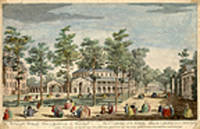
1751réf. 10664London: Printed for & Sold by Rob. Sayer at the Golden Buck opposite Fetter Lane Fleet Street. & Hen. Overton at the White Horse without Newgate 1751. Engraved by N. Parr after Canaleti. Engraving with original colour. Printed on laid paper. In good condition with the exception of being trimmed within the platemark. Corners are stained. Image size: 9 3/16 x 15 3/16 inches. A beautiful Vue d'Optique of the Rotunda House at Ranelagh. During the eighteenth century "vues d'optique" or "perspective views" became extremely popular in England and Europe. Like other optical prints they capitalized on a connoisseur market eager for the latest novelty. English publishers such as John Bowles and Robert Sayer had great success with these optical views which quickly developed into a collecting craze that swept through print shops on both sides of the Channel. "Vues d'optiques" were specifically designed to create the illusion of perspective when viewed with a zograscope or perspective glass. These viewing devices used a series of reflecting mirrors to enhance the illusion of depth in the print creating a veritable "view" for the onlooker. Typically these prints depicted city or landscape views and were horizontal in format. They had roughly the same dimensions and were sold with heavy opaque colouring so as to show the tints when viewed through the lens. In their heyday optical prints were a technical revolution; they could be seen in almost every fashionable drawing room and were enjoyed by the poorer classes in print shops or at traveling fairs. For a small fee the citizens of Europe and England could travel the world without leaving their village. The "vue d'optique" was the first medium to bring the visible appearance of the wider world to a large European public. Ironically the artists and engravers who created these prints rarely had first hand knowledge of the scenes depicted hence the views were often not as accurate as they were advertised to be. As a result of their constant handling optical prints such as these are rare especially in good condition. They are not only beautiful images but a fascinating glimpse into the history of printmaking. Clayton The English Print 1688-1802 140-141. Printed for & Sold by Rob. Sayer at the Golden Buck, opposite Fetter Lane, Fleet Street. & Hen. Overton at the White Horse witho unknown books
1800réf. 10694London: Printed for Bowles & Carver No. 69 St. Pauls Church Yard 1800. Engraving with beautiful hand-colour. In excellent condition with the exception of tape on the verso of sheet. Image size: 9 3/8 x 15 3/4 inches. Vue d'Optique of the Royal Palace in St. James' Park in London During the eighteenth century "vues d'optique" or "perspective views" became extremely popular in England and Europe. Like other optical prints they capitalized on a connoisseur market eager for the latest novelty. English publishers such as John Bowles and Robert Sayer had great success with these optical views which quickly developed into a collecting craze that swept through print shops on both sides of the Channel. "Vues d'optiques" were specifically designed to create the illusion of perspective when viewed with a zograscope or perspective glass. These viewing devices used a series of reflecting mirrors to enhance the illusion of depth in the print creating a veritable "view" for the onlooker. Typically these prints depicted city or landscape views and were horizontal in format. They had roughly the same dimensions and were sold with heavy opaque colouring so as to show the tints when viewed through the lens. In their heyday optical prints were a technical revolution; they could be seen in almost every fashionable drawing room and were enjoyed by the poorer classes in print shops or at traveling fairs. For a small fee the citizens of Europe and England could travel the world without leaving their village. The "vue d'optique" was the first medium to bring the visible appearance of the wider world to a large European public. Ironically the artists and engravers who created these prints rarely had first hand knowledge of the scenes depicted hence the views were often not as accurate as they were advertised to be. As a result of their constant handling optical prints such as these are rare especially in good condition. They are not only beautiful images but a fascinating glimpse into the history of printmaking. Clayton The English Print 1688-1802 140-141. Printed for Bowles & Carver, No. 69 St. Pauls Church Yard unknown books
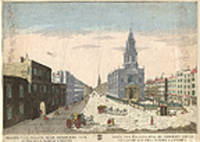
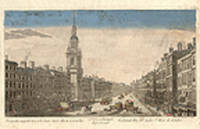
1760réf. 10384Paris: chez Daumont rue St. Martin 1760. Engraving with original colour. Printed on watermarked laid paper. In excellent condition with the exception of some surface soiling in the upper section of the image. Image size: 8 7/8 x 15 13/16 inches. A wonderful "vue d'optique" of St. Mary's Church in London During the eighteenth century "vues d'optique" or "perspective views" became extremely popular in England and Europe. Like other optical prints they capitalized on a connoisseur market eager for the latest novelty. English publishers such as John Bowles and Robert Sayer had great success with these optical views which quickly developed into a collecting craze that swept through print shops on both sides of the Channel. "Vues d'optiques" were specifically designed to create the illusion of perspective when viewed with a zograscope or perspective glass. These viewing devices used a series of reflecting mirrors to enhance the illusion of depth in the print creating a veritable "view" for the onlooker. Typically these prints depicted city or landscape views and were horizontal in format. They had roughly the same dimensions and were sold with heavy opaque colouring so as to show the tints when viewed through the lens. In their heyday optical prints were a technical revolution; they could be seen in almost every fashionable drawing room and were enjoyed by the poorer classes in print shops or at traveling fairs. For a small fee the citizens of Europe and England could travel the world without leaving their village. The "vue d'optique" was the first medium to bring the visible appearance of the wider world to a large European public. Ironically the artists and engravers who created these prints rarely had first hand knowledge of the scenes depicted hence the views were often not as accurate as they were advertised to be. As a result of their constant handling optical prints such as these are rare especially in good condition. They are not only beautiful images but a fascinating glimpse into the history of printmaking. Clayton The English Print 1688-1802 140-141. chez Daumont rue St. Martin unknown books
1902réf. 68721New York: Underwood & Underwood 1902. Paperback. Very Good. 18 x 9cm. Card slightly concave as usual. Aftermath of a collision between a white bicyclist and an African American man who had been carrying a basket of apples. Most of the apples have spilled from the basket the African American is lying flat out more or less on the ground and one of his hands has poked through the top of his straw hat and is pointing at the bicyclist. The white bicyclist is in a contorted position intertwined with his wrecked bicycle. Intended to be humorous. Underwood & Underwood paperback books
1860réf. 25622Mainz Germany: Joseph Halenza 1860. A view book with 22 blue tissue-guarded black and white engravings executed on heavy paper stock by F. Foltz; or after Von Pauer and Rohmer. Including views of: Heidelberg; Frankfurt am Main; Coblenz detached spotty; Mainz 2 views - one detached & spotty; Biebrich; Wiesbaden; Bingen; Mausethurn & Ehrenfels; Rheinstein; Bacharach; Caub und die Pfalz; Lurleyfelsen; St. Goar; Bad Ems; Stolzenfels; Andernach; Apolinaris-Kirche; Drachenfels Nonnenwerth und Rolandseck; Godesberg; Bonn; Coln. Approx. 9 1/2" x 13" size; oblong format; elaborately decorative embossed & gilt hardcover textured lavender cloth covers. Some of the plates with mostly marginal spotting & foxing and as described above. Binding with some fading to the cloth and contents loosening at the gutter a bit; generally in good condition. First Edition. Hardcover. Good. Joseph Halenza books
1907réf. 68720New York: American Stereoscopic Co 1907. Paperback. Very Good. 18 x 9cm. Card slightly concave as usual. Stamped on the back: Universal Photo Art Co. Philadelphia Pa. A white-haired African American man wearing patched-up winter clothes and feet coverings is holding an old rifle and is seated on a log. Beside him hangs what appear to be four of five rabbit carcasses. American Stereoscopic Co paperback books
1878réf. 84600Petoskey: Democrat" Print 1878. Very Good. Stereo View Card Mounted double photos on orange card mount which measures approx. 17.5 x 11.5 cm. Some scuffing but still quite sound. Image is decent but not sharp. Text on back signed by Ralph Connable and Church Secretary W. F. Lawton states that the "Rustic Pulpit" was made by Connable and presented to the Michigan Camp Ground Association at Bay View. Chief Petoskey is presumably the individual seated on a chair between the Speaker's Stand and several rows of outdoor seating planks. Proceeds from the sale of this and other unidentified pictures after first paying the photographer's bill were to be used for the erection of a chapel. The Michigan Camp Ground Association became the Bay View Association which still exists and is still affiliated with the Methodist Church although the evangelistic fervor has faded. Phil's parents spent 23 pleasant summers at a cottage in Bay View after Phil's father retired from the Methodist ministry. Democrat" Print unknown books
réf. 47492Sydney: Published by Samuel Wood n. d. Ca early 20th C. Light grey paper covers printed in green & yellow stapled. Now housed in an archival mylar sleeve. General wear & soiling smattering of foxing Very Good. Unpaginated though 44 pages. All views b/w captioned. Oblong format: 6-1/8" x 9-1/2" Published by Samuel Wood unknown books
1898réf. 47256Malden / Boston / New York: The Perry Pictures Company 1898. 2nd edition ca 1900. Original publisher printed green paper covers brown cord tie. General wear & soiling to wrappers bit of age-toning to paper Very Good. 32 ll: title leaf followed by 31 leaves of b/w images. Each image ~ 4" x 6" to leaf recto captioned. Versos blank. Printed on glossy paper. Booklet with horizontal format: 5-1/4" x 8" Somewhat uncommon view book for this popular northeast town; OCLC records 4 holding institutions for this 2nd edition. The Perry Pictures Company unknown books
1900réf. 68719n.p. 1900. Paperback. Very Good. 18 x 9cm. Card slightly concave as usual. Printed along the sides of the photos: "New Education Series Stereoscopic Views. American and Foreign Views. Sold by Canvasser." Four or five poorly-clad African American boys one of whom is grinning and has a watermelon partly concealed under his shirt. Partially readable poster on a wall behind the boys announces: "Second Annual Excursion C. R. Hubert Republican Club Stockton Pa." paperback books
1978réf. 74944Amherst:: Vista Trust. Very Good in Very Good dust jacket. 1978. Hardcover. 0960171215 . First edition. Light foxing on edges else very good in a very good minor edge wear fading along the spine dust jacket. . Vista Trust, hardcover books
réf. 006421Meadville PA: Keystone View Company No date circa late 1800s. Both cards Near Fine very slight rubbing at corners. Cards no. 207 and 208 printed both sides 2 images front sides text to verso. . First Printing. Stereo Card. Near Fine. 3 1/2" x 7". Keystone View Company Paperback books
1966réf. 288936London: Studio Vista Limited 1966. First. hardcover. very good/good. Illustrated b/w and color. 161 pages 12 pages of advertisers' announcements. 4to. Orange boards spine slightly cocked dust wrapper shows tear with some image loss at top edge d.w. now protected from further damage with mylar. First edition. London: Studio Vista Ltd. 1966. A very good copy in a good wrapper. Studio Vista Limited unknown books
1942réf. 10120Los Angeles: Wetzel Publishing Co. Near Fine in Near Fine dj. c.1942. First Edition. Hardcover. nice tight copy very minor soiling to top edge but no significant wear; jacket bright and clean with a trace of wear at several corners a couple of very tiny tears/chips along top edge. The first of several novels by this midwest-born L.A.-based author "active in club life" and a former "motion picture critic for 'Hollywood Lowdown'" not one of your major trade papers. The book presents "the living breathing story of the Pearson family told intimately and with brutal frankness from the personal viewpoint of the chief character Florrie Pearson the youngest. The mad unsavory escapades of her blood kin are lived through in the book with stirring realism. Early experiences the frustration of abject poverty turbulent times in America during 1917-1942 and last but not least their hot blood mixed with a strain of Cherokee Indian are among the causes that lie back of their sinful guiltiness as Florrie explains it." Last but not least indeed: as the author explains in her 4-page! foreword "the family's problem was one of a common handicap shared by their particular blood kin the problem of 'bad blood' or blood in which racial tendencies were said to be 'bad.' Also the frustration that comes with poverty." But lest you think you've stumbled into a midwestern Tobacco Road the author also assures us that "at no point does the book descend to the stark vulgarity sometimes masquerading under the pose of being merely 'brutal frankness.' But neither do I as an honest author make the unpardonable mistake of prudish understatement where merciless realism is called for by the story." So there you go: brutal frankness but not "merely" thus merciless yet stirring realism not an ounce of prudish understatement which as we all know is unpardonable but rather explicitly racist overtones which apparently are OK. Got it . Wetzel Publishing Co. hardcover books
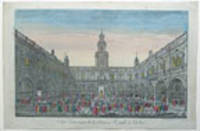
1770réf. 15059Paris: Chez Daumont rue St. Martin 1770. Engraving with beautiful early colour. Printed on watermarked laid paper. In excellent condition with the exception of being trimmed within the platemark on the lower margin. Small tear on upper margin. Small puncture mark on left margin. Image size: 10 1/8 x 16 1/8 inches. This is a beautiful perspective view of the courtyard of the Royal Stock Exchange in London published by a Parisian printseller at the close of the eighteenth century. During the eighteenth century "vues d'optique" or "perspective views" became extremely popular in England and Europe. Like other optical prints they capitalized on a connoisseur market eager for the latest novelty. English publishers such as John Bowles and Robert Sayer had great success with these optical views which quickly developed into a collecting craze that swept through print shops on both sides of the Channel. "Vues d'optiques" were specifically designed to create the illusion of perspective when viewed with a zograscope or perspective glass. These viewing devices used a series of reflecting mirrors to enhance the illusion of depth in the print creating a veritable "view" for the onlooker. Typically these prints depicted city or landscape views and were horizontal in format. They had roughly the same dimensions and were sold with heavy opaque colouring so as to show the tints when viewed through the lens. In their heyday optical prints were a technical revolution; they could be seen in almost every fashionable drawing room and were enjoyed by the poorer classes in print shops or at traveling fairs. For a small fee the citizens of Europe and England could travel the world without leaving their village. The "vue d'optique" was the first medium to bring the visible appearance of the wider world to a large European public. Ironically the artists and engravers who created these prints rarely had first hand knowledge of the scenes depicted hence the views were often not as accurate as they were advertised to be. As a result of their constant handling optical prints such as these are rare especially in good condition. They are not only beautiful images but a fascinating glimpse into the history of printmaking. Clayton The English Print 1688-1802 140-141. Chez Daumont rue St. Martin unknown books
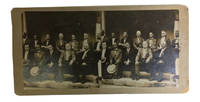
1910réf. 82170n.p. 1910. Very Good. 18 x 9cm. Card almost entirely flat unlike some stereo cards. Light scuffing and wear. No caption front or back and no identification of publisher or date. BTW and two other African Americans are seated at left end of back row. All men are wearing suits; two are holding white hats. We've seen several groupings of BTW with the white Tuskegee trustees. This a bit more integrated but we wouldn't be surprised if many of the prosperous-looking whites were trustees. unknown books
1860réf. 657831860. Good. Appears to utilize albumen photographs in a light orange card. No name on card. Photo clear but not sharp. Small tear in lefthand image. Two pieces missing from back panel on mounting. View looks from a distance directly at one of the corners so that you see two sides of the building. unknown books
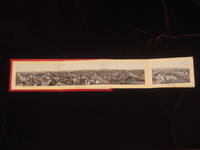
1910réf. 57900Monadnock Block Chicago: Compliments of The Baldwin Syndicate 1910. A black & white image on glossy paper measuring 22 1/4 x 95 cm. Noted in type: "Road to Globe" on left; "Phoenix & Eastern Railway" left of center; "Town of Kelvin 500 inhabitants at right." No. 1 2 & 3 shafts and tunnels for the copper company are marked by name and arrows on the terrain across the river. A few short tears and nicks to margin of image one snag at lower right affecting a few letters in the publishing information some light soiling primarily at either end some creasing from having been rolled up. A very good copy. The Baldwin Syndicate were "Sole Fiscal Agents Kelvin-Sultana Copper Company. The Kelvin-Sultana Copper Company was organized in 1910 out of the older Sultana-Arizona Copper Company. The new company went into receivership in 1919 and was re-organized and re-named as the Ray Boston Copper Company. Compliments of The Baldwin Syndicate unknown books
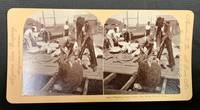
1898réf. 49371Meadville Pa / St. Louis Mo: Keystone View Company 1898. Pink mount slightly bowed with publisher imprint to either side caption under right image. Rounded corners. Blank verso. Now housed in a mylar sleeve. Light wear & soiling. Photo clear & sharp. A VG example. Domed b/w images of 7 men on a dock with a dozen or so sea turtles being gathered. Oblong format: 3-7/16" x 7" Keystone View Company unknown books
réf. 4934San Francisco; ca. 1885: C. P. Heininger. Hard Cover. 5" x 3 ½";. 24 panels folded accordion style each with black and white photolithographs the first 3 panels showing a panorama birds-eye view of Los Angeles; another shows a view of Los Angeles in 1857; verso of last panel is a map depicting carriage drive and railroad of Los Angeles County and San Bernardino County at rear bound in embossed red cloth title gilt within frame.Very nice. pastedown is an ad of publisher C. P. Heininger. small booksellers' ticket on rear pastedown; scarce; near fine. C. P. Heininger hardcover books