KONYA PROVINCE MEDICAL INSPECTORATE.MareMagnum
MareMagnum
2 Bollettini sanitari del Comune di Gualtieri
187330x22 cm, firmati a penna dal Sindaco del 22 ottobre e del 8 dicembre 1873 con situazione sanitaria delle persone in cura
434 risultati
1910Very Good Turkish, Ottoman (1500-1928) Original registry book in its original grey art nouveau cloth. All edges marbled. 'The English manufactory of book and register' written on end-papers. 'Zugologion' written in Greek letters on front cover. Slightly faded. A fine copy. Demy 8vo. (22 x 15 cm). In Ottoman script. 52 p. is written of which apprx. 200 p., but it's finished and complete; one folding hand-drawn color map, and 3 tables. [MANUSCRIPT] [Ottoman Prokopi sanitary report] Konya Sihhiye Müfettisligi'nin 16 Tesrinievvel 1327 tarihli mezkûr müfettislige takdim olunan rapordur ki 327 senesi Ürgüp'te zuhur eden koleraya dairdir.; Vilâyetin topografya-yi sihhiye ve harita-yi sihhiyesi. The report on the cholera occurring in Ürgüp in 1910, which was presented to the Inspectorate of Konya Sihhiye on October 16, 1910. Besides cholera, it contains information about diseases such as measles. 1329 (Hegira) written at the end of first 10-paged report. The second part contains title: Mecelle-i Memâlik-i Osmaniye'ye ait minvallere cevabât yazilarak Üsküp Kaymakamligi'na takdim olunan 'Müslüman Sihhiye' raporu [= Muslim health report submitted to the Ürgüp (Prokopi) District Governor]. This and following next chapters include general health and sanity registers on epidemics like 'frengi' (syphilis, pox), all kinds of 'humma' (pyrexia) and several others (almost more 15 titles) and give information about how often diseases are encountered in the region of Prokopi and Cappadocia. One folded map which is hand-drawn includes color markers as 'Ürgüp Bölgesi saglik haritasi' [= Prokopi region sanity and epidemic map]. Also it shows demographic and historical info about region. There are 3 statistical tables contain demographic, historical, religious info such 'Muslim' and 'Non-Muslim'. Maps and tables are perfectly drawn. Another chapter is 'Usul-i sihhiye', has all epidemics and their historical and demographic contexts, their cures etc. Book was written in a very nice hand-writing. Used black, blue, and red inks. Report was not published before such as that. Roumi: 1327 = Gregorian: 1910. The Ottoman land represented a bridge between Asia and Europe, which was destroyed by epidemic diseases that emerged in different periods. In the 19th century, the main source of epidemic was the cholera morbus that emerged in India in the lower Bengal delta between the Ganges and Brahmaputra rivers. At the beginning of the 19th century, the disease became a global threat. Cholera epidemic appeared for the first time in the Ottoman territory in 1822, and continued to emerge into intermediate outbreaks. Due to its geographical location, the cholera epidemic was easily spread to the Ottoman territory and caused great losses in the 19th century, when it became a global threat. At the beginning of the 20th century, still cholera was a serious problem. Prokopi is a settlement in Central Asia Minor, built on a plateau at an altitude of 1,200 m above sea level. It lies near the confluence of four tributary rivers of the Alys River (Kizilirmak), which flows to the north of Ürgüp, within about 10 km from the settlement. It has been claimed that the word Ürgüp is the Turkish version of the Greek name Prokopi. The latter is supposed to refer to St. Prokopios, although there is no evidence suggesting the existence of a namesake church. Levidis supported that the ancient name of the settlement was Osiana, which the traveller Texier (Charles) adopted as well. Ürgüp was inhabited by Muslims, Turkish-speaking Greek-Orthodox and some Armenians. Several conflicting opinions have been stated about the population. Farasopoulos talks about 15,000 Muslims and 5,000 Christians. According to an inventory carried out by the state in 1919, Ürgüp was inhabited by 12,500 Muslims, 6,000 Christian-Orthodox and 15-20 Armenian families.
186535x25 cm, 30 cartoncini colorati con pubblicità di negozi o studi professionali bolognesi ritagliate da giornali varii e applicati. Argomenti delle inserzioni sono: salute, commercio, spettacolo, cioccolato Majani, moda, colèra, acque minerali, alberghi, magnetismo, ballo, giochi, vino, cavalli, sonnambulismo, pasticceria, ecc
1996rif. 1524326640490HASP-393, Grupo Anaya, Madrid 1996
2002rif. 9420Goldmann, München, 2000, 2002. 268 S. + 288 S., TB, guter Zustand, beides als Mängelexemplar gekennzeichnet
187330x22 cm, firmati a penna dal Sindaco del 22 ottobre e del 8 dicembre 1873 con situazione sanitaria delle persone in cura
1893rif. 40Very rare Second enhanced edition No copy of any edition of this title recorded in WorldCat Uncut Oliveti Torquato. Della morte apparente nei cholerosi del modo di farli risorgere e della sola cura giovevole nel cholera asiatico / Torquato Oliveti. Savignano : Tipografia dei Filopatridi 1893 8° 185 x 120 mm original paper binding with title page printed on front board pp. 116. Very rare second edition of Torquato Olivetti treatise on Asian cholera and the phenomenon of apparent death in the sufferers of cholera The treatise published in First Edition in Naples in 1886 organised as a practical manual to be used by doctors during an epidemic of cholera deals with the causes and symptoms of the disease the most effective cures and deals with the phenomenon of the apparent death of some sick people on how to recognise this symptom and how to raise the apparent dead. Olivetti a doctor and lawyer from Emilia formed his experience on cholera during the terrible plague epidemic that broke out in Naples in 1884. In the summer of 1884 a devastating cholera epidemic was recorded in Naples. The difficult housing situation in the popular neighbourhoods and poor sanitation conditions favoured the rapid proliferation of the disease. In the space of a few weeks the death toll exceeded 7000. To prevent the recurrence of other similar tragedies the mayor Nicola Amore with the support of King Umberto I and Prime Minister Depretis started the "gutting" of the ancient city with a massive recovery plan. CONDITION: Amazing copy with no defects; uncut. Tipografia dei Filopatridi paperback
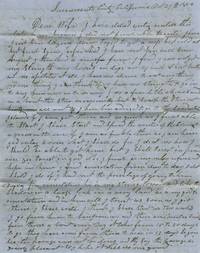
1850rif. BK0017Sacramento City California 1850. Autograph letter signed "Sam'l Locke" to his wife in Belfast Maine. 6 pp. Stampless folded letter with clear circular "SACRAMENTO CITY / CAL." postmark and "40" rate handstamp; manuscript notation recording receipt in Maine on December 19 1850. Light soiling; very good. A bleak California Gold Rush letter written during the 1850 Sacramento cholera epidemic by Samuel Locke a Maine emigrant suffering from prolonged fever and unable to regain his strength. Surrounded by sickness failed mining ventures violent crime and men too poor or ill to return home Locke plans to seek recovery in the Sandwich Islands while relying upon his religious faith for consolation. Locke had been ill since August and was now so weak that ordinary work exhausted him: "My limbs or legs are very weak short breath and no appetite at all. I have no desire to eat anything not one thing I can think of. I have no strength to go into any business or to do any. I do a few little chores round or about the store occasionally but to sweep the store it beats me all out . O how I long to get out of this place. Can't get any strength don't know as I can anywhere but I long to try." Friends advised him to spend the winter in the Sandwich Islands. He expected to travel first to San Francisco and then make the fifteen- to twenty-day passage to Hawaii though he feared that continued illness might leave him unable either to support himself there or return to Maine. He states that he will "trust in providence yes trust in God who I feel is my only refuge". Locke gives a grim account of California's climate and the spread of cholera through Sacramento claiming that the climate in California prevented the sick from recovering their strength as the "air is very light & bad middle of the day very hot and nights very cool." The previous week's report had stated forty dead but "nothing near all the cases were reported" with Locke himself knowing of several unreported cases personally. A local blacksmith died overnight after his companions borrowed Locke's syringe and "We can hardly see a healthy looking individual in the streets." The letter also records the uncertain fortunes of men from Locke's home region scattered through the mines. William Beckett and his partners had spent the summer constructing a mining dam had struck gold on the first day and then immediately "the dam was washed away so they lost all their summer's labor." Other acquaintances had moved to Kelsey's Bar the southern mines or Oregon or were preparing to return east by way of Panama. Some remained convinced that California would reward perseverance while others had "seen enough" after accomplishing nothing. Locke regarded success as largely accidental: "Thousands are here and in the mines who want to get home and cannot-not able to do seamen's duty and no money to pay but they have got to stay in the mines and do the best they can. Some it is true have been lucky. It is all luck. If they happen to hit a good place they do well." News that cholera had entered the mining districts increased his alarm. Locke feared especially for men living in tents as the rainy season approached with poor food and little protection from exposure. Sacramento itself was marked by nightly violence: "There are murders or robberies about every night. One man killed in front of our house a few nights ago. We heard him holler and heard the blows. Next morning he died. His head was dreadfully mangled." Locke closes with an emotional message to his wife and children. His health finances and prospects all appeared uncertain and he repeatedly asked his family and church to pray for him: "Tell the dear Children to be good and if they never see me again when I am gone they will have the satisfaction . of knowing they acted as thy Father requested . Pray for me ask the Church to pray for me indeed I know I have your prayers and you have mine often." A particularly bleak account of the human cost of the California Gold Rush documenting epidemic disease physical collapse failed mining schemes violent crime religious faith and the predicament of emigrants unable to escape California after their health and resources were exhausted. . unknown
18648 cartoncini 35x25 cm con 16 inserzioni pubblicitarie bolognesi applicate riguardanti commercio, salute, immobiliari, prestigiatori, abbigliamento, aste,
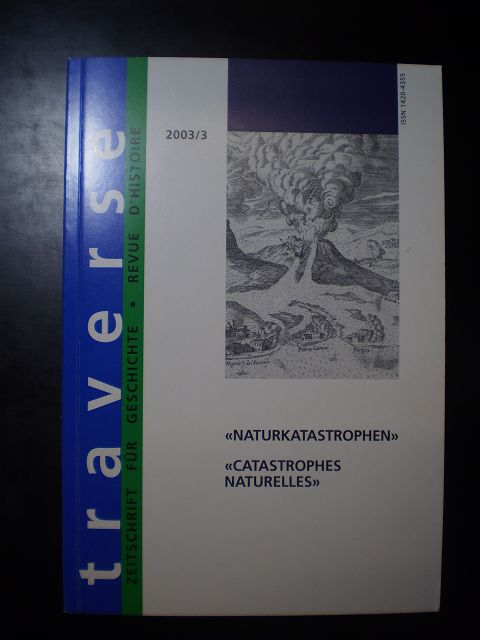
2003rif. 62789Zürich, Chronos Verlag, 2003, Auflage: 1. kartoniert; flexibler, weisser, grün/blau/schwarzweiss illustrierter Einband / Anz. Seiten: 216 / 15,5 x 22,5 cm / Zustand: schönes Exemplar