412 résultats
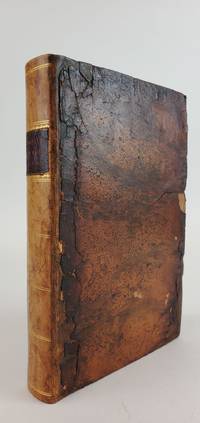
1829réf. 1358768Philadelphia: Carey Lea & Carey 1829. Hardcover. Octavo 2 v-viii 9-326 pp. Poor; bound in contemporary leather with surface scratches to covers and wear to spine edges and corners; front board fully separated binding else tight; text block age-toned; age-toning and extensive foxing to pages throughout; ex-library copy with usual markings including a bookplate to front pastedown institutional stamps to several pages and call number written in pencil; MF consignment. 1358768. Special Collections. Carey, Lea & Carey hardcover books
1801réf. mon0003790483Brosson 1801-01-01. Reliure inconnue. Good. . Complete 5 Volume Set - Volumes 1 & 2 are rebacked; 1/4 dark brown cloth with their original calf boards; gilt lettering to spines. Volumes 34 & 5 are Rebound in dark brown buckram cloth with gilt lettering to spines - XXXII 464 - VI 624 - XXVIII 461 1 - XXIV 496 - VIII 476 pages. Volumes 1 & 2 are former Univ. Louisville Medical library copies with only modest internal markings; Both have reinforced hinges foxing; Vol. 1. has browning and some dampstaining - Vols. 34 & 5 are former Univ of Chicago copies also with just modest internal markings; mild foxing throughout. Otherwise clean and unmarked. Vol. 1 is in fair condition; Vol. 2 is in Good Condition and the rest of the is in Very good Condition. Brosson unknown
réf. 6d9548Taubert`sche Buchhandlung Lpz. 1827. XVI/433 S. Pappband der Zeit Stempel auf Titel und Vorsatz. - aus dem Französischen übersetzt und mit Anmerkungen begleitet von A.W. Pestel - unknown
1823réf. R320108907brosson j;a; et chaude. 1823. In-8. Relié. Etat d'usage, Coins frottés, Dos abîmé, Intérieur frais. XXXIII+ 464 + 624 + 461 pages - Plats, contre-plats et tranches jaspés - Dos très frottés - dos du Tome 2 partiellement arraché mais conservé. 2 PHOTOS DISPONIBLES - . . . . Classification Dewey : 611-Anatomie humaine
1827réf. 57796Nouvelle édition, revue et augmentée de notes par M. Magendie, 1 vol. in-8 reliure de l'époque demi-veau vert, dos lisse orné en long, Méquignon-Marvis, Gabon, Paris, s.d. [ circa 1827 ], xxxiv-349 pp.
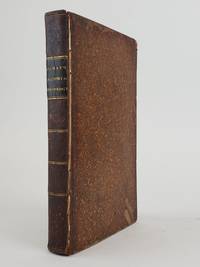
1827réf. 33666Boston: Richardson and Lord 1827. 8vo pp. viii 9-334; minor foxing bookplate removed else very good contemporary full calf neatly rebacked with old spine laid down red morocco label. First published in Paris in 1800. See Garrison-Morton 597: "When Volta questioned the validity of experiments claiming to show responsiveness of an ex vivo heart devoid of blood flow and nervous connections Bichat obtained permission to experiment on the freshly killed bodies of those guillotined during the French Revolution. His trials on both laboratory animals and human cadavers led him to conclude that cardiac excitation by electricity would occur only when the organ was simulated by direct contact. Richardson and Lord unknown
1827réf. 33666Boston: Richardson and Lord 1827. 8vo pp. viii 9-334; minor foxing bookplate removed else very good contemporary full calf neatly rebacked with old spine laid down red morocco label. First published in Paris in 1800. See Garrison-Morton 597: "When Volta questioned the validity of experiments claiming to show responsiveness of an ex vivo heart devoid of blood flow and nervous connections Bichat obtained permission to experiment on the freshly killed bodies of those guillotined during the French Revolution. His trials on both laboratory animals and human cadavers led him to conclude that cardiac excitation by electricity would occur only when the organ was simulated by direct contact. Richardson and Lord unknown books
1809réf. 49380Philadelphia: Smith & Maxwell 1809. First American from the Second Paris Edition. Hardcover. Very good. 300p octavo Very foxed throughout old stain on the lower right corner on the first 10 pages reboumd in modern blue boards. Smith & Maxwell hardcover
1827réf. 56240Boston: Published by Richardson and Lord. J.H.A. Frost Printer 1827. pp. viii 9-334. 1 vols. 8vo. Full contemporary sheep worn cover slightly sprung foxed front free-endpaper missing else a very good tight copy. Signed Baj. L. Swan 1`836. pp. viii 9-334. 1 vols. 8vo. One of Bichat's most influential works wherein he examines what happens in violent accidental and sudden death. See Garrison-Morton 597: "When Volta questioned the validity of experiments claiming to show responsiveness of an ex vivo heart devoid of blood flow and nervous connections Bichat obtained permission to experiment on the freshly killed bodies of those guillotined during the French Revolution. His trials on both laboratory animals and human cadavers led him to conclude that cardiac excitation by electricity would occur only when the organ was simulated by direct contact. Published by Richardson and Lord. J.H.A. Frost, Printer unknown
1827réf. 56240Boston: Published by Richardson and Lord. J.H.A. Frost Printer 1827. pp. viii 9-334. 1 vols. 8vo. Full contemporary sheep worn cover slightly sprung foxed front free-endpaper missing else a very good tight copy. Signed Baj. L. Swan 1`836. pp. viii 9-334. 1 vols. 8vo. One of Bichat's most influential works wherein he examines what happens in violent accidental and sudden death. See Garrison-Morton 597: "When Volta questioned the validity of experiments claiming to show responsiveness of an ex vivo heart devoid of blood flow and nervous connections Bichat obtained permission to experiment on the freshly killed bodies of those guillotined during the French Revolution. His trials on both laboratory animals and human cadavers led him to conclude that cardiac excitation by electricity would occur only when the organ was simulated by direct contact. Published by Richardson and Lord. J.H.A. Frost, Printer unknown books
1811réf. 1355441Philadelphia: Kimber & Conrad 1811. Second Edition. Hardcover. Octavo xiii 15-398 pp. Good; bound in contemporary leather with spine rebound in modern leather with boards showing extensive chipping and wear to front edges and corners; binding tight; text block discolored; foxing and age-toning throughout; ex-library copy with usual markings including a bookplate to front pastedown institutional stamps to several pages and call number written in pencil. MF consignment. 1355441. Special Collections. Kimber & Conrad hardcover
1811réf. 1355441Philadelphia: Kimber & Conrad 1811. Second Edition. Hardcover. Octavo xiii 15-398 pp. Good; bound in contemporary leather with spine rebound in modern leather with boards showing extensive chipping and wear to front edges and corners; binding tight; text block discolored; foxing and age-toning throughout; ex-library copy with usual markings including a bookplate to front pastedown institutional stamps to several pages and call number written in pencil. MF consignment. 1355441. Special Collections. Kimber & Conrad hardcover books
1801réf. mon0003512292Chez Brosson Gabon et Cie 1801. Hardcover. Good. . Vol. I and II ONLY. General shelf/age wear. Minor foxing here and there throughout overall clean. Bindings tight. A really nice set overall especially for its age. Chez Brosson, Gabon et Cie hardcover
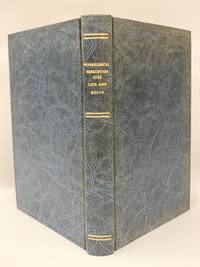
1987réf. 217416Alabama: Gryphon Editions 1987. First Edition; First Printing. Hardcover. Very Good Leather bound Accented in 22kt gold. Printed on archival paper with gilded edges. The endsheets are of moire fabric with a silk ribbon page marker. Smyth sewing and concealed muslin joints. This book is in full leather with hubbed spines. First Gryphon Edition. Owner bookplate on 2nd FEP.; The Classics of Medicine Library. Gryphon Editions hardcover
1987réf. 172760Alabama: Gryphon Editions 1987. First Edition; First Printing. Hardcover. Fine. Leather bound Accented in 22kt gold. Printed on archival paper with gilded edges. The endsheets are of moire fabric with a silk ribbon page marker. Smyth sewing and concealed muslin joints. This book is in full leather with hubbed spines. A Limited Edition. ; The Classics of Medicine Library.; First Gryphon Edition. Gryphon Editions hardcover
1987réf. 96875Birmingham AL: Gryphon Editions 1987. First Edition; First Printing. Hardcover. Fine. Leather bound Accented in 22kt gold. Printed on archival paper with gilded edges. The endsheets are of moire fabric with a silk ribbon page marker. Smyth sewing and concealed muslin joints. This book is in full leather with hubbed spines. A Limited Edition.; First Gryphon Edition.; 8vo 8" - 9" tall. Gryphon Editions hardcover
1823réf. R160214224J.A. Brosson et Chaudé/Gabon et Cie. 1823. In-8. Relié demi-cuir. Etat d'usage, Coins frottés, Dos abîmé, Quelques rousseurs. 32+464+6+624+6+461+8+472 pages - auteur, titre, tomaison et ornements dorés sur le dos - tranches et plats jaspé - tranches et plats frottés - mouillure à l'intérieur de quelques ouvrages - *dos absent sur les tomes 3+5. . . . Classification Dewey : 611-Anatomie humaine
réf. 15912,Paris, Méquignon-Marvis, Libraire et Gabon, Libraire 1816, 317 pp., 1 vol. in 8 relié demi-chagrin, dos à nerfs, titre doré, rares rousseurs (reliure 20e s.). Troisième édition augmentée de la vie de l'auteur par Husson. Bichat est le fondateur de lhistologie, le créateur de lanatomie générale mais il fut fut aussi un des instaurateurs de la physiologie moderne.
réf. 72253Chez Mequignon l'aîné, An IX - 1801, 2 volumes de 12.5x20 cm environ, (1) ff., xvi pp., 444 pp., (1) ff., - (1) ff., xij pp., 592 pp., (1) ff., reliures demi basane brune et cartonnage marbré, dos lisse avec pièces de titre rouge (manquante sur le tome 2), titres, tomaisons et motifs dorés. Complet des dix planches dépliantes (T. 1 : 2 planches, T. 2 : 8 planches). Cartonnages état moyen, cuir légèrement frotté, petites mouillures claires sur les tranches supérieures, mors internes fendus mais solides, bon état pour le reste.
1812réf. 88091812 basane racinée, étiquette vieux rose.( Manque de cuir à un des vol.) 4 vol. in-8, CXIIpp. y compris 2 tableaux repliés, 244pp.; (2ff.), pp. 245 à 636 ; XXXVIII-414pp. et (2ff.), pp. 415 à 828pp., P. Brosson Gabon 1812,
réf. 547P., Richard, An XI (1802), un volume in 8 relié en demi-basane, dos orné de filets dorés (reliure de l'époque, (mouillures très pâles dans la marge intérieure des premiers feuillets, petite épidermure sur le premier plat, 32pp., 302pp.
réf. 558P., Gabon, 1827, un volume in 8 relié en demi-basane, dos orné de fers et filets dorés (reliure de l'époque), (quelques rousseurs, cachet de bibliothèque dans la marge supérieure de la page de titre), 34pp., (1), 349pp.
réf. 1950A Paris, chez Brosson, Gabon et Cie, Libraires, rue Pierre-Sarrazin, près de l'Ecole de Médecine, An VIII, 449p in8 demi veau à dos plat orné de fleurons, tranches marbrées, bel exemplaire.
réf. 96430Paris, Brosson et Gabon, an XIII - 1805, in-8, XX-347 pp, Demi-basane de l'époque, dos lisse orné de caissons fleuronnés, titre doré, Troisième édition après l'originale de 1800 et la seconde de 1802. Les Recherches physiologiques sur la vie et la mort ont établi la célébrité du biologiste et physiologiste français François-Xavier Bichat (1771-1802), avec son Anatomie générale. L'ouvrage est divisé en deux parties, l'une théorique, contenant un grand nombre d'idées neuves sur les différentes fonctions de la vie organique ; l'autre expérimentale, exposant le passage de la vie à la mort et l'influence qu'exercent les uns sur les autres les principaux organes du corps humain. Bichat a organisé une vision générale de la physiologie humaine totalement nouvelle et révolutionnaire. Il est le fondateur de ce que Claude Bernard appellera la physiologie anatomique ; au lieu d'étudier les organes par région, il les étudiait par rapport à leur fonction, qu'il démontrait par des expériences sur animaux vivants. Avec la Révolution française, il put également accéder à des cadavres fraîchement guillotinés qui lui permirent d'aller plus loin dans ses recherches et de démontrer, notamment, que l'excitation cardiaque par l'électricité ne se produit que lorsque le coeur est stimulé par un contact direct. Bel exemplaire en reliure d'époque. Dos légèrement frotté. Wellcome II, p. 164 ; Garrison and Morton, 597. Couverture rigide
1805réf. 96797Paris, Brosson, Gabon et Compagnie, 1805, in-8, XX-347 pp, Demi-basane brune, dos lisse orné de filets entrecroisés, pièce de titre rouge, tranches citron, Troisième édition après l'originale de 1800 et la seconde de 1802. Les Recherches physiologiques sur la vie et la mort ont établi la célébrité du biologiste et physiologiste français François-Xavier Bichat (1771-1802), avec son Anatomie générale. L'ouvrage est divisé en deux parties, l'une théorique, contenant un grand nombre d'idées neuves sur les différentes fonctions de la vie organique ; l'autre expérimentale, exposant le passage de la vie à la mort et l'influence qu'exercent les uns sur les autres les principaux organes du corps humain. Bichat a organisé une vision générale de la physiologie humaine totalement nouvelle et révolutionnaire. Il est le fondateur de ce que que Claude Bernard appellera la physiologie anatomique ; au lieu d'étudier les organes par région, il les étudiait par rapport à leur fonction, qu'il démontrait par des expériences sur animaux vivants. Avec la Révolution française, il put également accéder à des cadavres fraîchement guillotinés qui lui permirent d'aller plus loin dans ses recherches et de démontrer, notamment, que l'excitation cardiaque par l'électricité ne se produit que lorsque le coeur est stimulé par un contact direct. Bon exemplaire. Légers frottements. Wellcome II, p. 164 ; Garrison and Morton, 597. Couverture rigide