5.782 Ergebnisse
1758In-folio (28,4x24,7 cm); 60 cc. Bella legatura novecentesca in cartoncino rigido foderato con carta marmorizzata antica. Titolo in oro su fascetta in pelle al dorso. Un piccolo forellino al margine basso bianco delle prime due carte,ininfluente. Un leggerissimo e piccolo alone al margine esterno bianco di una ventina di carte, anche questo ininfluente e praticamente invisibile e nel complesso esemplare in buone-ottime condizioni di conservazione, stampato su carta di ottima qualità. Prima rara edizione (da non confondersi con le seguenti molto più comuni) di questo celebre atlante anatomico del grande medico, chirurgo ed anatomista francese François Michel Disdier (1708-1781). L’opera è ornata da 30 magnifiche tavole anatomiche ispirate dal lavoro di Brtolomeo Eustachi, realizzate su disegni anatomici di Natoir, Crepy, Bouhardon e Babel ed incise da Crepy, Vasseur, Charpentier e Danzel Mathey ognuna con testo inciso esplicativo di Desdier, stampato sulla pagina a fronte. Magnifico frontespizio inciso da Boucher con rappresentazione di una lezione di anatomia. Disdier si formò alle scuole di chirurgia di Grenoble e Montpellier. Passò poi a Lione dove seguì un periodo di apprendistato in diversi ospedali. Fu quindi a Parigi dove iniziò la sua apprezzata pratica chirurgica che riscosse notevole successo. Ben presto venne chiamato da l’Académie de peinture per tenere i corsi di disegno anatomico. Fu membro dell’Académie Royale de Chirurgie”. “Cet ouvrage renferme des reflexions interessantes sur les hernies et sur qualques points d’accouchements.” Biographie Universelle Ancienne et Moderne, Paris, Michaud, 1814, pag. 421. Rif. Bibl.: Art Ancienne, p. 151 n° 470; Catalogo Rapaport pag, 128 n° 616.
1739In 2° (34,4x22 cm); due tomi in un volume: XXXVI, 260 pp. e una carta geografica più volte ripiegata, XII, 265, (27), (3) pp. e 10 c. di tav. fuori testo più una carta geografica più volte ripiegata. Completo. Legatura coeva in piena pergamena molle. Qualche lieve foxing al margine esterno di poche pagine, ininfluenti e nel complesso esemplare in buone condizioni di conservazione. Xilografia ai frontespizi. Primo frontespizio stampato in rosso e nero. Testane e finalini xilografici. dsc_0378_clipped_rev_1Prima edizione dell’opera “varia” del grande medico romano Giovanni Maria Lancisi (Roma, 26 ottobre 1654 – Roma, 20 gennaio 1720). Anatomista, fisiologo, botanico, fu anche un valente studioso di letteratura e conoscitore di antiquariato. In campo anatomico descrisse per le strie longitudinali mediali del corpo calloso, i così detti “nervi di Lancisi”, al “segno di Lancisi”, ed un particolare tipo di pulsazione nel polso giugulare, presente in casi di attacco cardiaco. A lui si deve l’intuizione della trasmissione della malaria attraverso il morso delle zanzare ed il consiglio di bonificare le paludi dell’Agro Pontino. Intuì che la malaria era un vera e propria forma di “pestem”, un’infezione che veniva trasmessa attraverso il contagio, scontrandosi così con i fautori dell’antico umoralismo. Arrivò ad ipotizzare che gli insetti depositassero organismi nei cibi che poi venivano assunti dagli uomini o che gli insetti iniettassero direttamente nelle ferite la loro saliva che secondo Lancisi, conteeva un “venifico liquido”.Tra le opere di medicina di Lancisi si ricordano il De subitaneis mortibus (1707), la Dissertatio de recta medicorum studiorum ratione instituenda (1715), e il postumo De motu cordis et aneurysmatibus (1728), con il quale contribuì allo sviluppo della fisiopatologia cardiocircolatoria. Fra le opere qui contenute: Dissertatio historica de Bovilla Peste; De recta studio rum Medicorum; De subitaneis morti bus; Dissertatio de nativis; De Noxiis Paludum Effluviis Libri (nella quale si preoccupò di problemi legati alla salute pubblica); Humani Corporis Anatomica Synopsis; De humorum secretionibus in genere; An acidum ex sanguine extrahi; De triplici interstinorum Polypo; De Physiognomia; De ortu, vegetaztioneac textura fungo rum; De Plinianae Viallae Ruderibus; De motu cordis & aneurysmatibus. "Lancisi, great Italian clinician, was the first to describe cardiac syphilis; he was also notable as an epidemiologist, with a clear insight into the theory of contagion. He was physician to Pope Clement XI, who turned over to him the forgotten copper plates executed by Eustachius in 1552. Lancisi published these with his own notes in 1714. [...] Lancisi's posthumous De aneurysmatibus published in 1728 appears only in later collected editions" (Garrison Morton). Opera non comune da reperirsi completa, nella sua legatura coeva ed in buone condizioni di conservazione.
1690Best.-Nr. 53926ABFrankfurt, Georg Wilhelm Kühn, 1690. Ca. 17,5 x 10 cm. (36) S., 492 S., (10) Seiten Index, (2) Seiten Errata. Mit 36 teils mehrfach gefalteten Kupfertafeln sowie einem Kupferporträt. Pergamentband der Zeit.
1637[Medicina-Chirurgia](cm. 22) Buona piena pergamena originale, minime abrasioni restaurate. - cc 8 nn., cc 431 + 1c. bianca. carattere corsivo, freci e capilettera figurati. Importante trattato di chirurgia del celebre medico modenese (1523-62) che fu professore a Frerrara, Pisa e Padova. Assieme al Vesalio fu il più importante anatomico del suo tempo; il suo nome è legato a varie scoperte, fra queste le trombe uterine dette "Trombe diFalloppio". Edizioe bella e rara manca a Waller, Choix, Dawson, Krivatsy, BM. STC e al Catalogo Rappaport "Ars Medica". Per notizie bio- Bibliografiche vedi: Hirsch, Capparoni, Castiglioni, De Renzi. Qualche insignificante e lieve alone al margine di alcune carte all'inizio, due macchioline alla prime due, per altro eemplare molto bello fresco e nitido. * Wellcome 2169; * Raccolta Putti n° 391; *Michel-Michel III 23.[f70] Libro
1684[FIGURATO GINECOLOGIA-PRIMA EDIZIONE] (cm. 22) buona piena pergamena originale, titolo manoscritto al dorso. Minime toccature.-- cc. 6 nn., pp. 485 con varie figure n.t. e 13 tavv. f.t. in rame di ottima fattura. Prima edizione in italiano di questo celebre classico di ginecologia, tradotto sulla II edizione francese del 1675. L' opera inizia con un breve trattato di anatomia femminile cui seguono tre libri delle malattie delle donne gravide, sui vari tipi di parto, sulle cure dopo il parto e sulle cure dei neonati. L' autore (1637-1709) fu uno dei più illustri ostetrici dell' epoca e il primo a stampare le sue esperienze. Studiò i movimenti del feto e la formazione del bacino femminile, la circolazione del sangue nell' utero, la formazione del latte, descrive per primo un caso di cordone ombellicale attorcigliato e condanna il taglio cesareo. Nel 1685 apparve una seconda edizione che differisce solo dalla marca tipografica al frontis e dall' aggiunta di un ritratto all' inizio che garantiamo essere assente nella edizione del 1684 come attesta KRIVATSY e MUGNAINI Vol. I p. 582. Edizione assolutamente rarissima. Manca a molta bibliografia compreso OSLER, WALLER, WELLCOME, CHOIX, MIRSCH, GARRISON-MORTON e DAWSON. Possiamo riferire una sola copia posseduta dalla NATIONAL LIBRARY OF MEDICINE (KRIVATSY). Alcune lievi fioriture uniformi ma esemplare molto bello e genuino senza gli usuali scarabocchi e tracce d' uso cui sono soggette opere di uso pratico come questa. KRIVATSY 7600; MUGNAINI "IL LIBRO ANTICO" Vol. I p. 582.[f40] Libro
1786Best.-Nr. ALDR0311Wien, Anton Gassler 1786. 2°. Vort., XX S., mit VI (= 12 Bl.) gest. Taf. (K. Ponheimer sc. Viennae), 49 nn. Bll., mit 32 gest. Taf., (Taf. V fehlt), mit zahlr. gestochenen Textillustrationen. Halblederband d. Zeit, mit e. Rückenschildchen in Gold- u. Zierlinien in Blindprägung, Einbanddeckel marmoriert, Buchschnitt rot marmoriert, berieben u. bestoßen, Papierüberzug an den Kanten teilw. aufgeplatzt, mit einigen Wurmgängen im Rücken. Seiten u. Tafeln meist stockfleckig, einige fingerfleckig, mit Wurmgängen im Innenfalz der Schlussblätter, Bl. IX/X und einige Schlussblätter locker. Mit einem Siegelabdruck am vorderen Innendeckel und e. Anmerkung von alter Hand am vorderen fliegenden Vorsatzblatt avers Zum Andenken des Herrn Primarius v. Schröfle Eigentum des ? ?). VD18 1478758X. Graesse I,300. Wurzbach 1,166. Holzmann-B. I,1771 - insgesamt gut erhaltenes vollständiges Exemplar der Erstausgabe dieses medizinischen Tafelwerks (Taf. V liegt in Kopie bei). Joseph Barth (1745/46-1818) war Ordinarius für Anatomie und Augenheilkunde an der Wiener Universität und ab 1776 kaiserlicher Leibarzt. Die meisterlichen anatomischen Darstellungen dieses "trefflichen Studienwerks" wurden von dem bedeutenden Kupferstecher seiner Zeit, Kilian Ponheimer, d. Ä. (1757-1828), der speziell auch wissenschaftliche Werke illustrierte, gestochen. Der in der Anmerkung genannte Joseph Schröfle war k.k. Polizei-, Bezirks- und Primar-Wundarzt im k. k. Provinzial-Strafhaus in der Leopoldstadt.
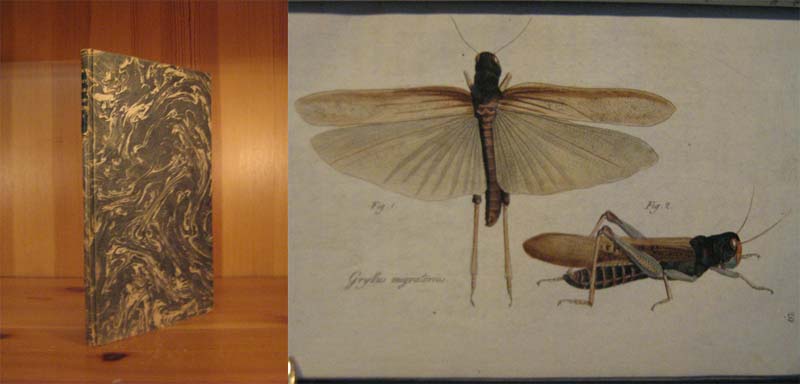
1804Best.-Nr. SB-14272Göttingen, Heinrich Dieterich, 1797 - 1804. Unpag. (21, 105 Bl.). Grau-beige marmorierte Pbde. der Zeit mit goldgeprägtem Rückentitel auf grünem Rückenschild. Formate: 21 x 13; 20 x 13 cm. Wissenschaftliche Illustrationsreihe des Göttinger Anatomen, Zoologen und Anthropologen Johann Friedrich Blumenbach (1752 - 1840). Blumenbach gilt als maßgeblicher Mitbegründer der Zoologie und der Anthropologie als wissenschaftlicher Disziplinen. Seine Göttinger Vorlesungen zur Naturgeschichte fanden regelmäßig eine internationale Zuhörerschaft. Blumenbachs erstmals 1804 erschienenes "Handbuch der vergleichenden Anatomie und Physiologie" gilt als maßgebliches Standardwerk seiner Zeit und wurde in nahezu alle europäischen Sprachen übersetzt. Die hier vorliegenden Hefte 2 bis 7 der Reihe (Hefte 2 bis 5 und 7 in einem Band sowie Heft 6 als separater Band) enthalten 60 Artikel mit jeweils zugehöriger ganzseitiger Kupfertafel (Kupfertafeln teilweise koloriert) zu folgenden zoologischen anatomischen und anthropologischen Motiven: 11. Simia troglodytes. 12. Simia satyrus. 13 Simia rostrata. 14. Manis tetradactyla. 15. Trichechus rosmarus. 16. certhia coccinea. 17. Serpula gigantea. 18. Basalt-Glieder von giant's Causeway. 19. Backenzähne vom fossilen Ohio-Incognitum...20. Der fossile Murex contrarius. 21. Gefleckter Neger. 22. Myrmecophaga didactyla. 23. Bos grunniens. 24. Buceros rhinoceros. 25. Pelecanus sinensis. 26. Lacerta crocodilos. 27. Derselbe, noch im Ey. 28. Anguis platuros. 29. gryllus migratorius. 30. Thalia lingulata. 31. Vespertilio spectrum. 32. Embryo vom Bär. 33. Ursus maritimus. 34. Küchelchen aus ... Hühnerei. 35. Didus ineptuds. 36. Rana pipa. 37. Gebiss der giftigen und giftlosen Schlangen. 38. Aranea tarantula. 39. Hydatis finna. 40. Phacites fossilis. 41. Ornithorhynchus paradoxus. 42. Vespertilio ferrum equinum. 43. Castor fiber. 44. Monodon narhwal. 45. motacilla calliope. 46. Aptenodytes chrysocone. 47. Oestrus bovis, equi, ovis. 48. glaucus atlanticus. 49. Fortpflanzungsweise der Conferva fontinalis. 50. Entomolitkus paradoxos. 51. Bildschöner Schädel einer Georgianerinn. 52. Schedel des Orang-Ontang von Borneo. 53. Bradypus tridactylus. 54. Didelphis marsupialis. 55. Falco serpentarius. 56. Emberiza aureola. 57. Raja torpedo. 58. Ostracion bicuspis. 59. Serpula comtortuplicata. 60. Encrinites fossilis. 61. Alle vier Hauptarten von Monstrositäten an Einem Ferkelkopf. 62. Ursus lotor. 63. Schedel des Riesenbüffels. 64. Küchelchen aus einem hundert Stunden bebrüteten Hühnerey. 65. Bucco astroflaunus. 66. Testudo graeca. 67. cancer dromia. 68. Lepas anatifera. 69. Venus mercenaria. 70. Pentacrinites fossilis.
1784Best.-Nr. 126731784 un volume, broché (livre sans sa reliure) in-folio (40X25cm), dos muet (spine - no title), recouvert d'un demi- peigné dans les tons bleu-pale, rose et crème, le même que le papier de garde peigné qui lui sert de couverture, très légèrement défraîchi (spine lightly faded) - manque de papier (miss paper on the spine) - fendu (cracked spine), toutes tranches lisses (all smooth edges), papier vélin ligné bleuté, orné d'une gravure-titre (engraved title page) gravée sur Bois en noir (engraving-wood) + 29 planches hors-texte gravées sur bois en noir (full page engraving) par Boucher, Natoire, Crepy, Bouchardon et gravées par Etienne, Charpentier, Vasseur, Denzel et Mathey...60 pages, (Le Texte est gravé comme les planches), cicatrices de mouillures (scars of waterstains) marginales, 1784 Paris Etienne Charpentier Editeur,
1848Best.-Nr. 012286Berlin bzw. Hildesheim, Georg Reimer 1848-1849 bzw. Olms 2008, 1848. LVI, 743 S., 6 gefaltete Kupfertafeln; 608 S., 4 gefaltete Kupfertafeln; 579 S., 4 gefaltete Tafeln. Neuere Halbleinenbände, jeweils mit eingebundenem Vorderumschlag der ursprünglichen Orig.-Broschur; der dritte Teilband liegt im Nachdruck als Orig.-Leinenband aus der neuen Werkausgabe des Olms Verlages bei. Hauptwerk des genialen Gelehrten 1818-1896), dem Mitbegründer der Physiologie als eigenständiger Wissenschaft. "A pupil of J. Müller, Emil du Bois-Reymond was the founder of modern elctrophysiology. He introduced faradic stimulation and made an exhaustive investigation of physiological tetanus. Above is a collective edition of his writings on the subject" (Garrison/Morton 610). K. E. Rothschuh spricht im Dictionary of Scientific Biography IV, 200 von "his lifelong, almost monomaniacal experimental analysis of animal electricity"; Du Bois-Reymond "owed his great scientific success to the development of new electrophysiological methods of deriving and measuring current. He was the first to avoid the many difficulties and sources of error that make it very hard to obtain clear results in electrophysiology, and he created much of the apparatus of electrophysiology" (202). Heirs of Hippocrates 1868. Die beiden ersten Bände erschienen 1848 und 1849, eine erste Teillieferung von Band II/2 (S. 1-384) erschien dann 1860, die zweite und letzte Teillieferung (S. 385-579) mit Nachwort, Nachträgen, einem ausführlichen Inhaltsverzeichnis und dem Register für das komplette Werk schließlich erst 1884. Vollständig ist das Werk sehr selten, Waller und Wellcome verzeichnen jeweils nur unvollständige Exemplare. Der miteingebundene Vorderumschlag des ersten Bandes mit größeren, hinterlegten Fehlstellen. Einige Seiten der beiden ersten Bände etwas stockfleckig, der Nachdruck tadellos. Insgesamt schönes, gut erhaltenes, wenn auch neu gebundenes und durch den Nachdruck komplettiertes Exemplar des Klassikers.
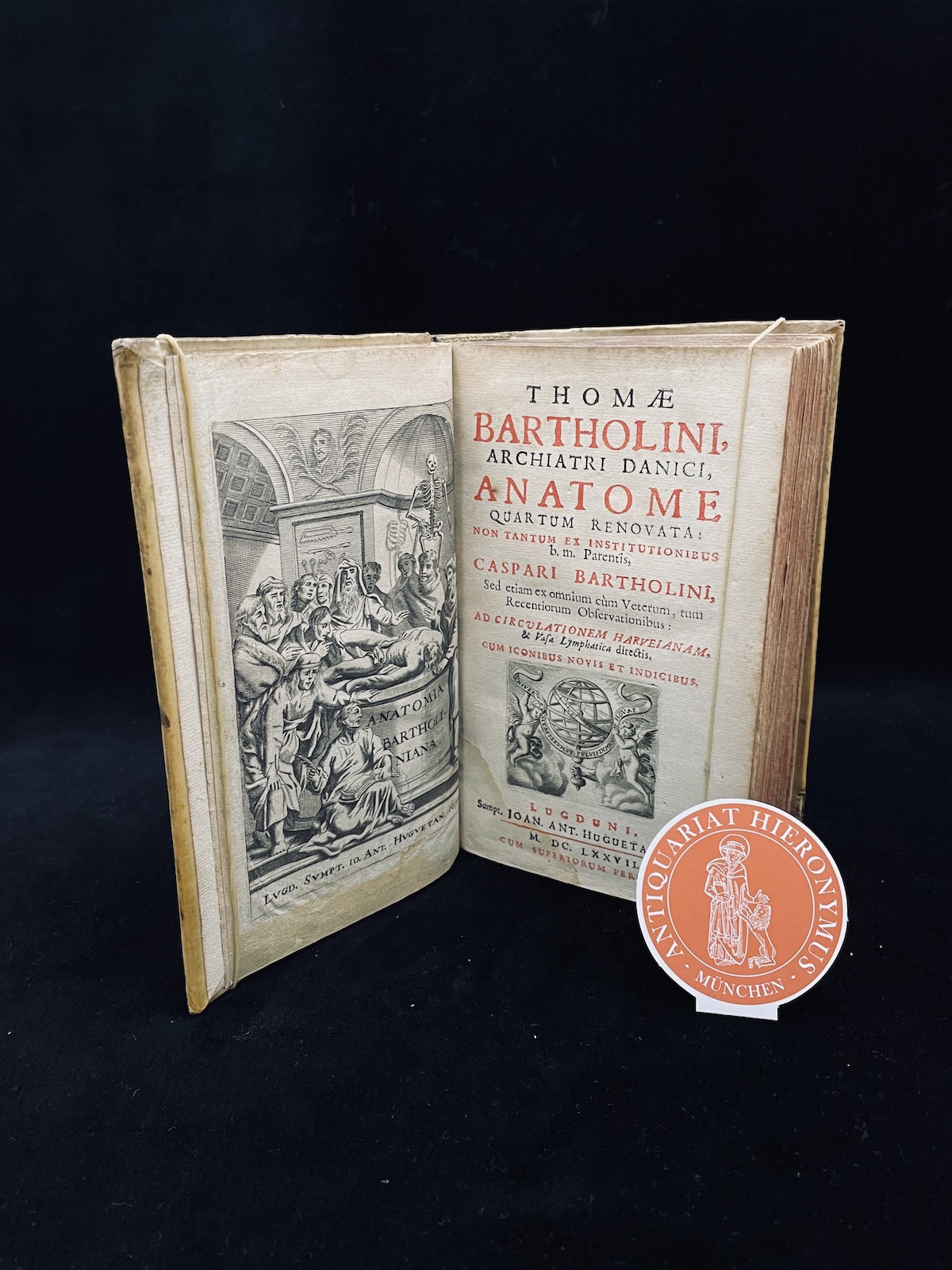
1677Best.-Nr. 12570Lyon, Johann Anton Huguetan, 1677. 4. Auflage 8° (18,5-22,5 cm). 15 Bll., 806 S., 9 Bll. Pergament der Zeit mit handschriftlichem Rückentitel [5 Warenabbildungen]
Best.-Nr. 546P., Gabon, 1801/1803, 5 volumes in 8 reliés en demi-basane, dos richement ornés de fers et filets dorés (reliures de l'époque), (quelques rousseurs), T.1 : 32pp., 464pp., T.2 : (2), 624pp., T.3 : 28pp., 461pp., T.4 : 24pp., 496pp., T.5 : 8pp., 472pp.
1815Best.-Nr. 21229Paris, Magimel (imp. Firmin Didot), 1815 ; 3 tomes (2 de texte et un recueil de planches) in-8, veau fauve raciné, dos lisse à faux nerfs dorés, jeux de croisillons et fleurons dorés, pièces vert empire, roulettes d’encadrement des plats et filet sur les coupes, tranches mouchetées (reliure de l’époque) ; [10], VIII, [2], 470 ; [6], pp. 471-924, [104], LII pp. ; 73 planches gravées y compris la page de titre et les tableaux chromatiques aquarellés dépliants, gravés par Forssell d’après Turpin, Brisseau-Mirbel, Schubert et Poiteau.
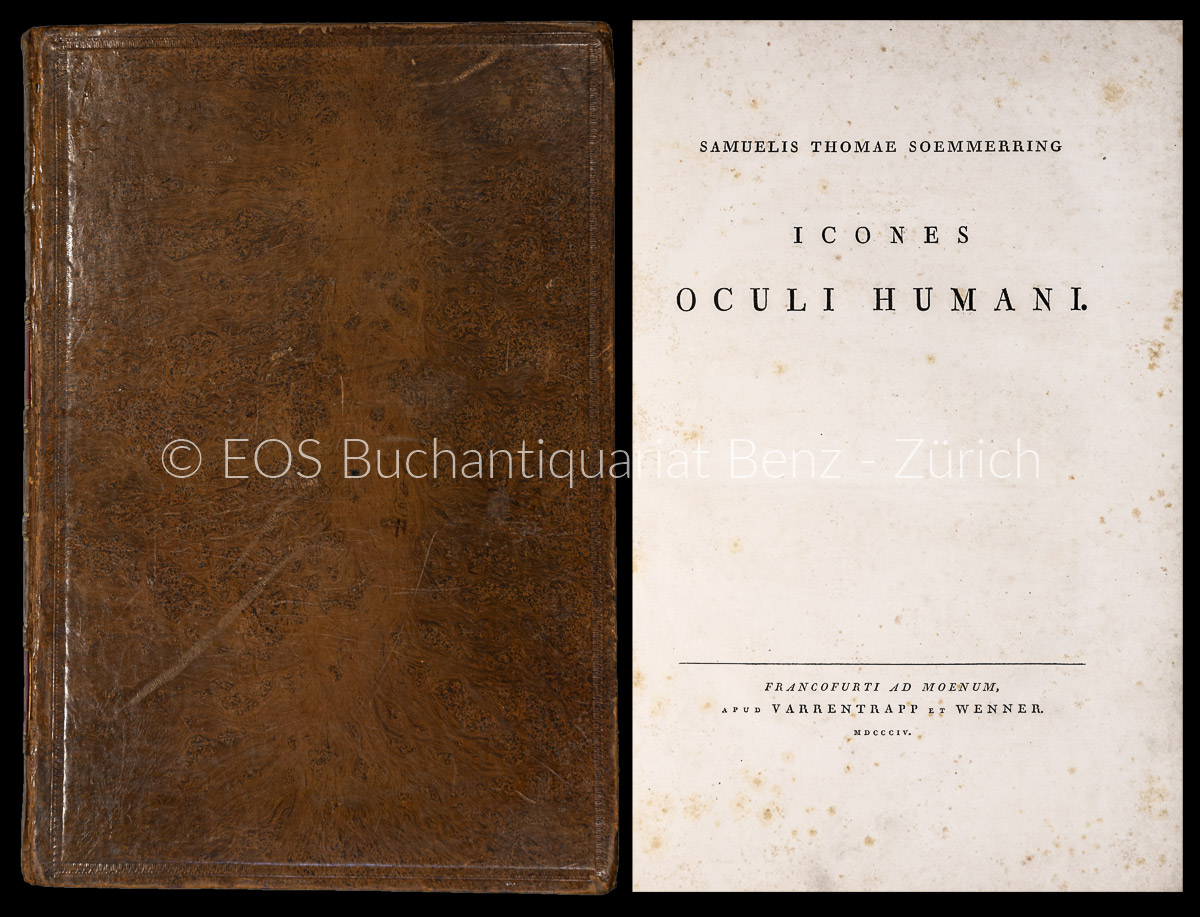
1804Best.-Nr. 40191DBFrankfurt, Varrentrapp und Wenner, 1804?1810. Folio. I: VIII, 94 S. Mit 16 (2 kolorierten Tafeln). ? II: VIII, 33 S. Mit 9 gestochenen Tafeln. ? III: VI, 6, II, 6 S. Mit 4 gestochenen Tafeln. ? IV: VIII, 23 S. Mit 9 gestochenen Tafeln. Total 38 Kupfertafeln. Geglätteter Kalblederband aus der Zeit mit zwei vergoldeten Rückenschildern und klassizistischer Rückenvergoldung. + Wichtig: Für unsere Kunden in der EU erfolgt der Versand alle 14 Tage verzollt ab Deutschland / Postbank-Konto in Deutschland vorhanden +, A|B 4 Werke in einem Band. [2 Warenabbildungen]
1797Best.-Nr. 4757DBTrajecti ad Moenum; Francofurti a Moenum, Varrentrapp et Wenner, 1797, 1799. Titelblatt, Kupfertafel, (2) S. (Text); Titelblatt, 2 Kupfertafeln, 10 S. (Text). Halbleinenband mit Pappdeckeln. + Wichtig: Für unsere Kunden in der EU erfolgt der Versand alle 14 Tage verzollt ab Deutschland / Postbank-Konto in Deutschland vorhanden +, 4757DB|4757DB_2|4757DB_3 [3 Warenabbildungen]
1734in-4, 2 parti in un vol., pp.(16), 186 (la prima parte); pp. (4), 187-494, (2) la seconda parte. Leg. coeva p. pergamena, titolo ms. al dorso. In fine vi sono 19 tavole incise in rame con centinaia di interessanti illustrazioni di carattere scientifico e tecnico relative al trattato. Stimata edizione (la prima era apparsa a Roma nel 1680-81) di questo famoso vasto trattato scientifico nel quale i principii della meccanica vengono applicati per la prima volta agli animali; il punto di partenza dell'innovativa teoria è la meccanica di Gallileo. La prima parte presenta l'analisi della struttura scheletrica come sistema di leve (tav. I-X, vol. I), del moto nei vari mezzi ambientali (corsa, nuoto, volo) e dei meccanismi della contrazione muscolare. Il Borelli fornisce la prima dimostrazione dell'impossibilità del volo muscolare umano, ed analizzando i movimenti dei pesci, delinea i primi progetti di battello sottomarino (tabula decimo quarta, vol. I). La seconda parte investe la sfera "spirituale" per analizzarne i legami con le circostanze organiche. Borelli considera il sistema nervoso come un reticolo di canali tubiformi contenenti un fluido inerte, le cui ondulazioni trasmettono gli stimoli in senso centripeto e centrifugo. Cristina di Svezia e l'Ordine degli Scolopi agevolarono la concessione dell'imprimatur al "De Motu", che altrimenti non sarebbe stata agevole, dato il carattere palesemente galileiano e materialistico dei suoi presupposti. Esemplare bello e puro (lievi bruniture della carta).. .
Best.-Nr. 183645 tomes in-8, veau marbré, dos à nerfs décoré et doré (reliure de l’époque) ; 24, LXXVI, 515, [11] pp., X planches dépliantes ; 676, [6] pp. pl-XI-XVIII ; 782, [8], pl. XIX-XXXII ; 480 pp., [64] pp., pl. XXXIII-XXXX ; XLVIII, 672 pp., [1] pl. dépliante gravée par Marie Dauvergne.
In Vinetia, nella stamperia de' Giunti, 1586, in-folio, legatura novecentesca in mezza pergamena con punte, carte [14] [su 18], 82, [4], da 83 a 154. Con 46 illustrazioni calcografiche a piena pagina disegnate probabilmente da Gaspar Becerra (1520-1570) e incise in rame da Nicolas Beatrizet. Colophon in fine, nella variante senza la data. Seconda edizione della traduzione italiana di Anton Tabo della più importante opera del Valverde, riveduta dall'autore stesso. Esemplare privo della carte a1 (frontespizio inciso in rame), a2 (recante una dedica al re di Spagna Filippo II al recto e il ritratto dell'autore in calcografia al verso), a5 e a6. Frequenti gore, perlopiù marginali. Adams V-231. Wellcome 6477. Camerini, n. 911.
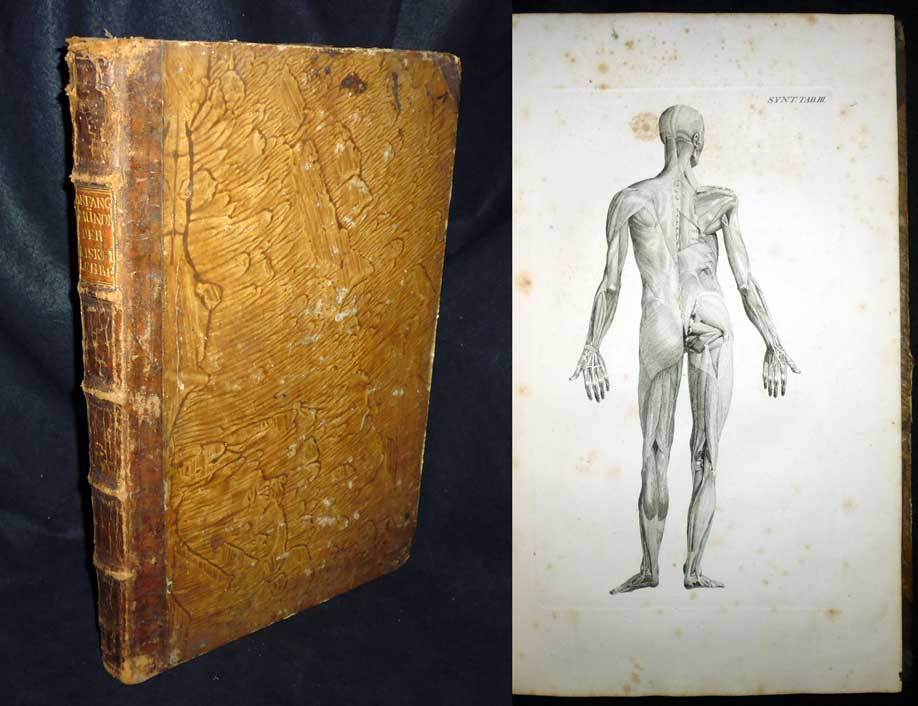
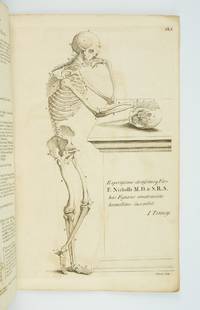
1770Best.-Nr. ST20219London: Printed for Robert Sayer ca. 1770. 380 x 242 mm. 15 x 9 1/2". 4 leaves of text followed by plates. Original gray paper wrappers. WITH EIGHT FINE ENGRAVED PLATES of the male body in various poses three depicting the skeleton and five the musculature. Russell 816; Wellcome V p. 273; ESTC N51161. See also Russell "John Tinney's Compendium Anatomicum and its publishers." Wrapper a bit soiled and foxed corners torn with two snags two-inch and half-inch to lower cover most of spine chipped away but the stitching holding the book firmly together; mild offsetting from engravings and a few spots of foxing but a really excellent copy internally the leaves fresh and clean and with very good impressions of the engravings. This rare collection of striking anatomical engravings is wonderfully preserved in its original unrestored wrappers. First published in 1743 as "Compendium Anatomicum" the work's plates are adapted from the famous anatomies of Vesalius and Cowper. It was intended as a reference work for artists but as its name suggests it was published with a wider audience in mind. As Tinney humbly tells the reader in the subtitle this is "a work not only very useful but absolutely necessary to painters statuaries and all professors of drawing and design as well as a proper introduction to the study of anatomy for the use of young surgeons" not to mention an "instructive furniture for the studies and libraries of the curious." The work remained in print for a full century though because it was a frequently used book few copies have come down to us in collectible condition. John Tinney ca. 1706-61 was an engraver and print seller who dealt in a wide variety of material being particularly known for maps and satirical prints as well as the present work. Our edition while undated almost certainly dates to the period between 1762-70. The first posthumous edition of "A Compendious Treatise" was released in 1762 by Robert Sayer a map and print seller who was an associate of Tinney's during his lifetime and who likely purchased his stock of plates from his widow following his 1761 death. In 1770 Sayer began a partnership with John Bennett after which the firm was known as "Sayer and Bennett." Since the present edition was published under Sayer's name alone it no doubt comes from the period following the 1762 edition but before the partnership. The present copy has made it through the centuries in remarkably good condition given its flimsy binding and the plates inside with their cheerfully macabre figures remain quite fresh and pleasing. Printed for Robert Sayer unknown
1770Best.-Nr. ST20219London: Printed for Robert Sayer ca. 1770. 380 x 242 mm. 15 x 9 1/2". 4 leaves of text followed by plates. Original gray paper wrappers. WITH EIGHT FINE ENGRAVED PLATES of the male body in various poses three depicting the skeleton and five the musculature. Russell 816; Wellcome V p. 273; ESTC N51161. See also Russell "John Tinney's Compendium Anatomicum and its publishers." Wrapper a bit soiled and foxed corners torn with two snags two-inch and half-inch to lower cover most of spine chipped away but the stitching holding the book firmly together; mild offsetting from engravings and a few spots of foxing but a really excellent copy internally the leaves fresh and clean and with very good impressions of the engravings. This rare collection of striking anatomical engravings is wonderfully preserved in its original unrestored wrappers. First published in 1743 as "Compendium Anatomicum" the work's plates are adapted from the famous anatomies of Vesalius and Cowper. It was intended as a reference work for artists but as its name suggests it was published with a wider audience in mind. As Tinney humbly tells the reader in the subtitle this is "a work not only very useful but absolutely necessary to painters statuaries and all professors of drawing and design as well as a proper introduction to the study of anatomy for the use of young surgeons" not to mention an "instructive furniture for the studies and libraries of the curious." The work remained in print for a full century though because it was a frequently used book few copies have come down to us in collectible condition. John Tinney ca. 1706-61 was an engraver and print seller who dealt in a wide variety of material being particularly known for maps and satirical prints as well as the present work. Our edition while undated almost certainly dates to the period between 1762-70. The first posthumous edition of "A Compendious Treatise" was released in 1762 by Robert Sayer a map and print seller who was an associate of Tinney's during his lifetime and who likely purchased his stock of plates from his widow following his 1761 death. In 1770 Sayer began a partnership with John Bennett after which the firm was known as "Sayer and Bennett." Since the present edition was published under Sayer's name alone it no doubt comes from the period following the 1762 edition but before the partnership. The present copy has made it through the centuries in remarkably good condition given its flimsy binding and the plates inside with their cheerfully macabre figures remain quite fresh and pleasing. Printed for Robert Sayer unknown books
Best.-Nr. 72244aafParis, G. Masson, 1888, gr. in-8vo, 20 p. + 7 planches, ex-libris ‘Michel Jequier’, reliure en demi-toile, titre d'orée au dos. Bel exemplaire bien relié.
1804Best.-Nr. 40191BBFrankfurt, Varrentrapp und Wenner, 1804-1810. Folio. I: VIII, 94 S. Mit 16 (2 kolorierten Tafeln). - II: VIII, 33 S. Mit 9 gestochenen Tafeln. - III: VI, 6, II, 6 S. Mit 4 gestochenen Tafeln. - IV: VIII, 23 S. Mit 9 gestochenen Tafeln. Total 38 Kupfertafeln. Geglätteter Kalblederband der Zeit mit zwei vergoldeten Rückenschildern und klassizistischer Rückenvergoldung. 4 Werke in einem Band. [2 Warenabbildungen]
1804Best.-Nr. 40191DB4 Werke in einem Band. Frankfurt, Varrentrapp und Wenner, 1804–1810. Folio. I: VIII, 94 S. Mit 16 (2 kolorierten Tafeln). – II: VIII, 33 S. Mit 9 gestochenen Tafeln. – III: VI, 6, II, 6 S. Mit 4 gestochenen Tafeln. – IV: VIII, 23 S. Mit 9 gestochenen Tafeln. Total 38 Kupfertafeln. Geglätteter Kalblederband aus der Zeit mit zwei vergoldeten Rückenschildern und klassizistischer Rückenvergoldung.
1804Best.-Nr. 40191BB4 Werke in einem Band. Frankfurt, Varrentrapp und Wenner, 1804-1810. Folio. I: VIII, 94 S. Mit 16 (2 kolorierten Tafeln). - II: VIII, 33 S. Mit 9 gestochenen Tafeln. - III: VI, 6, II, 6 S. Mit 4 gestochenen Tafeln. - IV: VIII, 23 S. Mit 9 gestochenen Tafeln. Total 38 Kupfertafeln. Geglätteter Kalblederband der Zeit mit zwei vergoldeten Rückenschildern und klassizistischer Rückenvergoldung.
1797Best.-Nr. 4757DBTrajecti ad Moenum; Francofurti a Moenum, Varrentrapp et Wenner, 1797, 1799. Titelblatt, Kupfertafel, (2) S. (Text); Titelblatt, 2 Kupfertafeln, 10 S. (Text). Halbleinenband mit Pappdeckeln.
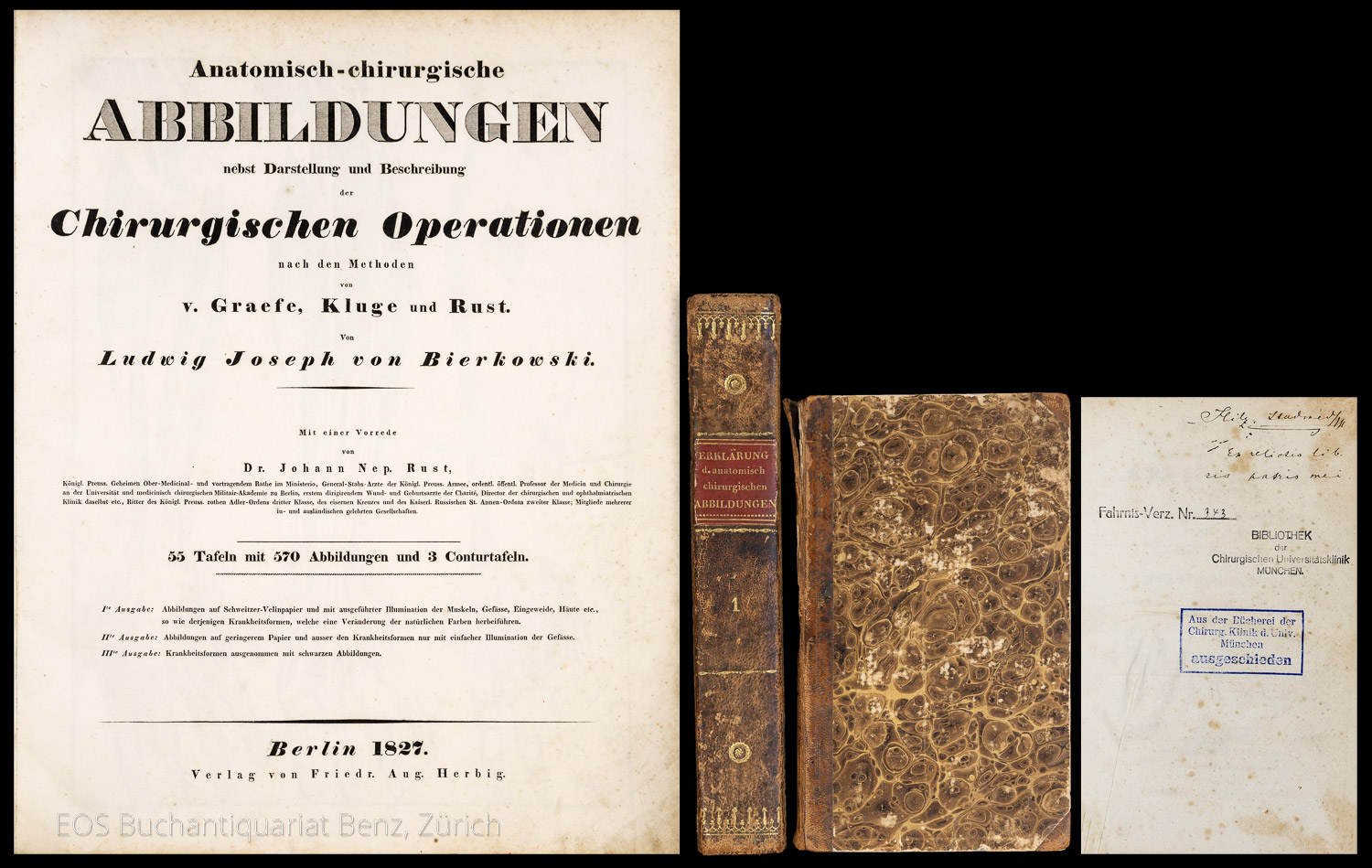
1827Best.-Nr. 4226CBBerlin, F. A. Herbig, 1827. Gr.-folio. XVI, 496 S.; (2), S. 497?973 (1) S., (2) leere S., XVI S. (Register), (4) S. Errata und Verlagsanzeigen); (2) S. Mit 55 lithogr. Tafeln mit 570 Abbildugen und 3 federlithogr. Tafeln (davon 48 koloriert). Pappband und Halblederbände der Zeit. + Wichtig: Für unsere Kunden in der EU erfolgt der Versand alle 14 Tage verzollt ab Deutschland / Postbank-Konto in Deutschland vorhanden +, 4226CB|4226CB_2|4226CB_3 2 Text- und 1 Tafelband. [3 Warenabbildungen]