Monro, Alexander (secundus)Antiquariat.de
6726 risultati
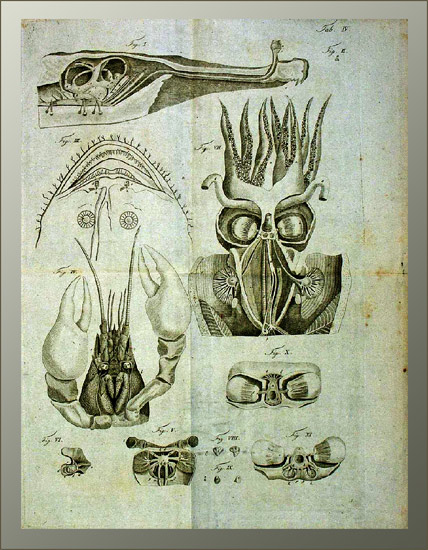
1799rif. 30068ABLeipzig, Breitkopf und Härtel, 1799. Folio. XII, 108 S. Mit 15 Kupfertafeln. Pappband der Zeit mit erneuertem Rücken.
1799rif. 30068ABLeipzig, Breitkopf und Härtel, 1799. Folio. XII, 108 S. Mit 15 Kupfertafeln. Pappband der Zeit mit erneuertem Rücken.
1799rif. 30068DBLeipzig, Breitkopf und Härtel, 1799. Folio. XII, 108 S. Mi 15 Kupfertafeln. Pappband aus der Zeit mit erneuertem Rücken.
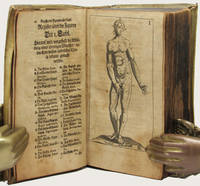
1704rif. 34368Leipzig: Thomas Fritsch 1704. First German Edition. Illustrated with an engraved frontispiece of the author and 31 additional full-page engravings depicting various anatomical views. 8vo bound in the original contemporary vellum the spine with calligraphic titling by hand. viii 742 26 Register pp. A very good copy the binding still strong and well preserved the text with the usual mellowing and aging still crisp and very usable. FIRST GERMAN EDITION of this important work on anatomy partnered with the work of Philippi Verheyen Anmerckungen In Die Anatomiam Blancardi. Brieff An den weitberühmten Hrn. Friedrich Ruyschium. 'Verheyen was a prolific writer including several books and manuscripts. His main work published originally in Latin the “Corporis Humani Anatomiae” was translated into multiple languages as here. This book became one of the most used anatomy books of the time. The following excerpt of his book "Corporis Humani Anatomiae Liber Primus" reads : " . QuintusAuricularis quia cum minimum sit auribus expurgandis est aptissimus" translates as".the fifth finger called Auricularis because how small it is is most suitable to clean the ears". Incredibly anatomists at that time called the fifth digit "digitus auricularis". Verheyen is credited with the creation of the eponym the “Achilles tendon” which denominates the common tendon for the gastrocnemius and soleus muscle although at the time he called it the “Chorda Achillis”. He also described the kidneys in detail especially the arterial “stars” found on the surface of the kidney which are today known as the “Stars of Verheyen” '. E. A. Miranda 2014 M.T.D. Thomas Fritsch hardcover
rif. DADAX0831780444New unknown
rif. 47059Le terrain Vague.1957.In-8 carré broché.Ex.224. TBE.Dédicace de l'Auteur à Jean Carrive.
1741In-8 gr. (mm. 250x190), p. pergam. coeva, tit. ms. al dorso, pp. XVI,241, vignetta al frontespizio, 2 belle e grandi testate: una alle armi (alla dedica ad Antonio Leprotto, Cubiculario & Archiatro Pontificio) e una con il ritratto dell'A.; ornato da grandi iniziali figur. a vignetta, tutte inc. su rame. Il vol. è illustrato da 6 tavv. f.t., più volte ripieg., pure inc. in rame. Vi sono contenuti: "De dura meninge", Opusculum Anatomicum, Romae, typis Bernabò, 1740 + "Epistolae physico-anatomicae". "Antonio Pacchioni da Reggio Emilia (1665-1726), amico ed allievo del Malpighi del quale fu collaboratore nella pubblicazione delle tavole anatomiche di Eustachio, si occupo' particolarmente dell'anatomia della dura madre e delle sue funzioni. Descrisse le granulazioni che portano il suo nome e la incisura nella tenda del cervelletto". Cosi' Castiglioni, pp. 531-532. Cfr. anche Wellcome,IV, p. 281 - De Renzi,IV, pp. 109-110. Qualche lieve e uniforme arross. solo su alc. tavv. e carte, altrim. esemplare con barbe ben conservato.
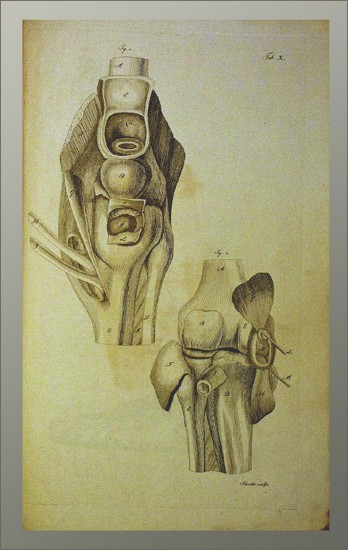
1800rif. 30071BBNürnberg, Raspeschen Buchhandlung, 1800. 4°. VIII, 176 S. Mit 8 auf 7 gefalteten Kupfertafeln. Pappband der Zeit mit goldgeprägtem Rückenschild und wenig Rückenvergoldung.
1840rif. 4754DBTurici, Orell, Fuesslini, 1840. 32 S., 26 einfarbig kolorierte Tafeln. Original Pappmappe/-einband mit gedrucktem Titelschild.
1800rif. 30071DBNürnberg, Raspeschen Buchhandlung, 1800. 4°. VIII, 176 S. Mit 8 Kupferstichen auf 7 gefalteten Tafeln. Pappband aus der Zeit mit goldgeprägtem Rückenschild und wenig Rückenvergoldung.
1800rif. 30071BBNürnberg, Raspeschen Buchhandlung, 1800. 4°. VIII, 176 S. Mit 8 auf 7 gefalteten Kupfertafeln. Pappband der Zeit mit goldgeprägtem Rückenschild und wenig Rückenvergoldung.
rif. DADAX0835232883New unknown
rif. 2684P., Masson, 1866, un volume de texte in 8 et un ATLAS in 4, reliés en demi-chagrin vert, têtes dorées (reliures de l'époque), 10pp., 596pp. pour le texte ; (2), 92 planches en COULEURS, certaines DEPLIANTES, avec leurs explications
1828rif. 40962London 1828. Parliament. House of Commons. Report from the select committee on anatomy. Folio. 150pp. London: House of Commons 22 July 1828. 331 x 212 mm. 19th century boards rebacked and recornered in calf light edgewear. Very good copy. Old medical library stamp on title and first page. First Edition of this highly interesting and entertaining report on the British body-snatching crisis. Since the mid-eighteenth century obtaining cadavers for teaching purposes had been regulated in Britain by the Murder Act of 1752 which stipulated that only the corpses of executed criminals could be used for dissection. By the beginning of the nineteenth century however improvements in medical science coupled with a substantial drop in the number of executions caused the demand for cadavers to far outstrip the legal supply. This situation was ripe for exploitation by "resurrection men" criminals who robbed the graves of the newly deceased and sold their corpses to teachers of anatomy who of necessity turned a blind eye to the illegality of these transactions. Some grave-robbers even resorted to murder including the infamous William Burke who in December 1828 was arrested in Edinburgh for the murders of over a dozen victims whose corpses he and his partner Hare sold to an anatomical demonstrator connected to Edinburgh University. In the first half of 1828 in response to increasing calls for reform the British Parliament appointed a committee to "enquire into the manner of obtaining subjects for dissection by schools of Anatomy and the State of law affecting persons employed in obtaining and dissecting bodies." During the course of its investigation the committee heard testimony from a wide range of witnesses from eminent medical men to procurers of bodies for medical schools these last identified only by initials. The medical men included Sir Astley Cooper Benjamin Collins Brodie John Abernethy William Lawrence Herbert Mayo Granville Sharp Pattison who himself was indicted for body-snatching at the age of 23 Thomas Southwood Smith Henry Halford John Webster and Benjamin Harrison the treasurer of Guy's Hospital. The witness list can be found on page 13 of the committee's report. The testimony of these men reproduced in full in the report is followed by several appendices including tables of paupers' deaths broken down by parish; the committee was proposing legislation that would allow the state to seize unclaimed corpses from workhouses and sell them to surgical schools. The committee's efforts were successful: In 1832 Parliament passed the Anatomy Act granting licenses to teachers of anatomy and giving physicians surgeons and medical students legal access to corpses unclaimed after death. Wise The Italian Boy: A Tale of Murder and Body Snatching in 1830s London 2004. Garrison-Morton.com 7096. . unknown
1828rif. 40962London 1828. Parliament. House of Commons. Report from the select committee on anatomy. Folio. 150pp. London: House of Commons 22 July 1828. 331 x 212 mm. 19th century boards rebacked and recornered in calf light edgewear. Very good copy. Old medical library stamp on title and first page. First Edition of this highly interesting and entertaining report on the British body-snatching crisis. Since the mid-eighteenth century obtaining cadavers for teaching purposes had been regulated in Britain by the Murder Act of 1752 which stipulated that only the corpses of executed criminals could be used for dissection. By the beginning of the nineteenth century however improvements in medical science coupled with a substantial drop in the number of executions caused the demand for cadavers to far outstrip the legal supply. This situation was ripe for exploitation by "resurrection men" criminals who robbed the graves of the newly deceased and sold their corpses to teachers of anatomy who of necessity turned a blind eye to the illegality of these transactions. Some grave-robbers even resorted to murder including the infamous William Burke who in December 1828 was arrested in Edinburgh for the murders of over a dozen victims whose corpses he and his partner Hare sold to an anatomical demonstrator connected to Edinburgh University. In the first half of 1828 in response to increasing calls for reform the British Parliament appointed a committee to "enquire into the manner of obtaining subjects for dissection by schools of Anatomy and the State of law affecting persons employed in obtaining and dissecting bodies." During the course of its investigation the committee heard testimony from a wide range of witnesses from eminent medical men to procurers of bodies for medical schools these last identified only by initials. The medical men included Sir Astley Cooper Benjamin Collins Brodie John Abernethy William Lawrence Herbert Mayo Granville Sharp Pattison who himself was indicted for body-snatching at the age of 23 Thomas Southwood Smith Henry Halford John Webster and Benjamin Harrison the treasurer of Guy's Hospital. The witness list can be found on page 13 of the committee's report. The testimony of these men reproduced in full in the report is followed by several appendices including tables of paupers' deaths broken down by parish; the committee was proposing legislation that would allow the state to seize unclaimed corpses from workhouses and sell them to surgical schools. The committee's efforts were successful: In 1832 Parliament passed the Anatomy Act granting licenses to teachers of anatomy and giving physicians surgeons and medical students legal access to corpses unclaimed after death. Wise The Italian Boy: A Tale of Murder and Body Snatching in 1830s London 2004. Garrison-Morton.com 7096. . unknown books
1741in-8, (4), 468; legatura coeva p. pella maculata, tit. oro su tassello al dorso a nervi. Con 3 tav. ripieg. f.t. Prima edizione di questo importante trattato diviso in tre parti: ''Nella prima è la storia fisiologica dell'uomo, a cominciar dall'uovo prima della fecondazione...; si leggono nella seconda parte alcune curiose istorie di gravidanze extrauterine, e di parti preternaturali, e di altri difetti dell'utero.. Nella terza l'A. ci dà un prolisso trattato istorico dei vermi..'' (cfr. Bonino, Biografia medica piemontese, II, p. 32-33). Interessante e non comune opera del Bianchi, famoso medico torinese (1681-1761) che svolse la sua attività soprattutto nell'ambito dell'anatomia (Vittorio Amedeo II fece costruire per il Bianchi un teatro pubblico anatomico). Bell'esemplare.. Wellcome II, 161..
1844rif. 24311844 Ed. FORTIN MASSON ET Cie, 1844/1850/1866, 4 Volumes in-4, toilés marron, tome 1: 82 planches avec explication; tome 2 : 62 planches avec expl. ; tome 3: 40 planches avec expl. ; tome 4: 54 planches avec expl. , manque à la planche dépliante des muscles du dos.
rif. 1274P., Didot, 1817, un volume in 4, broché, couverture muette moderne (cachet de bibliothèque), 6pp., 96pp., 4 PLANCHES LITHOGRAPHIEES
1728rif. za2283A Paris, chez Huart, ruë Saint Jacques, à la Justice, près la Fontaine S. Severin Sélection Abraxas-libris Relié 1728 EDITION ORIGINALE. In-12 (11 x 17 cm), reliure plein veau, dos à 5 nerfs orné de caissons dorés, pagination comme suit : page de titre, épître (3 pp. non numérotées), préface (8 pp. non numérotées), approbations de médecins (7 pp. non numérotées), privilège du roy (4 pp. non numérotées, puis 540 pp., bien complet des 20 planches hors texte, émouvante note d'un grenadier allemand en fin d'ouvrage ; dos craquelé, cuir usé aux coins, quelques marques d'usage sur les plats, par ailleurs intérieur bien conservé, assez bon état général. Livraison a domicile (La Poste) ou en Mondial Relay sur simple demande.
1819In 8o (cm 13 x 19), pp. LXXIV + 180; 160. Mezza pelle coeva con qualche mancanza ai piatti. Edizione originale rarissima di questo studio anatomico di Luigi Rolando che, in questa prima edizione latina, dovette avere scarsissima circolazione. Solo nel 1829 verra' pubblicata una traduzione a Milano con il titolo di Manuale di anatomia fisiologica, opera di Giovanni Meloni Baile, allievo sardo del Rolando. Questi, nella prefazione della sua traduzione sostiene: "Fu allora che tra i varii suoi scritti non altro mi parve piu' acconcio per fissare l'attenzione sopra tutto dei giovani, quanto la sua Anatomia Fisiologica, di cui essendo gia' esaurite le copie, era divenuto indispensabile il bisogno d'una seconda edizione, che niuno, a mio giudizio, dovea riprodurre, nella stessa lingua in cui era stata pubblicata per la prima volta, fuorche' l'autore medesimo". Nella stessa prefazione, Meloni Baile celebra il Saggio sulla vera struttura del cervello, importantissima opera del Rolando, pubblicata a Sassari nel 1808 che poi il Cloquet non ebbe difficolta' d'adottare.... Rolando, importante anatomista e fisiologo torinese, allievo del Cigna, si interesso' agli inizi della carriera all'anatomia e fisiologia dell'apparato respiratorio. Trasferitosi in Sardegna nel 1804 al seguito della corte Sabauda, compi' i suoi importanti studi sull'anatomia e il funzionamento del cervello. Tornato a Torino, divenne medico di corte e professore di anatomia all'universita'. Le sue ricerche portarono alla scoperta di importanti parti del cervello quale la 'scissura di Rolando', cosi' denominata in suo onore, il Tuber cinereun e la sostanza gelatinosa che nel midollo spinale ricopre la testa del corno posteriore. "Biblioteca italiana, ossia giornale...", 1821, p. 351. "The american journal of the medical sciences", 1831, vol. 8, p. 203 (tratta dell'importanza dell'opera partendo pero' dalla seconda edizione tradotta in italiano da Meloni Baile).
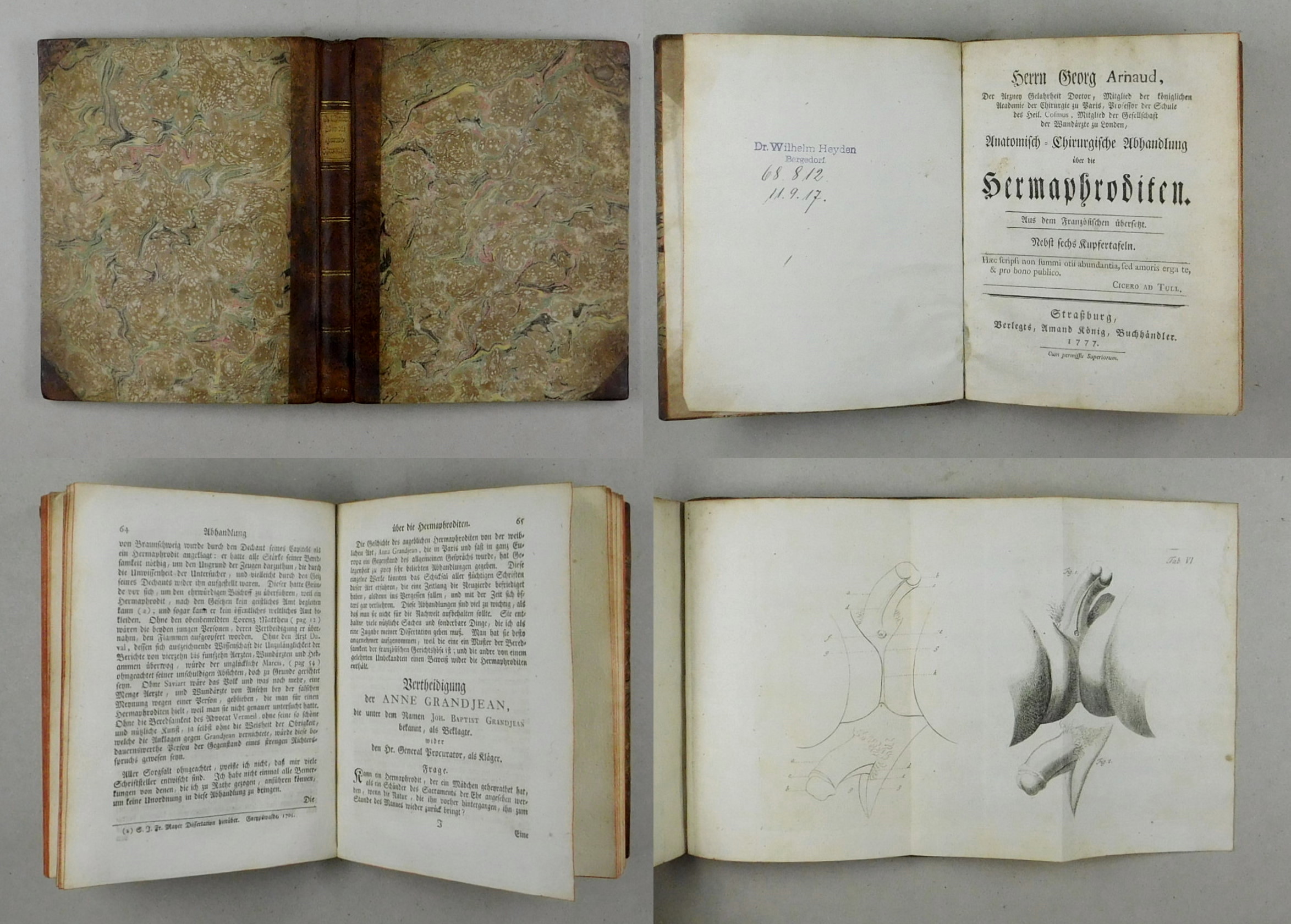
1777rif. 56467BBStrassburg, Verlegts, Amand König, 1777. 20x16 cm. 2 Bl., 116 S. Mit 6 gefalteten gestochenen Tafeln. Halblederband der Zeit mt rotem goldgeprägtem Rückenschild und wenig Rückenvergoldung. [2 Warenabbildungen]
1777rif. 56467BBStrassburg, Verlegts, Amand König 1777. 20x16 cm. 2 Bl., 116 S. Mit 6 gefalteten gestochenen Tafeln. Halblederband der Zeit mt rotem goldgeprägtem Rückenschild und wenig Rückenvergoldung.
1748In 8°(mm 205x135). Piena pergamena coeva con titolo manoscritto al dorso, tagli a spruzzo in rosso; pagg. [8], 215, [1], XXVIII [i.e. 26] carte di tav. compreso l'antiporta raffigurante lo studio di anatomia, frontespizio stampato in rosso e nero; iniziali e fregi xil. La tavola XVI è numerata XVI-XVII, la XXII è numerata XXII-XXIII. Testo latino, su due colonne. Poco comune edizione romana di questo manuale illustrato di anatomia a cura del medico tedesco Johann Adam Kulm (1689-1745); l'edizione originale, è del 1722, poi fu tradotta in latino nel 1731. Si tratta del primo libro occidentale tradotto in giapponese e pubblicato in Giappone (1774). Bell'esemplare su carta forte, occasionali fioriture. Iscrizione d'appartenenza manoscritta al contropiatto anteriore ("ad usum Josephi Aloysi Ma.... " - non facilmente leggibile). Valleriana cita altre edizioni; Choulant, pag. 34"in 1722 by imitations of Verheyen's plates by the Danzig physician Johann Adam Kulmus, which ran through many editions and were in part revised and provided with new engravings. They attained a wide circulation. Many other anatomic textbooks of this period had no pictures at all or at least, no complete series, since the aim was to produce books as cheaply as possible for the use of the student. Uncommon Roman edition of this illustrated manual of anatomy by the German physician Johann Adam Kulm (1689-1745); the original edition, in German, had been published in 1722, then was translated into Latin in 1731; it was the first western book to be translated and published in Japan and Japanese (1774).
1799rif. 30312Frankfurt, Selbstverlag des Autors, 1799. 16 S., 2 Tafeln Gr.-Fol., Pappband der Zeit
1831FIRST EDITION OF THE FIRST SCIENTIFIC/GEOMETRICAL STUDY OF HUMAN MOVEMENT. xii, 295 pp plus three folding tables with numerous complex diagrams. Printed on fine wove paper. 8vo. Original wraps. Uncut and unopened. Backstrip mostly gone, else a PRISTINE COPY OF A VERY RARE AND IMPORTANT WORK.