Kölliker, AlbertAntiquariat.de
5 838 résultats
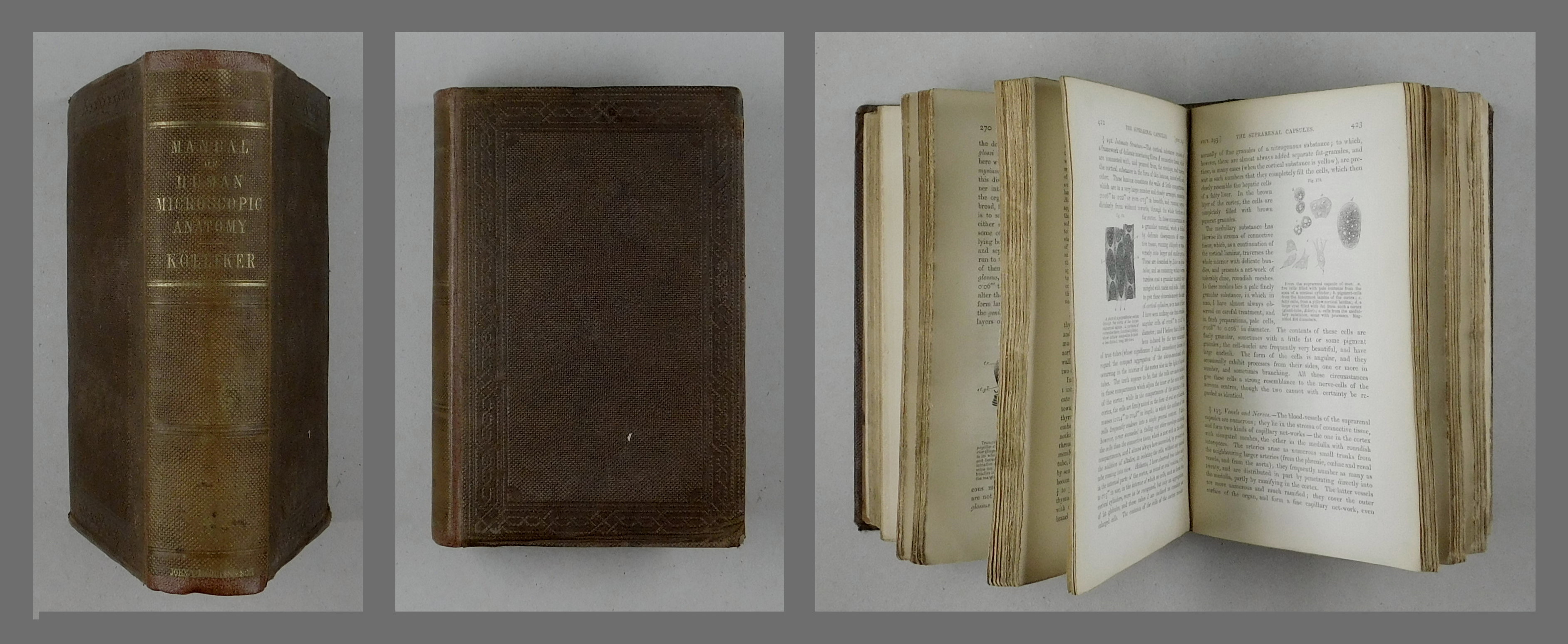
1860réf. 56365ABLondon, John W. Parker and Son., 1860. Gross-8°. XVI, 633 S., 18 S. Anzeigen. Mit 249 Holzstichillustrationen im Text. Originalleinwand.
1860réf. 56365ABLondon, John W. Parker and Son. 1860. Gross-8°. XVI, 633 S., 18 S. Anzeigen. Mit 249 Holzstichillustrationen im Text. Originalleinwand.
1825355 p. + Frontis folding plate with break in one fold. Plate II loss of outer half. Age stain. Bookplate from the library of Andrew B. Brumbaugh, M.D. Huntingdon, PA on front paste down. A prominent physician and surgeon in Huntingdon, Dr. Brumbaugh (1836-1907) was one of the co-founders of Juniata College. Early manuscript of D. Diller on first fly leaf. All edges decorated in yellow. 12mo. 185 mm. Original leather binding, worn. Rear board detached. Front board fragile. Original leather spine label. Title continues: "So As To Exhibit The Elementary Views Of Anatomy, And Their Application To Pathology And Surgery. By John Shaw. Being An Outline Of The Demonstrations Delivered By Him To The Students In The School Of Great Windmill-Street." First American from the last London Edition. Hardbound. AI BX 4
réf. lu2350Les Editions Ouvrières A la découverte de... Broché In-12 (12x18.5 cm), broché, couverture illustrée, 126 pages, schémas anatomique des jean-Paul Razavet, croquis de Jean de Rosbo ; pliures au dos frotté, coiffes et coupes frottées, coins pliés, rousseurs sur les plats, état correct. Livraison a domicile (La Poste) ou en Mondial Relay sur simple demande.
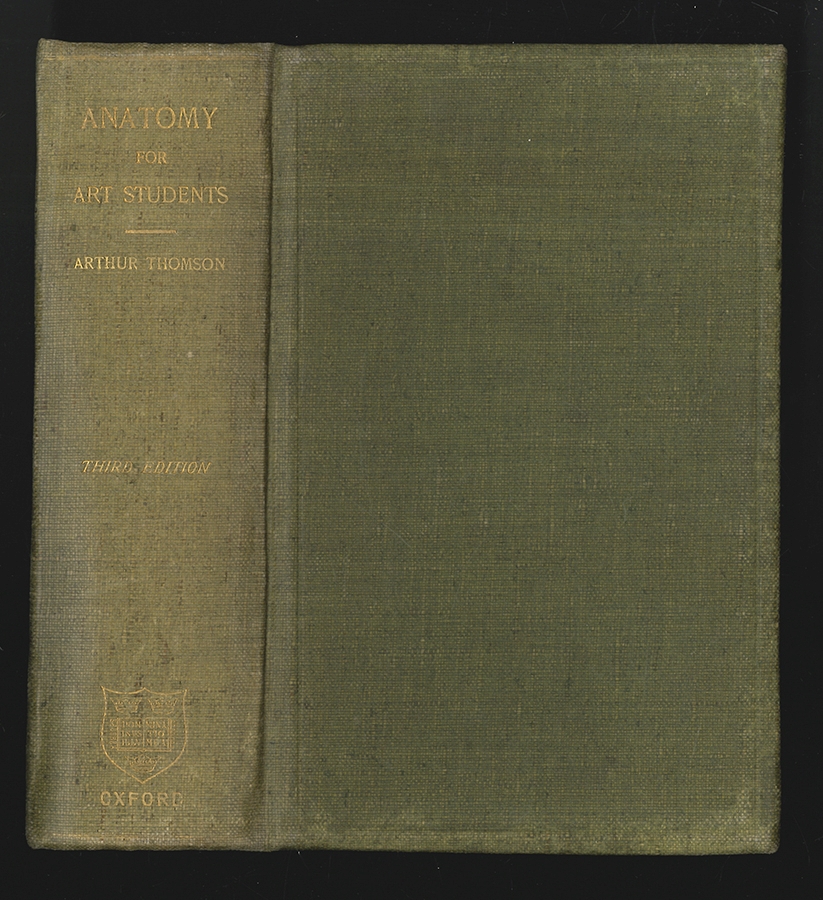
1906réf. 1872-24Oxford, Clarendon Press 1906. Third edition. gr.-8°. XX, 459 S., 8 Bll. Mit 59 Taf. u. zahlr. Illustr. im Text. Grüner OLn.-Bd. mit goldgepärgtem Rückentitel. Einband mit Gebrauchsspuren, Rücken etwas fleckig, flieg. Bl. etwas leimschattig, sonst gut erhalten. [2 Warenabbildungen]
1936In 8 (cm 17,5 x 25), pp. 5 + (1b). Brossura editoriale con punti metallici. Estratto editoriale.
1949Edinburgh and London, Oliver and Boyd, 1949. Tela verde editoriale con titoli dorati al dorso. pp. xvi, 480. Quarta edizione.
First Edition, folio (470 x 290 mm), [5], 6-60pp., 10 engraved plates (4 folding on 2 sheets joined) after A. Fyfe and Thomas Donaldson, plates II and III with short tears not touching the image, plate V a little creased with short closed tears, nineteenth-century half calf, rubbed, covers detached. This was "The first serious study of this subject and the most original anatomical work by the greatest of the Monro dynasty." It contains the first full anatomical description of the sacs between the tendons and bones which Albinus had named the bursae mucosae. They are illustrated on the ten plates "which for explicit clarity and accuracy have not been improved upon." (Heirs of Hippocrates 1011). The plates depict the foot, various joints including the knee and hip, and four of the plates are life-sized representations of the entire arm and leg. Monro secundus' earlier publications were largely polemical, and it was not until he had been teaching for twenty-five years that his three main contributions to medical literature appeared. Monro's Observations on the Structure and Functions of the Nervous System (Edinburgh, 1783), a massive text and atlas on human and comparative neurology, is Monro's greatest work. His Description of All the Bursae Mucosae of the Human Body... was a practical manual for direct use in surgery. Although next to nothing was known of germ life at that time, Monro's acute observation and independent empirical judgement led him to the conclusion that the chief danger of infection in surgery of joints lay in exposure to the air. Garrison-Morton, 399.2; Blake, p.309; Heirs of Hippocrates 1011; Wellcome, IV, p.156. Russell, British anatomy, 613. Taylor, The Monro Collection, M170.
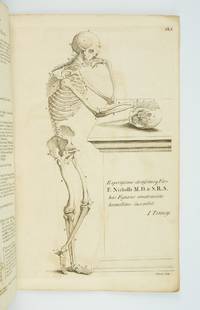
1770réf. ST20219London: Printed for Robert Sayer ca. 1770. 380 x 242 mm. 15 x 9 1/2". 4 leaves of text followed by plates. Original gray paper wrappers. WITH EIGHT FINE ENGRAVED PLATES of the male body in various poses three depicting the skeleton and five the musculature. Russell 816; Wellcome V p. 273; ESTC N51161. See also Russell "John Tinney's Compendium Anatomicum and its publishers." Wrapper a bit soiled and foxed corners torn with two snags two-inch and half-inch to lower cover most of spine chipped away but the stitching holding the book firmly together; mild offsetting from engravings and a few spots of foxing but a really excellent copy internally the leaves fresh and clean and with very good impressions of the engravings. This rare collection of striking anatomical engravings is wonderfully preserved in its original unrestored wrappers. First published in 1743 as "Compendium Anatomicum" the work's plates are adapted from the famous anatomies of Vesalius and Cowper. It was intended as a reference work for artists but as its name suggests it was published with a wider audience in mind. As Tinney humbly tells the reader in the subtitle this is "a work not only very useful but absolutely necessary to painters statuaries and all professors of drawing and design as well as a proper introduction to the study of anatomy for the use of young surgeons" not to mention an "instructive furniture for the studies and libraries of the curious." The work remained in print for a full century though because it was a frequently used book few copies have come down to us in collectible condition. John Tinney ca. 1706-61 was an engraver and print seller who dealt in a wide variety of material being particularly known for maps and satirical prints as well as the present work. Our edition while undated almost certainly dates to the period between 1762-70. The first posthumous edition of "A Compendious Treatise" was released in 1762 by Robert Sayer a map and print seller who was an associate of Tinney's during his lifetime and who likely purchased his stock of plates from his widow following his 1761 death. In 1770 Sayer began a partnership with John Bennett after which the firm was known as "Sayer and Bennett." Since the present edition was published under Sayer's name alone it no doubt comes from the period following the 1762 edition but before the partnership. The present copy has made it through the centuries in remarkably good condition given its flimsy binding and the plates inside with their cheerfully macabre figures remain quite fresh and pleasing. Printed for Robert Sayer unknown books
1770réf. ST20219London: Printed for Robert Sayer ca. 1770. 380 x 242 mm. 15 x 9 1/2". 4 leaves of text followed by plates. Original gray paper wrappers. WITH EIGHT FINE ENGRAVED PLATES of the male body in various poses three depicting the skeleton and five the musculature. Russell 816; Wellcome V p. 273; ESTC N51161. See also Russell "John Tinney's Compendium Anatomicum and its publishers." Wrapper a bit soiled and foxed corners torn with two snags two-inch and half-inch to lower cover most of spine chipped away but the stitching holding the book firmly together; mild offsetting from engravings and a few spots of foxing but a really excellent copy internally the leaves fresh and clean and with very good impressions of the engravings. This rare collection of striking anatomical engravings is wonderfully preserved in its original unrestored wrappers. First published in 1743 as "Compendium Anatomicum" the work's plates are adapted from the famous anatomies of Vesalius and Cowper. It was intended as a reference work for artists but as its name suggests it was published with a wider audience in mind. As Tinney humbly tells the reader in the subtitle this is "a work not only very useful but absolutely necessary to painters statuaries and all professors of drawing and design as well as a proper introduction to the study of anatomy for the use of young surgeons" not to mention an "instructive furniture for the studies and libraries of the curious." The work remained in print for a full century though because it was a frequently used book few copies have come down to us in collectible condition. John Tinney ca. 1706-61 was an engraver and print seller who dealt in a wide variety of material being particularly known for maps and satirical prints as well as the present work. Our edition while undated almost certainly dates to the period between 1762-70. The first posthumous edition of "A Compendious Treatise" was released in 1762 by Robert Sayer a map and print seller who was an associate of Tinney's during his lifetime and who likely purchased his stock of plates from his widow following his 1761 death. In 1770 Sayer began a partnership with John Bennett after which the firm was known as "Sayer and Bennett." Since the present edition was published under Sayer's name alone it no doubt comes from the period following the 1762 edition but before the partnership. The present copy has made it through the centuries in remarkably good condition given its flimsy binding and the plates inside with their cheerfully macabre figures remain quite fresh and pleasing. Printed for Robert Sayer unknown
réf. 1332007295.Gpaperback. Good. Access codes and supplements are not guaranteed with used items. May be an ex-library book. paperback
1988yellow tape across the cover, light shelf wear Ex - Library, Usual Stamps
20 pamphlets bound in one, a list is available on application, cont. cloth. Stephen MacKenzie (1844-1909) studied at London Hospital, then at the Aberdeen University, where he received his doctorate in 1875. Following further education in Berlin he once more came to London Hospital as a physician, and in 1877 became lecturer in pathology and pathological anatomy, in 1880 lecturer in theoretical and clinical medicine. He was at the same time physician at the Moorfields Eye Hospital. He was knighted in 1909. Formerly in the library of the Birmingham Medical Institute with a couple of their neat library stamps.
réf. 1332776078.Gpaperback. Good. Access codes and supplements are not guaranteed with used items. May be an ex-library book. paperback
1968réf. 293494Grünwald b. München : Kölbl, 1968. 95 Seiten. Mit zahlreichen Schwarz-Weiß- Abbildungen. Originalleinen. Folio
1647réf. 30509A Paris, chez la Veuve de Jean Camusat et Pierre Le Petit, 1647 - Amstelodami [Amsterdam], apud Danielem Elzevirium [Daniel Elzevier / Elsevier], 1664 - Amstelodami, apud Danielem Elzevirium, 1664 - Amstelodami, apud Ludovicum & Danielem Elzevirios, 1664 - Lugduni Batavorum [Leyde / Leyden], apud Franciscum Moyardum & Petrum Leffen, 1662 - A Paris, chez Michel Bobin et Nicolas Le Gras, 1677. 3 vol. au format pt in-4 (208 x 165 mm) de 1 f. bl., 7 ff. n.fol., 606 pp., 1 f. n.fol. et 1 f. bl. ; 1 f. bl., 20 (dont frontispice gravé) ff. n.fol. et 222 pp. ; 1 f. bl., 8 ff. n.fol. et 248 pp. ; 12 ff. n.fol., 92 pp. et 2 ff. n.fol. ; 18 ff. n.fol., 121 pp. et 1 f. bl. ; 32 ff. n.fol., 511 pp., 4 ff. n.fol. et 1 f. bl. Reliures uniformes (début XIXème) de pleine basane racinée blonde, plats jansénistes, dos lisses ornés de jeu de filets gras et maigres dorés, larges fleurons dorés, entrelacs de petits filets doré formant croisillons, pièces de titre de maroquin carmin, pièces de tomaison de maroquin vert-bronze, titre doré, tomaison dorée, palette dorée en queue, filet doré sur les coupes, tranches mouchetées.
In Vinetia, nella stamperia de' Giunti, 1586, in-folio, legatura novecentesca in mezza pergamena con punte, carte [14] [su 18], 82, [4], da 83 a 154. Con 46 illustrazioni calcografiche a piena pagina disegnate probabilmente da Gaspar Becerra (1520-1570) e incise in rame da Nicolas Beatrizet. Colophon in fine, nella variante senza la data. Seconda edizione della traduzione italiana di Anton Tabo della più importante opera del Valverde, riveduta dall'autore stesso. Esemplare privo della carte a1 (frontespizio inciso in rame), a2 (recante una dedica al re di Spagna Filippo II al recto e il ritratto dell'autore in calcografia al verso), a5 e a6. Frequenti gore, perlopiù marginali. Adams V-231. Wellcome 6477. Camerini, n. 911.
1900réf. 0045-18[ca. 1900]. Auffaltbarer und aufklappbarer Faltkarton. 18 x 49, 5 cm. 4 farblithogr. Abb. im Format 18 x 12 cm. Davon 1 Taf. (innere Organe) mit 7 aufklappbaren Teilen die die inneren Organe sichtbar machen - und auch deren Rückseite und das Skelett. In gutem Zustand.
1843réf. 910161CGStuttgart:, Hoffmann, 1843. Lithograpie 29,5 x 23 cm, Blattgröße 33,5 x 27 cm.
réf. DADAX143673097XNew unknown
réf. DADAX1441142630New unknown
réf. DADAX0415827264New unknown
réf. DADAX1621006980New unknown
réf. RO30332460Sandoz. Non daté. In-4. En feuillets. Etat passable, Couv. légèrement passée, Dos frotté, Papier jauni. 58 feuillets de 2 pages chacun, illustrés d'un croquis en noir et blanc et d'une photo en couleurs. Nombreuses rousseurs et salissures sur les plat et dans le texte. Cois frottés. Quelques mouillures.. . . . Classification Dewey : 611-Anatomie humaine
1930réf. 34096BBerlin / Jena:, Verlag von Julius Springer / Verlag von Gustav Fischer., 1930 - 1933. Original-Broschur mit Deckeltiteln. [5 Warenabbildungen] Alle mit leichten Gebrauchsspuren. Alle insgesamt guter Zustand. (= Albrecht von Graefe Archiv für Ophthalmologie, Sonderabdruck aus 125. Band, 2. Heft, 1930. / Virchows Archiv für Path