2 265 résultats
réf. DADAX0195042069New unknown
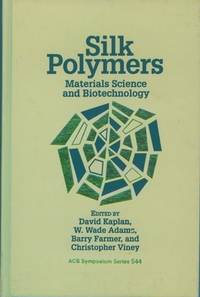
1994réf. 824798987book in excellent condition never used no mark light yellow pages due to aging satisfied guaranteed. A customer service.shipping within 2 working days An American Chemical Society Publication hardcover
1950réf. S8283no place: ca.1950-59. 1950. Includes many photos & figs. All with original wrappers. Rubber stamps or ownership signatures of Norman Horowitz. A FINE GROUP. RARE. Selection of papers from the 1950's dealing with a variety of important topics in genetics. Three of the papers are INSCRIBED BY THE AUTHOR. Includes studies of: Neurospora salmonella E. Coli bacterial populations genetic exchange mutations bacteriophages pneumococcus radiation damage bacterial growth radiation induced genetic change and DNA structure.Authors are: Homare Kuwana 2 papers; 1 INSCRIBED; S. B. Greer 1 paper; Mary Griffiths & R. Y. Stanier 1 paper; Ole Maale 6 papers; 2 INSCRIBED; J. Gross & E. Englesberg 1 paper; Charles Huebschman 1 paper; Zlata Hartman; Kerry T. Yasunobu & Walter B. Dandliker 1 paper; Henry T. Yost Jr. Dwight W. Fitterer Jr. & Howard Goldin 1 paper; Bention Nisman Georges N. Cohen Susan B. Wiesendanger & Marie-Louise Hirsch 1 paper; Thomas Clifford Nelson 1 paper; . Masamitsu Miyamoto & Thomas B. Fitzpatrick 1 paper; Edwin B. Kalan & P. R. Srinivasan 1 paper; Esther M. Lederberg 2 papers; Rollin D. Hotchkiss 4 papers; Alexander Hollaender et al 6 papers; Marie-Louise Hirsch & G. N. Cohen 1 paper; H. J. Teas 1 paper; Jan Weijer 4 papers; H. Edwin Umbarger & Edward A. Adelberg 1 paper; Thomas F. Anderson & A. H. Doermann 2 papers; M. Westergaard 1 paper; Royston C. Clowes 3 papers; W. Arber G. Kellenberger & J. Weigle 1 paper; Haim Yaniv & Charles Gilvarg 1 paper; Stephen Zamenhof 1 paper; Howard B. Newcombe 3 papers. ca.1950-59. unknown books
réf. DADAX0387774904New unknown
1950réf. S8283no place: ca.1950-59. 1950. Includes many photos & figs. All with original wrappers. Rubber stamps or ownership signatures of Norman Horowitz. A FINE GROUP. RARE. Selection of papers from the 1950's dealing with a variety of important topics in genetics. Three of the papers are INSCRIBED BY THE AUTHOR. Includes studies of: Neurospora salmonella E. Coli bacterial populations genetic exchange mutations bacteriophages pneumococcus radiation damage bacterial growth radiation induced genetic change and DNA structure.Authors are: Homare Kuwana 2 papers; 1 INSCRIBED; S. B. Greer 1 paper; Mary Griffiths & R. Y. Stanier 1 paper; Ole Maale 6 papers; 2 INSCRIBED; J. Gross & E. Englesberg 1 paper; Charles Huebschman 1 paper; Zlata Hartman; Kerry T. Yasunobu & Walter B. Dandliker 1 paper; Henry T. Yost Jr. Dwight W. Fitterer Jr. & Howard Goldin 1 paper; Bention Nisman Georges N. Cohen Susan B. Wiesendanger & Marie-Louise Hirsch 1 paper; Thomas Clifford Nelson 1 paper; . Masamitsu Miyamoto & Thomas B. Fitzpatrick 1 paper; Edwin B. Kalan & P. R. Srinivasan 1 paper; Esther M. Lederberg 2 papers; Rollin D. Hotchkiss 4 papers; Alexander Hollaender et al 6 papers; Marie-Louise Hirsch & G. N. Cohen 1 paper; H. J. Teas 1 paper; Jan Weijer 4 papers; H. Edwin Umbarger & Edward A. Adelberg 1 paper; Thomas F. Anderson & A. H. Doermann 2 papers; M. Westergaard 1 paper; Royston C. Clowes 3 papers; W. Arber G. Kellenberger & J. Weigle 1 paper; Haim Yaniv & Charles Gilvarg 1 paper; Stephen Zamenhof 1 paper; Howard B. Newcombe 3 papers. ca.1950-59. unknown
réf. SONG0199731969Used: Good unknown
réf. DADAX1461426553New unknown
1783In 8, pp. XL + 126. Stampato su carta forte. Bella legatura coeva ai piccoli ferri con decorazione 'a ventaglio' e stemma vescovile con 6 nappe che si dipartono dal cappello ecclesiastico. Spelature al margine interno del piatto anteriore e alcuni piccoli danni agli angoli. Dorso decorato ai piccoli ferri con nervature (piccole mancanze). Mancanza alla della parte superiore del dorso mascherato da etichetta applicata. Rara edizione che apre con una prolusione sull'uso della figura del grifo ( o grifone) nell'emblematica. L'opera raccoglie 40 problemi riguardanti curiosita' scientifiche riguardanti in particolare caratteristiche umane e animali. Ad esempio: Per qual ragione veggonsi nel genere degli animali altri che vanno soggetti al fenomeno della tosse ed altri no; Donde procede che l'uomo solo fra gli altri animali sen vada alla vitiligine...; Vedere il come debba stare che dalle capre e dalle pecore tanto piu' di latte si ritragga e tanto meno dalle femmine umane e bovine...; Come vada che i maschi... riescano sempre di una mole maggiore in paragon delle femmine; Come sia che alcuni degli animali partoriscono piu' feti in una volta siccole il majale, il cane il lepre ed altri no, siccome l'uomo il leone...; Per qual motivo sia massimamente dell'uomo lo sternutare; Perche' all'uomo specialmente fra tutti gli animali dee toccare il caso di nascere storpio nelle gambe....
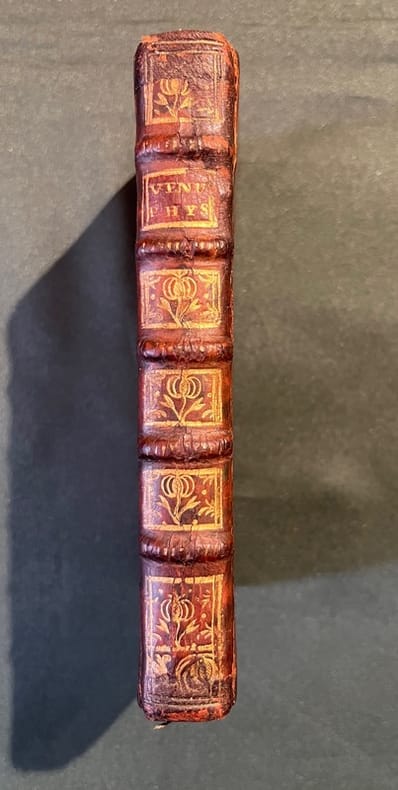
1751MAUPERTIUS Pierre Louis Moreau De. Venus Physique. S.l., 1751. In 16mo; pp.240, 5. Ampi margini. Cart. coevo. Blake, pag.293; Garrison Morton, 215.2.
réf. DADAX019989602XNew unknown
1871réf. 031862New York: D. Appleton and Company 1871. First American Edition First Printing 1st Printing. Hardcover. Very Good . Drawings. Vi 409; V "Postscript" 436. Brown Cloth Gilt. First Edition Later Issue Still Dated 1871 On Title Page No Indication Of Later Printing But Later Issue As The First Issue Identifies 16 Errata In Volume I. Two Volumes In Original Brown Cloth Gilt Lettering On Spine Black Border And Design On Covers Light Yellow Endpapers. Two Page Catalog Origin Of Species And A Book By T H Huxley At End Of First Volume; 12 Pp Catalog Mostly Works By Spencer But Again Including Origin Of Species At End Of Second Volume. A Very Clean Unmarked Set Possibly Unread. Edges Of Page Block Still Show Original Polish. Gilt Bright Cloth Evenly Colored Endpapers Immaculate Hinges Strong And Without Cracking Attractive. Points Of Fraying At Corners And Tips Tips With Minute Professional Repairs To Cloth And Color; Faint Dampstain In Parts Of Lower Covers Of Vol. Ii Also Professionally Refurbished And Almost Invisible With No Trace Of Dampstaining Inside. D. Appleton and Company hardcover
1951réf. BING42ERT001National Institute of Genetics Japen various 1951-1980. Used; Very Good. Prompt shipment with tracking. we ship in CLEAN SECURE NEW boxes Annual Reports beginning with No. 2 1951 contains also Nos: 3 4 5 67 9 10 11 12 13 14 15 16 17 18 19 20 21 22 23 1972. One issue has the stamp of L.C. Dunn 1893-1974a Developmental Geneticist at Columbia University. Several copies have what appear to be his initials in ink onfront cover a few have pages marked. A few copies have spine tears but overall in very good condition. Mostly around120 pages with illust. 20 issues overall. National Institute of Genetics, Japen, various unknown
réf. DADAX0199972133New unknown
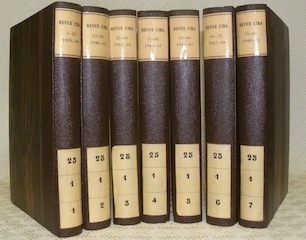
réf. 77385Bâle, Ciba 1939 - 1952, 240x175mm, demi-percaline. Plats papier bois. Couvertures supérieures conservées. Etiquettes de titre imprimé sur le haut et de cotation sur le bas. Hormis cachets de bibliothèques, très bel exemplaire. SOMMAIRE: n.° 1: L’Ecole de médecine de Montpellier. - n.° 2: La médecine à la cour de Louis XIV. - n.° 3: Le développement de la génétique. - n.° 4: Les symboles de la médecine. - n.° 5: L’Islam et la médecine. - n.° 6: Superstitions médicales des Tziganes. - n.° 7: Benins et animaux venimeux. - n.° 8: Médecine et mesure du temps. - n.° 9: Médecine babylonienne. - n.° 10: Les Peaux-Rouges et leur médecins. - n.° 11: Le rôle des médecins pendant la Révolution française. - n.° 12: Les Grands Mongols et leurs médecins. - n.° 13: La Croix-Rouge, son histoire et son oeuvre. - n.° 14: Le médecin chez les anciens Romains. - n.° 15: Evolution de la médecine hindoue. - n.° 16: L’apprivoisement et le dressage des animaux sauvages. - n.° 17: La promotion au grade de docteur en médecine. - n.° 18: Portraits de médecins du début de la photographie. - n.° 19: La médecine dans l’Egypte ancienne. - n.° 20: La culture des tissus. - n.° 21: Napoléon et ses médecins. - n.° 22: La Faculté de médecine de Bologne. - n.° 24: Hachich. - n.° 25: La médecine dans l’art de la porcelaine. - n.° 26: L’hermaphrodisme. - n.° 27: Salerne. - n.° 28: Le développement de la technique de coloration histologique. - n.° 29: Portraits de médecins. - n.° 30: Réalisations techniques de médecins. - n.° 31: Animaux sauvages en captivité. - n.° 32: L’enseignement médical à Oxford et à Cambridge. - n.° 33: La main. - n.° 34: Les sciences iatriques. - n.° 35: Le nourrisson. - n.° 36: Problèmes de symétrie. - n.° 37: Le vêtement et l’hygiène. - n.° 38: La médecine dans l’Espagne de l’âge d’or. - n.° 39: L’embryon. - n.° 40: L’hygiène au moyen âge. - n.° 41: Le sel. - n.° 42: Le tatouage. - n.° 43: La respiration. - n.° 44: Le bétel. - n.° 45: L’évolution de l’hygiène urbaine et domestique. - n.° 46: Le rêve. - n.° 47: La médecine dans l’ancien Pérou. - n.° 48: Les fondements littéraires de la pharmacologie arabe. - n.° 49: Vases à médicaments. - n.° 50: Le thermomètre. - n.° 51: La médecine des Aztèques. - n.° 52: La médecine en Angleterre à l’époque des Tudors. - n.° 53: La coca. - n.° 54: L’anatomie galénique. - n.° 55: Le soufre. - n.° 56: Les médecins et la politique. - n.° 57: Le masque et la maladie. - n.° 58: Fétiches, amulettes, talismans. - n.° 59: La renaissance de l’anatomie. - n.° 60: Le chamanisme. - n.° 61: L’initiation. - n.° 62: L’oreille et l’ouïe - n.° 63: Culte du crâne, têtes-trophées et scalps. - n.° 64: L’injection. - n.° 65: La Faculté de médecine de Paris. - n.° 66: L’eau. - n.° 67: Le mesmérisme. - n.° 68: La médecine à Bali. - n.° 69: Anatomia animata. - n.° 70: Médecine et cinéma. - n.° 71: Le thé. - n.° 72: La surdi-mutité. - n.° 73: L’école de médecine d’Edimbourg. - n.° 74: Yoga. - n.° 75: Le Lait. - n.° 76: La médecine en Russie jusau’à la mort de Pierre le Grand. - n.° 77: Le microscope. - n.° 78: Le tabac. - n.° 79: Antisepsie et asepsie. - n.° 80: La sécrétion interne. - n.° 81: L’iode. - n.° 82: L’hystérie. - n.° 83: Les débuts de l’obstétrique. - n.° 84: Le test psychologique.
réf. DADAX0444882596New unknown
1916réf. 64516Princeton NJ: Princeton University Press January 1916. Tall 8vo. ii 106 pp. Sepia-tinted photogravure frontisp. of Gregor Mendel 3 large folding diagrams text illustrations diagrams. Gray-brown softcovers title on front cover contents on back cover minor edgewear toning minor chipping head & foot of spine minor bumping to corners still a VG- copy from the libraries of Elof Axel Carlson 1931-2025 noted geneticist historian of science and fierce opponent of eugenics and his mentor Hermann J. Mueller 1890-1967 Nobel Prize-winning geneticist who first showed exposure to radiation could produce mutations in living organisms ink manuscript note in Mueller’s hand indicating he had ordered a Mendel portrait on April 3. First edition of the first issue of this groundbreaking American scientific journal on genetics which featured Calvin Bridges pioneering work on nondisjunction which offered proofs that genes reside in chromosomes which set up the nomenclature system for naming fly mutants; one of Jennings’ foundational works proving that conjugation resulted in new combinations of hereditary traits and finally Cushing’s important work on tracing kindred with symphalangism or inheritance of genetic disorder causing straight fingers from fusion of finger joints. These early papers for clinical genetics served as excellent studies for launching this key periodical which would continue to be advanced and influenced prominent American biologists and geneticists in Jennings and Morgan’s circles. Shull was a prominent early geneticist who began as a botanical investigator at the Carnegie Institution and later with Princeton from 1915 to 1942 applying the principles of Mendelian heredity in analyzing the inheritance of quantitative characters in corn and later influenced hybridization techniques in tandem with Luther Burbank. Princeton University Press, paperback
réf. DADAX019938603XNew unknown
18998vo., Sixth Edition, Fifty-Sixth Thousand, with folding diagram, neat contemporary inscription on half-title, endpapers and preliminary leaves (to Contents) lightly spotted; original green cloth, boards with Oxford frame in blind, gilt back, uncut, a remarkably bright, fresh, firm copy.
1982Hardcover, first edition of Dawkins' sequel to The Selfish Gene, and what is considered his principal contribution to evolutionary theory. Original green cloth boards and original dust jacket, in very good condition. Jacket has minor edgewear, no other notable flaws. AD Used
1900réf. 48208Paris Gauthier-Villars 1900. 4to. No wrappers. In: "Comptes Rendus Hebdomadaires des Séances de L'Academie des Sciences" Tome 130 No 13. Titlepage to tome 130 a. pp. 809- 864. Entire issue offered. De Vries paper: pp. 845-847. Rather poor paperquality fragile. Small nicks to margins of titlepage. First appearance of a milestone paper in genetics being the "REDISCOVERY" OF MENDEL'S LAWS OF HEREDITY" - This paper together with the two other papers from the same year by Carl Correns and Erich Tschermak laid the foundations of a new scientific discipline that in 1906 was given the name "genetics" and less than a century later rose to become the leading science in Western society. This French announcement was published 4 days before his longer paper "Das Spaltungsgesetzt der Hybride" in which Mendel is mentioned.De Vries completed most of his hybridization experiments without knowing about Mendel's work. Based on his own results de Vries drew the same conclusions as Mendel. De Vries published his work in 1900 first in French then in German. In the French report there was no mention of Mendel but this was amended by de Vries in the German paper. It is possible that de Vries read Mendel's paper before he published his own and included Mendel's name in the later printing when he realized that other people also knew about Mendel's work. De Vries may have thought that his own conclusions were superior to Mendel's. "During the 1880s de Vries became interested in heredity. In 1889 he published Intracellular Pangenesis in which he critically reviewed previous research on inheritance and advanced the theory that elements in the nucleus ‘pangenes’ determine hereditary traits. To investigate his theories he began breeding plants in 1892 and by 1896 had obtained clear evidence for the segregation of characters in the offspring of crosses in 3:1 ratios. He delayed publishing these results proposing to include them in a larger book but in 1900 he came across the work of Gregor Mendel published 34 years earlier and announced his own findings. This stimulated both Karl Correns and Erich von Tschermak-Seysenegg to publish their essentially similar observations." Oxford Dictionary of Scientists.Parkinson "Breakthroughs" 1900 B. - PMM 356 the note. unknown
1900réf. 48208Paris, Gauthier-Villars, 1900. 4to. No wrappers. In: ""Comptes Rendus Hebdomadaires des Séances de L'Academie des Sciences"", Tome 130, No 13. Titlepage to tome 130 a. pp. (809-) 864. (Entire issue offered). De Vries paper: pp. 845-847. Rather poor paperquality, fragile. Small nicks to margins of titlepage.
1745réf. 204361745. Petit in-12 de [8]-194 pages [π 4; A-S6 (dernier feuillet blanc)]. Plein veau brun moucheté, dos é nerfs orné de filet slet fleurons dorés, pièce de titre bordeaux, tranche rouges.
18868vo., Sixth Edition, Thirtieth Thousand, with folding diagram, neat contemporary signature on front free endpaper; original green cloth, boards with Oxford frame in blind, gilt back, chocolate endpapers, uncut, a remarkably bright, fresh, firm copy. The sixth edition is the last published in Darwin's lifetime and contains his final major corrections and revisions. It is the first edition with the title The Origin of Species, and includes among many other revisions a new chapter inserted to confute the views of the Catholic biologist St. George Mivart. There is a glossary, and the word 'evolution' is used in the text for the first time. SCARCE IN THIS CONDITION. Freeman 423.
réf. 4216Snell was the co-recipient of the 1980 Nobel Prize in Medicine for his work on the genetics of the mouse immune system which led to a better understanding of cancer cell behavior in humans. One of the leading authorities on the genetics of "transplant reaction" his work was key in making organ transplants possible. All of the offprints are from the library of L.C. Dunn of Columbia University. unknown books
réf. 4216Snell was the co-recipient of the 1980 Nobel Prize in Medicine for his work on the genetics of the mouse immune system which led to a better understanding of cancer cell behavior in humans. One of the leading authorities on the genetics of "transplant reaction" his work was key in making organ transplants possible. All of the offprints are from the library of L.C. Dunn of Columbia University. unknown