266 résultats
1970réf. 26864Manchester, Manchester University Press, 1970. A comparison of social and moral values 136 S. (22,5 cm) Leinen / gebundene Ausgabe
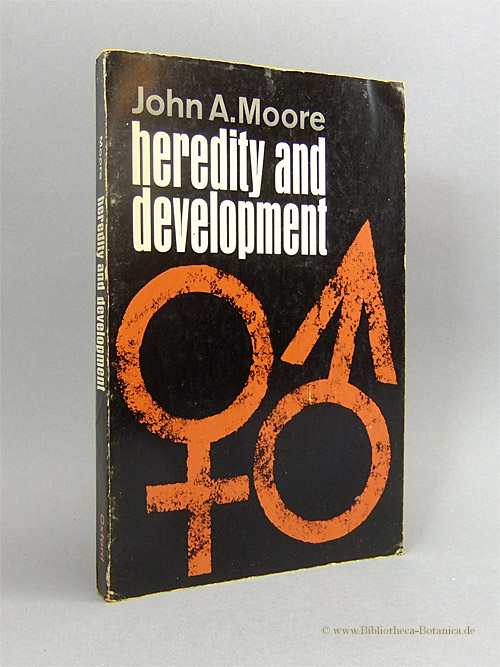
1963réf. 15453ABNew York, Oxford Univ. Press, 1963. 23 cm/9,1". (4) Bl., 245 S. mit zahlr. Abb. im Text. Originalkarton (Softcover) mit Leinenrücken. Etwas bestoßen und berieben Schnitt braunfleckig.
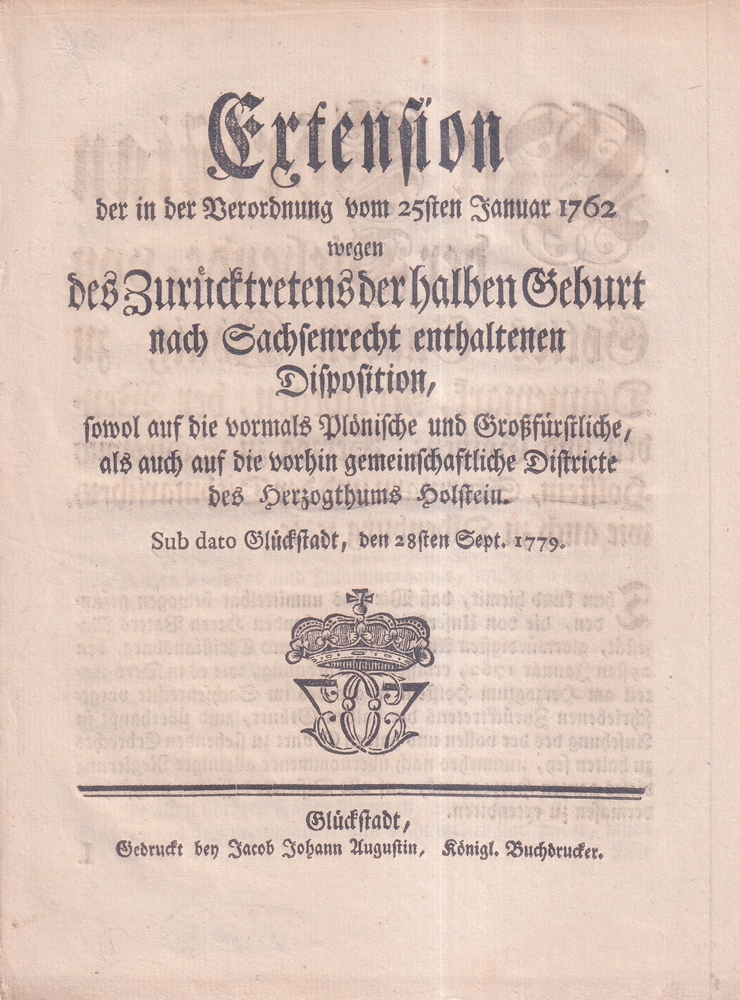
1779réf. 9064Glückstadt, gebr. bei J. J. Augustin, ( 1779). 2 Bll.
1786réf. RECH0574Wien, Weingand 1786. 4°, 38 S., 5 gefalt. Taf., Ppbd. d. Zt., schmutzfleck., berieb., bestoß., Rücken fehlt, Reste von Klebestreifen aus Papier auf den Deckeln, vord. Spiegel m. Namenszug, innen sauber und gut.
2016réf. x-9492260085Almenara 2016. Paperback. New. 420 pages. Spanish language. 9.00x6.10x1.30 inches. Almenara paperback
réf. kb774A.887GB: MilNER Small blue hardback lettered and heavily decorated in gold and black. 288 pages. 16 page catalogue at rear. Probably c1900. . Hardback. VG/No DW. MilNER Hardcover
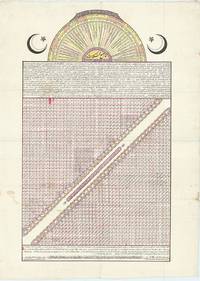
réf. 66246Izmir 15th day of Jumada al-Akhir AH 1300 April 23 1883. Original broadside 80 x 50 cm in Ottoman Turkish and Arabic printed on laid paper with double-headed eagle watermark embellished with two crescent moon and star symbols neatly rubricated and coloured by a contemporary hand in a palette of pastel shades of pink yellow pale orange and purple. Old folds margins with some light wrinkling and a few nicks some minor losses to intersections of folds with some paper restorations a few instances of light browning generally a very good well-preserved example. This broadside presents the far id — the system of inheritance prescribed by the Qur an and elaborated over centuries of Islamic jurisprudence — in the form of a structured diagram dedicated to Sultan Abdülhamid II the thirty-fourth ruler of the Ottoman Empire and the last to exercise effective autocratic power over its domains. It was composed on the fifteenth day of Jumada al-Akhir in the year 1300 AH April 23 1883 by Kulevi Müftizade and Süleyman Hilmi the latter holding the rank of Devriyye a position in the Ottoman religious-scholarly hierarchy authorising him to teach and adjudicate at a defined level of the medrese system something approximating a licensed judge. The broadside presents the far id inheritance system in a structured diagrammatic form setting out the prescribed shares of all categories of heirs after burial expenses and debts have been settled. The extensive introductory text opens with a formal dedication to Abdülhamid II and continues with a concise historical survey of Islamic inheritance jurisprudence. The principal diagram sets out the prescribed shares of all categories of heirs: daughters widows mothers and collateral relatives. Shares are calculated after the deceased's burial expenses and outstanding debts have been settled. The system turns on a fundamental distinction between quota-heirs dhaw al-far id those entitled to fixed fractional portions of the estate one-half one-third one-sixth and so on and residuary heirs asaba who receive whatever remains after the fixed shares have been distributed. Four male quota-heirs are identified husband father paternal grandfather and maternal brother and eight females: wife daughter granddaughter mother grandmother full sister paternal sister and maternal sister. Depending on the configuration of surviving relatives certain heirs may shift between the quota and residuary categories. The chart concludes with the extended family group dhaw al-arh m who inherit only in the absence of both quota-heirs and residuaries. The far id system is among the most precisely codified elements of classical Islamic jurisprudence and its Qur anic basis has given it a sanctity and stability that have resisted modification over fourteen centuries. One of its notable features frequently observed by both Muslim jurists and later Western commentators is its explicit guarantee of inheritance rights to women at a time when most legal systems afforded them none. Daughters receive half the share of sons; widows and mothers receive defined fractions; sisters are specifically enumerated as quota-heirs. The Ayd n vilayet centered on zmir Smyrna was one of the most prosperous and cosmopolitan provinces of the Ottoman Empire — a major commercial hub with a mixed population of Muslims Greeks Armenians and Jews and a well-developed provincial administrative apparatus including its own press. That this Arabic-language inheritance law text was produced there in 1883 reflects the continuing operation of the Sharia court system in provincial Ottoman life where religious judges required authoritative reference materials for the administration of inheritance cases. Süleyman Hilmi's Devriyye rank placed him within the Ottoman ilmiye hierarchy — the class of religious scholars and jurists — and his co-authorship of a formally licensed and copyright-protected legal broadside suggests both professional standing and commercial ambition. The copyright notice is itself noteworthy: Ottoman intellectual property protection of this kind enforced through the author's personal seal was not unusual by the 1880s yet it remains a detail that surprises modern readers. The dedication to Abdülhamid II who had come to power in 1876 and was actively cultivating pan-Islamic sentiment as a tool of political legitimacy is consistent with the tone of religious-legal publication throughout his reign. The entire Ottoman legal system that this broadside served — Sharia courts far id inheritance rules the ilmiye hierarchy — would be abolished in the reforms of 1924–26. Composed April 23 1883 15 Jumada al-Akhir 1300 AH by Kulevi Müftizade and Süleyman Hilmi. Printed at the provincial press of the Ayd n vilayet presumably at Izmir through the agency of Ziya Efendi under Board of Education license 674 dated 1301. This is the first time we have encountered this place of publication. A bookseller's stamp appears at the foot. Copies not bearing the author's personal seal were declared counterfeit at the time of publication. Generally speaking large ephemeral broadsides like this tend to survive in low numbers. More specifically examples of this broadside were likely discarded when the jurisprudential tradition it represents was abolished between 1924 and 1926 when the new Turkish Republic adopted a modern civil code in its place. [Izmir], 15th day of Jumada al-Akhir, AH 1300 (April 23, 1883). unknown
réf. BN370034Voices Within Carnatic Music Passing on an Inheritance Hardcover Voices Within Carnatic Music Passing on an Inheritance Hardcover Voices Within Carnatic Music Passing on an Inheritance Hardcover hardcover
réf. BN374333ReMaK-Verlag. The Swiss civil code - Volume I and II Part I: Law of Persons Part II: Family Law Part III: Law of inheritance Part IV: Law of property final title appendices Hardcover The Swiss civil code - Volume I and II Part I: Law of Persons Part II: Family Law Part III: Law of inheritance Part IV: Law of property final title appendices Hardcover The Swiss civil code - Volume I and II Part I: Law of Persons Part II: Family Law Part III: Law of inheritance Part IV: Law of property final title appendices Hardcover ReMaK-Verlag hardcover
1897réf. 48085London Harrison and Sons 1897. No wrappers. Extracted from "Proceedings of the Royal Society" Vol. 61. Pp. 401-413. First printing of Galton's "Law of ancestral Heredity"Galton's ancestral law states that the two parent contribute between them on average one-half of the total heritage of the offspring the four grandparents one-quarter and so on. He interpreted this law both as a representation of the separate contributions of each ancestor to the heritage of the offspring and as a multiple regression formula for predicting the value of a trait from ancestral values.Garrison & Morton: 239. unknown
1898réf. 48323London Harrison and Sons 1898. 8vo. Later full blue buckram. Spine with gilt lettering. In: "Proceedings of the Royal Society of London" Vol. LXII. VIII458 pp. a. 6 plates. Pearson's paper: pp. 386-417. First appearance of this importent paper in which Pearson expressed what he christened "Galton’s Law of Ancestral Heredity" in the form of a multiple regression equation of offspring on midparental ancestry. It is a statistical formulation of Galton’s law in the form of a multiple regression of offspring on "midparental" ancestry with deductions therefrom of theoretical values for various regression and correlation coefficients between kin and comparisons of such theoretical values with values derived from observational material. DSB.The title "Contributions to the Mathematical Theory of Evolution" or "Mathematical Contributions. . ." was used as the general title of 17 memoirs numbered II through XIX published in the Philosophical Transactions or as Drapers’ Company Research Memoirs and of 8 unnumbered papers published in the Proceedings of he Royal Society "Mathematical" became and remained the initial word from III1896on. hardcover
1889réf. 64520London UK: Macmillan and Co. 1889. 8vo. ix 5 259 1 pp. plus 2 pp. publisher’s ads including the inserted unpaginated errata leaf. With diagrams text figures tables. Plum-coloured publisher’s cloth gilt lettering on spine edgewear rubbing minor soiling to covers slightly cocked still G- copy from the library of Elof Axel Carlson 1931-2025 noted geneticist historian of science and fierce opponent of eugenics and J.H. Rickes. First edition of this first major statistical and biometric study of biological variation which established foundational concepts like regression to the mean and the law of ancestral heredity that shaped quantitative genetics. Galton was a pioneer in forensic science heredity and more fields and half-cousin to Charles Darwin whose studies on inheritance of certain traits such as the hereditary nature of later served as the basis of behavioral genetics or eugenics which later was used to justify compulsory sterilization programs across the United States and by Nazi Germany for mass extermination. Garrison & Morton 233. Macmillan and Co., hardcover
1782réf. 7101s.l.: s.n. 1782. 4to pp. viii 27 1 176; 52. Extracted from a volume with portion of leather spine and label remaining. Some soiling to front and rear final page torn at gutter. Ownership inscription to title page of Sir Wm Forbes Bart. A rare document of a dispute of inheritance pursued by the daughter of Helenus Halkerston of Rathillet against the geologist Captain later Lieutenant-Colonel Ninian Imrie of Denmuir d. 1820. Miss Halkerston argues that the releveant deeds executed before her father’s death were invalid by reason of his insanity and apparently James Boswell was approached for an opinion though he declined. Halkerston had published a short work ‘Considerations on man in his natural as well as moral state’ in 1764 ‘solving all the phænomena of the animal world of our moral and physical intelligence &c. hitherto so much the subjects of dispute’ - a subsequent edition of which was appended to 400 pages of land ownership dispute under the new title of ‘An appeal to reason’ 1778 perhaps evidence for Halkerston’s mental state. Indeed the printer of the latter edition contributes much testimony here. The ESTC record is based on a single copy held in Aberdeen which lacks the title-page and the next leaf as well as the final leaf - and therefore is catalogued under a different title. ESTC T230518. [s.n.] hardcover
1795réf. 7108s.l.: s.n. 1795. 4to pp. ii 95 1 folding genealogical chart. Extracted from a volume retaining portions of leather spine. Light soiling to front and rear. A scarce argument for the inheritance of John Stewart 7th Earl of Galloway 1736-1806 to give him a claim to the English peerage. Lord Galloway had already sat in the House of Lords as a Scottish representative peer and had done so since 1774 but faced re-election each parliament and lost his seat in the 1790 election. Whether on the strength of this argument or his service as a Lord of the Bedchamber Lord Galloway achieved his aim being created Baron Stewart of Garlies in the peerage of Great Britain in 1796 and thereby rejoining the Lords as a permanent member. Though anonymous this pamphlet was written by Eliezer Williams 1754-1820 chaplain and tutor to the Galloway family who had been enlisted to help investigate the pedigree. The table at the end mentions the death of Vice-Admiral Keith Stewart in March 1795 giving a terminus post quem for the publication. NLS and Hornel Gallery only in ESTC. ESTC T193376. [s.n.] hardcover
réf. 27940533-nnew. unknown
2019réf. 2-6139068673EAE 2019. Paperback. New. Spanish language. 8.66x5.91x0.28 inches. EAE paperback
réf. ria9789492260086_inpPaperback. New. New Book; Fast Shipping from UK; Not signed; Not First Edition; El efecto archipiélago es simultáneamente un atributo del objeto de estudio y del sujeto que escribe del paisaje y del cuerpo de las tierras y las aguas inscritas en ciertos cuerpos literarios. Lo que efectúa es paperback
réf. ria9789492260499_inpPaperback. New. New Book; Fast Shipping from UK; Not signed; Not First Edition; Más que un diálogo Quintero Herencia propone en este libro escrito de oído un encuentro con la salsa con el saber de su sabor y con el sabor de su saber. Despojado del ceremonial sociológico etnográfico o antropológico que legiti paperback
réf. ria9789492260567_inpPaperback. New. New Book; Fast Shipping from UK; Not signed; Not First Edition; Esta colección de ensayos es una zambullida en la fantasía playera de lo archipelágico. La desistencia aquí practicada es una toma de la palabra que no escamotea agotamientos ni cierres y que abandona la escena de sujetos y políticas au paperback
réf. 42636466-nnew. unknown
réf. 27940533like new. unknown
réf. 47989301like new. unknown
réf. 42636466like new. unknown
réf. 3126Richard Bentley London 1841 revised by the author. iv 428pp engraved half title engraved frontispiece. Leather spine with marbled boards. Covers edge worn and scuffed. Contents browned little fingered and soiled. A few page edges with marginal tears. Half title and frontispiece with noticeable fox marks. Ownership inscription inside front cover. 16x11cms. Richard Bentley, London, 1841 (revised by the author). hardcover
First separate edition, 32pp., author's presentation copy, lacks lower wrapper. Reprinted from the 'Proceedings of the Birmingham Philosophical Society,' Vol. 6. Formerly in the library of the Birmingham Medical Institute.