11,749 results
2007ref. 8604605Geological Society 2007. This is an ex-library book and may have the usual library/used-book markings inside.This book has hardback covers. In fair condition suitable as a study copy. Dust jacket in fair condition. Please note the Image in this listing is a stock photo and may not match the covers of the actual item1000grams ISBN:9781862392250 Geological Society hardcover
2007ref. 4142406Geological Society 2007. This is an ex-library book and may have the usual library/used-book markings inside.This book has hardback covers. In good all round condition. No dust jacket. Please note the Image in this listing is a stock photo and may not match the covers of the actual item950grams ISBN:9781862392250 Geological Society hardcover
1974ref. Q-0553123270Bantam Books 1974-01-01. Mass Market Paperback. New. In shrink wrap. Looks like an interesting title! Bantam Books paperback
ref. DADAX3899553845New unknown
1997ref. __030905799XNational Academies Press 1997. Paperback. New. 28 pages. 8.80x5.90x0.20 inches. National Academies Press paperback
ref. DADAX0449905896New unknown
2002ref. 9956542Springer 2002. This is an ex-library book and may have the usual library/used-book markings inside.This book has hardback covers. In good all round condition. Please note the Image in this listing is a stock photo and may not match the covers of the actual item700grams ISBN:9783540431305 Springer hardcover
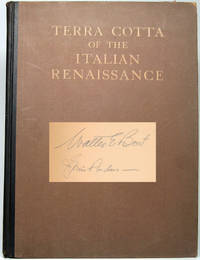
1925ref. 47296New York: National Terra Cotta Society 1925. Hardcover. 4to. Black cloth spine with gilt lettering and brown paper over boards with tan lettering. viii 200pp. Extensive full-page illustrations. Very good. Mild binding edgewear else tight and internally fine. Tight and handsome first edition of this heavily-pictorial study of terra cotta architectural details. Front pastedown bears bold pencilled ownership signature of noted Iowa architect Walter E. Bort 1889-1954 and also of J. Eric Anderson 1922-2013 a noted Illinois architect who served as president of the Northern Illinois chapter of the American Institute of Architects. Sharp copy. National Terra Cotta Society hardcover
1984ref. 70608N.pl: Earth First! 1984. Poster. Near Fine. Poster 43cm x 26cm / 17" x 10". Four-color print on cream colored stock. Minor bump to an edge and corner. Poster promoting Earth First!'s 1984 Road Show. Depicts a forested mountainous scene with a bright blue sky. The EF! crossed club/monkey wrench logo adorns the top corners. With text in bold below the poster reads: "Earth First! The 1984 Road Show Films: "Give Trees A Chance" About the Australian Terania Rainforest Blockade "The Cracking of Glen Canyon Damn" Speakers: John Seed from Australia on "The Earth's Threatened Rainforests" Dave Foreman Earth First! Founder on "Defense of the Wild" Music: Cecelia Ostrow from Oregon Wilderness Folksinger No Compromise in Defense of Mother Earth! We use recycled paper." Earth First! is a group of radical environmentalists that formed in the American Southwest in the spring of 1980. The group set themselves apart from other environmental groups of the time with their focus on non-hierarchical structures organic methods of organization and growth and especially with their utilization of direct action tactics and sabotage or "monkey wrenching" - inspired by Edward Abbey's novel in defense of wilderness. Earth First! unknown
1984ref. 70608N.pl: Earth First! 1984. Poster. Near Fine. Poster 43cm x 26cm / 17" x 10". Four-color print on cream colored stock. Minor bump to an edge and corner. Poster promoting Earth First!'s 1984 Road Show. Depicts a forested mountainous scene with a bright blue sky. The EF! crossed club/monkey wrench logo adorns the top corners. With text in bold below the poster reads: "Earth First! The 1984 Road Show Films: "Give Trees A Chance" About the Australian Terania Rainforest Blockade "The Cracking of Glen Canyon Damn" Speakers: John Seed from Australia on "The Earth's Threatened Rainforests" Dave Foreman Earth First! Founder on "Defense of the Wild" Music: Cecelia Ostrow from Oregon Wilderness Folksinger No Compromise in Defense of Mother Earth! We use recycled paper." Earth First! is a group of radical environmentalists that formed in the American Southwest in the spring of 1980. The group set themselves apart from other environmental groups of the time with their focus on non-hierarchical structures organic methods of organization and growth and especially with their utilization of direct action tactics and sabotage or "monkey wrenching" - inspired by Edward Abbey's novel in defense of wilderness. Earth First! unknown books
2003ref. GO-8Republic of Slovenia: Geografski Institut Antona Melika 2003. Comprehensive reference text presents current research in scientific geography and includes topics in the importance of the division of the countryside in stimulating regional development; starting points for the monitoring and evaluation of regional policy in Slovenia; ; legislation in the field of regional policy in Slovenia and an analysis of its spatial impact; geographical factors of fertility; demographic characteristics of the Romany in Prekmurje. Text in English and Slovene. 157 pgs. Illustrated. Minimal shelfwear. . Soft Cover. Excellent/ . 8vo - over 7¾" - 9¾" tall. Geografski Institut Antona Melika paperback
1865ref. 16219Napoli: R. Accademia delle Scienze Fisiche e Matematiche di Napoli 1865. 1865. Good. - Quarto 12 inches high by 9 inches wide softcover printed self-wraps. 10 pages. There is a piece out of the top corner of each leaf & the bottom corners are bumped. There is light creasing to the leaves with a horizontal crease to each leaf where the pamphlet has been folded. There is a repaired tear to the front edge of each leaf at the fold. Ex-library with a library blind stamp and a discard stamp on the title. Good only. Inscribed along the top of the title page and signed "l'autore". Ferdinando De Luca 1785-1869 was a Naples geographer and mathematician. This text which is in Italian with some passages in French advocates a universal meridian which would be recognized by all countries. (Napoli: R. Accademia delle Scienze Fisiche e Matematiche di Napoli, 1865). paperback
1971ref. 2090502113702566Not Available 1971. Soft Cover. Fine. The book is in fine condition. Not Available paperback
1836ref. 20220087Washington DC : Gales & Seaton 1836. First edition. Paperback. Good. Octavo 168 pages some foxing contemporary drab wrappers spine perished repaired with old cellophane tape small puncture to the title-page. Lacking the two folding maps which were not issued with all the copies. Note: the stain facing the title-page looks much darker in the photograph than in reality Senate Doument 333. Featherstonhaugh was Yorkshireman who became a Fellow of the Royal Society the Geological Society and the first U. S. government Geologist. On assignment for the U. S. Topographical Bureau Featherstonhaugh traversed the Fox River from Green Bay Wisconsin Territory to the Wisconsin River to Prairie du Chien and up the Mississippi by canoe up the western edge of Wisconsin past the eastern edge of Minnesota. Each plate shows mulitple views including geological sections from Georgetown D.C. to Green Bay and Green Bay to Prairie du Chien then Prairie du Chien to the Coteau de Prairie; also Wills Creek. Gales & Seaton paperback
1985ref. 32100International Association of Hydrogeologists. VG/NONE. 1985. Softcover. Two-volume softcover of Volume XVII Part 1 and Part 2 Proceedings. Mild cover wear w/fading at spine. Pgs tight clean unmarked. Proceedings of the 17th International Congress International Assn. Of Hydrogeologists Jan. 7-12 1985 Tucson Arizona. . International Association of Hydrogeologists, paperback
1925ref. 023703Hartford: State of Connecticut 1925. Very Good condition. Pages are clean and unmarked. With 9 figures and 8 plates. Complete with tipped-in folding map in perfect condition Geologic Map of the Stonington Quadrangle. Bound in the original gray wraps. State of Connecticut: Public Document No. 47. This book is from the library of and bears the tiny ink stamp of Robert B. Sosman. A geophysicist and physical chemist Robert Browning Sosman authored THE PHASES OF SILICA 1965 New Brunswick: Rutgers University Press. Sosman received his Ph.D. from the Massachusetts Institute of Technology in 1907 at the age of 26. By 1908 he had joined the Geo-Physical Laboratory of the Carnegie Institution. Dr. Sosman worked at the Geo-Physical Laboratory for 20 years serving 8 years as Assistant Director. During World War I his contributions were instrumental in establishing America's capacity for manufacturing optical glass. In 1928 he left to join the United States Steel Corporation as Assistant Director of Research. Following his retirement from U.S. Steel in 1947 he became visiting professor of Ceramics at Rutgers University. Dr. Sosman was a past president of the American Ceramic Society. In his honor the Society established The Robert B. Sosman Award "the highest recognition of scientific accomplishment given by the Basic Science Division. in recognition of outstanding achievement in basic science of an area that results in a significant impact to the field of ceramics.". First Edition. Softcover. Very Good condition. Illus. by NOT a library discard. xii 70pp. 8 plates 10 . Great Packaging Fast Shipping. State of Connecticut Paperback
1893ref. 013891Washington D. C.: Government Printing Office 1893. Very Fine condition. Beautiful full-color folding map of the United States that measures 30" wide by 19" tall when unfolded. Ideal for framing. This is the map only. It was removed from the rear pocket of FOURTEENTH ANNUAL REPORT OF THE U. S. GEOLOGICAL SURVEY 1892-1893 PART II by J. W. Powell. Note that the map shows the boundary lines in the United States as it was in the 1890s e.g. "Indian Territory" is shown where Oklahoma is today. First Edition. Softcover. Very Fine condition. 30" wide by 19" tall when unfolded. Government Printing Office Paperback
2012ref. 84053Washington DC: The National Academies Press 2012. Presumed First Edition First printing. Trade paperback. Very good. xx 200 pages. Figures. Tables. References. Table of Contents: Front Matter Executive Summary 1 Introduction 2 Defining Nuclear and Radiochemistry Expertise 3 Academic Basic Research and Education 4 Medicine 5 Energy and Power Generation 6 National Security 7 Environmental Management 8 Summary of Supply and Demand for Nuclear and Radiochemistry Expertise 9 Approaches to Assuring U.S. Nuclear and Radiochemistry Expertise 10 Committee Recommendations Appendix A: Study Statement of Task Appendix B: Biographical Information Appendix C: Public Meeting Schedule and Guest Speakers Appendix D: Questionnaire Descriptions Appendix E: 2008 Nuclear and Radiochemistry Faculty List Appendix F: Data Collection from National Laboratories Appendix G: Positron Emission Tomography Radiopharmaceuticals Appendix H: Chemistry Department Chairs and Appendix I: Commercial Nuclear Power Plants. The growing use of nuclear medicine the potential expansion of nuclear power generation and the urgent needs to protect the nation against external nuclear threats to maintain our nuclear weapons stockpile and to manage the nuclear wastes generated in past decades require a substantial highly trained and exceptionally talented workforce. Assuring a Future U.S.-Based Nuclear and Radiochemistry Expertise examines supply and demand for expertise in nuclear chemistry nuclear science and radiochemistry in the United States and presents possible approaches for ensuring adequate availability of these skills including necessary science and technology training platforms. Considering a range of reasonable scenarios looking to the future none of these areas are likely to experience a decrease in demand for expertise. However many in the current workforce are approaching retirement age and the number of students opting for careers in nuclear and radiochemistry has decreased dramatically over the past few decades. In order to avoid a gap in these critical areas increases in student interest in these careers in the research and educational capacity of universities and colleges and sector specific on-the-job training will be needed. Concise recommendations are given for actions to avoid a shortage of nuclear chemistry nuclear scientists and radiochemists in the future. The National Academies Press paperback
2003ref. 81311Washington D.C.: The National Academies Press 2003. Presumed First Edition First printing. Trade paperback. Very good. xv 1 137 1 pages. Erratum slip laid in. Footnotes. Figures. Tables. Includes Preface; Acknowledgments; List of Reviewers; Summary; Spent Nuclear Fuel and End Points; High-Level Radioactive Waste; and Conclusions and Recommendations. Also contains References as well as Appendixes Covering Statement of Task; Acronyms and Abbreviations; Committee Member Biographies; Presentations and Site Visits; and Laws Governing Radioactive Waste of the United States and Russia. This study requested by the U.S. Department of Energy provides a scientific and technical analysis of the management of spent nuclear fuel and high-level radioactive waste in Russia and the United States and describes inventories compares the approaches taken in the two countries and addresses the end-point options for interim and long-term storage of materials and wastes and for permanent disposal of wastes. An end point for spent nuclear fuel or high-level radioactive waste is a stable safe and secure disposition of the material that can be sustained. The objective of this study was to provide an analysis of the management of spent nuclear fuel and high-level radioactive waste in Russia and to provide a scientific/technical assessment of the end points for this material including options for other interim storage and permanent disposal. End Points for spent Nuclear Fuel and High-Level Radioactive Waste in Russian and the United States provides an analysis of the management of spent nuclear fuel and high-level radioactive waste in Russia and the United States describing inventories comparing approaches and assessing the end-point options for storage and disposal of materials and wastes. The authoring committee finds that despite differences in philosophy about nuclear fuel cycles Russia and the United States need similar kinds of facilities and face similar challenges although in Russia many of the problems are worse and funding is less available. This book contains recommendations for immediate and near-term actions for example protecting and stabilizing materials that are security and safety hazards actions for the longer term such as developing more interim storage capacity and studying effects of deep injection and areas for collaboration. The National Academies Press paperback
2001ref. 81522Washington DC: National Academy Press 2001. Presumed First Edition First printing. Hardcover. Very good. xii 198 2 pages. Illustrations Tables Figures some with color. Formulae. Appendixes. Glossary. References. Biosketches. The Committee on Dosimetry for the Radiation Effects Research Foundation RERF was set up more than a decade before this publication at the request of the U.S. Department of Energy. It was charged with monitoring work and experimental results related to the Dosimetry System 1986 DS86 used by RERF to reconstruct the radiation doses to the survivors in Hiroshima and Nagasaki. At the time it was established DS86 was believed to be the best available dosimetric system for RERF but questions have persisted about some features especially the estimates of neutrons resulting from the Hiroshima bomb. This book describes the current situation the gamma-ray dosimetry and such dosimetry issues as thermal-neutron discrepancies between measurement and calculation at various distances in Hiroshima and Nagasaki. It recommends approaches to bring those issues to closure and sets the stage for the recently convened U.S. and Japan Working Groups that will develop a new dosimetry for RERF. The book outlines the changes relating to DS86 in the past 15 years such as improved numbers that go into and are part of more sophisticated calculations for determining the radiations from bombs that reach certain distances in air and encourages incorporation of the changes into a revised dosimetry system. The Radiation Effects Research Foundation RERF is a joint U.S.-Japan research organization responsible for studying the medical effects of radiation and associated diseases in humans for the welfare of the survivors and all humankind. The organization is located in Hiroshima Japan. The studies have been going on for 70 years which makes RERF the only institution that has been conducting epidemiological studies on a population of more than 120000 individuals for this long. RERF continues to conduct research until this day because the effects of A-bomb radiation on human health have not been fully elucidated. RERF conducts research in multiple fields of science including epidemiology clinical medicine genetics and immunology. Findings from RERF's studies have been used not only for the medical care and welfare of the A-bomb survivors but also for the establishment of international radiation protection standards. The preceding organization to RERF was the Atomic Bomb Casualty Commission which was established in 1948 by the U.S National Academy of Sciences. It was established to determine how over long-term exposure to radiation affected the health of A-bomb survivors. An extensive interview survey was conducted in the 1950s based on which records were compiled for each A-bomb survivor. These records concerned location and structure of the building the survivor may have been at the time of the bombing. Based on these records radiation doses were calculated for most A-bomb survivors. RERF was established on April 1 1975 as a nonprofit foundation under the jurisdiction of the Japan Ministry of Foreign Affairs and Ministry of Health and Welfare. On April 1 2012 RERF transitioned to a public interest incorporated foundation upon authorization by Japan's Prime Minister. National Academy Press hardcover
2010ref. 80999Washington DC: The National Academies Press 2010. Presumed First Edition First printing. Taped spine. Very good. xii 97 1 pages. Illustrations. Footnotes. References. Limited Distribution/Official Use Only. It is understood that this limitation no longer applies due to the passage of time and the dissemination of comparable information into the public domain. It is also noted that an abbreviated version was issued by the National Research Council in 2011. The U.S. Department of Energy's costs for securing its facilities that house nuclear weapons and material have increased from $550 million in 2002 to around $930 million in 2010. This is a congressionally requested report from the National Research Council that examines whether risk-based approaches including probabilistic risk assessment could be used to improve methods for determining security requirements at these facilities. A nuclear weapon or a significant quantity of special nuclear material SNM would be of great value to a terrorist or other adversary. It might have particular value if acquired from a U.S. facility--in addition to acquiring a highly destructive tool the adversary would demonstrate an inability of the United States to protect its nuclear assets. The United States expends considerable resources toward maintaining effective security at facilities that house its nuclear assets. However particularly in a budget-constrained environment it is essential that these assets are also secured efficiently meaning at reasonable cost and imposing minimal burdens on the primary missions of the organizations that operate U.S. nuclear facilities. It is in this context that the U.S. Congress directed the National Nuclear Security Administration NNSA--a semi-autonomous agency in the U.S. Department of Energy DOE responsible for securing nuclear weapons and significant quantities of SNM--asked the National Academies for advice on augmenting its security approach particularly on the applicability of quantitative and other risk-based approaches for securing its facilities. In carrying out its charge the committee has focused on what actions NNSA could take to make its security approach more effective and efficient. The committee concluded that the solution to balancing cost security and operations at facilities in the nuclear weapons complex is not to assess security risks more quantitatively or more precisely. This is primarily because there is no comprehensive analytical basis for defining the attack strategies that a malicious creative and deliberate adversary might employ or the probabilities associated with them. However using structured thinking processes and techniques to characterize security risk could improve NNSA's understanding of security vulnerabilities and guide more effective resource allocation. The National Academies Press unknown
2010ref. 73685Washington DC: The National Academies Press 2010. Presumed First Edition First printing. Marked "Official Use Only" and "Limited Distribution". Wraps. Very good. xii 94 pages. Illustrations. Boxed text. Footnotes. References. Acronyms. Dissenting statement by W. Earl Boebert. Roger Hagengruber was a Committee member. Stiff card cover in cloth spine. Ink notation on front. An abbreviated version of about 30 pages was published in 2011. The mission of the National Academies of Sciences Engineering and Medicine is to improve government decision making and public policy increase public understanding and promote the acquisition and dissemination of knowledge in matters involving science engineering technology and health. Our reports and other scientific activities inform policies and actions that can improve the lives of people in the U.S. and around the world. Our major programs conduct studies facilitate workshops and undertake other activities: Behavioral and Social Sciences and Education; Earth and Life Studies; Engineering and Physical Sciences; Health and Medicine; Policy and Global Affairs; Transportation Research Board; and the Gulf Research Program. The Council's rules and regulations govern this work. It is understood that the distribution limitation has expired with the passage of time and publication of the abbreviated version. A nuclear weapon or a significant quantity of special nuclear material SNM would be of great value to a terrorist or other adversary. It might have particular value if acquired from a U.S. facility-in addition to acquiring a highly destructive tool the adversary would demonstrate an inability of the United States to protect its nuclear assets. The United States expends considerable resources toward maintaining effective security at facilities that house its nuclear assets. However particularly in a budget-constrained environment it is essential that these assets are also secured efficiently meaning at reasonable cost and imposing minimal burdens on the primary missions of the organizations that operate U.S. nuclear facilities. It is in this context that the U.S. Congress directed the National Nuclear Security Administration NNSA-a semi-autonomous agency in the U.S. Department of Energy DOE responsible for securing nuclear weapons and significant quantities of SNM-to ask the National Academies for advice on augmenting its security approach particularly on the applicability of quantitative and other risk-based approaches for securing its facilities. In carrying out its charge the committee has focused on what actions NNSA could take to make its security approach more effective and efficient. The committee concluded that the solution to balancing cost security and operations at facilities in the nuclear weapons complex is not to assess security risks more quantitatively or more precisely. This is primarily because there is no comprehensive analytical basis for defining the attack strategies that a malicious creative and deliberate adversary might employ or the probabilities associated with them. However using structured thinking processes and techniques to characterize security risk could improve NNSA's understanding of security vulnerabilities and guide more effective resource allocation. Over the course of the study the committee identified three key shortcomings in NNSA's current security approach: 1 the interactions and dependencies among security countermeasures; 2 the interactions between DOE/NNSA and other organizations responsible in part for preparing for or responding to an attack on NNSA facilities; and 3 the adequacy of attack scenarios used to design update and test the security systems to consider all possible attack scenarios. As a first step in addressing these shortcomings the committee recommends that NNSA adopt what the committee termed a "total systems approach" to characterize the interactions and dependencies of security countermeasures at its facilities. Such an approach is commonly used as an initial step in assessing the risks associated with a complex technological system. However performing such an analysis is not sufficient for implementing highly effective security. Coordination communication and joint exercises that include all relevant security organizations are also necessary. In addition it is essential to understand the adversary. This involves understanding adversary objectives goals and in particular how adversaries view the security system. The committee's approach could help DOE to better understand a range of potentially unexpected vulnerabilities and attack scenarios. The National Academies Press paperback
2002ref. 2284987Kluwer Academic Publishers 2002. This is an ex-library book and may have the usual library/used-book markings inside.This book has hardback covers. In good all round condition. No dust jacket. Please note the Image in this listing is a stock photo and may not match the covers of the actual item950grams ISBN:9781402070884 Kluwer Academic Publishers hardcover
1980ref. 25523Tulsa:: Society of Exploration Geophysicists. 1980. Hardcover. 0931830141 . Covers exceptionally crisp bright; pgs tight unmarked; owner's name. NOT ex-lib copy. ; . Society of Exploration Geophysicists, hardcover
1856ref. 0009177Madison WI: Calkins & Proudfit 1856. First edition. self-wrappers. Fine. 12mo 111 pages disbound. Surprisingly scarce. After completing a geological survey of Connecticut and having studied the lead areas of Illinois and Wisconsin Dr. Percival was hired as the State Geologist of Wisconsin. This report continues his unfinished first report of 1855 and begins with the lead region. Percival inspected 38 of Wisconsin's 50 counties for this. This report includes a biography of Dr. Percival who died while compiling this report. Calkins & Proudfit unknown