10 189 résultats
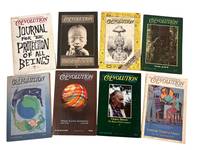
1978réf. 237141978. CoEvolution Quarterly run from Spring 1978 through Winter 1979/80 documenting the Whole Earth network's expansion from practical self reliance into systems theory environmental politics nuclear risk communications ecological design and technological criticism. The eight consecutive issues contain Gregory Bateson's "The Pattern Which Connects" Russell Schweickart's account of the Three Mile Island accident the ten year Whole Earth Jamboree retrospective an issue edited by Lawrence Ferlinghetti Michael McClure David Meltzer and Gary Snyder and work by R. Crumb Wendell Berry Allen Ginsberg Anne Waldman John Todd Ken Kesey Paul Ehrlich and others. Founded in 1974 as a descendant of the Whole Earth Catalog the quarterly retained the Catalog's practical departments while providing sustained space for political argument scientific controversy and ecological systems thinking. Brand Stewart ed. The CoEvolution Quarterly. Nos. 17 through 24. Sausalito California: POINT 1978 to 1980. Eight illustrated issues averaging approximately 130 pages each 7 x 11 inches. 1 No. 17 Spring 1978. Contents include John Michell's "A Defence of Sacred Measures" Ken Kesey on "Cops Without Guns" W. C. Ellerbroek's "Language Thought & Disease" "Earl Butz Versus Wendell Berry" Mark Primack's "Botanic Architecture" a history of solar water heaters and discussions of job sharing roadkill use institutional psychiatry and personal computing. 2 No. 18 Summer 1978. Gregory Bateson appears on the cover under the heading "The Pattern Which Connects"; the issue includes Bateson on scale nuclear addiction and mind and nature with contributions or commentary by James Oberg Christian O. Basler Paul and Anne Ehrlich Lynn Margulis Eric Drexler Gerard O'Neill Thomas Szasz R. Crumb and Rosemary Menninger. 3 No. 19 Fall 1978. Edited by Lawrence Ferlinghetti Michael McClure David Meltzer and Gary Snyder and issued with City Lights the "Journal for the Protection of All Beings" gathers work by Peter Blue Cloud Susan Griffin Jack Kerouac Allen Ginsberg Anne Waldman Herbert Read Robert Aitken Nanao Sakaki Peter Marin William LaFleur Michael McClure Peter Orlovsky Ismael Reed Mei Bersenbrugge Richard Felger Robert Creeley Walt Whitman Henry David Thoreau Antonin Artaud and others around plutonium nuclear politics Buddhism endangered species and ecological survival. 4 No. 20 Winter 1978. The "Whole Earth Jamboree 1968-1978" issue records the gathering through photographs and thirty seven pages of stage talks with appearances by Stewart Brand Margaret Mead Theodor Kroeber Quinn Robert Currey Bruce Ames James Fadiman Tom Ferguson Peter Warshall Ernest Callenbach Michael McClure Raymond Dasmann Sam Keen William Irwin Thompson Anne Herbert Huey Johnson Bill Wahpepah R. Crumb and others; additional material addresses nuclear weapons desertification permaculture solar power community finance and R. Crumb's "The Final Solution." 5 No. 21 Spring 1979. The cover announces "GENETIC TOXICITY: New chemicals may have already done more damage to the human gene pool than nuclear energy ever will" introducing articles by Steven Klein and Stewart Brand on mutagenic chemicals human DNA herbicides pregnancy and environmental pollutants; the issue also includes R. Crumb Anne Herbert Gary Snyder William Burroughs Judy Chicago Wendell Berry Paul Ehrlich and a broad survey of used magazines. 6 No. 22 Summer 1979. Opens with "The Real News from Three Mile Island" Stewart Brand's interview with former astronaut Russell Schweickart on reactor damage possible meltdown scenarios and the public information failures surrounding the March 1979 accident; further articles address civil liberties Sacramento watershed management tree sitting personal computer networks information warfare Arctic travel and underground finance. 7 No. 23 Fall 1979. The ocean issue combines John Todd's "Ocean Arks" George Putz's "The Ocean Full Wilderness Empty Wilderness" Phil Conkling on the global carbon cycle R. Crumb's "A Short History of America" material on ocean power fisheries boats navigation and The Whole Sea Catalog with Brand's editorial insistence that ocean politics begin in local watersheds. 8 No. 24 Winter 1979/80. Antler's "FACTORY" supplies the principal text and R. Crumb the cover image of an industrial worker beneath a nuclear cloud; related contents address factory production biological diversity solar architecture ocean farming hospital labor money communications computer networks electronic defense and the contested politics of the cover itself. Across these issues the Whole Earth editorial model becomes a forum in which back to the land practice encounters nuclear engineering cybernetics genetics media access and institutional power. Bateson's account of the "pattern which connects" supplies a conceptual vocabulary for relations among mind ecology and communication while the Three Mile Island interview records Schweickart discussing reactor damage before the accident's full consequences had been settled. The sequence also preserves the publication's unusual adjacency of technical manuals book reviews cartoons scientific disputes political reporting financial statements and reader correspondence allowing solar heaters computer networks desertification maps roadkill manuals plutonium poetry and federal energy policy to occupy the same editorial field. Brand founded the quarterly with proceeds from the Whole Earth Catalog; it continued until 1985 when it was merged with the Whole Earth Software Review to form Whole Earth Review. Moderate rubbing toning staining cover creasing and edge wear; no detached leaves substantial annotations or modifications. Overall good condition. unknown books
1690Carta della mitica isola della Frislandia e della Groenlandia, tratta dal Corso geografico universale, o sia la terra divisa nelle sue parti e subdistinta ne' suoi gran regni. Esposta in tavole geografiche ricorrette et accresciute di tutte le nuove scoperte, ad uso dell'Accademia Cosmografica degli Argonauti dal Padre Maestro Vincenzo Coronelli M. C. Cosmografo della Serenissima Republica di Venetia. Dedicata alla Santità di Nostro Signore Innocenzo XII. P. I. In Venetia, a spese dell'autore. MDCXCII. La Frislanda e un’isola fantasma che appare pressoché in tutte le mappe dell’Atlantico settentrionale dal 1560 fino al 1660. La sua esistenza fu ammessa dalla maggioranza dei cartografi del tempo, anche se a volte posta a longitudini molto diverse, in alcuni casi anche all’estremo ovest, al largo della costa nord-americana. In origine il toponimo era forse riferito all’Islanda. La prima attestazione della Frislanda si ritrova sulla mappa dell’Atlantico del nord del 1558 compilata da Niccolo Zeno, dove l’isola e raffigurata a sud dell’Islanda. Pronipote di Niccolo e Antonio Zeno, i due fratelli che nel 1380, durante un lungo viaggio nei mari nordici, sarebbero sbarcati sull’isola fino ad allora sconosciuta, pubblico la relazione del loro viaggio, Dello scoprimento dell’isole Frislanda, Eslanda, Engrouelanda, Estotilanda e Icaria fatto sotto il Polo artico da’ due fratelli Zeni, M. Nicolo il K. E M. Antonio, che egli dice di avere tratto da lettere dei suoi due antenati, corredandola della mappa. Sia il viaggio che la relazione che la stessa mappa, oggi sono considerati frutto d’invenzione. Ad ogni modo, la Frislanda di Zeno fu ricalcata nelle mappe successive per un secolo. Coronelli visse un periodo di straordinaria fecondità editoriale a partire dal 1689, quando ebbe la cattedra di geografia presso l'Università alle Procuratie, con la pubblicazione, nel 1690, del primo volume dell'Atlante Veneto. In effetti sotto il nome di Atlante Veneto va tutta la raccolta di tredici opere composte nell'arco del decennio successivo, dall'Isolario allo Specchio del mare. In realtà solo alcune di tali opere possono definirsi atlante, e sono di valore molto disuguale, dato che si passa da opere originali e fondamentali come quelle citate o il Corso Geografico ad opere di compilazione o semplici raccolte di vedute. Il Corso Geografico uscì in diverse edizioni con numeri diversi di carte - sessantotto tavole nel 1689-92; di centosettantatré tavole nel 1692; duecentosessanta tavole, nel 1694-97 - che venivano vendute anche separatamente, al ritmo di sei carte al mese per due anni. Le carte furono incise tra il 1688 e il 1692 nell'attrezzatissima officina cartografica del convento dei Frari, dove lavoravano anche incisori stranieri. La carta è priva di testo descrittivo al verso, che invece è presente negli esemplari inseriti nell'Isolario del 1696. Incisione in rame, in ottimo stato di conservazione. Decorative map of Frisland, a ghost island that appears on almost every map of the North Atlantic from 1560 until 1660. Its existence was admitted by most cartographers of the time, although sometimes placed at very different longitudes, in some cases even in the far west, off the North American coast. Originally, the toponym may have referred to Iceland. The first attestation of Frislanda is found on the map of the North Atlantic of 1558 compiled by Niccolo Zeno, where the island is depicted south of Iceland. Great-grandson of Niccolo and Antonio Zeno, the two brothers who in 1380, during a long voyage in the Nordic seas, would have landed on the island hitherto unknown, published the report of their journey, Dello scoprimento dell’isole Frislanda, Eslanda, Engrouelanda, Estotilanda e Icaria fatto sotto il Polo artico da’ due fratelli Zeni, M. Nicolo il K. E M. Antonio, which he says he took from letters of his two ancestors, accompanying the map. Both the voyage and the report, as well as the map itself, are today considered to be the result of invention. In any case, Zeno's Frislanda was traced in later maps for a century. The map is taken from Corso geografico universale, o sia la terra divisa nelle sue parti e subdistinta ne' suoi gran regni. Esposta in tavole geografiche ricorrette et accresciute di tutte le nuove scoperte, ad uso dell'Accademia Cosmografica degli Argonauti dal Padre Maestro Vincenzo Coronelli M. C. Cosmografo della Serenissima Republica di Venetia. Dedicata alla Santità di Nostro Signore Innocenzo XII. P. I. In Venetia, a spese dell'autore. MDCXCII. Coronelli lived a period of extraordinary editorial fecundity starting from 1689, when he had the chair of geography at the University at the Procuratie, with the publication, in 1690, of the first volume of the Atlante Veneto. Under the name of Atlante Veneto goes the entire collection of thirteen works composed over the next decade, from the Isolario to the Specchio del mare. In reality, only some of these works can be defined as atlas, and are of very unequal value, since we go from original and fundamental works such as those mentioned or the Corso Geografico to works of compilation or simple collections of views. The Corso Geografico came out in several editions with different numbers of maps - sixty-eight maps in 1689-92; one hundred and seventy-three maps in 1692; two hundred and sixty maps in 1694-97 - which were also sold separately, at the rate of six a month for two years. The maps were alle engraved between 1688 and 1692 in the well-equipped cartographic workshop of the Frari convent, where foreign engravers also worked.
1822réf. 10815Firenze, Stamperia Magheri, 1822. In-8 de LIV-241 pages, demi-maroquin rouge, dos à nerfs (passé) orné d'un chiffre surmonté d'une couronne dorée, ex-libris de Charles Schefer.
1821AA. VV. RACCOLTA DI AUTORI ITALIANI CHE TRATTANO DEL MOTO DELLE ACQUE. Bologna, Tipografia di Jacopo Marsigli 1821, Raccolta PURTROPPO incompleta (mancano i volumi 5, 6 e 10) Presenti numerose tavole ripiegate. Buono (Good) Buon es.. in quarto leg. m. pelle e piatti marmorizzati, titolo su tassello e decorazioni in oro al dorso. 7 voll.
1884réf. 841121884 Paris, Plon, 1884, 2 forts volumes in folio reliés demi-chagrin à coins, dos à nerfs, têtes dorées, 468 et 512 pages ; frottis et défauts d'usage à la reliure.
1965réf. 016283Buenos Aires Ediciones Honegger - Coleccion "El Canto de la tierra" dirigida por Leon Benaros" I 1965 Reliure Dédicacé par l'auteur
1929réf. 2285356United States Government Printing Office 1929. This is an ex-library book and may have the usual library/used-book markings inside.This book has hardback covers. In good all round condition. No dust jacket. Loose bindings otherwise in good condition. Please note the Image in this listing is a stock photo and may not match the covers of the actual item7350grams ISBN: United States Government Printing Office hardcover
2005réf. x-1844071669Earthscan / James & James 2005. Hardcover. New. 1st edition. 368 pages. 9.75x6.75x1.00 inches. Earthscan / James & James hardcover
2017réf. x-1138435228Taylor & Francis 2017. Hardcover. New. 450 pages. 9.02x5.98x1.06 inches. Taylor & Francis hardcover
2019réf. 2-1070579572Independently published 2019. Paperback. New. 137 pages. 10.00x8.00x0.31 inches. Independently published paperback
1898The second issue of this popular and long-lived publication. Pages 114-224. Features: Canadian Curiosities - article with great illustrations; The Marvelous Feats of Juggler Ram Pershad; Earth Pyramids in the Rosengarten Mountains; "For the Company's Credit" - story of an ocean-liner race; The Queerest Monarch in the World - Mwanga, King of Uganda (illustrated article); The Wreck of the "Rising Sun" - fire at sea; Picnics in Perak - article with photo of many Malay sultans aboard elephants crossing a river; The Telegraphist of Neufchateau - true WWI story; The Romance of the Mission Field - part 1; Across the Atlantic in an Open Boat - article with photo of Harvo and Samuelson in their rowboat "Fox"; The Mysterious Tramp; Tree-Blazing - how explorers in Australia's interior mark trees to guide those who may come after them; Bagging a Man-Eater - Major A. St. H. Gibbons kills a lion to protect villagers - article with photo; "The Miracle of Moses" - the Platte High Line Canal in Colorado - article with photos; In Search of an Orchid; The Fiery Ordeal of Fiji - walking on coals (illustrated article; In the Ocean Depths - illustrated recollections of ocean diver John Pearce. Front cover loose but present. Back cover missing. Last page is 224. It is uncertain if any pages were included after that. Few pencil markings. A worthy vintage copy. Book
196482 pages. Features: Excellent cover photo of Premier Ernest Manning in front of the Alberta Legislature Building; Nice colour photo ad for 1965 Mercury Park Lane convertible; Big Canadian Push to Analyze Easter Island before civilization spoils the place; Why Canadians are practically the only diplomats that Washington trusts; How Sault Ste. Marie built the biggest little medicare scheme in Canada; Britain issues booklet "Treachery Is Their Trade" as required reading for civil servants vulnerable to attacks by Soviet spies; Editorial - Let's make friends, not enemies, with the mainland Chinese; How Arthur Hailey turned Reporter in Manning's Alberta; Ordeal by Rumor - The Skeletons in (Ernest) Manning's Cabinet, by Arthur Hailey - long, informative article including photos of cabinet ministers under clouds; Is the Family Doctor Vanishing?, by Claude P. Gendron, MD; How I Found Out the Toronto Argonauts Don't Really Lose Games on Purpose, by Peter N. Allison; Canada's 1967 Centennial celebration preparations - Will we be late for our own birthday parth? - a 'non'-progress report by Hal Tennant; When Mama Cooked Solomon Grundy, by Helen Wilson; The Killer That Could be Hiding in your car - Ray Stapley warns of the danger of metal fatigue in autos; The Many Worlds of Soviet Russia - Kenneth Bagnell reports on his five weeks in Russia, traveling from Moscow to Siberia to Central Asia; Nice colour-illustrated ad for the 1965 Ford Mustang Hardtop; Magnificent colour photo ad for the Lincoln Continental - featuring a white model with suicide doors; Nice colour-illustrated ad for the 1965 Ford Galaxie 500/XL Convertible (red); How Talk Show Host Pat Burns Won Fame and Fortune by Talking on the World's Biggest Party Line (CJOR) - article with photo; Quebec censor board censors La Terre a Boire; John Bradshaw - the man who got rich by making gardening sound easy; Colour photo ad for Coke on back cover. Average wear. Unmarked. Binding intact. A sound copy of this excellent vintage issue. Book
1922Abundant black and white illustrations and reproductions of photos. Features: Trailing the Gun-Runners - Part II - The U.S. attempts to prevent the arming of revolutionaries in Dominica in 1906-7; Hunting Wild Goats By Seaplane and Motorcycle Near San Clemente - article with photos; Remanded - a perfectly blameless man is blamed for a crime; Full Speed Astern - 400 men aboard the steamer Remiji Maru are saved by the action of a young engineer on watch two days out of Hong Kong; The Wild Men of Borneo - Wonderful photo-illustrated account of a visit to the Dyaks; Photo and letter from a reader who, with five friends, dressed up in KKK outfits and brought along a relative in blackface to entertain at a fancy-dress ball in Leeds; Across Remote Yunnan - Part II - Capt. F. Kingdon Ward continues his journey through the little-known region where the frontiers of China and Tibet meet - article with nice photos; Two Men and a "Pink" - terrifying experience of two returned Canadian soldiers off the coast of Labrador aboard their vessel Terra Nova, nicknamed the Turn Over; "Gentleman" Girard - Frenchman Henri Girard made a profession of poisoning people whose lives he had insured; The Ghost Dancers of the Imst - unusual customs in the Tyrolian valley village of Imst - article with photos; Down the "Old Delph" - two men venture into a disused mine near Roby Mill in Lancashire; Marooned On a Precipice - Three mountain climbers, Karl Aichner, Alois Netzer, and Conrad Schuster, are stranded for six days in the Northern Tyrol; and more. pp. 8 [ads], [2] 180-264, 9-16 [ads]. Unmarked with light wear and some soiling to back cover. A quality vintage copy of this wonderful issue. Book
DU SERVICE GEOLOGIQUE DU MAROC. 1955. In-4 Carré. Relié cuir dos-coins. Bon état. Coins frottés. Dos satisfaisant. Intérieur frais. 180 pages - Nombreuses planches en noir et blanc et en couleurs , dont certaines sont dépliantes. Plats et contre-plats jaspés - Dos frotté - Coins émoussés - Epidermures - Auteur, titre et filets dorés au dos . Dos, coins cuir. ENVOI DES DEUX AUTEURS BOULADON ET JOURAVSKY. / 3 PHOTOS DISPONIBLES.
1955réf. R320095428DU SERVICE GEOLOGIQUE DU MAROC. 1955. In-4. Relié cuir dos-coins. Bon état, Coins frottés, Dos satisfaisant, Intérieur frais. 180 pages - Nombreuses planches en noir et blanc et en couleurs , dont certaines sont dépliantes. Plats et contre-plats jaspés - Dos frotté - Coins émoussés - Epidermures - Auteur, titre et filets dorés au dos . Dos, coins cuir. ENVOI DES DEUX AUTEURS BOULADON ET JOURAVSKY. / 3 PHOTOS DISPONIBLES.. . . . Classification Dewey : 550-Sciences de la Terre et des autres mondes
1900réf. RO80173183LIBRAIRIE J.B. BAILLIERE ET FILS. 1900. In-4. En feuillets. Etat d'usage, Couv. convenable, Dos abîmé, Non coupé. 101 + 37 + XCVI pages augmentées de nombreuses planches d'illustrations en noir et blanc et en couleur hors texte. Fermeture des rabats cartonnés par des liens en tissus. Dos abîmé et mors fendus. Pages non coupées. COMPLET ET COLLATIONNE. 4 photos disponibles.. . . . Classification Dewey : 550-Sciences de la Terre et des autres mondes
1672réf. 25398Cezy 1672 une liasse de 12 pages, manuscrites à l'encre brune, sur parchemin velin de format : 25 x 18 cm, signature manuscrite : LEVERS, TABELLION DE LA CHATELLÉNIE DE CÉZY, fait à Cézy, le 27 DECEMBRE 1661,
1685In 16, cm 8 x 14,5, pp. 274 + (2). Piena pelle coeva con fregi oro e nervature al dorso, Piccoli restauri al dorso e agli angoli dei piatti. Lievi ossidazioni. Edizione originale italiana che, pur presentandosi come traduzione dal francese, presenta una intera seconda parte non presente nell'edizione francese , pubblicata a Lione nel 1681 dallo stampatore Francois Larchier. Infatti, alla descrizione di gran parte dell'Europa, (che si ferma a p. 107), chiaramente tradotta dalla suddetta edizione, segue una seconda ampia descrizione, sicuramente opera del traduttore, che tratta di gran parte del resto del mondo cambiando anche la struttura dell'opera con l'inserimento dei viaggi strutturati attraverso l'indicazione delle stazioni di posta frammiste alle descrizioni delle citta' attraversate. In sequenza troviamo: Descrizione di Torino, Piemonte e Casa Savoia, dell'Asia, Turchia, Siria, Arabia, Tartaria, Cina, Indie Orientali, Regno del Gran Mogor, Isole Maldive, Africa, suoi porti, America, Brasile, Nuova Spagna, Canada, ecc. Segue poi la serie dei viaggi: Da Parigi e per tutta l'inghilterra, da Lione a Roma, avviso ai cavalieri per andare a Malta, da Roma a Torino, da Torino a Venezia per Vercelli, da Torino a S. Giacomo di Galizia, da Torino alle Indie Orientali e strada che fanno i Galleoni al suo ritorno ecc. Sono poi date le distanze e le poste da Torino a moltissime citta' del mondo, generalita' astronomiche, le principali fiere del mondo ecc. Indicativo il fatto che gran parte delle descrizioni di viaggio partano da Torino il che attesterebbe una origine piemontese dell'autore. Fossati Bellani, n. 47
Cm. 30; pp. VIII, 431. Tela editoriale, titoli al dorso e al piatto. Molte Illustrazioni fotografiche nel testo in bianco e nero, numerose tavole fotografiche fuori testo, alcune delle quali più volte ripiegate ed alcune a colori. Allegata una carta geografica a colori, più volte ripiegata, con custodia : " Terra del Fuoco", scala 1: 1.000.000. Manca la sovracoperta. Ottimo esemplare.
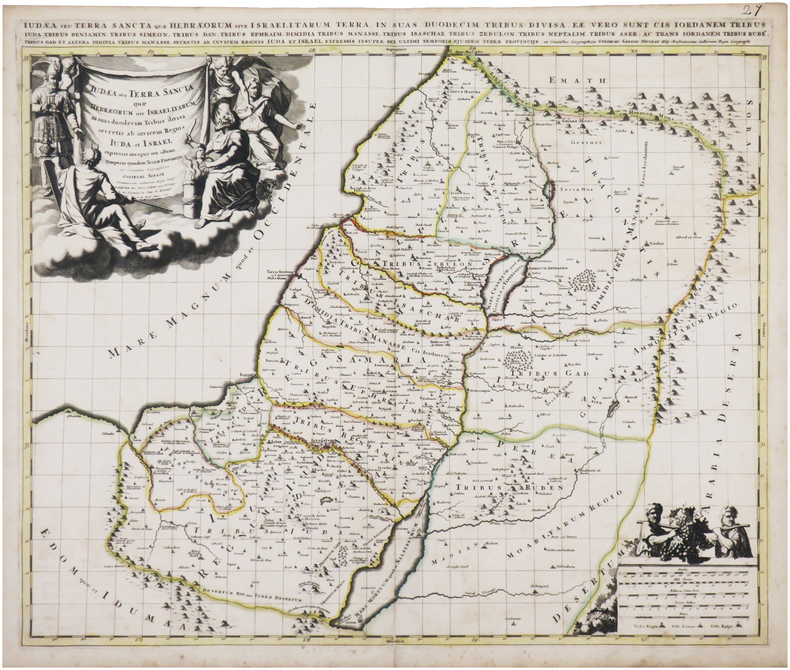
500Carta geografica raffigurante il territorio della Terra Santa
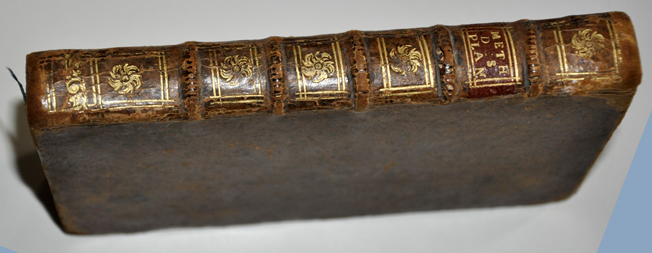
1716réf. 53781716 Paris , Claude Jombert , 1716 , in-8 , (6) ff , 215 , (1) pp , 14 planches depliantes , veau brun , dos à nerfs orné de fleurons dorés Bon etat , photos sur demande
réf. 015874Köln Galerie Artiste et Artisan 0 En feuilles
réf. 030682Mokelumne Hill, Californië. Health Research Books Soft cover
1700réf. LBW-8050Amsterdam, Pierre Schenk, [circa 1700]. 487 x 577 mm.
réf. LBW-7630Mont Carmel, 11 novembre 1847. 1 f. in-32 oblong monté sur papier noir (7,4 x 10,4 cm ; 12,6 x 15,3 cm avec montage).