Robin WaterfieldBiblio.com
30,740 results
ref. B9780393065275Hardback. New. A revisionist account of the most famous trial and execution in Western civilization-one with great resonance for American society today. hardcover
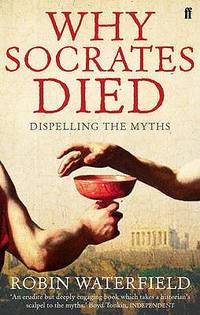
2010ref. Q-0571235514FABER & FABER 2010-02-04. Paperback. New. New. In shrink wrap. Looks like an interesting title! FABER & FABER paperback
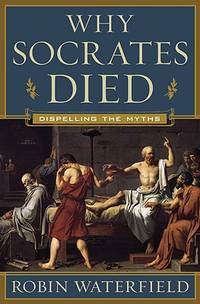
2009ref. Q-0393065278W. W. Norton & Company 2009-06-08. Hardcover. New. In shrink wrap. Looks like an interesting title! W. W. Norton & Company hardcover
ref. 6743989W. W. Norton & Company . Hardback. New. pp. 288 W. W. Norton & Company hardcover
2009ref. x-0393065278W W Norton & Co Inc 2009. Hardcover. New. 288 pages. 9.25x6.12x1.00 inches. W W Norton & Co Inc hardcover
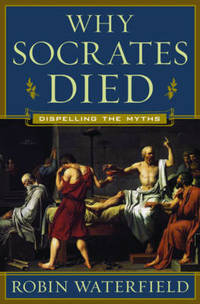
2009ref. 95293W. W. Norton & Company. New. Hardcover. FREE UPGRADE to Courier/Priority Shipping Upon Request - IN STOCK AND IMMEDIATELY AVAILABLE FOR SHIPMENT - Flawless copy brand new pristine never opened -- -- with a bonus offer--; A revisionist account of the most famous trial and execution in Western civilization—one with great resonance for American society today. Socrates’ trial and death together form an iconic moment in Western civilization. In 399 BCE the great philosopher stood before an Athenian jury on serious charges: impiety and “subverting the young men of the city.” The picture we have of it—created by his immediate followers Plato and Xenophon and perpetuated in countless works of literature and art ever since—is of a noble man putting his lips to the poisonous cup of hemlock sentenced to death in a fit of folly by an ancient Athenian democracy already fighting for its own life. But an icon an image is not reality and time has transmuted so many of the facts into historical fable. Aware of these myths Robin Waterfield has examined the actual Greek sources and presents here a new Socrates in which he separates the legend from the man himself. As Waterfield recounts the story the charges of impiety and corrupting the youth of Athens were already enough for a death sentence but the prosecutors accused him of more. They asserted that Socrates was not just an atheist and the guru of a weird sect but also an elitist who surrounded himself with politically undesirable characters and had mentored those responsible for defeat in the Peloponnesian War. Their claims were not without substance for Plato and Xenophon among Socrates’ closest companions had idolized him as students while Alcibiades the hawkish and notoriously self-serving general had brought Athens to the brink of military disaster. In fact as Waterfield perceptively shows through an engrossing historical narrative there was a great deal of truth from an Athenian perspective in these charges. The trial was in part a response to troubled times—Athens was reeling from a catastrophic war and undergoing turbulent social changes—and Socrates’ companions were unfortunately direct representatives of these troubles. Their words and actions judiciously sifted and placed in proper context not only serve to portray Socrates as a flesh-and-blood historical figure but also provide a good lens through which to explore both the trial and the general history of the period. Ultimately the study of these events and principal figures allows us to finally strip away the veneer that has for so long denied us glimpses of the real Socrates. Why Socrates Died is an illuminating authoritative account of not only one of the defining periods of Western civilization but also of one of its most defining figures. 4 pages of illustrations . 2009. 0393065278 . W. W. Norton & Company hardcover
1994ref. Q-0517598507Clarkson Potter 1994-05-24. Hardcover. New. New. In shrink wrap. Looks like an interesting title! Clarkson Potter hardcover
ref. 0691149348.Gpaperback. Good. Access codes and supplements are not guaranteed with used items. May be an ex-library book. paperback
2008ref. Q-0691127018Princeton University Press 2008-01-23. Hardcover. New. New. In shrink wrap. Looks like an interesting title! Princeton University Press hardcover
2010ref. x-0691149348Princeton Univ Pr 2010. Paperback. New. 348 pages. 9.00x6.00x1.00 inches. Princeton Univ Pr paperback
2010ref. DADAX0691149348Princeton University Press 2010-10-10. paperback. New. 6.14x0.84x9.21. Buy with confidence. Excellent Customer Service & Return policy. Princeton University Press paperback
2008ref. DADAX0691127018Princeton University Press 2008-01-23. hardcover. New. 6.25x0.75x9.00. Buy with confidence. Excellent Customer Service & Return policy. Princeton University Press hardcover
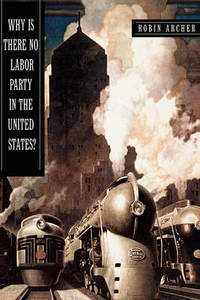
ref. ria9780691149349_inpPaperback. New. New Book; Fast Shipping from UK; Not signed; Not First Edition; Why is the United States the only advanced capitalist country with no labor party This title puts forward an explanation for why there is no American labor party - an explanation that suggests that much of the conventional wisdom about paperback
ref. A9780691149349Paperback / softback. New. Why is the United States the only advanced capitalist country with no labor party This title puts forward an explanation for why there is no American labor party - an explanation that suggests that much of the conventional wisdom about 'American exceptionalism' is untenable. paperback
ref. 038076718X.Gpaperback. Good. Access codes and supplements are not guaranteed with used items. May be an ex-library book. paperback
ref. 0956763901.Gpaperback. Good. Access codes and supplements are not guaranteed with used items. May be an ex-library book. paperback
1997ref. Q-0671002074Pocket 1997-01-01. Paperback. New. In shrink wrap. Looks like an interesting title! Pocket paperback
ref. 42580350-nnew. unknown
ref. 42580350like new. unknown
ref. A9781119619420Hardback. New. hardcover
2021ref. __1119619424Blackwell Pub 2021. Hardcover. New. 256 pages. 9.60x6.69x0.43 inches. Blackwell Pub hardcover
ref. 1119619424.Ghardcover. Good. Access codes and supplements are not guaranteed with used items. May be an ex-library book. hardcover
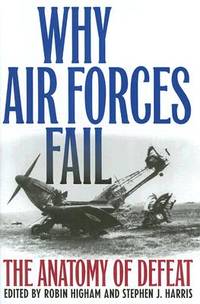
2006ref. 87360Lexington KY: The University Press of Kentucky 2006. First Printing Stated. Hardcover. Very good/Very good. 382 pages. Illustrations. List of Contributors Index. Robin David Stewart Higham June 20 1925 - August 27 2015 was a British-American historian specializing in aerospace and military history who also served as a pilot with the Royal Canadian Air Force during World War II. Higham received a Ph.D. in 1957 from Harvard with a dissertation on the development of aviation in Great Britain. For the next six years until 1963 he was an assistant professor at the University of North Carolina where he was co-founder of the National Security Seminar of Duke University and. University of North Carolina. In 1963 he became a professor at Kansas State University. He became professor emeritus there in 1999. Though he described himself as a "historical generalist" in a 1998 interview Higham's primary publications were on the subject of aeronautics especially military-scientific aspects. He did however also write extensively on geopolitics in general. In 1977 he founded Sunflower University Press which existed until 2005 and published books on military science and military history. He was editor of Military Affairs now The Journal of Military History from 1968 to 1988 and of Aerospace Historian from 1970 to 1988. He was also the editor of the Journal of the West beginning in 1976. Stephen J. Harris is the chief historian for the Directorate of History and Heritage at the National Defence Headquarters in Ottawa Canada. He coauthored The Crucible of War: The Official History of the Royal Canadian Air Force. According to Robin Higham and Stephen J. Harris "Flight has been part of the human dream for aeons and its military application has likely been the dark side of that dream for almost as long." In the twentieth century this dream and its dark side unfolded as the air forces of the world went to war bringing destruction and reassessment with each failure. Why Air Forces Fail examines the complex often deep-seated reasons for the catastrophic failures of the air forces of various nations. Higham and Harris divide the air forces into three categories of defeat: forces that never had a chance to win such as Poland and France; forces that started out victorious but were ultimately defeated such as Germany and Japan; and finally those that were defeated in their early efforts yet rose to victory such as the air forces of Britain and the United States. The contributing authors examine the complex causes of defeats of the Russian Polish French Arab British Italian German Argentine and American air services. In all cases the failures stemmed from deep usually prewar factors that were shaped by the political economic military and social circumstances in the countries. Defeat also stemmed from the anticipation of future wars early wartime actions and the precarious relationship between the doctrine of the military leadership and its execution in the field. Anthony Christopher Cain's chapter on France's air force l'Armée de l'Air attributes France's loss to Germany in June 1940 to a lack of preparation and investment in the air force. One major problem was the failure to centralize planning or coordinate a strategy between land and air forces which was compounded by aborted alliances between France and countries in eastern Europe especially Poland and Czechoslovakia. In addition the lack of incentives for design innovation in air technologies led to clashes between airplane manufacturers laborers and the government a struggle that resulted in France's airplanes' being outnumbered by Germany's more than three to one by 1940. Complemented by reading lists and suggestions for further research Why Air Forces Fail provides groundbreaking studies of the causes of air force defeats. The University Press of Kentucky hardcover
2006ref. Q-0813123747University Press of Kentucky 2006-02-17. Hardcover. New. In shrink wrap. Looks like an interesting title! University Press of Kentucky hardcover
2006ref. 329409Kentucky: University Press of Kentucky 2006. First Edition; Second Printing. Hardcover. Near Fine in a Near Fine dust jacket.; 416 pages. University Press of Kentucky hardcover