2.051 resultados
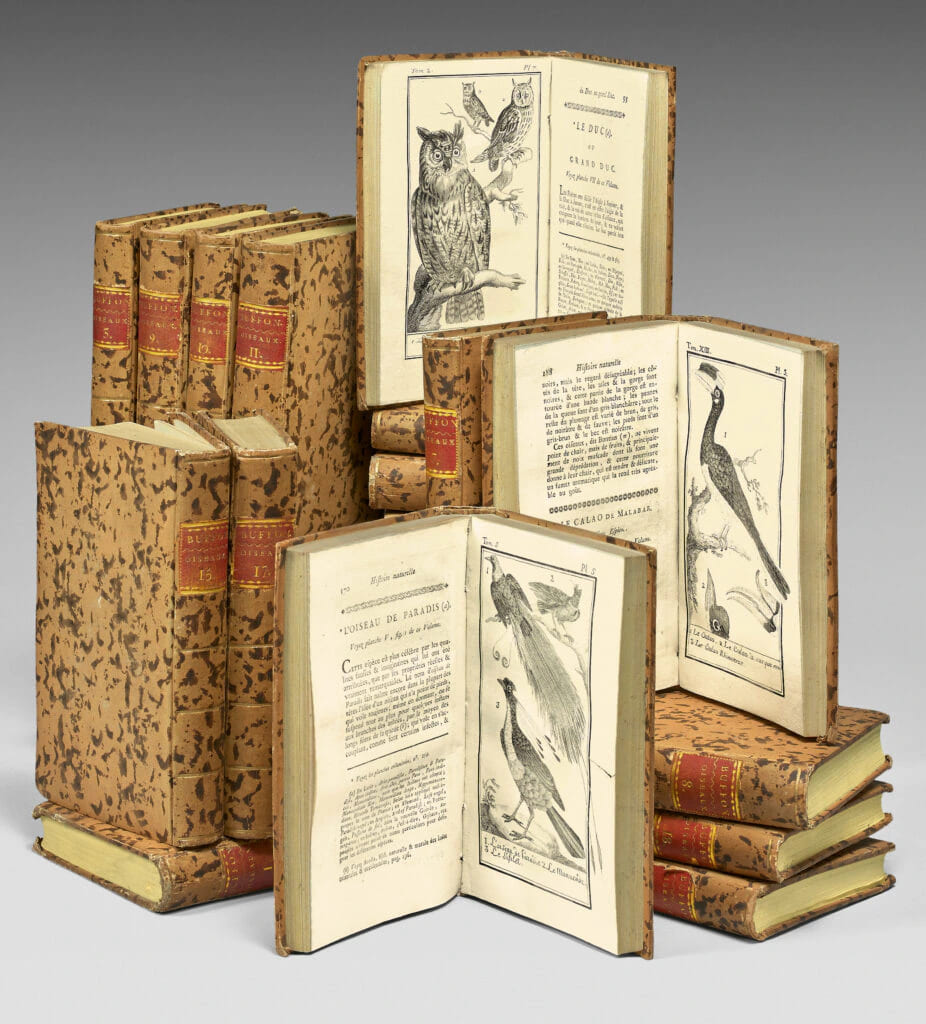
1804ref. 6665Paris: De l'Imprimerie Royale later Imprimerie des Bâtimens du Roi; Hôtel de Thou; Plassan 1804. First edition. First edition a very fine uniformly-bound contemporary set with the separately-issued and frequently-absent atlas to the Minéraux of the first work to present natural history as a continuous secular narrative-from planetary formation through geology and mineralogy to the quadrupeds birds fishes and cetaceans and at last to the human races-and the work in which across fifty-five years and four political regimes the biblical chronology that had organised European natural science since antiquity ceased to be the only frame within which educated readers could discuss the age of the earth. In the Époques de la Nature 1778 Buffon proposed seven epochs of earth history and from cooling experiments in his own forge at Montbard estimated its age at roughly seventy-five thousand years; in unpublished notes his private estimate reaches three million-the order of magnitude Lyell would later extract from stratigraphy and Darwin require for natural selection to operate. . The Founding Treatise of Secular Science. First edition of the first work to present natural history as a continuous secular narrative from planetary formation to the human races and the work in which across fifty-five years and four political regimes the biblical chronology that had organised European natural science since antiquity ceased to be the only frame within which educated readers could discuss the age of the earth. Ernst Mayr called Buffon "the father of all thought in natural history" at his time; the DSB records that he "established the intellectual framework within which most naturalists up to Darwin worked." Buffon was appointed Intendant du Jardin du Roi in 1739 at thirty-two and spent nearly half a century converting the royal cabinet of natural-history specimens into a compendium. At its close under Lacépède's hand in 1804 it comprised forty-four quarto volumes more than twelve hundred engraved plates and a style so supple that Buffon's elegies on individual species remained set texts in French lycées into the twentieth century. Uniformly bound in contemporary French mottled calf and preserving all forty-four text volumes together with the separately-issued and frequently-absent atlas to the Minéraux the present copy is of a completeness and coherence uncommon in a publication whose fifty-five-year issue spanned four successive Parisian imprints. Within thirty years of the final volume Lyell was writing the Principles of Geology; within sixty Darwin the Origin. The publishing history ran for fifty-five years through four imprints. The first three volumes appeared together in the autumn of 1749 from the Imprimerie Royale sold out in six weeks were reprinted three times within the same interval and provoked the Sorbonne's faculty of theology into delivering Buffon a list of propositions judged heretical-to which Buffon submitted a carefully calibrated retraction while continuing to print the offending volumes unchanged. The initial prospectus of 1748 had promised fifteen volumes in three divisions; by the time Buffon died in 1788 thirty-five were in print a thirty-sixth was on the press and the plan of covering the vegetable kingdom had quietly been abandoned. The seventh and final Supplément appeared posthumously in 1789 through Lacépède's editorship; the fifth volume of the Minéraux containing the Traité de l'aimant had issued a year earlier from the Imprimerie des Bâtimens du Roi and was accompanied by a separately-issued atlas of folding maps and tables. Lacépède then continued the animal-kingdom programme with the Quadrupèdes ovipares et Serpens 1788-89 the Poissons 1798-An XII and the Cétacées 1804. The combined output of four imprints across three generations of Parisian printers-the Imprimerie Royale the Imprimerie des Bâtimens du Roi the Hôtel de Thou under Panckoucke and Plassan and Plassan imprimeur-libraire-is the reason a uniformly-bound contemporary set is uncommon. Volume I opens the series with the Premier Discours: De la manière d'étudier et de traiter l'histoire naturelle a forty-page polemic against Linnaean classification that argues from a position of mathematical and empirical rigour rare in the literature of the period that species as Linnaeus conceived them were artificial abstractions imposed on the continuous variability of individuals and that a taxonomy built on stamen-counts and pistil-counts did not correspond to nature. The attack was political as well as philosophical. Linnaeus's Systema Naturae Leiden 1735 had already been adopted as the common grammar of European zoology; Buffon's Discours delivered from within the most prestigious press in France asserted that the Swede's method was a convenience of memory mistaken for a description of the world. The volume continues with the Second Discours: Histoire et théorie de la Terre dated by Buffon himself "à Montbard le 3 octobre 1744" which proposes a cosmogony in which the planets were struck from the sun by the oblique impact of a comet and have been cooling ever since and with the Preuves de la théorie de la Terre in which Buffon develops his theory across seventeen articles and provides two engraved terrestrial maps drawn under his supervision by Robert de Vaugondy fils. These arguments delivered within a volume bearing the royal arms of France on its title-page vignette constituted a public challenge to Mosaic cosmogony. The geological argument reached its mature form a generation later in the fifth Supplément the Époques de la Nature 1778 published when Buffon was seventy-one. Here he proposed seven epochs of the earth's history estimated their combined duration at roughly 75000 years and in unpublished manuscript notes pushed his private estimate to three million-an order of magnitude consistent with the timescales that Lyell would later extract from stratigraphy and that Darwin would require for natural selection to operate. Beyond the number the Époques argues by accumulation: Buffon marshals fossil molluscs at Alpine altitudes the decay of volcanic emissions the rate at which heated iron spheres cool in Buffon's own forge at Montbard and the distribution of living species across climate zones and weaves these into a cumulative inductive case in which each line of evidence corroborates the others. The technique is no longer antiquarian but probabilistic; Buffon had published a French translation of Newton's Method of Fluxions in 1740 and would publish original work on geometric probability. When the Époques reached Edinburgh and Cambridge in the 1780s it announced to Anglophone readers that the earth's antiquity had become a quantitative problem rather than a scriptural one. The core of the programme is the animal kingdom. Volumes 4 through 15 1753-1767 treat the quadrupeds in an arrangement that combines Buffon's natural-historical essays with Daubenton's anatomical descriptions-a division of labour Buffon defended in the Preface to volume IV and that Daubenton eventually came to resent his name disappearing from the later volumes. The Oiseaux volumes 1770-1783 are the work of Buffon with Philibert Guéneau de Montbeillard and the Abbé Bexon and assume decisively that geographic distribution is a datum of zoology rather than an incidental fact about individual animals-a premise that commits the Histoire naturelle to the biogeographic thinking which Alfred Russel Wallace would systematise a century later. The Minéraux volumes I-V 1783-1788 extend the account to the inorganic world and conclude with the Traité de l'aimant Buffon's last publication in his lifetime accompanied by the atlas that the present set preserves. Lacépède's eight continuation volumes close the series with the Ovipares et Serpens the Poissons five volumes 1798-An XII drawing on the manuscript collections of Philibert Commerson and the Cétacées 1804-the whole project begun under Louis XV and finished under the Consulate of Bonaparte. The plate programme numbering 1275 copper engravings including the portrait frontispiece of Buffon and twelve folding maps was entrusted principally to Jacques de Sève and his son Jacques-Eustache de Sève with additional designs by Buvée l'Amériquain Oudry and Baron and engravings by Baquoy Basan Moitte and Tardieu. De Sève père is the designing sensibility that defines the visual character of the Histoire naturelle: his quadrupeds stand in pastoral European landscapes-villages rivers mountains ruins-that place each species within a habitat rather than isolating it on the diagrammatic ground of the pre-Linnaean iconotheca. The aesthetic choice is not decorative. It performs Buffon's thesis that species are functions of geography; the elk against a Norwegian spruce-line and the jerboa against a North African dune argue in visual shorthand a zoogeography that the text elaborates. The plates in the present set are in the original uncoloured state as issued by the Imprimerie Royale and its successor presses; the hand-coloured Planches enluminées of Edme-Louis Daubenton 1765-1786 1008 plates issued separately to accompany the de luxe folio edition of the Oiseaux are a distinct publication and do not belong to the quarto edition. Buffon was born Georges-Louis Leclerc at Montbard in Burgundy on 7 September 1707 the son of a magistrate of the Estates of Burgundy who in 1714 inherited a substantial fortune from a maternal relative and acquired the lordship of Buffon - the toponym from which the future comte took the name by which he is universally known. He was educated by the Jesuits at Dijon studied mathematics at Angers and travelled in Italy and England in 1730-1733 in the company of the young Duke of Kingston and his Genevan tutor Nathaniel Hickman. Election to the Académie des Sciences followed at twenty-six in 1734. His earliest publications were French translations of Newton's Method of Fluxions 1740 and Stephen Hales's Vegetable Staticks 1735 and an original 1733 communication to the Académie on the geometric probability of a needle dropped at random across a ruled floor - the "needle problem" that bears his name in the founding literature of integral geometry. The 1739 appointment as Intendant du Jardin du Roi secured through the patronage of Maurepas gave him the cabinet the printing privilege and the institutional platform that the Histoire naturelle required. From 1739 onward his year was strictly bisected: October to April in Paris among the specimens May to September at Montbard where the great house the gardens the ducal tower and from 1768 an industrial-scale ironworks furnished both the writing room and the experimental laboratory. The Montbard forge is the experimental backbone of Buffon's late geological writing. From 1765 onward he conducted a sustained programme of cooling experiments in which iron and stone spheres of graduated diameter were heated to incandescence and the time required for them to cool to ambient temperature was measured under controlled conditions. Extrapolating from sphere to planet on the assumption that the earth had begun as a molten body progressively congealed Buffon arrived at the published 75000-year estimate of the Époques de la Nature and at the manuscript figure three million years that he allowed his students to read but did not put into print. The forge was simultaneously a working blast-furnace producing pig-iron for the Burgundian armaments trade - the revenue from which subsidised the publication and freed Buffon from dependence on royal subvention. The orangery at Montbard housed parallel experiments on plant respiration and the germination of seeds; the great walled garden was a controlled environment for testing the hardiness of imported species against Burgundian winters. The whole estate in effect was an early instance of the gentleman-natural-philosopher's establishment as instrument - comparable in scale to Tycho's Uraniborg to Boyle's Stalbridge or to Darwin's later Down House. The Histoire naturelle is the published face of this experimental enterprise. The literary reception of Buffon was nearly as consequential as the scientific. His 1753 reception address to the Académie française the Discours sur le style "le style est l'homme même" became one of the most quoted statements of French neoclassical aesthetics and reframed the Histoire naturelle as a literary as well as a scientific monument. The set-piece elegies on the horse the lion the swan the orangutan and the dog were detached from the parent volumes and circulated as morceaux choisis; they remained obligatory recitation pieces in the French lycée through the Third Republic and were anthologised by Sainte-Beuve in the Causeries du lundi in 1855 as the model of mid-eighteenth-century French prose. Diderot read and annotated the early volumes for the Encyclopédie; Rousseau with whom Buffon's relations were polite but distant took the geographic-determinist passages as silent corroboration of his own anthropology; Voltaire who shared Buffon's anti-Sorbonne instinct but resented his court success kept up a guarded correspondence. The Smellie translation Edinburgh 1780-1785 and Goldsmith's History of the Earth and Animated Nature London 1774 an avowed abridgment carried the work into the English-speaking world where Erasmus Darwin's Zoonomia 1794-96 silently absorbed Buffon's transformist hints into its own evolutionary speculation. The afterlife of Buffon's argument runs straight through nineteenth-century evolutionary thought. Cuvier lecturing at the Muséum d'Histoire Naturelle from 1795 treated the Histoire naturelle as the institutional charter of his own comparative-anatomical programme even while disputing its transformism. Lamarck who had reorganised the botanical galleries under Buffon in 1788 developed his 1809 Philosophie zoologique by extending Buffon's observations of climate-driven variability into a fully transformist mechanism. Lyell's Principles of Geology 1830-33 acknowledged in its preface that the eighteenth-century revolution in geological time had been Buffon's and Darwin in the historical sketch added to the third edition of the Origin 1861 placed Buffon at the head of the line of pre-evolutionary speculators - with the politically careful note that the Histoire naturelle had at one point been condemned by the Sorbonne. Thomas Jefferson who owned the work at Monticello Sowerby 1024 for volumes 1-31 and 637 for the Suppléments and corresponded with Buffon about American zoology was so stung by Buffon's thesis that New World fauna were degenerate forms of Old World types that he had the bones of an American moose shipped across the Atlantic to Paris as evidence in rebuttal. The German reception travelled along a separate but parallel channel: Goethe read the Époques in 1781 and absorbed its rhetoric of geological depth into his own morphological writing and Alexander von Humboldt whose Kosmos 1845-1862 is the nineteenth-century lineal descendant of the encyclopaedic ambition of the Histoire naturelle repeatedly cited Buffon as the founder of the genre to which he conceived his own work as belonging. The scholarly modern editions - the Imprimerie Nationale Pléiade selection of 1954 under the editorship of Jean Piveteau the 1971 Bibliothek Suhrkamp German selection edited by Jacques Roger and Roger's own 1989 Fayard biography translated as Buffon: A Life in Natural History Cornell 1997 - are all built on direct consultation of the original quarto edition of which complete uniformly-bound contemporary sets remain the necessary collation copy. The Centre international d'étude du XVIIIe siècle's Buffon: Histoire naturelle générale et particulière bibliography Pierre Lecouturier and Roger Hahn 1972 supplemented by Jeff Loveland and others through the 2010s confirms that no two contemporary sets are identical in title-page state advertisement leaves or the order of the prefatory matter and treats the uniformly-bound quarto with a complete Minéraux atlas as the bibliographical reference state for the work. References: Printing and the Mind of Man 198 Carter and Muir identify Buffon's priority in presenting the natural world as a single unified field - Dibner Heralds of Science 193 described as the most celebrated treatise on animals ever produced - Norman 369-370 - Evans First Editions of Scientific Books Berkeley exhibition 1934 no. 97 - Nissen ZBI 672 - Wellcome II 267 - Brunet I 1376 Brunet recommends that collectors always seek out this first quarto edition for the beauty of its engravings - Sowerby Catalogue of the Library of Thomas Jefferson 1024 and 637. 45 volumes 4to 242 × 188 mm comprising the 44 text volumes and the separately-issued atlas to the Minéraux. 1275 engraved plates including the portrait frontispiece of Buffon and twelve folding maps mostly by Jacques de Sève père and his son Jacques-Eustache de Sève with further designs by Buvée l'Amériquain Jean-Baptiste Oudry and Nicolas Baron engraved by Baquoy Basan Moitte and Tardieu. Uniform contemporary French mottled calf the spines gilt in compartments with small lozenge tools and two black morocco lettering-pieces triple gilt fillet on the covers marbled edges and matching Spanish-shell marbled endpapers; narrow blue silk ribbon markers at the heads of the spines. A very fine set. The Oiseaux volumes are numbered I-IX on their title-pages and continuously as tomes XVI-XXIV on their half-titles. . De l'Imprimerie Royale [later Imprimerie des Bâtimens du Roi; Hôtel de Thou; Plassan] unknown
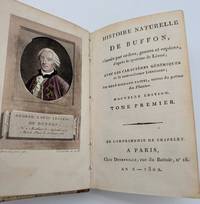
1802ref. 12697Paris Crapelet and Deterville 1802-1803. Histoire naturelle de Buffon classée par ordres genres et espèces d'après le systeme de Linné; avec les caractères génériques et la nomenclature Linnéenne. In 12° 135 x 83 mm. / 5.12 x 3.15 inch. Complete set of Buffons celebrated natural history in a finely preserved contemporary edition. 80 volumes Paris Crapelet and Deterville 18021803 small 8vo c. 14 cm. Beautifully bound in uniform bindings and illustrated with approximately 800 engraved plates with fine contemporary hand-colouring. The set comprises: 26 volumes of Histoire naturelle vols. 126; 5 volumes Minéraux 2731; 10 volumes Poissons 3241; 4 volumes Reptiles 4245; 10 volumes Insectes 4655; 2 volumes Crustacés 5657; 5 volumes Coquilles 5862; 3 volumes Vers 6365; and 15 volumes Végétaux 6680. An unusually fresh and visually striking copy of this compact Paris edition of Buffons complete natural history notable for the bright contemporary colouring of the plates and the attractive uniform bindings. Complete sets in such condition with uniformly coloured plates are scarce on the market. References: Brunet I 1378; Nissen ZBI. Paris, Crapelet and Deterville unknown
1789ref. 60389Paris, l' Imprimerie Royale, Plassan, 1749 - 1789. 4to (262 x 205 mm). Uniformly bound in 32 contemporary full sprinkled calf bindings with five raised bands and richly gilt spines. Leather tome- and title-labels to all volumes. Edges of boards gilt. Light wear to extremities primarily affecting head and foot of spines, corners bumped. Internally with light occassional, marginal brownspotting, but generally fine. With ""J. Collin"" (Danish zoologist Jonas Collin) to top margin of most front free end-papers. An overall nice set comprising the following:Histoire Naturelle, Générale et Particulière (15 vols) - 578 plates and 2 maps.Supplément à l'Histoire naturelle (6 vols) - 141 plates and 2 maps.Histoire naturelle des Oiseaux (9 vols) - 257 plates.Quadrupedes Ovipares et des Serpens (2 vols) - 66 plates. A total of 1042 plates and 4 maps. Wanting the portrait. The complex collation of this work has not been accurately described by bibliographers. Nissen and Heilbrun differ in the listing of number of plates and misname the descriptions of the plates.
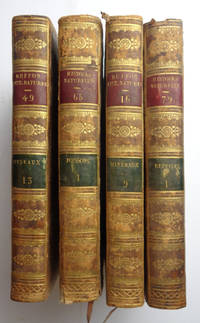
1789ref. 60389Paris l' Imprimerie Royale Plassan 1749 - 1789. 4to 262 x 205 mm. Uniformly bound in 32 contemporary full sprinkled calf bindings with five raised bands and richly gilt spines. Leather tome- and title-labels to all volumes. Edges of boards gilt. Light wear to extremities primarily affecting head and foot of spines corners bumped. Internally with light occassional marginal brownspotting but generally fine. With "J. Collin" Danish zoologist Jonas Collin to top margin of most front free end-papers. An overall nice set comprising the following:Histoire Naturelle Générale et Particulière 15 vols - 578 plates and 2 maps.Supplément à l'Histoire naturelle 6 vols - 141 plates and 2 maps.Histoire naturelle des Oiseaux 9 vols - 257 plates.Quadrupedes Ovipares et des Serpens 2 vols - 66 plates. A total of 1042 plates and 4 maps. Wanting the portrait. The complex collation of this work has not been accurately described by bibliographers. Nissen and Heilbrun differ in the listing of number of plates and misname the descriptions of the plates. First edition of this extensive landmark work in natural science. After his death several other volumes were published making the total number of volumes 44. Together with Diderot's Encyclopaedia this work represents the peak of book printing of the French enlightenment. Buffon was the first to sum up an entire natural history based on science instead of theology; It constitutes one of the first attempts to provide a comprehensive account of the natural world aiming at describing the entire known natural world - including plants animals and minerals - in a single work. Buffon based his work on first-hand observations and scientific analysis rather than on second-hand accounts or mythological beliefs making it a seminal work in the development of modern science. "Buffon's "Natural History General and Particular" presented for the first time a complete survey of natural history in a popular form . he was the first to present the universe as one complete whole and to find no phenomenon calling for any but a purely scientific explanation. In 1739 he was appointed Director of the Jardin du Roi now Jardin des Plantes. It would appear that the 'Natural History germinated in the preparation of a catalogue of the royal collection. Buffon then enlarged its scope to Aristotelian or Plinian proportions and finally transformed it into a conspectus of nature of a breadth and depth previously unknown". … he was the first to present the universe as one complete whole and to find no phenomenon calling for any but a purely scientific explanation." PMM. Buffon's work had a significant impact upon the field of natural history and influenced many other scientists including Charles Darwin; In a part of the work "Des Epoqeus de la Nature" Supplement vol. V 1778 present here Buffon attacked several Christian doctrines on natural science. He saw man as a part of the animal world he objected to earth being only 6000 years old and he dismissed a rigid classification system thus paving the way for Darwin's thoughts a century later:"Georges Buffon set forth his general views on species classification in the first volume of his Histoire Naturelle. Buffon objected to the so-called "artificial" classifications of Andrea Cesalpino and Carolus Linnaeus stating that in nature the chain of life has small gradations from one type to another and that the discontinuous categories are all artificially constructed by mankind. Buffon suggested that all organic species may have descended form a small number of primordial types; this is an evolution predominantly from more perfect to less perfect forms." Parkinson Breakthroughs. "Buffon's work is of exceptional importance because of its diversity richness originality and influence. Buffon was among the first to create an autonomous science free of any theological influence. He emphasized the importance of natural history and the great length of geological time. He envisioned the nature of science and understood the roles of paleontology zoological geography and animal psychology. He realised both the necessity of transformism and its difficulties. Although his cosmogony was inadequate and his theory of animal reproduction was weak and although he did not understand the problem of classification he did establish the intellectual framework within which most naturalists up to Darwin worked." DSB From the library of Danish zoologist Jonas Collin 1840-1905 who issued a new edition of Kjærbølling's "The Birds of Scandinavia" in 1875-1877 See Anker 251 - a work most likely inspired by his knowledge from his i.e. the present copy of Buffon's "Histoire Naturelle".The 'Histoire Générale' was widely reprinted and translated. Sometimes only individual sections were produced other times the complete work appeared. PMM 198.Nissen 672.Brunet I 376.Dibner 193.Sparrow p. 23.Anker 6. hardcover
1749ref. 82611749 Paris: De lImprimerie royale, [puis] Hotel de Thou, 1749-1789. Collection de 39 vol. in-4: 20.5 x 26.5 cm. Édition originale de la fameuse Histoire naturelle de Buffon complète en 36 volumes, parue entre 1749 et 1789, auxquels sajoutent 8 grandes cartes dép. rel. en un volume séparé, prévues pour ill. Le Traité de laimant, le dernier ouvrage publié du vivant de Buffon, ainsi que les 2 vol. consacrés aux quadrupèdes ovipares et serpents par Lacépède (1788-1789). Exceptionnel et mythique ouvrage dhistoire naturelle illustré de plus dun millier de figures hors-texte exécutées par Jacques de Sève pour les quadrupèdes et François-Nicolas Martinet pour les oiseaux. La représentation des animaux est toujours faite avec un grand soucis esthétique et anatomique, dans des décors pittoresques oumythologiques. Lune des uvres les plus ambitieuses et les plus complètes de la littérature scientifique, commencée par Buffon (1707-1789), lHistoire naturelle fut composée avec la collaboration de Daubenton, Guéneau de Montbéliard et labbé Bexon, et terminée par Bernard-Germain de Lacépède. Reliures homogènes de lépoque en veau marbré. Dos à cinq nerfs avec pièces de titre et de tomaison en maroquin noir ou brun, caissons ornés aux petits fers. Trois filets en encadrement des plats ornés de lex-libris: «Bibliothèque de V. Perdonnet». Toutes tranches dorées. De Vincent Perdonnet (1768-1850), homme politique et patriote vaudois. Sa bibliothèque, dans sa villa du Parc de Mont-Repos de Lausanne, était particulièrement fameuse. Quelques traces dusage aux reliures, sinon collection en fort bel état de conservation. Les planches sont belles et propres. Lhistoire naturelle se divise en plusieurs séries: lHistoire naturelle, générale et particulière (1749-1767) en 15 vol. qui présente trois vol. dintroduction De la manière détudier lhistoire naturelle, Théorie de la Terre, Histoire générale des animaux et Histoire naturelle de lhomme suivis de 12 vol. consacrés aux quadrupèdes; lHistoire naturelle des Oiseaux (1770-1783) en 9 vol., le Supplément (1774-1789), en 7 vol., et enfin lHistoire naturelle des Minéraux (1783-1788) en 5 vol. Paraîtront après la mort de Buffon, les trois suppléments de Lacépède dont nous avons celui portant sur les ovipares.
1829ref. 61486Berlin, Joachim Pauli bzw. (nur ?Mineralien?) Frankfurt-Leipzig, auf Kosten der Verlags-Casse, 1771-1829. 8°. Mit zus. 32 kolor. Titelkupfern, 64 gest. kolor. Titelvignetten, einer gefalt. Tabelle, 2 gefalt. kolor. Kupferkarten u. 2161 (davon 2 gefalt. u. 2149 kolor.) Kupfertafeln. Zus. ca. 20.700 S., HLdr.-Bde. d. Zt. a. 5 Bünden m. etw. Rückenverg., je 2 goldgepr. Rückenschildern u. dreiseitigem Farbschnitt.
1803ref. 71345Paris: De L'Imprimerie de Crapelet 1803. Nouvelle Édition. Leather Bound. Very Good. Twenty-fourmo 13.5 cm Contemporary 3/4 brown leather with speckled paper over boards. Pale red and green gilt stamped leather spine labels. Six gilt ruled compartments on the spines. Illustrated plates the majority with tissue-guards. This specific set has a frontispiece portrait of Buffon 781 illustrated plates and 5 folding tables the exact number of plates found in each volume is available upon request. Text in French. Extremities very lightly rubbed and soiled. A couple of boards with small red stains. Spines sporadically mottled. Occasional minor chipping to spine ends and a handful of spine labels with loss. Underlying boards peeking through at corners. Endpapers have a previous owner's red ink stamps a small faint ink stamp in black and minute contemporary numerical notations. Stitching visible in gutters here and there. Pp. 125-130 volume 12 are partially detached. Pp. 29-32 volume 44 and pp. 93-96 volume 77 are completely detached but present. Skillful repair to fore-edge margin of p. 169 volume 59. Pages bound out of sequence in volume 59 between p. 136 and p. 185. Periodic printing errors occur in the set's pagination. In a handful of plates the sky in the background appears stained and there is a bit of red staining to plate at p. 258 in volume 70. Two reptile illustrations in volume 42 are a trifle trimmed at the head. Additional Collation Notes: Curiously volumes 56-65 are the only volumes in which the plates are numbered. In volume 58 I believe plate 15 is mislabeled as 13 and it is found between plates 23 and 24. The books are very structurally sound and the pages are strikingly clean and bright. Contents: Théorie de la Terre. Époques de la Nature; Discours Généraux; Quadrupèdes; Oiseaux; Histoire Naturelle des Minéraux; Histoire Naturelle des Poissons; Histoire Naturelle des Reptiles; Histoire Naturelle des Insectes; Histoire Naturelle des Coquilles; Histoire Naturelle des Vers; Histoire Naturelle des Crustacés; Histoire Naturelle des Végétaux. An edition published posthumously of Buffon's most famous work. Buffon's Histoire Naturelle was continued in part by others after his death. It was translated into various languages and read throughout Europe. French naturalist George-Louis Leclerc de Buffon 1707-1788 Comte de Buffon is viewed as the most influential biologist of the 18th century epitomizing the revolutionary changes the Enlightenment brought to the study of nature. The title of Count was bestowed on him by Louis XV in recognition of his accomplishments rather than by birth. He is most famous for Histoire Naturelle a comprehensive work on natural history first begun in 1749. De Buffon began his studies at the College of Godrans in Dijon where he was only an average student. Originally his father wanted him to have a legal career however in 1728 he went to Angers where he studied medicine botany and mathematics. In 1739 he was appointed keeper of the Jardin du Roi the royal botanical garden now the Jardin des Plantes and of the accompanying museum. There he was tasked with creating a catalog of the royal collections in natural history which he transformed into an undertaking to produce a record of the whole of nature. This became his monumental work Histoire Naturelle Générale et Particulière which was the first modern effort to methodically present all existing knowledge in the subjects of natural history geology and anthropology in one publication. Buffon's ideas challenged traditional biological classification and introduced theories of evolutionary thought roughly one hundred years before Darwin. Comte de Buffon is also remembered for his argument that the world had a lengthy history rather than being only a few thousand years old as the naturalists of the 1600s believed. In addition he felt that scientific writing should be energetic and graceful in style thereby allowing his work to be accessible to a wide audience in Europe and beyond. Buffon's work articulated that species were different throughout the world that the planet was much older than the Bible suggested and that plant and animal species were related in intricate ways. Buffon's bold way of looking at the world laid the groundwork for later revolutionary thinkers who are responsible for much of what we know about the natural world. An attractive set of a pivotal work of the Enlightenment richly illustrated with numerous hand-colored plates. De L'Imprimerie de Crapelet unknown
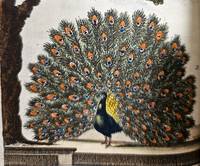
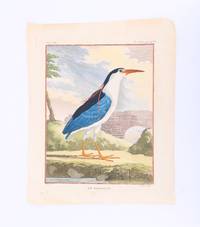
1765ref. B7181Paris c.1765. One plate with small tear at gutter not affecting plate. Interior generally crisp and clean colours vivid. Binding: Half brown calf over marbled paper boards. Spine with 5 raised bands red morocco label in second compartment green morocco label in fourth compartment gilt rolls on bands. Notes: Edme-Louis Daubenton 12 August 1730 – 12 December 1785 was a French naturalist. Daubenton was the cousin of another French naturalist Louis Jean-Marie Daubenton. Georges-Louis Leclerc the Comte de Buffon engaged Edme-Louis Daubenton to supervise the coloured illustrations for the monumental Histoire Naturelle 1749–89. The Planches Enluminee started to appear in 1765 and finally accounted for 1008 plates all engraved by François-Nicolas Martinet 1731–1800 and all painted by hand. The Parisian publisher Panckoucke published a version without text between 1765 and 1783. The Histoire Naturelle générale et particulière avec la description du Cabinet du Roi is an encyclopaedic collection of 36 large quarto volumes written between 1749 and 1789 by the Comte de Buffon. The books cover what was known of the "natural sciences" at the time including what would now be called material science physics chemistry and technology as well as the natural history of animals. A de luxe edition of Histoire Naturelle des Oiseaux 1771–1786 was produced by the Imprimerie royale in 10 folio and quarto volumes with 1008 engraved and hand-coloured plates executed under Buffon's personal supervision by Edme-Louis Daubenton cousin and brother-in-law of Buffon's principal collaborator Louis Jean-Marie Daubenton. The plates were originally issued in 42 cahiers each containing 24 plates and no accompanying text or titles. Size: Folio 460 x 315mm Illustration: A beautifully bound collection of 100 handcoloured plates produced by Daubenton for the Comte de Buffon’s Histoire Naturelle which was issued in multiple parts between 1765 and 1783 and came to encompass over 1000 plates. The numbered plates depict birds from many parts of the world including Africa Canada Mexico France Italy Brazil China and America. The present volume represents an impressive compilation of plates originally issued across different parts the numbering not always chronological. One plate with etched caption crossed and rewritten in contemporary hand. Category: Book Natural History; Book Plate Books Colour; hardcover
1798ref. 017909Paris: Dufart VII-XIII 1798-1805. .nouvelle edition accompagnée de notes et dans laquelle les supplémens sont insérés dans le premier texte à la place qui leur convient. L'on y a ajouté l'histoire naturelle des quadrupèdes et des oiseaux découverts depuis la mort de Buffon celle des reptiles des poissons des insectes et des vers; enfin l'histoire des plantes dont se grand naturaliste n'a pas eu le tems de s'occuper. Ouvrage formant un cours complet d'Histoire naturelle redigé par C.S. Sonnini. 127 volumi 125x20 cm in bella legatura coeva in piena pelle marmorizzata cornice dorata ai piatti dorso liscio ornato e dorato con doppio tassello di titolo e tomagione. --Un volume con rilegatura rifatta a imitazione alcune cuffie mancanti o altri segni d'uso e del tempo ai margini e agli angoli. Risguardie marmorizzate testimoni. Set completo di questa famosa edizione con 1113 tavole quasi tutte colorate a mano e carte geografiche più circa 30 schemi di classificazione e tabelle. Qualche brunitura a macchia o fioriture ma bell'insieme di questa monumentale riedizione e aggiornamento dell'opera di Buffon. L'opera è così divisa: Théorie de la terre 3 tomes; Epoques de la Nature 1 tome; Histoire des Minéraux 12 tomes; Des Animaux 1 tome; De l'Homme 4 tomes; Quadrupèdes 13 tomes; des Singes 2 tomes;; des Oiseaux 28 tomes; Crustacés et Insectes 14 tomes; Mollusques 6 tomes; Reptiles 8 tomes; Plantes 18 tomes; Poissons 14 tomes; Tables analytiques 3 tomes. Non tutte le tavole sono numerate e a volte non sono in sequenza ma corrispondono al testo.Oltre al testo "classico" di Buffon sono assai importanti le integrazioni sulla base delle nuove scoperte scientifiche. Rettili e anfibi sono opera del Dudin con 100 tavole; i molluschi sono di Denis de Monfort con 72 tavole; uccelli e pesci sono sviluppati dal Sonnini; gli insetti da Latrelle. In sostanza i migliori studiosi degli anni a cavallo tra 7 e 8cento furono partecipi dell'opera rara da trovare così completa e in belle condizioni esterne. Dufart
ref. 96654A Paris, de l'Imprimerie Royale, 1770-1782, 29 volumes in-4 sur 31 : Histoire naturelle (15 volumes, ensemble recomposé) illustrée de 578 planches + 1 portrait en frontispice+ 2 cartes+1 tableau dépliant (Chiens) (total 582 planches) - Supplément à l'Histoire naturelle (6 volumes sur 7 de 1774 à 1782, illustré de 144 planches + 1 carte Chaîne de Montagnes +1 carte Régions polaires ( total 146 planches) - Histoire des Oiseaux (tome 1 à 8 sur , de 1770 à 1781), illustrée de 227/231 planches, soit un total 29/31 volumes illustrés de 955 planches, série recomposée avec 2 tomes à la reliure légèrement différente, plein veau fauve (2 tomes en veau marbré dont une reliure aux armes), dos à nerfs portant titres et tomaisons dorés, ornés de caissons à fleurons et motifs dorés, coupes et chasses dorées, gardes marbrées, tranches rouges (1 tome avec tranche marbrée). Des rousseurs et pages brunies, petites galeries et mouillures dans les marges, des frottements épidermures et petits accrocs sur le cuir, des coiffes ébréchées, des coins émoussés, petits défauts de marge, quelques pages tachées, bordures de certaines gravures fendillées et brunies, sinon belle série en bon état.
1770ref. 64661770 Paris, Imp. Royale, Imp. Bâtiments du roi, Hôtel de Thou, Plassan, 1770-1804. Complet en 71 vol. in-12 reliés: 10.5 x 17 cm. Ensemble illustré de 871 planches gravées principalement d'après De Sève, la plupart à double avec ÉPREUVES AVANT LA LETTRE. 5e édition du texte, 1ère édition in-12. Ensemble complet sans le sup. anatomique (14 vol.) par Daubenton. Luxueuses reliures de l'époque en plein cuir de Russie Rouge. Dos lisse avec auteur, titre, tomaison et filets en doré. Doubles encadrements des plats. Filets sur les coupes. Roulettes intérieures. Tranches dorées. Très bel exemplaire
1749ref. 22898P., Imprimerie Royale, 1749-1803 43 volumes in-4 veau marbré, dos lisses ornés à la grotesque de fers dorés, tranches rouges. (Quelques accidents aux coiffes, des tomaisons plus claires à cinq volumes,, des mouillures au tome X, dans le tome VI des Suppléments, les 49 planches concernent les quadrupèdes mais la numérotation est aléatoire).
1957ref. 3181Henri Jonquières, Paris 1957. Un volume in-folio (387 x 292 mm) en feuilles sous couverture imprimée rempliée, chemise-étui de l'éditeur. Fac-similé de l'exemplaire enluminé et offert par Picasso à Dora Maar (édition Fabiani 1942) reproduisant l'ensemble des dessins originaux. Tirage à 2226 exemplaires : 226 sur vélin d'Arches comprenant une gravure à la gouge signée + 2000 sur vélin du Marais. Celui-ci exemplaire de luxe (n° 140) comportant LA LINOGRAVURE ORIGINALE gravée en 1939 et signée au crayon de couleur (vert) par PICASSO. Notre épreuve, imprimée sur une feuille de vélin d'Arches (37,5 x 28,2 cm), porte la justification 140/226 au crayon noir et la signature au crayon vert. La signature au crayon de couleur est très recherchée des amateurs. Catalogues raisonnés : Bloch 326 ; Baer 1028 ; Cramer Les Livres illustrés 84 ; MoMA 1017.1964.1-2.
ref. LCS-1864075Collection complète des 18 volumes d’oiseaux parus dans cette édition de 1785-1787 ornée de 114 planches d’oiseaux. Aux Deux-Ponts, chez Sanson & Compagnie, 1785-1787. 18 volumes in-12. I/ xxxiv pp., (1) f., 256 pp., (1) f., 12 planches hors texte dont 2 en couleurs; II/ 264 pp., 11 planches hors texte; III/ 305 pp., 6 planches hors texte dont 1 en couleurs; IV/ 299 pp., 8 planches hors texte; V/ 372 pp., 7 planches hors texte; VI/ 199 pp., 153 pp.de table, 4 planches hors texte; VII/ 336 pp. (relié à l’époque sans la p. 325), 3 planches hors texte; VIII/ 339 pp., li pp. de table, 7 pp. de table, 5 planches hors texte; IX/ 377 pp., 5 pp. de table, 6 planches hors texte; X/ 246 pp., L pp. de table, 4 pp. de table, 3 planches; XI/ 400 pp., 8 pp. de table, 6 planches; XII/ 391 pp., 6 pp. de table, 4 planches hors texte; XIII/ 370 pp., 6 pp. de table, 6 planches hors texte; XIV/ 299 pp., xviii pp., 6 pp. de table, 5 planches; XV/ 349 pp., 6 pp. de table, 7 planches hors texte; XVI/ 258 pp., 3 pp. de table, 7 planches; XVII/ 385 pp., (3) pp. de table, 10 planches; XVIII/ 110 pp., cxlix pp. de table, (3) pp., 4 planches hors texte. Soit 114 planches au total. Plein cartonnage marbré de l’époque. 165 x 98 mm.
1772ref. AMO-3535Georges-Louis Leclerc, comte de Buffon (1707-1788) 1 page feuillet 20,5 x 16 cm Bon état. Légères traces de plis. Deux trous d’épingle en dehors du texte. Voir photos. Lettre signée à son ami le botaniste André Thouin (1747-1824) alors âgé de 25 ans. Goerges-Louis Leclerc, comte de Buffon est âgé de 65 ans au moment de la rédaction de ce courrier. Son immense ouvrage intitulé "L'Histoire naturelle" est encore en cours de publication (cette somme unique en son genre fut publiée entre 1749 et sa mort - avec de nombreux suppléments parus ensuite par Lacépède – en 1772 les Oiseaux sont en cours de publication depuis 1770. La publication des Oiseaux ne s’achèvera qu’en 1783). Dans le présent courrier Buffon écrit à son jeune ami et collaborateur resté à Paris. Buffon écrit depuis son cabinet de travail de Montbard. C’est précisément en 1772, peu de temps après la rédaction de ce courrier que seront achevées les forges situées près du village de Buffon. Buffon écrit à Thouin en ces termes : [Transcription de la lettre / orthographe respectée :] "Lucas a dû vous remettre, mon cher Thouin, les deux certificats dont vous avez besoin et c'est à lui à qui je vous prie de remettre la partie qui me revient lorsque vous aurez touchée. Je vous envoye ci joint un second mandat pour prendre vingt voyes de bois chez le Sr Vaslin ; s'il fait aussi froid à Paris qu'ici on doit commencer à en brûler beaucoup. Ma santé souffre de cette rigueur de froid qui dure ici depuis quatre à cinq jours, le termomètre étoit cette nuit à 6 degrés 1/2 au dessous de la glace. Je vous remercie, mon cher Thouin, de vos bons souhaits au renouvellement de cette année. Je vous prie de faire mes amitiés à votre bonne mère et à votre famille. à Montbard ce 6 janvier 1772 [signé] Buffon." Les relations entre André Thouin (1747-1824) et Buffon sont importantes. C'est Buffon, alors intendant du jardin du roi depuis 1739, qui offre à André Thouin la place de son pèreJean- André Thouin (jardinier en chef du jardin du roi) décédé en 1764. André Thouin n'a alors que 17 ans. Les deux hommes collaboreront étroitement jusqu’à la mort de Buffon en 1788. Buffon gère Paris le plus souvent depuis son cabinet de Montbard tandis que Thouin se révèle être un parfait collaborateur au plus près des nombreux travaux à réaliser et à gérer le Jardin du Roi. Thouin aura une importante carrière et sera toujours très apprécié de Buffon. De nombreuses lettres de Buffon à Thouin ont été publiées dans la Correspondance Générale de Buffon ainsi que dans les volumes de correspondance inédite publiés ultérieurement. La lettre que nous proposons ici ne se trouve pas dans ces volumes de correspondance. Elle est inédite. Par ailleurs nous avons constaté que les échanges publiés entre Buffon et Thouin datent du début des années 1780 et années suivantes. Un tel courrier entre les deux hommes à la date de janvier 1772 montre la teneur des échanges durant les premières années après la nomination de Thouin jeune au Jardin du Roi depuis 1764. Très beau document signé par le grand naturaliste.
1825ref. 81174A. Eymery | Paris 1825 -1828 | 13.50 x 21 cm, longueur totale de la série 103 cm | 26 volumes reliés
1770ref. 89949Paris: Imprimerie royale 1770. Fine. Mrs Necker: ""Animals seemed to be the most distant from us and Buffon's art lay in constantly bringing them closer"" our own translation Imprimerie royale Paris 1770-1783 20 x 26.4 cm relié First edition from the Imprimerie Royale complete in nine quarto volumes with all 262 black-and-white engraved plates. Contemporary full mottled calf spines with raised bands decorated with guilloche tooling and gilt ornaments in the compartments red morocco lettering-pieces and numbering-pieces triple gilt fillet border on boards double gilt fillet on board edges marbled endpapers and pastedowns marbled edges. Minor variations in the tooling on volume 3. In this set some headcaps missing 6 cm joints split at foot of volume 1 6.5 cm and 6 cm at foot of volume 2 3.5 cm at head of volume 3 corners bumped scratches and minor restoration to boards including a more significant repair on volume 7 measuring 11 cm browning in left margin of lower board of volume 4. In this copy: some worming several instances of dampstaining throughout the set more pronounced in volumes 1 3 and 8 some tears restored on the title page and on pp. ix and xxiii of volume 1 also restored on p. 496 of volume 2 on pp. 259 and 260 of volume 3 on pp. 481 and 482 of volume 4 and on pp. 173 to 176 of volume 5. Copy with some marginal annotations: in volume 2 a manuscript footnote added in ink on p. 541 ""Voyez les Planches enluminures n°491"" erroneous manuscript dates in ink in volumes 2 and 8 the number ""18"" annotated in ink in the upper right corner of the rear endpaper of volume 9. Copy richly illustrated with drawings by Jacques de Sève engraved by Robert de Launay Lucas Michel Madeleine-Thérèse Rousselet C. Baron Hubert Catherine Haussard Carl Gottlieb Guttenberg Jean-Guillaume Blanchon Menil Dufour Louis Claude Legrand Claude Mathieu Fessard Elisabeth Haussard François Hubert A.-B. Duhamel Mlle Mansard C. Baquoy Heinrich Guttenberg Laurent Guyot Benazeth Schmitz Marie-Anne Rousselet M. R. veuve Tardieu Louis-Gabriel Monnier Pierre-Étienne Moitte Jean-Louis de Lignon Levillain N. du Four Thomas Chambars Nicolas Thomas Luigi Valperga and George Louis Biosse. Accompanied by two additional plates heightened in color numbered XX and XXII from a volume 7 of the Histoire naturelle des oiseaux. The illustrator Jacques de Sève's main work was unquestionably the Histoire naturelle générale et particulière for which he executed nearly 2000 drawings. Unlike the illustrations he produced for other sections of Buffon's monumental work made primarily from stuffed specimens his work on birds was essentially executed from living models. To accomplish this vast project Jacques de Sève drew inspiration from the works of the king's ""Peintre ordinaire"" Jean-Baptiste Oudry. This judicious decision won him the favor of the queen a great admirer of the master of animal painting. By incorporating small Boucher-style putti in the introductory vignettes of certain volumes of the Histoire naturelle des oiseaux Sève also gained the good graces of the king's mistress. These illustrations at once decorative and scholarly which appear in the present first edition were not retained in the duodecimo edition. A superb complete copy of Georges-Louis Leclerc de Buffon's Histoire naturelle des oiseaux by the French Pliny. As Ferdinand Hoefer wrote this work maintains the same ""magnificence of style"" as the other publications in the Histoire naturelle générale et particulière. Imprimerie royale hardcover
1749ref. 56340A Paris: de l'Imprimerie Royale 1749-1767. Quindici volumi in-quarto cm. 25 pp. 10.000 ca. complessive. Con grande incisioni a ciascun frontespizio testate due carte geografiche ripiegate al primo volume e 579 tavole fuori testo anche ripiegate fra cui una tabella al quinto volume ed una 46 bis presente al dodicesimo volume. Manca il ritratto di Buffon al primo volume. Legatura coeva in piena pelle dorsi a nervi con titoli e ricchi fregi in oro. Tagli rossi. I decori al dorso degli ultimi quattro volumi leggermente dissimili. Qualche piccola mancanza o segno d'uso alle cuffie alcune fioriture a pochi volumi. Esemplare complessivamente genuino ed in ottimo stato di conservazione. de l'Imprimerie Royale unknown
1825ref. 46402819Paris, Eymery, 1825-28 ; 26 volumes, Suivi de LACÉPÈDE. Histoire naturelle des quadrupèdes ovipares, serpents, poissons et cétacés, pour faire suite aux œuvres de Buffon. Id., ibid, 1825. 5 volumes. Ensemble 31 volumes in-8, demi-basane violette, filet doré et à froid, tranches jaspées. (Reliures de l’époque.) Belle édition, rare et recherchée, surtout lorsqu’elle est complète comme c’est le cas ici, du 26e volume de supplément et des 5 volumes de Lacépède. Les œuvres de Buffon comptent 1 portrait, 4 cartes dépliantes, 12 planches en noir et 217 PLANCHES COLORIÉES. Le supplément offre 12 planches coloriées. Les 5 volumes de Lacépède comportent 115 planches coloriées. Les oiseaux occupent les tomes XVIII à XXV, ces volumes comptent 126 planches en couleurs portant chacune plusieurs oiseaux.Les planches sont dessinées pour la plupart par Jean-Gabriel PRÊTRE, le peintre du Museum d’Histoire Naturelle et de la Ménagerie de l’Impératrice Joséphine. D’autres sont de C. Vernet et J.J. Leroy. - Ronsil I, p. 412.Plaisant exemplaire en reliures uniformes. Quelques pâles mouillures et petites rousseurs.
1828ref. ABC_50439Brussels 1828. 8vo. Th. Lejeune Contemporary half calf marble boards gold-tooled spine with green and blue compartments author title and volume number lettered in gold on the spine green sprinkled edges. With a lithographed frontispiece portrait of the author a lithographed portrait of Daubenton 2 lithographed emblematic frontispieces 2 lithographed double-page maps of the Old and the New World 6 numbered lithographed plates of teeth 16 numbered lithographed plates of scientific instruments etc. and 6 numbered lithographed plates of seeds in the first 4 introductory volumes lithographed frontispieces of a naked man woman and child and 26 lithographed plates of human heads and species including 10 are nicely coloured by hand in volume 5 on the natural history of man illustrations of mammals and mammalian anatomy on 469 lithographed plates including 226 coloured by hand in volumes 6 to 10 and illustrations of birds on 210 lithographed plates all beautifully coloured by hand and including 8 heightened with gold in volumes 11 to 14. 20 volumes 14 text and 6 atlas. Each volume ca. 500 pp. Fine complete set of a special edition of the works of George-Louis Leclerc Comte de Buffon 1707-1788 the most important natural historian of his day whose ground-breaking observations and classifications profoundly influenced biology geology and the natural sciences across Europe. This Brussels edition was edited by Professor Lamouroux correspondant of the Institut de France and enhanced with extensive contributions by Buffon's successors including Daubenton Lacépède Cuvier Duméril Poiret Lesson and Geoffroy Saint-Hilaire whose additions were appended to the relevant chapters to provide the most current scientific observations and refinements.The work opens with two prefaces by the publishers and two eulogies one on Buffon by Nicolas de Condorcet 1743-1794 and the other on Louis Jean Marie Daubenton 1716-1800 by Baron Cuvier 1796-1832 situating the compilation within its historical and intellectual context. The illustrations were produced under the supervision of M. Meunier draughtsman of the Cabinet dHistoire Naturelle and for the first time lithographed a technique that allowed according to the Paris publisher a far more faithful representation of living subjects than was previously possible with traditional engraving. The lithography was executed by Th. Lejeune in Brussels on specially prepared paper ensuring clarity and durability.The set is divided into four major sections. Théorie de la terre volumes 1-4 illustrating minerals fossils and natural phenomena along with emblematic and scientific designs. Histoire naturelle de lhomme volume 5 depicting human anatomy physiognomy and the diversity of peoples across the globe. Mammifères volumes 6-10 presenting mammals in remarkable anatomical and behavioural detail. Oiseaux volumes 11-14 illustrating the appearance and structure of birds in natural poses. All of these topics are also represented in 6 separate atlas volumes providing a complete visual complement to the text.In total the edition contains 738 lithographs maps and plates almost two-thirds of which depict mammals and birds in rich hand-colouring demonstrating both scientific precision and extraordinary artistry. This edition preserves Buffon's original genius while reflecting the cumulative expertise of successive generations of naturalists making it one of the most comprehensive visually impressive and historically significant editions of Buffons Oeuvres complètes ever produced.With a red ownership stamp on the title page and the recto of the first flyleaf of the first volume of Théorie de la Terre Dr. A.A. v. Otterloo possibly Antony Adriaan van Otterloo 1847-1895 pastor in Zutphen The Netherlands from 1883. Some minor rubbing is visible on a few boards and all volumes show foxing. Otherwise in very good condition.l Bibl. Natura Artis Magistra 1171; Nissen 689; Sitwell Fine Bird Books 1700-1900 p. 83; Wood 268; Zimmer J.T. Ayer Lib. p. 112-113. NATURAL HISTORY / Zoology Birds - Ornithology Faunas & General Zoology Mammals hardcover
1770ref. 89949Imprimerie royale | Paris 1770-1783 | 20 x 26.4 cm | relié
ref. 6461824-1832 À Paris, chez Verdière et Ladrange, 1824-1832.
ref. 142104aafSanson & Compagnie, Deux-Ponts, 1785-1787, in-8vo, Oiseaux, vols 1-18. Avec 114 planches gravées et magnifiquement coloriées à la main, Ex libris “Bestein de Bassompierre”, reliures en d.-cuir d’époque. Bel ensemble.
ref. 4362Paris, Imprimerie Royale, Entre 1774 et 1790. Ensemble de 57 volumes in-12 reliés en plein veau marbré du temps, dos lisses ornés de filets et fleurons dorés, étiquettes de tomaison et titre en maroquin vert et rouge. Seuls six volumes présentent quelques infimes différences de reliures. Bel ensemble réunissant 695 planches hors texte et 4 cartes dépliantes.
ref. 3506678Short description: In Russian. Buffon, Georges Louis Leclerc. Illustrated Buffon, or Natural History of Four Pods, Birds, Fish, and Insects, drawn by Victor Adam: Moscow: Type. A. Semyon, 1853. You are welcome to reach out to us for a detailed description of the copies currently available. Delivery of this book may take longer than usual including extended processing and pre-shipping time, no expedited shipping is available. Please advise us if you have a set date or a deadline to receive your order.SKU3506678