La Perouse; BuffonBiblio.com
2 051 résultats
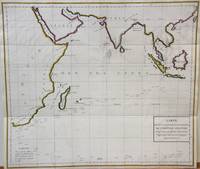
1788réf. M7032Paris 1788. Very Good;. Notes: An 18th century mapping of the Indian Ocean. This handsome sea chart depicts magnetic needle readings along various routes in the ocean from the Cape of Good Hope le Cap des Aiguilles to the South East Asian archipelago. Size : 511x583 mm 20.12x22.95 Inches Coloring: Hand Colored in Outline Category: Maps Sea Chart; Maps Ocean Indian; unknown
1788réf. M6851Paris 1788. Very Good; laid on acid-free canvas for long-term preservation. Notes: This handsome sea chart depicts magnetic needle readings along various routes in the North Pacific ocean. Size : 590x1090 mm 23.23x42.91 Inches Coloring: Hand Colored in Outline Category: Maps Sea Chart; Maps Ocean Pacific; Maps United States West; unknown
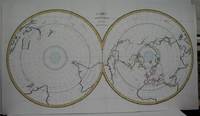
1788réf. M5521Paris 1788. Very Good folding map flattened and folds reinforced laid on acid free canvas for long term preservation. Notes: "Double hemispherical world map with each hemisphere shown on polar projection. Plate probably accompanied: Histoire naturelle generale et particulare / George Louis Leclerc Buffon. Paris 1749-1804. Plate "No. 8" of an 8 sheet map which was probably compiled from the reports of La Perouse’s last voyage in the Pacific and is by Jean-Charles Borda." National Library of Australia Digital Collection map-rm3253 Size : 480x940 mm 18.875x37 Inches Coloring: Hand Colored in Outline Category: ; Maps Polar Antarctic Regions; Maps Polar Arctic Regions unknown
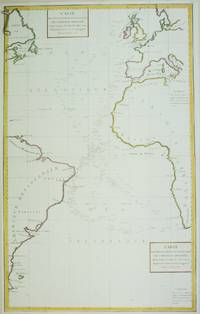
1788réf. M6850Paris 1788. Very Good; laid on acid-free paper for long-term preservation. Notes: This handsome sea chart that indicates magnetic needle readings along various routes through the Atlantic. Size : 850x532 mm 33.46x20.94 Inches Coloring: Hand Colored in Outline Category: Maps Sea Chart; Maps Ocean Atlantic; unknown
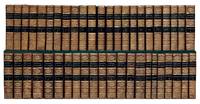
1827réf. 42163Paris Baudouin Frères et N. Delangle 1827-28. Bound in 34 contemp. uniform hcalf richly gilt spines. Various wear to spine-ends a few vols. with small tears to hinges. Edges rubbed. Engraved portrait 2 folded maps to vol. I 3 plates to vol. 11 Carte polaires to vol. 5 and 192 engraved and handcoloured plates. Oiseaux 118 Mammifères 74. Plates with tissue-guards and in general fine and clean. Textvolumes with some foxing and scattered brownspots throughout. unknown
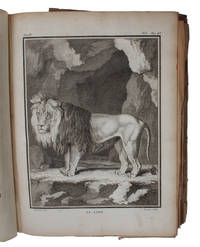
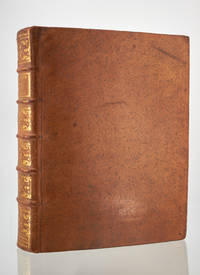
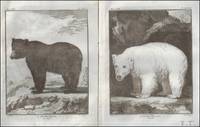
1761réf. 39518Paris Imprimerie Royale 1761. 4to. Contemporary full mottled calf spine and boards worn. 4 376 pp. With engraved vignette on titlepage and 41 full-page engraved plates many folding. Plate 16 torn. Volume 9 in the first edition. Plates describing lions tigers leopards hyenas &c. Buffon is best remembered for his great work Histoire naturelle générale et particulière 1749-788: in 35 volumes 9 additional volumes published after his death by Lacépède. It included everything known about the natural world up until that date. "Written in a brilliant style this work was read. by every educated person in Europe." Those who assisted him in the production of this great work included Louis-Jean-Marie Daubenton. His Histoire was translated into many different languages making him one of the most widely read authors of the day equaling Rousseau and Voltaire. hardcover
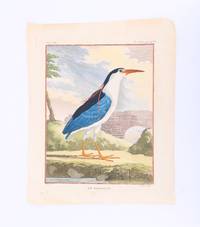
1770réf. 89949Paris: Imprimerie royale 1770. Fine. Mrs Necker: ""Animals seemed to be the most distant from us and Buffon's art lay in constantly bringing them closer"" our own translation Imprimerie royale Paris 1770-1783 20 x 26.4 cm relié First edition from the Imprimerie Royale complete in nine quarto volumes with all 262 black-and-white engraved plates. Contemporary full mottled calf spines with raised bands decorated with guilloche tooling and gilt ornaments in the compartments red morocco lettering-pieces and numbering-pieces triple gilt fillet border on boards double gilt fillet on board edges marbled endpapers and pastedowns marbled edges. Minor variations in the tooling on volume 3. In this set some headcaps missing 6 cm joints split at foot of volume 1 6.5 cm and 6 cm at foot of volume 2 3.5 cm at head of volume 3 corners bumped scratches and minor restoration to boards including a more significant repair on volume 7 measuring 11 cm browning in left margin of lower board of volume 4. In this copy: some worming several instances of dampstaining throughout the set more pronounced in volumes 1 3 and 8 some tears restored on the title page and on pp. ix and xxiii of volume 1 also restored on p. 496 of volume 2 on pp. 259 and 260 of volume 3 on pp. 481 and 482 of volume 4 and on pp. 173 to 176 of volume 5. Copy with some marginal annotations: in volume 2 a manuscript footnote added in ink on p. 541 ""Voyez les Planches enluminures n°491"" erroneous manuscript dates in ink in volumes 2 and 8 the number ""18"" annotated in ink in the upper right corner of the rear endpaper of volume 9. Copy richly illustrated with drawings by Jacques de Sève engraved by Robert de Launay Lucas Michel Madeleine-Thérèse Rousselet C. Baron Hubert Catherine Haussard Carl Gottlieb Guttenberg Jean-Guillaume Blanchon Menil Dufour Louis Claude Legrand Claude Mathieu Fessard Elisabeth Haussard François Hubert A.-B. Duhamel Mlle Mansard C. Baquoy Heinrich Guttenberg Laurent Guyot Benazeth Schmitz Marie-Anne Rousselet M. R. veuve Tardieu Louis-Gabriel Monnier Pierre-Étienne Moitte Jean-Louis de Lignon Levillain N. du Four Thomas Chambars Nicolas Thomas Luigi Valperga and George Louis Biosse. Accompanied by two additional plates heightened in color numbered XX and XXII from a volume 7 of the Histoire naturelle des oiseaux. The illustrator Jacques de Sève's main work was unquestionably the Histoire naturelle générale et particulière for which he executed nearly 2000 drawings. Unlike the illustrations he produced for other sections of Buffon's monumental work made primarily from stuffed specimens his work on birds was essentially executed from living models. To accomplish this vast project Jacques de Sève drew inspiration from the works of the king's ""Peintre ordinaire"" Jean-Baptiste Oudry. This judicious decision won him the favor of the queen a great admirer of the master of animal painting. By incorporating small Boucher-style putti in the introductory vignettes of certain volumes of the Histoire naturelle des oiseaux Sève also gained the good graces of the king's mistress. These illustrations at once decorative and scholarly which appear in the present first edition were not retained in the duodecimo edition. A superb complete copy of Georges-Louis Leclerc de Buffon's Histoire naturelle des oiseaux by the French Pliny. As Ferdinand Hoefer wrote this work maintains the same ""magnificence of style"" as the other publications in the Histoire naturelle générale et particulière. Imprimerie royale hardcover
1735réf. 74286Paris & Genève Geneva: Chez Debure l'aînéChez les héritiers Cramer et Frères Philibert 1735. Fine. Chez Debure l'aîné Chez les héritiers Cramer et Frères Philibert Paris & Genève Geneva 1735 et 1744 19 x 25 cm 2 ouvrages reliés en un volume First edition of the French translation of these two texts by Stephen Hales. The translation of the first work originally entitled Vegetable Staticks published in 1727 is the first text published by Buffon. The translation of the second work originally issued under the title Haemastaticks in 1733 is by François Boissier de Sauvages. Our copy is complete with its 20 engraved figures on 10 folding plates for the first text and its folding plate at the end for the second. Contemporary full speckled blond sheep spine in five raised bands richly decorated with gilt compartments rolls and fleurons with a havana morocco title label marbled endpapers all edges speckled red. Headcap and two corners skilfully restored. A few leaves slightly browned. Rare French first editions of these two texts by Hales founder of modern experimental physiology. The Statique des végétaux describes one hundred and twenty-four experiments on plant physiology. Buffon precedes it with an important préface du traducteur in which he praises not only Hales Je ne connais rien de mieux dans son genre et le genre par lui-même est excellent. but above all scientific experiment emblematic of the emergence of modern science: Amassons-donc toujours des expériences et éloignons nous s'il est possible de tout esprit de système du moins jusqu'à ce que nous soyons instruits . c'est cette méthode que mon auteur a suivie ; c'est celle du grand Newton ; c'est celle que Messieurs de Verulam Galilée Boyle Sthall Stahl ont recommandée et embrassée c'est celle que l'Académie des Sciences s'est fait une loi d'adopter . The plates executed with great finesse depict the machines devised notably his famous water apparatus and the processes used by Hales to demonstrate the circulation of sap and the production of gases in the plants he studied. The second treatise following the research of William Harvey and Marcello Malpighi deals with blood circulation. It is in this work that Hales recounts his experiment on arterial pressure using one of his inventions a precursor of the sphygmomanometer. Chez Debure l'aînéChez les héritiers Cramer et Frères Philibert hardcover
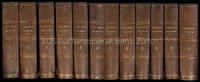
1855réf. 31004AB1855. 12 Bände. Paris Librairie Garnier Freres 6 rue des Saints-Peres 1855. 4°. Mit über 8000 Seiten. 150 kolorierte Stahlstiche. Halbleinenbände mit geprägter Rückenbeschriftung. Mit Gebrauchspuren. Durchgehend stockfleckig. unknown
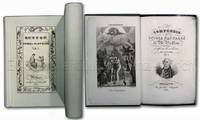
1831réf. 3736DB1831. 2 Bände. Milano Gaetano Schiepatti 1831. 8°. XXIII 279 S.; 305 S. 2 Bl. Mit 2 gest. Frontisp. 2 gest. Titel mit Portrait und 36 Kupfertafeln. Moderne Pappbände mit mont. Orig.-Buchdeckel. Seiten unbeschnitten. Neu aufgebunden. unknown
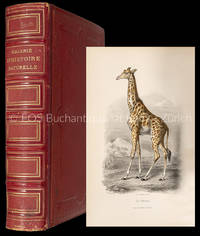
1880réf. 5553CB1880. Paris Garnier Frères 1880. Kl.-4°. XII 622 S. 2 Bl. Mit 32 handkolorierten Tafeln und Textillustrationen in Holzstich. Roter Halblederband aus der Zeit mit Rückenvergoldung und dreiseitigem Goldschnitt Blindprägung auf Deckeln Ch. Magnier. Sehr attraktiv illustrierte Ausgabe zusammengestellt aus den Werken von Georges Louis Leclerc de Buffon 17071788 die sich mit Säugetieren und Vögeln befasst. Kanten leicht berieben sonst schönes sauberes Exemplar Besitzereintrag auf Vorsatz. unknown
1804réf. 4989BB1804. 3. Auflage. 5 Bände. Paris Le Prieur 1804. Klein-8°. Mit 1 gest. Frontisp. und 56 gest. Tafeln. Halblederbände aus der Zeit mit je 2 goldgepr. Rückenschildern und einfacher Rückenvergoldung. Die Vorsätze leimschattig. Durchgehend leicht gebräunt und stockfleckig. Einbände berieben und bestossen. Gelenke von Band eins geplatzt und eine Tafel lose. unknown
1788réf. 48877à Paris: De l' imprimerie des Bâtiments du roi 1788. Fine. De l' imprimerie des Bâtiments du roi à Paris 1788 20 x 25.50 cm relié First edition of this treatise published following the four volumes whose editorial dates run from 1782 for the first volume to 1788 for the last namely the Traité de l'aimant which is therefore often missing from the series. Contemporary full red morocco binding. Spine with raised bands richly decorated. Title and volume labels in black morocco. Triple fillet frame on covers. Roulette on leading edges and board-edges. Gilt edges. Domino paper with gilt stars. Corners rubbed. Very handsome copy perfectly bound in a master binding very fresh. The Traité de l'aimant is the last work published during the author's lifetime and closes the Histoire naturelle whose edition spanned fifty years and which enjoyed success comparable to Diderot and d'Alembert's Encyclopédie. The treatise proper is followed by numerous tables of observations on the inclination of the magnetic needle with the names of travelers and navigators in the southern and northern hemispheres according to different latitudes. The treatise begins with an exposition of magnetic and electric forces. De l' imprimerie des Bâtiments du roi hardcover
1783réf. 46110Paris: De L'imprimerie Royale 1783. First separate edition 9 volumes complete with 262 engraved plates by De Seve; 4to marbled endpapers title-page engravings and illustrations in the text; extremities rubbed and worn some hinges weak with joints starting v. 1 missing spine labels approx. half of v. 9 spine is perished interior very good and sound plates are mostly fine and bright; overall a good set in full contemporary mottled calf with triple gilt rules on covers insignia stamped in blind on covers excluding v. 6 & 9 all edges marbled gilt-decorated spines red morocco labels lettered in gilt. As noted in Sitwell a new set of 262 uncolored plates were made for this separate edition of the bird volumes the plates in the first edition of Histoire Naturelle Generale were by Francois Nicolas Martinet. Sitwell p. 83; Nissen 158; Wood p. 262; Brunet p.1376 Ebert 3131. De L'imprimerie Royale unknown
1957réf. 44458Bourg-la-Reine: Aux dépens d'un artiste 1957. Fine. Aux dépens d'un artiste Bourg-la-Reine 1957 25.50 x 32.50 cm en feuilles sous chemise et étui. Edition illustrated with 21 original engravings by Tavy Notton one of 15 numbered copies on Japan super nacré deluxe copy after 6 others differently enhanced. Our copy as stipulated in the justification page is complete with the original signed drawing by Tavy Notton with its two duplicate suites on Auvergne and Rives blanc with the silk printing of 3 simple plates. However the copperplate and the silk printing of 3 double plates are lacking in our work. Tavy Notton's illustrations thus comprise: 1 frontispiece in black 20 hors-texte in black of which 6 are double-page. Very handsome copy. Aux dépens d'un artiste unknown
réf. 62102379Cambridge University Press CUP . Papeback. New. pp. 596 Cambridge University Press CUP unknown
réf. 62102362Cambridge University Press CUP . Papeback. New. pp. 540 Cambridge University Press CUP unknown
réf. 62102442Cambridge University Press CUP . Papeback. New. pp. 618 Cambridge University Press CUP unknown
réf. 62102290Cambridge University Press CUP . Papeback. New. pp. 554 Cambridge University Press CUP unknown
réf. 62102321Cambridge University Press CUP . Papeback. New. pp. 492 Cambridge University Press CUP unknown
réf. 62102342Cambridge University Press CUP . Papeback. New. pp. 610 Cambridge University Press CUP unknown
1804réf. 6665Paris: De l'Imprimerie Royale later Imprimerie des Bâtimens du Roi; Hôtel de Thou; Plassan 1804. First edition. First edition a very fine uniformly-bound contemporary set with the separately-issued and frequently-absent atlas to the Minéraux of the first work to present natural history as a continuous secular narrative-from planetary formation through geology and mineralogy to the quadrupeds birds fishes and cetaceans and at last to the human races-and the work in which across fifty-five years and four political regimes the biblical chronology that had organised European natural science since antiquity ceased to be the only frame within which educated readers could discuss the age of the earth. In the Époques de la Nature 1778 Buffon proposed seven epochs of earth history and from cooling experiments in his own forge at Montbard estimated its age at roughly seventy-five thousand years; in unpublished notes his private estimate reaches three million-the order of magnitude Lyell would later extract from stratigraphy and Darwin require for natural selection to operate. . The Founding Treatise of Secular Science. First edition of the first work to present natural history as a continuous secular narrative from planetary formation to the human races and the work in which across fifty-five years and four political regimes the biblical chronology that had organised European natural science since antiquity ceased to be the only frame within which educated readers could discuss the age of the earth. Ernst Mayr called Buffon "the father of all thought in natural history" at his time; the DSB records that he "established the intellectual framework within which most naturalists up to Darwin worked." Buffon was appointed Intendant du Jardin du Roi in 1739 at thirty-two and spent nearly half a century converting the royal cabinet of natural-history specimens into a compendium. At its close under Lacépède's hand in 1804 it comprised forty-four quarto volumes more than twelve hundred engraved plates and a style so supple that Buffon's elegies on individual species remained set texts in French lycées into the twentieth century. Uniformly bound in contemporary French mottled calf and preserving all forty-four text volumes together with the separately-issued and frequently-absent atlas to the Minéraux the present copy is of a completeness and coherence uncommon in a publication whose fifty-five-year issue spanned four successive Parisian imprints. Within thirty years of the final volume Lyell was writing the Principles of Geology; within sixty Darwin the Origin. The publishing history ran for fifty-five years through four imprints. The first three volumes appeared together in the autumn of 1749 from the Imprimerie Royale sold out in six weeks were reprinted three times within the same interval and provoked the Sorbonne's faculty of theology into delivering Buffon a list of propositions judged heretical-to which Buffon submitted a carefully calibrated retraction while continuing to print the offending volumes unchanged. The initial prospectus of 1748 had promised fifteen volumes in three divisions; by the time Buffon died in 1788 thirty-five were in print a thirty-sixth was on the press and the plan of covering the vegetable kingdom had quietly been abandoned. The seventh and final Supplément appeared posthumously in 1789 through Lacépède's editorship; the fifth volume of the Minéraux containing the Traité de l'aimant had issued a year earlier from the Imprimerie des Bâtimens du Roi and was accompanied by a separately-issued atlas of folding maps and tables. Lacépède then continued the animal-kingdom programme with the Quadrupèdes ovipares et Serpens 1788-89 the Poissons 1798-An XII and the Cétacées 1804. The combined output of four imprints across three generations of Parisian printers-the Imprimerie Royale the Imprimerie des Bâtimens du Roi the Hôtel de Thou under Panckoucke and Plassan and Plassan imprimeur-libraire-is the reason a uniformly-bound contemporary set is uncommon. Volume I opens the series with the Premier Discours: De la manière d'étudier et de traiter l'histoire naturelle a forty-page polemic against Linnaean classification that argues from a position of mathematical and empirical rigour rare in the literature of the period that species as Linnaeus conceived them were artificial abstractions imposed on the continuous variability of individuals and that a taxonomy built on stamen-counts and pistil-counts did not correspond to nature. The attack was political as well as philosophical. Linnaeus's Systema Naturae Leiden 1735 had already been adopted as the common grammar of European zoology; Buffon's Discours delivered from within the most prestigious press in France asserted that the Swede's method was a convenience of memory mistaken for a description of the world. The volume continues with the Second Discours: Histoire et théorie de la Terre dated by Buffon himself "à Montbard le 3 octobre 1744" which proposes a cosmogony in which the planets were struck from the sun by the oblique impact of a comet and have been cooling ever since and with the Preuves de la théorie de la Terre in which Buffon develops his theory across seventeen articles and provides two engraved terrestrial maps drawn under his supervision by Robert de Vaugondy fils. These arguments delivered within a volume bearing the royal arms of France on its title-page vignette constituted a public challenge to Mosaic cosmogony. The geological argument reached its mature form a generation later in the fifth Supplément the Époques de la Nature 1778 published when Buffon was seventy-one. Here he proposed seven epochs of the earth's history estimated their combined duration at roughly 75000 years and in unpublished manuscript notes pushed his private estimate to three million-an order of magnitude consistent with the timescales that Lyell would later extract from stratigraphy and that Darwin would require for natural selection to operate. Beyond the number the Époques argues by accumulation: Buffon marshals fossil molluscs at Alpine altitudes the decay of volcanic emissions the rate at which heated iron spheres cool in Buffon's own forge at Montbard and the distribution of living species across climate zones and weaves these into a cumulative inductive case in which each line of evidence corroborates the others. The technique is no longer antiquarian but probabilistic; Buffon had published a French translation of Newton's Method of Fluxions in 1740 and would publish original work on geometric probability. When the Époques reached Edinburgh and Cambridge in the 1780s it announced to Anglophone readers that the earth's antiquity had become a quantitative problem rather than a scriptural one. The core of the programme is the animal kingdom. Volumes 4 through 15 1753-1767 treat the quadrupeds in an arrangement that combines Buffon's natural-historical essays with Daubenton's anatomical descriptions-a division of labour Buffon defended in the Preface to volume IV and that Daubenton eventually came to resent his name disappearing from the later volumes. The Oiseaux volumes 1770-1783 are the work of Buffon with Philibert Guéneau de Montbeillard and the Abbé Bexon and assume decisively that geographic distribution is a datum of zoology rather than an incidental fact about individual animals-a premise that commits the Histoire naturelle to the biogeographic thinking which Alfred Russel Wallace would systematise a century later. The Minéraux volumes I-V 1783-1788 extend the account to the inorganic world and conclude with the Traité de l'aimant Buffon's last publication in his lifetime accompanied by the atlas that the present set preserves. Lacépède's eight continuation volumes close the series with the Ovipares et Serpens the Poissons five volumes 1798-An XII drawing on the manuscript collections of Philibert Commerson and the Cétacées 1804-the whole project begun under Louis XV and finished under the Consulate of Bonaparte. The plate programme numbering 1275 copper engravings including the portrait frontispiece of Buffon and twelve folding maps was entrusted principally to Jacques de Sève and his son Jacques-Eustache de Sève with additional designs by Buvée l'Amériquain Oudry and Baron and engravings by Baquoy Basan Moitte and Tardieu. De Sève père is the designing sensibility that defines the visual character of the Histoire naturelle: his quadrupeds stand in pastoral European landscapes-villages rivers mountains ruins-that place each species within a habitat rather than isolating it on the diagrammatic ground of the pre-Linnaean iconotheca. The aesthetic choice is not decorative. It performs Buffon's thesis that species are functions of geography; the elk against a Norwegian spruce-line and the jerboa against a North African dune argue in visual shorthand a zoogeography that the text elaborates. The plates in the present set are in the original uncoloured state as issued by the Imprimerie Royale and its successor presses; the hand-coloured Planches enluminées of Edme-Louis Daubenton 1765-1786 1008 plates issued separately to accompany the de luxe folio edition of the Oiseaux are a distinct publication and do not belong to the quarto edition. Buffon was born Georges-Louis Leclerc at Montbard in Burgundy on 7 September 1707 the son of a magistrate of the Estates of Burgundy who in 1714 inherited a substantial fortune from a maternal relative and acquired the lordship of Buffon - the toponym from which the future comte took the name by which he is universally known. He was educated by the Jesuits at Dijon studied mathematics at Angers and travelled in Italy and England in 1730-1733 in the company of the young Duke of Kingston and his Genevan tutor Nathaniel Hickman. Election to the Académie des Sciences followed at twenty-six in 1734. His earliest publications were French translations of Newton's Method of Fluxions 1740 and Stephen Hales's Vegetable Staticks 1735 and an original 1733 communication to the Académie on the geometric probability of a needle dropped at random across a ruled floor - the "needle problem" that bears his name in the founding literature of integral geometry. The 1739 appointment as Intendant du Jardin du Roi secured through the patronage of Maurepas gave him the cabinet the printing privilege and the institutional platform that the Histoire naturelle required. From 1739 onward his year was strictly bisected: October to April in Paris among the specimens May to September at Montbard where the great house the gardens the ducal tower and from 1768 an industrial-scale ironworks furnished both the writing room and the experimental laboratory. The Montbard forge is the experimental backbone of Buffon's late geological writing. From 1765 onward he conducted a sustained programme of cooling experiments in which iron and stone spheres of graduated diameter were heated to incandescence and the time required for them to cool to ambient temperature was measured under controlled conditions. Extrapolating from sphere to planet on the assumption that the earth had begun as a molten body progressively congealed Buffon arrived at the published 75000-year estimate of the Époques de la Nature and at the manuscript figure three million years that he allowed his students to read but did not put into print. The forge was simultaneously a working blast-furnace producing pig-iron for the Burgundian armaments trade - the revenue from which subsidised the publication and freed Buffon from dependence on royal subvention. The orangery at Montbard housed parallel experiments on plant respiration and the germination of seeds; the great walled garden was a controlled environment for testing the hardiness of imported species against Burgundian winters. The whole estate in effect was an early instance of the gentleman-natural-philosopher's establishment as instrument - comparable in scale to Tycho's Uraniborg to Boyle's Stalbridge or to Darwin's later Down House. The Histoire naturelle is the published face of this experimental enterprise. The literary reception of Buffon was nearly as consequential as the scientific. His 1753 reception address to the Académie française the Discours sur le style "le style est l'homme même" became one of the most quoted statements of French neoclassical aesthetics and reframed the Histoire naturelle as a literary as well as a scientific monument. The set-piece elegies on the horse the lion the swan the orangutan and the dog were detached from the parent volumes and circulated as morceaux choisis; they remained obligatory recitation pieces in the French lycée through the Third Republic and were anthologised by Sainte-Beuve in the Causeries du lundi in 1855 as the model of mid-eighteenth-century French prose. Diderot read and annotated the early volumes for the Encyclopédie; Rousseau with whom Buffon's relations were polite but distant took the geographic-determinist passages as silent corroboration of his own anthropology; Voltaire who shared Buffon's anti-Sorbonne instinct but resented his court success kept up a guarded correspondence. The Smellie translation Edinburgh 1780-1785 and Goldsmith's History of the Earth and Animated Nature London 1774 an avowed abridgment carried the work into the English-speaking world where Erasmus Darwin's Zoonomia 1794-96 silently absorbed Buffon's transformist hints into its own evolutionary speculation. The afterlife of Buffon's argument runs straight through nineteenth-century evolutionary thought. Cuvier lecturing at the Muséum d'Histoire Naturelle from 1795 treated the Histoire naturelle as the institutional charter of his own comparative-anatomical programme even while disputing its transformism. Lamarck who had reorganised the botanical galleries under Buffon in 1788 developed his 1809 Philosophie zoologique by extending Buffon's observations of climate-driven variability into a fully transformist mechanism. Lyell's Principles of Geology 1830-33 acknowledged in its preface that the eighteenth-century revolution in geological time had been Buffon's and Darwin in the historical sketch added to the third edition of the Origin 1861 placed Buffon at the head of the line of pre-evolutionary speculators - with the politically careful note that the Histoire naturelle had at one point been condemned by the Sorbonne. Thomas Jefferson who owned the work at Monticello Sowerby 1024 for volumes 1-31 and 637 for the Suppléments and corresponded with Buffon about American zoology was so stung by Buffon's thesis that New World fauna were degenerate forms of Old World types that he had the bones of an American moose shipped across the Atlantic to Paris as evidence in rebuttal. The German reception travelled along a separate but parallel channel: Goethe read the Époques in 1781 and absorbed its rhetoric of geological depth into his own morphological writing and Alexander von Humboldt whose Kosmos 1845-1862 is the nineteenth-century lineal descendant of the encyclopaedic ambition of the Histoire naturelle repeatedly cited Buffon as the founder of the genre to which he conceived his own work as belonging. The scholarly modern editions - the Imprimerie Nationale Pléiade selection of 1954 under the editorship of Jean Piveteau the 1971 Bibliothek Suhrkamp German selection edited by Jacques Roger and Roger's own 1989 Fayard biography translated as Buffon: A Life in Natural History Cornell 1997 - are all built on direct consultation of the original quarto edition of which complete uniformly-bound contemporary sets remain the necessary collation copy. The Centre international d'étude du XVIIIe siècle's Buffon: Histoire naturelle générale et particulière bibliography Pierre Lecouturier and Roger Hahn 1972 supplemented by Jeff Loveland and others through the 2010s confirms that no two contemporary sets are identical in title-page state advertisement leaves or the order of the prefatory matter and treats the uniformly-bound quarto with a complete Minéraux atlas as the bibliographical reference state for the work. References: Printing and the Mind of Man 198 Carter and Muir identify Buffon's priority in presenting the natural world as a single unified field - Dibner Heralds of Science 193 described as the most celebrated treatise on animals ever produced - Norman 369-370 - Evans First Editions of Scientific Books Berkeley exhibition 1934 no. 97 - Nissen ZBI 672 - Wellcome II 267 - Brunet I 1376 Brunet recommends that collectors always seek out this first quarto edition for the beauty of its engravings - Sowerby Catalogue of the Library of Thomas Jefferson 1024 and 637. 45 volumes 4to 242 × 188 mm comprising the 44 text volumes and the separately-issued atlas to the Minéraux. 1275 engraved plates including the portrait frontispiece of Buffon and twelve folding maps mostly by Jacques de Sève père and his son Jacques-Eustache de Sève with further designs by Buvée l'Amériquain Jean-Baptiste Oudry and Nicolas Baron engraved by Baquoy Basan Moitte and Tardieu. Uniform contemporary French mottled calf the spines gilt in compartments with small lozenge tools and two black morocco lettering-pieces triple gilt fillet on the covers marbled edges and matching Spanish-shell marbled endpapers; narrow blue silk ribbon markers at the heads of the spines. A very fine set. The Oiseaux volumes are numbered I-IX on their title-pages and continuously as tomes XVI-XXIV on their half-titles. . De l'Imprimerie Royale [later Imprimerie des Bâtimens du Roi; Hôtel de Thou; Plassan] unknown
1828réf. ABC_50439Brussels 1828. 8vo. Th. Lejeune Contemporary half calf marble boards gold-tooled spine with green and blue compartments author title and volume number lettered in gold on the spine green sprinkled edges. With a lithographed frontispiece portrait of the author a lithographed portrait of Daubenton 2 lithographed emblematic frontispieces 2 lithographed double-page maps of the Old and the New World 6 numbered lithographed plates of teeth 16 numbered lithographed plates of scientific instruments etc. and 6 numbered lithographed plates of seeds in the first 4 introductory volumes lithographed frontispieces of a naked man woman and child and 26 lithographed plates of human heads and species including 10 are nicely coloured by hand in volume 5 on the natural history of man illustrations of mammals and mammalian anatomy on 469 lithographed plates including 226 coloured by hand in volumes 6 to 10 and illustrations of birds on 210 lithographed plates all beautifully coloured by hand and including 8 heightened with gold in volumes 11 to 14. 20 volumes 14 text and 6 atlas. Each volume ca. 500 pp. Fine complete set of a special edition of the works of George-Louis Leclerc Comte de Buffon 1707-1788 the most important natural historian of his day whose ground-breaking observations and classifications profoundly influenced biology geology and the natural sciences across Europe. This Brussels edition was edited by Professor Lamouroux correspondant of the Institut de France and enhanced with extensive contributions by Buffon's successors including Daubenton Lacépède Cuvier Duméril Poiret Lesson and Geoffroy Saint-Hilaire whose additions were appended to the relevant chapters to provide the most current scientific observations and refinements.The work opens with two prefaces by the publishers and two eulogies one on Buffon by Nicolas de Condorcet 1743-1794 and the other on Louis Jean Marie Daubenton 1716-1800 by Baron Cuvier 1796-1832 situating the compilation within its historical and intellectual context. The illustrations were produced under the supervision of M. Meunier draughtsman of the Cabinet dHistoire Naturelle and for the first time lithographed a technique that allowed according to the Paris publisher a far more faithful representation of living subjects than was previously possible with traditional engraving. The lithography was executed by Th. Lejeune in Brussels on specially prepared paper ensuring clarity and durability.The set is divided into four major sections. Théorie de la terre volumes 1-4 illustrating minerals fossils and natural phenomena along with emblematic and scientific designs. Histoire naturelle de lhomme volume 5 depicting human anatomy physiognomy and the diversity of peoples across the globe. Mammifères volumes 6-10 presenting mammals in remarkable anatomical and behavioural detail. Oiseaux volumes 11-14 illustrating the appearance and structure of birds in natural poses. All of these topics are also represented in 6 separate atlas volumes providing a complete visual complement to the text.In total the edition contains 738 lithographs maps and plates almost two-thirds of which depict mammals and birds in rich hand-colouring demonstrating both scientific precision and extraordinary artistry. This edition preserves Buffon's original genius while reflecting the cumulative expertise of successive generations of naturalists making it one of the most comprehensive visually impressive and historically significant editions of Buffons Oeuvres complètes ever produced.With a red ownership stamp on the title page and the recto of the first flyleaf of the first volume of Théorie de la Terre Dr. A.A. v. Otterloo possibly Antony Adriaan van Otterloo 1847-1895 pastor in Zutphen The Netherlands from 1883. Some minor rubbing is visible on a few boards and all volumes show foxing. Otherwise in very good condition.l Bibl. Natura Artis Magistra 1171; Nissen 689; Sitwell Fine Bird Books 1700-1900 p. 83; Wood 268; Zimmer J.T. Ayer Lib. p. 112-113. NATURAL HISTORY / Zoology Birds - Ornithology Faunas & General Zoology Mammals hardcover
réf. 70362Amsterdam Schneider 1776. Geen band 234 pagina's 54 prenten 25 x 21 cm Nederlands. Losse pagina's waterschade scheurtjes. De algemeene en byzondere natuurlyke historie met de beschryving van des konings kabinet. Agtste deel. Amsterdam Schneider 1776 unknown
réf. NATW3141A Paris A La Libairie Stereotype De P. Didot L'Aine.Et Firmin Didot An VII. - 1799. 278 S. mit 28 Taf. 1 nn. Bl. mit verschlungenem Monogramm am Titelblatt P. D. Marmorierter heller Lederband d. Zeit Rückenschildchen u. Rückenverzierung sowie Zierrahmen d. Einbanddeckel goldgeprägt Vorsatz und Buchschnitt blau marmoriert Ecken u. Kanten bestoßen beschabt Rückenverzierung abgerieben Rücken vom Buchblock gelöst u. eingerissen Einbanddeckel gelockert Vorsätze leimschattig. Vorsatz u. mehrere Seiten etwas wasserrandig Seiten sonst durchgehend leicht gebräunt u. teilw. braunfleckig. Mit kleinem runden Papierschildchen mit Monogramm B S am vorderen Innendeckel. Warfare and the age of printing 1488. Querard 1558 - sechstes Bändchen der Stereotypausgabe der vierzehnbändigen die 'Vierfüßer' umfassenden Abteilung dieser dem Zoologen Etienne de Lacepede 1756-1825 gewidmeten 'Histoire Naturelle' des französischen Naturforschers Buffon 1707-1788 von welcher Lacepede auch die letzten Bände verfasst hatte. Die zahlreichen Tafeln zeigen die bekannten Tierabbildungen zu Buffons Werk nach Entwürfen des Illustrators Jean Louis Charles Pauquet 1759-1824. A Paris, A La Libairie Stereotype De P. Didot L'Aine...Et Firmin Didot An VII. - 1799. unknown