Georges Louis Leclerc de BuffonBiblio.com

2530 resultados
ref. 0484679139.Ghardcover. Good. Access codes and supplements are not guaranteed with used items. May be an ex-library book. hardcover
ref. 0666436002.Ghardcover. Good. Access codes and supplements are not guaranteed with used items. May be an ex-library book. hardcover
ref. 0282284176.Gpaperback. Good. Access codes and supplements are not guaranteed with used items. May be an ex-library book. paperback
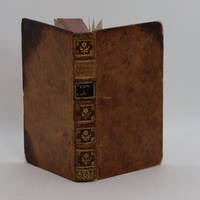
1774ref. FB640 /6AFull leather binding black title plate. Gilt floral design on the spine. The Histoire Naturelle générale et particulière avec la description du Cabinet du Roi English: Natural History General and Particular with a Description of the King's Cabinet is an encyclopaedic collection of 36 large quarto volumes written between 1749–1804 initially by the Comte de Buffon and continued in eight more volumes after his death by his colleagues led by Bernard Germain de Lacépède. The books cover what was known of the "natural sciences" at the time including what would now be called material science physics chemistry and technology as well as the natural history of animals. Georges-Louis Leclerc Comte de Buffon 7 September 1707 – 16 April 1788 was a French naturalist mathematician cosmologist and encyclopédiste. His works influenced the next two generations of naturalists including two prominent French scientists Jean-Baptiste Lamarck and Georges Cuvier. Buffon published thirty-six quarto volumes of his Histoire Naturelle during his lifetime with additional volumes based on his notes and further research being published in the two decades following his death. Ernst Mayr wrote that "Truly Buffon was the father of all thought in natural history in the second half of the 18th century". Credited with being one of the first naturalists to recognize ecological succession he was later forced by the theology committee at the University of Paris to recant his theories about geological history and animal evolution because they contradicted the Biblical narrative of Creation. Buffon held the position of intendant director at the Jardin du Roi now called the Jardin des Plantes. Buffon's Histoire naturelle générale et particulière 1749–1788: in 36 volumes; an additional volume based on his notes appeared in 1789 was originally intended to cover all three "kingdoms" of nature but the Histoire naturelle ended up being limited to the animal and mineral kingdoms and the animals covered were only the birds and quadrupeds. "Written in a brilliant style this work was read . by every educated person in Europe". Those who assisted him in the production of this great work included Louis-Jean-Marie Daubenton Philibert Guéneau de Montbeillard and Gabriel-Léopold Bexon along with numerous artists. Buffon's Histoire naturelle was translated into many different languages making him one of the most widely read authors of the day a rival to Montesquieu Rousseau and Voltaire. In the opening volumes of the Histoire naturelle Buffon questioned the usefulness of mathematics criticized Carl Linnaeus's taxonomical approach to natural history outlined a history of the Earth with little relation to the Biblical account and proposed a theory of reproduction that ran counter to the prevailing theory of pre-existence. The early volumes were condemned by the Faculty of Theology at the Sorbonne. Buffon published a retraction but he continued publishing the offending volumes without any change. In the course of his examination of the animal world Buffon noted that despite similar environments different regions have distinct plants and animals a concept later known as Buffon's Law. This is considered to be the first principle of biogeography. He made the suggestion that species may have both "improved" and "degenerated" after dispersing from a center of creation. In volume 14 he argued that all the world's quadrupeds had developed from an original set of just thirty-eight quadrupeds. On this basis he is sometimes considered a "transformist" and a precursor of Darwin. He also asserted that climate change may have facilitated the worldwide spread of species from their centres of origin. Still interpreting his ideas on the subject is not simple for he returned to topics many times in the course of his work. Buffon considered the similarities between humans and apes but ultimately rejected the possibility of a common descent. He debated with James Burnett Lord Monboddo on the relationship of the primates to man Monboddo insisting against Buffon on a close relationship. At one point Buffon propounded a theory that nature in the New World was inferior to that of Eurasia. He argued that the Americas were lacking in large and powerful creatures and that even the people were less virile than their European counterparts. He ascribed this inferiority to the marsh odours and dense forests of the American continent. These remarks so incensed Thomas Jefferson that he dispatched twenty soldiers to the New Hampshire woods to find a bull moose for Buffon as proof of the "stature and majesty of American quadrupeds". In Les époques de la nature 1778 Buffon discussed the origins of the solar system speculating that the planets had been created by a comet's collision with the sun. He also suggested that the Earth originated much earlier than 4004 BC the date determined by Archbishop James Ussher. Basing his figures on the cooling rate of iron tested at his Laboratory the Petit Fontenet at Montbard he calculated that the age of the earth was 75000 years. Once again his ideas were condemned by the Sorbonne and once again he issued a retraction to avoid further problems. De L'Imprimerie Royal. Paris. hardcover
1831ref. R300097434CHEZ PILLOT. 1831. In-8. Broché. Etat d'usage, 1er plat abîmé, Coiffe en pied abîmée, Intérieur frais. 470 pages - pas de gravures - coiffes abîmées - 1er plat désolidarisé.. . . . Classification Dewey : 508-Histoire naturelle
ref. R300124920Non renseigné. Non daté. In-4. Relié plein cuir. Etat d'usage, 1er plat abîmé, Dos satisfaisant, Quelques rousseurs. Paginé de 205 à 578. 200 premières pages manquantes et dernières pages manquantes. 6 planches en noir et blanc hors texte, dont certaines dépliantes (collationnées). Contreplats bleus. 1er plat abîmé avec un manque au niveau du coin inférieur. Dos à 5 nerfs, 2 pièces de titre noires abîmées, titre, tomaison et motifs dorés. Non daté, 18e siècle.. . . . Classification Dewey : 840.05-XVIII ème siècle
ref. lc_108332Chez F. D. Pillot, 1832
ref. 0656362782.Ghardcover. Good. Access codes and supplements are not guaranteed with used items. May be an ex-library book. hardcover
ref. 9597Suite de 167 gravures,de format in 12,chez LECOINTRE 1830 Dessins de J.G PRETRE. Dans un portefeuille cartonné, fermoirs à rubans, pièce de titre cuir.
1776ref. 665081776 Paris, Imprimerie Royale, 1776, In-douze,370 + (liii-table des matières), pleine reliure époque, dos à cinq nerfs, coins émoussés,coiffe supérieure abimée, tranche jaspée,état conveanble,
1845ref. AUB-4011Paris, administration de librairie 1845. Bon exemplaire relié, reliure demi cuir, in-8, 510 pages + planches.
17912 volumi in un tomo In 16°, pp. 341+323 con errori di numerazione Legatura originale in mz pelle con titoli in oro al dorso.Ediizone figurata da 6 tavole f.t. incise in rame.Si dispone del solo tomo di supplemento. Timbro di biblioteca estinta.
1771ref. 17749In Milano: appresso Giuseppe Galeazzi 1771. Cm. 19 pp. 305 1. Con 31 tavole incise in rame fuori testo. Legatura coeva in cartonato alla rustica. Bell'esemplare fresco marginoso e stampato su carta di ottima qualità. Volume sesto delle opere complete. Tratta principalmente del Cavallo del cane 17 tavole e del gatto 3 tavole. appresso Giuseppe Galeazzi unknown
1770ref. 17747In Milano: appresso Giuseppe Galeazzi 1770. Cm. 19 pp. 392 4. Con sette tavole incise in rame fuori testo. Legatura coeva in cartonato alla rustica. Bell'esemplare fresco marginoso e stampato su carta di ottima qualità. Volume terzo delle opere complete. Titola: Storia degli animali con studi generali sulla riproduzione la nutrizione ecc. appresso Giuseppe Galeazzi unknown
1772ref. 33745Milano: Giuseppe Galeazzi 1772. Cm. 19 pp. 302. Con 26 tavole incise in rame fuori testo. Legatura coeva in cart. alla rustica ricoperta da carta marmorizzata. Manca la tavola n. 20 ed un'altra presenta una lacuna. Esemplare genuino marginoso e stampato su carta forte. Disponibile il solo tomo undicesimo. Giuseppe Galeazzi unknown
1780ref. 44372Milano: Galeazzi 1780. Cm. 195 pp. 324 xlvi. Leg. coeva in cart. alla rustica con dorso ricoperto. Esemplare genuino marginoso e ben conservato. Galeazzi unknown
1778ref. 44352Milano: Galeazzi 1778. Cm. 195 pp. 293 1 xxxvii 3. Con 16 tavole incise in rame f.t. Leg. coeva in cart. alla rustica. Esemplare genuino marginoso e ben conservato. Galeazzi unknown
1770ref. 33742Milano: Giuseppe Galeazzi 1770. Cm. 19 pp. 364 2. Legatura coeva in cart. alla rustica ricoperta da carta marmorizzata. Bell'esemplare genuino marginoso e stampato su carta forte. Disponibile il solo tomo secondo. Giuseppe Galeazzi unknown
1770ref. 33743Milano: Giuseppe Galeazzi 1770. Cm. 19 pp. 392 4. Legatura coeva in cart. alla rustica ricoperta da carta marmorizzata. Bell'esemplare genuino marginoso e stampato su carta forte. Disponibile il solo tomo terzo. Giuseppe Galeazzi unknown
1780ref. 44354Milano: Galeazzi 1780. Cm. 195 pp. 187 3 xxiv. Con parecchie tavole incise in rame f.t. Leg. coeva in cart. Esemplare genuino marginoso e ben conservato. Galeazzi unknown
1771ref. 33744Milano: Giuseppe Galeazzi 1771. Cm. 19 pp. 327 1. Con 17 tavole incise in rame fuori testo. Legatura coeva in cart. alla rustica ricoperta da carta marmorizzata. Bell'esemplare genuino marginoso e stampato su carta forte. Disponibile il solo tomo ottavo. Giuseppe Galeazzi unknown
1772ref. 33747Milano: Giuseppe Galeazzi 1772. Cm. 19 pp. 341 1. Con 21 tavole incise in rame fuori testo. Legatura coeva in cart. alla rustica ricoperta da carta marmorizzata. Esemplare genuino marginoso e stampato su carta forte. Disponibile il solo tomo nono. Giuseppe Galeazzi unknown
1771ref. 33746Milano: Giuseppe Galeazzi 1771. Cm. 19 pp. 295 3. Con 33 tavole incise in rame fuori testo. Legatura coeva in cart. alla rustica ricoperta da carta marmorizzata. Mancanze ad almeno tre tavole. Esemplare peraltro genuino marginoso e stampato su carta forte. Disponibile il solo tomo settimo. Giuseppe Galeazzi unknown
1812ref. 122071Piacenza dai Torchi del Majno 1812/1832. Opera in 90 volumi in 16° piccoli opuscoli aggiunti tutti ancora nelle brossure originali con solo problemi ai dorsi non di tutti i volumi per esposizione alla luce e alla polvere. L'opera è così suddivisa. Parte generale in 4 volumi dal vol. 1 al vol. 4 - Quadrupedi in 7 volumi dal vol. 5 al vol. 11 - Uccelli in 16 volumi dal vol. 12 al vol. 27 con aggiunta di 3 volumi dal vol. 28 al vol. 30 dell' editore italiano 1 volume di Indice vol. 31 - Minerali in 5 volumi dal vol. 32 al vol. 36 con una traccia di tarlo alle prime 20 pagine del volume 36. Dal vol. 37 il titolo dell'occhietto cambia in: Continuazione della storia naturale di Buffon. - Pesci in 11 volumi dal vol. 37 al vol. 47 nella copertina il IV volune è erroneamente segnato come III ma giusta la collazione - Rettili in 5 volumi dal vol. 48 al vol. 52 - Insetti in 11 volumi dal vol. 53 al vol. 63 contrariamente al piano dell'opera che ne conta 62 - Crostacei in 2 volumi dal vol. 64 al vol. 65 - Conchiglie in 5 volumi dal vol. 66 al vol. 70 - Vermi in 3 volumi dal vol. 71 al vol. 73 - I Vegetabili con indicazione dell'uso che se ne può fare in 16 volumi dal vol. 74 al vol. 89 - Indice vol. 90 Piano dell'opera. Tutti i volumi recano le tavole in nero incise da Maurizio De Magistris e Guglielmo Silvestri dai disegni di Jacques Eustache Deseve alle quali va aggiunto il ritratto del B. in antiporta al primo volume. Buoni esemplari salvo il detto di questa importante opera che mantiene ancora una carta sana e fresca unknown