Edwards, GeorgeBiblio.com

11 087 résultats
1743réf. 7013London:: The College of Physicians 1743-51. First edition. Fine . A fine original hand-colored copperplate engraving. Quarto 9 x 12 inches. Includes text. George Edwards London 1694-1773 was a Fellow of the Royal Society and Fellow of the Society of Antiquaries in London who rejected his early formal training and potential career in business to pursue his passion in natural history. His dedication and talent as a draftsman and naturalist was evident thus gaining the attention of Sir Hans Sloane President of the College of Physicians and the Royal Society. Sir Hans offered Edwards the post of Librarian of the Royal College of Physicians in London and enlisted him to draw the natural curiosities of Sloane's private museum. This connection became the inspiration for Edward's masterful achievements; A Natural History of Uncommon Birds Published between 1743 and 1751 and the subsequent work; Gleanings of Natural History which was produced between 1758 and 1764. These two works illustrated and documented many previously unrecorded specimens of birds reptiles and insects held in England's private collections up to the mid eighteenth century. A monumental achievement Edwards documented- in English and French- painted engraved and hand-colored every one of the fine compositions in this Pre-Linnaean natural history opus. Although not a field naturalist Edwards placed many of his birds and animals in landscaped settings which was unusual for the time. In other compositions birds are elegantly perched on stylized branches in a classic Georgian format more decorative than realistic charming nonetheless. A gracious and humble man Edwards established firm and respected alliances with naturalist pioneers Carl Linnaeus 1707-78 Mark Catesby 1683-1749 from whom he learned the art of engraving and subsequently aided Catesby in the revision of his publication; The Natural History of Carolina Florida and the Bahama Islands London c.1754 as well as William Bartram from whom he acquired several species of Pennsylvanian birds included in his volumes. As Edwards' work predates the completion of the Linnaean classification system Linnaeus was to borrow the English names of many of Edwards species for his renowned work on classification and nomenclature. Ref: Buchanan Jackson Fine Bird Books. Matted in Rag Board The College of Physicians, unknown
1743réf. 7014London:: The College of Physicians 1743-51. later printing. Fine . Pl 208 The Mango-fish & The Great Brown Locust. Original hand-colored copperplate engraving. Quarto 9 x 12 inches. Includes text. This print is from a later edition printed on J Whatman Turkey Mills paper watermarked 1836. George Edwards London 1694-1773 was a Fellow of the Royal Society and Fellow of the Society of Antiquaries in London who rejected his early formal training and potential career in business to pursue his passion in natural history. His dedication and talent as a draftsman and naturalist was evident thus gaining the attention of Sir Hans Sloane President of the College of Physicians and the Royal Society. Sir Hans offered Edwards the post of Librarian of the Royal College of Physicians in London and enlisted him to draw the natural curiosities of Sloane's private museum. This connection became the inspiration for Edward's masterful achievements; A Natural History of Uncommon Birds Published between 1743 and 1751 and the subsequent work; Gleanings of Natural History which was produced between 1758 and 1764. These two works illustrated and documented many previously unrecorded specimens of birds reptiles and insects held in England's private collections up to the mid eighteenth century. A monumental achievement Edwards documented- in English and French- painted engraved and hand-colored every one of the fine compositions in this Pre-Linnaean natural history opus. Although not a field naturalist Edwards placed many of his birds and animals in landscaped settings which was unusual for the time. In other compositions birds are elegantly perched on stylized branches in a classic Georgian format more decorative than realistic charming nonetheless. A gracious and humble man Edwards established firm and respected alliances with naturalist pioneers Carl Linnaeus 1707-78 Mark Catesby 1683-1749 from whom he learned the art of engraving and subsequently aided Catesby in the revision of his publication; The Natural History of Carolina Florida and the Bahama Islands London c.1754 as well as William Bartram from whom he acquired several species of Pennsylvanian birds included in his volumes. As Edwards' work predates the completion of the Linnaean classification system Linnaeus was to borrow the English names of many of Edwards species for his renowned work on classification and nomenclature. Ref: Buchanan Jackson Fine Bird Books. Matted in Rag Board The College of Physicians, unknown
1758réf. 7020London:: The Royal College of Physicians 1758-1764. First edition. Fine. Pl 282 The Spur Fish & The Indian Gattorugina. Original hand-colored copperplate engraving. Quarto 9 x 12 inches. Includes text. George Edwards London 1694-1773 was a Fellow of the Royal Society and Fellow of the Society of Antiquaries in London who rejected his early formal training and potential career in business to pursue his passion in natural history. His dedication and talent as a draftsman and naturalist was evident thus gaining the attention of Sir Hans Sloane President of the College of Physicians and the Royal Society. Sir Hans offered Edwards the post of Librarian of the Royal College of Physicians in London and enlisted him to draw the natural curiosities of Sloane's private museum. This connection became the inspiration for Edward's masterful achievements; A Natural History of Uncommon Birds Published between 1743 and 1751 and the subsequent work; Gleanings of Natural History which was produced between 1758 and 1764. These two works illustrated and documented many previously unrecorded specimens of birds reptiles and insects held in England's private collections up to the mid eighteenth century. A monumental achievement Edwards documented- in English and French- painted engraved and hand-colored every one of the fine compositions in this Pre-Linnaean natural history opus. Although not a field naturalist Edwards placed many of his birds and animals in landscaped settings which was unusual for the time. In other compositions birds are elegantly perched on stylized branches in a classic Georgian format more decorative than realistic charming nonetheless. A gracious and humble man Edwards established firm and respected alliances with naturalist pioneers Carl Linnaeus 1707-78 Mark Catesby 1683-1749 from whom he learned the art of engraving and subsequently aided Catesby in the revision of his publication; The Natural History of Carolina Florida and the Bahama Islands London c.1754 as well as William Bartram from whom he acquired several species of Pennsylvanian birds included in his volumes. As Edwards' work predates the completion of the Linnaean classification system Linnaeus was to borrow the English names of many of Edwards species for his renowned work on classification and nomenclature. Ref: Buchanan Jackson Fine Bird Books. Matted in Rag Board The Royal College of Physicians, unknown
1758réf. 7018London:: The Royal College of Physicians 1758-1764. First edition. Fine . Pl 283 Sea Bat & The Pyed Acarauana. Original hand-colored copperplate engraving. Quarto 9 x 12 inches. Includes text. George Edwards London 1694-1773 was a Fellow of the Royal Society and Fellow of the Society of Antiquaries in London who rejected his early formal training and potential career in business to pursue his passion in natural history. His dedication and talent as a draftsman and naturalist was evident thus gaining the attention of Sir Hans Sloane President of the College of Physicians and the Royal Society. Sir Hans offered Edwards the post of Librarian of the Royal College of Physicians in London and enlisted him to draw the natural curiosities of Sloane's private museum. This connection became the inspiration for Edward's masterful achievements; A Natural History of Uncommon Birds Published between 1743 and 1751 and the subsequent work; Gleanings of Natural History which was produced between 1758 and 1764. These two works illustrated and documented many previously unrecorded specimens of birds reptiles and insects held in England's private collections up to the mid eighteenth century. A monumental achievement Edwards documented- in English and French- painted engraved and hand-colored every one of the fine compositions in this Pre-Linnaean natural history opus. Although not a field naturalist Edwards placed many of his birds and animals in landscaped settings which was unusual for the time. In other compositions birds are elegantly perched on stylized branches in a classic Georgian format more decorative than realistic charming nonetheless. A gracious and humble man Edwards established firm and respected alliances with naturalist pioneers Carl Linnaeus 1707-78 Mark Catesby 1683-1749 from whom he learned the art of engraving and subsequently aided Catesby in the revision of his publication; The Natural History of Carolina Florida and the Bahama Islands London c.1754 as well as William Bartram from whom he acquired several species of Pennsylvanian birds included in his volumes. As Edwards' work predates the completion of the Linnaean classification system Linnaeus was to borrow the English names of many of Edwards species for his renowned work on classification and nomenclature. Ref: Buchanan Jackson Fine Bird Books. Matted in Rag Board The Royal College of Physicians, unknown
1758réf. 7019London:: The Royal College of Physicians 1758-1764. First edition. Fine . Pl 288 The Prickled Dog or Hound-fish with an insect called the Walking-stick. Original hand-colored copperplate engraving. Quarto 9 x 12 inches. Includes text. George Edwards London 1694-1773 was a Fellow of the Royal Society and Fellow of the Society of Antiquaries in London who rejected his early formal training and potential career in business to pursue his passion in natural history. His dedication and talent as a draftsman and naturalist was evident thus gaining the attention of Sir Hans Sloane President of the College of Physicians and the Royal Society. Sir Hans offered Edwards the post of Librarian of the Royal College of Physicians in London and enlisted him to draw the natural curiosities of Sloane's private museum. This connection became the inspiration for Edward's masterful achievements; A Natural History of Uncommon Birds Published between 1743 and 1751 and the subsequent work; Gleanings of Natural History which was produced between 1758 and 1764. These two works illustrated and documented many previously unrecorded specimens of birds reptiles and insects held in England's private collections up to the mid eighteenth century. A monumental achievement Edwards documented- in English and French- painted engraved and hand-colored every one of the fine compositions in this Pre-Linnaean natural history opus. Although not a field naturalist Edwards placed many of his birds and animals in landscaped settings which was unusual for the time. In other compositions birds are elegantly perched on stylized branches in a classic Georgian format more decorative than realistic charming nonetheless. A gracious and humble man Edwards established firm and respected alliances with naturalist pioneers Carl Linnaeus 1707-78 Mark Catesby 1683-1749 from whom he learned the art of engraving and subsequently aided Catesby in the revision of his publication; The Natural History of Carolina Florida and the Bahama Islands London c.1754 as well as William Bartram from whom he acquired several species of Pennsylvanian birds included in his volumes. As Edwards' work predates the completion of the Linnaean classification system Linnaeus was to borrow the English names of many of Edwards species for his renowned work on classification and nomenclature. Ref: Buchanan Jackson Fine Bird Books. Matted in Rag Board The Royal College of Physicians, unknown
1743réf. 7008London:: The College of Physicians 1743-51. First edition. Fine . Pl. 121 The American Nightingale & the Green Sparrow or Green Ruby-throated Hummingbird. Original hand-colored copperplate engraving. Quarto 11.5 x 9 inches. Includes text. George Edwards London 1694-1773 was a Fellow of the Royal Society and Fellow of the Society of Antiquaries in London who rejected his early formal training and potential career in business to pursue his passion in natural history. His dedication and talent as a draftsman and naturalist was evident thus gaining the attention of Sir Hans Sloane President of the College of Physicians and the Royal Society. Sir Hans offered Edwards the post of Librarian of the Royal College of Physicians in London and enlisted him to draw the natural curiosities of Sloane's private museum. This connection became the inspiration for Edward's masterful achievements; A Natural History of Uncommon Birds Published between 1743 and 1751 and the subsequent work; Gleanings of Natural History which was produced between 1758 and 1764. These two works illustrated and documented many previously unrecorded specimens of birds reptiles and insects held in England's private collections up to the mid eighteenth century. A monumental achievement Edwards documented- in English and French- painted engraved and hand-colored every one of the fine compositions in this Pre-Linnaean natural history opus. Although not a field naturalist Edwards placed many of his birds and animals in landscaped settings which was unusual for the time. In other compositions birds are elegantly perched on stylized branches in a classic Georgian format more decorative than realistic charming nonetheless. A gracious and humble man Edwards established firm and respected alliances with naturalist pioneers Carl Linnaeus 1707-78 Mark Catesby 1683-1749 from whom he learned the art of engraving and subsequently aided Catesby in the revision of his publication; The Natural History of Carolina Florida and the Bahama Islands London c.1754 as well as William Bartram from whom he acquired several species of Pennsylvanian birds included in his volumes. As Edwards' work predates the completion of the Linnaean classification system Linnaeus was to borrow the English names of many of Edwards species for his renowned work on classification and nomenclature. Ref: Buchanan Jackson Fine Bird Books. Matted in Rag Board The College of Physicians, unknown
1758réf. 699London:: The Royal College of Physicians 1758-1764. First edition. Fine. A fine original hand-colored copperplate engraving. Quarto 9 x 12 inches. George Edwards London 1694-1773 was a Fellow of the Royal Society and Fellow of the Society of Antiquaries in London who rejected his early formal training and potential career in business to pursue his passion in natural history. His dedication and talent as a draftsman and naturalist was evident thus gaining the attention of Sir Hans Sloane President of the College of Physicians and the Royal Society. Sir Hans offered Edwards the post of Librarian of the Royal College of Physicians in London and enlisted him to draw the natural curiosities of Sloane's private museum. This connection became the inspiration for Edward's masterful achievements; A Natural History of Uncommon Birds Published between 1743 and 1751 and the subsequent work; Gleanings of Natural History which was produced between 1758 and 1764. These two works illustrated and documented many previously unrecorded specimens of birds reptiles and insects held in England's private collections up to the mid eighteenth century. A monumental achievement Edwards documented- in English and French- painted engraved and hand-colored every one of the fine compositions in this Pre-Linnaean natural history opus. Although not a field naturalist Edwards placed many of his birds and animals in landscaped settings which was unusual for the time. In other compositions birds are elegantly perched on stylized branches in a classic Georgian format more decorative than realistic charming nonetheless. A gracious and humble man Edwards established firm and respected alliances with naturalist pioneers Carl Linnaeus 1707-78 Mark Catesby 1683-1749 from whom he learned the art of engraving and subsequently aided Catesby in the revision of his publication; The Natural History of Carolina Florida and the Bahama Islands London c.1754 as well as William Bartram from whom he acquired several species of Pennsylvanian birds included in his volumes. As Edwards' work predates the completion of the Linnaean classification system Linnaeus was to borrow the English names of many of Edwards species for his renowned work on classification and nomenclature. Ref: Buchanan Jackson Fine Bird Books. Matted in Rag Board The Royal College of Physicians, unknown
1754réf. 6489London:: C. Marsh 1754. Second Edition. Near Fine with original hand-coloring. Original hand-colored copperplate engraving. Folio. Near Fine condition with one minute foxed mark on right edge of plate mark. Archivally framed in walnut burl 23 x 20 inches. This powerful image of the Chain-snake is decoratively surrounded by a blooming Frutex lauri a shrub native to Virginia. This second edition of Mark Catesby's renowned series was published posthumously by George Edwards; a friend and noted colleague. Archivally Framed C. Marsh, unknown
1743réf. 7011London:: The College of Physicians 1743-51. First edition. Fine . Pl. 71 The Brown and Spotted Heathcock. Original hand-colored copperplate engraving. Quarto 11.5 x 9 inches. Includes text. George Edwards London 1694-1773 was a Fellow of the Royal Society and Fellow of the Society of Antiquaries in London who rejected his early formal training and potential career in business to pursue his passion in natural history. His dedication and talent as a draftsman and naturalist was evident thus gaining the attention of Sir Hans Sloane President of the College of Physicians and the Royal Society. Sir Hans offered Edwards the post of Librarian of the Royal College of Physicians in London and enlisted him to draw the natural curiosities of Sloane's private museum. This connection became the inspiration for Edward's masterful achievements; A Natural History of Uncommon Birds Published between 1743 and 1751 and the subsequent work; Gleanings of Natural History which was produced between 1758 and 1764. These two works illustrated and documented many previously unrecorded specimens of birds reptiles and insects held in England's private collections up to the mid eighteenth century. A monumental achievement Edwards documented- in English and French- painted engraved and hand-colored every one of the fine compositions in this Pre-Linnaean natural history opus. Although not a field naturalist Edwards placed many of his birds and animals in landscaped settings which was unusual for the time. In other compositions birds are elegantly perched on stylized branches in a classic Georgian format more decorative than realistic charming nonetheless. A gracious and humble man Edwards established firm and respected alliances with naturalist pioneers Carl Linnaeus 1707-78 Mark Catesby 1683-1749 from whom he learned the art of engraving and subsequently aided Catesby in the revision of his publication; The Natural History of Carolina Florida and the Bahama Islands London c.1754 as well as William Bartram from whom he acquired several species of Pennsylvanian birds included in his volumes. As Edwards' work predates the completion of the Linnaean classification system Linnaeus was to borrow the English names of many of Edwards species for his renowned work on classification and nomenclature. Ref: Buchanan Jackson Fine Bird Books. Matted in Rag Board The College of Physicians, unknown
1743réf. 7012London:: The College of Physicians 1743-51. First edition. Fine . Pl. 73 The Bustard Cock. Original hand-colored copperplate engraving. Quarto 11.5 x 9 inches. Includes text. George Edwards London 1694-1773 was a Fellow of the Royal Society and Fellow of the Society of Antiquaries in London who rejected his early formal training and potential career in business to pursue his passion in natural history. His dedication and talent as a draftsman and naturalist was evident thus gaining the attention of Sir Hans Sloane President of the College of Physicians and the Royal Society. Sir Hans offered Edwards the post of Librarian of the Royal College of Physicians in London and enlisted him to draw the natural curiosities of Sloane's private museum. This connection became the inspiration for Edward's masterful achievements; A Natural History of Uncommon Birds Published between 1743 and 1751 and the subsequent work; Gleanings of Natural History which was produced between 1758 and 1764. These two works illustrated and documented many previously unrecorded specimens of birds reptiles and insects held in England's private collections up to the mid eighteenth century. A monumental achievement Edwards documented- in English and French- painted engraved and hand-colored every one of the fine compositions in this Pre-Linnaean natural history opus. Although not a field naturalist Edwards placed many of his birds and animals in landscaped settings which was unusual for the time. In other compositions birds are elegantly perched on stylized branches in a classic Georgian format more decorative than realistic charming nonetheless. A gracious and humble man Edwards established firm and respected alliances with naturalist pioneers Carl Linnaeus 1707-78 Mark Catesby 1683-1749 from whom he learned the art of engraving and subsequently aided Catesby in the revision of his publication; The Natural History of Carolina Florida and the Bahama Islands London c.1754 as well as William Bartram from whom he acquired several species of Pennsylvanian birds included in his volumes. As Edwards' work predates the completion of the Linnaean classification system Linnaeus was to borrow the English names of many of Edwards species for his renowned work on classification and nomenclature. Ref: Buchanan Jackson Fine Bird Books. Matted in Rag Board The College of Physicians, unknown
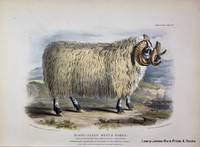
1842réf. 6997London:: Longman Brown Green & Longman 1842. First edition. Near Fine condition in original color. Supplementary Pl. III. Black-faced Heath Breed. Ram 3 years old bred by Mr. Thomas Robertson Broomlea. County of Peebles. A scarce original hand-painted lithograph; drawn & printed on stone by Fairland from a drawing by Mr. Nicholson R.S.A. Member of the Royal Scottish Academy after a painting by Mr. Sheils R.S.A Folio 16.75 x 12 inches. Professor David Low 1786-1859 was a Professor of Agriculture at the University of Edinburgh who created this series to document the pure bred domestic animals of the British Isles in an effort to educate both the landed gentry and common breeders on the importance of selective breeding of animals in their natural environment. Unlike the traditional nineteenth century animal paintings- which often accentuated the useable portions of the beast to glorify the breeder- Professor Low 's animal portraits of the prized breeds were accurately rendered in their actual and appropriate environment as an attestment to fine animal husbandry. In addition the animals are set in lovely nineteenth century British pastoral or mountain settings thus making the appeal of the work twofold: as a fine work of animal portraiture as well as a fine classic landscape. Wood 442 H. Buchanan Nature into Art. Matted in Rag Board Longman, Brown, Green & Longman, unknown
1705réf. 6428Leiden:: Rumphius 1705. First edition. Fine . Fine hand-colored copperplate engraving. 10 x 15 inches. Archivally matted and framed to 16.5 x 21.5 inches as shown. Although best known for her revolutionary discoveries of the metamorphosis of the caterpillar and her painterly compositions for her masterpiece: Metamorphosis Insectorum Surinamensium Maria Sibylla Merian 1647-1717 provided the precise and exacting illustrations for this work. Rumphius commissioned by the Dutch East India Company traveled to Ambon as deputy prefect and as a passion studied and documented the natural order of the island. His legacy the Rariteitkamer published posthumously included natural objects such as these decorative dendrite stones. Dendrites of Iron oxide and manganese oxide on limestone were shaped for emblems and jewelry. Archivally Framed Rumphius, unknown
1961réf. 253401La maison rustique 1961 279 pages in12. 1961. Cartonné. 279 pages.
1954réf. 254451La maison rustique 1954 poche. 1954. Broché.
1990réf. 500038174Arthaud 1990 2x27x23cm. 1990. Relié.
1996réf. 500088786Rustica 1996 1x22x16cm. 1996. Broché.
réf. CZC-13002illustré de 150 gravures sur bois et 6 planches coloriées. Lors de mes dernières vacances, il avait été convenu, avec le docteur Magnus, que nous irions passer une huitaine de jours sur le littoral. Je me rendis à pied chez mon oncle, en Normandie, où nous devions nous réunir. Récit sous forme de narration de l'auteur; "J’avais pris le chemin des écoliers, et, après quelques jours de marche, rien encore ne m’indiquait le voisinage de la mer, lorsque, au détour d’un petit chemin creux, je me trouvai tout à coup au bord d’un long précipice coupé à pic : c’étaient les falaises normandes ". Table; en route - une visite au docteur - a travers champs - l'herborisation - les serres de mon voisin - à travers bois - dans le jardin du docteur - une volière naturelle - au bord de la mer - une vente à Fécamp - a propos d'une vipère - mon retour. Bel exemplaire, couverture éditeur un peu salie, frottements à la coiffe, gd format, 27x18, toutes tranches dorées, bon état intérieur, 442pp. Paris, A. Hennuyer, Imprimeur-éditeur, 1880
réf. CZC-13002illustré de 150 gravures sur bois et 6 planches coloriées. Lors de mes dernières vacances, il avait été convenu, avec le docteur Magnus, que nous irions passer une huitaine de jours sur le littoral. Je me rendis à pied chez mon oncle, en Normandie, où nous devions nous réunir. Récit sous forme de narration de l'auteur; "J’avais pris le chemin des écoliers, et, après quelques jours de marche, rien encore ne m’indiquait le voisinage de la mer, lorsque, au détour d’un petit chemin creux, je me trouvai tout à coup au bord d’un long précipice coupé à pic : c’étaient les falaises normandes ". Table; en route - une visite au docteur - a travers champs - l'herborisation - les serres de mon voisin - à travers bois - dans le jardin du docteur - une volière naturelle - au bord de la mer - une vente à Fécamp - a propos d'une vipère - mon retour. Bel exemplaire, couverture éditeur un peu salie, frottements à la coiffe, gd format, 27x18, toutes tranches dorées, bon état intérieur, 442pp. Paris, A. Hennuyer, Imprimeur-éditeur, 1880
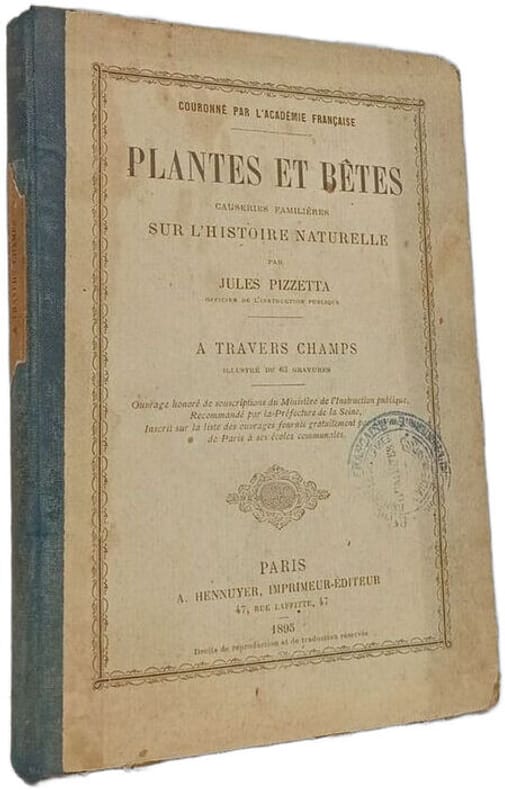
1895réf. 100150626A. Hennuyer imprimeur-éditeur 1895 in8. 1895. Cartonné. Ouvrage de vulgarisation scientifique publié en 1880 par le naturaliste français Jules Pizzetta présentant sous forme de causeries familières des sujets liés aux plantes et aux animaux. Il s'agit d'un fac-similé de l'édition originale de 1880 reproduisant fidèlement le livre broché imprimé sur papier bouffant avec couverture souple
1957réf. 253379La maison rustique 1957 279 pages in12. 1957. Cartonné. 279 pages. photographies en couleurs et en noir de a. bertrand
1977réf. 101597Arthaud 1977 In-4 relié toile éditeur marron. Pas de jaquette. Lettrage légèrement effacé sur le dos. 219 pages. Bon état d’occasion.
1989réf. 241968Milan 1989 200 pages in4. 1989. Relié jaquette. 200 pages. riche iconographie en couleurs
réf. DADAX1442211857Rowman & Littlefield Publishers 2012-08-02. paperback. New. 6.00x0.52x9.04. Buy with confidence. Excellent Customer Service & Return policy. Rowman & Littlefield Publishers paperback
195289p. Photographs. 8vo. Original full printed wraps. PETS/1
2011Oversized hardcover with printed boards, no jacket. Very minor shelf wear to front and rear and bumps to upper leading corners of boards, no other faults. Very good condition. AD Used