Its Environment, Its Men and Its WorkBiblio.com

7,148 results
ref. 1331141583.Gpaperback. Good. Access codes and supplements are not guaranteed with used items. May be an ex-library book. paperback
ref. 1572782730.Gpaperback. Good. Access codes and supplements are not guaranteed with used items. May be an ex-library book. paperback
ref. 0265128994.Gpaperback. Good. Access codes and supplements are not guaranteed with used items. May be an ex-library book. paperback
ref. 0070124051.Ghardcover. Good. Access codes and supplements are not guaranteed with used items. May be an ex-library book. hardcover
ref. 033135649X.Ghardcover. Good. Access codes and supplements are not guaranteed with used items. May be an ex-library book. hardcover
ref. 0260967904.Gpaperback. Good. Access codes and supplements are not guaranteed with used items. May be an ex-library book. paperback
ref. 1572782714.Gpaperback. Good. Access codes and supplements are not guaranteed with used items. May be an ex-library book. paperback
ref. 1572784687.Gpaperback. Good. Access codes and supplements are not guaranteed with used items. May be an ex-library book. paperback
ref. 0484457101.Ghardcover. Good. Access codes and supplements are not guaranteed with used items. May be an ex-library book. hardcover
ref. 0331351277.Ghardcover. Good. Access codes and supplements are not guaranteed with used items. May be an ex-library book. hardcover
ref. 0260248916.Ghardcover. Good. Access codes and supplements are not guaranteed with used items. May be an ex-library book. hardcover
ref. 0484573179.Ghardcover. Good. Access codes and supplements are not guaranteed with used items. May be an ex-library book. hardcover
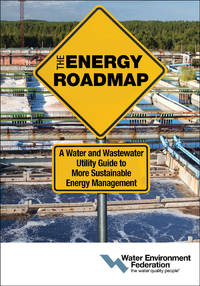
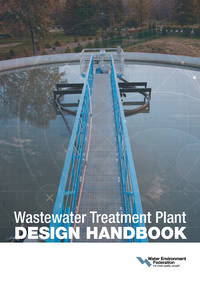
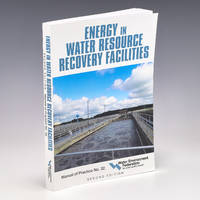
2021ref. SKU-0574AF07103014Water Environment Federation 2021. 2. Softcover. Very Good. Very Good Minus; Softcover; 2nd Edition; Covers are still glossy with a couple of light creases to the back cover; Unblemished textblock edges; The endpapers and all text pages are clean and unmarked; Good binding; This book will be shipped in a sturdy cardboard box with foam padding; Medium-Large Format Quatro 9.75" - 10.75" tall; 1.5 lbs; White covers with photo of a water treatment facility and title in blue lettering; 2021 Water Environment Federation; 376 pages; "Energy in Water Resource Recovery Facilities 2nd Edition MOP 32 WEF Manual of Practice 32" by Water Environment Federation. Water Environment Federation paperback
2000ref. mon0004106754Water Environment Federation 3/20/2024 12:00:01 A. paperback. Very Good. 1.5748 11.4567 9.0157. Water Environment Federation paperback
2000ref. __0309068320National Academies Press 2000. Paperback. New. 128 pages. 5.98x0.98x9.02 inches. National Academies Press paperback
2002ref. __1840649135Edward Elgar Pub 2002. Hardcover. New. illustrated edition. 328 pages. 9.25x6.25x1.00 inches. Edward Elgar Pub hardcover
1997ref. __0309141699National Academies Press 1997. Paperback. New. 204 pages. 0.00x0.00x0.00 inches. National Academies Press paperback
ref. 1527755363.Gpaperback. Good. Access codes and supplements are not guaranteed with used items. May be an ex-library book. paperback
ref. 1390946452.Gpaperback. Good. Access codes and supplements are not guaranteed with used items. May be an ex-library book. paperback
1980ref. 91170Washington DC: U.S. Government Printing Office 1980. Presumed First Edition First printing. Wraps. Good. iii 1 141 7 pages. Wraps. Illustrations. Tabular Data. Serial NO. 96-H50 Front cover and several early pages creased at lower front corner. The National Maximum Speed Law NMSL established in 1974 55 mph and modified in 1987/1988 65 mph was repealed in 1995 returning speed limit authority to states. The original law enforced compliance by withholding federal highway funds which was heavily debated with studies showing it saved 2000–4000 lives annually. Signed by President Nixon in 1974 Public Law 93-239 in response to the 1973 oil crisis to conserve fuel not primarily for safety. The federal government forced compliance by threatening to withhold federal-aid highway funding from states that did not adhere to the 55 mph limit. Congress passed the National Highway System Designation Act of 1995 signed by President Clinton on December 8 1995 which formally repealed the National Maximum Speed Limit returning control to states. Current debates often focus on "safety-conscious" planning rather than national caps with some current legislation such as the DRIVE Act aiming to prevent federal mandates for speed-limiting technology on commercial trucks. Historically Senate hearings and committees often focused on the balance between state autonomy fuel conservation and safety statistics e.g. studies on the 55 mph limit reducing fatalities. The 1974 National Maximum Speed Limit NMSL of 55 mph was enacted to conserve fuel during the oil embargo and reduce traffic fatalities. Congress forced state compliance by threatening to withhold federal highway funds. States monitored compliance using sensors and enforcement with the NMSL repealed in 1995. This law was enacted to conserve fuel and improve safety with the 55-mph limit estimated to have saved thousands of lives. The Emergency Highway Energy Conservation Act of 1974 mandated a 55 mph limit withholding federal-aid highway funds from states that did not comply. The Federal Highway Administration FHwA monitored compliance requiring states to submit data on speed enforcement. States used marked patrol cars near monitoring sensors to slow traffic and ensure reported speeds met federal requirements. The NMSL was repealed in 1995 returning authority to set speed limits to individual states. Compliance often met resistance particularly in Western states and enforcement was sometimes criticized as ineffective according to the Hoover Institution and The Heritage Foundation. U.S. Government Printing Office paperback
1979ref. 91169Washington DC: U.S. Government Printing Office 1979. Presumed First Edition First printing. Wraps. Very good. iii 1 145 3 pages. Tables/ Wraps. Serial No. 96-6. The Nurse Training Act of 1964 NTA was a landmark U.S. federal law enacted to combat a severe nursing shortage by providing funding for nursing education student loans and school construction. It authorized over $283 million over five years significantly expanding the nursing workforce and increasing diversity by promoting the integration of nursing schools. It provided grants for the construction and renovation of nursing school facilities. It established low-interest student loans to make nursing education more accessible. It funded improvements to nursing school programs to increase enrollment. It played a crucial role in dismantling racial segregation in professional nursing schools supporting Black nurses' access to education. It dramatically increased the number of nurses per capita in the United States especially between 1972 and 1983. The 1964 NTA represented a major shift in the federal government's role setting the stage for ongoing federal investment in nursing education. Following 1964 several amendments continued federal support for nursing education throughout the 1970s. U.S. Government Printing Office paperback
ref. 1396537430.Ghardcover. Good. Access codes and supplements are not guaranteed with used items. May be an ex-library book. hardcover
ref. 1333176104.Gpaperback. Good. Access codes and supplements are not guaranteed with used items. May be an ex-library book. paperback
ref. 1333763425.Gpaperback. Good. Access codes and supplements are not guaranteed with used items. May be an ex-library book. paperback
ref. Jane Feifer, edIn Pristine Condition. unknown