19.756 Ergebnisse
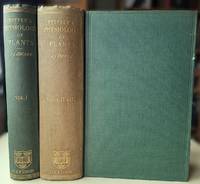
1900Best.-Nr. 023620Oxford at The Clarendon Press 1900. Second edition revised. Three volumes 1900 - 1906 bound in two. Large thick octavo pp xii 632; viii 296; viii 451 illustrated with approximately 160 small text drawings with the tipped-in errata slip to the first volume very clean internally original green cloth the fore-edge of the second volume slightly snaggedand the spine faded otherwise very good. From the collection of the Chelsea Physic Garden and donated to it by the plant physiologist W.O. James. Complete sets seem extremely scarce. "Wilhelm Pfeffer was a pioneer of modern plant physiology. His scientific interests included the thermonastic and photonastic movements of flowers the nyctinastic movements of leaves protoplastic physics and photosynthesis. In 1877 while researching plant metabolism Pfeffer developed a semi-porous membrane to study the phenomena of osmosis. The eponymous Pfeffer cell is named for the osmometric device he constructed for determining the osmotic pressure of a solution. During his tenure at Leipzig Pfeffer published an article on the use of photography to study plant growth. He wanted to extend the chronophotographic experiments of Étienne-Jules Marey 1830-1904 by producing a short film involving the stages of plant growth. This "movie" would be filmed over a period of weeks by frame-at-a-time exposure taken at regular spaced intervals. Later time-lapse photography would become a commonplace procedure.". "It was Julius Sachs the acknowledged founder of plant physiology who showed Pfeffer the path to physiology. At the instigation of Sachs Pfeffer undertook his first purely physiological investigation which dealt with the effect of different colours of light on the assimilation of carbon dioxide 1871c. In the end Pfeffer went further than Sachs. Sachs treated plant physiology as an area of botany which had been neglected up to this point. He introduced the use of hydroponics and he dealt with the physiology of germination of roots of stimulation and with photosynthesis. He thus gave a significant impetus to the further research of these processes. These phenomena were also of interest to Pfeffer but to him they were primarily keys to the solution of general problems of biology. It may be said of Sachs and of many other outstanding biologists that they investigated separate subject areas with success. At the risk of oversimplification it may be said of Pfeffer that he investigated diverse areas with the objective of finding as many starting points as possible to penetrate the molecular foundations of life's processes" Bunning pp. 18-19. Second edition revised and enlarged. Cloth. Very Good. Oxford at The Clarendon Press Hardcover
2010Best.-Nr. DADAX1160814961Kessinger Publishing 2010-03-19. paperback. New. 6.00x1.62x9.00. Buy with confidence. Excellent Customer Service & Return policy. Kessinger Publishing paperback
Best.-Nr. 9354152481.Ghardcover. Good. Access codes and supplements are not guaranteed with used items. May be an ex-library book. hardcover
1650Best.-Nr. 93TCL8LKTV6YNetherlands 1650. Framed. Drawings 48.8 x 28.9-29.2 cm. Black chalk drawings occasionally heightened with white chalk including some light brown watercolours on grey 17th-century handmade paper without watermark. In manuscript 'Martagon' in brown ink. In lower right corner in manuscript the number '3' in ink. We have not succeeded in identifying the artist of these beautiful drawings. We know no other drawing that is clearly from the same hand. Two artists are mentioned as possible candidates Govert Flinck Cleves 1615-1660 Amsterdam and Gerbrand van den Eeckhout 1621 - Amsterdam - 1674. The present drawings are probably made around the middle of the 17th century in Holland. The composition is similar to some papers in florilegia such as Theodor de Bry 1611/1612 to 1641 and later but they never show so many species and the flowers on a sheet. This study could be a sketch for a painting not necessarily a floral still life possibly a landscape. In fine condition.l Cf. Bernt Die niederländischen Maler und Zeichner des 17. Jahrhunderts vol. 4 nr. 209 München 1979; Schatborn 'Een toeschrijving aan Govert Flinck' in: Bulletin van het Rijksmuseum 22 nr. 2/3 1974 pp. 111-121. unknown
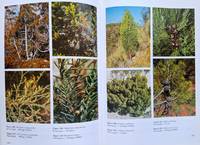
1980Best.-Nr. Alibris.0008441Lae Papua New Guinea: Department of Forests Division of Botany. 1980. Trade paperback. Very good. No dust jacket as issued. iv 153 p. 24 p. of plates: ill.; 25 cm. Includes: Illustrations Plates. . Includes index. Bibliography: p. 141-143. Department of Forests, Division of Botany paperback
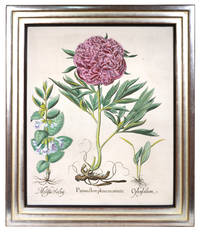
Best.-Nr. 96802Nuremberg & Eichstatt 1640. . Four copper engraved plates with hand-colour; framed and glazed; plate size: 500 x 440 mm.; overall size: 512 x 603 mm. Magnificent plates from Hortus Eystettensis one of the earliest and most famous works in the field which provides a pictorial record of the flowers grown in the greatest German garden of its time that of Prince Bishop of Eichstatt Johann Conrad von Gemmingen. The garden was begun by Joachim Camerarius in 1596 and after his death in 1598 completed by Basil Besler a pharmacist from Nuremberg. A visitor Philipp Hainhofer in 1611 marvelled at the eight gardens each containing 'flowers from a different country; they varied in the beds and flowers especially in the beautiful roses lilies tulips'. The Hortus records this variety and beauty. The book is exceptional in every sense; in its variety and range of flowers in its size in its fine quality of engraving. It is also one of the earliest records of flowers from a specific documented garden. Besler was asked to complete the work by Gemmingen in 1606; the huge nature of the task was clear to Besler and he enlisted the help of his younger brother Hieronymus and Ludwig Jungermann a nephew of Camerarius. Printing the Hortus may have begun as early as 1607. Drawings were made in situ and from specimens sent by the Bishop to Nuremberg; the Bishop reported to Hainhofer that he had boxes of fresh flowers sent every week to Besler at Nuremberg for sketching. A team of at least 10 engravers were employed to translate the drawings to copperplates. The gardens along with most of the town of Eichstatt were destroyed by the invading Swedish troops under Herzog Bernhard von Weimar in 1633-4 although they were partially restored by later bishops. Many of the original drawings survive in the University Library Erlangen. Nissen 158; Pritzel 745; Hunt 430; Blunt pp 95-97; Stafleu & Cowan 497. Nuremberg & Eichstatt, 1640. unknown
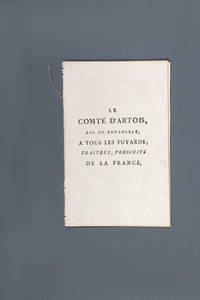
1790Best.-Nr. 4504805Paris 1790. Small hole to A4 affecting one word otherwise fine. Octavo 19 1 pp; disbound from a volume. A very rare early "satire on French politics and English colonization" Ferguson. Likening those who fled the tumult of the French Revolution to the English convicts transported to Australia the author petitions them to join the future king of France in the newly established penal colony at Botany Bay: "le vaste continent des Terres Australes leur offre un pays nouveau asyle fait pour eux" "The vast continent of the Southern Lands offers them a new country a refuge made for them". The "count" continues that "c'est la Nation que vous etes dignes d'etentre c'est la Nation que je suis fait pour commander" "this is the nation that you deserve and that I am meant to command" and explains that in the Antipodes the laws are very different and virtue and vice are often upended. The satire evidently found an audience in Revolutionary France: a second edition was published in 1799. It appeared in the very first years of the English colonisation of Australia at a time when France had its own interests in the region and its own problems at home. La Pérouse commanding the Astrolabe and the Boussole arrived at Botany Bay on 24 January 1788 just as Arthur Phillip was moving the English settlement to Port Jackson. They spent six weeks in Australia before moving on. Toby R. Benis uses the pamplet to begin the introduction to his Romantic Diasporas: French Émigrés British Convicts and Jews 2009: "In 1799 a satirical pamphlet aimed at French émigrés and those inside the republic who sympathized with them appeared in England. Claiming to be produced in London the text was framed as an appeal from the Comte d'Artois Louis XVI's youngest brother calling on the 'cowards who fled France and to all those who have been banned from France-princes and valets traitors and bandits princesses and prostitutes' to join him in the British penal colony of Botany Bay: 'a new country made especially for them'. Styling d'Artois the "king of Botany Bay" the writer characterizes Australia as a de Sadian refuge for the worst elements of both Britain and the ancien regime bequeathed by the British government to the emigrant Prince and his circle to rule. A historical curiosity this document nonetheless points to a political and social dimension to exile in the Romantic period.". Romantic Diasporas focuses on how French emigrés Australian convicts and Britain's Jews embodied this state for Georgian society. . unknown
1833Best.-Nr. 3409328Rio de Janeiro: Miranda & Carneiro 1833. Occasional light spotting. A fine copy. Three parts in one volume small octavo; in contemporary green quarter calf gilt. The first edition in Portuguese of this unrecorded reference to Botany Bay. First published in 1789 in Paris Barère de Vieuzac's La Liberté des Mers was an invective against the British government whose maritime supremacy he described in such terms as "despotism" and "tyranny". This volume is a translation from a Spanish edition of Barère published circa 1820. In the Introduction Barère charges the British with a multitude of crimes including responsibility for the evils of the French Revolution; conspiring with American Indians to attack non-British settlers; aiding and abetting pirates; and exiling Irish and Scottish political prisoners to Botany Bay. This reference consists of seven lines of text which appear on p. xv: '"Quem concebeo e executou o terrivel plano de desterrar para o arido Solo de Botany-Bay aos Irlandezes e Escocezes e de assassinar em Hollanda Italia França e America todos os Virtuaosos patriotas que sustentavão com energia a liberdade e gloria de seu paiz". O Gevenrno Britanico'. Barère 1755-1841 was born in Gascony and practiced law until elected to the States-General in 1789. Elected president of the Convention in December 1792 he presided over the trial and execution of Louis XVI. This is the first edition to have appeared in Portuguese. None of the editions in Spanish or French have been traced in Ferguson. . Miranda & Carneiro unknown
Best.-Nr. 9934Calcutta: Royal Botanic Garden 1905. First edition. The boards are browned with some worm holes; the text is generally clean with some tanning to the first few pages only there are a few marginal worm holes also called pin holes due to their small size to the text; overall a good solid copy of a rare work. Pp. i-iv i-ii 115-197 1 i-lxxv 1-2; 25 full page plates fine line-drawings. Publishers original portfolio case in one-quarter dark green leather over printed pale green boards with three internal black flaps that hold the monograph folio 14 3/4 x 11 1/2 inches. Annals of the Royal Botanic Gardens Calcutta Volume X Part II. This is the original and complete work published in Calcutta in 1905. Aconitum Aconites is a genus of over 250 species of flowering plants belonging to the family Ranunculaceae; these herbaceous perennial plants are chiefly native to the mountainous parts of the northern hemisphere. Most species in this genus are extremely poisonious; this has resulted in some unusual common names such as monkshood wolf's bane leopard's bane mousebane women's bane devil's helmet Queen of all Poisons or blue rocket modified after Wiki. The second monograph by D. Prain is a biography of Francis Buchanan who was an East India Company surgeon surveyor and botanist. Dr. Francis Buchanan later Hamilton or Hamilton-Buchanan published works on the geography flora and fauna of India where he lived and explored from the end of the 18th century until 1815 after Wiki. No ownership marks. Calcutta: Royal Botanic Garden, 1905. First edition. hardcover
Best.-Nr. 9751Hatfield South Africa: Umdaus Press 2001. Limited edition. A fine copy in a fine slipcase. Pp. x 126; 12 full page color plates from paintings by Gillian Craib numerous black-and-white illustrations from ink drawings by Gillian Craib black-and-white distribution maps of all species. One-quarter brown morocco leather over green patterned marbled boards spine with four raised bands and with black leather title label lettered in gilt in one compartment housed in a green cloth and marbled paper leather-tipped slipcase as issued sm 4to 10 1/2 x 8 inches. Loosely laid in at front is an original watercolor painting of a Pelargonium species signed in pencil by the artist and numbered 23/34. This volume is no. 8 of 25 copies of the Collectors edition signed by the author and artist on the limitation page. The name of the subscriber R. J. Jeffery is neatly printed on the limitation page by the author. Attractive bookplate of R. J. Jeffery is attached to the front endpaper. Pelargonium is a genus of flowering plants that includes about 280 species of perennials succulents and shrubs commonly called geraniums pelargoniums or storksbills. Pelargonium species are evergreen perennials indigenous to warm temperate and tropical regions of the world with many species in southern Africa from Wiki. Rare botanical monograph especially in this limited edition of 25 copies. Hatfield, South Africa: Umdaus Press, 2001. Limited edition. hardcover
Best.-Nr. 9750Cape Town: Tiyan Publishers 1982. First edition. A fine copy in the original gray cloth case that is slightly edge-worn. Pp. xvi 174; 14 full page color plates from paintings by Thalia Lincoln each signed in pencil by the artist numerous other black-and-white figures and portraits. One-quarter leather over green cloth-covered boards lettered in gilt on the front board spine leather with four raised bands housed in the publishers gray cloth-covered folding case lettered in brown on the top cover elephant folio 660 x 490 mm. This printing was limited to 500 copies. The first 50 copies are presentation copies and the remaining copies are numbered 50 to 500 this being copy no. 120. Each copy of this limited edition is signed by the author John Patrick Rouke and by the artist Thalia Lincoln on the limitation page. Mimetes the pagoda is a genus of evergreen shrubs or small trees 0.56 meters 1.619.7 feet high with thirteen species assigned to the family Proteaceae. This genus as with other proteas is popular with nectivorous birds such as the Cape sugarbird and several sunbird species. All species of Mimetes are endemic to the Cape Region of South Africa from Wiki. Orothamnus or marsh rose is a monotypic fynbos genus in the family Proteaceae occurring in the Kogelberg and Kleinrivier Mountains of Hottentots-Holland in the Western Cape Province of South Africa. It is an erect sparsely branched shrub to 5 meter tall and was first depicted by Jean Villet a Capetonian artist and dealer in natural history specimens from Wiki. No ownership marks. This book weighs 36 pounds; it will require extra postage in the USA and worldwide. Cape Town: Tiyan Publishers, 1982. First edition. hardcover
2012Best.-Nr. DADAX0986021636VELLUM 2012-10-12. hardcover. New. 6.00x1.06x9.00. Buy with confidence. Excellent Customer Service & Return policy. VELLUM hardcover
Best.-Nr. 6241Johannesburg: Aloe Books 1985. Limited edition. A fine as new copy. Pp. i-xl 2-150; frontispiece portrait of Adrian H. Haworth 120 color photographs 31 black-and-white photos and half-tones 24 distribution maps. Publisher's original dark green morocco leather spine with five raised bands red morocco title/author label in one compartment two-color map endpapers in gray cloth-covered slipcase with green marbled paper on the top side and bottom of the slipcase and dark green morocco flange at the opening of the slipcase sm 4to 11 x 8 1/4 inches. This is Sponsors' edition limited to 27 signed copies lettered A-Z signed by the author on the limitation page; this is copy letter V. The subscriber's page shows that there were sixteen sponsors to this work presumably they received letters A-Q; this left only eleven copies available for sale. The copy offered here is one of these eleven available for sale. Haworthia is a large genus of small succulent plants endemic to Southern Africa Mozambique Namibia Lesotho Swaziland South Africa. Like the Aloes they are members of the subfamily Asphodeloideae and they generally resemble miniature aloes except in their flowers which are distinctive in appearance. Horticulturally they are popular garden and container plants from Wiki. This is an important taxonomic revision of the genus Haworthia that was named after Adrian H. Haworth who was an English entomologist botanist and crustacean expert. This very rare offering is finely bound in attractive dark green morocco that is housed in a custom slipcase. Johannesburg: Aloe Books, 1985. Limited edition. hardcover
Best.-Nr. 5195México: Sociedad Mexicana de Historia Natural 1976. Reprint. Small bump to front outer top corner which has caused some pages to bend forward wrappers on spine a little sunned some browning to the front wrappers only the text and plates are bright and clean; overall a very good copy. Pp. iv 298 70 full page plates. Original green pictorial printed wrappers lg 4to. This is a facsimile reprint of the rare 1909 first edition. The work covers the ferns of Mexico with finely executed plates of many species. México: Sociedad Mexicana de Historia Natural, 1976. Reprint. unknown
2002Best.-Nr. DADAX1571457216Brand: Laurel Glen Publishing 2002-09-28. First Editiion. paperback. New. 6.00x1.75x7.75. Buy with confidence. Excellent Customer Service & Return policy. Brand: Laurel Glen Publishing paperback
Best.-Nr. 3617Hong Kong: Orchid Press 2003-2007. First edition. Fine new condition. Pp. 103; 108; 108 300 fine color photos of orchids. Color pictorial boards hardback with color pictorial dust jacket beautiful color pictorial endpapers 4to 10.75 x 10.5 inches. Volume 1: Highlight Edition Volume 2: A Poem of Wild Orchids and Volume 3: Shangri-La of Wild Orchids. A total of six volumes were planned in 2003 but only three have been published. Since five years have passed since volume 3 was published it is doubtful any more will appear. Hong Kong: Orchid Press, 2003-2007. First edition hardcover
Best.-Nr. 3404New York: Ivison Blakeman Taylor and Co. 1878-1884. First edition. Spine cloth of volume 2 part 1 is a bit sunned and has a nick to cloth just below the title as well as wear to the cloth at the head and foot of the spine there is also some light spotting to the cloth of volume 1 part 2 - overall a good solid copy. Pp. vi 402; iv 402. Publisher's original brown cloth gilt-lettered on the spine sm 4to. Vol. 1 Part 2 covers Caprifoliaceae to Compositae Vol. 2 Part 1 covers Gamopetalae after Compositae. See Stafleu and Cowan 2132. Vol. 1 Part 1 was published in 1895-97 after Gray's death. Name sticker of C.D. Fretz M.D. Sellersville on the front endpaper. New York: Ivison, Blakeman, Taylor and Co., 1878-1884. First edition hardcover
Best.-Nr. 2255Lehre Germany: Verlag von J. Cramer 1968 reprint. Fine copy. Pp. iv 62 74 91 300 full page plates. Publisher's cloth gilt-lettered on spine folio 38cm x 28cm. First published in Leipzig in 1835 this high quality reprint is an exact reproduction of the original work. It is volume 65 in the series 'Historiae Naturalis Classica' edited by J. Cramer and H.K. Swann. Lehre, Germany: Verlag von J. Cramer, 1968, reprint hardcover
Best.-Nr. 1845Leiden Lugduni Batavorum: Arnz and Soc. 1850. Some faint scattered foxing to some plates some minor chipping to the wrappers along the spine otherwise a clean near fine copy with the text pages unopened and uncut. Pp. 234 65 full page lithographs some folding. Original blue boards 4to. Documents the Dicotyledones and Monocotyledones of Suriname formerly Dutch Guinea. Leiden (Lugduni Batavorum): Arnz and Soc., 1850. hardcover
1888Best.-Nr. 023319York Street Covent Garden London: George Bell and Sons 1888. Octavo pp xii 216 a little age-toned pages 105/122 have been trimmed sl;ightly on the fore-edge a tiny ink blot on the ofr-edge two or three slightly open hinges with very slight weakness; original blue/green cloth torn at the spine head otherwise good. RARE. From the library of the garden designer and plant collector Jim Russell with his bookplate. Also with the blindstamo of the Caledonia Nursery Guernsey on several pages. First Edition. Cloth. Good. George Bell and Sons Hardcover
1977Best.-Nr. 023328Kew Richmond Surrey 1977. 1977 - 1985. Two volumes illustrated with two colour frontispieces and 104 botanical plates pp 1969 very clean internally blue cloth not quite matching as usual very slight signs of use but a very good set. The definitive flora painstakingly researched. These two volumes weigh over 3 kilos when packed. Extra postage will be required. First Edition. Cloth. Very Good. Hardcover
1886Best.-Nr. 023342Oxford and London: Parker and Co. 1886. First edition. Small octavo pp lii 451 i very slightly used internally with only a few pages showing light foxing a folding map in the rear pocket in good condition original green cloth very slightly worn and gently blotched. A good firm copy. First Edition. Cloth. Very Good. Parker and Co. Hardcover
1927Best.-Nr. 023340Oxford at The Clarendon Press 1927. Second edition thick octavo pp cxxxii 538 very clean internally but a few pages carelessly opened blue cloth very slightly faded and rubbed very slightly marked. The best edition and very scarce. Second edition. Cloth. Good. Oxford at The Clarendon Press Hardcover
1889Best.-Nr. 023405Paternoster Row London: Gurney & Jackson 1889. First edition. A double page colopured map frontispiece very thick octavo pp xxxiv 508 very clean internally original pink pebble cloth the spine faded and slightly torn at the head. A good sound copy. . First Edition. Cloth. Good. Gurney & Jackson Hardcover
1998Best.-Nr. 023421Collingwood Victoria: CSIRO 1998. Illustrated with line drawings and a clutch of colour photograpgs large thick octavo pp xxii 766 extremely clean internally brown cloth in very good condition in a very goiod dustwrapper with the very slightest signs of use. From the library of the botanist Alan Leslie with his bookplate on the front endpaper. Very heavy - will need extra postage. First Edition. Cloth. Very Good/Very Good. CSIRO Hardcover